Hunting a Gated Forest Road Beyond the Lot
There's nothing quite like pulling into a public land parking lot on a crisp fall morning, only to find it already overflowing with trucks. It's a frustrating sight, instantly telling you that the woods around the main access points are likely to be swarming with other hunters. For many of us, the immediate thought is: "Where do I go to find deer that haven't been pushed to the next county?" That's where hunting a gated forest road beyond the main lot becomes a true game-changer, offering a chance to escape the crowds and find less pressured game. This guide will walk you through how to effectively use these often-overlooked access points in Maryland.
Understanding Gated Forest Roads and Their Purpose
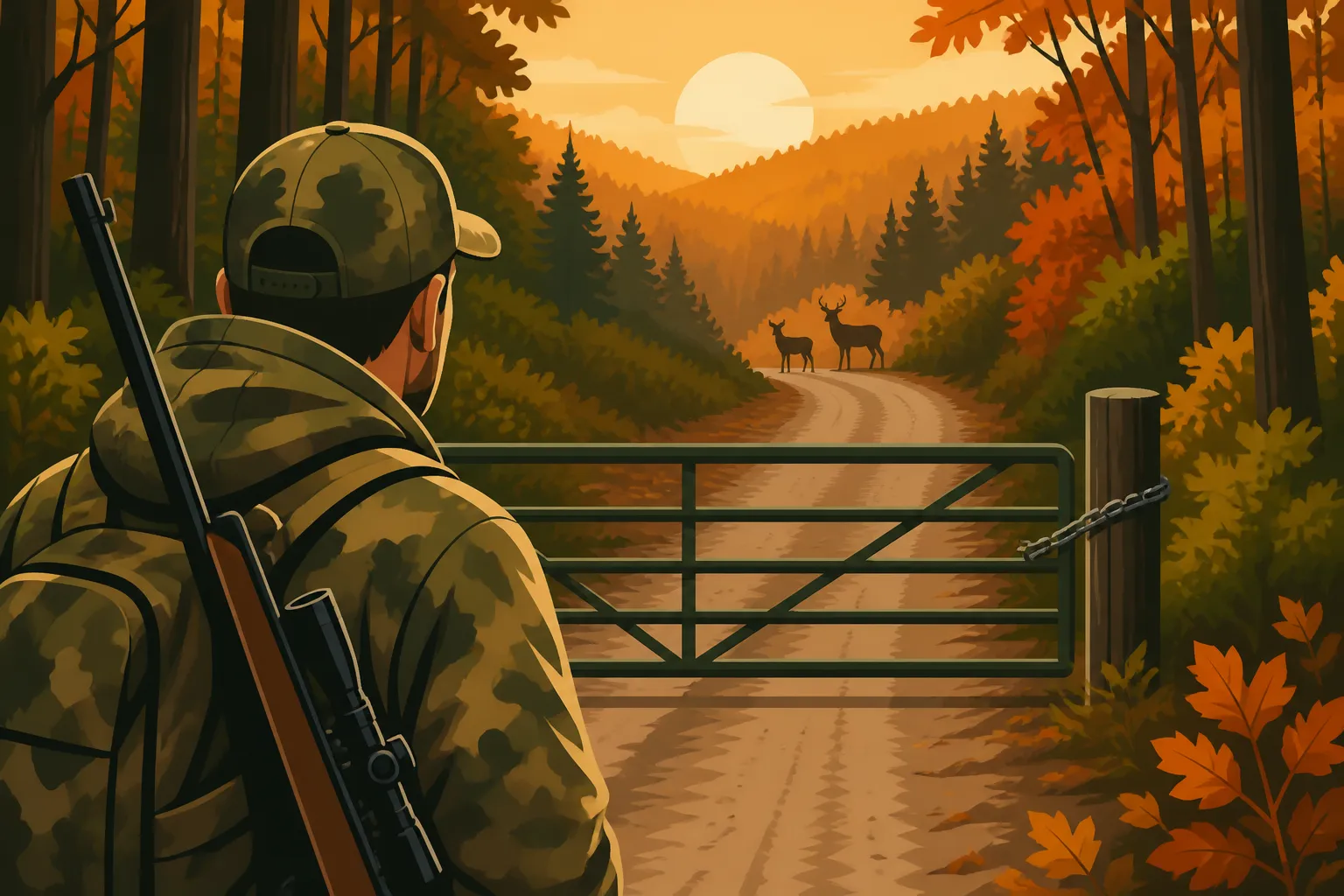
Gated forest roads are a common feature across Maryland's public lands, from the Western mountains to the Eastern Shore. They might seem like barriers, but for the savvy hunter, they're actually invitations to a different kind of experience. These roads are typically maintained for administrative purposes, like timber harvesting, fire access, or wildlife management, but they're closed to public vehicle traffic. This distinction is crucial: "gated" doesn't mean "no entry," it simply means "no motorized entry" for the general public.
Why These Roads Exist and What They Mean for Hunters
The primary reason for these gates is often ecological and operational. Limiting vehicle traffic helps prevent erosion, protects sensitive habitats, and reduces disturbance to wildlife. For example, in areas like Maryland's State Forests Open to Hunters or designated Wildlife Management Areas (WMAs), these gates help channel visitor use, allowing large tracts of land to remain wilder. From a hunter's perspective, this vehicle exclusion translates directly into reduced human pressure. Most hunters are creatures of convenience; they'll often stick close to their vehicles. The farther you get from the truck, the fewer people you're likely to encounter. This natural filter means that the deeper you walk, the better your chances of encountering deer that haven't been educated by constant human presence and scent.
The Advantage of Walking In: Finding Unpressured Terrain
The sheer act of walking past a gate and into the solitude of a forest road offers several profound advantages. First, you're immediately putting distance between yourself and the typical road hunters or those who don't want to stray too far from their vehicle. This often leads you into areas where deer patterns are more natural and predictable, less influenced by daily human intrusion. Second, moving on foot is inherently quieter. You're not relying on a noisy ATV or truck to get you deep into the woods, which means your approach is less disruptive. This quietude extends to scent control as well; you're not leaving exhaust fumes or other vehicle-related odors in your wake. Finally, walking in gives you an intimate understanding of the terrain. You notice subtle changes in topography, faint deer trails crossing the old roadbed, and potential pinch points or funnels that might be missed when driving past at speed. It's an opportunity for a truly immersive hunt.
Scouting for Success Beyond the Gate
Successfully hunting a gated forest road isn't just about showing up and walking. It requires dedicated scouting, both from the comfort of your home and with your boots on the ground. The goal is to identify areas that will hold deer away from the main pressure points and understand how those deer will move.
Digital Reconnaissance with Mapping Apps
Before you ever set foot on the ground, modern mapping tools are your best friend. Services like onX Hunt or GoHunt allow you to zoom in on Maryland's public lands, identify gated roads, and analyze the terrain beyond them. Look for key features:
- Topography: Identify saddles, ridge lines, and draws that act as natural travel corridors. Deer often follow the path of least resistance, especially when pressured. Working a Ridge Saddle for Rutting Bucks can be especially productive.
- Vegetation Changes: Use satellite imagery to spot differences in timber stands – clear-cuts, mature hardwoods, pine thickets. These transitions often create excellent edge habitat where deer feel secure.
- Water Sources: Ponds, creeks, or swampy areas are vital, especially during drier periods, and can concentrate deer movement.
- Distance from Main Access: Note how far the gated road extends and where it connects to other features or trails. The farther in you go, the less likely you are to encounter other hunters. Use these apps to plan your ideal entry and exit points, estimate walking times, and mark potential stand locations. This digital legwork, especially with a tool like onX Hunt, helps you eliminate unproductive areas and focus your physical scouting efforts.
Boots-on-the-Ground Verification
Digital maps provide a great starting point, but there's no substitute for walking the ground yourself before the season. This is where you confirm what you saw on the map and discover the hidden details.
- Follow the Road: Walk the entire length of the gated road you plan to hunt. Look for fresh deer tracks, rub lines, and scrape lines along its edges, especially in the early season. These old roads often act as travel corridors or feeding areas for deer browsing on regenerating vegetation.
- Branch Off: Don't just stick to the main road. Look for faint game trails that branch off into thicker cover. These could lead to hidden bedding areas or overlooked food sources.
- Check Wind and Thermals: Pay attention to how the wind behaves in different areas, particularly in mountainous regions or valleys. Understanding local thermals is crucial for deer hunting. You can also get a feel for the lay of the land, which helps in Reading Sign in Maryland Mountain Timber or marsh environments.
- Identify Stand Locations: Pinpoint specific trees or ground blind locations that offer good shooting lanes and cover for your approach. Consider how you'll get in and out undetected. Finding Maryland Ground Others Walk Past is all about noticing these subtle details.
Strategies for Hunting Gated Forest Roads
Once you've done your scouting, it's time to put a plan into action. Hunting gated forest roads successfully requires a blend of patience, stealth, and a willingness to adapt.
Stealthy Entry and Exit
Your approach is paramount when hunting beyond a gate. The goal is to get to your hunting location without alerting every deer in the vicinity.
- Pre-dawn Arrival: Plan to arrive at the gate well before first light. This allows you to walk in slowly, giving the woods time to settle before you're in position.
- Wind Direction is Key: Always, always, always factor in the wind. A long walk in can push your scent deep into the woods. Use mapping apps like GoHunt to understand typical wind patterns for your chosen area and hunt accordingly. Avoid walking directly into the wind if it means blowing your scent towards your target area. If the wind is wrong, consider another spot or another day.
- Quiet Footwear and Clothing: Choose gear that minimizes noise. Soft-soled boots and quiet outer layers are essential. Every rustle and crunch is amplified in the quiet woods, especially when deer are on high alert due to Hunting Pressure on Maryland Public Land.
- Headlamp Management: Use your headlamp sparingly and on its lowest red-light setting if possible. Your eyes adjust to the dark, and less artificial light means less disturbance.
Finding Unpressured Game
The beauty of these areas is the potential for less pressured deer. But "less pressured" doesn't mean "easy."
- Go Deeper: While some deer may be near the gate, the true reward often lies a mile or more in. This is where you're most likely to find deer that exhibit natural behavior.
- Hunt Secondary Features: Don't just hunt the old road itself. Look for drainages, small benches, thickets, or subtle ridges that run parallel to the road. Deer will often parallel these clearings within the cover. Hunting a Funnel Between Two Grain Fields is a good example of how deer use edges, and a gated road often acts as one.
- Still-Hunting: The quiet nature of these roads makes them excellent for still-hunting. Take a few slow steps, stop, scan, listen intently, then repeat. This allows you to cover ground effectively while remaining observant.
- Utilize Natural Funnels: Look for where deer would naturally cross the old road or where terrain features pinch down their movement. A small creek crossing, a low spot in a ridge, or a dense thicket forcing them into a narrow opening can be goldmines.
- Focus on Food and Cover: During the season, deer prioritize food and cover. Late season, this might mean Late Season Food Sources for Maryland Deer like leftover acorns or browse in sheltered areas. In general, hunt the transitions between thick cover and more open feeding zones.
- Hunting After a Cold Front: Following a significant cold front, deer often become more active, moving to feed and restore energy. These deep, quiet areas can be excellent places to intercept them.
Post-Shot Considerations
This is where hunting beyond the gate demands serious forethought. Recovering a deer deep in the woods, especially a larger animal, is a challenge.
- Mark the Spot: If you make a shot, immediately mark the exact location where the deer was standing and where you last saw it. Use your GPS, a piece of flagging tape (removed after use!), or distinct landmarks.
- Wait and Track: Give the deer time, especially if the shot wasn't perfect. Then, track methodically. Be prepared for a long blood trail, potentially through dense brush. Consider carrying a bright LED light if tracking into darkness.
- Retrieval Plan: This is critical. How will you get the deer out? A heavy-duty game cart can be invaluable for a long drag back to the gate. If the terrain is too rugged for a cart, a good dragging harness and a strong back (or two!) will be necessary. For large bucks, especially if you're alone, quartering the animal in the field is often the most practical solution. Remember that the gate means no vehicle assistance.
Essential Gear for Backcountry Gate Hunts
Because you're leaving your vehicle behind, every item you carry needs to be well-considered. You can't just run back to the truck for something you forgot.
Packing Smart for the Long Haul
A well-packed backpack is your lifeline on these hunts.
- Comfortable Backpack: A high-quality hunting pack (2500-4000 cubic inches) with a comfortable suspension system is non-negotiable. It needs to handle weight effectively.
- Water and Food: Carry plenty of water and calorie-dense snacks. A long walk in, a day of hunting, and a potential long drag out will burn a lot of energy.
- First-Aid Kit: Accidents happen, especially far from help. A comprehensive first-aid kit is essential.
- Game Bags: If you plan to quarter a deer, lightweight, breathable game bags are crucial for keeping meat clean and cool.
- Knife/Field Dressing Kit: Sharp knife, gut hook, gloves, and wet wipes.
- Warmth/Rain Gear: Even on a clear morning, weather can change quickly in Maryland. Pack an extra warm layer, a quality rain jacket, and pants. Layers are key.
Navigation and Communication
Losing your way or being unable to call for help when deep in the woods is a serious concern.
- GPS Device/Mapping App: Your phone with a reliable mapping app like onX Hunt or GoHunt (downloaded offline maps are a must!) is invaluable. Consider a dedicated handheld GPS as a backup.
- Compass and Map: Always carry a physical compass and a paper map of the area. Batteries die, screens break. Knowing how to use them could save your hide.
- Fully Charged Phone & Power Bank: Even if you have no service, your phone can still be used for GPS with offline maps. A portable power bank will keep it charged.
- Two-Way Radio: If hunting with a partner, two-way radios can be a lifesaver where cell service is spotty.
- Whistle: For emergencies or to signal a partner.
Retrieval Tools
These will make the arduous task of getting your deer out significantly easier.
- Game Cart: A collapsible, heavy-duty game cart is a worthwhile investment. Look for one with large wheels that can handle uneven terrain.
- Dragging Harness/Rope: A sturdy dragging harness that goes around your waist or shoulders distributes the weight better than just pulling with your hands. A good length of rope can also be useful for maneuvering a deer over obstacles.
- Gloves: Heavy-duty gloves protect your hands during the drag.
Hunting a gated forest road requires more effort, more planning, and certainly more sweat equity. But the reward of finding unpressured deer and experiencing the true solitude of Maryland's wild spaces is well worth the extra miles. It's a reminder that sometimes, the best hunting spots are those you have to earn.
| Feature | Pros of Hunting Gated Forest Roads | Cons of Hunting Gated Forest Roads |
|---|---|---|
| Hunter Pressure | Significantly reduced, especially deeper in | None (relative to main access) |
| Game Behavior | More natural, less wary deer patterns likely | None (relative to main access) |
| Stealth & Noise | Quieter approach without vehicle noise | None |
| Access & Distance | Provides access to vast, otherwise hard-to-reach areas | Requires significant walking, often miles from parking |
| Retrieval | None | Extremely difficult to extract game without vehicle access |
| Gear Requirements | None | Requires more careful packing for self-sufficiency and retrieval |
| Scouting Effort | None | Requires thorough pre-season scouting (digital and on-the-ground) |
| Physical Demands | None | Higher physical exertion due to walking and potential game retrieval |
Disclaimer
This article is for general informational purposes only and does not constitute professional advice. Laws, prices and regulations vary by location and change over time. Consult a qualified professional for guidance on your specific situation.