Hunting a Piedmont Stream Valley
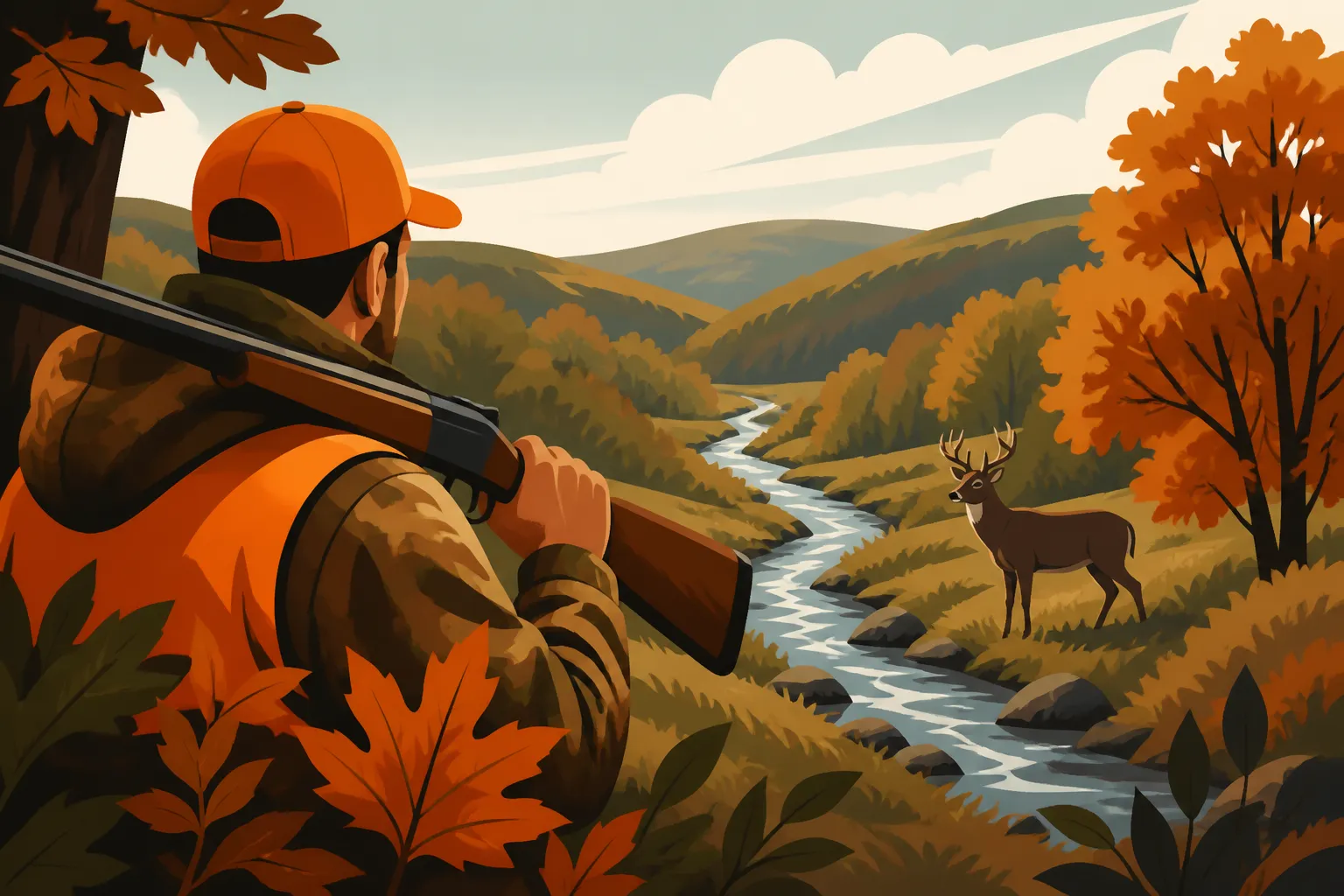
Hunting a stream valley in Maryland's Piedmont region can feel like a puzzle. You're often dealing with narrow strips of cover, close proximity to homes, and deer that are incredibly adept at navigating these fragmented landscapes. This guide will help you decipher those winding stream bottoms, pinpoint where deer move and bed, and employ strategies that truly work in these often-overlooked yet highly productive areas.
Understanding the Piedmont Stream Valley Landscape
The Piedmont region of Maryland, stretching between the mountains to the west and the coastal plain to the east, is characterized by rolling hills, mixed forests, agricultural fields, and a network of creeks and rivers. These stream valleys, often tucked away, act as vital arteries for wildlife, especially deer. They offer a unique set of challenges and opportunities for the Maryland hunter.
Why Deer Favor Stream Valleys in the Piedmont
Deer, particularly whitetails, are masters of adaptation, and Piedmont stream valleys provide exactly what they need: cover, water, and food, often in close proximity. These linear habitats offer security cover even in areas with fragmented larger woods. Think about it: a stream bottom might be lined with thick multiflora rose, honeysuckle, or dense saplings, creating an impenetrable tunnel that deer feel safe traversing during daylight hours. The consistent water source is invaluable, especially during dry spells, and often the banks support rich vegetation or spilled agricultural crops, making for easy foraging.
Moreover, these valleys act as natural travel corridors, funnels, and pinch points. Deer will use them to move between larger woodlots, crop fields, or bedding areas, instinctively following the path of least resistance or greatest concealment. They connect otherwise isolated patches of habitat, turning what might seem like a small, insignificant piece of woods into a major highway for deer movement. This is especially true when development pushes deer into tighter spaces, making these stream bottoms critical sanctuaries.
Topographical Features and Cover Types
When you're looking at a stream valley on a map, or better yet, walking it, pay close attention to the micro-topography and the types of cover present. It's rarely just a flat ditch. You'll often find small benches, slight rises on the bank, or even small islands within the stream itself. Deer will use these subtle features for bedding or pausing. The elevation changes, even minor ones, can also create thermal currents that influence deer movement and how your scent travels.
The vegetation density is crucial. While some stream valleys might be relatively open, many are choked with invasive species like Japanese honeysuckle, autumn olive, or common reed (Phragmites). These plants, while often a nuisance, create incredibly dense thermal and security cover for deer. They'll bed down deep inside these thickets, feeling almost invisible. On the edges of these dense areas, you might find pockets of native hardwoods like oaks, offering acorn crops in the fall, or soft mast trees like persimmon or crabapple. Understanding these distinct cover types helps you predict where deer will feed, bed, and travel within the valley.
Scouting Strategies for Piedmont Stream Bottoms
Scouting is paramount when hunting these smaller, often linear habitats. You can't just walk in blindly; you need to understand the intricate movements and habits of the deer using these specific corridors. This involves a mix of aerial reconnaissance, ground-truthing, and paying close attention to every detail.
Leveraging Mapping Tools for Reconnaissance
Before you even step foot in the woods, pull up your digital mapping tools like onX Hunt or GoHunt. These platforms are absolute game-changers for identifying potential stream valley hotspots. Start by looking for the obvious: water features, contour lines that indicate changes in elevation, and areas where habitat types shift.
Zoom in and identify property lines. This is critical in the Piedmont, where public land can be fragmented and private parcels often abut public access. You might find a small public parcel that connects to a vast private agricultural field via a narrow stream corridor. This is exactly the kind of funnel you're looking for. Look for areas where the stream makes a sharp bend, creating a natural pinch point, or where a thicker patch of woods funnels down into the stream bottom. Identify potential access points, but also note areas that look difficult to access, as these often hold less pressured deer. Remember, deer will use these linear features as escape routes, too, so understanding the surrounding landscape is key. Scouting Maryland Public Land With Aerial Photos can give you an edge here, helping you pick out those subtle features from above.
Reading Sign and Interpreting Deer Movement
Once you've done your digital homework, it's time to hit the ground. Approach scouting a stream valley differently than a large timber block. Think of it as unraveling a long, winding story. Start by walking the edges, looking for entry and exit points where deer might be coming from fields or adjacent woodlots. Look for worn trails along the banks, in particular where they cross the stream itself. Deer prefer predictable crossings, especially if the water is deeper elsewhere or the banks are too steep.
Pay very close attention to rubs and scrapes. These aren't just random acts; they're signposts. A series of rubs along a stream bank can tell you a buck is moving through that specific corridor, perhaps scent-checking for does. Scrapes, especially large, active ones, are clear indicators of communication hubs. Look for Scrape Lines Along a Maryland Field Edge that lead directly into the stream bottom, indicating how deer transition from feeding to cover.
Also, be mindful of bedding areas. Deer often bed just above the immediate flood plain, on a small rise or a dense thicket on the bank, offering them a vantage point or heavy cover. Look for flattened grass, small droppings, or tufts of hair in these dense areas. In the Piedmont, especially near suburban areas, deer become incredibly nocturnal, so finding fresh sign in these hidden pockets of cover is your best bet for daylight encounters.
Effective Hunting Tactics for Stream Bottoms
Hunting a stream valley requires a nuanced approach. You're not just setting up on a big timber ridge; you're often dealing with a narrow, linear habitat where deer movement can be tight and predictable, but also incredibly sensitive to pressure.
Stand Placement and Entry/Exit Routes
Stand placement in a stream valley is all about understanding how deer use that specific corridor. Look for natural pinch points: a narrow section between thickets, a downed log crossing the stream, or where the stream bottom narrows significantly due to topography. A stand positioned to overlook one of these funnels can be incredibly effective. Consider placing your stand slightly off the main trail, perhaps 10-20 yards back into the cover, giving you a better angle and allowing deer to feel less exposed while traveling.
Another great spot is where a small tributary or ditch dumps into the main stream. This often creates a natural junction that deer will investigate. Look for a large, mature tree that offers good cover and a clear shooting lane down the valley.
Your entry and exit routes are critical, especially in these more confined areas. You want to move in and out undetected. If the stream itself is small enough, wading in the streambed can mask your scent and sound. Otherwise, use existing cover, ditches, or topography to hide your approach. Always factor in the wind, which can be tricky in valleys, often swirling. Think about how deer will move with the wind through the valley and position yourself accordingly to catch them crosswind or downwind. Hanging a Stand on a Maryland Farm Edge often means using similar principles of concealment and access, just on a larger scale.
Still-Hunting and Driving Strategies
Given the linear nature of stream valleys, still-hunting can be a highly effective tactic, especially during the middle of the day when deer might be bedded down. Move slowly, literally taking one step at a time, pausing frequently to scan ahead. Use the stream bank as a natural barrier to your movement and focus on the thickest cover where deer are likely to be hiding. Look for ears, antlers, or horizontal lines that break up the vertical patterns of the woods.
If you have a small group, a carefully planned deer drive can be productive. One or two hunters can slowly push through the stream bottom, while others are positioned on stands at known escape routes or pinch points. The key is for the drivers to move slowly and deliberately, pausing to listen, rather than crashing through the brush. This encourages deer to slip out quietly rather than blowing out, giving the standers a better shot. This is a common tactic when Deer Drives on Maryland Private Ground are employed to move deer out of dense cover.
Navigating Access and Challenges in Populated Areas
Hunting Maryland's Piedmont stream valleys often means dealing with more than just deer sign. You're frequently operating in close proximity to human activity, which brings its own set of rules and considerations.
Securing Permission on Fragmented Private Land
Many of the most promising stream valleys, especially those connecting larger blocks of habitat, will run through private property. This means knocking on doors and asking for permission is often your best bet. Be polite, well-prepared, and respectful. Offer to help with any deer-related issues the landowner might have, such as crop damage. Show them your onX Hunt map and explain exactly where you'd like to hunt and how you'll access it without disturbing their property. Some landowners might be wary, especially if they've had bad experiences, but many are open to responsible hunters. For guidance, check out Getting Private Land Permission in Maryland.
Even if you only get permission for a small strip along the stream, that can be enough. Remember, deer use these areas as travel corridors, so a small, well-placed stand can be incredibly effective. Sometimes, a "yes" on one property can lead to introductions to neighbors, opening up more ground.
Respecting Boundaries and Managing Noise
When hunting these fragmented, often semi-suburban areas, respecting property boundaries isn't just a courtesy; it's a legal necessity. Always know where you stand in relation to property lines, especially with your digital mapping tools. Be aware of setback distances from homes and roads, as Maryland has specific regulations regarding shooting near inhabited dwellings.
Noise discipline is also crucial. Keep your conversations quiet, use game calls sparingly and realistically (a soft Grunt Calls in Maryland Hardwoods can work wonders), and move through the woods as silently as possible. You don't want to alert deer, but you also don't want to disturb homeowners who might be very close to your hunting area. Early mornings and late evenings are often the best times to hunt these areas, when human activity is at a minimum and deer are most likely to be moving. Hunting these areas requires a bit more stealth and thoughtfulness than deep wilderness, but the rewards of catching a mature buck unaware in his backyard sanctuary can be immense.
| Characteristic | Deer Use | Scouting Priority | Hunting Implication |
|---|---|---|---|
| Dense Thickets | Primary bedding, security cover, escape routes | Look for flattened beds, fresh droppings, small trails | Ideal for slow still-hunting or carefully placed stands |
| Sharp Bends/Pinch Pts | Natural funnel points for travel | Fresh tracks, rubs, scrapes concentrated here | Excellent stand locations, intercepting movement |
| Stream Crossings | Predictable travel routes, especially during rain/snow | Heavy tracks, worn paths entering/exiting water | Prime stand sites, particularly in cold weather |
| Elevation Changes | Bedding on rises, thermal current use | Look for subtle benches, wind direction at different heights | Understand scent control challenges, potential bedding areas |
| Food Sources (Acorns, etc.) | Feeding areas, often near cover | Droppings, chewed mast, fresh tracks | Focus hunting during feeding times, especially early/late season |
Disclaimer
This article is for general informational purposes only and does not constitute professional advice. Laws, prices and regulations vary by location and change over time. Consult a qualified professional for guidance on your specific situation.