Junior Turkey Hunt Date and Rules
For many young hunters and their mentors in Maryland, the anticipation of turkey season is huge, but trying to navigate the specific dates and rules for junior hunters can feel like flipping through a dense legal manual. It’s a common frustration, especially when you’re just trying to introduce the next generation to the joys of the outdoors safely and legally. This comprehensive guide is here to untangle all the details surrounding Maryland's Junior Turkey Hunt, ensuring you and your young hunter are fully prepared for a rewarding experience in the spring woods.
Understanding Maryland's Junior Turkey Hunt
Maryland recognizes the importance of fostering a love for hunting in its youth, and the Junior Turkey Hunt is a fantastic initiative designed specifically for this purpose. It provides a dedicated opportunity for young hunters to pursue wild turkeys before the general statewide season opens, often resulting in less pressure and a more focused, educational experience. It’s not just about harvesting a bird; it's about building foundational skills, understanding wildlife, and creating lasting memories.
The Philosophy Behind Junior Hunts
The idea behind junior hunts, whether for turkey, deer, or waterfowl, is rooted in hunter recruitment and retention. By offering a dedicated day or weekend, young hunters can experience the woods without the added competition and pressure of a full adult season. This early access allows mentors to focus entirely on teaching woodsmanship, calling techniques, and safety without having to worry about their own tag. It's a chance to immerse kids in the full experience – from scouting to the shot, and beyond. These dedicated youth days are crucial for passing on our hunting heritage, ensuring that future generations continue to appreciate and conserve Maryland's wildlife resources.
Key Dates for Maryland's Junior Turkey Hunt
The specific dates for Maryland's Junior Turkey Hunt can vary slightly year to year, so it's absolutely vital to check the current Maryland DNR hunting guide annually. However, typically, the Junior Turkey Hunt takes place on a Saturday, one week prior to the statewide spring turkey season opener. For instance, if the regular statewide spring turkey season opens on a Monday in mid-April, the Junior Turkey Hunt would fall on the Saturday before that. This timing is strategic, allowing young hunters the first crack at gobblers that haven't yet been pressured by a full week of calling and hunting activity. This early window provides an excellent chance for success, which is incredibly encouraging for new hunters. Always double-check the Maryland Spring Turkey Season Dates in the official regulations.
Eligibility and Requirements for Young Hunters
Enrolling your child in Maryland's Junior Turkey Hunt isn't just a matter of showing up on the right day; there are specific age, education, and licensing requirements that must be met. These safeguards are in place to ensure a safe, responsible, and legal hunting experience for everyone involved. Neglecting any of these steps could lead to fines or worse, so it’s essential to be thoroughly prepared.
Age Restrictions and Hunter Education
To participate in the Junior Turkey Hunt, a young hunter must be under the age of 17 on the day of the hunt. This age cut-off is firm, designed to define who qualifies as a "junior" for these special days. Perhaps even more importantly, every young hunter, regardless of age, must have completed a certified Hunter Education course. This isn't just a suggestion; it's a mandatory requirement to legally hunt in Maryland. The course covers crucial topics like firearm safety, ethical hunting practices, wildlife identification, and state regulations. It's a cornerstone of responsible hunting, ensuring that young participants have the foundational knowledge to be safe and effective in the field. You can learn more about these prerequisites by looking into Maryland Hunter Education Requirements. For those who haven't completed it, Maryland offers various options, including online courses followed by a field day, making it accessible for busy families.
Licensing and Permit Essentials
Beyond hunter education, specific licenses and permits are necessary for a junior turkey hunt. All junior hunters must possess a valid Maryland hunting license, which is often available at a reduced cost for youth. In addition to a basic hunting license, a Maryland Migratory Game Bird Stamp is required for all turkey hunting, regardless of age. These can be purchased through the Maryland Department of Natural Resources' COMPASS system, either online or at a licensed agent. It's always a good idea to purchase these well in advance of the season to avoid any last-minute rushes or technical glitches. For a full breakdown of costs and types, refer to Maryland Hunting Licenses and What They Cost. Remember, proper licensing isn't just a formality; it directly funds wildlife conservation efforts in the state, making every licensed hunter a contributor to the future of Maryland's diverse ecosystems.
Rules and Regulations on the Hunt
Once you've cleared the eligibility hurdles, understanding the specific rules and regulations that govern the actual hunt is paramount. These rules are designed to ensure ethical hunting, fair chase, and, most importantly, safety for the young hunter, their mentor, and other outdoor enthusiasts. Maryland takes its hunting regulations seriously, and ignorance is rarely an excuse for violations.
Bag Limits and Legal Birds
For the Junior Turkey Hunt, the bag limit is typically one (1) bearded turkey per season. This means the young hunter can only harvest a single gobbler during this special youth day. It's important to stress "bearded turkey," as hens (female turkeys) typically do not have beards and are not legal to harvest during the spring season. While some hens can grow short beards, the focus should always be on identifying a male bird. Educating your junior hunter on how to differentiate between a mature gobbler (long beard, large fan, red/white/blue head), a jake (short beard, smaller fan, usually no blue on the head), and a hen is a critical part of pre-hunt preparation. There's nothing more frustrating than making a mistake in the field, so taking the time to review these identification details beforehand is key. You can check the specific details on Maryland Spring Turkey Bag Limit.
Weaponry and Blaze Orange Requirements
Legal weaponry for spring turkey hunting in Maryland generally includes shotguns (no larger than 10-gauge) using shot sizes no larger than 4, or bows and crossbows. Airguns are not legal for turkey. For junior hunters, often a 20-gauge shotgun is a fantastic choice due to its lighter recoil and sufficient stopping power for turkeys at reasonable ranges.
Table: Maryland Junior Turkey Hunt Key Regulations
| Category | Requirement | Notes |
|---|---|---|
| Hunter Age | Under 17 on the day of the hunt | No exceptions; strict age limit. |
| Hunter Education | Mandatory completion of a certified course | Required for all hunters, regardless of age, to obtain a hunting license. |
| Licenses/Permits | Valid Maryland Hunting License & Maryland Migratory Game Bird Stamp | Purchase through COMPASS system. Youth licenses often at reduced rates. |
| Bag Limit | One (1) bearded turkey | Only male turkeys with beards are legal. Focus on clear identification. |
| Legal Weapons | Shotguns (10 gauge max, #4 shot max), vertical bows, crossbows. | No airguns allowed for turkey. Shotguns must be plugged to hold no more than 3 shells. |
| Blaze Orange | Required when moving to/from a hunting location. Not required when stationary, actively hunting. | Mentor must also adhere to blaze orange rules. |
| Mentoring | Hunter under 13 must be accompanied by a licensed adult 21+; 13-16 years old can hunt alone if licensed. | Mentor must be within arm's reach (under 13) or close enough for direct supervision (13-16). Mentor cannot hunt if accompanying an apprentice license holder. However, for the Junior Turkey Hunt, the mentor is almost always present and actively involved. |
In terms of blaze orange, Maryland has specific rules. During periods of firearms hunting, all hunters (including junior hunters and their mentors) must wear a minimum of 250 square inches of solid fluorescent orange or pink on the upper body, except when actively hunting migratory game birds (like turkeys) from a stationary position. This means that while walking to your blind or setup location, you must wear blaze orange, but once you're set up and calling, you can remove it. However, it's always a good idea for the mentor to have a blaze orange vest easily accessible and to ensure the young hunter knows when it's safe to put it on or take it off. Safety is paramount, and these rules are in place to prevent accidents.
Mentoring and Supervision Rules
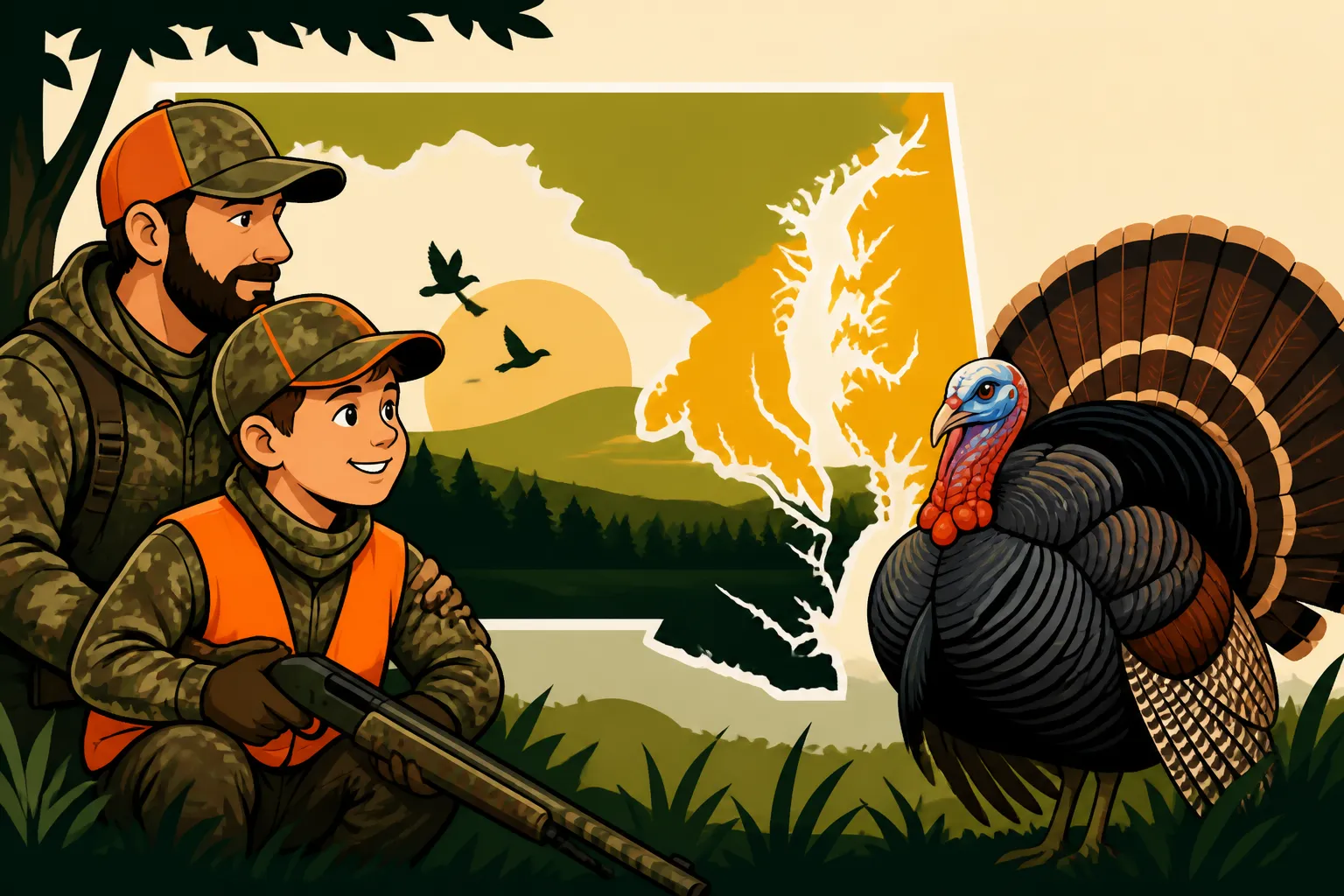
The role of the mentor in a junior hunt cannot be overstated. For hunters under the age of 13, a licensed adult (21 years or older) must accompany them, remaining within "arm's reach." This direct, immediate supervision ensures safety and allows for real-time guidance. For hunters aged 13 to 16, if they possess a valid hunting license, they can technically hunt unsupervised, but for a Junior Turkey Hunt, the spirit of the event strongly encourages active mentorship. Most parents and guardians will be right there, guiding the young hunter every step of the way, which is exactly how it should be. The mentor is responsible for ensuring the junior hunter understands and adheres to all regulations, including safe firearm handling. It’s important to note that if the young hunter is participating under an Apprentice Hunting License, the mentor cannot possess a weapon or hunt themselves. However, if the junior hunter has a full license, the mentor can also carry a weapon (and be licensed themselves), though the focus for the Junior Hunt should always remain on the youth's experience. Diving deeper into Maryland Apprentice and Mentored Hunting can provide additional context.
Preparing for a Successful Junior Turkey Hunt
A successful junior turkey hunt isn't just about bagging a bird; it's about the entire experience – from the excitement of preparation to the lessons learned in the field. Thoughtful planning can make all the difference, creating a positive and memorable adventure for your young hunter.
Pre-Season Scouting and Familiarization
This is where the real fun, and real learning, begins well before opening day. Get out in the woods with your junior hunter in the weeks leading up to the season. Use tools like GoHunt or other mapping apps to identify potential roosting areas, feeding locations, and travel corridors. Look for fresh turkey sign: tracks, droppings, and scratch marks. Listen for gobblers at dawn from different vantage points. Teach your child how to read the landscape, identifying areas where turkeys might strut or feed. For example, if you're hunting farmland, showing them where turkeys might cross a field or use a fenceline can be invaluable. This pre-season scouting builds anticipation and teaches crucial woodsmanship skills. It also familiarizes your child with the terrain, making them more comfortable and confident when the actual hunt begins. This is also a perfect time to scout for potential setup spots, perhaps even visualizing where you'd put a decoy by checking Decoy Placement for Pressured Maryland Gobblers.
Essential Gear for the Field
Outfitting a junior hunter properly is key to their comfort and success. Start with appropriate clothing: layers are always best, as spring mornings can be chilly but afternoons can warm up. Camouflage that matches the local foliage (such as Realtree or Mossy Oak patterns) is important. Good, waterproof boots are a must, especially in the damp spring woods. Beyond clothing, consider a comfortable seat or cushion for long waits, a small backpack with snacks and water, and insect repellent. For calling, start simple. A basic slate call or box call is often easier for young hands to master than a diaphragm call. Bring a pair of binoculars for spotting distant birds or identifying them clearly before making a move. Most importantly, ensure the young hunter's shotgun fits them properly. A shotgun that's too long or too heavy will be uncomfortable and negatively impact their shooting. Many youth models are available with shorter stocks and lighter frames. If you are going to be still-hunting, make sure you know what to pack for a Maryland Mountain Hunt.
Ethical Considerations and Sportsmanship
Hunting is more than just pulling a trigger; it's about respecting the animal, the land, and the tradition. Use the junior hunt as an opportunity to instill a strong sense of ethics and sportsmanship in your child. Teach them about fair chase: never shoot a bird on the roost, always ensure a clean shot, and never take a shot beyond their effective range. Emphasize patience and perseverance, explaining that not every hunt ends with a harvest, but every hunt offers valuable lessons. Discuss the importance of quiet movement, understanding turkey vocalizations, and the thrill of the chase, even if the bird wins that day. After a successful harvest, teach them how to properly Field Dressing a Deer in Warm September Weather (the principles are similar for turkeys), how to register the bird legally, and how to appreciate the meat it provides. This holistic approach ensures that the junior hunter develops into a responsible and respectful conservationist, carrying forward the proud legacy of Maryland hunting.
Disclaimer
Please remember that hunting regulations, dates, and requirements can change. Always consult the most current Maryland Department of Natural Resources (DNR) official hunting guide and regulations prior to any hunting activity. This guide is for informational purposes only and should not be considered a substitute for official legal documentation.