Vehicle Rules on Maryland Public Land
There's nothing quite like the feeling of waking up before dawn, your truck packed with gear, and the promise of a crisp Maryland morning hunt ahead. But that excitement can quickly turn to frustration if you pull up to a public land gate only to find it locked, or worse, if you unknowingly drive somewhere you shouldn't and face a citation. Navigating the specific vehicle rules on Maryland's public hunting lands can feel like deciphering a secret code, especially when regulations vary from one property to the next. This guide is here to unravel those complexities, helping you understand where you can drive, where you should park, and how to avoid common pitfalls that can ruin a hunt before it even begins.
Understanding the Basics of Vehicle Access
When you're headed out to chase deer, turkey, or small game on Maryland's public lands, it’s easy to get caught up in thoughts of stand placement or calling sequences. However, one of the most critical aspects of a successful and legal hunt often gets overlooked until it's too late: where you can actually take your vehicle. Maryland's public lands are diverse, ranging from vast state forests in the west to scattered wildlife management areas on the Eastern Shore, and each often comes with its own set of rules regarding vehicle access.
Why Rules Exist: Safety and Conservation
It's natural to sometimes feel like regulations are just there to make things difficult, especially when you're loaded down with gear and just want to get to your hunting spot. But the rules around vehicle access on public land are in place for really good reasons, primarily focused on safety and the long-term health of our natural resources. Imagine if everyone could drive their truck or ATV wherever they pleased, tearing up delicate marsh ecosystems or creating new, unplanned trails through sensitive timber stands. It wouldn't take long for these precious hunting grounds to become degraded, not only impacting wildlife habitat but also making them less enjoyable and even dangerous for future hunters and outdoor enthusiasts.
These regulations prevent erosion, protect water quality, and minimize disturbance to wildlife, especially during sensitive breeding or nesting periods. They also ensure a fair and safe experience for everyone. A designated parking area keeps vehicles off narrow access roads, preventing traffic jams or blockages that could hinder emergency services or other users. It's about balancing access for hunters with the ecological imperative to preserve these wild spaces. So, while it might feel like an inconvenience at times, remember that these rules are ultimately safeguarding the very places we love to hunt for generations to come.
Types of Public Land and Varying Regulations
Maryland boasts a fantastic array of public hunting opportunities, but the term "public land" is a broad umbrella, covering several different management entities, each with its own set of rules. You've got your State Forests, which are usually large tracts of timberland in places like Western Maryland, and they often have a more extensive network of forest roads. Then there are Wildlife Management Areas (WMAs), managed specifically for wildlife habitat and public recreation, often with smaller, more defined access points and stricter vehicle limitations. State Parks, while sometimes offering hunting, usually have the most restrictive vehicle policies, often limiting access to paved roads and designated parking lots only. Maryland's State Forests Open to Hunters and Maryland's Wildlife Management Areas are prime examples of the diversity you'll encounter.
Furthermore, you might come across federal lands, like parts of national wildlife refuges or lands managed by the Army Corps of Engineers, which operate under their own federal guidelines, often layered on top of state rules. It's crucial not to assume that what's allowed in one type of public land will be okay in another. For instance, a gravel forest road you can drive on in Green Ridge State Forest might be strictly off-limits to vehicles in a marshy WMA like Fishing Bay. This patchwork of regulations is why doing your homework before you head out is so incredibly important; a little research can save you a lot of grief.
Common Vehicle Restrictions You'll Encounter
When you're out exploring Maryland's public hunting grounds, it's wise to expect certain vehicle restrictions. These aren't just arbitrary rules; they're designed to manage traffic, prevent habitat damage, and ensure a more primitive experience for hunters who choose to walk deeper into the woods. Ignoring these common signs and barriers is one of the quickest ways to find yourself on the wrong side of a conversation with a conservation officer.
Gates, Barriers, and Posted Signs
One of the most obvious indicators that vehicle access is restricted is a gate or physical barrier across a road or trail. These aren't there for decoration. If a gate is closed, even if it looks like a perfectly good dirt road beyond it, assume you are not allowed to drive past it. This applies whether it's locked or simply shut. Many times, these gates are installed to protect interior forest roads from damage during wet conditions, to create walk-in-only areas for quality hunting, or to block access to sensitive ecological zones. You'll often see these in places like Savage River State Forest or within certain blocks of the Chesapeake Forest Lands. Hunting Maryland's Savage River State Forest offers a good example of areas where you'll definitely encounter these types of access controls.
Beyond gates, look for "No Motorized Vehicles Beyond This Point" signs, "Road Closed" signs, or even simple "Foot Traffic Only" markers. Sometimes, the restriction might not even be a physical barrier, but just a clearly marked sign indicating that the road ahead is for administrative use only or specifically for non-motorized travel. Disregarding these signs isn't just a minor infraction; it can lead to hefty fines, vehicle impoundment, and even loss of hunting privileges. Always err on the side of caution. If there's any doubt, park your vehicle legally and continue on foot.
Designated Parking Areas and Road Closures
Most public hunting lands in Maryland will have designated parking areas. These might be small gravel pull-offs, larger paved lots, or even just marked areas along the shoulder of a service road. The key is that these are the only places you are permitted to leave your vehicle. Parking outside of these designated spots, especially blocking a gate, a service road, or even partially obstructing a trail, is a definite no-no. It creates hazards for other users, blocks access for maintenance vehicles or emergency services, and can quickly land you a ticket. I've heard too many stories of hunters coming back to a notice on their windshield because they thought they could just squeeze their truck in "for a little while" somewhere off the beaten path.
Furthermore, many public land roads, particularly unpaved ones, are subject to seasonal closures. These closures are often implemented during the wetter months (late fall, winter, and early spring) to prevent damage to the roadbed from vehicle traffic, which can lead to severe erosion and costly repairs. A road that was open during archery season in September might be completely closed by the time late muzzleloader season rolls around in January. Always check the Maryland Department of Natural Resources (DNR) website or the specific WMA/State Forest regulations for current road closure information. There's nothing worse than driving miles down a forest road, only to be met with a "Road Closed Ahead" sign, forcing you to turn around and find an alternative access point.
ATV, UTV, and Off-Road Vehicle Limitations
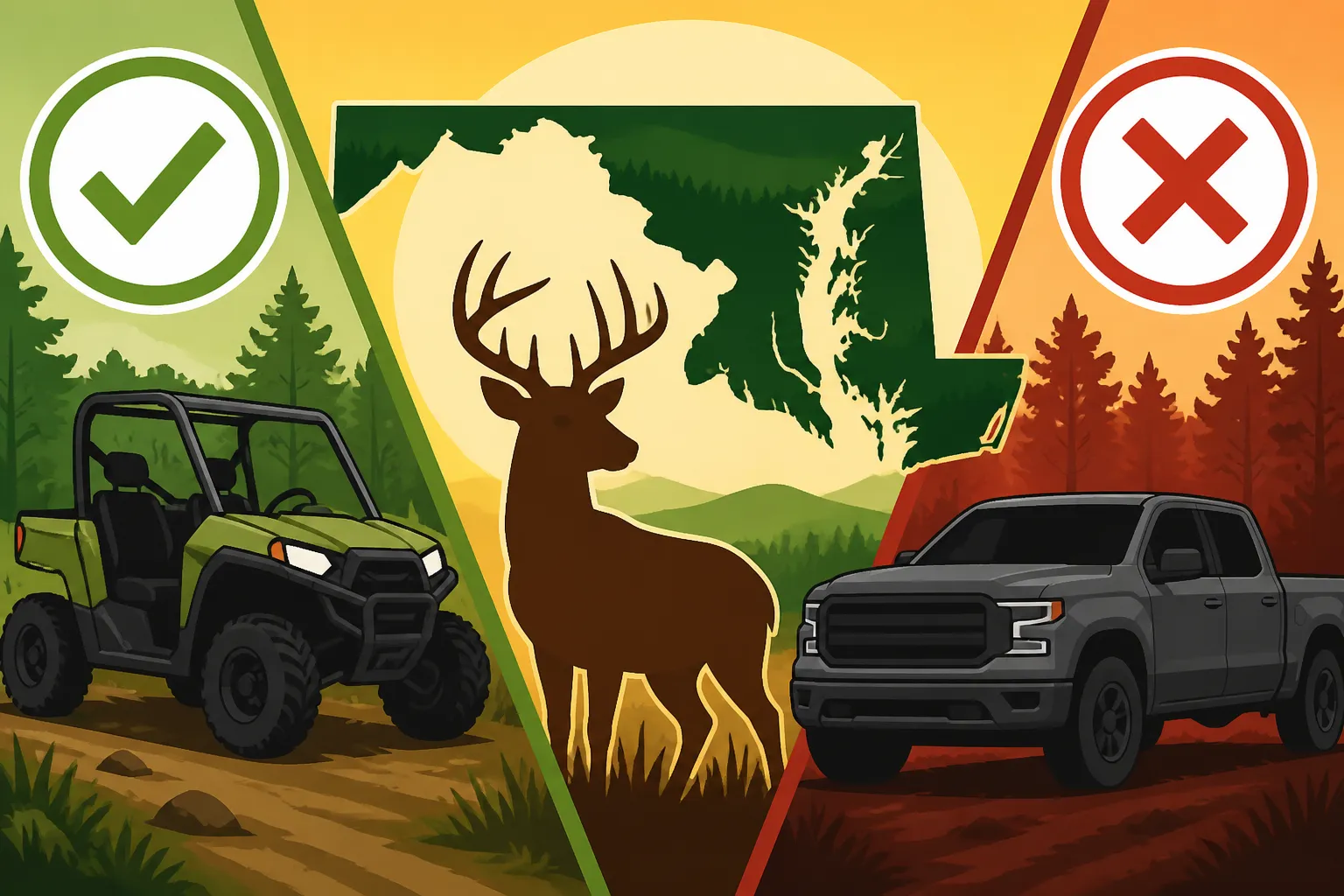
This is a big one, and it's where many hunters, especially those new to public land, can get into trouble. While ATVs, UTVs, and other off-road vehicles (ORVs) are incredibly useful for hauling gear and getting around private land, their use on Maryland public hunting land is extremely limited. In most cases, they are outright prohibited. The general rule of thumb is that if you can't drive your street-legal pickup truck or SUV on a particular road or trail, you certainly cannot drive an ATV or UTV on it either.
There are very few exceptions, and these are usually specific, designated trails or areas explicitly marked for ORV use, which are often not found within typical hunting zones. Some areas might allow ATVs for specific purposes, like retrieving a downed deer, but only with prior authorization or a special permit from the managing agency, and usually only on designated routes. For instance, you absolutely cannot just take your side-by-side off-trail to get to a remote treestand. This causes significant habitat damage, creates unauthorized trails, and disturbs other hunters. Always assume ATVs and UTVs are not permitted unless you see very clear, official signage specifically stating otherwise for that particular area, and even then, double-check the regulations. Violations here can result in hefty fines, vehicle seizure, and permanent loss of hunting privileges.
Navigating Specific Public Land Categories
As we touched on earlier, "public land" isn't a monolith. The rules you encounter can change dramatically depending on whether you're in a sprawling state forest or a smaller, more intensely managed wildlife management area. Knowing these distinctions can save you a lot of headaches and ensure your hunt goes smoothly.
State Forests and Wildlife Management Areas (WMAs)
Maryland's State Forests, like Green Ridge and Savage River, tend to be vast tracts of timber, often crisscrossed with a network of forest roads. Vehicle access here is generally more generous than in some other public areas, but it's still far from a free-for-all. Many main forest roads are gravel and open to street-legal vehicles, allowing you to get deeper into the property. However, off these main arteries, you'll frequently find secondary roads, old logging trails, and gated spurs that are strictly closed to vehicles. Hunting Maryland's Western Mountain Forests goes into more detail about these areas. It’s common for hunters to drive in on open roads, park in a designated pull-off, and then hike in for miles on foot or use a mountain bike on the closed, gated roads.
Wildlife Management Areas, on the other hand, are often smaller, more fragmented, and specifically managed for wildlife habitat. As such, vehicle access is usually much more restricted. You'll typically find designated parking lots at the entrance, and beyond that, most interior roads and trails are walk-in only. Take for example, Deal Island WMA or Fishing Bay WMA on the Eastern Shore, crucial areas for Sika Deer Hunting in Maryland's Tidal Marshes. Here, vehicle access is almost exclusively limited to main access points and boat ramps, with the vast majority of the marsh accessible only by foot or boat. Always look for WMA-specific maps and signs, which often highlight parking areas and restricted zones. Don't assume that a two-track path you see heading into the woods on a WMA is fair game for your truck.
State Parks and National Wildlife Refuges
Hunting opportunities exist in some Maryland State Parks, but these are often highly managed, limited hunts with very specific rules. When hunting in a State Park, vehicle access will almost always be confined to paved roads and established parking lots, just as if you were visiting the park for any other recreational activity. Off-road driving, or even driving on unpaved service roads not explicitly open to the public, is generally prohibited. The emphasis in State Parks is often on multi-use recreation, so keeping vehicles to designated areas helps minimize conflict with hikers, birdwatchers, and other visitors.
Similarly, National Wildlife Refuges (NWRs), such as Blackwater National Wildlife Refuge, may offer limited hunting opportunities, usually through a permit lottery system. These federal lands operate under strict guidelines, and vehicle access is typically highly controlled. You might be allowed to drive to a specific designated parking area, but almost certainly not beyond that. Off-road vehicles are almost universally banned on NWRs, and even driving on some refuge service roads may require special authorization. If you're lucky enough to draw a permit for a hunt on an NWR, read all the specific regulations that come with your permit very carefully, as they will outline exact access points, parking rules, and any limitations on vehicle use. It's not the place to guess or assume.
Special Permit Areas and Managed Hunts
Beyond the general categories, Maryland has various special permit areas and managed hunts, particularly for deer, often on properties not typically open to the public or with unique access requirements. These could include managed hunts on certain county lands, municipal watersheds, or even suburban deer management programs. In these scenarios, vehicle rules are usually hyper-specific and non-negotiable.
For example, a managed hunt on a municipal reservoir property might only allow vehicles in a single designated staging area, with all hunting access requiring foot travel. Similarly, some Hunting Maryland's Suburban Deer Management Hunts might have strict ingress and egress routes, parking instructions, and even vehicle idling rules to minimize disturbance to nearby residents. If you secure a permit for one of these special hunts, expect a detailed set of rules regarding vehicle access to be part of your permit package. Do not deviate from these instructions, as the permissions granted are often contingent on strict adherence to these specific conditions. These hunts can offer fantastic opportunities, but they demand careful attention to every detail, including where you can and cannot take your vehicle.
Tools and Tips for Staying Compliant
Even with all the varied rules, staying on the right side of Maryland's public land vehicle regulations isn't as daunting as it might seem. It really comes down to doing your homework and using the right tools. A little preparation goes a long way in ensuring your hunting trip is both successful and penalty-free.
Using Mapping Apps to Identify Access Points
In this day and age, there's really no excuse for not knowing where you stand on public land. Mapping applications like onX Hunt and GoHunt are absolute game-changers for hunters. These apps use GPS technology to show property boundaries, designating public and private land, and crucially, often marking roads, trails, and gates. With onX Hunt, for example, you can toggle layers that show you specific public land boundaries, often color-coded, and see roads that are open versus those that are gated or closed. This visual information is invaluable for planning your access route. You can pinpoint legal parking areas, identify gated roads where you'll have to walk in, and even find smaller pull-offs you might have missed otherwise.
Before you even leave the house, spend some time scouting your intended hunting area on your app. Look for access roads, parking spots, and any barriers. This allows you to mentally plan your approach, understand how far you'll need to walk from your vehicle, and avoid surprises like locked gates that would force a long detour or unexpected hike. Scouting Maryland Public Land With Aerial Photos combined with these mapping layers can give you an incredibly comprehensive view of the landscape, including all the vehicle access points. Even if you don't have cell service in the field, these apps often allow you to download maps for offline use, ensuring you always know your location and the rules of the land you're on.
The Importance of Pre-Scouting and Research
While mapping apps are fantastic, they are best used in conjunction with good old-fashioned research and, if possible, some boots-on-the-ground pre-scouting. Before you head out for a hunt, a quick visit to the Maryland Department of Natural Resources (DNR) website is a must. They often have specific maps and detailed regulations for individual WMAs and State Forests. Many WMAs, for instance, have PDFs of their rules that you can download, which explicitly state vehicle policies, parking restrictions, and areas closed to motorized travel. Where to Get a Maryland Public Land Map can point you in the right direction for official resources.
Even better, if time allows, physically scouting the area before the season opens is a huge advantage. Drive the main access roads, locate parking areas, and identify any gates or barriers. This allows you to confirm what you saw on your mapping app, note any unposted seasonal closures, and get a feel for the terrain from a vehicle perspective. Imagine showing up on opening morning, full of anticipation, only to find the road you planned to take is now seasonally closed. A simple pre-scouting trip could have prevented that disappointment, allowing you to formulate a Plan B and enjoy a much less stressful hunt.
Reporting Violations and What to Do if You See Them
It's unfortunate, but sometimes you might encounter someone disregarding vehicle rules on public land. This could be someone driving an ATV where they shouldn't, parking illegally, or even going around a locked gate. It can be frustrating to see, knowing that these actions harm the resource and potentially jeopardize access for everyone. While it's tempting to confront the individual, it's generally best to avoid direct confrontation, as situations can escalate quickly and dangerously.
The most effective and safest course of action is to report the violation to the Maryland Natural Resources Police (NRP). You can do this by calling their dispatch number (often 410-260-8888 or a specific regional number) or by using the NRP's online reporting tools if available. Try to gather as much detail as possible without putting yourself in harm's way: the vehicle make, model, color, license plate number, a description of the individuals, the exact location of the violation, and the nature of the offense. The NRP relies on tips from vigilant citizens to help enforce regulations and protect our public lands. By reporting violations responsibly, you're doing your part to ensure these precious hunting areas remain healthy and accessible for all law-abiding hunters.
| Public Land Type | Common Vehicle Access | ATV/UTV Use | Key Considerations |
|---|---|---|---|
| State Forests | Main gravel roads often open. Secondary roads, logging trails, and spurs frequently gated/closed. Designated parking. | Generally prohibited off designated roads. Some limited, authorized use for game retrieval with permit. | Check for seasonal road closures, especially in wet conditions. Be prepared to hike or bike gated roads. |
| Wildlife Management Areas | Very limited, often only to main entrance roads and parking lots. Interior roads typically walk-in only. | Almost universally prohibited. May be limited access for game retrieval on designated routes with specific WMA authorization. | Focus on perimeter parking and foot access. Study WMA maps closely for specific access rules. |
| State Parks | Paved roads and established parking lots only. Unpaved service roads usually restricted. | Prohibited. | Hunting access is often through special managed hunts; vehicle rules will be very specific. Minimizing disturbance to other park users is a high priority. |
| National Wildlife Refuges | Highly restricted, usually to specific access points and designated parking for permitted hunts. | Prohibited. | Federal regulations apply. Read permit instructions carefully, as access is often very precise. Expect long walk-ins from vehicle drop-off points. |
| Special Permit Areas | Varies wildly by property. Usually hyper-specific access routes and parking instructions provided with permit. | Varies, but almost always prohibited unless explicitly stated for specific administrative use. | Read ALL permit documentation carefully. Follow directions exactly to avoid fines or losing hunting privileges. No guessing allowed. |
Disclaimer
This article is for general informational purposes only and does not constitute professional advice. Laws, prices and regulations vary by location and change over time. Consult a qualified professional for guidance on your specific situation.