Camping Rules on Maryland State Forest Land
There’s nothing quite like the dream of getting away from it all, setting up camp under a canopy of trees, and truly unwinding in Maryland’s beautiful state forests. But if you’ve ever tried to plan one of these escapes, you quickly realize it's not always as simple as just throwing a tent in the car and heading out. Navigating the myriad of rules, permits, and specific regulations can feel more complicated than a tax form! This guide is designed to cut through that confusion, giving you a clear, detailed understanding of the camping rules on Maryland State Forest land so you can enjoy your wilderness experience without a hitch.
General Camping Regulations & Permits on Maryland State Forests
Maryland’s state forests offer some incredible opportunities for campers, from rustic sites to true backcountry adventures. But unlike just pulling off the side of the road somewhere (which, let's be honest, is definitely not allowed!), there's usually a system in place to ensure everyone has a safe and enjoyable time, and that our precious natural resources are protected. Ignoring these regulations can lead to fines, an early end to your trip, or worse, damage to the environment we all cherish.
Understanding Permit Requirements
For most designated campgrounds within Maryland State Forests, you'll need to secure a permit or make a reservation in advance. This isn't just bureaucratic red tape; it helps the forest managers control capacity, ensure sites are maintained, and even provide services like trash removal or potable water where available. Think of it like booking a hotel room, but with significantly more fresh air and fewer tiny soap bottles. Each state forest might have slightly different procedures, so always check the specific forest you plan to visit. For instance, a popular spot like Green Ridge State Forest will have different booking patterns and availability compared to a more secluded option.
Primitive or backcountry camping often has its own set of permit requirements, too. While you might not be reserving a specific numbered site, the state still wants to know who's in the woods, for how long, and where they generally plan to be. This is crucial for safety, especially if there's an emergency or search and rescue is needed. Sometimes, these permits are free but still mandatory, requiring you to fill out a form online or at a local forest office. Always carry a copy of your permit with you while in the forest; it's your proof that you're where you're supposed to be.
Not all state forests are managed identically, which can be a source of frustration for campers. One forest might allow dispersed camping with just a sign-in, while another requires a specific online reservation months in advance. It pays to do your homework well ahead of time. You can often find this information directly on the Maryland Department of Natural Resources (DNR) website for each specific state forest. Utilizing mapping tools like onX Hunt can also help you identify public land boundaries and even sometimes show designated camping areas, though always cross-reference with official DNR rules.
Fees and Booking Your Spot
Yes, a lot of good things in life come with a cost, and that sometimes includes a prime camping spot. Fees for designated campsites in Maryland State Forests vary depending on the amenities provided, the popularity of the location, and whether you're a Maryland resident or not. These fees go towards maintaining the facilities, staffing, and conservation efforts that keep these beautiful places open for all of us. Don't be surprised if a site with a bathhouse and paved pad costs more than a rustic walk-in tent site.
The booking process typically happens online, often through a central state park and forest reservation system. It’s usually straightforward, allowing you to pick your dates and specific site if applicable. During peak seasons, like summer weekends or during prime hunting weeks in the fall, popular campgrounds can book up months in advance. So, if you have a specific date or location in mind, plan accordingly and try to reserve your spot as early as possible. Many sites operate on a first-come, first-served basis for a limited number of spots, but relying on that is often a gamble, especially for weekend trips.
For backcountry or primitive camping permits that may be free, you still need to "book" them. This often means registering your party and itinerary with the forest office. Even if there's no monetary fee, the act of registering is a critical step in ensuring your safety and the proper management of the forest. This is also where you'll learn about any specific restrictions for your chosen area, such as fire bans or bear advisories. Sometimes these permits can be obtained on the same day, but it’s always best to call ahead to the individual state forest office to confirm their specific procedures and hours of operation.
Seasonality and Operating Hours
Maryland's state forests aren't always a 24/7, 365-day operation for all types of camping. Designated campgrounds often have specific operating seasons, typically from spring through late fall. During the winter months, some campgrounds may close entirely, or offer primitive camping only without services like water or trash pickup. Always check the seasonal opening and closing dates for the specific campground you're targeting. Showing up to a locked gate or no water can definitely put a damper on your plans, no matter how prepared you thought you were.
For those venturing into backcountry or dispersed camping, while the forest itself might be open year-round, access roads or specific areas might be seasonally closed due to weather, logging operations, or wildlife management. For example, roads in Western Maryland's mountain forests might close during heavy snow. Always check for road closures or area restrictions, especially if you're planning a trip during the shoulder seasons or winter. This information is usually posted on the forest's official webpage or can be obtained by calling the local forest office. Don't just assume if the weather is good where you are, it's good in the forest, especially when dealing with elevation changes.
Furthermore, there are often specific quiet hours for designated campgrounds, usually from late evening until early morning. These hours are in place to ensure everyone can enjoy the peace and quiet of nature, and not have their experience ruined by loud music or boisterous conversations from the next site over. Respecting these hours is a fundamental part of good camping etiquette. While backcountry camping generally offers more solitude, it's still good practice to be mindful of any other campers who might be sharing the wilderness with you.
Types of Camping Allowed in Maryland State Forests
Understanding the different styles of camping permitted is key to planning your perfect outing. Maryland’s state forests offer a spectrum of experiences, from comfortable, amenity-rich sites to truly wild and rugged adventures. Choosing the right type for your group and skill level makes all the difference.
Designated Campgrounds and Amenities
Many state forests feature established campgrounds, which are often the most popular choice for families or those seeking a bit more comfort. These sites usually come with defined parking spots, a picnic table, and a fire ring. Think of these as your "glamping lite" options. You might find amenities like flush toilets, showers, potable water, and even electric hookups at some of the more developed campgrounds. These are fantastic for folks who want to enjoy nature without completely roughing it, or for those new to camping who appreciate the convenience of modern facilities.
The beauty of designated campgrounds is the balance they strike between nature and convenience. You're deep enough in the woods to feel disconnected, but close enough to essentials if needed. These campgrounds are often near trailheads, fishing spots, or other recreational opportunities within the forest. For example, Hunting a Green Ridge Permit Zone might be a great option for a hunter looking for a comfortable basecamp while exploring the vastness of the state forest. They're also generally safer due to the presence of other campers and park rangers making rounds, which can be reassuring for solo campers or those with small children.
However, designated campgrounds also mean less solitude. You’ll have neighbors, and while most are respectful, some noise is inevitable. You're also confined to your specific site, so there's less freedom to roam directly from your tent. Always remember that even in developed campgrounds, wildlife is present. Properly storing food is crucial to prevent attracting curious critters, whether it’s a raccoon at Assateague or a bear in Garrett County. Leave your site cleaner than you found it, and follow all posted rules to ensure these amenities remain available for everyone.
Backcountry and Primitive Camping
For the adventurers among us, backcountry and primitive camping offer a more immersive wilderness experience. This generally means carrying everything you need on your back, hiking into a remote area, and setting up camp away from roads and developed facilities. You'll often find no picnic tables, no fire rings (unless you build one responsibly and legally), and certainly no flush toilets. This is about self-reliance and truly connecting with the raw beauty of the forest. Still-Hunting Western Maryland Mountain Timber often pairs perfectly with a primitive camping experience, allowing hunters to wake up deep in the woods.
Regulations for primitive camping can vary widely. In some Maryland State Forests, you might be allowed to camp almost anywhere as long as you're a certain distance from roads, trails, and water sources, and have the appropriate permit. In others, "primitive" might still mean designated, but very rustic, sites. Always verify the specific rules for the forest you plan to visit. For instance, some areas might have strict rules about where you can pitch a tent to protect sensitive ecosystems or water sources.
This style of camping requires careful planning and a good understanding of Leave No Trace principles, which we’ll dive into shortly. You're responsible for your own water purification, waste disposal, and fire safety. The rewards, however, are immense: unparalleled solitude, stunning views, and a profound sense of accomplishment. It’s where you truly experience the wild side of Maryland, where you might only see a deer or a turkey and hear the rustle of leaves as your only companions.
Dispersed Camping: Where and When It's Permitted
Dispersed camping is a specific type of primitive camping that means camping outside of a designated campground, often with no amenities whatsoever. It’s about finding your own spot within a vast forest. Not all Maryland State Forests permit true dispersed camping, and those that do usually have strict guidelines on where you can do it. Typically, you need to be a specified distance from roads, trails, and water bodies (like 100 or 200 feet), and often, there's a limit to how long you can stay in one spot.
The key to understanding dispersed camping in Maryland is to recognize that it's often more restricted than in vast western states. While you might dream of just pulling off a forest road and setting up, most state forests have rules about vehicle access and where you can actually pitch a tent. Always check with the individual forest office or their website. Some state forests might offer specific "primitive camping areas" that function similarly to dispersed camping but within a defined zone. Using a robust mapping app like GoHunt or onX Hunt can be incredibly helpful here, allowing you to visualize property boundaries and topographical features to find suitable, legal spots.
When dispersed camping, minimizing your impact is paramount. This means packing out everything you pack in, including all trash and food scraps. Human waste needs to be properly buried well away from water sources, and fires must be managed with extreme care, if allowed at all. The reward is a truly unique, private experience. Imagine waking up to a Maryland sunrise with no one else in sight, just the sounds of the forest around you. It’s a profound experience, but one that demands a high level of responsibility and respect for the land.
Specific Rules and Best Practices for a Good Experience
Beyond permits and where to pitch your tent, there are a host of important rules and best practices that make camping in Maryland State Forests safe, enjoyable, and sustainable for everyone. Adhering to these principles is crucial for preserving the natural beauty and ecological health of these cherished areas.
Leave No Trace Principles
The Leave No Trace philosophy is not just a suggestion; it's a critical framework for minimizing human impact on the outdoors. These seven principles should be your guiding stars whenever you're camping, especially in primitive or dispersed settings. They include planning and preparing in advance, traveling and camping on durable surfaces, disposing of waste properly, leaving what you find, minimizing campfire impacts, respecting wildlife, and being considerate of other visitors. For instance, when backcountry camping in Hunting Savage River's High Country, following these principles is vital to protect its rugged beauty.
One of the most common issues is improper waste disposal. This goes beyond just packing out your trash. If there are no restrooms, human waste needs to be buried in a "cathole" 6-8 inches deep and at least 200 feet from water sources, trails, and campsites. All toilet paper, wipes, and hygiene products must be packed out – yes, even that. For food, pack out all scraps, peels, and cores. "Biodegradable" doesn't mean "disappear immediately," and animals can still get habituated to human food, leading to negative encounters.
Leaving what you find is another critical principle often overlooked. Resist the urge to collect "souvenirs" like rocks, plants, or antlers. These are all part of the natural ecosystem and belong in the forest. Building structures, digging trenches around your tent, or carving initials into trees are all examples of leaving a trace that degrades the natural environment for future visitors. We want everyone to experience the wonder of these places, just as we did, so let's keep them pristine.
Campfire Regulations and Safety
Ah, the campfire – the quintessential camping experience! There’s nothing quite like gathering around a crackling fire under the stars. However, campfires are also one of the biggest risks to our forests. Always, and I mean always, check the current fire regulations for the specific state forest you're visiting. Fire danger can change rapidly due to drought conditions, and what was allowed yesterday might be prohibited today. A simple call to the forest office or checking their website can prevent a disaster.
If fires are permitted, they must be contained within existing fire rings if you're in a designated campground. In primitive or dispersed settings, you might be allowed to build a small, contained fire, but it's often preferred to use a stove for cooking. If you do build a fire, ensure it's in a safe spot, away from overhanging branches, dry grass, or other flammable materials. Keep your fire small, only use dead and downed wood that you can break by hand (never cut live trees!), and never leave it unattended.
Extinguishing your campfire completely is non-negotiable. It's not enough for it to just look like it's out. Drown it with water, stir the ashes, and then drown it again. Feel the coals with your bare hand (carefully!) to ensure they are cool to the touch. If it's still warm, it's not out. Many devastating wildfires have started from seemingly extinguished campfires. Take no chances. Your vigilance can literally save thousands of acres of forest.
Waste Management and Food Storage
Proper waste management extends beyond human waste and campfire ashes. All trash, without exception, must be packed out. This includes food wrappers, empty bottles, broken gear, and anything else you brought in. Carry a designated trash bag, and make sure it's secure so nothing escapes on the trail or at your campsite. Don't rely on overflowing trash cans at trailheads; assume you'll pack out everything until you're safely off forest land.
Food storage, especially in areas with bears, is absolutely critical. While Maryland's bear population is concentrated in the western counties (like those covered by Black Bear Hunting in Western Maryland), any state forest can have opportunistic animals like raccoons, opossums, or even curious deer that will gladly raid your cooler or backpack. Never leave food, scented items (like toothpaste or deodorant), or even cooking utensils exposed at your campsite. Store them in bear-resistant containers, hung from a bear bag system (at least 10-12 feet off the ground and 4 feet from the tree trunk), or locked inside your vehicle.
Failure to properly store food not only risks losing your provisions but can also lead to habituating wildlife to human food sources. This often results in animals becoming aggressive or bold around campers, which can lead to them being euthanized for public safety. We owe it to these animals, and to future campers, to keep our food secure and our campsites clean.
Respecting Wildlife and Other Users
Remember, when you're camping in a state forest, you're a guest in someone else's home – the wildlife's home. Observe animals from a distance, never approach them, and absolutely never feed them. Feeding wild animals, even seemingly harmless squirrels, disrupts their natural foraging behaviors and can make them dependent on humans, leading to unhealthy interactions. If you're lucky enough to encounter some of Maryland's diverse fauna, appreciate it from afar.
| Wildlife Encounter Best Practices | Do This | Don't Do This |
|---|---|---|
| Observation | Use binoculars, stay quiet. | Approach or chase animals for a better photo. |
| Feeding | Store all food securely. | Offer food scraps, leave food unattended. |
| Pets | Keep dogs on a leash, pack out waste. | Let pets run unleashed, allow them to harass wildlife. |
| Safety | Make noise while hiking, carry bear spray (if applicable). | Startle animals, block their escape routes. |
| Waste | Pack out all trash, bury human waste properly. | Leave food waste or toilet paper behind. |
Being considerate of other users is equally important. State forests are multi-use areas, meaning you might encounter hikers, mountain bikers, horseback riders, birdwatchers, or Bowhunting Maryland's Long Archery Season during your trip. Keep noise levels down, especially during designated quiet hours. Share trails respectfully, yielding to others as appropriate (often hikers yield to horses, bikers yield to hikers and horses). Your peaceful enjoyment of nature shouldn't come at the expense of someone else's.
Planning Your Trip: Resources and Tools
The best camping experiences are almost always the result of thorough planning. When you know the rules, understand the terrain, and have the right gear, you're set for success. Maryland offers some great resources to help you prepare.
Finding Information on State Forest Websites
Your first and best stop for accurate, up-to-date information will always be the official Maryland Department of Natural Resources (DNR) website. Each state forest usually has its own dedicated page or section, detailing everything from camping regulations, permit requirements, and seasonal closures to recreational opportunities and contact information for the local forest office. This is where you’ll find the definitive answers to your questions, bypassing conflicting information you might find elsewhere.
Don't just skim these pages; read them thoroughly. Look for specific sections on camping, fire restrictions, and any unique rules for that particular forest. For instance, some state forests might have specific rules about Treestand Rules on Maryland Public Land or Trail Camera Rules on Maryland Public Land that, while primarily for hunters, also apply to general visitors if you are considering bringing such equipment. It’s also wise to look for maps (printable or interactive) that show campground locations, trails, and boundaries. If anything is unclear, don't hesitate to call the forest office directly. Their staff are usually very knowledgeable and happy to help you plan a safe and legal trip.
Many state forest websites also provide alerts or notices about current conditions, such as recent bear sightings, trail closures due to storm damage, or changes in water availability at campgrounds. Subscribing to email newsletters or following their social media channels (if available) can also keep you informed of real-time updates that might impact your trip. Being proactive in gathering information ensures you arrive prepared for whatever conditions you might encounter.
Using Mapping Apps for Campsite Scouting
In today's digital age, mapping applications have become indispensable tools for outdoor enthusiasts. While paper maps are still a wise backup, apps like onX Hunt or GoHunt provide a wealth of information at your fingertips, making campsite scouting and navigation much easier. These apps can show you public land boundaries, which is crucial for distinguishing state forest land from private property (and avoiding potential trespassing issues, especially if you're Finding Maryland Property Lines Before You Hunt).
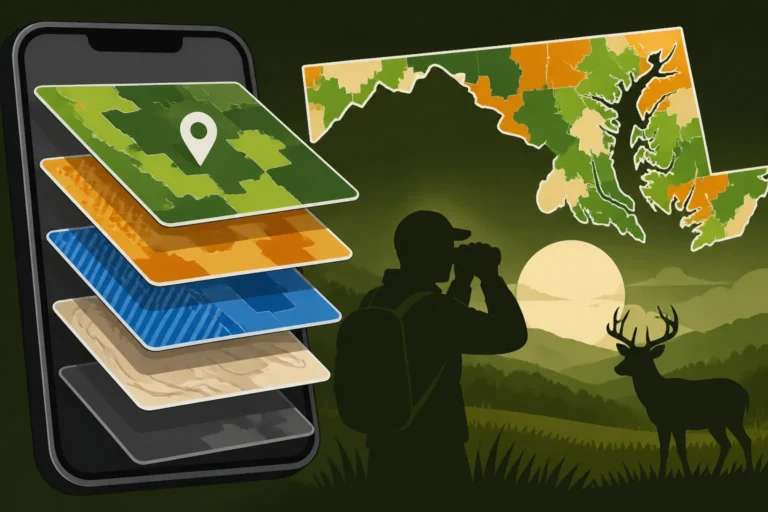
Beyond boundaries, these apps often overlay topographical maps, satellite imagery, and even layers showing trails, water sources, and designated camping areas. This allows you to virtually "scout" potential primitive or dispersed camping locations before you ever leave home. You can look for flat spots, areas near streams (but far enough away to protect water quality), and even potential points of interest for exploring. Imagine being able to see a hidden bench on a hillside that would make a perfect secluded campsite!
Remember that even with advanced apps, cell service can be spotty or nonexistent in remote areas of state forests. Always download offline maps for the regions you plan to visit before you lose service. This way, you'll still have access to critical navigation information even without a signal. Relying solely on a smartphone without a backup plan can lead to dangerous situations if your battery dies or you lose reception.
Essential Gear for Maryland Forest Camping
Having the right gear is fundamental to a successful and comfortable camping trip in Maryland's diverse environments. Your gear list will vary depending on the type of camping you're doing (designated campground vs. backcountry) and the season, but some essentials remain constant. A reliable tent, appropriate sleeping bag and pad for the expected temperatures, and a cooking system (stove and fuel) are non-negotiable.
Don't forget navigation tools like a compass and map (and knowing how to use them, even with a GPS app backup), a first-aid kit, plenty of water or a water filter/purifier, and illumination like a headlamp or flashlight. Layered clothing is key, as Maryland weather can be unpredictable, especially in the mountains or near the water. Even in summer, evenings can get cool, and rain is always a possibility. Consider quick-drying fabrics and waterproof outerwear.
For primitive or backcountry camping, lightweight gear is paramount. Every ounce counts when you're carrying it on your back. This is where investing in quality, multi-functional gear pays off. If you're going to be in bear country, a bear canister or bear bag system is a must. And always, always pack out everything you pack in – so bring an extra trash bag for all your waste. Being prepared means you can focus on enjoying the beauty of Maryland’s state forests, rather than struggling with inadequate equipment.
Disclaimer
This article is for general informational purposes only and does not constitute professional advice. Laws, prices and regulations vary by location and change over time. Consult a qualified professional for guidance on your specific situation.