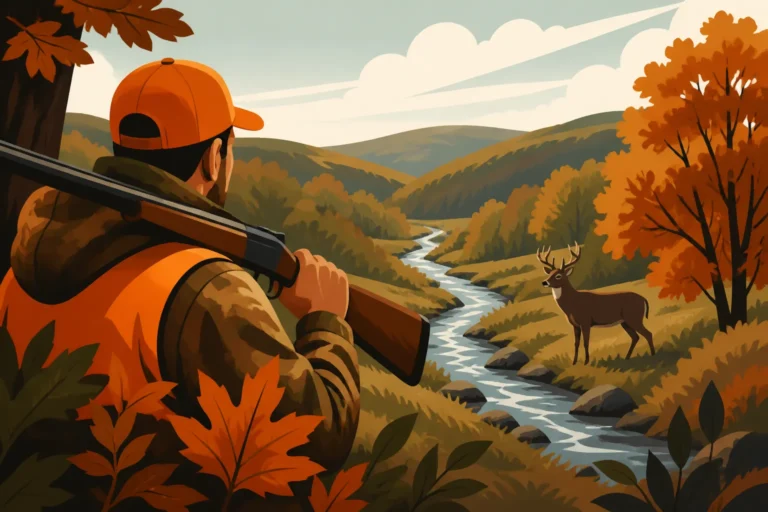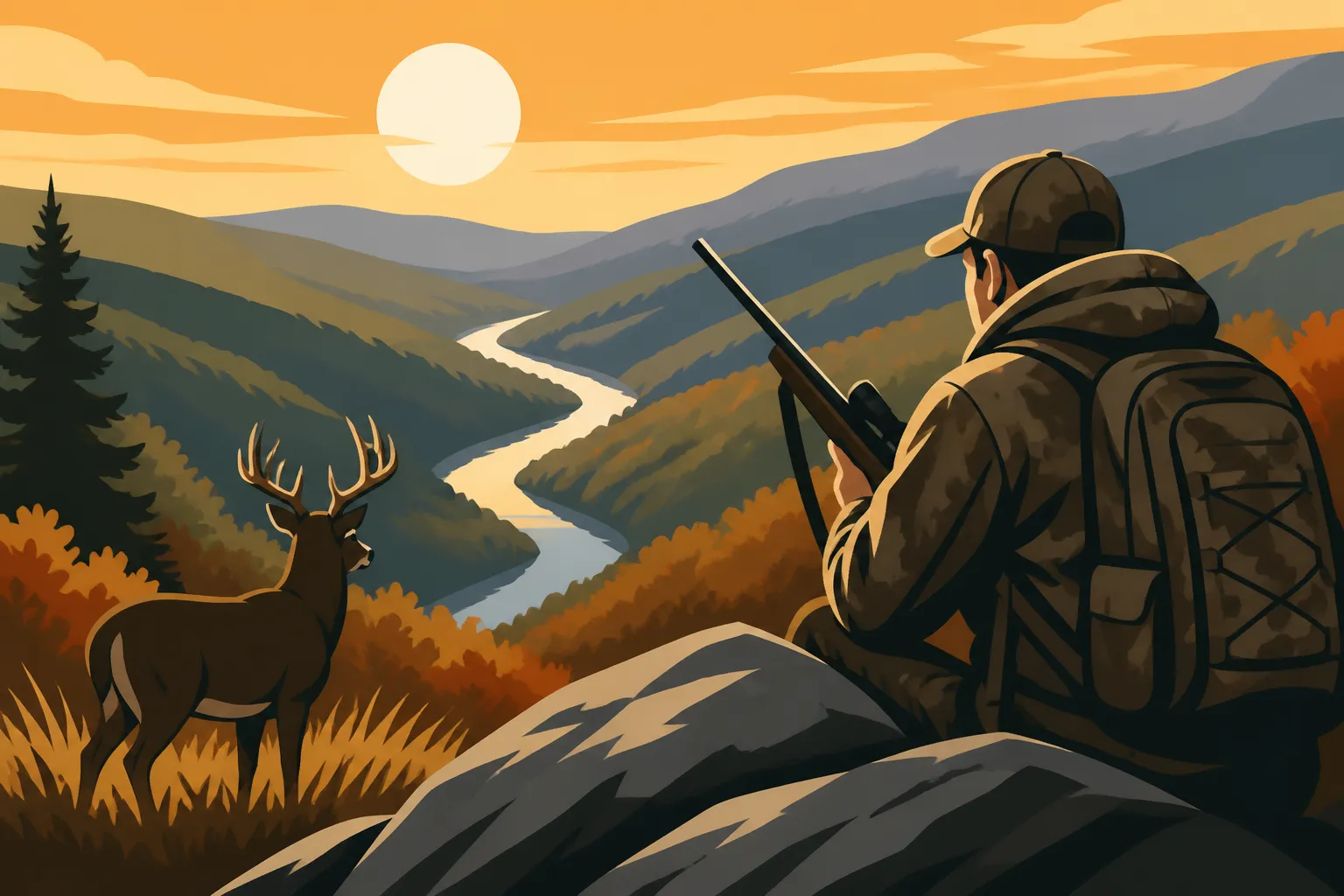
Hunting Savage River’s High Country
Hunting Savage River's high country in Maryland presents a unique set of challenges and rewards. It's not your typical flatland farm hunt, and if you go in unprepared, you'll quickly find yourself exhausted, disoriented, and frustrated. This guide is designed to help you navigate the rugged terrain, understand the game, and prepare for a successful and safe hunt in one of Maryland's wildest and most beautiful areas.
Understanding Savage River State Forest's Unique Terrain
Savage River State Forest, nestled in the western reaches of Maryland, is a world away from the gentler landscapes of the Eastern Shore. It's a place of towering ridges, deep hollows, and dense, unbroken timber that truly tests a hunter's mettle. Many folks underestimate just how wild and expansive this area is, often comparing it to hunting in parts of West Virginia or Pennsylvania, and for good reason. The sheer scale can be daunting, but it's also what makes it so special.
The Appalachian Landscape and Its Challenges
Imagine steep climbs and descents that make your quads burn, even before you've seen a single track. This is the reality of the Appalachian foothills that define Savage River's high country. The elevation changes aren't just physically demanding; they also create complex wind patterns and thermals that constantly swirl and shift, especially in the early morning and late evening. What feels like a steady breeze at the bottom of a hollow might be a completely different direction on a ridge top just a few hundred yards away. This makes scent control and stand placement a real chess match against nature. The timber is often thick, a mix of mature hardwoods like oak and hickory, interspersed with dense mountain laurel thickets and stands of conifers. This cover, while fantastic for wildlife, can make visibility challenging, limiting your effective shooting range and making still-hunting a test of patience and stealth. It's not uncommon to walk for miles and see very little, only to have a buck ghost through a small opening you barely noticed.
Key Species and Their Habitat Preferences
Savage River's high country is primarily known for its white-tailed deer and, for those lucky enough to draw a tag, its healthy population of black bears. Wild turkeys also thrive in these big woods. Deer here often live a different life than their agricultural-fed cousins on the Eastern Shore. They are leaner, wilier, and much more attuned to avoiding human contact. They utilize the steep slopes for bedding, often finding thermal pockets on south-facing ridges during colder months, or seeking cool, dense cover in laurel thickets during warmer archery seasons. Finding those primary food sources like acorns in oak flats or the occasional forgotten apple tree can be the key to locating deer. Reading Sign in Maryland Mountain Timber becomes critical here; you'll be looking for subtle rub lines, faint trails, and fresh droppings in areas that don't see heavy human traffic. Black bears are also drawn to the abundant mast crops, especially acorns, and they’ll often be found in the densest, most remote parts of the forest, particularly near natural springs or berry patches. Turkeys, too, favor the mixed hardwoods, roosting in tall trees along ridge lines and scratching for insects and nuts on the forest floor, especially in mature oak stands.
Navigating the Remote Nature of the High Country
One of the biggest differences between Savage River and many other Maryland hunting areas is its sheer remoteness. Cell service is spotty at best, and in many of the deeper hollows or higher elevations, it's non-existent. This isn't just an inconvenience; it's a safety concern. You can't rely on your phone for navigation or emergencies. Getting turned around in these woods, especially on an overcast day when the sun is hidden, is surprisingly easy. The vastness means that if you get hurt, help could be hours away. This necessitates a heightened sense of preparedness, including carrying reliable navigation tools, emergency supplies, and a robust communication plan, even if that means investing in a satellite messenger device. It’s about being truly self-reliant, understanding that once you leave the main forest roads, you are largely on your own. Many hunters embrace this solitude, finding it to be the ultimate test of their woodsman skills.
Essential Scouting and Planning for Success
Hunting the high country of Savage River isn't something you just show up for on opening day. It demands meticulous planning and dedicated scouting, often long before the season even begins. The sheer scale and ruggedness of the terrain mean that a little pre-work goes a very long way in improving your odds and ensuring your safety.
Pre-Season Digital Reconnaissance
Before you ever put boots on the ground, your best friend will be a robust mapping application like onX Hunt. This isn't just for showing property lines, though that's vital for public land like Savage River. Use onX Hunt to pour over topography maps, identifying key features from the comfort of your home. Look for the steepest slopes that might funnel deer movement, saddles between ridges where animals cross, natural pinch points, and benches on hillsides where deer might bed down. Pay close attention to changes in forest type – are there oak flats mixed with denser conifer stands? These transitions are often prime areas. You can mark potential stand locations, bedding areas, and water sources. I find it incredibly helpful to use different layers on onX Hunt to visualize terrain, timber types, and even past logging roads that might provide easier access or show clear-cut edges that deer love. Don't forget to study the access points, parking areas, and gated forest roads, noting how far you're willing to hike to get away from other hunters. This digital legwork can literally save you miles of wasted steps in the actual forest. For broader insights on hunting western big game, though not Maryland-specific, resources like GoHunt can sometimes offer strategic thinking that can be adapted to tough terrain.
Boots-on-the-Ground Scouting Strategies
While digital maps are invaluable, nothing beats actually walking the ground. Your digital scouting helps you prioritize areas, but physical scouting confirms your theories and reveals subtle details that satellite images just can't show. Head out in the late winter or early spring after snowmelt but before heavy foliage, when sign is easiest to spot. Look for deer trails, particularly those that parallel ridge lines or drop into hollows. Find rub lines from previous seasons and old scrape locations; deer often revisit these spots. More importantly, identify actual food sources – are there white oak or red oak trees dropping acorns? Are there clearings with browse? Pay attention to water sources. Even small seep springs or trickles in hollows can be magnets for deer, especially in dry periods. When you find good sign, don't just walk by; consider where you'd put a stand or how you'd still-hunt through that area, keeping wind and thermals in mind. Take mental notes or drop pins on your onX Hunt app so you can revisit these spots. Remember, the deeper you go, the less pressure you'll likely encounter, so don't be afraid to hike an extra mile or two beyond the common trailheads.
Understanding Hunting Pressure and Access Points
Savage River State Forest is popular, especially during firearms season. While it's vast, certain easily accessible areas will see significant pressure. The key to successful high-country hunting is often finding those pockets that others overlook or simply aren't willing to walk to. Study your maps for remote corners, areas with challenging terrain that deter casual hunters, or sections where access might require a longer hike. Look for points where you can enter from less obvious directions. Sometimes, a long, steep climb early in the morning can put you in a prime, undisturbed area that others simply won't reach. It's not about being antisocial; it's about understanding animal behavior under pressure. Deer, especially mature bucks, will gravitate to the thickest, most difficult-to-reach cover when hunting season arrives. If you can identify and access those sanctuaries, you significantly increase your chances. This table highlights some key considerations for scouting in these conditions:
| Scouting Method | Primary Benefit | Key Actions | Best Time | Considerations |
|---|---|---|---|---|
| Digital (onX Hunt) | Macro-level understanding of terrain & access | Identify ridges, saddles, funnels, forest types, roads. Mark waypoints. | Year-round, especially pre-season | Confine to public land; verify ground conditions. |
| Physical (Boots) | Micro-level detail of sign & cover | Locate trails, rubs, scrapes, browse, bedding areas. Confirm terrain. | Late winter/early spring, or post-rut | Requires physical exertion; weather dependent. |
| Remote Cameras | Confirming game presence & movement patterns | Place on trails, near food sources or pinch points. | Throughout summer and early fall | Check local regulations for public land trail cams. |
Hunting Tactics for Savage River's High Country
Once you've done your homework and identified promising areas, it's time to put those plans into action. Hunting Savage River's high country demands a blend of patience, stealth, and adaptability. You can't just sit and wait in most spots; you need to engage with the landscape and the animals on their terms.
Still-Hunting and Stand Placement in Mountain Timber
Still-hunting is perhaps the most effective tactic for covering ground in the dense, broken timber of the high country. This isn't about aimlessly wandering; it's a slow, deliberate process of moving ten steps and then stopping for ten minutes, using your binoculars to scan every shadow and listen for the faintest rustle. You're trying to integrate yourself into the environment, becoming part of the natural rhythm. Pay close attention to the wind, using the swirling thermals to your advantage, or at least mitigating their disadvantage. Wind and Thermals in Western Maryland Terrain are constantly changing, so being flexible is key. As you move, keep an eye out for fresh sign – a recently turned leaf, a faint track, a small rub. These clues can tell you if you're in an active area. For stand placement, think about pinch points created by terrain features, like a narrow saddle between two ridges or a bench above a steep drop-off. Setting up on the downwind side of a known travel corridor, especially one leading to a bedding or feeding area, can be highly effective. Remember, the deeper you are, the less chance other hunters will bump deer your way, so your patience in a stand can truly pay off. A portable climbing stand or hang-on stand is often ideal here, allowing you to adapt to changing conditions and new sign.
Adapting to Weather and Elevation Changes
The weather in Western Maryland, especially in the high country, can be unpredictable and change rapidly. A sunny morning can quickly turn into a cold, driving rain or even snow. Always check the forecast, but be prepared for anything. This means layering your clothing effectively. You'll sweat on the climbs, and then get cold quickly when you stop or descend. Having waterproof outer layers is non-negotiable. Elevation also plays a huge role in weather. It can be significantly colder and windier on a ridge top than in a sheltered hollow. Pay attention to how these changes might impact deer movement. On cold, windy days, deer might seek the lee side of a ridge or drop into a sheltered hollow. After a heavy rain, they might move more freely as the forest floor is quieter. During a sustained cold snap, south-facing slopes, which get more sun, can become critical bedding and feeding areas. Being able to read these environmental cues and adjust your strategy on the fly is a hallmark of a successful mountain hunter.
Dealing with Game Recovery in Rugged Terrain
This is where the rubber truly meets the road in the high country. Recovering a deer or bear in Savage River can be an extremely challenging endeavor, especially if the animal travels far after the shot. A wounded animal can quickly descend into a deep hollow or disappear into an impenetrable laurel thicket, making tracking incredibly difficult. This is why shot placement is paramount. Aim for lethal, quick-killing shots to minimize tracking distance. After the shot, give the animal plenty of time, especially if it's not a visible pass-through. If you hit a bear, give it even more time and approach with extreme caution. Blood Trailing in Marsh Grass After Dark might be tough, but imagine doing it on a steep, rocky hillside. Mark your last point of sign carefully and methodically grid-search the area. Bringing a small roll of flagging tape to mark the blood trail is a game-changer. If you're hunting alone, consider having a plan for help. Hauling a deer or, even more so, a bear out of a remote hollow is an exhausting, multi-person job. Pack strong game bags, a good knife, and a solid headlamp with extra batteries. You might be spending hours, or even overnight, retrieving your game. Having a pack frame or a sturdy sled can make the difference between a successful recovery and an impossible task. It’s also wise to inform someone of your general hunting area and expected return time.
Gear and Safety Considerations for Remote Mountain Hunting
Hunting the high country is physically demanding and often isolates you from immediate help. Proper gear and a strong emphasis on safety are not just recommendations; they are absolute necessities to ensure a successful and, most importantly, safe trip.
Essential Pack Items for Deep Woods Hunts
When you're venturing deep into Savage River's high country, your pack isn't just for snacks; it's your lifeline. Beyond your weapon and ammunition, consider these essentials:
- Navigation: A reliable GPS unit (and know how to use it!), paired with a physical map and compass as a backup. Even with
onX Hunton your phone, phone batteries die, and signals disappear. - First-Aid Kit: A comprehensive one, not just a few bandaids. Include pain relievers, blister treatment, gauze, antiseptic wipes, and any personal medications.
- Emergency Shelter: A lightweight tarp or emergency bivy sack could save your life if you get stranded overnight.
- Fire Starting Kit: Waterproof matches, a lighter, and a fire starter like cotton balls soaked in petroleum jelly.
- Water Purification: A filter or purification tablets. While you might carry water, having a backup for hydration is crucial.
- Headlamp & Extra Batteries: For early morning hikes, late evening tracking, or unexpected overnight stays.
- Signaling Device: A whistle and a small mirror to attract attention in an emergency.
- Repair Kit: Duct tape, zip ties, and a multi-tool can fix minor gear malfunctions.
- Food: High-energy snacks that are lightweight and non-perishable.
- Layers: Be prepared for all weather conditions, even if the forecast seems mild. A good base layer, insulating mid-layers, and a waterproof, breathable outer shell are standard.
Navigating and Communication in Off-Grid Areas
As mentioned, cell service is a luxury, not a given, in Savage River's high country. This makes reliable navigation and communication paramount. Beyond your primary GPS, carry a detailed topographic map of the specific area you'll be hunting and know how to use a compass. Practice reading terrain features on the map and relating them to what you see on the ground. For communication, a satellite messenger device (like a Garmin inReach or Zoleo) is an excellent investment. These devices allow you to send and receive text messages even without cell service and, crucially, have an SOS button for true emergencies that can summon rescue services. Don't rely solely on your hunting partners. Each person in your group should be able to navigate independently and have their own emergency communication plan. Before you leave, tell someone responsible exactly where you are going and when you expect to return. Give them a detailed map mark or description of your route. This isn't being paranoid; it's being smart and responsible when hunting in genuinely remote areas.
Physical Fitness and Mental Preparedness
Hunting Savage River's high country is physically demanding. You'll be climbing steep grades, traversing uneven terrain, and potentially hauling heavy game out of difficult spots. Being in good physical condition is not just about comfort; it's about safety and effectiveness. Start a fitness regimen well before the season: focus on cardio, strength training, and endurance. Practice hiking with your loaded hunting pack. But beyond the physical, mental preparedness is just as important. The high country can be isolating, frustrating, and, at times, intimidating. You might go long hours without seeing game, get lost, or face unexpected challenges. Maintaining a positive attitude, staying focused, and being mentally resilient are crucial. Accept that things will go wrong, and develop a calm, problem-solving mindset. Understanding that the journey itself is part of the reward, even if you don't fill your tag, will help you appreciate the unique experience of hunting these wild Maryland mountains. Hunting Maryland's Western Mountain Forests truly asks for your full commitment, both physically and mentally.
Disclaimer
This article is for general informational purposes only and does not constitute professional advice. Laws, prices and regulations vary by location and change over time. Consult a qualified professional for guidance on your specific situation.