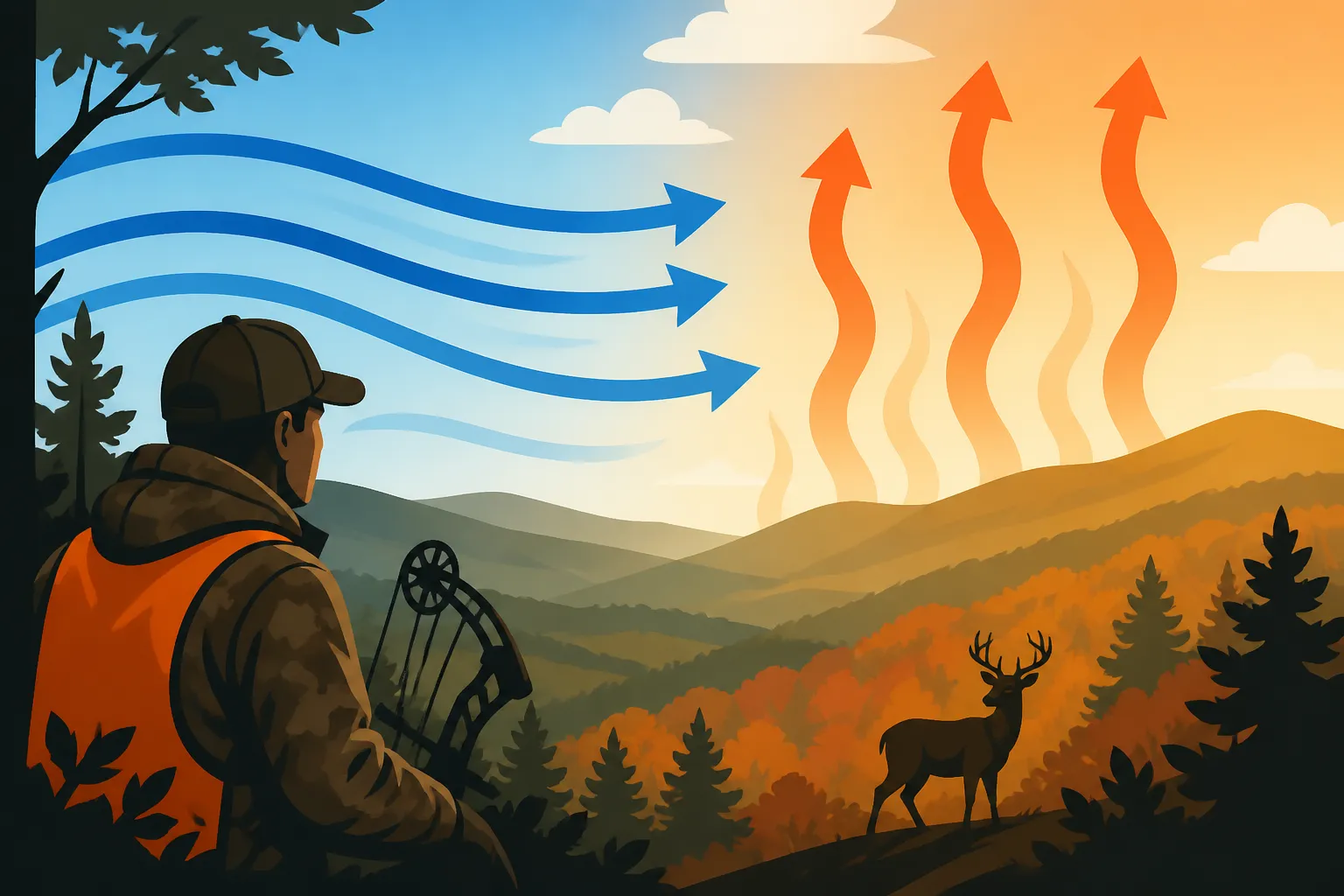
Wind and Thermals in Western Maryland Terrain
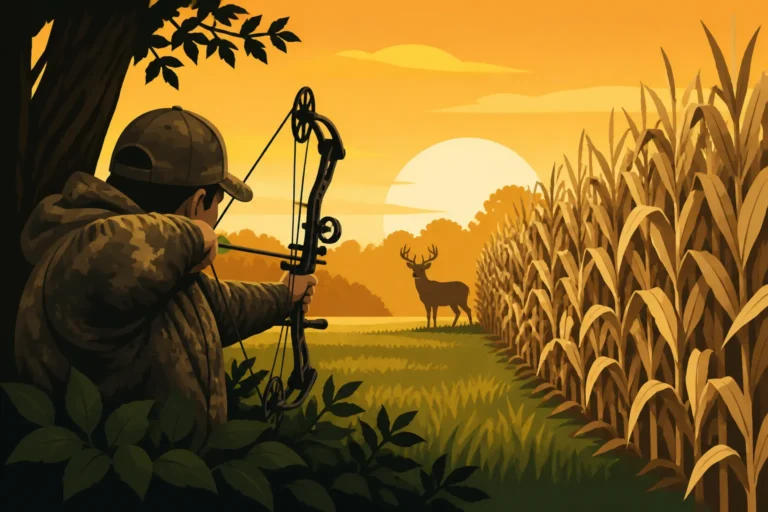
There's nothing quite as frustrating as meticulously planning a deer hunt in Western Maryland's rugged mountains, making a stealthy approach, only to have a sudden, inexplicable gust of wind betray your presence to a wary buck. The seemingly random shifts of air currents in places like Green Ridge and Savage River State Forests can feel like a personal attack on your hard work. This guide is dedicated to demystifying the complex dance of wind and thermals in mountainous terrain, giving you the knowledge and practical strategies to turn these natural forces from adversaries into allies in your pursuit of Maryland whitetails.
Understanding the Basics of Mountain Wind and Thermals
When you're out in the relatively flat agricultural fields of the Eastern Shore, "wind" feels pretty straightforward. It blows from one direction, and you try to stay downwind. But once you hit the steep ridges and hollows of Western Maryland, everything changes. The large-scale atmospheric wind patterns that weather apps report are just one piece of a much more intricate puzzle. Local topography, sun exposure, and temperature differentials create micro-climates where air moves in its own unique ways, often defying what the general forecast tells you. This is where understanding thermals becomes absolutely critical.
How Air Movement Behaves in Undulating Terrain
Imagine a river, but instead of water, it's air flowing over the land. Just like water, air tends to follow the path of least resistance, channeling through valleys, accelerating over saddles, and swirling around obstacles. In Western Maryland, with its myriad of steep hollows, rolling ridges, and deep ravines, this "air river" is anything but smooth. Cold air is denser than warm air, so it acts like water, flowing downhill and pooling in low-lying areas. Conversely, warm air rises. This fundamental principle is what drives thermals, which are localized air movements caused by temperature differences.
During the day, as the sun heats up exposed slopes, the air above them warms and begins to rise. This creates an upward draft, drawing cooler air from lower elevations up with it. At night, or once the sun dips below the horizon, the ground cools rapidly, especially in shaded hollows. The air above these cooling surfaces also cools, becoming denser and sinking down the slopes. This downward flow is what we call a thermal "dropping." General wind patterns can either augment or override these thermals, creating incredibly complex and often unpredictable swirling conditions, particularly when the atmospheric wind is light. It's not uncommon to feel the wind blowing in one direction at your treestand, only to watch your scent go completely opposite just a few yards away, sucked into a hollow's thermal draft.
The Diurnal Cycle: Morning and Evening Thermals
The sun is the primary engine behind thermal activity, creating a predictable, cyclical pattern in the mountains. Understanding this daily rhythm is paramount for any hunter in Western Maryland, whether you're hunting the high country of Garrett County or the oak flats of Allegany County.
In the morning, before dawn, the air is typically at its coldest, having settled into the valleys and hollows overnight. As the sun begins to rise and hit the eastern slopes, it warms the ground. This warmth transfers to the air, causing it to lighten and begin its slow, steady ascent. This "morning thermal" will pull your scent up the mountain, making approaches to ridgetop stands risky if you're not careful. This upward movement usually continues until midday, often getting stronger as the sun climbs higher and more terrain heats up. The strength and duration of this upward pull can vary greatly depending on factors like cloud cover, which can mute the sun's heating effect, or a strong prevailing wind, which might overwhelm the localized thermal.
Conversely, as the sun sets and temperatures begin to drop in the evening, the process reverses. The slopes cool, and the air above them cools as well, becoming denser and beginning its downward flow into the valleys and hollows. This "evening thermal" will carry your scent down the mountain. This is a crucial consideration when you're exiting a stand or still-hunting through a bottomland area. This downward thermal can be very pronounced, especially in areas with steep elevation changes and clear, calm evenings. A heavy tree canopy can also trap cooler air, intensifying these downward movements. Knowing whether the thermal is rising or falling can dictate your approach, your stand placement, and even which side of a ridge you choose to hunt.
Applying Thermal Knowledge to Western Maryland's Landscape
Western Maryland isn't just "mountains"; it's a specific, unique landscape with its own quirks and characteristics. The heavily forested, undulating terrain of places like Green Ridge State Forest and Savage River State Forest presents a master class in thermal behavior. Simply knowing the general rules isn't enough; you need to understand how they play out on the ground you're actually hunting.
Specific Terrain Features and Their Impact
The topography of Western Maryland, characterized by its long, parallel ridges and deep, winding hollows, acts like a giant natural funnel system for air. When you're Hunting Maryland's Western Mountain Forests, you'll notice that steep hollows and narrow valleys become natural channels for both rising and falling thermals. During morning hunts, if you're set up on a ridgetop or bench overlooking a steep draw, those rising thermals can carry your scent straight up from the valley floor, alerting any deer bedded on the opposing slope. Conversely, an evening hunt in the same spot means your scent will be dropping into that hollow, potentially putting deer below you at ease, but possibly alerting deer if they're moving up the draw.
Large blocks of mature timber, common in areas like Savage River State Forest, also influence thermals. The dense canopy can hold cooler air longer in the mornings, delaying the thermal rise, and can prevent the ground from cooling as quickly in the evenings, potentially extending the upward thermal or softening the downward drop. Clear-cuts, on the other hand, with their exposed ground, heat up and cool down much faster, creating strong, localized thermal shifts that can be quite intense. If you're Hunting a Green Ridge Ridgetop Bench, consider how a nearby clear-cut might be influencing the air currents, potentially creating an eddy effect or a rapid thermal rise that could carry your scent unexpectedly. Understanding these localized effects is crucial for successful hunting in counties like Allegany and Garrett.
Seasonal and Weather Influences on Airflow
The Maryland hunting seasons span from early September archery right through January firearms, encompassing significant changes in foliage and weather. These changes dramatically impact how wind and thermals behave.
In the early archery season, when the leaves are still dense on the trees, the canopy creates a buffer against both sun and wind. This can make thermals less pronounced and more prone to swirling, as the air struggles to establish a steady flow through the thick foliage. Temperatures can still be quite warm, intensifying thermal activity when the sun is out, but the leaf cover can also trap cool air in shaded pockets. As the season progresses into late October and November, when the leaves fall, the entire dynamic shifts. Without the canopy, the ground heats and cools more rapidly, leading to stronger, more consistent thermals. The wind also has a clearer path, often creating a more predictable flow, though it can still be influenced by the topography. This is particularly important when Hunting the Rut in Early to Mid November because bucks are moving more, and their noses are hotter than ever.
Weather systems also play a massive role. High-pressure systems typically bring calm, clear weather, which means stronger, more predictable thermals. These are the days when the morning thermal rises consistently and the evening thermal drops reliably. Low-pressure fronts, on the other hand, often bring cloud cover, rain, and stronger, more erratic winds. Cloud cover acts like a blanket, moderating ground temperatures and weakening thermal activity. Strong winds can completely override thermals, making the atmospheric wind the dominant factor, though it can still be deflected and swirled by terrain. After a rain or snow event, the ground temperature can be significantly altered, affecting thermal generation. A fresh snow cover, for instance, can reflect sunlight, reducing the ground's ability to heat up and consequently weakening morning thermals. Always check your local weather, but then add your on-the-ground knowledge of how that weather interacts with Western Maryland's unique terrain.
Tactical Hunting Strategies for Western Maryland's Air Currents
Knowing how thermals work is one thing; actually using that knowledge to tag a deer is another. This is where we move from theory to practical application, giving you concrete steps to improve your odds in the challenging Western Maryland landscape.
Still-Hunting and Stand Placement with Thermals in Mind
Effective still-hunting in Western Maryland requires you to constantly read the wind and thermals, often micro-adjusting your path every few steps. If you're still-hunting uphill in the morning, remember those rising thermals are carrying your scent ahead and above you. This means you need to be extra cautious, perhaps staying below ridge lines or using thick cover to mask your approach. Conversely, still-hunting downhill in the evening can be an advantage, as your scent is dropping behind you. However, you're also potentially pushing deer down into hollows where they might circle below you.
When it comes to stand placement, the goal is always to have the wind and thermals carry your scent away from where you expect deer to approach or pass. For a morning hunt, consider setting up a bit lower on a slope, perhaps just off the top of a ridge, so that the rising thermal carries your scent over the deer moving up from their feeding areas. Similarly, when approaching your stand, use an entry route that keeps the morning thermal from blowing your scent into bedding areas. As for evening hunts, a stand placed higher on a slope or on a bench overlooking a feeding area might be ideal, allowing the dropping thermal to carry your scent harmlessly down and away from the deer moving into the open. Saddles, those dips in a ridge line, are classic deer travel corridors, but they are also notorious for swirling winds. If you plan to hunt a saddle, careful observation of the wind and thermal patterns on that specific day is critical, or you might find yourself surrounded by contradictory air currents. This applies whether you're chasing bucks in Allegany County or exploring the vast timber of Savage River.
Using Technology and Scouting to Predict Air Movement
In today's hunting world, technology can be a powerful ally. Apps like GoHunt offer detailed topographic maps, satellite imagery, and weather overlays that can help you visualize wind direction and terrain interaction before you even step foot in the woods. You can use these tools to identify prevailing wind directions, mark potential stand locations based on thermal predictions, and plan quiet entry and exit routes that minimize your scent footprint. While GoHunt provides valuable data, it's important to remember that it’s a forecast, and actual conditions on the ground can vary.
That's why physical scouting remains irreplaceable. Before the season, or even during a lull in hunting, spend time observing how the air moves in your chosen spots. Watch for spiderwebs or fine dust that reveal subtle air currents. Carry a small squeeze bottle of powder or milkweed seeds to constantly check the localized wind direction while on the move or in your stand. Pay close attention to how the wind changes as you move between different micro-terrain features – from a dense pine thicket to an open hardwood bottom, or from a shaded north-facing slope to a sun-exposed south-facing one. By combining detailed map reconnaissance and weather forecasts with on-the-ground observations, you build a much more accurate picture of how to hunt Reading Sign in Maryland Mountain Timber effectively.
Navigating Common Challenges and Adapting Your Approach
Even with a solid understanding of wind and thermals, Western Maryland's mountains will throw you curveballs. Being prepared for these challenges and knowing how to adapt is what separates consistent hunters from those who constantly get busted.
Dealing with Swirling Winds in Complex Terrain
There will be days, especially in deep hollows or dense, broken cover, where the wind seems to come from every conceivable direction. These "swirling" conditions are a hunter's nightmare because they make scent control incredibly difficult. In such situations, your best bet might be to avoid areas known for unpredictable air currents. If you must hunt them, consider alternative tactics. A ground blind, for example, can offer a slight advantage by containing some of your scent, especially if it's well-placed against a natural barrier that helps funnel air.
Scent control becomes even more paramount on these days. Using scent-eliminating sprays, washing clothes in unscented detergent, and showering with scent-free soap are crucial, but they are only part of the solution. The most effective scent control is still keeping the wind in your favor, which means understanding that a light, swirling wind in a deep hollow is often just a battle you can't win. Sometimes, it's better to move to a more open, wind-swept ridge top where the prevailing wind might be more consistent, or even consider a complete shift in location to a different part of Hunting Maryland's Green Ridge State Forest or Savage River State Forest known for more predictable airflow.
Adjusting for Unpredictable Weather Shifts
Western Maryland weather can change on a dime. A sunny, calm morning can quickly turn into a blustery, overcast afternoon, dramatically altering thermal and wind patterns. This is where flexibility and a willingness to adapt your plan are crucial. If a sudden cold front pushes through, expect stronger, more consistent winds and potentially weaker thermals as the ground struggles to warm up. Deer might also change their patterns, seeking thermal cover or heading for late-season food sources for Maryland deer that provide quick energy.
Hunting after a heavy rain can present opportunities, as the ground is cooled, and thermals might be less pronounced, allowing for quieter movement. However, if the sun breaks out post-rain, the rapid heating of wet surfaces can create very strong, albeit temporary, thermals. Foggy conditions often mean extremely calm air, allowing scent to hang heavy and travel unpredictably. In these situations, relying on visual cues and sound becomes even more critical. Having a backup plan – perhaps a different stand location or an entirely different hunting strategy – is key. Whether you're targeting deer in Allegany County Public Hunting Access or Garrett County Public Land for Deer, always be ready to change your approach based on what Mother Nature throws at you.
| Thermal Behavior | Morning (Pre-Dawn to Mid-Morning) | Evening (Late Afternoon to Dusk) |
|---|---|---|
| Direction | Primarily rises uphill | Primarily falls downhill |
| Cause | Sun heats ground, warming air | Ground cools, air becomes denser |
| Strength | Increases as sun rises, stronger on sunny days | Increases as sun sets, stronger on clear, calm evenings |
| Scent Effect | Carries scent up and away from valleys, over ridges | Carries scent down into valleys, away from ridge tops |
| Strategy | Approach stands from downwind/downhill; set up lower on slopes for uphill deer | Approach stands from downwind/uphill; set up higher on slopes for downhill deer |
| Challenges | Risk of scenting deer above you during approach or hunt | Risk of scenting deer below you if they circle downwind |
Ultimately, successful hunting in the challenging, yet rewarding, terrain of Western Maryland hinges on your ability to not only understand these natural forces but to truly feel and adapt to them in real-time. Just like reading deer sign on a well-used trail, learning to read the wind and thermals is an art that comes with practice and keen observation.
Disclaimer
Please remember that hunting regulations, seasons, and licensing requirements can change. Always consult the official Maryland Department of Natural Resources (DNR) website or their hunting guide for the most current and accurate information before planning any hunt. Safety should always be your top priority.