Hunting a Standing Corn Field Edge for Deer
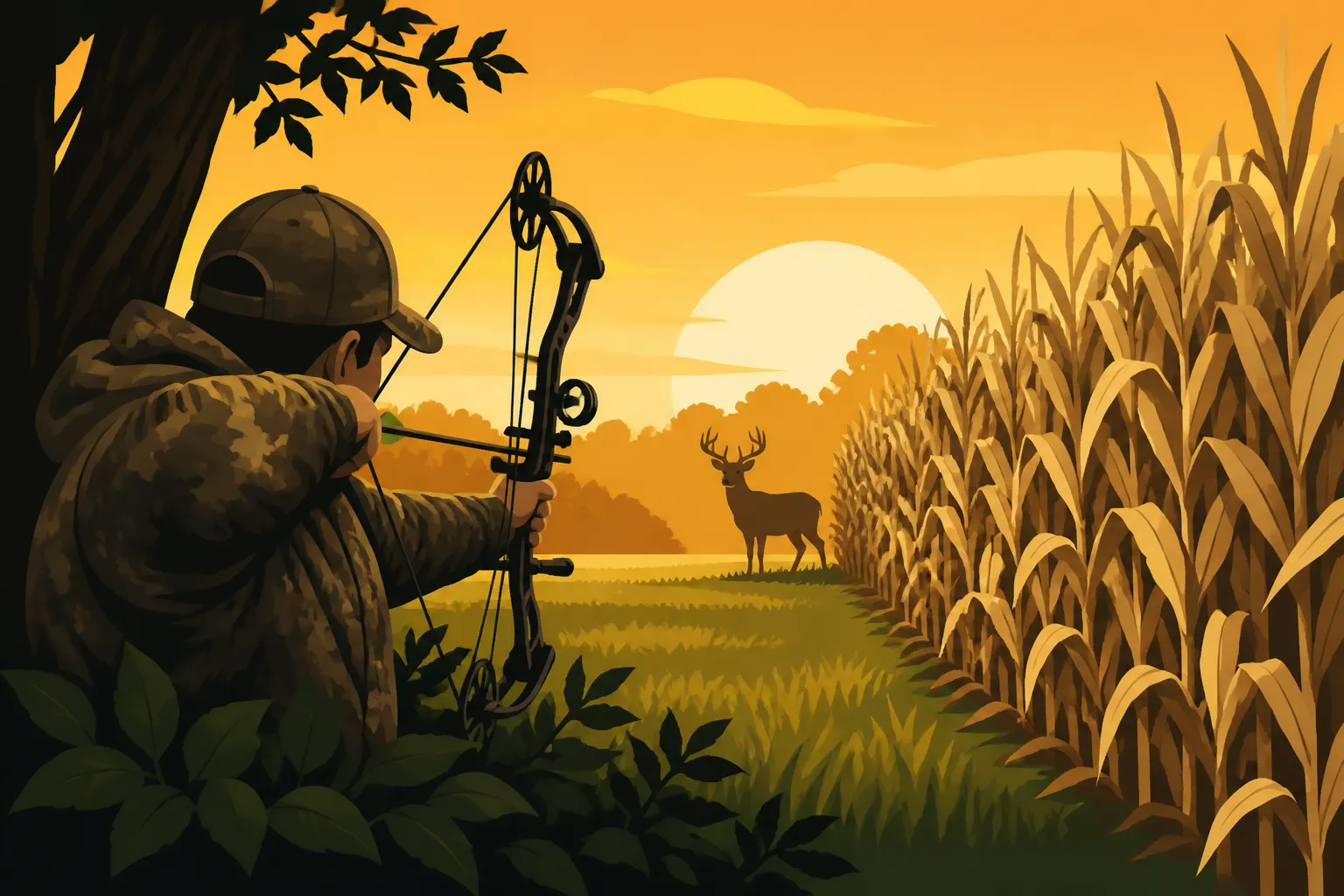
There's nothing quite like the frustration of knowing deer are absolutely piled up in a standing corn field, just out of reach, living their best lives while you scratch your head wondering how to get them out. That impenetrable wall of stalks feels like a fortress, and figuring out how to intercept those deer as they move in and out can be one of the biggest challenges in Maryland hunting. This comprehensive guide will break down exactly how to effectively hunt a standing corn field edge for deer, turning that frustrating barrier into your strategic advantage.
The Allure of Standing Corn for Maryland Deer
Standing corn fields aren't just pretty backdrops for fall photos; for deer in Maryland, they're the ultimate sanctuary and buffet all rolled into one. From late summer right through winter, these fields provide everything a whitetail needs to thrive, making them prime real estate for savvy hunters.
Why Corn is a Deer Magnet
Deer are survivalists, always looking for the best combination of food, water, and cover. Standing corn checks all these boxes with a big, bold marker. First and foremost, it's an incredibly high-energy food source. As the kernels mature, they become a carbohydrate powerhouse, essential for deer building up fat reserves for the lean winter months or for bucks recovering from the grueling rut. This makes corn fields particularly attractive during the late summer, fall, and early winter seasons.
Beyond the caloric bounty, the sheer density of standing corn offers unparalleled security. A deer can disappear into a few rows of corn and be virtually invisible, even to a hunter just yards away. This dense cover provides a safe haven from predators, including us hunters, and a comfortable place to bed down. It also offers a thermal advantage, shielding deer from cold winds in the late season or providing shade from the scorching sun during early archery hunts. Think of it as a five-star hotel with an all-you-can-eat buffet right outside the door—why would they leave? They'll often spend entire days bedded deep within the field, only venturing out to the edges or nearby food plots at dusk or under the cover of darkness.
Understanding Deer Bedding and Travel Patterns
Just because deer love corn doesn't mean they're randomly milling about in there. They establish distinct patterns within and around these fields. Often, deer will bed deep inside the corn, especially during hunting pressure, seeking the most impenetrable sections. Their travel routes will typically follow the easiest paths, such as old tractor rows, subtle depressions, or natural breaks in the corn. These internal trails lead them to watering holes, other bedding areas, or, most commonly, to the field edges where they can stage before entering an adjacent food plot or another section of timber.
When a deer is ready to leave the security of the corn, they don't just burst out randomly. They'll often "stage" just inside the edge, usually a few rows deep, where they can observe the surrounding area before committing to stepping out into the open. Look for these staging areas—small, trampled-down pockets just inside the field. Similarly, when returning to the corn, they'll often utilize predictable entry points. These are the crucial pinch points and funnels you need to identify. Keep an eye out for well-worn trails leading directly into the corn, especially near changes in topography, timber lines, or even along brushy fencerows. Understanding these patterns is key to successful Setting Up on a Maryland Grain Field Edge.
Scouting Secrets Along the Corn Edge
You can't effectively hunt a corn field edge without putting in the time to scout it properly. This isn't just about walking around the perimeter; it's about becoming a detective, looking for subtle clues that reveal exactly how deer are using this valuable resource.
Reading the Edges for Hot Sign
The first step is to thoroughly walk the entire perimeter of the standing corn field, paying meticulous attention to every detail. You're looking for primary entry and exit points, which will be indicated by heavily worn trails leading directly into the stalks. These trails will often be much wider and deeper than casual tracks, indicating consistent use. Pay close attention to corners and natural funnels where two cover types meet, as deer often prefer to enter and exit fields where they feel most secure.
Beyond trails, look for other obvious deer sign. Droppings, fresh tracks (especially those of larger deer), and rubs or scrapes along the edge of the corn or in the adjacent cover are gold. Scrape Lines Along a Maryland Field Edge can indicate a buck regularly working that area, especially as the rut approaches. Look for browsed corn stalks, where deer have nipped off ears or leaves, indicating feeding activity. Sometimes, deer will even "clip" the ends of corn stalks at the very edge of the field while standing just inside, providing a subtle but clear sign of their presence. Remember, fresh sign is always better than old sign. If you find a ton of old tracks but nothing new, deer patterns may have shifted.
Leveraging Technology for Corn Field Scouting
In today's hunting world, technology can be your best friend when scouting challenging areas like standing corn fields. Tools like the GoHunt app are invaluable for gaining an overhead perspective. Before you even set foot on the property, use aerial imagery to identify potential pinch points, funnels, and natural travel corridors that lead to or from the corn. Look for areas where timber fingers extend into the field, or where a creek bottom or ditch line runs alongside the corn. These are often natural highways for deer movement.
With GoHunt, you can mark potential stand locations, map out your silent entry and exit routes, and even identify property lines to avoid trespassing. This is particularly crucial on farmland where fields might span multiple landowners. You can also use topographical maps within the app to identify subtle elevation changes or low spots where deer might prefer to cross, especially if you're hunting in a more undulating landscape outside of the flat Eastern Shore. This type of pre-scouting helps you prioritize which sections of the corn field edge to investigate on foot, saving you valuable time and effort. It's like having a bird's-eye view of deer country before you even lace up your boots. Consider using these tools for Scouting Maryland Public Land With Aerial Photos.
Strategic Setup for Success
Once you've identified the high-traffic areas and understood how deer are moving along the corn edge, the next critical step is setting up your ambush. This involves careful consideration of stand placement, wind direction, and your entry and exit strategies to remain undetected.
Optimizing Stand Placement
The ideal stand placement along a corn field edge balances visibility with concealment and wind advantage. You want to be positioned to intercept deer as they exit or enter the field, but without them detecting your presence. A good rule of thumb is to place your stand downwind or crosswind of the most active deer trails. Deer have an incredible sense of smell, and a shifting wind can quickly blow your cover. Always check the prevailing winds for your hunt day and choose a stand location that keeps your scent out of the deer's path.
Consider a treestand if suitable trees are available, as it gets your scent cone higher off the ground and provides a better vantage point for spotting deer in the corn. Aim for a position that offers a clear shooting lane to the main trails and staging areas. If treestands aren't an option, a well-camouflaged ground blind can be incredibly effective, especially if you set it up several weeks in advance to allow deer to get used to its presence. Place ground blinds slightly back into the timber or brush bordering the corn, not right on the very edge, to break up your silhouette. Look for natural cover to blend into, whether it's a thick hedgerow or a small pocket of timber. Remember, the goal is to be invisible and odorless to approaching deer.
Mastering Your Entry and Exit Routes
This might be the most overlooked, yet most critical, aspect of hunting a corn field edge. A poor entry or exit can ruin a hunt before it even begins. Your goal is to approach and leave your stand completely undetected by deer that may already be in the field or in adjacent cover. For morning hunts, this often means utilizing low-light conditions and quiet routes. If possible, use a ditch, creek bed, or a fencerow for cover on your approach. Sometimes, it even means walking directly into a cut section of corn or a mowed path if available, provided the wind is right and you're moving before legal shooting light.
For evening hunts, you need a route that allows you to sneak in without alerting deer already moving towards the corn. Often, this involves skirting the timber edge away from the field or using the topography to your advantage. The real challenge comes after the shot. If you harvest a deer, you'll need a discreet way to get it out without disturbing other deer in the area, especially if you plan to hunt that stand again soon. This often means having a recovery plan in place, possibly involving a cart or another person, and picking a route that minimizes disturbance. Thinking about Entry Routes Through Cut Corn Before Daylight for a specific field is a skill that comes with practice, but it's essential for consistent success. You might also consider how you'd manage this if you were Hunting a Fencerow for Late Season Deer, as those often run alongside corn.
In-Season Tactics for Corn Field Edges
Once your stand is set and your routes are planned, it's time to put those plans into action. Hunting corn field edges effectively requires a strategic approach to timing, as well as an understanding of how and when to use calls and decoys.
When to Hunt the Corn Edge
The best times to hunt a standing corn field edge are often during the first and last hours of daylight. In the morning, deer will be filtering back into the corn after feeding all night, or heading deeper into the field to bed down. In the evening, they'll be staging just inside the corn before stepping out to feed in the field itself or move to an adjacent food source. The precise timing can vary greatly depending on local pressure, moon phase, and weather conditions.
During the early archery season in September, deer may move more sporadically due to warmer temperatures, but cooler fronts can trigger increased activity. As the season progresses into October and November, especially leading up to and during the rut, movement will become more consistent. This is when corn becomes an even more critical thermal and security blanket for rutting bucks. If the weather is particularly nasty—cold, windy, or raining—deer might hold tight in the corn all day, making those low-pressure mid-day hunts around the edges less productive. However, a major cold front after a warm spell can really get them on their feet and moving to feed, making the corn edge a hotspot. Always prioritize hunting during peak feeding times if you want to catch deer near the corn. Keep in mind that corn is a great Late Season Food Sources for Maryland Deer, making it productive deep into winter.
Calling and Decoying Strategies
While sitting patiently is often the best strategy, sometimes a well-timed call or strategically placed decoy can make all the difference. For bucks, soft grunts or doe bleats can be effective, especially during the pre-rut and rut phases. Deer exiting the corn might be curious enough to investigate, particularly if they hear a "social" call. Don't be afraid to try some light rattling if you suspect a buck is within earshot, especially in areas like Hunting a Farm Along the Potomac where open fields meet dense timber. Just remember that less is often more with calling; you don't want to spook deer by overdoing it. A subtle Grunt Calls in Maryland Hardwoods can sometimes pull a deer from the corn and into shooting range.
Decoys can also play a role, particularly a single doe or buck decoy placed within sight of the corn edge. For morning hunts, positioning a decoy facing towards the corn can give the impression that a deer is about to enter, which might pique the interest of a buck passing by. For evening hunts, placing a decoy facing away from the corn, as if it's already feeding, can draw deer out. Always ensure your decoy is visible from where you expect deer to approach and that the wind is in your favor so your scent doesn't betray the illusion. The effectiveness of decoys can be hit or miss, but in the right conditions, they can provide that extra bit of realism to draw a cautious deer into range.
Morning vs. Evening Hunts at a Corn Field Edge
| Feature | Morning Hunt | Evening Hunt |
|---|---|---|
| Deer Movement | Deer returning to corn from feeding, or bedding deeper inside. | Deer staging and exiting corn to feed. |
| Approach | Critical to be in stand before first light. Use routes that avoid disturbing bedded deer. | Less pressure to be in stand super early, but stealth still key. |
| Wind | Often more stable in early morning, but can shift quickly. Play winds carefully to avoid blowing scent into bedding. | Can be more variable, often picking up. Focus on intercepting deer downwind of exit trails. |
| Visibility | Low light challenges initially, improving with sunrise. Can spot deer moving away from the corn. | Visibility good initially, decreasing with sunset. Focus on deer entering open. |
| Best Time Frame | First 1-2 hours of legal light. | Last 1-2 hours of legal light. |
| Considerations | Deer are often more relaxed returning to bed. Good for intercepting bucks still cruising. | Deer are often more wary when exiting cover. Good for catching deer moving to specific food. |
Disclaimer
Hunting is an activity with inherent risks. Always prioritize safety, understand and follow all Maryland hunting regulations, and ensure you have the appropriate licenses and permits before heading afield. The information provided here is for educational purposes and should not replace professional guidance or personal judgment.