Hunting a Hillside Bench Above a Mountain Stream
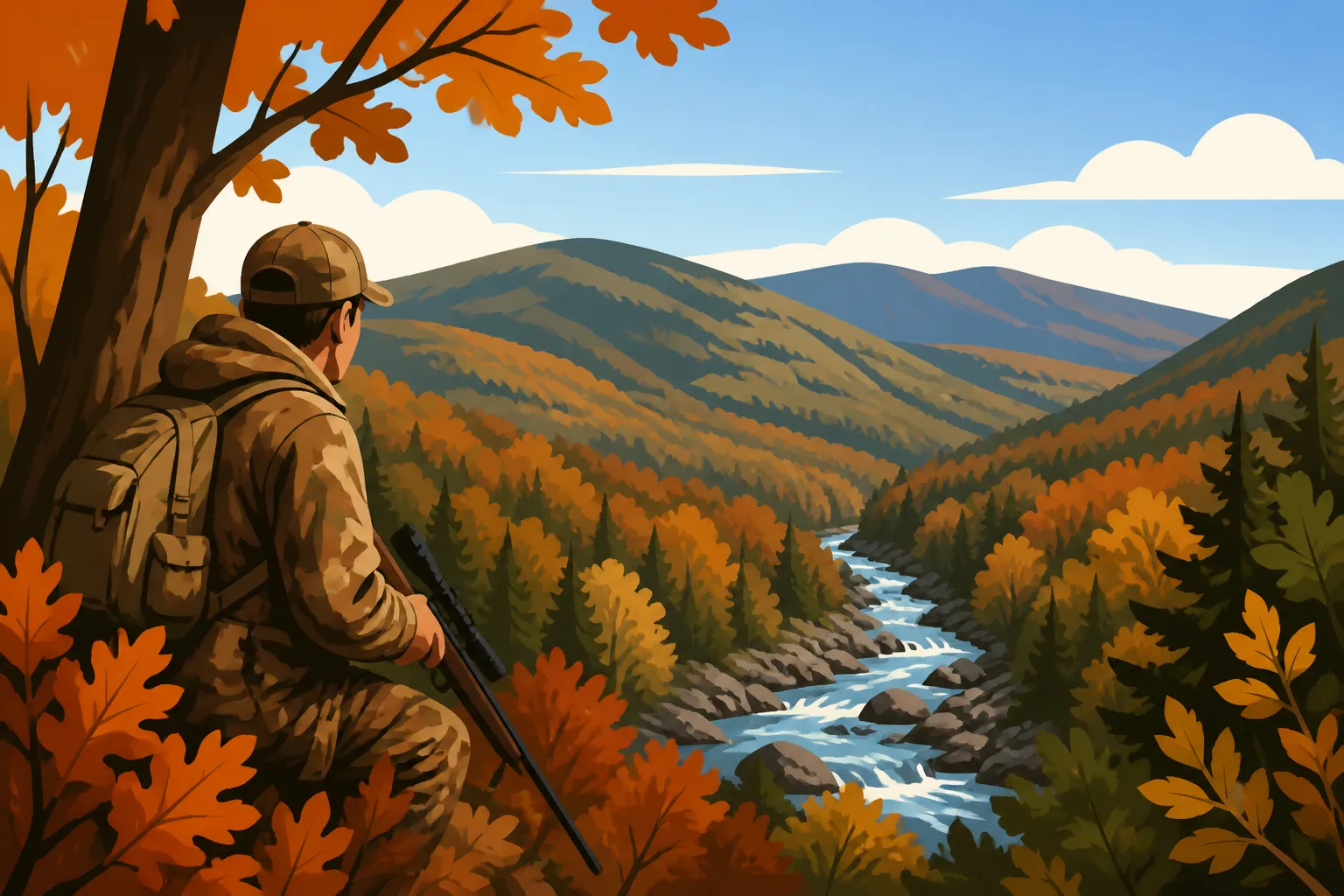
Hunting a hillside bench above a mountain stream in Maryland can feel like trying to find a needle in a haystack, especially with the steep terrain and often thick timber. It’s easy to overlook these subtle yet incredibly productive areas, leading to frustration and unproductive hunts. This comprehensive guide will walk you through exactly how to identify, scout, and effectively hunt these prime spots, helping you understand deer movement in these challenging environments.
Understanding Maryland's Mountain Stream Habitat
Maryland's western mountains, with their rugged topography and numerous stream valleys, offer a unique hunting challenge and incredible opportunities. Deer, like all wildlife, seek out the path of least resistance and areas that provide security, food, and water. Hillside benches above mountain streams combine many of these crucial elements, often acting as hidden highways and safe havens for whitetails.
Why Hillside Benches Are Deer Magnets
Imagine trying to navigate a steep, rocky mountain face. It's exhausting for us, and it's no different for a deer. Hillside benches are essentially flat or gently sloping ledges that interrupt the steep incline of a mountain. These benches act as natural travel corridors, much like a shelf carved into a cliffside. Deer will consistently use these benches to travel horizontally across the mountain or to move between different elevation levels with less effort. They provide easier footing than the steep, jumbled rocks and thick undergrowth often found elsewhere.
Beyond simply being easier to travel, these benches frequently offer thicker cover. Often, the terrain below them drops away sharply, and above them, the slope continues its ascent, creating a natural funneling effect. This combination of accessible travel and security makes them prime areas. Deer feel safer traversing these routes, especially during daylight hours, knowing they have good visibility both up and down the mountain, and quick escape routes if needed. It’s not uncommon to find several benches at different elevations, each serving as a distinct travel path.
Reading the Terrain: Contours and Cover
Successfully hunting these areas starts with understanding the lay of the land, even before you step foot on it. When you look at a topographical map, either a paper version or using digital tools like GoHunt, you're looking for areas where the contour lines "bulge" or flatten out for a stretch, interrupting the consistent slope. These are your benches. They might be narrow, just a few feet wide, or wider, creating small, almost flat sections hundreds of yards long.
The type of cover on these benches is also critical. They often feature mixed hardwood and pine stands, mountain laurel thickets, or even areas of dense rhododendron. This varied vegetation provides both browsing opportunities and excellent bedding cover. Deer will use the dense cover on the benches to bed down, especially if it's protected from prevailing winds or offers a thermal advantage. Understanding the subtle shifts in elevation and vegetation helps you predict where deer will browse, bed, and travel. Remember, even a slight change in slope or cover can influence deer movement dramatically. For a deeper dive into what game animals are seeking, you might find insight in articles discussing Reading Sign in Maryland Mountain Timber.
Water's Influence: Stream Crossings and Thermal Hubs
The presence of a mountain stream is what makes these benches truly special. Streams provide a constant water source, but more importantly, they are incredible thermal highways. In the morning, cold air sinks into the stream bottoms, creating a downward thermal flow. As the sun rises and warms the hillsides, the thermals reverse, pulling air (and scent) upwards. Deer use these predictable thermal shifts to their advantage. A deer bedded on a bench above a stream in the morning can easily detect danger approaching from below as its scent is carried down by the thermals. In the afternoon, as thermals rise, they can detect anything above them.
Stream crossings are also critical focal points. Deer will cross streams at the easiest points – often where the banks are less steep, a log has fallen, or the water is shallower. These crossings are natural funnels where deer traffic is concentrated. A bench that leads directly to, or parallels, a known stream crossing can be an absolute hotspot. Pay close attention to how deer move along these benches in relation to the water, especially during specific times of day. You'll often find that deer use specific benches to travel down to the stream to drink or cross, creating predictable patterns.
Scouting and Locating Key Bench Features
You can't just stumble into these spots and expect success. Effective scouting, combining mapping technology with boots on the ground, is absolutely essential. This proactive approach saves time and ensures you're hunting the most promising locations.
Aerial Reconnaissance with Mapping Tools
Before you ever lace up your boots, fire up your digital mapping app. Tools like GoHunt are invaluable for pre-scouting these mountain environments. Start by identifying the mountain streams and then zoom in on the surrounding hillsides. Look for those contour lines that flatten out or create distinct "shelves." Pay attention to where multiple benches converge or where a bench narrows into a funnel. These pinch points are gold.
Look for changes in timber type or density. Darker green patches might indicate thicker conifer stands, offering prime bedding, while lighter areas could be more open hardwoods, signifying feeding areas. Identify potential access points, old logging roads, or game trails that could lead you to these benches. Mark these areas as waypoints or points of interest. This digital reconnaissance allows you to cover vast amounts of ground from your couch, narrowing down your physical scouting efforts to the most promising terrain. This process is very similar to Scouting Maryland Public Land With Aerial Photos.
| Mapping Feature | What to Look For | Why It Matters |
|---|---|---|
| Contour Lines | Flat or widely spaced lines interrupting steep inclines | Indicates a bench or flat travel corridor |
| Drainages/Hollows | Lines creating V-shapes pointing uphill | Deer often follow these up/down to benches |
| Vegetation Changes | Distinct color shifts (dark green for conifers, lighter for hardwoods) | Indicates bedding vs. feeding cover |
| Old Roads/Trails | Faint lines, sometimes barely visible | Potential easy access or historic deer travel |
| North-Facing Slopes | Cooler, often thicker cover, good for bedding | Deer prefer these in warmer weather or for security |
| South-Facing Slopes | Warmer, often better for early morning feeding | Deer use these in colder weather for sun |
Boots on the Ground: Finding Fresh Sign
Once you've pinpointed potential benches on your map, it's time for the real work: physical scouting. Walk those benches. Look for fresh deer sign – tracks, scat, rubs, and scrapes. Pay particular attention to fresh tracks, as they indicate recent activity. Deer often travel in single file on benches, creating distinct trails, especially in areas with softer soil or leaf litter. The fresher the sign, the more active the bench is.
Look for rubs on saplings and small trees. A series of rubs along a bench is a clear indicator that bucks are actively using that travel route. Similarly, scrapes, especially those with an overhanging branch worked above them, are communication hubs for deer. If you find fresh rubs and scrapes on a bench, you've hit a jackpot. Also, don't forget to look for bedding areas – flattened grass or leaves, often under dense cover, with droppings nearby. Finding these tells you exactly where deer are spending their downtime. Getting up close and personal with the terrain is crucial for truly understanding Reading Sign in Maryland Mountain Timber.
Thermal Hubs and Wind Considerations
As we discussed, thermals are a major factor in mountain stream hunting. When scouting, pay attention to the prevailing wind direction, but also understand how thermals will override or interact with it. In the mornings, cold air will pull your scent down towards the stream. In the afternoons, as the sun warms the slopes, your scent will rise. This means you need to position yourself not just for the wind, but for the thermal currents as well.
Identify potential stand sites that offer a favorable wind and thermal advantage based on the time of day you plan to hunt. A stand placed on a bench during an evening hunt might need to be higher up, utilizing the rising thermals to carry your scent away. Conversely, a morning hunt might require you to be lower, letting descending thermals pull your scent down into the stream bottom, away from deer traveling higher up. Understanding Wind and Thermals in Western Maryland Terrain is non-negotiable for success in these areas.
Strategies for Hunting Hillside Benches
Once you've done your homework and found those promising benches, it's time to put a hunting strategy in place. This involves smart stand placement, knowing when to still-hunt, and understanding if calling tactics will work in the terrain.
Stand Placement and Entry/Exit Routes
Choosing the right stand location on a hillside bench is critical. Look for pinch points, saddles, or areas where the bench passes through thicker cover or intersects with another game trail. Your goal is to be invisible, silent, and have your scent managed. Consider multiple stand locations for different wind and thermal conditions. For example, you might have one stand for a prevailing northwest wind and another for a southwest wind.
Always position your stand with the sun in mind. You don't want the morning or evening sun directly in your eyes, silhouetting you. Entry and exit routes are just as important as the stand itself. Plan a route that allows you to get to and from your stand without spooking deer. This often means using drainages, stream beds, or parallel ridges to mask your approach and departure. Avoid walking directly on the bench you plan to hunt or crossing known deer trails, especially during daylight hours. A well-planned approach is key to success, whether you are Hunting a Green Ridge Ridgetop Bench or another similar location.
Still-Hunting the Bench Lines
Still-hunting is an incredibly effective tactic for hillside benches, especially if you enjoy covering ground. The idea is to move slowly, deliberately, and quietly, taking a few steps and then pausing for several minutes to observe your surroundings. Use your binoculars to scan ahead, looking for subtle movements, horizontal lines that don't belong, or even just the flick of an ear. The varied terrain and cover on benches often hide deer remarkably well.
Focus on hunting into the wind or with favorable thermals. Move slowly enough that you're not sweating excessively, which can increase your scent profile. Pay attention to the natural contours of the bench, using them as cover. If you identify a promising stretch of bench with fresh sign, take your time. This method requires patience and keen observation, but it allows you to dynamically adapt to deer movement as you encounter it. To truly master this, consider refining your approach by reading more about Still-Hunting Western Maryland Mountain Timber.
Calling and Decoying Tactics
While not always the primary tactic for mountain stream benches, calling can certainly play a role, especially during the rut. Grunt calls can be effective, particularly if you hear deer movement but can't quite pinpoint their location. A subtle grunt might pique a curious buck's interest and draw him closer to investigate. Rattling antlers can also work, mimicking two bucks fighting, but use this sparingly in mountainous terrain where sound can travel strangely or be easily localized. You might get a response from a buck coming in to investigate or one staying away to avoid a fight.
Decoying is generally less practical on steep, timbered benches due to the limited visibility and the effort involved in carrying and setting up a decoy. However, in specific situations where a bench opens up into a small, flat clearing, a decoy could potentially draw a deer into range. Always prioritize realism and scent control if attempting decoying. Maryland hunters know that grunt calls can be effective in many situations, as detailed in articles like Grunt Calls in Maryland Hardwoods.
Gear and Preparation for Mountain Hunting
Hunting these challenging Maryland mountain stream environments demands specific gear and a solid understanding of preparation. The right equipment can make the difference between a successful, safe hunt and a miserable, potentially dangerous one.
Essential Clothing and Footwear
Layering is paramount when hunting in the mountains. Temperatures can fluctuate wildly from pre-dawn cold to midday warmth, especially with changing elevations. Start with a moisture-wicking base layer, add insulating layers like fleece or down, and top it with a waterproof and windproof outer shell. You'll likely be shedding and adding layers throughout the day. Opt for quiet fabrics that won't rustle as you move through thick brush.
Footwear is arguably the most critical component. You need sturdy, waterproof boots with excellent ankle support and aggressive traction. The terrain can be rocky, slippery, and uneven, making a sprained ankle a real possibility. Brands like Merrell, Keen, and Salomon offer various boots suitable for rugged conditions. Ensure your boots are well broken-in before your hunt to avoid blisters. Good quality wool or synthetic socks are also essential to keep your feet dry and warm.
Navigation and Safety Gear
Getting lost in Maryland's mountain timber is easier than you might think, especially when focused on tracking game. A reliable GPS unit or a smartphone with a robust mapping app (like GoHunt, which allows for offline map downloads) is indispensable. Always carry a compass and a physical map as a backup, and know how to use them. Mark your truck, stand locations, and any significant landmarks as waypoints.
Safety gear should include a first-aid kit, a headlamp with extra batteries, a fire starter, a small saw or multi-tool, and enough water and high-energy snacks for your entire hunt, plus a little extra for emergencies. A whistle can be invaluable for signaling in case of an emergency. Always tell someone exactly where you're going and when you expect to return. This simple step can literally be a lifesaver. For those venturing into truly remote areas, Hunting Savage River's High Country discusses additional considerations.
Weapon Choice and Shot Angles
Your weapon choice should be suitable for the terrain and typical shot distances. For most deer hunting on benches, shots will likely be at closer to moderate ranges, often within 100 yards, due to the dense cover. A modern compound bow is an excellent choice for its quietness and precision at closer ranges, perfect for Bowhunting Maryland's Long Archery Season. If using a firearm, consider a rifle chambered in a cartridge suitable for deer that also handles brush well, or a shotgun with slugs. Remember to check Maryland's Legal Weapons by County as rules vary.
Regardless of your weapon, practice shooting from various positions, including kneeling, sitting, and even awkward angles that mimic real-world hunting scenarios on uneven ground. Shot angles can be significantly different on a hillside than on flat ground. You might be shooting downhill or uphill, which affects arrow or bullet trajectory. Understand how this impacts your aim point and practice taking these shots to ensure ethical kills. For firearm users, Maryland's Maryland's Split Firearms Deer Season offers ample opportunity to apply these skills.
Disclaimer
Always consult the Maryland Department of Natural Resources (DNR) official regulations before heading afield, as rules and seasons can change. Safety should always be your top priority when hunting.