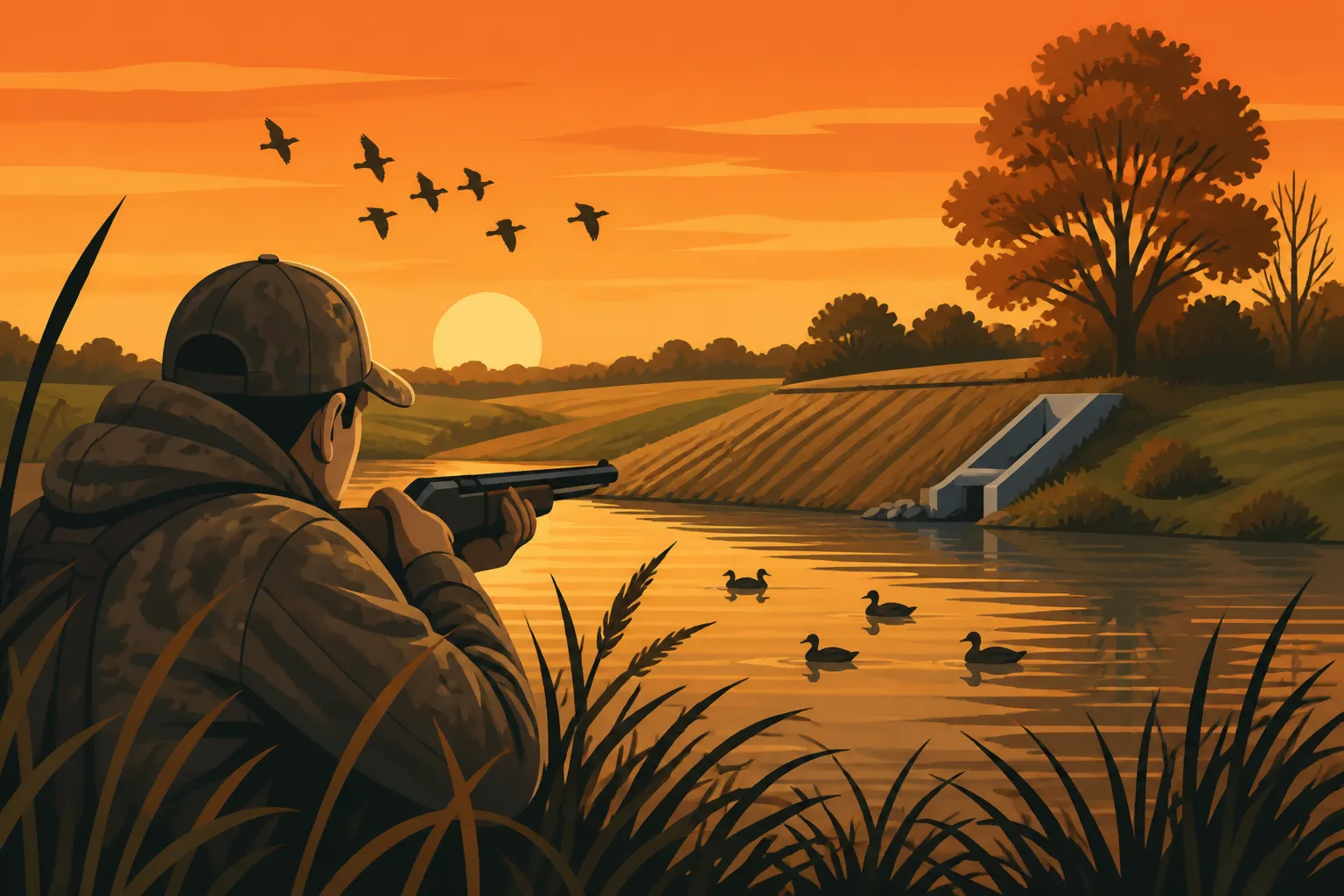
Hunting a Farm Pond Dam Late in the Season
Late season can be a real grind for Maryland deer hunters. The woods often feel empty, deer patterns have shifted dramatically, and the weather can be downright brutal. But for those willing to put in the effort, a seemingly unassuming location like a farm pond dam can hold the key to filling a tag when other spots are quiet. This guide will walk you through exactly why these overlooked features become magnets for deer and how to effectively hunt them during the challenging final weeks of the season.
Understanding Late-Season Deer Behavior Around Water
As the late season progresses in Maryland, typically from mid-December through January, deer behavior undergoes significant changes. Food sources become scarcer, temperatures drop, and snow or ice can create additional challenges. During this time, water sources, especially farm pond dams, transition from just another feature on the landscape to critical hubs for deer activity.
The Allure of Water in Cold Weather
It might seem counterintuitive, but deer need water just as much, if not more, in cold weather than they do in warm. Their metabolism is working harder to stay warm, and the available browse—twigs, buds, and residual forages—often has a lower moisture content than the lush greenery of earlier seasons. When everything else is frozen solid, an open patch of water on a farm pond can be a lifeline. Deer will often travel considerable distances to access reliable unfrozen water, and a dam, with its potential for flowing water or deeper sections that resist freezing, becomes a primary destination.
Think about it from a deer's perspective: you're trying to conserve energy, forage for every last calorie, and stay hidden from predators and hunters. A pond dam provides a one-stop shop for hydration. The edges of these ponds, particularly where there's a slight seep or inflow, might remain thawed even when the main body of water freezes over. This draws deer in consistently, creating predictable travel patterns that savvy hunters can exploit.
Moreover, if there's any residual agricultural crop nearby—think soybeans, corn stubble, or even winter wheat fields—deer will seek water before and after feeding. The roughage in their diet requires water to aid digestion, and a convenient pond dam fits the bill perfectly. These trips aren't just for a quick drink; they're often part of a larger daily circuit that includes bedding and feeding.
Thermal Cover and Travel Corridors
Beyond water, farm pond dams frequently offer excellent thermal cover, which is crucial for deer in the late season. Many dams are bordered by dense thickets of multiflora rose, honeysuckle, or successional growth that provide excellent bedding. These thickets act like natural insulation, shielding deer from bitter winds and trapping what little warmth the winter sun offers. In some cases, stands of evergreen trees like cedars or pines might line the dam, creating a dense canopy that holds heat and offers refuge from snow.
The dam itself can serve as a natural travel corridor, a kind of deer highway. Its elevated structure often provides easier walking than a snow-covered, uneven forest floor or a muddy, low-lying field. Deer will naturally gravitate to paths of least resistance, and the crest of a dam, or trails along its base, can funnel movement. These pathways connect critical resources: a water source, often a bedding area in the thick cover bordering the pond, and nearby food sources like grain fields.
An essential part of identifying these travel corridors is recognizing how deer use the terrain. Mapping tools, like those found on GoHunt, can be incredibly useful here. By studying aerial photos, you can pinpoint the dam's relationship to surrounding woods, fields, and other potential bedding areas. Look for natural funnels where deer would likely cross the dam, perhaps at a narrow point or where cover provides maximum concealment on either side. These insights allow you to anticipate deer movement rather than just react to it. Understanding these connections is key to successful late-season hunting, as deer are very particular about their low-energy movements.
Scouting and Stand Placement Strategies for Pond Dams
Scouting a farm pond dam in the late season is vastly different from early-season reconnaissance. The landscape is stripped down, making deer sign more apparent, but also making deer more wary. Your approach needs to be calculated, minimizing disturbance while maximizing information gathering.
Reading the Sign: Tracks, Rubs, and Browsing
When you're glassing a farm pond dam, you're not just looking for a body of water; you're looking for evidence of a deer's daily life. Fresh tracks are your most valuable clue. In frozen mud or a dusting of snow, these tracks will tell you exactly where deer are accessing the water and which paths they prefer along the dam. Look for clusters of tracks at specific points along the bank, indicating a favored drinking spot. Pay attention to the size of the tracks – larger, deeper imprints could signal a mature buck.
Beyond tracks, examine the surrounding vegetation for signs of browsing. In late season, deer are often desperate for any available forage. They'll browse on woody stems, evergreen saplings, and residual leaves. Look for clipped ends of twigs or stripped bark on certain trees and shrubs, especially those known to be deer favorites like honeysuckle, greenbrier, or even young oak sprouts. While late-season rubs are less common than in the rut, don't ignore any you find. A fresh rub, particularly on a smaller tree along a travel route, indicates a buck is still marking his territory, however subtly. A tool like GoHunt can help you mark these specific locations on your map, building a comprehensive picture of deer activity around the dam.
Remember, deer are creatures of habit. If you find consistent fresh sign, it's a strong indicator that deer are regularly using that dam. The key is to distinguish between old, frozen-over sign and fresh activity. Pay attention to the edges of the dam where runoff might keep the ground softer, preserving tracks longer. This meticulous detective work is what separates successful late-season hunters from those who come up empty.
Optimizing Your Setup for Success
Stand placement around a farm pond dam is paramount, especially when deer are at their wariest. Your primary concerns should be wind direction, thermals, and your access/egress routes. Deer will almost always approach a water source, bedding area, or feeding area with the wind in their favor, attempting to scent-check the area before fully committing. Therefore, you need to set up downwind of their most likely approach. This often means having multiple stand locations to account for varying wind conditions.
Thermals can be particularly tricky around water features. As the sun rises and warms the land, air currents typically rise. In the evening, as the air cools, they fall. Near a body of water, these thermals can be influenced by the water temperature itself, creating unpredictable swirling patterns. It's crucial to understand how thermals will carry your scent, not just the prevailing wind. Often, setting up slightly above the dam, perhaps on a small ridge or rise overlooking it, can help keep your scent dispersed above the deer's nose. For more nuanced terrain analysis, a mapping application can help you visualize elevation changes that affect thermals.
When choosing a specific tree or ground blind location, focus on concealment. A big oak or a cluster of evergreens on the edge of the dam's cover can offer excellent camouflage. Ensure you have clear shooting lanes to the most likely deer trails and drinking spots, but don't over-trim, as that will draw attention. Your access and egress routes are just as important as your stand location. Plan a route that keeps you out of sight and downwind from where you expect deer to be, both when walking in before first light and walking out after dark. Disturbing deer on your way in or out can ruin a hunt faster than anything else. Consider how you will approach quietly, perhaps using a ditch, fencerow, or even the water's edge if it provides cover, to get into your setup unseen and unheard.
Hunting Techniques and Timing on a Farm Pond Dam
Late-season hunting around a farm pond dam requires a specific mindset and strategy. Deer are operating in survival mode, and their movements are often more subtle and less frequent than during the rut. Patience and an understanding of the best windows of opportunity are essential.
The Best Times to Hunt a Dam
Generally speaking, the best times to hunt a farm pond dam late in the season are during the first hour or two of daylight and the last hour or two before dark. These are the peak movement times when deer are transitioning between bedding and feeding areas, and a reliable water source fits squarely into that pattern. In the morning, deer may be returning from a night of foraging in a nearby field, stopping for a drink before bedding down in the thick cover around the dam. In the evening, they'll often emerge from their beds for a drink before heading to feed.
However, don't discount midday activity entirely, especially on exceptionally cold or snowy days. Extreme weather conditions can sometimes force deer to move more frequently during daylight hours to conserve energy or seek new browse. A cold front, for instance, can trigger increased movement as deer try to feed heavily before or after the weather system passes. On a bitter, windy day, deer might bed in the thermal cover right against the dam or on a protected hillside nearby and only venture a few yards for a quick drink. This is where your detailed scouting comes in, helping you predict those shorter, midday movements. For insights on how these weather patterns influence behavior, it's worth checking out resources like "Hunting After a Maryland Cold Front" or "Late Season Food Sources for Maryland Deer".
One often-overlooked factor is the presence of other hunters. If public lands or easily accessible private grounds are experiencing high pressure, deer on nearby farms might become largely nocturnal. In such scenarios, your best bet might be to focus on those brief windows right at legal shooting light, when deer are most likely to be active before retreating to dense cover for the day. Sitting a stand all day can be beneficial, as it reduces your disturbance and allows you to catch those infrequent, opportunistic midday movements.
Patience and Persistence in Late Season
Hunting a farm pond dam in the late season is a test of patience. Unlike the rut, where deer might move erratically throughout the day, late-season deer often stick to very tight patterns, conserve energy, and move with extreme caution. You might sit for hours without seeing anything more than a squirrel, and then suddenly, a deer materializes from the thicket. This is why staying put, remaining absolutely motionless, and minimizing any sound or movement are critical.
Don't expect to see a parade of deer. Often, it will be a single deer, or a small group of does and fawns, cautiously approaching the water. If you're targeting a mature buck, understand that he's survived months of hunting pressure and will be incredibly wary. He'll likely skirt the edges, use the densest cover, and approach the dam from unexpected angles. This is where your detailed understanding of the dam's features and surrounding terrain becomes vital. Identifying those subtle travel lanes and bedding areas is key.
Resist the urge to get down and walk around if you're not seeing anything. Every time you leave your stand, you introduce human scent and disturbance, pushing deer further into their sanctuary. If you can, pack enough food, water, and warm clothing to sit for an extended period, perhaps even all day. Your persistence will often be rewarded when others have given up. Consider integrating knowledge from "Sitting a Field Edge in Maryland's January Firearms Days" to refine your patience and observation skills in these low-activity periods.
| Feature / Season | Early Season (Sept-Oct) | Late Season (Dec-Jan) |
|---|---|---|
| Water Source Importance | Moderate (abundant natural water, lush browse) | High (frozen ground, dry browse, critical for survival) |
| Deer Activity | Often sporadic, related to food sources; nocturnal if pressured | Highly predictable if unpressured; brief, cautious movements otherwise |
| Cover Use | Seeking shade and cool bedding | Seeking thermal cover and wind breaks |
| Food Sources | Acorns, lush green browse, early crops | Woody browse, persistent mast (oaks), residual crops (corn, soybeans) |
| Human Pressure | Varies by location, generally increasing | Can be high on public land; deer are wariest |
| Typical Movement | Longer, more varied patterns | Short, direct routes between bed, water, food |
| Scouting Focus | Food, fresh rubs, scrapes | Fresh tracks, browsing sign, thermal cover |
Practical Considerations and Gear for Dam Hunting
Hunting a farm pond dam late in the season demands careful preparation, especially regarding your gear. The environment can be unforgiving, with cold, damp conditions that can quickly turn uncomfortable or even dangerous if you're not properly equipped.
Dealing with Cold and Wet Conditions
One of the biggest challenges when hunting near water in late season is combating the cold and wet. Layering is not just a suggestion; it's a necessity. Start with a moisture-wicking base layer to draw sweat away from your skin, preventing chills. Add an insulating mid-layer, such as fleece or down, for warmth. Your outer layer needs to be completely waterproof and windproof to protect against rain, snow, and biting winds that can feel even colder coming off the water. Consider brands like Sitka Gear or First Lite for high-quality technical hunting apparel that manages moisture and insulation effectively.
Waterproof boots are absolutely essential. Whether you're wading through shallow edges of the pond, crossing muddy approaches, or dealing with unexpected melting snow, dry feet are paramount for comfort and safety. Neoprene or rubber boots, often insulated, are excellent choices. Bring extra socks, just in case, and consider hand and foot warmers to keep extremities toasty during long sits. Sitting still for hours in freezing temperatures will test your gear, so invest in quality. For more general advice on staying comfortable, "Hunting Maryland's January Firearms Days" offers insights on enduring the cold.
Beyond staying warm and dry, you need to remain silent. Bulky, cold-weather clothing can often be noisy, especially when moving or shifting in your stand. Test your layers for quietness before heading afield. A silent approach and departure are crucial, as late-season deer are hyper-alert to any unusual sounds. This means choosing soft, quiet fabrics and being mindful of rustling against branches or crunching leaves underfoot.
Equipment for Success
The right equipment can make all the difference in a late-season pond dam hunt. High-quality binoculars are invaluable for scanning the thick cover around the dam and identifying deer movement without making your presence known. Look for a pair with good light transmission for those low-light hours. A rangefinder is equally important, allowing you to accurately judge distances to potential shooting lanes and the water's edge. This precision is especially critical when dealing with variable terrain and the potential for a quick, fleeting shot opportunity.
Your weapon choice should match the expected shot distances and the regulations for your specific county. Depending on whether you're using archery equipment, a muzzleloader, or a firearm, ensure it's sighted in and you've practiced shooting in cold weather while wearing your hunting gear. For crossbow hunters, checking the "Maryland Crossbow Rules and Who Can Use One" can confirm eligibility and specific guidelines.
Finally, integrating modern tools into your planning can give you a significant advantage. A robust GPS mapping application, such as GoHunt, allows you to meticulously mark key features like deer trails, bedding areas, preferred drinking spots, and your stand locations. You can use it to plan silent entry and exit routes, avoid known bedding areas, and navigate in the dark. It also helps you stay on track and within legal boundaries, especially if you're hunting near property lines. Learning to "Scouting Maryland Public Land With Aerial Photos" (even if on private land) can sharpen your skills in interpreting satellite imagery for these critical details around a dam. These tools, combined with your on-the-ground scouting, create a powerful strategy for late-season success.
Disclaimer
Please be aware that hunting regulations, seasons, and licensing requirements can change. Always consult the most current Maryland Department of Natural Resources (DNR) hunting guide before planning any hunt. This information is intended for educational purposes only and does not supersede official state regulations. Hunt safely and ethically.