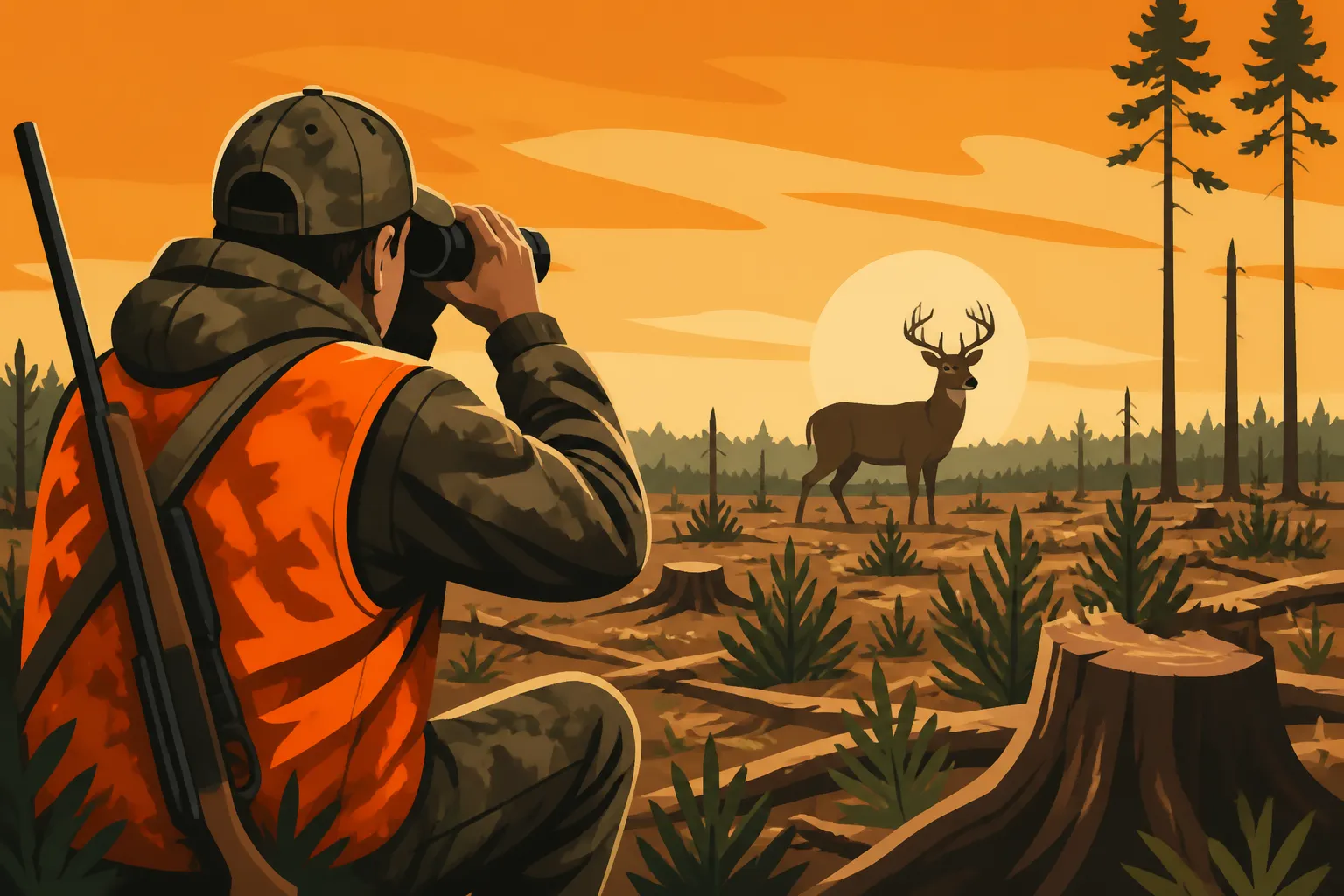
Hunting a Cutover Pine Stand on the Lower Shore
Hunting thick, tangled cutover pine stands on Maryland's Lower Shore can feel like trying to find a needle in a haystack – or, more accurately, like trying to navigate a briar patch while wearing a blindfold. It's a frustrating environment where visibility is minimal, movement is loud, and game seems to appear and disappear like ghosts. This guide will walk you through understanding these challenging habitats, developing effective strategies, and utilizing the right gear to successfully hunt deer and sika in Maryland's dense pine cutovers.
Understanding the Dynamics of a Cutover Pine Stand
These aren't your picturesque, open hardwoods. Cutover pine stands on Maryland's Lower Shore are a beast of their own, creating a unique ecosystem that, while challenging for hunters, is a goldmine for wildlife. They are essentially regeneration zones, left behind after a timber harvest, and their dense, tangled nature provides exactly what deer and sika need: food, cover, and security.
Why Deer and Sika Love These Areas
Think about it from a deer or sika's perspective. After a timber company comes through and clears a section of pine forest, the ground is suddenly exposed to sunlight. This sunlight encourages an explosion of new growth – briars, saplings, weeds, and various shrubs that were previously shaded out. This understory offers an incredible buffet of browse, providing high-quality forage throughout much of the year. Both white-tailed deer in Maryland and Maryland's Sika Deer, an Imported Herd thrive on this readily available food source. It’s not just the food; the sheer density of this new growth creates an impenetrable fortress. A deer can bed down just a few yards from a trail and be completely invisible. This makes cutovers ideal bedding areas, especially during hunting season when pressure pushes animals out of more open woods. They know they can disappear into that thick cover and feel relatively safe. This security is paramount, especially for mature animals who have learned to avoid danger. The extensive cover also helps them feel secure from predators.
Furthermore, these dense areas provide thermal cover in colder months, offering a buffer against harsh winds and cold temperatures. This makes them attractive bedding sites not just for security, but for comfort. When the wind picks up or temperatures drop, deer and sika will often seek out the densest sections of a cutover to hunker down. This concentration of animals in a relatively small area, though incredibly difficult to navigate, also means that if you can successfully penetrate their sanctuary, your chances of encountering game significantly increase. It's a classic high-risk, high-reward hunting scenario.
The Life Cycle of a Pine Cutover
A cutover pine stand isn't static; it evolves significantly over the years, and understanding this progression is key to knowing when and how to hunt it. Initially, right after logging, it's often a chaotic mess of stumps, logging debris, and disturbed soil. Within a year or two, however, the sun-drenched ground explodes with a mix of grasses, forbs, and pioneering shrubs. This is often the prime time for browse, attracting deer and sika like magnets. You’ll see a surge of blackberry, greenbrier, and various herbaceous plants that are highly palatable to deer. During this early stage, the cover is still relatively low, making it possible, though still challenging, to spot game moving through.
As the new pine saplings begin to establish themselves and grow taller, they start to shade out some of the lower browse, and the ground cover becomes less diverse. The stand transitions from a dense feeding and bedding area to more of a thick travel corridor, especially if it connects to other food sources or bedding. This phase often presents the densest, most challenging hunting conditions, with visibility dropping to mere feet in places. It's during this middle phase that these cutovers truly become a refuge, almost impenetrable by human hunters. Eventually, as the pines mature, the understory thins out again, making it less attractive for deer and sika seeking thick cover. The canopy closes, reducing sunlight to the forest floor, and the once-abundant browse disappears. Hunters who consistently scout these areas, perhaps with the help of a tool like GoHunt to mark changes year after year, will notice these subtle shifts and adapt their strategies accordingly, focusing on different sections as the habitat evolves. Understanding this cycle helps you prioritize which cutovers, or even which parts of a specific cutover, will be most productive at different times.
Scouting and Strategy for Success
Hunting cutover pine stands effectively isn't about aimlessly wandering; it requires meticulous scouting, smart planning, and a deep understanding of how deer and sika utilize these challenging spaces. Without a solid strategy, you'll spend more time fighting briars than seeing game.
Reading the Sign in a Thick Environment
Scouting a cutover is less about finding obvious, well-worn trails and more about deciphering subtle clues within the chaos. While you might find some defined deer trails, especially along the edges or where deer try to find the path of least resistance, the real treasures are often hidden deeper inside. Look for rubs and scrapes on the few trees that survived the logging or on new saplings. These indicate active deer and sika movement, and given the confined nature of the space, a rub line often means a buck or stag is regularly passing through that specific lane. Pay close attention to droppings and fresh tracks in any soft spots. The sheer density of cutovers often means that animals move slower and leave more sign, especially along the few discernible paths. You might also find evidence of bedding, such as flattened areas in thick grass or briars, often accompanied by fresh droppings or hair.
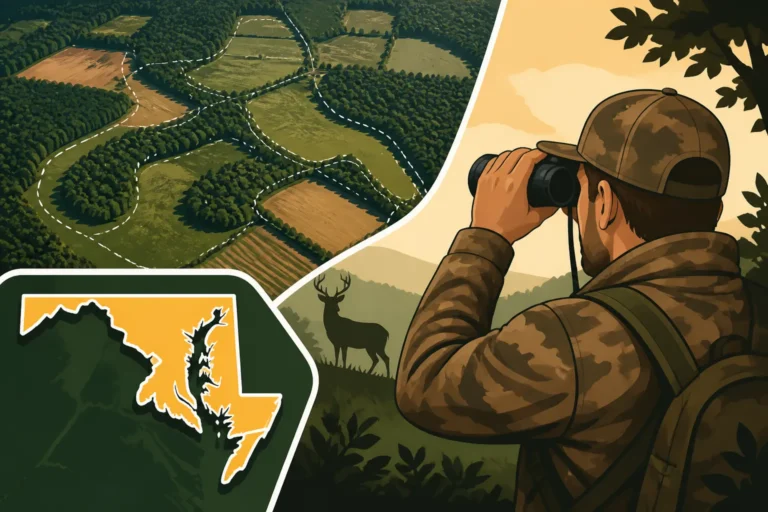
The biggest challenge is simply getting into these areas without blowing out all the game. During your off-season scouting trips, focus on identifying natural funnels within the cutover – perhaps a slight ridge, a dry creek bed, or a slightly less dense section that deer or sika might prefer for travel. These are your choke points, your opportunities. Using an aerial mapping tool like GoHunt can be invaluable here. You can identify the boundaries of the cutover, locate adjacent food sources, and even visualize potential entry and exit routes that might be obscured on the ground. Features like small islands of unlogged timber, old logging roads that have grown over, or even subtle changes in elevation can act as highways for deer. This kind of pre-hunt analysis, combined with boots-on-the-ground scouting, helps you develop a comprehensive picture of how game uses the area. Don't be afraid to crawl on your hands and knees in places to uncover these hidden travel ways; it’s often the only way to truly understand the intricate network within the thicket. For insight into another dense habitat, consider checking out Hunting a Loblolly Pine Island in the Marsh.
Entry, Exit, and Stand Placement Considerations
The dense nature of a cutover makes your approach and departure incredibly critical. A noisy entrance can ruin your hunt before it even begins. When considering stand placement, forget the traditional "20 feet up in a big oak" mentality. In a cutover, you might only need to be 8-12 feet high to get above the thickest growth and gain just enough visibility for a shot. Look for any mature trees that were left standing, or even use a sturdy climbing stand on a large pine trunk if permitted and safe. The goal isn't necessarily height, but rather a shooting lane and a slight advantage in visibility. If you can only see 30 yards, then you need to be prepared for a 30-yard shot, not hoping for a 100-yard clear cut. Clearing a few strategic shooting lanes with a pruning saw can dramatically improve your odds, but do so well in advance of the season to minimize disturbance.
Ground blinds are also incredibly effective in these environments, especially if you can brush them in naturally against some existing thicket. The key is to get into your position well before daylight and remain absolutely still and quiet. Planning your entry and exit routes to avoid known bedding areas or major travel corridors is paramount. Always approach with the wind in your favor. In thick cover, thermals can be tricky, so always try to hunt when the wind is consistently in your favor relative to where you expect the animals to be. Remember, the game already feels secure in these thickets; your job is to exploit their movement patterns without alerting them to your presence. Sometimes, the best stand isn't in the thickest part but rather on the edge, where animals will transition in and out. This strategy works well, particularly when animals are moving from dense bedding to more open feeding areas. Reviewing your planned routes and stand locations on an app like GoHunt can help you visualize the terrain and minimize your footprint and scent cone. A quiet entry is a slow entry – take your time, picking up your feet, and avoid scraping brush as much as possible. This is particularly important when Scouting Maryland Public Land With Aerial Photos, as you'll want to find those subtle approaches.
Hunting Techniques for Cutover Pine Stands
Once you've done your scouting and picked your spots, it's time to put boots on the ground. Hunting cutover pine stands requires specific techniques that differ significantly from open timber or field edges.
Still-Hunting Through the Chaos
Still-hunting, when done correctly, can be incredibly effective in cutovers. This isn't about walking quickly; it's about moving at a snail's pace, taking only a few steps, then pausing for several minutes to observe and listen. The noise you make is unavoidable, but by taking your time, you allow the woods to settle down around you. You're trying to spot the game before it spots you, which is a tall order in such dense cover. Look for horizontal lines (the back of a deer or sika) in a vertical world of saplings and briars. Pay attention to flicking ears, a patch of hide, or the twitch of a tail. You'll likely be hunting very tight quarters, so be ready for quick, close-range shots. Often, a deer or sika will hear you before you see them. They may not bolt immediately but might try to sneak away. That's your cue to freeze, scan intensely, and listen for the subtle sounds of their movement – a rustle, a snap, or even the subtle sound of breathing. A sudden shift in your position could send them running. It's an exercise in patience and precision. For more on this method, you might find tips on Still-Hunting Western Maryland Mountain Timber helpful, even though the terrain differs, the principle of slow, deliberate movement applies.
When still-hunting, always walk into the wind or with a crosswind. This minimizes your scent dispersion and maximizes your chances of surprising game. Focus on areas where sign is concentrated, such as where multiple trails converge or where browse is particularly heavy. Remember, you're not trying to cover ground quickly; you're systematically dissecting the cover. Use your binoculars to scan every little opening, every shadowy patch. Many times, you’ll only see a small part of an animal, so training your eye to spot unnatural shapes and colors is crucial. This method is often most effective during the middle of the day when animals are typically bedded, making them less likely to be on the move and more susceptible to a patient approach.
Elevated Stands vs. Ground Blinds
Choosing between an elevated stand and a ground blind in a cutover depends heavily on the specific terrain, available cover, and your personal hunting style.
-
Elevated Stands: The primary advantage of an elevated stand, even a slightly elevated one, is an improved sight line. Getting 8-10 feet off the ground can give you a crucial advantage, allowing you to see over some of the initial thicket that might completely obscure ground-level vision. This is particularly useful for archery hunting, where you need clear shooting lanes through the dense saplings. Remember that tree selection is limited; you’ll need a sturdy tree that survived the logging and is safe to climb. Portable ladder stands or hang-on stands are often the best choices, allowing you to adapt to the limited options. However, setting up an elevated stand can be noisy and time-consuming, and if you don't clear enough shooting lanes, your advantage is nullified. It's a delicate balance. The increased elevation can also help with scent dispersal, allowing your scent to be carried over the heads of approaching game, especially if you position yourself properly with the wind. Always check for overhead branches that might impede an arrow or bullet path.
-
Ground Blinds: Ground blinds truly shine in cutover pine stands. The natural density of the environment allows you to easily brush in a pop-up blind or even create a natural blind using fallen timber and existing vegetation. This allows you to blend seamlessly into the environment. The main advantage is stealth during entry and exit; you can often get into a ground blind with less disturbance than climbing a tree. They also offer excellent concealment for movement, allowing you to reposition for a shot without being silhouetted. The downside, of course, is limited visibility. You're hunting at eye level with the deer, meaning you need to be incredibly vigilant and prepared for very close encounters. When hunting from a ground blind, wearing full camouflage and breaking up your outline are even more critical. Consider the direction of the sun if you plan to sit for an extended period, as bright sunlight can cast harsh shadows or make you uncomfortable. Both options can be effective; the best choice often comes down to the specific micro-terrain of your chosen hunting spot. When you're in a ground blind, rely heavily on your hearing. Every snap of a twig or rustle of leaves could signal an approaching animal. If you're hunting sika, the unique whistle call can be an effective way to pinpoint their location, especially during the rut. For more on this, check out Hunting Sika Stags During Their Fall Whistle.
Essential Gear and Safety Considerations
Hunting cutover pine stands is physically demanding and requires specific gear to ensure both success and safety. The unique challenges of this habitat demand careful preparation.
Clothing, Navigation, and Communication
When venturing into a cutover, the right clothing isn't just about camouflage; it's about protection and functionality. Expect to encounter thorns, briars, and abrasive pine needles, so durable, tear-resistant outer layers are a must. Heavy-duty briar pants or chaps can save your legs a lot of pain and keep you from getting hung up on every piece of brush. Waterproof boots are also critical, as the Lower Shore can be wet, and cutovers often hold water in low-lying areas, creating muddy, boggy conditions. Blaze orange, as required by Maryland's hunting regulations, is non-negotiable for safety, especially if you're still-hunting or if other hunters are in the vicinity. Remember to check Maryland Blaze Orange Requirements to ensure you're meeting the legal requirements.
Navigation is another huge concern. It's incredibly easy to get disoriented in the dense, monotonous growth of a cutover. A reliable GPS unit or a smartphone with a mapping app like GoHunt is absolutely essential. Before you even step foot in the woods, mark your truck, your stand, and any key features like property lines or trails you've identified during scouting. Don't rely solely on your phone; a backup compass and physical map are always a good idea, as electronics can fail. Cell service can be spotty in some of these remote areas, so a satellite messenger or two-way radio can be a lifesaver for communication, especially if you're hunting with a partner or need to contact someone in an emergency. Always tell someone where you're going and when you expect to be back, providing specific details about your hunting area. This basic safety protocol is crucial when hunting any remote or challenging terrain.
The Importance of a Recovery Plan
Successfully shooting a deer or sika in a cutover is only half the battle; recovering it can be an even greater challenge. The dense cover that provides such great habitat also makes blood trailing incredibly difficult, if not impossible, especially after dark. Always take careful note of the exact spot where the animal was standing when you shot, and mark any visual landmarks. Pick out a specific tree or log beyond the animal to help orient yourself. If the animal runs, try to pinpoint its last known direction of travel. Give the animal plenty of time before you start trailing – often an hour or more for a solid hit, and even longer for a questionable one. This allows the animal to bed down and expire, rather than being pushed further into the thicket, making recovery even harder.
When you do begin to trail, go slowly, looking for every speck of blood, disturbed leaves, broken branches, or even flattened grass. A high-quality headlamp is non-negotiable for after-dark recovery, and a tracking light specifically designed to enhance blood visibility can be a game-changer. If you lose the trail, back out, mark your last blood, and come back with more people the next day. Four sets of eyes are always better than one in thick cover. Retrieving a Deer From a Tidal Marsh can offer some similar challenges in terms of difficult terrain and visibility. Having a plan, knowing your limitations, and potentially enlisting the help of a tracking dog (where legal) can make all the difference in a successful recovery, ensuring your hard-earned harvest doesn't go to waste. Always prioritize a safe and successful recovery.
Here's a quick look at how different hunting methods stack up in the challenging cutover terrain:
| Hunting Method | Pros in Cutover | Cons in Cutover | Ideal for |
|---|---|---|---|
| Still-Hunting | Highly mobile, covers ground, stealthy approach | Very difficult to spot game, easy to spook, extremely slow going | Actively searching for bedded game, small areas |
| Elevated Stand | Better visibility over immediate brush, scent dispersal | Limited suitable tree options, noisy setup, hard to find clear shooting lanes | Overlooking travel corridors, edges of thickets |
| Ground Blind | Excellent concealment, easy setup, comfortable | Very limited visibility at ground level, needs extensive lane clearing | Ambushing established trails within thickets, dense bedding |
| Deer Drive (Group) | Forces game out of thick cover, effective for large areas | Requires multiple hunters, can push game off property, less selective shooting | Large, impenetrable blocks of cutover, late season |
Disclaimer
Please remember that hunting regulations and conditions can change. Always consult the Maryland Department of Natural Resources (DNR) website for the most current rules, seasons, and licensing requirements before planning any hunt. This guide is for informational purposes only and does not replace official regulations. Stay safe and hunt ethically.