Building a Blind on a Maryland Shoreline Point
Finding a prime spot for waterfowl on Maryland's vast tidal waters is just the first step; actually creating a concealed position that blends into the natural shoreline and holds up to the elements can feel like a monumental task. Many hunters struggle with navigating the complex regulations, sourcing appropriate materials, and the sheer physical effort involved in building an effective blind. This guide will meticulously walk you through the essential steps for successfully building a sturdy and legal blind on a Maryland shoreline point, ensuring you're ready for waterfowl season.
Navigating Maryland's Blind Site Licensing and Regulations
Before you even think about hammering the first nail or cutting the first piece of brush, understanding the legal framework around shoreline blinds in Maryland is absolutely crucial. The state has a well-established system for allocating and regulating waterfowl hunting sites, especially those tied to shorelines. Ignoring these rules can lead to serious fines and the loss of your hunting privileges.
Understanding Riparian Rights and Blind Site Allocation
Maryland's blind site licensing system is deeply rooted in the concept of riparian rights, which essentially means that landowners whose property borders navigable water have certain privileges regarding that water. Specifically, they have the first right to license a blind site directly in front of their property. This isn't just a suggestion; it's a fundamental aspect of Maryland Waterfowl Blind Site Licensing. If you don't own the property, you'll either need explicit permission from the riparian landowner or you'll be looking for open, unlicensed sites.
The Department of Natural Resources (DNR) manages this system, with specific dates for when riparian landowners can apply for their sites and then open periods for non-riparian hunters to apply for any remaining unlicensed, or "open," sites. These "open" sites are usually located in areas where there's no private land or where a riparian landowner chose not to license their spot. It's a competitive process, especially in popular areas, and being prepared with multiple potential locations is always a smart move. Always double-check current year deadlines and application procedures on the Maryland DNR website, as they can shift slightly from year to year.
Required Permits and Adherence to Setback Rules
Beyond merely acquiring a blind site license, you'll need to adhere to a host of other regulations designed to ensure safety and fair chase. One of the most critical aspects is understanding the setback rules. These rules dictate minimum distances a blind must be from another licensed blind, from property lines, and from navigational channels. These distances aren't arbitrary; they're there to prevent conflicts between hunters, ensure safe shooting lanes, and keep waterways clear. For instance, blinds generally need to be a certain distance from an adjacent landowner's property line, even if you have the riparian rights to your own point.
Furthermore, you need to be aware of Maryland Shooting Hours and Legal Light. Shooting before or after these designated times is illegal and unsafe. Your blind must also comply with material and structural guidelines. While the DNR encourages natural materials for concealment, the structure itself needs to be safe and identifiable under certain conditions. For example, if your blind is permanent or semi-permanent, it might require specific markers or a unique identification number issued by the DNR, particularly if it's placed in a navigable waterway. Always carry your blind license and hunting license with you when you're at your site. A platform like GoHunt can be incredibly useful for overlaying property lines and identifying potential blind locations, helping you understand where riparian rights might apply and where open zones exist.
Scouting Your Shoreline Point for the Perfect Setup
Once you've navigated the licensing labyrinth, the real work of site selection begins. A good blind isn't just well-hidden; it's strategically placed to capitalize on waterfowl flight paths, prevailing winds, and local geography. This requires careful observation and a deep understanding of how ducks and geese use the shoreline.
Observing Waterfowl Movement and Flight Patterns
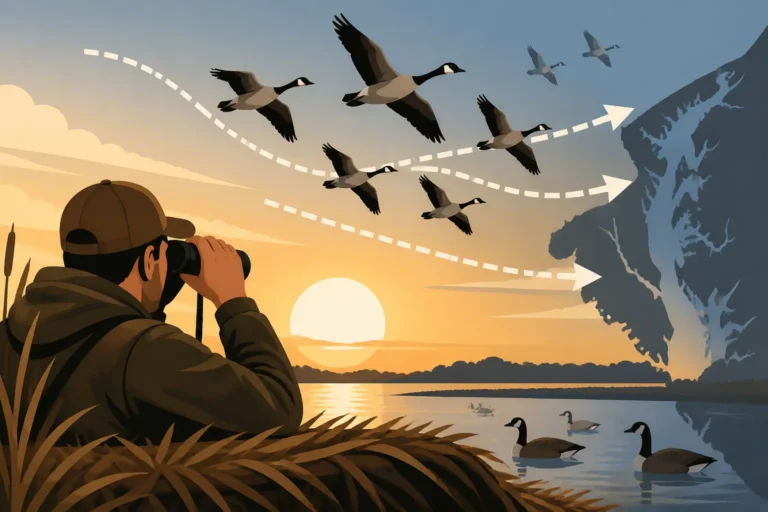
The success of your blind hinges almost entirely on whether birds actually fly past it or, even better, want to land near it. Spend time observing your chosen shoreline point before the season even starts. Watch during different times of day, in varying weather conditions, and as the tides change. Pay close attention to how ducks and geese approach and leave the area. Do they hug the shoreline? Do they cut across the point? Where do they seem to want to feed or raft up? Are there natural funnels created by land features or vegetation that concentrate their movement?
Consider the species you're targeting. Puddle ducks like mallards and black ducks often prefer shallower, protected coves and marshes, while diving ducks such as canvasbacks and redheads might be found in deeper, more open water further off a point. Knowing Puddle Ducks of the Maryland Marshes versus Diving Ducks of the Chesapeake will inform your decoy spread and blind placement. Using binoculars or a spotting scope can help you map out these flight patterns without disturbing the birds. You might notice that birds consistently skirt a certain side of the point, or that they prefer to land into the wind from a particular direction. This knowledge is gold for blind placement.
Assessing Wind, Water Depths, and Natural Cover
Wind direction is paramount in waterfowl hunting. Ducks and geese almost always land and take off into the wind, so your blind needs to be positioned downwind of where you expect them to approach. This gives you the best opportunity for a shot as they commit to your decoy spread. A blind that faces directly into the prevailing winds can be miserable to hunt from and might even scare birds if your concealment isn't perfect against the windward side. Use a weather app, or even better, a wind checker like those recommended on GoHunt, to understand local wind patterns.
Water depth around your point is another critical factor. You need water deep enough to float your decoys naturally, but shallow enough that you can easily set and retrieve them, especially if you're using chest waders. If you're hunting diving ducks, deeper water might be necessary, potentially requiring longer decoy lines. Tides will also significantly impact water depth, so Reading Tide Charts Before a Marsh Hunt is essential. Mark where the low and high tide lines are on your point during scouting trips. Finally, look for existing natural cover. A point that already has a stand of phragmites, spartina grass, or small bushes offers a fantastic head start on concealment. Integrating your blind into this existing cover is far more effective and less intrusive than trying to create cover from scratch in an open area.
Materials and Construction for Durability and Concealment
Once you've picked your perfect, legal spot, it's time to build a blind that will last through the season and keep you hidden. Choosing the right materials and construction techniques is vital for both effectiveness and longevity in Maryland's diverse weather conditions.
Choosing Weather-Resistant and Natural Materials
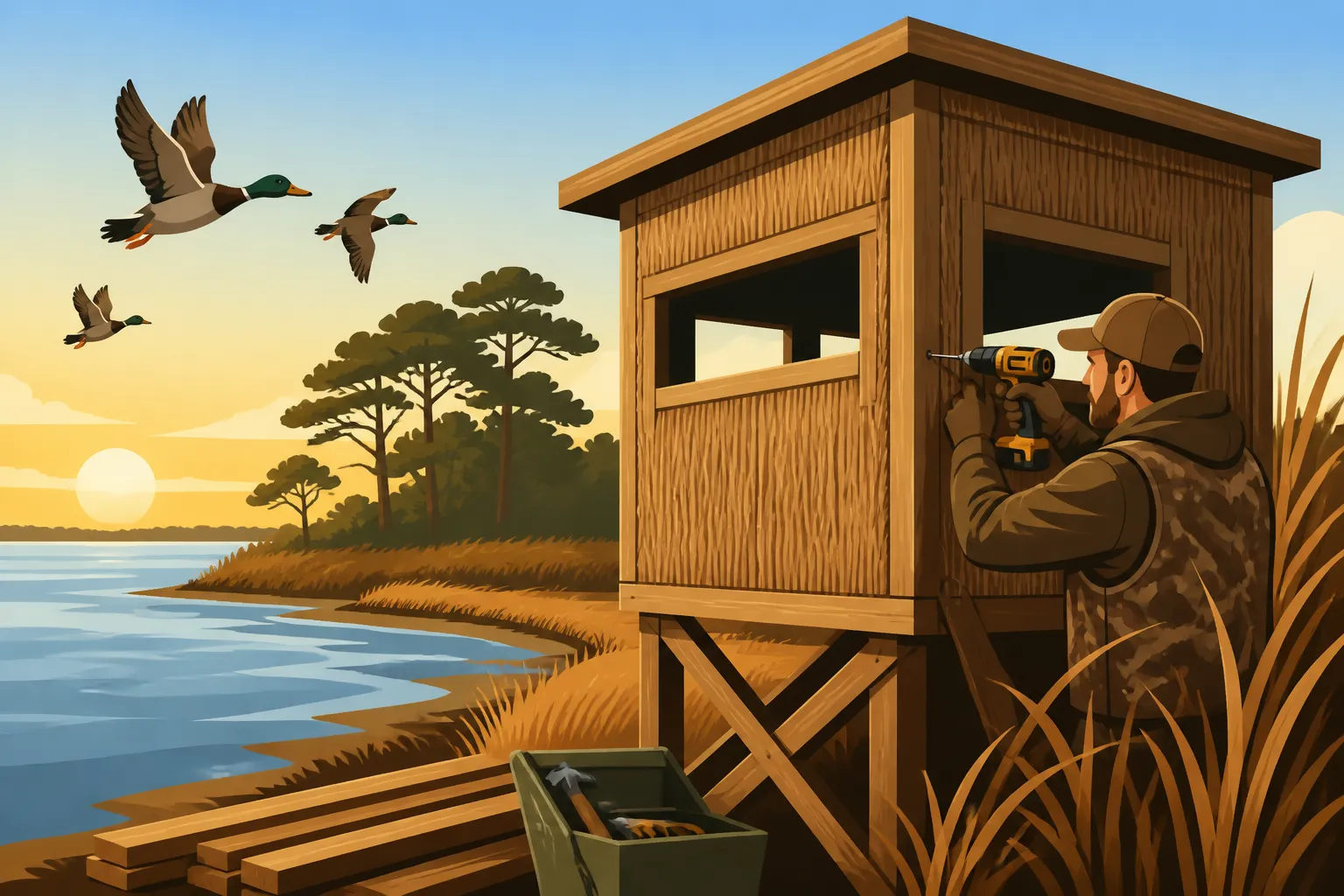
The materials you choose for your blind will dictate its durability and how well it blends into the environment. Shoreline points are exposed to wind, rain, salt spray, and sometimes even ice. Treated lumber (like ground contact pressure-treated wood) is often a good choice for the frame, as it resists rot and insect damage. Metal conduit or rebar can also form a sturdy, lightweight frame that's easy to transport and set up. For the walls and roof, think about materials that can be easily brushed in. Plywood or plastic sheeting can provide a base layer of protection, but always cover it completely with natural vegetation.
When it comes to concealment, nothing beats what's already growing nearby. Phragmites, cattails, marsh grass, cedar branches, or pine boughs are excellent for brushing in your blind. The goal is to make your blind disappear into the natural contours and colors of the shoreline. Avoid anything too rigid or uniform; nature isn't perfectly square. Consider using heavy-duty zip ties or baling wire to secure natural materials to your frame, making it easy to refresh the brush as it wilts or blows away throughout the season. The more realistic your blind looks, the less likely birds are to flare, and the better your chances of Hunting a Chesapeake Bay Blind at First Light will be.
Secure Construction Techniques and Blending with the Landscape
Building a blind on a shoreline point means contending with unstable ground and often strong winds. Anchoring your blind securely is non-negotiable. If you're building a semi-permanent structure, posts should be driven deep into the marsh or mud, or set into concrete if feasible and permitted. For more temporary blinds, heavy-duty T-posts or rebar stakes driven into the ground can provide a solid foundation. Cross-bracing the frame will add significant stability against lateral winds. Remember, a blind that collapses in the middle of a hunt or, worse, blows away and creates debris in the Bay, is a problem for everyone.
The final step in construction is the art of blending. Step back and look at your blind from the perspective of an approaching duck or goose. Are there hard edges? Does it cast an unnatural shadow? Is it too tall or too short for the surrounding vegetation? Try to match the height and texture of the natural cover. Build an overhead cover or a small roof to block skylight and keep you out of the elements. Mud or camouflage netting can break up the outline, but always layer natural vegetation on top. Using onX maps or similar mapping tools from GoHunt to identify specific vegetation types in your area can help you plan your brushing materials in advance. Don't forget to create shooting lanes that offer clear views while still maintaining maximum concealment from approaching birds.
| Blind Material Type | Pros | Cons | Ideal Use Case |
|---|---|---|---|
| Pressure-Treated Wood | Durable, strong, rot-resistant, versatile | Heavy, requires tools, more visible if not well-brushed | Semi-permanent, sturdy frame for exposed points |
| Metal Conduit/Rebar | Lightweight, strong, easy to transport/assemble | Can be noisy if not secured, less rigid than wood | Temporary blinds, easy relocation, marsh setups |
| PVC Pipe | Very lightweight, cheap, easy to cut | Less durable in high winds, can become brittle in cold | Light-duty, quick setup, minimal exposure |
| Natural Brush/Logs | Excellent concealment, eco-friendly, free | Requires frequent refreshing, less structural integrity | Blending an existing structure, temporary concealment |
| Camouflage Netting | Quick concealment, lightweight, portable | Can flap in wind, limited insulation, needs backing | Quick setup, layered over frame, supplemental cover |
Maintaining Your Blind and Ethical Considerations
Building a blind is a significant investment of time and effort, but the work doesn't stop once construction is complete. Proper maintenance ensures your blind remains effective and safe throughout the season, and ethical considerations are paramount for responsible hunting.
Seasonal Maintenance and Off-Season Care
Maryland's weather can be tough on even the most well-built blind. High winds, heavy rains, and winter ice can take a toll. Throughout the season, you'll need to regularly check your blind for damage. Are the brush materials still providing adequate concealment, or have they withered and fallen off? Carry extra zip ties, baling wire, and pruning shears to refresh the brush as needed. Check the structural integrity of the frame, especially after a major storm. Loose connections or weakened posts can lead to a collapsed blind, potentially injuring hunters or sending debris into the water.
When the season ends, consider your off-season care. For temporary blinds, it's often best to dismantle them and store the materials. This not only prevents environmental pollution but also prolongs the life of your materials. If you have a semi-permanent structure, remove all synthetic materials that won't naturally degrade. Any non-degradable materials left in the environment can become a hazard to wildlife and other boaters. A thorough cleaning and any necessary repairs during the off-season will ensure your blind is ready to go when Maryland Duck Season Dates roll around next fall. This proactive approach saves you headaches and hurried repairs on opening day.
Respecting the Environment and Other Hunters
As responsible stewards of Maryland's natural resources, hunters have a duty to minimize their impact on the environment. When building and maintaining your blind, always prioritize natural and biodegradable materials. Avoid using plastics, foams, or other non-degradable items that can break down and pollute the Chesapeake Bay or its tributaries. If you do use synthetic materials for the frame or base, ensure they are securely anchored and removed at the end of the hunting season. Consider the impact of your construction on the immediate shoreline habitat; try to avoid excessive clearing of native vegetation that might serve as food or cover for other wildlife.
Beyond environmental considerations, respecting other hunters is a cornerstone of ethical waterfowl hunting. Adhere strictly to setback rules to ensure safe distances between blinds and prevent conflicts. Never crowd another hunter's blind, even if you believe their site isn't licensed. Communication and courtesy go a long way in sharing our limited resources. Ensure your blind is well-camouflaged and not an eyesore for other users of the waterway. Remember, your actions reflect on the entire hunting community, and demonstrating respect for the land, the wildlife, and fellow outdoor enthusiasts helps preserve our hunting heritage for future generations. For those curious about the broader picture of waterfowl hunting regulations, exploring topics like Maryland Migratory Bird Stamp Requirements can offer valuable context.
Disclaimer
The information provided in this guide is for general informational purposes only and does not constitute legal advice. Hunting regulations, licensing requirements, and specific rules for blind construction can change frequently. Always consult the most current Maryland Department of Natural Resources (DNR) regulations and local ordinances before engaging in any hunting activities or blind construction. Compliance with all applicable laws is the sole responsibility of the hunter.