Maryland Shooting Hours and Legal Light
It's easy to get tangled up in the fine print of Maryland's hunting regulations, especially when it comes to legal shooting hours. You want to be out there at prime time, but nobody wants to be on the wrong side of the law, wondering if that shot taken just minutes after civil twilight was actually legal. This comprehensive guide will walk you through the nuances of Maryland's shooting hours and legal light, helping you understand the rules for various game species and ensuring you're always hunting ethically and legally.
Understanding Legal Hunting Hours in Maryland
The concept of "legal light" is fundamental to ethical and lawful hunting in Maryland, yet it's one of the most frequently misunderstood aspects of our state's regulations. It's not just about when the sun feels like it's up or down; there are precise, officially defined windows of time that dictate when you can legally discharge a firearm or bow at game. Missing these windows, even by a few minutes, can have serious consequences.
Defining Legal Light for Hunters
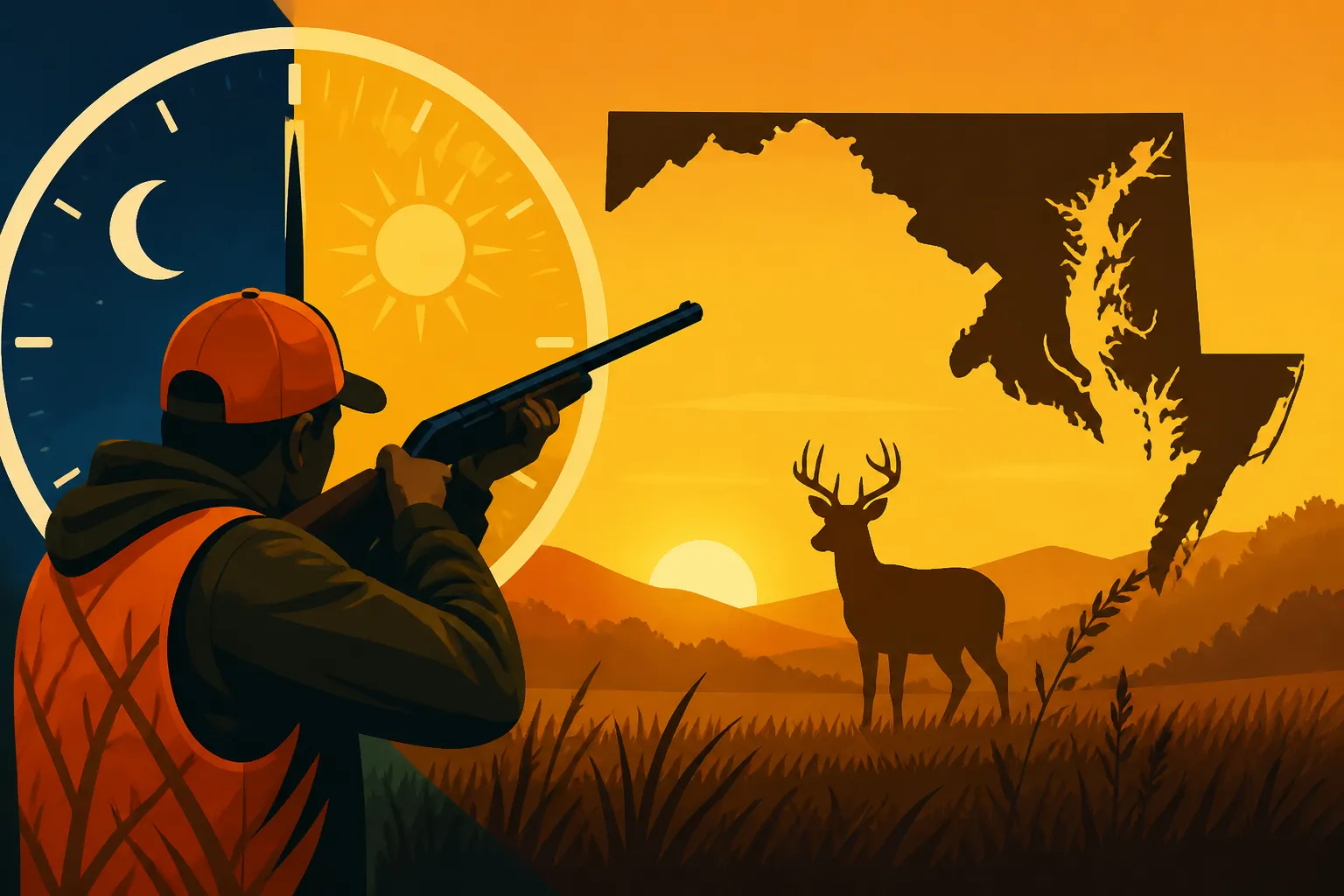
In Maryland, "legal light" for most game species generally refers to the period from one half-hour before official sunrise to one half-hour after official sunset. This window is often referred to as civil twilight. Civil twilight is the time when the center of the sun is geometrically 6 degrees below the horizon in the morning and evening. During this time, there is usually enough natural light for objects to be distinguishable, but artificial illumination might be needed for some activities. For hunters, this means there's a crucial buffer zone on either side of the actual sun's appearance and disappearance that's considered part of the hunting day.
However, this isn't a one-size-fits-all rule. Different species and hunting methods can have their own specific regulations regarding legal shooting hours. For instance, migratory bird hunting, like duck and goose seasons, often operates under federal guidelines that might dictate slightly different starting and ending times, usually aligning more closely with official sunrise and sunset without the extended half-hour buffer. Always double-check the specific regulations for the game you're pursuing to ensure you're within the legal window. The Maryland Department of Natural Resources (DNR) publishes official sunrise and sunset tables annually, and these are the times hunters should always refer to, rather than relying on personal observation or generalized weather app data.
The Importance of Official Sunrise and Sunset Times
When you're planning a hunt, especially for those critical first and last minutes of the day, relying on anything less than official sunrise and sunset times can put you at risk. These times are meticulously calculated by astronomical observatories and are the legal standard that conservation officers use. They account for the curvature of the Earth, your specific latitude and longitude, and the time of year. Your car's dashboard clock, your phone's default weather app, or even a local news forecast might give you a general idea, but they often aren't precise enough for legal hunting purposes.
The Maryland DNR provides tables in their annual hunting guide and online that list these precise times for various regions of the state throughout the hunting seasons. It’s imperative to consult these resources before heading afield. Many experienced hunters will even keep a printed copy of the relevant table in their pack or car as a quick reference. This attention to detail isn't just about avoiding a citation; it's also about ethics. Hunting during periods of insufficient light can compromise shot placement, leading to wounded game and difficult, often unsuccessful, recovery efforts. Respecting legal light boundaries helps ensure clean kills and responsible hunting.
Specific Regulations for Different Game Species
Maryland's diverse hunting opportunities mean a variety of rules. The "half-hour before sunrise to half-hour after sunset" rule is a good baseline, but it's crucial to understand the exceptions and specific details for the game you're pursuing. Failing to differentiate between species-specific shooting hours is a common mistake that can land hunters in hot water.
Deer Hunting: Archery, Muzzleloader, and Firearms
For white-tailed deer and Sika deer in Maryland, the general rule of one half-hour before official sunrise to one half-hour after official sunset applies across the board, regardless of the weapon used. This consistency makes it somewhat easier for deer hunters to remember. Whether you're in the woods with a compound bow during Maryland's Archery Season Opening Day in September, or carrying a shotgun or rifle during Maryland Firearms Season Opening Day in late November, your legal shooting window for deer remains the same. This also holds true for the special primitive weapon seasons, so hunters during Maryland Muzzleloader Season Dates will follow these same guidelines.
This extended window allows hunters to take advantage of the deer's natural movement patterns, as they are often most active during the low-light periods of dawn and dusk. Many seasoned hunters know that those crucial minutes at the very beginning and end of the day can be the most productive. However, it also demands diligence. As the light fades, positive target identification becomes paramount. Ensure you can clearly identify your target as a legal deer and that you have a safe backdrop before taking a shot. Ethical hunting means always waiting for sufficient light to make a clean, responsible kill.
Waterfowl Hunting: Special Considerations
Waterfowl hunting, which includes ducks, geese, and other migratory birds, operates under a different set of federal regulations that Maryland adopts. Unlike deer hunting, the shooting hours for most migratory game birds begin at official sunrise and end at official sunset. There is no half-hour buffer on either end. This distinction is incredibly important and often overlooked by hunters accustomed to the deer hunting schedule. You cannot legally shoot a duck or goose a half-hour before the sun officially peeks over the horizon.
This difference in regulations means waterfowl hunters must be even more precise with their timing. For instance, if you're out chasing ducks on Maryland Duck Season Dates or setting up for geese during Maryland Canada Goose Season Dates on the Eastern Shore, your day truly starts and ends with the sun. Many hunters utilize online resources, dedicated hunting apps like those provided by GoHunt, or waterproof printouts to track these exact sunrise and sunset times. These tools can often automatically adjust for your specific location, ensuring you're always compliant. Being set up and ready a few minutes early is fine, but squeezing off a shot outside the legal window, even by accident, is a serious violation.
Turkey and Small Game: Different Rules for Different Quarry
Wild turkeys and various small game species like squirrels and rabbits also have their own specific shooting hour rules, which can vary from the general deer hunting framework. For wild turkeys, Maryland's regulations typically state that shooting hours are from one half-hour before sunrise until noon during the spring season. During the fall and winter turkey seasons, the shooting hours extend to one half-hour after sunset, similar to deer. This midday cutoff in spring, particularly during Maryland Spring Turkey Season Dates when gobblers are most active in the mornings, is a crucial detail for turkey hunters to remember.
For small game species like squirrels, which are pursued during seasons like Maryland Squirrel Season Opens and Closes in the early fall, the rules generally align with the half-hour before sunrise to half-hour after sunset window, much like deer. This allows hunters to take advantage of the early morning activity of squirrels as they begin foraging. However, species like pheasants, often hunted on managed preserves, might have their own unique hours set by the preserve itself, though public land pheasant hunting would follow general small game rules. Always consult the Maryland DNR hunting guide for the specific season and species you intend to pursue to avoid any confusion. The comprehensive annual guide is your best friend when it comes to navigating these varied regulations.
Daylight Saving Time and Its Impact on Shooting Hours
Daylight Saving Time (DST) can be a real headache for hunters. Just when you've gotten into a rhythm and understand the legal light for your morning and evening hunts, the clocks shift, and suddenly, everything feels off. This change isn't just an inconvenience; it can directly impact your legal hunting window and requires careful attention to avoid accidental violations.
Adjusting Your Clock, Adjusting Your Hunt
When Daylight Saving Time begins in the spring, clocks "spring forward" an hour. This means that sunrise and sunset occur one hour later by the clock. For hunters, this effectively shifts your shooting hours an hour later. If you don't adjust your understanding of legal light, you might find yourself in the woods an hour too early, waiting for that legal shooting time to arrive, or cutting your evening hunt short prematurely. Conversely, when DST ends in the fall and clocks "fall back," sunrise and sunset occur an hour earlier by the clock. This change means that your legal hunting window starts an hour earlier in the morning and ends an hour earlier in the evening according to the new time.
The key here is that the actual solar event of sunrise and sunset doesn't change; only the arbitrary time we assign to it does. Maryland's legal shooting hours are always tied to official sunrise and sunset, regardless of whether we're on Standard Time or Daylight Saving Time. So, when the clocks change, you must re-check the official sunrise/sunset tables or update your hunting app, such as GoHunt, which will automatically adjust for these shifts. Trusting your old mental calculations after a time change is a recipe for trouble and could lead to you being in violation of shooting hour laws.
Seasonal Shifts and Hunter Awareness
Beyond the abrupt changes of Daylight Saving Time, hunters also need to be aware of the natural, gradual shift in sunrise and sunset times throughout the hunting season. In early September, when archery season kicks off, the days are still relatively long. However, by the time December rolls around, and you're contemplating a late-season deer hunt, the days are significantly shorter, with much later sunrises and earlier sunsets. This constant shift means that the legal shooting windows are always in flux.
For instance, those precious thirty minutes before sunrise might mean a 6:00 AM start in September, but it could be closer to 7:00 AM in December. Similarly, your quitting time in the evening will gradually creep earlier as autumn progresses. This is why consistent vigilance is essential. You can't just memorize one set of times for the entire season. Making it a habit to check the official times each week, or at least before each major hunt, is a mark of a responsible hunter. It ensures you're always maximizing your legal hunting time while staying within the confines of the law, regardless of the season's progression or time zone adjustments.
Tools and Resources for Tracking Legal Light
In today's connected world, there are more resources than ever to help hunters accurately track legal shooting hours. Gone are the days of solely relying on a crumpled, outdated newspaper almanac. From digital apps to official government publications, leveraging these tools is a non-negotiable part of modern, ethical hunting.
Using Digital Apps and Online Calculators
For many hunters, especially those who appreciate convenience and accuracy, digital apps and online calculators have become indispensable tools for tracking legal light. Many sophisticated hunting apps offer real-time, location-specific sunrise and sunset data, and then automatically calculate the legal shooting hours based on those figures and the specific regulations for various game species in Maryland. For example, the popular hunting platform GoHunt provides excellent tools for this, allowing you to punch in your exact location and see your precise legal hunting window. This eliminates much of the guesswork and manual calculation.
These apps often integrate other useful features, such as mapping, weather forecasts, and even solunar tables, making them comprehensive resources for planning your time afield. Beyond dedicated hunting apps, general weather apps or sunrise/sunset calculators available on most smartphones can also provide the raw data, though you'll still need to apply Maryland's specific half-hour rules or other species-specific regulations yourself. The key benefit of digital tools is their dynamic nature; they adjust automatically for Daylight Saving Time and the natural progression of the seasons, as long as you have a reliable internet connection for updates. Just make sure the app or calculator is using official astronomical data and not just a generalized estimate.
Maryland DNR Resources and Printed Guides
While digital tools are incredibly handy, nothing beats the official word from the Maryland Department of Natural Resources (DNR). The DNR publishes comprehensive annual hunting guides, both in print and online, that contain all the legal shooting hours for various game species throughout the hunting season. These guides are the definitive source of information and should always be your primary reference. You can usually pick up a printed copy wherever hunting licenses are sold, or download a free PDF from the DNR website.
These official publications also include crucial details about weapon restrictions (see Maryland's Legal Weapons by County), bag limits, license requirements (like Maryland Hunting Licenses and What They Cost ), and other vital information. Many hunters still prefer to carry a physical copy of the guide, especially in areas with spotty cell service. Additionally, the DNR website often features interactive maps and specific regulation updates that might not be in the printed guide immediately. Familiarizing yourself with these resources is part of your responsibility as a Maryland hunter and ensures you have the most accurate and up-to-date information at your fingertips, reducing the risk of accidental violations.
Common Misconceptions and How to Avoid Violations
Even experienced hunters can fall prey to common misconceptions about legal shooting hours. The rules aren't always intuitive, and historical changes in regulations can lead to outdated information persisting. Understanding these pitfalls and being diligent in your checks is crucial for avoiding violations.
The "Half-Hour" Rule: When It Applies and When It Doesn't
The most pervasive misconception revolves around the "half-hour before sunrise to half-hour after sunset" rule. While this rule is correct for most deer hunting (both archery and firearms), and many small game species in Maryland, it does not apply universally. The biggest departure, as discussed, is for migratory game birds, like ducks and geese, where shooting hours are strictly from official sunrise to official sunset. This means if you start shooting for geese at the same time you'd start for deer, you're likely in violation.
Similarly, spring turkey season has its own unique cutoff: one half-hour before sunrise to noon. If you're out there calling a gobbler in the afternoon during spring, even though there's still plenty of legal light left in the day for deer hunting, you're breaking the law. These differences can be confusing, especially if you hunt multiple species throughout the year. The best way to combat this confusion is to consult the Maryland DNR guide or a reliable app like GoHunt for each specific species you are targeting, before each specific hunt. Don't generalize; verify.
| Game Species / Method | Morning Start Time | Evening End Time | Common Season |
|---|---|---|---|
| Deer (Archery, Muzzleloader, Firearms) | 1/2 hour before sunrise | 1/2 hour after sunset | Fall/Winter |
| Waterfowl (Ducks, Geese) | Official sunrise | Official sunset | Fall/Winter |
| Spring Turkey | 1/2 hour before sunrise | Noon | Spring |
| Fall/Winter Turkey | 1/2 hour before sunrise | 1/2 hour after sunset | Fall/Winter |
| Small Game (Squirrel, Rabbit) | 1/2 hour before sunrise | 1/2 hour after sunset | Fall/Winter |
Avoiding Poaching Charges: Due Diligence is Key
Operating outside of legal shooting hours, even by a few minutes, is considered poaching and can result in significant fines, loss of hunting privileges, and confiscation of equipment. Conservation officers are trained to enforce these regulations strictly, and ignorance of the law is never an excuse. Beyond the legal ramifications, shooting outside of legal light raises serious ethical concerns. It increases the risk of misidentifying a target, making a poor shot, or failing to recover wounded game. It also contributes to a negative public perception of hunting.
To protect yourself and uphold the integrity of hunting, due diligence is absolutely key. This means proactively checking official sunrise and sunset times for your specific hunting location and the species you're pursuing. Many hunters use GPS-enabled apps to confirm their exact coordinates, then cross-reference with official tables. When Scouting Maryland Public Land Before Season or even on private ground, familiarize yourself with landmarks that can help you gauge the light. If you have any doubt whatsoever about the legal light, err on the side of caution. It's always better to wait a few extra minutes for full legal light or pack up a few minutes early than to risk a violation or an unethical shot. Remember, responsible hunting starts long before you pull the trigger or release an arrow.
Disclaimer
The information provided in this guide is for general informational purposes only and is not intended as legal advice. Hunting regulations in Maryland are subject to change, and it is the hunter's sole responsibility to consult the most current Maryland Department of Natural Resources (DNR) hunting guide and relevant federal regulations before engaging in any hunting activity. Always verify season dates, bag limits, and legal shooting hours with official DNR publications.