When Maryland Squirrel Season Opens and Closes
Trying to keep tabs on all the various hunting seasons here in Maryland can sometimes feel like you need a full-time administrative assistant just to keep them straight, right? Between deer, waterfowl, turkey, and all the small game opportunities, it’s easy to get lost in the regulations and dates. If you're eager to chase some bushy-tails this year, you’re in the right place. This comprehensive guide will walk you through everything you need to know about when Maryland's squirrel season opens and closes, ensuring you're fully prepared to hit the woods.
Understanding Maryland's Squirrel Hunting Seasons
For many of us, squirrel hunting is where it all began. It's often the first species new hunters pursue, offering accessible and exciting action in the early fall woods. But even if you've been at it for decades, remembering the exact start and end dates can be a yearly challenge. Maryland offers a generous window to pursue these agile arboreal critters, primarily targeting gray squirrels, which are abundant across the state's diverse woodlands.
Key Dates for Gray and Fox Squirrels
Maryland's squirrel season is pretty consistent year after year, offering a long stretch of opportunity that caters to both early-season enthusiasts and late-season trackers. Typically, the season for both gray and Eastern fox squirrels kicks off on the first Saturday in September. This early opener is a fantastic time to be in the woods, often with lush green foliage, but it also brings its own set of challenges, like dealing with warmer temperatures and dense cover.
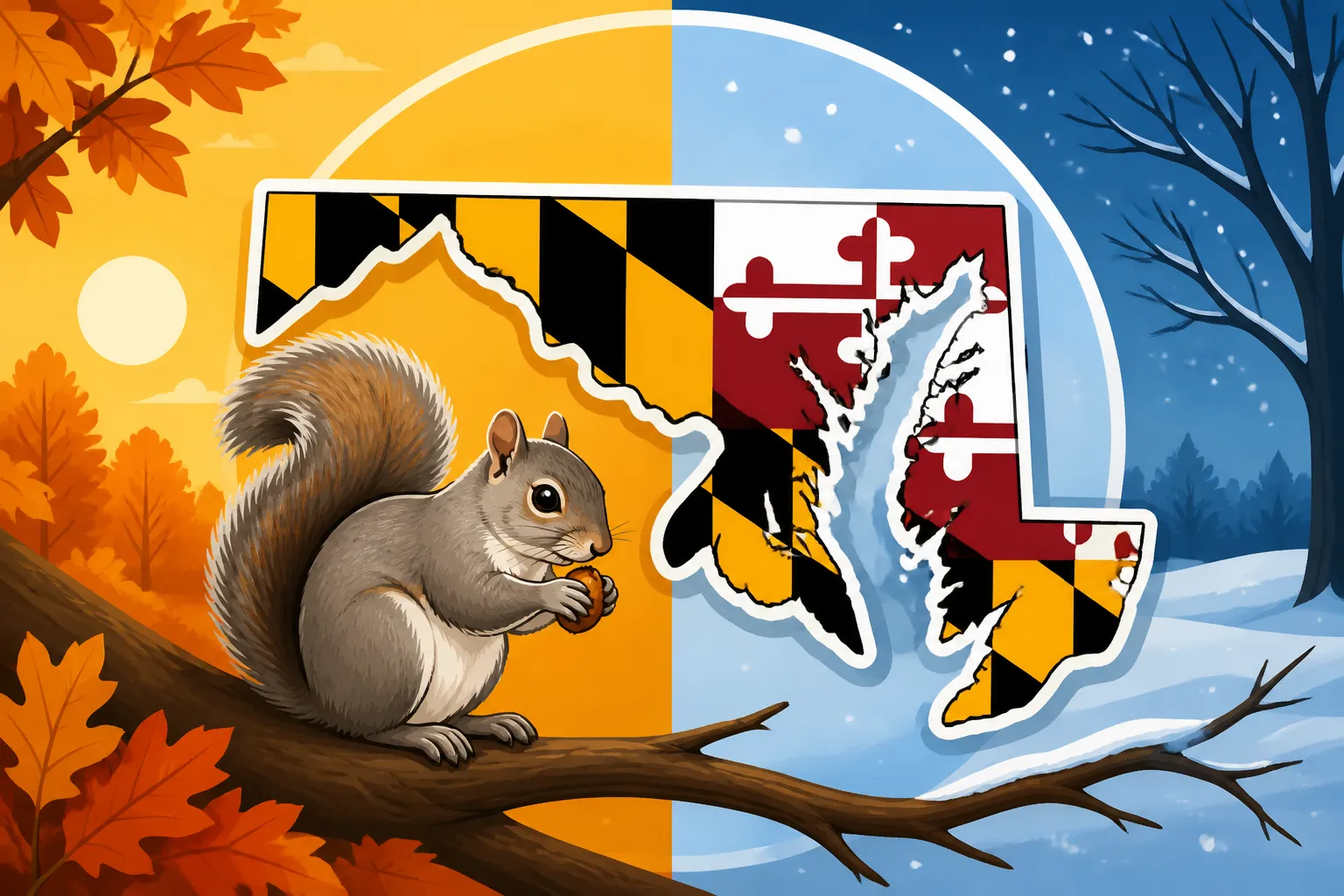
The season then runs continuously, stretching well into the winter months, usually closing at the end of February. This extended period means you can enjoy everything from the crisp, colorful days of autumn to the stark, silent beauty of a snow-covered forest while pursuing squirrels. It's worth noting that while the season is long, conditions change dramatically, influencing squirrel behavior and hunting tactics. Knowing these dates by heart ensures you don't miss out on any prime hunting days.
The Importance of Early and Late Season Opportunities
The sheer length of Maryland's squirrel season provides a unique opportunity to experience a wide range of hunting conditions and squirrel behaviors. The early season, starting in September, often finds squirrels focused on acorns and other mast crops. They might be a bit more predictable in their feeding patterns, but the dense canopy can make spotting them a real challenge. Plus, the early warmth means you'll want to take extra precautions for meat care if you’re planning on keeping your harvest.
As the season progresses into late fall and winter, the leaves drop, opening up the woods and making squirrels easier to spot. However, these late-season squirrels are often much warier, having encountered hunters or predators for months. Food sources shift, too, with squirrels relying on cached nuts or whatever remaining hard mast they can find. This transition from a "bustling woods" feel to a "quiet contemplation" type of hunt is one of the joys of Maryland's long squirrel season, allowing you to refine your skills against increasingly challenging quarry. You can even check out some specific tactics for Squirrel Hunting Maryland's September Opener to get a jump start.
Daily Bag Limits and Possession Limits
To ensure healthy populations and sustainable hunting, Maryland has specific bag and possession limits for squirrels. For gray and Eastern fox squirrels combined, the daily bag limit is six. This means you can harvest up to six squirrels in a single day. There isn't a separate possession limit listed that differs from the daily bag, which simplifies things for hunters. Generally, if you're not exceeding the daily bag, you're fine, but it's always wise to check the current Maryland DNR hunting guide for any updates or specific nuances.
It’s important to always adhere to these limits, not just because it’s the law, but because it’s part of being a responsible steward of our wildlife resources. These regulations are designed to allow ample opportunity for hunters while ensuring that squirrel populations remain robust for future generations to enjoy. Taking only what you need and can use is a fundamental principle of ethical hunting that we should all embrace.
Where to Find Maryland's Huntable Squirrel Species
Maryland offers a rich tapestry of habitats, from the rugged Appalachian mountains to the coastal plains, providing homes for various small game species. When it comes to squirrels, understanding their preferred environments is key to a successful hunt. While gray squirrels are widespread, the larger Eastern fox squirrel is more localized, and the protected Delmarva fox squirrel requires careful identification.
Prime Habitats for Gray Squirrels
Gray squirrels are arguably the most common and widely distributed squirrel species throughout Maryland, thriving wherever mature hardwood forests abound. If you're looking for prime gray squirrel country, focus on areas rich in oak, hickory, and other nut-bearing trees. These squirrels depend heavily on mast crops for survival, especially leading into the fall and winter months. You'll often find them foraging on the forest floor, caching nuts, or scampering through the canopy.
Excellent spots to pursue gray squirrels include many of Maryland's state forests and wildlife management areas. Think about places like Savage River State Forest in Western Maryland, which boasts vast tracts of mature timber. Or consider the expansive oak flats in Green Ridge State Forest. When scouting, look for "cuttings"—shredded nut shells left by feeding squirrels—at the base of trees, or drey nests (leaf nests) high in the branches. Areas with abundant food sources and thick canopy cover will almost always hold gray squirrels, providing fantastic opportunities for a productive day in the woods.
Locating Fox Squirrels in Western Maryland
The Eastern fox squirrel, a larger cousin to the gray squirrel, is a bit more particular about its habitat and thus less widespread in Maryland. In our state, you're most likely to encounter these impressive squirrels in the western counties, particularly in areas with mature, open timber stands and scattered woodlots, often bordering agricultural fields. They tend to prefer less dense canopy cover than gray squirrels and might spend more time on the ground.
While not as numerous as gray squirrels, finding a fox squirrel can be a real treat due to their size and striking appearance. If you're specifically targeting them, focus your efforts on the fringes of larger forest blocks in Garrett, Allegany, and Washington counties. Look for those stately, older oak and hickory trees, often with more space between them. For more insights into these magnificent creatures and where to find them, you can delve deeper into Fox Squirrels in Western Maryland.
Protecting the Delmarva Fox Squirrel
This is a critical point that every squirrel hunter in Maryland needs to be aware of: the Delmarva fox squirrel is a federally and state-protected species. Unlike the huntable Eastern fox squirrel, the Delmarva variety is off-limits. They are slightly different in appearance, often larger and sometimes paler in color, with a bushier tail. Their historical range was primarily concentrated on the Eastern Shore, particularly in Dorchester, Somerset, and Wicomico counties, but their populations have been making a remarkable comeback in certain areas.
It is absolutely vital for hunters to be able to distinguish between the two. The Delmarva fox squirrel has a unique color pattern, often appearing silver-gray with white on its belly, nose, and ear tips, and a very full, bushy tail. The Eastern fox squirrel, by contrast, typically has a more reddish-brown or yellowish-orange fur with a somewhat less bushy tail. If there's any doubt, don't shoot. Ignorance of the law is no excuse, and accidentally taking a protected species can lead to significant penalties. For a detailed guide on identification and range, make sure to read up on Telling a Fox Squirrel From a Protected Delmarva Squirrel and explore Where Delmarva Fox Squirrels Still Live.
Essential Gear and Tactics for Maryland Squirrel Hunting
Squirrel hunting might seem straightforward, but having the right gear and understanding effective tactics can dramatically increase your success and enjoyment. It's not just about walking into the woods; it's about being prepared and employing smart strategies.
Choosing the Right Firearm and Ammunition
When it comes to selecting a firearm for squirrel hunting, you have a few excellent options, each with its own advantages.
- Small-caliber Rifles (.22 LR, .17 HMR): These are often the firearm of choice for many seasoned squirrel hunters. A .22 long rifle is incredibly accurate, quiet, and economical. It's perfect for headshots, which preserve more meat. The .17 HMR offers a flatter trajectory and more power, great for longer shots. The downside is that they require precise aim, which can be challenging on a moving target or if you're not accustomed to shooting accurately offhand. Always carry quality, accurate ammunition.
- Shotguns (20 gauge, .410): For those who prefer a bit more leeway, a shotgun is an excellent choice, especially in thick cover where squirrels might be on the move. A 20-gauge or .410 shotgun loaded with small shot (like #6 or #7.5) provides a pattern that makes hitting these quick-moving targets much easier. The trade-off is that shot can damage some meat, but careful aim at the head or neck can minimize this. A shotgun is also a great option for younger hunters or those still building their marksmanship skills.
- Air Rifles: Modern, powerful air rifles, especially PCP (pre-charged pneumatic) models in .22 or .25 caliber, have become increasingly popular for small game. They are remarkably quiet, accurate, and can be quite effective. They offer a unique challenge and are often suitable for areas where firearms might be restricted or where noise is a concern.
Regardless of your choice, make sure you're proficient with your weapon and that it's sighted in properly.
Effective Hunting Strategies and Techniques
Squirrels are creatures of habit, and understanding their daily routines can make all the difference.
- Still-Hunting: This is a classic and highly effective method. Move slowly and deliberately through the woods, pausing frequently to scan the trees and ground for movement. Take a few steps, then stop and stand absolutely still for several minutes, letting your eyes and ears do the work. Squirrels that were spooked by your movement might reappear, or you might spot others that were unaware of your presence. This is an excellent technique for Squirrel Hunting Maryland Hardwood Ridges, where the terrain helps you break up your silhouette.
- Sitting and Waiting: Find a good spot with an elevated view, perhaps near a stand of mast-producing trees or along a known squirrel travel route, and simply wait. Early morning and late afternoon are typically the most active feeding times. Patience is key here. Blend into your surroundings, minimize movement, and let the squirrels come to you.
- Calling: Believe it or not, squirrel calls can be incredibly effective. Bark calls or distress calls can pique a squirrel's curiosity, drawing them closer for a shot. Many hunters find success by combining calling with still-hunting or sitting tactics.
- Hunting with Dogs: For some, squirrel hunting isn't complete without a good squirrel dog. Breeds like feists and curs are bred to locate, tree, and bark at squirrels, making them much easier to pinpoint. This active style of hunting is a blast, covering more ground and often resulting in more opportunities.
Always remember that stealth and patience are your best friends when pursuing squirrels. Their keen eyesight and hearing mean you need to be constantly aware of your movement and noise.
Leveraging Technology for Better Scouting
In today's world, technology has made hunting more accessible and efficient, even for small game like squirrels.
- Mapping Applications: Tools like GoHunt have revolutionized how hunters scout and navigate. Using satellite imagery and topographical maps, you can identify prime squirrel habitat—like dense stands of oak and hickory, creek bottoms, or old growth timber—even before you set foot in the woods. These apps allow you to mark potential hotspots, plan your approach, and verify property lines to avoid trespassing. Knowing where to focus your efforts can save you countless hours of wandering.
- Understanding Public Land Access: Mapping apps can also clearly delineate public hunting lands from private parcels, which is crucial for ethical and legal hunting. When planning your hunt, you can overlay public land boundaries to ensure you're on accessible ground. You can even use these digital tools for Scouting Maryland Public Land With Aerial Photos to get an idea of the terrain and potential cover.
- Weather and Wind Data: While perhaps less critical than for big game, understanding current and forecasted weather patterns can still influence squirrel activity. Squirrels are often more active on calm, clear days and might hunker down during heavy winds or rain. Many hunting apps, including GoHunt, integrate weather information, allowing you to plan your hunt for optimal conditions.
Leveraging these technological aids doesn't replace traditional scouting or woodsmanship, but it certainly enhances it, giving you a distinct advantage in the field.
Licenses, Regulations, and Responsible Hunting Practices
Before you even load a single round, it's absolutely essential to ensure you're compliant with all of Maryland's hunting laws and regulations. This isn't just about avoiding fines; it's about upholding the integrity of our hunting heritage and ensuring safety for everyone.
Required Licenses and Stamps for Squirrel Hunting
To legally hunt squirrels in Maryland, you'll need to purchase a valid Maryland hunting license. This is your fundamental pass to enjoy hunting in the state. For most resident adult hunters, this will be the standard Maryland Resident Hunting License. Non-residents will need to obtain a Maryland Nonresident Hunting License.
You can easily purchase these licenses and any required stamps through the Maryland Department of Natural Resources' COMPASS portal online, or at licensed agents across the state. While squirrel hunting typically doesn't require additional stamps beyond the basic hunting license, it's always a good habit to review the current year's hunting guide. It will confirm all requirements, including any specific stamps that might be needed depending on the species or location. For more details on costs, check out Maryland Resident Hunting License Cost or Maryland Nonresident Hunting License Cost.
Legal Shooting Hours and Safety Considerations
Understanding legal shooting hours is paramount for any hunting activity. For squirrels and other small game in Maryland, hunting hours generally run from one-half hour before sunrise to one-half hour after sunset. This generous window allows for morning and evening hunts, which are often the most productive times due to squirrel activity. Always check an accurate sunrise/sunset table for your specific location on the day you plan to hunt to ensure you are within legal shooting hours. You can learn more about general shooting hours by reviewing Maryland Shooting Hours and Legal Light.
Safety is, of course, non-negotiable. Always treat every firearm as if it were loaded, keep the muzzle pointed in a safe direction, keep your finger off the trigger until ready to shoot, and be absolutely certain of your target and what's beyond it. Especially when hunting squirrels in trees, be mindful of your backdrop. Additionally, Maryland has specific blaze orange requirements during certain hunting seasons, particularly when deer firearms seasons are open. Even if not explicitly required for small game during the entire squirrel season, wearing some blaze orange is always a smart safety practice to make yourself visible to other hunters. For specifics on when and how much blaze orange is required, refer to How Much Blaze Orange Maryland Requires.
Respecting Property and Ethical Hunting
Hunting responsibly goes beyond just following the law; it encompasses ethical behavior and respect for the land and its owners. Always know where you are hunting and respect property boundaries. If you plan to hunt on private land, securing explicit permission from the landowner beforehand is not just polite, it's legally required in Maryland. Never assume implied permission. A quick read on Maryland Hunter Education Requirements can reinforce these ethical pillars.
Furthermore, practice good shot placement to ensure a clean, humane kill. This minimizes suffering for the animal and reduces the chance of losing wounded game. Field dress your squirrels properly and dispose of any waste ethically and legally. Leave no trace of your presence and always strive to represent the hunting community in a positive light. Our actions in the field reflect on all hunters, and upholding a high standard of ethics is vital for the future of our sport.
Maryland Squirrel Season at a Glance
Here’s a quick overview of the typical Maryland squirrel hunting season details. Remember, always consult the official Maryland DNR hunting guide for the most current and specific regulations for the year you plan to hunt, as dates and rules can occasionally shift.
| Species | Season Dates (Typical) | Daily Bag Limit | Possession Limit | Legal Hunting Hours (General) | Notes |
|---|---|---|---|---|---|
| Gray & Eastern Fox Squirrel | First Saturday in Sept. – End of Feb. | 6 (combined) | 6 (combined) | 1/2 hour before sunrise to 1/2 hour after sunset | No open season on Delmarva Fox Squirrels |
Disclaimer
Please remember that hunting regulations can change. While this guide provides a comprehensive overview based on typical Maryland hunting seasons, it is crucial to always consult the current Maryland Department of Natural Resources (DNR) hunting guide or website for the most up-to-date and specific information before planning any hunt. This content is for informational purposes only and does not constitute legal advice.