Where Delmarva Fox Squirrels Still Live
It's quite common for Maryland hunters and outdoor enthusiasts to spot a large, striking squirrel in our forests and wonder, "What is that?" Especially on the Eastern Shore, encountering a critter that looks like a fox mixed with a squirrel can be a truly captivating experience. This guide is here to clear up the mystery of the Delmarva Fox Squirrel, help you understand its unique place in our ecosystem, and pinpoint the specific areas where these magnificent, protected animals still thrive.
Understanding the Delmarva Fox Squirrel's Unique Status
The Delmarva Fox Squirrel (DFS) isn't just another pretty face in the woods; it's a living piece of Maryland's ecological history, and its story is one of both decline and determined recovery. While many hunters are familiar with Maryland's Three Huntable Squirrel Species, the Delmarva Fox Squirrel holds a very different, and very special, place.
Why They're Different
When you first lay eyes on a Delmarva Fox Squirrel, its sheer size is often the most striking feature. These aren't your typical backyard gray squirrels. Delmarva Fox Squirrels are significantly larger, often appearing almost cat-like in their robust build. They have a grizzled gray coat, usually with a white belly, and a distinctive bushy, often silver-tipped tail. Their head can sometimes have a brownish or reddish hue, adding to that "fox-like" appearance. They move differently too; while gray squirrels are masters of the canopy, DFS tend to spend more time on the ground, foraging deliberately and moving with a slower, more deliberate gait, sometimes even pausing to watch you with an almost curious gaze. It's truly a sight to behold when you encounter one.
Historical Range and Decline
Once upon a time, these majestic squirrels were far more widespread, their historical range stretching across the entire Delmarva Peninsula and into southeastern Pennsylvania and southern New Jersey. They thrived in the vast, mature forests that characterized the region. However, as human populations grew and agricultural practices intensified, much of this prime, mature forest habitat was cleared for farms, timber, and development. This widespread habitat loss and fragmentation, especially during the 19th and early 20th centuries, took a severe toll on their populations. Their numbers dwindled dramatically, and by the mid-20th century, they were facing extinction, prompting serious conservation concerns.
Protected Status
Because of their significant decline and precarious existence, the Delmarva Fox Squirrel was listed as an endangered species in 1967. This designation meant strict protections were put in place, making it illegal to harass, harm, or hunt these animals. Thankfully, through concerted conservation efforts, their populations have seen a remarkable recovery in many areas, leading to their downlisting from "endangered" to "threatened" in 1993, and then ultimately removed from the endangered species list entirely in 2015. However, it's crucial to understand that even though they are no longer federally listed as endangered, they remain a protected species at the state level in Maryland. This means the rules haven't changed for hunters: Delmarva Fox Squirrels are not a huntable game species. Hunters seeing these magnificent animals should appreciate them from a distance and avoid any actions that could disturb them. Always be sure you know The Protected Delmarva Fox Squirrel and its specific legal status.
Current Strongholds: Where You Can Find Them Today
While their range is much smaller than it once was, the Delmarva Fox Squirrel has made a fantastic comeback in certain pockets of Maryland, primarily on the Eastern Shore. If you're hoping to catch a glimpse of one, knowing where to look and what habitat they prefer is key.
Specific Maryland Counties and Habitats
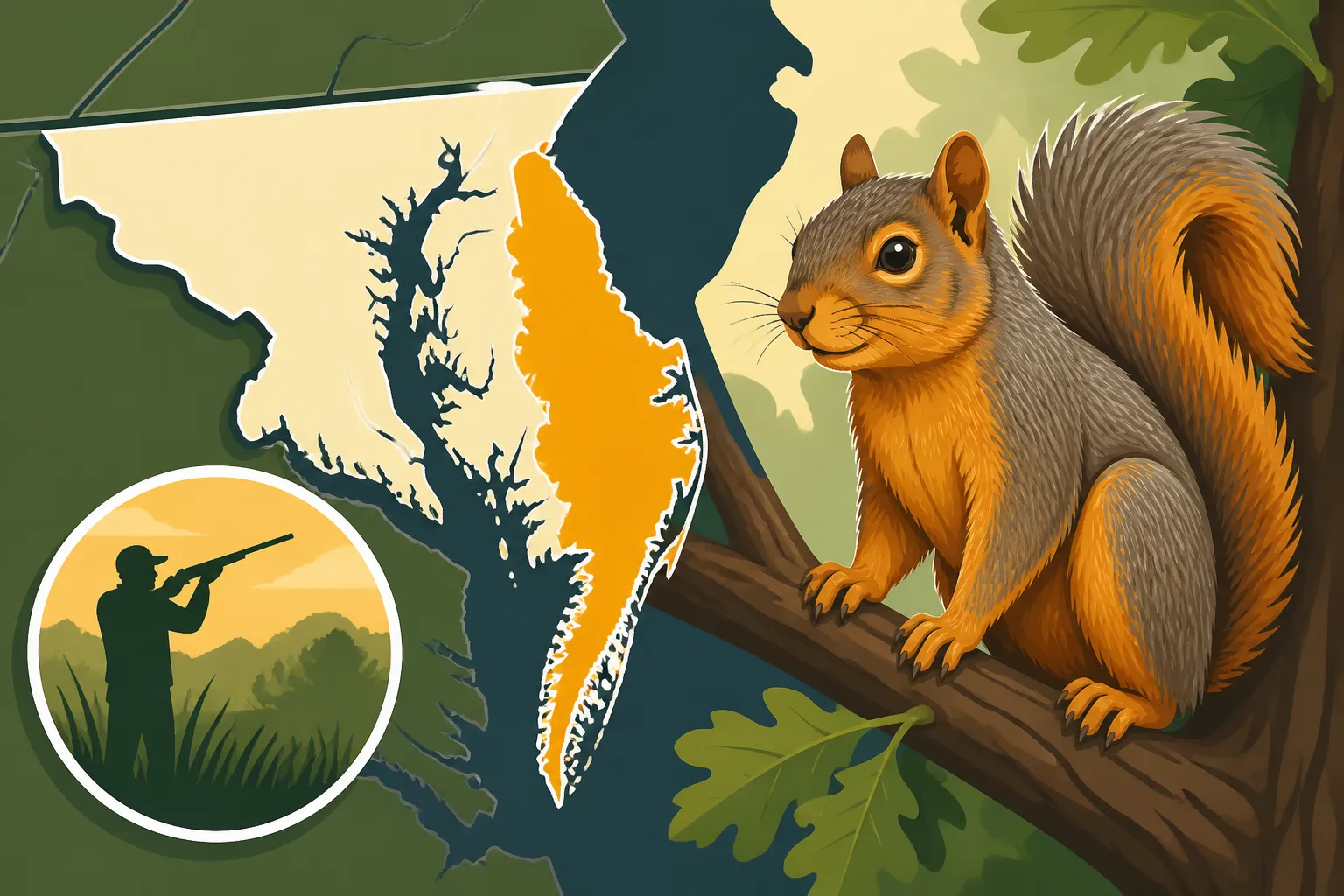
The heart of the Delmarva Fox Squirrel's current range in Maryland lies firmly within the central and lower Eastern Shore counties. You're most likely to encounter them in:
- Dorchester County: This county, with its mix of mature forests, agricultural fields, and critical marsh edges, is a prime location. Areas around Cambridge, Vienna, and into the vast public lands here are often cited. Hunters exploring Hunting Maryland's Lower Eastern Shore Marshes might spot them on the higher ground adjacent to wetlands.
- Talbot County: Similar to Dorchester, Talbot offers excellent habitat with mature hardwood stands interspersed with farmland.
- Caroline County: This inland county also boasts populations in suitable forested areas, particularly where older growth timber meets farm fields.
- Kent County: Moving north on the Upper Shore, Kent County has significant populations, especially in areas with mature hardwoods near agricultural fields. Anyone interested in Hunting Maryland's Upper Eastern Shore Farm Country should be vigilant for these unique squirrels.
- Queen Anne's County: The southern parts of Queen Anne's also provide good habitat for DFS.
Their preferred habitat isn't just any woods. They gravitate towards mature deciduous and mixed forests, particularly those with an open understory. Think stately oak and hickory trees, providing ample mast, combined with relatively clear ground beneath, making it easier for them to forage and spot predators. They often favor forest edges, where they can quickly retreat into dense cover if needed, and are commonly seen near agricultural fields, especially cornfields after harvest, where they might forage for spilled grain.
Public vs. Private Land
Delmarva Fox Squirrels can be found on both public and private lands within these counties. For those seeking to observe them, public lands offer accessible opportunities:
- Key Conservation Areas: Several Wildlife Management Areas (WMAs) and State Forests on the Eastern Shore are managed with the DFS in mind. Portions of the Chesapeake Forest Lands are known to harbor healthy populations, especially where the timber management plans encourage the mature forest structure they need. Other WMAs like Idylwild, Taylor's Island, and Fishing Bay also have suitable habitat, though specific sightings can vary greatly. Always check with the Maryland Department of Natural Resources (DNR) for specific WMA regulations and known DFS areas.
- Private Land: Many private landowners in these counties actively manage their timber for wildlife, inadvertently or intentionally supporting DFS populations. If you have permission to hunt or recreate on private land in these areas, you stand a good chance of seeing one. However, it's paramount to remember their protected status regardless of land ownership.
When scouting for ideal habitat, whether using traditional methods or advanced tools, like the mapping capabilities provided by GoHunt, you'll be looking for large blocks of mature timber. Pay attention to areas where older forests transition into fields or smaller woodlots, as these edges are often favored.
Key Conservation Areas
Beyond general county descriptions, some specific large tracts of public land are particularly notable for their Delmarva Fox Squirrel populations. These areas often have dedicated management plans focused on maintaining and enhancing the specific forest structure that DFS thrive in.
One of the largest and most critical areas is the complex of state forests and WMAs in Dorchester and Wicomico counties, including parts of the Chesapeake Forest Lands. These lands offer extensive mature pine and hardwood stands, often adjacent to agricultural fields or marsh systems. The management here often aims for older growth, which directly benefits DFS by providing large den trees and consistent mast crops. Similarly, parts of the public lands in Kent and Queen Anne's counties, like the Millington and Sassafras River WMAs, also represent important strongholds. When you're using resources like GoHunt to scout these public areas, look for contiguous mature forest blocks and consider how they connect to smaller woodlots or agricultural fields, as these connective habitats are often used by the squirrels. Understanding Habitat Work on Maryland Wildlife Management Areas will give you an idea of how the DNR actively supports these species.
Habitat Requirements and What Sustains Them
The Delmarva Fox Squirrel isn't just living anywhere; it's quite particular about its home. Their preference for specific types of forest structure and food sources is a critical factor in understanding where they can be found today.
Forest Types
These squirrels are true connoisseurs of mature woodlands. They thrive in extensive stands of mature, open deciduous forests, or mixed pine and hardwood forests. What does "mature" mean here? It means big, old trees – often oaks, hickories, and sometimes loblolly pines – that provide a rich bounty of nuts (acorns, hickory nuts, pine seeds) as well as the cavities they need for nesting and shelter. Unlike gray squirrels, which can adapt to smaller, younger woodlots and even urban parks, Delmarva Fox Squirrels really need those large, unbroken tracts of older timber to sustain healthy populations. Think about the classic, grand old woodlots you might find when hunting a Chesapeake farm woodlot point – that's the kind of place a DFS would call home.
Importance of Open Understory
This is a key differentiator. While gray squirrels might love a dense, tangled understory for quick escapes and hiding from predators, Delmarva Fox Squirrels prefer a more open forest floor. They spend a significant amount of their time foraging on the ground, burying and recovering nuts, and moving between trees. A thick, brushy understory would impede their movement and make them more vulnerable to predators because it's harder for them to spot danger or make a quick dash for a tree. So, when you're looking for DFS habitat, you're not just looking for big trees, but also for woods where you can see a good distance through the lower levels – almost park-like in its openness. This preference also affects timber management; practices that clear out dense undergrowth, mimicking natural fire or grazing patterns, can actually benefit DFS populations.
Food Sources
Like all squirrels, their diet is heavily seasonal and dependent on what the forest provides. Their primary food source, especially in fall and winter, consists of hard mast – acorns from various oak species and hickory nuts. These energy-rich foods are crucial for building up fat reserves to get through the lean months. They'll also consume pine seeds, buds, fungi, and occasionally insects. During the spring and summer, they might forage on berries and fruits, supplementing their diet. The availability and consistency of these food sources are paramount. A year with a poor acorn crop can significantly impact their survival and reproductive success, which is why large, diverse stands of mast-producing trees are so vital to their continued presence in an area. When using mapping tools like GoHunt, identifying areas with prominent oak and hickory concentrations can be a good indicator of potential DFS habitat.
Challenges and Conservation Efforts
Despite their recovery, Delmarva Fox Squirrels still face ongoing challenges, and their future depends heavily on continued conservation efforts.
Threats to Their Survival
While direct hunting is no longer a major threat thanks to their protected status, other factors continue to impact DFS populations:
- Habitat Loss and Fragmentation: This remains the biggest hurdle. Even if a forest stands today, breaking it up with roads, developments, or clear-cuts reduces the total area of suitable habitat and makes it harder for squirrels to move between populations. Smaller, isolated populations are more vulnerable to disease, inbreeding, and localized catastrophes.
- Competition with Gray Squirrels: Eastern Gray Squirrels are highly adaptable and prolific. In areas where both species coexist, gray squirrels can outcompete DFS for food resources and den sites. Gray squirrels are often more aggressive and reproduce more quickly, putting pressure on the larger, slower-reproducing DFS.
- Disease: Like all wildlife, squirrels are susceptible to various diseases, and a dense population can be more vulnerable to outbreaks.
- Predation: While they are larger, they are still prey for raptors, foxes, bobcats (in western Maryland, though less so on Delmarva), and domestic cats and dogs, especially when foraging on the ground.
What Maryland DNR is Doing
The Maryland Department of Natural Resources (DNR) plays a crucial role in the ongoing recovery and management of the Delmarva Fox Squirrel. Their efforts include:
- Habitat Restoration and Management: This involves active forestry practices on state lands to create and maintain the mature, open understory forest structure that DFS prefer. This can include selective timber harvests, prescribed burns, and planting appropriate mast-producing trees.
- Population Monitoring: DNR biologists regularly monitor known DFS populations to track their numbers, health, and distribution. This data is vital for understanding how well conservation efforts are working and where further intervention might be needed.
- Translocation Programs: In some cases, squirrels have been moved from healthy populations to suitable, unoccupied habitat to help establish new colonies or bolster struggling ones.
- Public Education: Informing the public, especially hunters and landowners, about the DFS's protected status and identification is crucial. Understanding is the first step toward conservation.
These efforts are part of a broader commitment to ensuring the long-term survival of this unique Maryland species.
How Hunters Can Help (Indirectly)
While you can't hunt Delmarva Fox Squirrels, the hunting community can still contribute to their well-being and conservation.
- Positive Identification: The most important thing is to accurately identify the squirrel before taking a shot at a huntable species. If you see a large, grizzled gray squirrel with a bushy, often silver-tipped tail, assume it's a Delmarva Fox Squirrel and do not shoot. Review How to Identify a Delmarva Fox Squirrel before heading into the woods.
- Report Sightings: If you encounter a DFS, especially outside of its known strongholds, consider reporting the sighting to the Maryland DNR. This helps biologists track their expansion and understand their current distribution.
- Habitat Stewardship: Many hunters are also landowners or practice land stewardship. Managing your property to encourage mature forest growth with an open understory can inadvertently create excellent DFS habitat.
- Responsible Hunting Practices: Adhering to all hunting regulations, including blaze orange requirements and safe shooting distances, contributes to a healthy and respected hunting community, which in turn supports broader conservation efforts. Understanding Maryland Hunter Education Requirements helps instill these principles.
- Advocacy: Support conservation organizations and policies that protect and restore critical forest habitats on the Eastern Shore.
Distinguishing Delmarva Fox Squirrels from Other Squirrels
Accurate identification is paramount, especially since Delmarva Fox Squirrels share their habitat with the more common Eastern Gray Squirrel, one of Maryland's Three Huntable Squirrel Species. Confusing the two could lead to a wildlife violation, which no responsible hunter wants.
Visual Cues
The easiest way to tell a Delmarva Fox Squirrel from an Eastern Gray Squirrel is often their size and coloration.
- Size: The Delmarva Fox Squirrel is noticeably larger and heavier-bodied, often looking like it could easily outweigh two Eastern Gray Squirrels. They can weigh up to 3 pounds, while a gray squirrel is typically less than 1.5 pounds.
- Coloration: DFS have a distinctly grizzled gray coat, usually with a pale white or creamy belly, and often a very bushy, white-edged or silver-tipped tail. Eastern Gray Squirrels are, well, gray, but often have more brown or reddish tones, especially on their flanks and face, and their tails tend to be uniformly gray with no distinct white edge. There are variations, of course, but the overall impression is key. Some Delmarva Fox Squirrels can have a reddish wash on their head or limbs, but the grizzled gray body and white belly remain fairly consistent.
Behavioral Differences
Beyond looks, their behavior also offers clues:
- Arboreal vs. Terrestrial: While both species climb trees, DFS spend a significant amount of time on the ground, foraging for nuts and seeds. They tend to move more slowly and deliberately on the forest floor, whereas gray squirrels are often a blur of motion, constantly scampering up and down trees.
- Flight Response: When startled, a DFS might run a short distance on the ground before climbing a tree, often pausing to look back. Gray squirrels, on the other hand, typically bolt straight up the nearest tree and quickly disappear into the canopy.
- Vocalization: Both species chatter, but the specific calls can differ. However, relying on calls alone can be tricky for inexperienced observers.
Here’s a quick comparison to help you keep them straight:
| Feature | Delmarva Fox Squirrel | Eastern Gray Squirrel |
|---|---|---|
| Size | Large, robust, often appearing cat-like (up to 3 lbs) | Smaller, slender (1 – 1.5 lbs) |
| Coloration | Grizzled gray back, white belly, bushy silver-tipped tail | Gray/brownish-gray back, paler belly, uniform gray tail |
| Movement | More terrestrial, slower, deliberate on ground | More arboreal, quick, erratic, spends less time on ground |
| Habitat Pref. | Mature, open hardwoods/mixed forests | Adaptable, wide range of wooded areas, even urban parks |
| Legal Status | Protected Species (not huntable in MD) | Huntable Game Species (with proper license/season) |
Remember, when you're out Reading Sign in Maryland Mountain Timber or any other wooded area, always take an extra moment to confirm your target. It's an important part of ethical hunting and conservation.
Conclusion
The Delmarva Fox Squirrel is a true conservation success story, a testament to what dedicated effort can achieve when a species is on the brink. While they are no longer on the federal endangered list, they remain a protected species in Maryland, meaning they are absolutely off-limits to hunters. Their survival in our Eastern Shore counties, from Dorchester to Kent, depends on the preservation of mature, open-understory forests and the continued vigilance of outdoor enthusiasts. By understanding where they live, what they need, and how to tell them apart from their huntable cousins, we all play a part in ensuring these magnificent, fox-like squirrels continue to grace Maryland's woodlands for generations to come. So next time you're afield, keep an eye out for that big, beautiful, grizzled gray squirrel—and appreciate it for the special, protected wild resident that it is.
Disclaimer
This article is for general informational purposes only and does not constitute professional advice. Laws, prices and regulations vary by location and change over time. Consult a qualified professional for guidance on your specific situation.