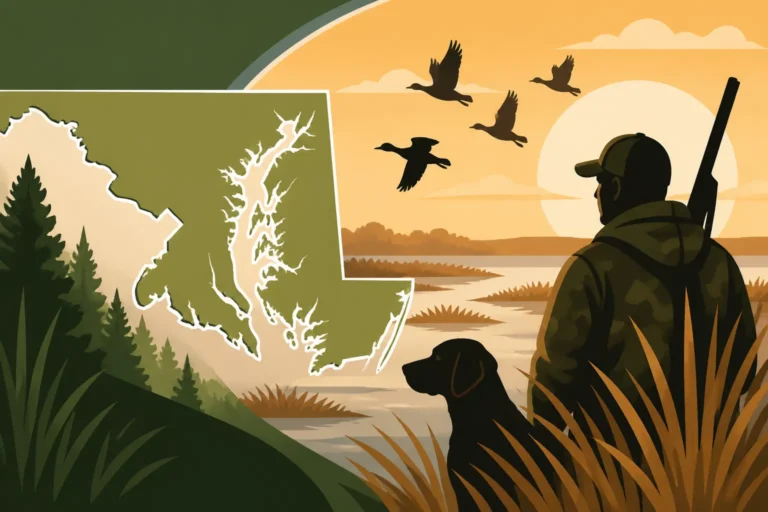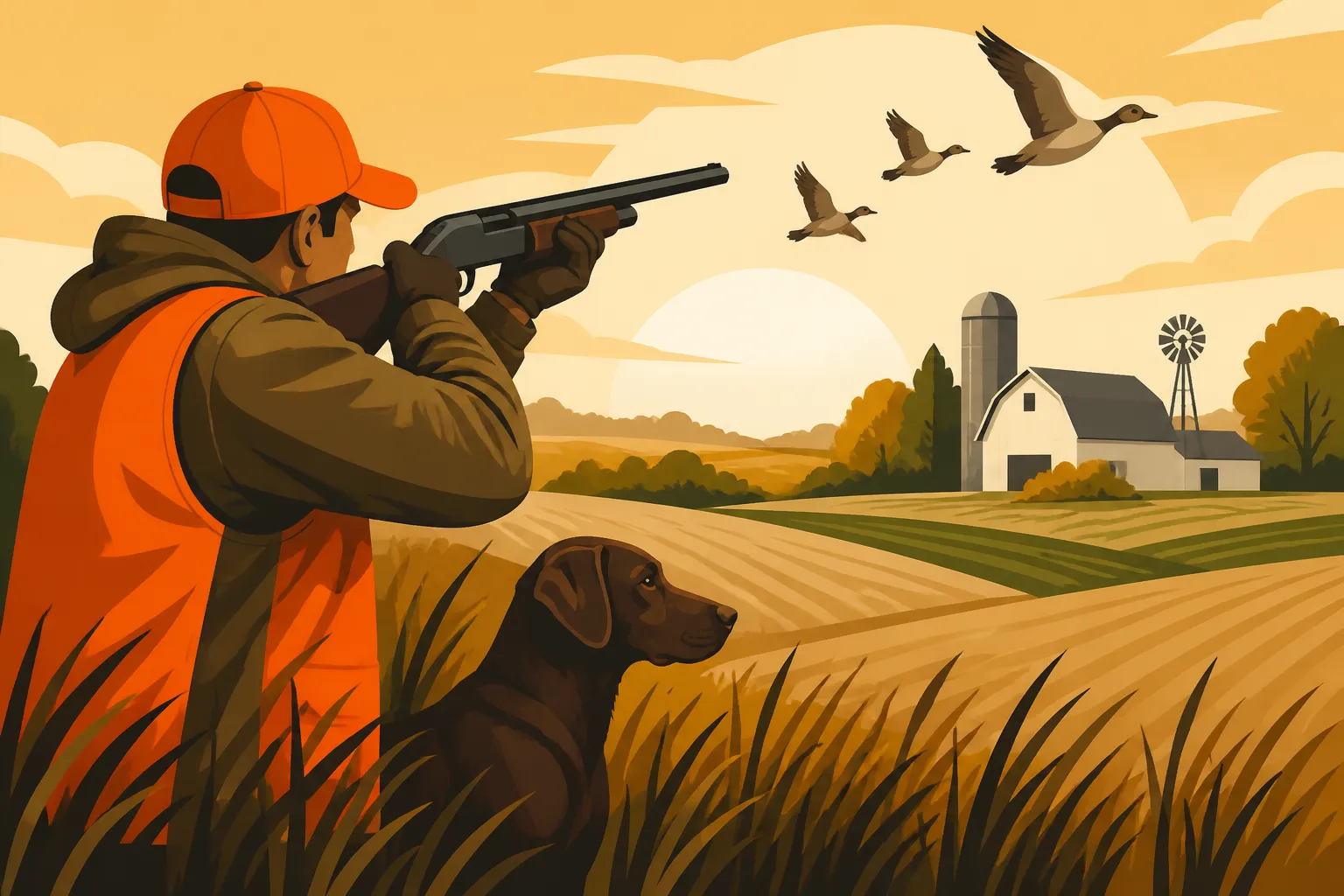
Hunting Maryland’s Upper Eastern Shore Farm Country
Hunting the Upper Eastern Shore of Maryland can feel like a completely different world compared to the mountains of Western Maryland or the dense suburban woods. You’re often faced with vast, open agricultural fields that seem to hold endless opportunities, but also present unique challenges in finding cover, understanding deer movement, and navigating private land. This comprehensive guide is here to help you unlock the potential of this rich farming landscape, from understanding its unique ecosystem to mastering the strategies that will put you on game.
Understanding the Upper Eastern Shore Landscape
The Upper Eastern Shore is a tapestry of productive farmland, winding tidal rivers, and scattered woodlots, all contributing to a rich and diverse hunting environment. Unlike the sprawling forests of other regions, here the land is often parceled out into working farms, which means understanding the unique interplay between agriculture and wildlife is absolutely crucial for success. It’s a place where cornfields become temporary havens and a small creek bottom can hold a surprisingly large number of deer.
The Dominance of Agriculture and Its Impact on Wildlife
When you drive through counties like Kent, Queen Anne's, or Caroline, you're immediately struck by the sheer scale of agriculture. Miles of corn, soybeans, and wheat fields stretch as far as the eye can see, creating an incredibly rich food source for a variety of game species. These fields are not just food plots; they are dynamic ecosystems that change with the seasons. In late summer and early fall, standing corn offers dense cover, acting like a fortress for deer and a secure roost for turkeys. As crops are harvested, the landscape transforms, pushing game into adjacent cover and making food sources like waste grain incredibly important.
The agricultural rhythm dictates much of the game movement here. Deer will browse on young soybean plants, hide in tall corn, and then move to browse on winter wheat or graze on leftover corn in stubble fields once the combines have passed. Waterfowl, particularly Canada geese, are inherently tied to these fields, using them for feeding and roosting. Understanding crop rotations and harvest schedules becomes almost as important as knowing the lay of the land itself. Hunters often spend hours glassing fields at dawn and dusk, trying to pinpoint patterns that will guide their strategy.
This intensive agricultural use also means that the remaining natural habitats, like small woodlots, hedgerows, and creek bottoms, become disproportionately important. These fragmented pieces of cover serve as bedding areas, travel corridors, and sanctuary zones for wildlife. The challenge for hunters is often finding these crucial pockets of cover and understanding how game animals utilize them in relation to the vast open fields. It’s a landscape of feast or famine – abundant food, but often limited cover, which concentrates game in predictable ways if you know what to look for.
Interspersed Woodlots and Stream Valleys: Deer and Turkey Havens
While fields dominate, the Upper Shore is far from devoid of timber. You’ll find countless small woodlots, often bordering property lines or surrounding farmsteads, acting as vital refuges. These woodlots, ranging from a few acres to hundreds, are frequently comprised of hardwoods like oaks and hickories, providing critical mast crops, especially in the fall. These isolated timber stands become magnets for deer, which seek them out for bedding and escape cover during daylight hours, only venturing into the open fields under the cloak of darkness or during periods of low pressure.
Beyond the isolated woodlots, the region is crisscrossed by a network of small stream valleys and drainage ditches that feed into the larger tidal rivers. These riparian corridors, often lined with thicker brush, mature trees, and dense undergrowth, serve as natural funnels and travel routes for deer and turkeys. A small creek bottom, seemingly insignificant on a map, can be a bustling highway for bucks during the rut or a safe passage for a flock of turkeys moving between roosting and feeding areas. Learning to identify these linear strips of cover and how game uses them is a cornerstone of successful hunting in farm country. Hunting a Funnel Between Two Grain Fields is a strategy that shines in these areas.
Turkeys, in particular, rely heavily on these woodlots and stream valleys for roosting and nesting. While they’ll feed in fields, they almost always retreat to the safety of mature trees along water sources or in secluded timber stands at night. Scouting for roost trees along creek banks or in larger woodlots before the spring season opens can significantly increase your chances of success. It's a game of connecting the dots: observing where they feed, then tracing those movements back to where they feel safe enough to spend the night.
Tidal Creeks, Rivers, and the Bay's Influence: Waterfowl Opportunities
The Upper Eastern Shore's proximity to the Chesapeake Bay and its myriad tidal creeks and rivers is what truly sets it apart for waterfowl hunters. These waterways are not just boundaries; they are vital habitats that attract an incredible diversity of ducks and geese. The brackish waters, marsh edges, and surrounding agricultural fields create ideal conditions for dabbling ducks like mallards and black ducks, as well as significant numbers of diving ducks like canvasbacks and bluebills further out on the open water. And, of course, the Canada goose is king here, with massive flocks utilizing the Bay and its tributaries for sanctuary, while feeding heavily in the surrounding grain fields.
Waterfowl hunting here is deeply intertwined with the tides. A falling tide might expose mudflats, drawing in puddle ducks, while a rising tide could push birds into flooded timber or marsh fringes. Understanding the local tide charts is as essential as checking the wind direction. Shoreline hunting from fixed blinds or layout boats on the open water are common tactics. The region is famous for its concentration of Maryland's Canada Geese and Their Two Populations, offering hunters a chance at both migrant and resident birds.
Access to these waterways often involves boats, from shallow-draft skiffs to specialized layout boats for open-water hunting. Many prime locations, particularly marsh islands or points, are only reachable by water, offering a unique hunting experience. These tidal areas also support other species, like muskrats and sometimes even deer (especially Sika deer if you venture further south on the Delmarva), making the waterways a multifaceted resource for the dedicated hunter. Even if you're primarily a deer hunter, understanding the ebb and flow of the tide can influence where deer travel along marshy edges and creek banks.
Key Game Species and Their Habitat Preferences
The Upper Eastern Shore offers a diverse array of hunting opportunities, but it truly shines for white-tailed deer, Canada geese, and wild turkeys. Each of these species has adapted remarkably to the farm country landscape, developing distinct patterns of movement and habitat preferences that hunters must learn to decipher.
White-tailed Deer: Adapting to Farm and Forest
White-tailed deer are the undisputed stars of the Upper Eastern Shore, thriving in the mosaic of agricultural fields, woodlots, and riparian corridors. Their numbers here are robust, supported by an endless buffet of crops and the safety afforded by dense cover. These deer are often larger-bodied due to the rich food sources, and the potential for impressive antlers is a major draw for many hunters. They spend their days bedding down in the thickest cover they can find – whether that's a small, overlooked brushy draw, a dense pine thicket in a woodlot, or even standing corn during the early season.
As evening approaches, these deer will begin to move out from their bedding areas, often along fencerows or ditch lines, to access the fields where they feed on soybeans, corn, wheat, and clover. Their patterns can be incredibly consistent, especially during non-pressured times. However, once hunting season opens and pressure mounts, they become notoriously nocturnal, often waiting until after dark to step foot into the open. This makes identifying primary travel corridors and staging areas just inside the cover, where they gather before entering fields, absolutely critical.
Understanding how deer utilize the fragmented cover is key. A single mature oak tree dropping acorns in a small woodlot can be a hotspot, as can a brushy hedgerow connecting two larger timber blocks. During the rut, bucks will actively cruise these corridors, looking for does, making pinch points and funnels along field edges prime stand locations. Hunting the Rut in Early to Mid November on the Upper Shore is an exciting time, as mature bucks throw caution to the wind in pursuit of breeding opportunities, often venturing out during daylight hours.
Canada Geese and Ducks: Masters of the Grain Fields and Marshes
The Upper Eastern Shore is legendary for its waterfowl hunting, particularly for Canada geese. The region serves as a crucial wintering ground for both migrating Atlantic Population Canada geese and a significant population of resident birds. These geese are incredibly intelligent and adaptable, using the vast agricultural fields for feeding during the day and often retreating to the safety of open water on the Chesapeake Bay or its tidal rivers for roosting at night. Hunters here often focus on large cut cornfields, winter wheat, or freshly planted grain, where geese are actively feeding.
Ducks are also abundant, with a strong presence of puddle ducks like mallards, black ducks, and pintails, especially in the shallower marshes and tidal guts. These birds thrive in the wetland areas adjacent to agricultural lands, feeding on submerged aquatic vegetation, seeds, and waste grain. Diving ducks, such as canvasbacks, redheads, and scaup, can be found on the larger open water bodies of the Bay and its wider tributaries, feasting on clams and other aquatic life. The varied habitat means hunters can pursue different species with various methods, from field hunting geese to marsh hunting ducks.
Successful waterfowl hunting on the Upper Shore demands extensive scouting, understanding flight patterns, and meticulous decoy placement. Geese, in particular, are highly sensitive to hunting pressure and will quickly abandon fields where they feel unsafe. This often means rotating fields or hunting different locations throughout the season. Ducks, while sometimes less wary, still require good concealment and realistic decoy spreads. The excitement of a flock of Canada geese cupping their wings into your spread over a cut cornfield or a group of mallards dropping into a marsh pond at first light is an experience unique to this region.
Wild Turkeys: Finding Roosts and Roaming Wooded Edges
Wild turkeys, while perhaps not as iconic as the geese in this region, have made a remarkable comeback and offer fantastic hunting opportunities on the Upper Eastern Shore, particularly during the spring season. These birds integrate well into the farm country landscape, utilizing the woodlots and riparian corridors for roosting and nesting, and venturing into fields and forest edges to feed. They’re opportunistic eaters, foraging for insects, seeds, waste grain, and mast crops like acorns and berries.
Turkeys here often develop predictable patterns, especially in the spring. They'll typically fly down from their roosts in mature trees along creek banks or in larger timber blocks at first light, gather in open fields or clearings to feed and strut, and then spend the mid-day hours loafing and foraging in the woods. As afternoon wanes, they'll head back towards their roosting areas. Identifying these patterns through pre-season scouting is vital. Listening for gobblers on the roost before season or observing flocks feeding in fields can give you a significant advantage.
Hunting these turkeys involves a lot of calling, patience, and knowing how to set up strategically. You'll often be setting up on the edge of a woodlot, trying to entice a gobbler that's strutting in an open field to come closer, or working birds that are moving through a creek bottom. The challenge can be the wide-open fields themselves, which make it difficult to get close to a gobbler without being spotted. Finding a good setup against a solid backdrop, like a large tree or a thick hedgerow, is crucial. Roost Hunting Gobblers on Maryland Farmland is a common and often effective strategy for locating birds.
Accessing Hunting Ground: Public vs. Private
One of the biggest hurdles for hunters on the Upper Eastern Shore is securing access to prime hunting ground. With its agricultural dominance, much of the desirable habitat is privately owned. While public lands exist, they often receive significant pressure. Navigating this landscape effectively requires a blend of diligence, courtesy, and smart planning.
Navigating Private Land Permission in a Rich Agricultural Region
The vast majority of prime hunting land on the Upper Eastern Shore is privately owned, primarily by farmers and landowners. This means that gaining permission to hunt these properties is often the most direct path to success, but it requires effort and respect. Simply showing up on opening day hoping to find a spot is a recipe for disappointment. Instead, a proactive and courteous approach is essential. Start well before the season, preferably in the late summer or early fall, when farmers are less stressed with planting or harvesting.
When approaching landowners, always be polite, well-dressed, and prepared to introduce yourself and clearly state your intentions. Offer to help with chores, remove nuisance animals, or even assist during the harvest season. Building a relationship based on trust and mutual respect is key. Many farmers deal with trespassers or disrespectful hunters, so demonstrating that you are responsible, safe, and will respect their property can go a long way. Always offer to share some of your harvest, and never overstay your welcome. Using mapping tools like onX Hunt can help you identify landowners and property boundaries, giving you the information you need before you even knock on a door. Knocking on Doors in Maryland Farm Country is a time-honored tradition that still pays dividends.
It's also important to understand that many landowners, especially those with large tracts of prime waterfowl or deer habitat, may already have leases in place or long-standing relationships with hunters. Don't be discouraged by initial rejections. Persistence, good manners, and casting a wide net can eventually lead to opportunities. Sometimes, smaller, overlooked parcels—perhaps a small woodlot or a brushy corner of a field—can hold excellent hunting and are more likely to be granted permission.
Exploring Maryland's Upper Shore Wildlife Management Areas
While private land dominates, Maryland does offer several Wildlife Management Areas (WMAs) on the Upper Eastern Shore that provide public hunting access. These WMAs are managed by the Maryland Department of Natural Resources (DNR) and are often critical havens for wildlife in agricultural landscapes. Examples include Millington WMA in Kent County, Idylwild WMA in Caroline County, and Tuckahoe State Park, which offers hunting opportunities in Queen Anne's and Caroline counties. These areas typically consist of a mix of woodlands, fields, and wetlands, providing habitat for deer, turkeys, small game, and waterfowl.
Hunting on WMAs often requires specific regulations beyond a general hunting license. Some WMAs may require a free Public Hunting Land Permit, while others might have sign-in/sign-out procedures or daily quotas. It’s crucial to check the specific rules for each WMA you plan to hunt well in advance. Hunting pressure on these public lands, especially on opening days or during peak seasons, can be considerable. Arriving early, being prepared to walk further than most, and utilizing scouting tools like GoHunt to understand terrain and access points can help you find less pressured areas.
WMAs are invaluable resources, particularly for those without private land access. They offer a chance to explore diverse habitats and hone your hunting skills. While you might encounter more competition, diligent scouting and a willingness to explore less accessible areas can lead to rewarding experiences. Many WMAs are managed with an emphasis on habitat improvement, meaning they often provide excellent cover and food sources for game, even if they are smaller in size compared to some state forests in other regions.
Leveraging Water Access for Waterfowl and Marsh Species
For waterfowl hunters, the numerous tidal creeks, rivers, and direct access to the Chesapeake Bay offer a unique avenue for hunting access. Maryland has specific regulations regarding fixed blind sites and riparian landowner rights for waterfowl hunting, which are complex but important to understand. Riparian landowners generally have the first right to license a blind site directly offshore from their property. However, open-water areas, public marshes, or certain designated zones may offer opportunities for hunters without private land access.
One common approach is to hunt from a mobile boat blind in open water or set up a temporary layout blind on a suitable shoreline or island if permission allows. For those targeting marsh species, a shallow-draft boat or even wading can provide access to remote guts and ponds that hold ducks. Understanding where navigable waters meet public access points or where state-owned marshland can be legally hunted is essential. Charts and maps, combined with local knowledge, are invaluable for this type of hunting.
Remember that boat safety is paramount on the Bay and its tributaries, especially during the colder months when waterfowl seasons are in full swing. Navigating strong currents, cold water, and potential fog requires proper equipment, safety gear, and experience. Hunting from water access often means fewer hunters, but it demands a different set of skills and preparation compared to traditional land-based hunting. It's an exciting way to experience the Upper Shore's rich waterfowl heritage.
Effective Hunting Strategies for Farm Country
Hunting the Upper Eastern Shore requires strategies tailored to its unique blend of open fields and fragmented cover. What works in a sprawling mountain forest won't necessarily yield success in a flat, agricultural landscape. Here, understanding game movement in relation to food, cover, and pressure is paramount.
Deer Hunting: Field Edges, Funnels, and Food Sources
Deer hunting on the Upper Eastern Shore is largely about understanding how deer navigate the open landscape between bedding and feeding areas. Field edges are prime locations. Deer frequently walk just inside the tree line bordering a field, using the cover for security while still being close to food. Setting up a stand or ground blind along a well-used field edge, especially one with fresh tracks or rubs, can be highly effective. Pay attention to how the wind flows along these edges; swirling winds are common and can betray your presence.
Funnels and pinch points are even more critical. These are areas where natural or man-made features constrict deer movement into a narrow corridor. A small strip of woods between two large fields, a deep ditch that deer prefer to cross in one spot, or a thick hedgerow connecting two woodlots can all act as funnels. During the rut, bucks will actively cruise these features, maximizing their chances of encountering does. Scouting these pinch points with trail cameras before the season can reveal consistent deer traffic. Hanging a Stand on a Maryland Farm Edge is a classic move that consistently puts hunters in the game.
Food sources dictate deer movement heavily. Early season might see deer in standing soybeans or corn, transitioning to waste grain or green fields (like winter wheat or clover) after the harvest. Locating the current hot food source is key, and often requires frequent scouting or using quality optics to observe deer movement from a distance. As the season progresses and food becomes scarcer, deer will concentrate on the most nutritious available options, making these spots irresistible.
Waterfowl Hunting: Decoys, Layouts, and Blind Placement
Waterfowl hunting on the Upper Eastern Shore, especially for Canada geese, relies heavily on realistic decoy spreads and effective concealment. For geese, hunters typically use large spreads of full-body decoys in cut corn or grain fields. The more decoys, the better, often ranging from several dozen to hundreds, to simulate a large, confident flock. Placement is critical; creating a landing zone upwind of your blind is standard practice, as geese prefer to land into the wind. Adding movement to the spread with flags or motion decoys can significantly enhance realism. Setting a Goose Spread in Cut Corn is an art form, and mastering it makes a huge difference.
Concealment is paramount, as geese have incredible eyesight. Layout blinds are incredibly popular for field hunting, allowing hunters to lie flat in the field, blending in with the stubble, and popping up only when the birds are committed. Pit blinds, often permanent structures dug into fields, offer superior concealment but require significant investment and landowner permission. For ducks in marshes or open water, camouflaged boat blinds or natural vegetation blinds are common, with smaller spreads of duck decoys.
Scouting is non-negotiable for waterfowl. You need to know exactly where the birds are feeding and flying before you set up. This often means driving around at dawn and dusk, observing flight lines and feeding fields. Once birds are located, you must secure permission (if on private land) and set up quickly and quietly. The weather, particularly wind and fog, plays a huge role in waterfowl movement, so staying flexible and adapting your plans to conditions is key. Pass-Shooting Geese Over Cut Corn can be a productive method when large flocks are moving between roosting and feeding areas.
Turkey Hunting: Roosting, Calling, and Scouting Farm Edges
Spring turkey hunting on the Upper Eastern Shore is an exhilarating challenge that combines scouting, calling, and patience. The first step is locating birds, often by listening for gobblers on the roost at dawn or dusk in the weeks leading up to the season. Once you've identified a general roosting area, usually in mature trees along a creek or in a dense woodlot, you can plan your approach. The goal is to get as close as possible to the roost before first light, without spooking the birds.
When the gobbler flies down, your calling comes into play. Replicate hen yelps, clucks, and purrs to entice him into range. Turkeys in farm country can be notoriously wary, especially if they’ve been hunted before. Sometimes, less calling is more. Other times, an aggressive sequence can fire them up. Be mindful of their excellent eyesight and your setup; always have a solid backdrop (like a wide tree trunk) to break up your silhouette. Decoys can be very effective, especially a lone hen or a jake and hen setup, to give the gobbler something visual to commit to. Calling a Gobbler Off a Maryland Farm Roost requires a nuanced approach, balancing aggression with subtlety.
Scouting the edges of farm fields is also vital for turkey hunting. Turkeys love to strut and feed in open fields, especially those with good visibility. Identifying areas where turkeys regularly enter and exit fields from adjacent woodlots can provide excellent ambush points. Being patient and willing to move and set up multiple times throughout the morning can be the difference between success and going home empty-handed. Remember that mid-morning lulls can turn into active periods as gobblers search for hens that have finished nesting duties.
Essential Gear and Equipment for Upper Shore Hunts
Hunting on Maryland's Upper Eastern Shore presents a unique set of challenges that require specific gear and equipment. From the broad, open fields to the damp marshlands, your kit needs to be adaptable, durable, and effective across various conditions and species.
Clothing and Camouflage for Diverse Environments
Given the varied landscape of farm fields, dense woodlots, and marsh fringes, your hunting clothing needs to be versatile. For deer and turkey hunting in the woods, traditional woodland or realistic camouflage patterns that mimic tree bark, leaves, and shadows are ideal. However, when hunting geese or deer in cut fields, a pattern that blends with corn stubble, dry grass, or dirt is far more effective. Many waterfowl hunters opt for specialized field camo or even simple drab earth tones that melt into the background of a harvested field.
Layering is absolutely critical, as temperatures on the Eastern Shore can fluctuate wildly, especially during the fall and winter. Early season bowhunts can be warm and humid, while late-season firearms or waterfowl hunts can be bitterly cold with biting winds coming off the Bay. A good base layer to wick moisture, an insulating mid-layer, and a waterproof, windproof outer layer are essential. For marsh hunting, chest waders are often a necessity, protecting you from cold water and mud. Ensure your waders are durable and comfortable for potentially long waits or walks.
Don't forget the small but important details: comfortable, waterproof boots with good ankle support for navigating uneven terrain and mud; warm, waterproof gloves or mittens; and a quality head covering, whether it's a camo hat for concealment or a warm beanie for cold weather. Your clothing is your first line of defense against the elements and your primary tool for concealment, so invest wisely.
Optics and Scouting Tools for Open Landscapes
In the expansive farm country of the Upper Eastern Shore, good optics are not a luxury; they are a necessity. Binoculars, typically 8x or 10x power, are essential for glassing distant fields at dawn and dusk, identifying deer movement, locating feeding flocks of geese, or spotting strutting turkeys. Quality binoculars will allow you to pick out subtle movements and discern game from background clutter, saving you countless steps and preventing unnecessary disturbance of game.
A spotting scope can also be incredibly useful for observing waterfowl at extreme distances without spooking them, allowing you to confirm species, numbers, and precise feeding locations before planning your approach. For deer hunters, especially during the rut, a spotting scope allows for detailed observation of buck behavior without getting too close. Rangefinders are equally important for confidently determining shot distances, particularly in open fields where judging yardage can be deceiving.
Beyond traditional optics, modern scouting tools have revolutionized hunting in this region. GPS devices or smartphone apps like onX Hunt and GoHunt are indispensable for identifying property lines, navigating public lands, marking scouting locations, and understanding topographical features like subtle creek beds or elevation changes in otherwise flat terrain. Trail cameras, strategically placed along field edges, pinch points, or near known food sources, can provide invaluable intelligence on deer movement patterns, times of activity, and the presence of specific bucks or turkey flocks. These tools allow you to gather information remotely and efficiently, minimizing your impact on the land.
Decoys, Blinds, and Calls: Waterfowl and Turkey Specifics
For waterfowl hunting on the Upper Shore, your decoys and blinds are your primary tools. A significant spread of high-quality, realistic Canada goose decoys (full-body or shells) is standard. Adding a few active-pose decoys or wind-activated flappers can create vital movement. For duck hunting, realistic mallard, black duck, or diver decoys are needed, depending on the species you're targeting. Don't skimp on quality; realistic decoys draw in wary birds.
Concealment is critical, so a good layout blind for field hunting geese is often a must. For duck hunting, a camouflaged boat blind, a pop-up blind brushed in with natural vegetation, or even a simple layout blind used in a marsh can be effective. Ensure your blind material blends seamlessly with the surrounding environment, and always take the time to brush it in thoroughly.
Turkey hunting requires specific calls to mimic the sounds of hens and gobblers. A good friction call (slate or box), a mouth diaphragm call, and perhaps an owl hooter or crow call for locating shock gobbles, are essential. Having a jake or hen decoy, or both, can often seal the deal, giving an approaching gobbler a visual to focus on, diverting his attention from you. Just like with waterfowl, realism in your calls and decoys can make all the difference in luring in a wary tom.
Navigating Seasons, Regulations, and Local Nuances
Hunting in any state comes with its own set of rules, and Maryland is no exception. For the Upper Eastern Shore, it's not just about knowing the statewide regulations, but also understanding the specific nuances that apply to this region, including season dates, bag limits, and county-specific rules.
Understanding Maryland's Specific Seasons and Bag Limits
Maryland’s hunting seasons are structured by species and weapon type, with specific opening and closing dates for archery, muzzleloader, and firearms seasons for deer, and distinct periods for turkey, waterfowl, and small game. For deer, the Upper Eastern Shore falls within Region B, which generally offers more liberal antlerless deer bag limits compared to the mountainous Region A. This is due to higher deer populations and often more agricultural damage concerns in the farm country. Hunters in Region B have greater opportunities to harvest antlerless deer, which is crucial for herd management. How Many Antlerless Deer Region B Allows is a key piece of information for deer hunters in this area.
Waterfowl seasons are divided into multiple segments throughout the fall and winter, targeting different migration peaks. Canada goose seasons vary by zone (Atlantic Population vs. Resident Population), and understanding which zone you are in is crucial for adhering to bag limits and season dates. Duck seasons also have specific dates and species-specific daily bag limits. Always consult the current Maryland Guide to Hunting and Trapping, published annually by the DNR, for the most up-to-date and accurate dates, times, and bag limits.
Turkey seasons are primarily in the spring, with a brief fall season in some counties. Spring gobbler season typically runs from mid-April through mid-May, with specific shooting hours and bag limits (usually two bearded birds). Small game seasons for squirrel, rabbit, and pheasant typically open in the fall and extend into winter, offering additional opportunities.
The Importance of Licensing and HIP Registration
Before you even step foot in the field, you need the proper licenses and stamps. For hunting in Maryland, you'll need a base hunting license, which can be a resident or nonresident license depending on your status. Beyond that, most species require additional stamps. Deer hunters will need a Maryland Archery Stamp, Muzzleloader Stamp, or Firearm Stamp depending on their chosen weapon. Many also opt for a Bonus Antlered Deer Stamp to pursue additional bucks if eligible. Maryland Hunting Licenses and What They Cost can vary, so check the DNR website.
Waterfowl hunters have additional requirements. In addition to a base hunting license, you'll need a Maryland Migratory Game Bird Stamp and a Federal Duck Stamp. Furthermore, all migratory bird hunters (including doves, woodcock, and snipe) must register with the Harvest Information Program (HIP). This is a federal requirement that helps wildlife agencies track migratory bird harvest data. Missing any of these stamps or the HIP registration can lead to significant fines and penalties.
It’s crucial to purchase all necessary licenses and stamps well in advance of your hunt and carry them with you at all times. Maryland uses a Compass system for purchasing licenses online or through authorized agents. Always double-check that you have everything required for the species and weapon you intend to use.
Local Considerations: Sunday Hunting and Weapon Restrictions
Maryland has specific rules regarding Sunday hunting, which can vary by county and land ownership. While Sunday hunting for deer is permitted statewide on private land during certain seasons, some counties may have restrictions or require specific permission. Furthermore, public lands often have more restrictive Sunday hunting rules, with many WMAs and State Forests remaining closed to hunting on Sundays or having specific restricted hours. Always check the current regulations for the specific county and property type you plan to hunt. Sunday Hunting Rules by County is a critical reference point.
Weapon restrictions are also important. While rifles are generally permitted for deer hunting in many parts of Maryland, certain counties, especially those with higher population densities or specific management designations, may restrict rifle use to shotgun slugs, muzzleloaders, or archery equipment. On the Upper Eastern Shore, shotgun slugs are widely permitted for deer, and many hunters choose this reliable option. For waterfowl, only shotguns capable of holding no more than three shells (plugged) and using non-toxic shot are legal. Understanding Maryland's Legal Weapons by County is non-negotiable to avoid violations.
Always be aware of setback rules, which dictate minimum distances from dwellings, roads, and other structures where you can discharge a firearm or bow. These rules are designed to ensure public safety and are strictly enforced. Hunting in farm country often means being close to residences and public roads, so knowing and adhering to these setbacks is crucial for responsible hunting.
The Role of Outfitters and Guided Hunts on the Upper Shore
For many hunters, particularly those from out of state or those new to the region, navigating the intricacies of the Upper Eastern Shore's hunting landscape can be daunting. This is where a reputable outfitter or guide can be an invaluable asset, providing access, expertise, and a more streamlined hunting experience.
What a Guided Goose Hunt Offers
The Upper Eastern Shore is world-renowned for its Canada goose hunting, and booking a guided trip is one of the most popular ways to experience it. A guided goose hunt typically includes access to prime private land that has been meticulously scouted for active feeding flocks. Outfitters invest heavily in large, realistic decoy spreads, professional-grade layout or pit blinds, and often provide experienced callers who can work the birds effectively. For hunters without the extensive gear, land access, or local knowledge, a guided goose hunt offers a high-quality experience.
Guides handle all the logistics: securing permission, setting up the spread, calling, and often retrieving birds. This allows you to focus purely on the hunting experience. Many guides also offer insights into goose behavior, migration patterns, and calling techniques, enhancing your understanding of the sport. While prices can vary, the value often lies in the quality of the land, the expertise of the guide, and the increased chance of success. Maryland Guided Goose Hunt Prices Per Gun can give you an idea of what to expect, but remember to always verify what is included in the package.
When booking a goose hunt, ask about group sizes, the number of fields available, and what happens in case of bad weather. A good guide will prioritize safety and adapt to conditions to maximize your opportunities. They often have multiple properties under lease, allowing them to move to where the birds are most active.
Options for Guided Deer and Turkey Hunts
While waterfowl often take center stage, guided deer and turkey hunts are also available on the Upper Eastern Shore. For deer, guides often have access to private farm properties with established food plots, strategic stand locations, and a history of producing quality deer. A guided deer hunt can be particularly beneficial during the rut when understanding local deer movement is critical, or if you're targeting a mature buck in a specific area. Guides will typically provide pre-scouted stand locations and sometimes even transportation to and from the hunting area.
Turkey guides on the Upper Shore specialize in locating spring gobblers on private farms and woodlots. They bring local knowledge of roosting sites, feeding patterns, and the subtle nuances of calling pressured birds. A guided turkey hunt often involves an early morning start, getting into position before light, and then working with the guide to call in a gobbler. Given the challenging nature of turkey hunting, especially for those new to it, a guide can significantly improve your chances of success and provide a valuable learning experience.
When considering a guided deer or turkey hunt, inquire about the type of terrain you'll be hunting, the guide's success rates, and what equipment (stands, blinds, calls) is provided. It's important to clarify whether the hunt is fully guided (guide actively hunting with you) or semi-guided (guide provides access and advice, but you hunt independently).
Finding Reputable Guides and Booking Your Trip
Finding a reputable guide on the Upper Eastern Shore is crucial for a positive experience. Start by researching Maryland Outfitters on the Upper Eastern Shore. Look for outfitters with established reputations, positive client testimonials, and a strong online presence. Don't hesitate to ask for references from past clients and follow up with them. A good guide will be transparent about their services, pricing, and what to expect.
Check if the guide is properly licensed by the state of Maryland. Waterfowl guides, in particular, have specific licensing requirements. Discuss your expectations openly with the guide: what species you're targeting, your desired experience level, and any physical limitations. Be clear about what is included in the price (meals, lodging, transportation, processing, taxidermy) and what is not. Most guided hunts do not include your hunting license or stamps, which you'll need to purchase separately.
Booking well in advance, especially for prime waterfowl dates, is highly recommended as popular outfitters fill up quickly. Many guides require a deposit to secure your dates. A clear understanding of their cancellation and refund policy is also important. Ultimately, a good guide acts as your local expert, maximizing your opportunities and helping you have a safe, successful, and memorable hunt on Maryland's rich Upper Eastern Shore.
Disclaimer
This article is for general informational purposes only and does not constitute professional advice. Laws, prices and regulations vary by location and change over time. Consult a qualified professional for guidance on your specific situation.