Roost Hunting Gobblers on Maryland Farmland
The pre-dawn chill on a Maryland farm can be a magical, yet incredibly frustrating, experience when you're after a spring gobbler. You've done your scouting, you think you've pinpointed their roost, and you're praying this morning is the morning, but those birds have a knack for doing the exact opposite of what you expect. It's a dance between anticipation and agonizing silence, often leaving you wondering if you're truly in the right spot or if they've already slipped away. This comprehensive guide is all about peeling back the layers of that experience, helping you understand the nuances of roost hunting gobblers specifically on Maryland farmland, giving you the strategies to turn those frustrating mornings into successful ones.
Understanding Gobbler Roosting Behavior on Farmland
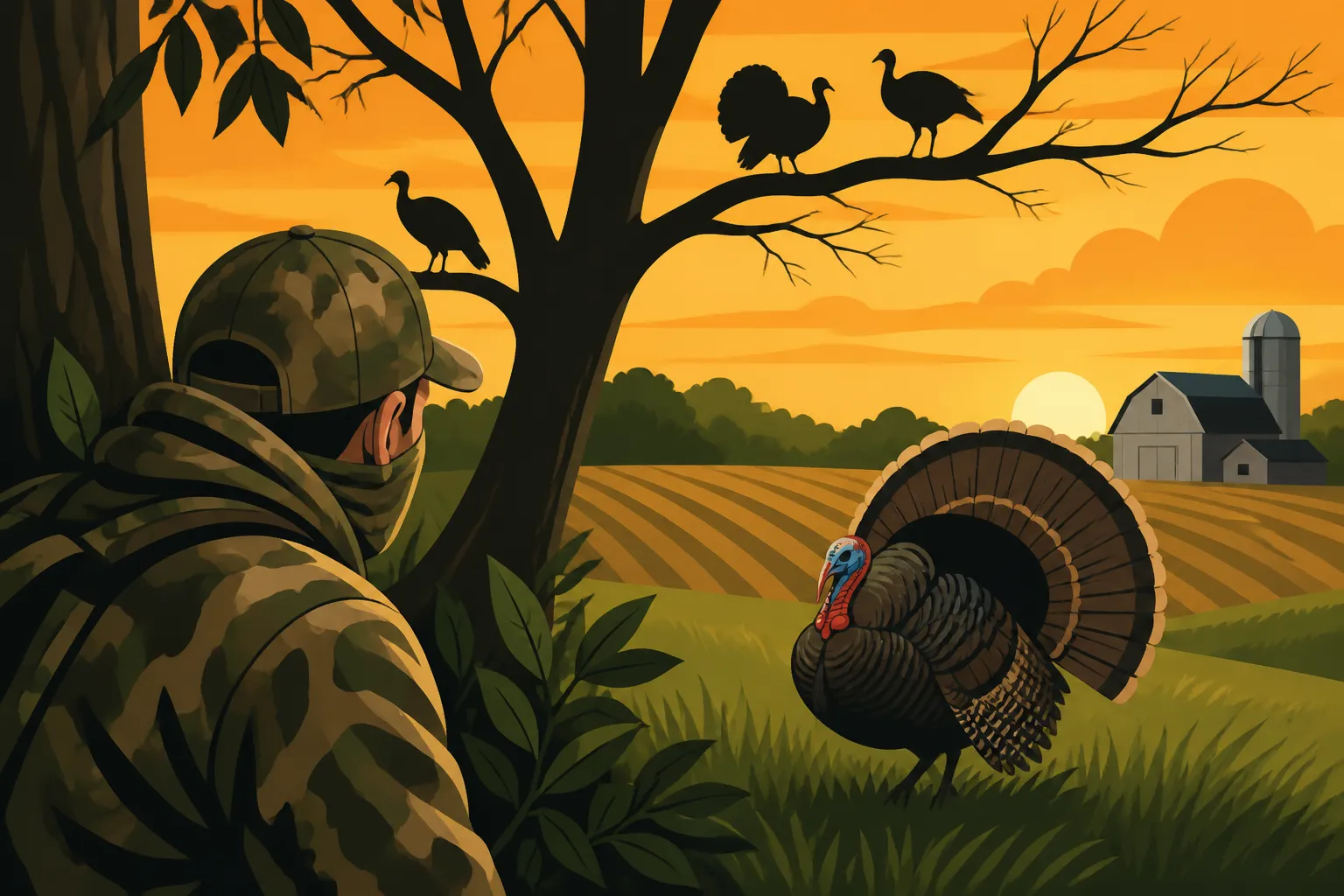
Turkey hunting, especially for those elusive gobblers, often feels like trying to solve a puzzle with a constantly changing set of pieces. On Maryland farmland, this challenge is amplified because their roosting habits are so heavily influenced by the open landscape, available cover, and human activity. Unlike vast, unbroken timber blocks, farmland turkeys operate within a patchwork of woods, fields, and agricultural structures, which shapes everything from where they decide to spend the night to how they fly down at first light. Understanding these behaviors is the first step in formulating a winning strategy.
Why Farmland Roosts are Unique
Farmland gobblers are creatures of habit, but their habits are often dictated by the unique characteristics of their environment. Large, mature trees bordering crop fields or stream bottoms are prime real estate. They choose these spots not just for comfort, but for security. The open fields surrounding their roost offer an excellent vantage point for spotting predators – both four-legged and two-legged – as they fly up to the limb at dusk and descend at dawn. This panoramic view is a double-edged sword for hunters; it makes them feel safe, but it also makes them incredibly difficult to approach undetected.
Moreover, the availability of diverse food sources on farmland plays a significant role. They might spend their days foraging in corn stubble, picking through soybean fields, or strutting in a freshly planted wheat field. Having a secure roost relatively close to these feeding grounds is a huge advantage for them. This proximity reduces the distance they need to travel each day, conserving energy and minimizing exposure to predators. For us hunters, this means that while the roost is critical, understanding their daily patterns on the farm is just as important. Knowing where they're likely to go after fly-down can inform your setup, making it easier to call them into range once they've hit the ground.
Preferred Roost Trees and Habitat Features
When it comes to picking a bedroom in the sky, gobblers on Maryland farmland have some distinct preferences. They're typically looking for large, sturdy trees with strong horizontal limbs that offer good perching spots and an open canopy. Think mature oaks, sycamores, or even large maples that stand tall along field edges, creek bottoms, or in isolated woodlots within or adjacent to agricultural fields. These trees provide excellent visibility, allowing them to survey their surroundings for potential threats before committing to a limb. A common sight might be a line of huge old trees along a creek winding through an otherwise open expanse of corn or bean fields. These natural travel corridors and edge habitats are magnets.
Beyond just the trees, the surrounding habitat features are equally important. Roosts are often found near water sources like streams, ponds, or even drainage ditches, as turkeys need to drink. They also prefer areas that offer a quick escape route or nearby cover, such as a thick hedgerow, a brushy fenceline, or the dense undergrowth of a small woodlot. This proximity to escape cover, even if they choose to roost in an open tree, gives them a sense of security. As you're scouting, pay close attention to the transitions between open fields and dense woods; these are often the key areas. A great resource for scouting this kind of terrain is using a mapping application like GoHunt, which allows you to digitally identify these features before you even step foot in the woods. This kind of advanced scouting can be a game-changer.
Impact of Weather and Pressure on Roosting
Just like us, turkeys are influenced by the weather, and it can significantly affect their roosting choices. On clear, calm nights, gobblers might spread out more, roosting in smaller groups or even solo. However, on windy or stormy nights, they tend to seek out more sheltered locations, often deeper within a protected woodlot or on the leeward side of a ridge, even if it means slightly less visibility. Rain can also make them reluctant to fly down right at first light, sometimes holding on the limb for a bit longer, waiting for the showers to pass. A sudden cold front can also change their patterns, pushing them towards areas with better thermal cover.
Hunting pressure also plays a massive role in how and where gobblers roost on farmland. Birds that are frequently hunted or disturbed will become incredibly wary. They might choose more secluded, harder-to-reach roosts, often deeper within timber blocks rather than on exposed field edges. They might also fly down silently and sneak off in the opposite direction of perceived threats, making traditional fly-down calling incredibly difficult. If you're hunting private land that sees a lot of activity, or even public land bordering farms, expect these birds to be extra cautious. You might even find them roosting in a different tree every night to avoid predictable patterns. This constant adaptation by the birds means your strategy needs to be flexible, which is why a deep understanding of Maryland Spring Turkey Season Dates and typical pressure periods is so vital.
Pre-Season Scouting and Roost Location Identification
The foundation of a successful roost hunt isn't built in the dark hours before dawn; it's laid weeks, sometimes even months, before the season even begins. Pre-season scouting is absolutely critical, especially on farmland where gobbler patterns can shift with changing crops and farming activities. This isn't just about looking for feathers on the ground; it's about becoming a detective, piecing together clues to understand the turkey's world. Ignoring this step is akin to showing up to a test without studying – you might get lucky, but the odds are stacked against you.
Using Topographic Maps and Aerial Imagery
Before you even tie your boots, fire up your computer or tablet and spend some serious time with topographic maps and aerial imagery. Modern mapping apps, including GoHunt's detailed overlays, are invaluable for this. Look for key features: mature timber stands, especially those bordering open fields; creek bottoms or drainages lined with older, larger trees; isolated woodlots; and areas with significant changes in elevation, even subtle ones. These are all prime candidates for roosting locations. Pay particular attention to fingers of timber that jut out into fields or narrow strips of woods that act as travel corridors. These provide turkeys with both cover and visibility.
Once you identify potential roosting areas, you can start to plan your ground reconnaissance. Use the maps to scout out potential access points and, crucially, stealthy entry routes that will get you close to the roost without spooking the birds. Identify natural barriers like fences, ditches, or dense thickets that you might need to navigate. Knowing these details beforehand can save you precious minutes and avoid making noise in the dark. It's also a good idea to mark down any potential ambush points – places where you might set up for a fly-down shot or where you can intercept them once they're on the ground. For more general scouting advice, you might find tips in Scouting Maryland Public Land Before Season that can be adapted for private farm properties.
Listening for Roosting Calls at Dawn and Dusk
There's no better way to confirm a roost location than by listening. As the spring gets closer, make a point to be out in potential turkey country an hour before sunrise and an hour before sunset. This is when gobblers are most vocal around their roosts. At dusk, listen for "fly-up" cackles and soft yelps as they settle onto their limbs. Then, right at dawn, they'll often "gobble on the roost" before flying down. These shock gobblers are a direct announcement of their presence. Don't be shy about letting out a soft owl hoot or a crow call to try and elicit a shock gobble; they often can't resist responding.
When you hear a gobble, triangulate its location as best you can. Use landmarks – a lone tree, a distant barn, a specific field corner – to mentally mark where the sound came from. You might need to move to a few different listening points to get a precise fix. The goal isn't to get directly under them right away; it's to confirm their general area. Once you have a strong indication of a roost, resist the urge to get too close during scouting. The last thing you want to do is educate the birds before the season even starts. Just confirm their presence and location, then back out quietly. This practice helps ensure you don't inadvertently alter their patterns before you ever get a chance to hunt them.
Interpreting Sign Around Potential Roost Sites
While listening is key, physical sign can back up your auditory clues and give you even more insight into turkey activity. Look for droppings, especially those that are firm and j-shaped (from gobblers), around the base of potential roost trees. The sheer volume of droppings under a tree can tell you if it's a frequently used roost. You might also find breast feathers, wing feathers, or primary flight feathers on the ground. These are sure indicators that birds have been roosting there, especially if you find flight feathers that have been shed during molting.
Beyond the roost tree itself, look for other signs of turkey activity in the surrounding fields and wood edges. Tracks in muddy spots, dusting bowls (shallow depressions where turkeys dust bathe), scratch marks in leaf litter from feeding, and strut marks (drag marks from a gobbler's wingtips) can all confirm that birds are actively using the area. If you find a heavily used strut zone or feeding area within a reasonable distance of a confirmed roost, you've hit the jackpot. This tells you not only where they sleep, but also where they like to spend their mornings. All these clues combine to paint a comprehensive picture, allowing you to develop a more precise and effective plan for your Maryland's Spring Turkey Season and Permits hunt.
Planning Your Roost Hunt Approach
You've spent the pre-season listening and looking, marking those critical roost locations on your GoHunt app, and now opening morning is looming. The real work of planning your approach begins. This isn't just about setting your alarm early; it's about meticulously mapping out every step, from how you get to your setup to what calls you'll make when the birds are still on the limb. A well-executed plan can turn a promising roost into a harvested gobbler, while a hasty or careless approach can send him sailing in the opposite direction before you even get a chance to call.
Stealthy Entry Routes and Avoiding Detection
The pre-dawn entry is arguably the most critical part of a roost hunt. Turkeys have exceptional eyesight and hearing, even in low light, and they are incredibly sensitive to unusual sounds or movements. Your goal is to get into your setup location undetected. This means scouting multiple entry routes in advance, prioritizing paths that offer the most cover, have the quietest footing (avoid crunchy leaves or gravel if possible), and keep you out of the line of sight of the roost tree. Walking along a field edge might seem easy, but it can silhouette you against the sky. Instead, consider using a creek bed, a deep ditch, a fenceline with brush, or the thicker cover within a woodlot to shield your approach.
Time your arrival so you're in position at least an hour, preferably 90 minutes, before first light. This gives you ample time to move slowly, avoid tripping hazards, and quietly settle into your spot without rushing. It also allows the woods to "settle" around you. Any disturbance you make needs time to fade before the gobblers start stirring. Carry minimal gear to reduce noise, and wear soft, quiet clothing. Flashlights should be used sparingly and always pointed at the ground, never sweeping the trees. The moment you hear the first sleepy tree yelp, or a wing flap, freeze. Let them wake up naturally, unaware of your presence, and you're already ahead of the game.
Optimal Setup Locations for the Morning Fly-Down
Once you've confirmed a roost, selecting your setup spot is paramount. You need to be close enough to hear and engage the birds, but far enough away not to spook them when they fly down. A good rule of thumb is to set up 75 to 150 yards from the roost tree, directly between the roost and where you anticipate them flying down or strutting first thing in the morning. This distance is often a sweet spot; it allows you to hear them clearly and work them, but gives them enough space to feel comfortable flying to the ground. Crucially, position yourself so you have a clear line of sight and shooting lanes to where you expect them to land, but also ensure you have a good backdrop for concealment. Setting Up Against a Big Oak for Turkeys is always a solid strategy, but any large tree or brush pile that breaks up your outline can work.
Consider the terrain. Are they likely to fly down into an open field? If so, placing a decoy in a visible spot can be highly effective, especially with Decoy Placement for Pressured Maryland Gobblers in mind. If they're likely to drop into a woodlot or along a brushy fenceline, plan your setup accordingly, looking for natural funnels or pinch points they might use. Always have a plan B. If they fly down in a different direction, how can you adjust? Maybe there's a slight rise or dip in the land that will allow you to quickly reposition if necessary. Think about your shooting hand; ensure you have a clear, unimpeded swing toward the likely approach paths.
Calling Strategies for Roosted Birds
Working a gobbler while he's still on the limb requires a delicate touch. You don't want to overcall and make him suspicious, nor do you want to stay silent and let him wander off. The key is to mimic a hen just waking up and stretching her wings. Start with very soft, sleepy tree yelps and soft clucks, just enough to let him know you're there and sound like a hen ready to greet the morning. Don't call every time he gobbles. Let him wonder, let him get eager. When he gobbles, wait a bit, then offer another soft sequence. The goal is to make him believe a hen is waiting for him just below his tree, encouraging him to fly down in your direction.
Once he's fired up and gobbling aggressively on the limb, you might offer a slightly more excited series of yelps, but still maintain that soft, enticing tone. Don't be afraid to mix in some soft purrs or clucks, indicating contentment. If you have multiple gobblers roosted together, sometimes directing your calls to one specific gobbler can isolate him from the others, making him more susceptible. Remember, you're not trying to call him to the tree; you're calling him off the tree. Your sounds should suggest a hen that's already on the ground, ready to be bred. This soft, patient approach often yields the best results, keeping the gobbler interested without making him feel pressured.
Executing the Roost Hunt: The Moment of Truth
The pre-dawn planning and stealthy approach have led you to this moment. You're set up, the birds are chirping, and the woods are slowly coming alive. This is where the rubber meets the road, where all your anticipation and careful steps culminate in the intense few minutes before and after fly-down. It's a test of nerves, patience, and quick decision-making. The slightest mistake can send your target sailing over the horizon, but a well-executed sequence can put a heavy gobbler on your shoulder.
The Pre-Dawn Wait and First Light Calls
As you sit nestled against your chosen tree or blind, the world around you will transition from silent darkness to a symphony of sound. First, the songbirds will begin their chorus, signaling the impending sunrise. Then, you might hear the soft clucks or yelps from the turkeys still on the roost – a subtle hint that they're stirring. This is your cue to begin your soft, seductive calling. Start with soft, sleepy tree yelps, perhaps a few contented clucks, just enough to announce your presence without being aggressive. You want to sound like a natural part of the morning, a hen just waking up.
Listen intently to the gobblers' responses. Are they gobbling consistently? Is their gobbling getting closer as they turn on their limbs? Pay attention to the direction of their calls, trying to pinpoint the exact tree. As the sky lightens, you'll hear wing flaps and muffled thuds as they hit the ground. This is usually the moment of truth. Resist the urge to call too loudly or too frequently while they're still on the limb. You're building anticipation, making them believe a receptive hen is waiting just out of sight. Remember the lessons of Calling a Gobbler Off a Maryland Farm Roost – soft and patient is often the winning strategy.
Dealing with Fly-Down and Initial Ground Play
When those gobblers fly down, the dynamic changes instantly. They're on the ground, sometimes looking for that hen they heard, sometimes strutting and showing off. Your immediate response needs to be measured. If they fly down and immediately gobble and strut in your direction, you're in a fantastic position. Continue with soft, inviting calls – purrs, clucks, and maybe a subtle yelp or two. If you have decoys out, they'll often hone in on them, which can be a huge advantage for drawing them into range. A single hen decoy or a jake and hen combo can be incredibly effective, pulling them right into your shooting lane.
However, often they'll fly down and move away from you, sometimes silently. This is where patience is key. Don't panic and start bombarding them with aggressive calls. Give them a few minutes to settle, to gauge their initial direction. If they're moving away, try a series of soft, questioning yelps. Sometimes, a subtle change in your calling – perhaps a bit more volume or excitement, but still natural – can pique their interest and turn them back. If they're strutting in an open field, they might be wary of coming into the woods, so position yourself at the edge where they feel comfortable approaching.
When to Be Patient and When to Make a Move
Patience is a turkey hunter's greatest virtue, but knowing when to abandon it and make a move is crucial. If a gobbler is hung up at 80-100 yards, gobbling but refusing to commit, or if he's strutting in an open field seemingly oblivious to your calls, it's a frustrating situation that many of us have faced. This is when you have to decide: keep calling or reposition. Often, gobblers on farmland will hang up just out of range, especially if they've been pressured. They want the hen to come to them.
If a gobbler won't come, and you have terrain features that can conceal your movement, a subtle repositioning might be in order. This is a high-risk, high-reward move. You need to move slowly, carefully, and silently, using every bit of available cover. Try to cut the distance by 50-75 yards, circling slightly to get a new angle. Once you're in the new spot, settle down, wait a few minutes, and then try a completely different series of calls. Sometimes a change of pace or location is all it takes to break that hang-up.
Conversely, if the bird is actively working your calls, even if slowly, stay put. Let him come. Resist the urge to make that extra call or shift your position. He's coming, and any unnecessary movement or sound could ruin it. It's a gut feeling born from experience, knowing when to trust your setup and when to change tactics. Remember, Maryland's Wild Turkey Population Trends show these birds are resilient, but also smart; you have to outwit them.
Here's a quick comparison of initial calling approaches:
| Strategy | When to Use | Calling Style | Expected Response | Potential Pitfalls |
|---|---|---|---|---|
| Soft Tree Yelp | Gobblers on roost, pre-dawn | Very soft, sleepy yelps and clucks | Initial gobble, turn on limb | Overcalling can spook birds |
| Patience/Minimal | Gobblers actively gobbling on limb, or flying down | Occasional soft purrs, clucks | Gobbler flies down, approaches slowly | Gobbler flies down silently, moves away |
| Enticing Yelp Series | Gobblers on ground, 75-150 yards, hung up | Medium volume, more excited yelps | Gobbler approaches, may strut | Gobbler becomes wary, walks off |
| Gobble/Challenge (Rare) | Mature gobblers ignoring soft calls, far off | Aggressive gobble (mouth call) | Shock gobble, potential approach | Can easily spook birds if not timed right |
Adapting to Challenges and Post-Roost Strategies
Let's be real: not every roost hunt goes according to plan. You've been there, I've been there. The gobbler flies down silently and immediately heads the opposite direction, or he pitches down into a thicket and refuses to budge. Maybe another hunter slipped in between you, or perhaps a coyote trotted through, scattering the birds. These challenges are a fundamental part of turkey hunting, especially on pressured farmland. The true test of a seasoned hunter isn't just in making the perfect plan, but in how effectively you adapt when the perfect plan goes sideways.
What to Do When Gobblers Fly Down Away
It's one of the most disheartening moments in turkey hunting: you hear the wing beats, then a soft thud, and instead of the gobbler heading your way, his next gobble is distinctly further away, or worse, there's no gobble at all, just a silent departure. When a gobbler flies down away from your position, the first thing to do is not panic. Avoid the urge to immediately jump up and chase after him. Instead, maintain your composure and listen. Does he gobble again? Can you tell his direction of travel? Often, they'll fly to a preferred strutting area or an initial feeding ground.
Once you have a better understanding of his trajectory, assess your options for a reposition. Can you make a wide, silent circle to get ahead of him or at least cut him off? Look for terrain features like small ridges, draws, or dense fencelines that can conceal your movement. If you can use a hedgerow or a field edge with tall grass for cover, that's ideal. This is where your pre-season scouting on GoHunt pays off – knowing the subtle contours and cover features of the land can give you a path to quickly get back into the game. Make your move slowly and deliberately, taking advantage of any calling lulls to cover ground. Sometimes, a completely fresh setup, maybe 150-200 yards from his current location, can fool him into thinking it's a different hen.
Post-Roost Calling and Movement Strategies
Once the birds are off the roost and on the ground, your calling strategies will need to shift. The goal is no longer to pull them off the limb, but to bring them in close once they're actively moving or feeding. If the gobbler has flown down and is simply ignoring your soft calls, it's time to become more aggressive, but still realistic. Try a series of excited yelps and cutts – mimicking a hen that's eager and possibly looking for the gobbler. Don't be afraid to add some clucks and purrs to break up the sequence. Sometimes, mimicking multiple hens can create competition and draw a gobbler in.
If the gobbler is actively moving, try to predict his path. Is he heading towards a known feeding area or a strut zone? Set up ahead of him, allowing him to walk into your calling. If he's completely silent, you might need to "run and gun." This involves moving silently, stopping frequently to call loudly for a minute or two (like a lost hen), then listening intently for a response. If you get a response, quickly evaluate whether you can set up on him, or if you need to move again. This can be a highly effective, albeit physically demanding, tactic for birds that aren't committing to a roost setup. You might find more detailed tactics in an article like Hunting the Rut in Early to Mid November on movement during the deer rut, and apply that same principle of intercepting moving game.
Safety Considerations and Ethical Hunting
Beyond the strategies for calling and moving, safety must always be your top priority. When dealing with other hunters, especially on farmland where property lines can be confusing or multiple groups might have access, extreme caution is vital. Always confirm your target, especially in low light. If you hear other hunters calling or hear shots, identify their direction and ensure you are not moving into their area. Wearing blaze orange when moving between setups, even if not legally required during spring turkey season, is a smart safety measure, especially if you're hunting in a busy area. In Maryland, while not mandatory for turkey hunting, How Much Blaze Orange Maryland Requires for deer hunting illustrates the general principle of visibility.
Ethical hunting also extends to retrieving your bird. If you shoot a gobbler and he runs or flies a short distance, make every effort to recover him. Mark the exact spot of the shot, look for feathers or blood, and methodically grid search the area. If he's gone into thick cover like a marsh or dense briars, be persistent. A wounded bird is a tragedy if not recovered. Always be respectful of the landowner's property, leaving gates as you found them, picking up spent shells, and keeping noise to a minimum around houses or livestock. Your actions reflect on all hunters, and maintaining good relationships with landowners is crucial for future access.
Disclaimer
Please note that hunting regulations, seasons, and licensing requirements can change. Always consult the most current Maryland Department of Natural Resources (DNR) official regulations before planning any hunting trip. This guide is for informational purposes only and should not replace official legal guidance.