Boat Safety on the Chesapeake in December
Heading out onto the Chesapeake Bay for a winter hunt can be an incredible experience, but the raw beauty of December on the water comes with significant risks that many hunters, especially those new to waterfowling, often underestimate. The harsh realities of cold water, unpredictable weather, and isolation can turn a planned duck or goose hunt into a life-threatening situation faster than you can blink. This guide is dedicated to helping you understand those dangers and, more importantly, equip you with the knowledge and preparation needed to ensure every trip is a safe one, bringing you home with stories, not close calls.
The Unforgiving Nature of the Chesapeake in Winter
The Chesapeake Bay in December is a magnificent, yet treacherous, place. While the hunting can be phenomenal, especially for those pursuing various species like canvasbacks or scaup, the environment itself demands the utmost respect and preparation. The calm, mirror-like waters you might see one moment can quickly become a churning, wind-whipped nightmare the next, making it far more dangerous than most inland bodies of water.
Water Temperatures and Hypothermia Risk
Let's not sugarcoat it: the water temperature in the Chesapeake Bay during December is brutally cold, typically hovering in the low 40s or even dipping into the upper 30s Fahrenheit. This isn't just uncomfortable; it's lethal. Immersion in water this cold can lead to incapacitating cold shock within minutes, followed swiftly by hypothermia. Even strong swimmers can become disoriented and lose motor control almost immediately, making it incredibly difficult to stay afloat or re-enter a boat.
The initial gasp reflex upon hitting cold water can cause you to inhale water, leading to drowning. After a few minutes, your body will start to lose heat at an accelerated rate, and your muscles will stiffen, making any attempt at self-rescue increasingly futile. The reality is, without proper cold-water protective gear, your survival time in these conditions is alarmingly short. This is why understanding the immediate and long-term effects of cold water exposure is paramount to making smart decisions about when and how you hunt.
Unpredictable Weather and Sudden Squalls
Another major factor that makes the December Chesapeake so challenging is its notoriously unpredictable weather. A clear, calm morning can give way to heavy fog, driving rain, or even snow squalls in a matter of hours. The vast, open expanses of the Bay offer little shelter from sudden shifts in wind direction or intensity, and those winds can whip up significant chop and waves, turning a comfortable ride into a teeth-rattling struggle.
Imagine being miles from shore, perhaps decoying divers on Maryland's open Bay, when a squall suddenly rolls in. What might have been a gentle breeze becomes a roaring gale, pushing waves over your bow and making navigation incredibly difficult. Visibility drops to near zero, and the cold spray drenches you to the bone, increasing the risk of hypothermia even if you stay in the boat. Always assume the weather can and will change, and plan your hunt with multiple escape routes and contingency plans.
Low Visibility and Navigation Challenges
December brings shorter daylight hours, meaning you're often operating in low light conditions both before dawn and after dusk. This reduced visibility, combined with the frequent occurrence of fog, can make navigating the Bay a true test of skill and equipment. Channel markers can become invisible, shorelines blur, and other vessels, often moving at high speeds, can appear out of nowhere.
Hunting early or late, like when you're setting up on a Maryland grain field edge for geese or working a Chesapeake Bay blind at first light, demands precise navigation in the dark. Misjudging a sandbar, a shallow flat, or even a crab pot line can lead to serious damage to your boat, stranding you far from help in dangerously cold conditions. Furthermore, ice can become a factor in shallower coves and protected areas as the month progresses, adding another layer of risk to early morning travel.
Essential Gear Beyond the Basics
When hunting the Chesapeake in December, your standard hunting attire and basic boat safety kit simply won't cut it. You need specialized gear designed to protect you from the elements and aid in self-rescue or emergency communication. Don't skimp here; your life, and the lives of those hunting with you, may depend on it.
Personal Flotation Devices PFDs and Cold Weather Suits
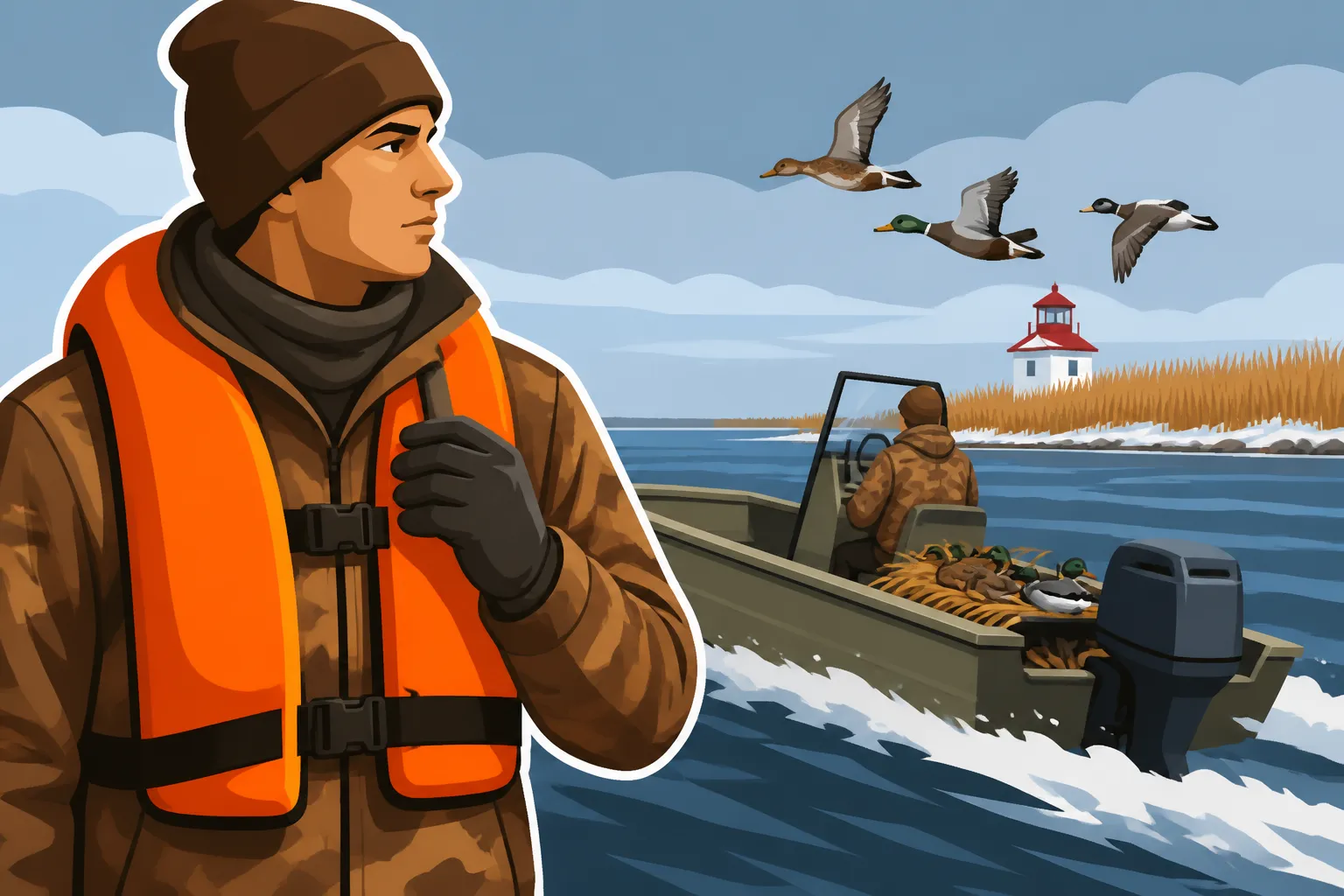
Forget the standard orange life vest. For cold water conditions on the Chesapeake, every person in the boat should be wearing a US Coast Guard-approved Type III or V PFD specifically designed for cold weather or, even better, a full immersion suit. Inflatable PFDs are popular for comfort, but ensure they are regularly inspected and that the CO2 cartridges are fresh. More importantly, consider a Mustang Survival suit or similar anti-exposure coverall. These suits are incredibly warm, provide buoyancy, and significantly extend your survival time in frigid water.
These specialized suits trap a layer of air, providing insulation and making it far easier to stay afloat and conserve body heat should you end up in the water. While they might feel bulky in the boat, they are an absolute non-negotiable for serious December Bay hunters. Remember, the goal isn't just to float; it's to stay alive long enough to be rescued. This is especially critical when hunting alone or in small groups, as self-rescue can be nearly impossible in these conditions without proper gear.
Communication and Navigation Electronics
Reliable communication is your lifeline on the vast expanse of the Chesapeake. A handheld or mounted VHF marine radio is absolutely essential, even if you have cell service. Cell phones can get wet, lose battery in the cold, or simply not have coverage in remote areas. A VHF radio allows you to directly contact the Coast Guard, other boaters, or marine rescue services. Additionally, carry an Emergency Position Indicating Radio Beacon (EPIRB) or Personal Locator Beacon (PLB) which, when activated, transmits your precise location to rescue authorities via satellite.
Beyond communication, robust navigation tools are critical. A reliable GPS unit, separate from your cell phone, loaded with up-to-date charts, is a must. Many modern GPS units offer marine weather overlays, helping you track squalls. Consider using a marine chart plotter from brands like Garmin or Raymarine for detailed navigation. Even with advanced electronics, a good old-fashioned paper chart and a compass should always be onboard as a backup. Before every trip, it's wise to use tools like GoHunt or other marine navigation apps to pre-plan your route, mark potential hazards, and identify safe harbors in case of an emergency. This can also help you understand the nuances of Reading Tide Charts Before a Marsh Hunt.
Emergency Preparedness Kits
Your boat should have a comprehensive emergency kit that goes far beyond what's legally required. Think about what you would need if you were stranded overnight, perhaps due to engine failure or getting stuck on a mud flat. This kit should include:
- First-aid kit: Stocked for severe trauma, hypothermia, and frostbite. Include chemical hand warmers, emergency blankets, and pain relievers.
- Signaling devices: Flares (both aerial and handheld), a whistle, a loud air horn, and a strong flashlight. A strobe light that attaches to your PFD is also a smart addition.
- Repair kit: Basic tools, duct tape, zip ties, spare spark plugs, fuel line repair kit, and a spare propeller if applicable. You never know when a simple fix could prevent a major catastrophe.
- Warmth and sustenance: Extra layers of dry, warm clothing (wool or synthetic, never cotton), high-energy snacks, and plenty of water in insulated containers. A small propane heater (with proper ventilation) could be a lifesaver if stranded.
- Anchor and line: Enough to hold your boat in rough conditions.
- Bailing device and spare pump: Essential for managing water intrusion.
- Knife: A sturdy knife for cutting lines or other emergencies.
Pre-Trip Planning and On-Water Protocols
The most successful and safest hunts on the December Chesapeake are those that are meticulously planned. It's not just about knowing where the ducks are; it's about knowing every potential hazard and having a plan for every possible scenario.
Checking Forecasts and Advisories
Before you even load your boat, a thorough check of the marine forecast is non-negotiable. Don't just look at the temperature; pay close attention to wind speed and direction, wave height, precipitation chances, and any small craft advisories or other warnings issued by the National Weather Service or Coast Guard. Check multiple sources, as forecasts can vary. Tools like GoHunt can provide detailed marine weather information specifically for the Chesapeake Bay. If there's any doubt, or if conditions are at the edge of your comfort zone, err on the side of caution and postpone your trip. No duck is worth risking your life.
Remember that wind direction is just as important as speed. A north wind can quickly build large, steep waves in certain areas of the Bay that might be sheltered from a west wind. Also, consider the combined effect of wind and tide; opposing forces can create particularly nasty chop. Knowing the Maryland Waterfowl Zones and Season Dates is one thing, but knowing if you can safely get to your blind is another.
Filing a Float Plan and Informing Others
This is one of the simplest, yet most overlooked, safety measures. Before you launch, always leave a detailed float plan with a responsible person on shore who knows your expected return time. This plan should include:
- Your name and contact information.
- The names and contact information of everyone onboard.
- Your boat's description (make, model, color, registration number).
- Your planned departure and return times.
- Your precise hunting location and planned route.
- Vehicle description and where it will be parked.
- A "time to call for help" if you haven't checked in.
This float plan ensures that if you don't return as expected, someone knows where to start looking, dramatically increasing the chances of a timely rescue. It’s also wise to share your general intentions with local DNR officers or harbor masters if they are available in your launch area, particularly if you are heading to remote spots like those found when Hunting a Marsh Island by Boat.
Safe Boat Operation in Cold Conditions
Once on the water, exercising extreme caution is paramount. Maintain a safe speed, especially in low visibility or choppy conditions. Always keep a lookout for other vessels, floating debris, and navigation hazards. If you're heading to a known hunting spot, like a popular area for Decoying Divers on Maryland's Open Bay, you might encounter other hunters, so situational awareness is key.
Distribute weight evenly in your boat to maintain stability, and ensure all gear is properly secured to prevent it from shifting or going overboard in rough water. If you're operating a small skiff, remember that these boats are much more susceptible to swamping in waves. It’s critical to understand your boat's limits and stay well within them. Remember to ensure compliance with all legal requirements including Maryland's Legal Weapons by County and Maryland Shooting Hours and Legal Light when planning your day.
If conditions worsen, don't hesitate to turn back or seek shelter in a protected cove or harbor. Your hunt can always be rescheduled, but your life cannot be replaced. Staying updated on weather through apps like GoHunt while on the water can help you make these critical decisions in real-time.
Dealing with Emergencies: What to Do When Things Go Wrong
Even with the best preparation, emergencies can happen. Knowing how to react calmly and effectively can be the difference between a minor incident and a tragedy.
Man Overboard Recovery in Cold Water
A person falling overboard in December is an immediate, critical emergency. Time is of the essence due to cold shock and rapid hypothermia. Every second counts.
- Shout "Man Overboard!": Alert everyone in the boat.
- Throw Flotation: Immediately throw a PFD, a throwable cushion, or any buoyant object to the person in the water to give them something to hold onto. Mark the spot with a buoy or by pointing.
- Turn the Boat: If possible, circle back to the person as quickly and safely as you can, keeping them in sight. If it's windy, approach from downwind/downcurrent.
- Recovery: Once alongside, use a rescue ladder, a strong rope, or a boat hook to help the person back into the boat. This can be extremely difficult in choppy water and with a hypothermic individual. If they cannot assist, consider a "scoop" method with a larger boat, or if you have a powerful enough motor, approach slowly and gently, allowing the person to reach the transom.
Once retrieved, immediately begin treatment for hypothermia: remove wet clothing, wrap them in dry blankets or an emergency space blanket, and provide warm, non-alcoholic drinks if they are conscious. Get medical help as quickly as possible. This is where your VHF radio and EPIRB become absolutely vital.
Engine Trouble and Getting Stranded
Engine failure is a common cause of emergencies, especially in cold weather when systems are stressed. Always carry a secondary means of propulsion, even if it's just a set of oars or a small trolling motor with a fully charged battery. A tow rope should be easily accessible.
If your engine quits:
- Anchor Immediately: Prevent drifting into dangerous areas or open water.
- Assess the Problem: Can you make a quick fix (e.g., fuel filter, loose wire)?
- Signal for Help: Use your VHF radio to call for assistance (Coast Guard on Channel 16, or a commercial tow service like TowBoatUS or Sea Tow if you have a membership). Use your flares and other signaling devices if you see another vessel.
- Stay Warm: Deploy your emergency kit. Put on extra dry layers, use emergency blankets, and huddle together to conserve body heat. Being stranded for hours in freezing temperatures is a serious risk.
Consider taking a basic marine engine maintenance course or watching online tutorials to understand common issues. Regular maintenance before the season, especially checking fuel lines for water or blockages, is key.
First Aid for Hypothermia and Frostbite
Recognizing and treating cold-related injuries is critical for winter hunters.
Hypothermia (core body temperature drops below 95°F):
- Symptoms: Shivering (initially), confusion, slurred speech, clumsiness, lethargy, blue-tinged skin, loss of consciousness. Paradoxical undressing (stripping off clothes despite being cold) can occur in severe cases.
- Treatment:
- Get the person out of the cold, wet environment immediately.
- Remove all wet clothing and replace with dry, warm layers.
- Wrap them in blankets, sleeping bags, or emergency blankets. Focus on warming the core (chest, neck, head, groin).
- If conscious, provide warm, sugary drinks. Avoid alcohol or caffeine.
- Seek medical attention immediately, even if they seem to recover.
Frostbite (freezing of body tissue):
- Symptoms: Skin appears pale, waxy, or grayish-yellow. It may feel hard or numb. Fingers, toes, ears, and nose are most commonly affected.
- Treatment:
- Move to a warm place.
- Gently rewarm the affected area in warm (not hot) water (around 100-105°F) for 20-30 minutes, or with body heat. Do NOT rub the affected area or use direct dry heat, as this can cause further damage.
- Protect the rewarmed area from refreezing.
- Seek immediate medical attention.
Carrying adequate first aid supplies and knowing how to use them is as important as your weapon or decoys. Many Maryland Hunter Education Requirements courses cover basic first aid, but specialized marine first aid courses are highly recommended.
Remember, the vastness of the Chesapeake Bay, particularly in its more remote areas, means that help can be a long time coming. Whether you're hunting Sika Deer in Maryland's tidal marshes or Waterfowl Hunting Maryland's Chesapeake Bay, self-sufficiency and thorough preparation are your best defenses. Always tell someone your plans, ensure your boat is sea-worthy, and equip yourself for the absolute worst-case scenario.
Essential Cold Weather Boating Gear Checklist
Here’s a quick overview of essential gear that goes beyond the basics for winter hunting on the Chesapeake Bay.
| Item | Description | Why it's crucial |
|---|---|---|
| Immersion Suit/Cold-Water PFD | USCG-approved Type III/V full-body suit or inflatable with cold-weather rating | Extends survival time in cold water, provides flotation, thermal protection |
| VHF Marine Radio | Handheld or mounted, capable of contacting Coast Guard (Channel 16) | Reliable communication for emergencies, better than cell service |
| EPIRB/PLB | Emergency Position Indicating Radio Beacon/Personal Locator Beacon | Transmits exact location to rescue authorities via satellite |
| GPS/Chart Plotter | Dedicated marine unit with up-to-date charts, separate from phone | Essential for navigation, especially in low visibility and unfamiliar areas |
| Paper Charts & Compass | Backup navigation, independent of electronics and power | Critical fail-safe if electronics fail |
| Signaling Kit | Aerial and handheld flares, whistle, air horn, strobe light, powerful flashlight | Attracts attention for rescue, vital in low light or fog |
| Dry Bag with Spare Clothes | Waterproof bag containing full change of dry, warm (wool/synthetic) layers | Prevents hypothermia if drenched or after a swim |
| Comprehensive First-Aid Kit | Includes trauma supplies, emergency blankets, chemical hand warmers | Addresses injuries, hypothermia, frostbite |
| Heated Food/Drinks | Thermos with hot soup/coffee, high-energy snacks | Maintains core body temperature, provides energy, boosts morale |
| Spare Prop & Tools | Propeller, wrench, basic engine repair kit, duct tape, zip ties | Facilitates on-water repairs, prevents being stranded |
| Heavy-Duty Anchor & Line | Sufficient size/length for strong currents and rough seas | Holds boat in place during engine failure or adverse weather |
| Bilge Pump (Manual & Electric) | Ensures water can be removed from the boat | Prevents swamping, especially in rough conditions |
This isn't an exhaustive list, but it covers the critical items that differentiate a well-prepared hunter from one taking unnecessary risks. Don't be the person who wishes they had packed one more thing.
Disclaimer
Hunting is an inherently dangerous activity. This guide provides general safety information and recommendations but cannot cover every possible scenario. Always consult official Maryland hunting regulations, marine safety guidelines, and local weather forecasts before embarking on any hunting trip. Your personal judgment and adherence to safety protocols are paramount. The author and publisher assume no liability for incidents or accidents that may occur.