Squirrel Hunting Maryland’s September Opener
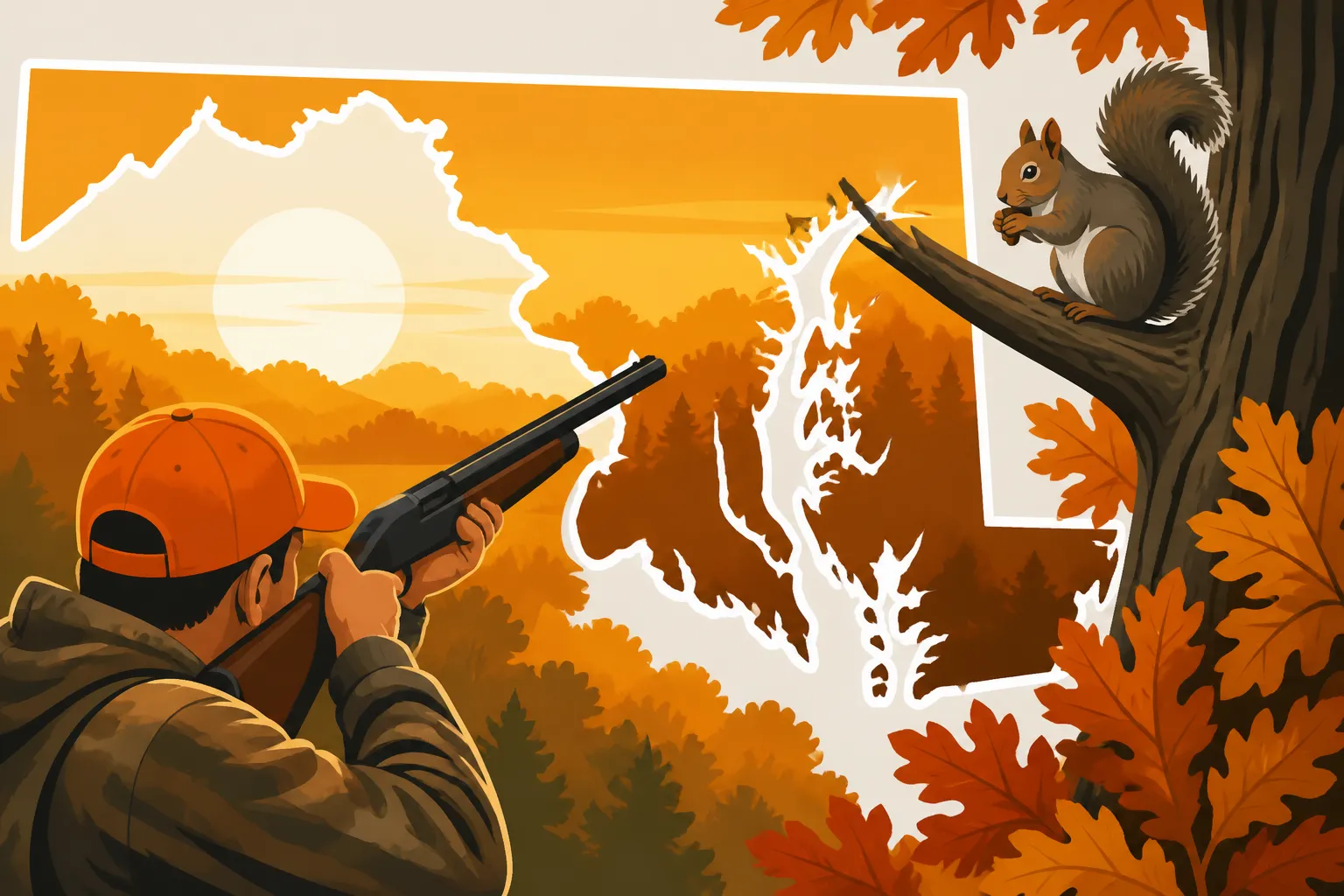
That craving to get back into the woods, to feel the cool morning air, and hear the rustle of leaves underfoot is real, isn't it? As September rolls around, many of us are itching for deer season, but the truth is, Maryland offers an incredible opportunity to scratch that hunting itch long before the big bucks start chasing. Squirrel hunting on Maryland's September opener is a fantastic way to reconnect with nature, sharpen your stalking skills, and put some delicious wild game on the table without the intense pressure of later seasons. This guide will walk you through everything you need to know to make your early season squirrel hunt a success, from gear to tactics to finding those prime locations.
Why Early Season Squirrels Are a Fantastic Choice
There's something uniquely satisfying about the September opener for squirrels. While many hunters are still in summer mode, waiting patiently for the deer and turkey seasons to really kick into high gear, the humble squirrel offers immediate action. It’s a chance to dust off your hunting gear, get your boots on the ground, and immerse yourself in the natural world when the weather is still pleasantly mild.
Beating the Pre-Deer Season Blues
Let's be honest, the anticipation leading up to deer season can feel like an eternity. We're constantly checking trail cameras, scouting new spots, and pouring over regulations. But September squirrel hunting provides a much-needed outlet for that pent-up energy. It’s a low-pressure way to get your blood flowing and satisfy that primal urge to hunt. You're not worried about alerting a trophy buck or spooking a flock of gobblers; you're just enjoying the hunt. It’s also a perfect opportunity to introduce new hunters, especially youth, to the sport. The action can be consistent, teaching them patience, stealth, and marksmanship in a more forgiving environment than deer hunting. Plus, the success rate is often higher, which is a huge confidence booster for beginners.
Learning the Woods in Comfort
September in Maryland offers some truly beautiful days, a far cry from the bone-chilling cold of late-season deer hunts or the sweltering heat of early spring turkey. The foliage is often still thick, but the air is crisp, and the gnats and mosquitoes, while present, aren't as aggressive as in deep summer. This comfortable weather allows you to move quietly through the woods, observing deer sign, potential pinch points, and food sources that you might otherwise overlook when bundled up or rushing through harsher conditions. You’re essentially "pre-scouting" for deer season without even trying. You'll learn the natural rhythm of the forest, understand how different nut trees are producing, and notice subtle changes in the landscape that will pay dividends later in the fall. It’s a low-stakes reconnaissance mission disguised as a squirrel hunt, and it's incredibly effective.
The Thrill of the Stalk
Squirrel hunting, particularly with a .22 rifle or a bow, demands a level of stealth and precision that hones your big game hunting skills. It’s a true test of your ability to move silently, use cover, and spot subtle movements in a dense canopy. The foliage is still relatively full in September, making it a challenging game of hide-and-seek. You’re not just sitting in a stand; you’re actively engaging with the environment, trying to outwit a creature known for its agility and keen senses. Every successful stalk, every perfectly placed shot, builds confidence and sharpens instincts. This kind of active hunting makes you a better all-around woodsman, improving your tracking, observation, and shooting skills in a tangible way. It's a hands-on masterclass in woodsmanship, all while enjoying the peace and quiet of an early autumn morning.
Essential Gear and Preparations for Early Season Squirrels
Getting ready for a September squirrel hunt isn't overly complicated, which is part of its charm. You don't need a truckload of specialized gear, but a few key items and preparations will significantly improve your comfort and success.
Your Weapon of Choice: Rimfire, Shotgun, or Archery
The beauty of squirrel hunting is the versatility in weapon choices. Each offers a different experience and challenge.
- Rimfire Rifles (.22LR or .17 HMR): For many, the .22 rifle is the quintessential squirrel gun. It’s accurate, quiet, and economical to shoot. A well-placed shot to the head or vitals ensures a quick, clean kill and preserves more meat. The challenge lies in stalking close enough for an ethical shot, especially with thick September leaves. The .17 HMR offers a flatter trajectory and more power, which can be useful for longer shots, but it's often overkill for squirrels and can damage more meat. When using a .22, consider solid-point or "subsonic" ammunition for maximum meat preservation and reduced noise.
- Shotguns (20 gauge or .410): If you prefer more dynamic shooting or if squirrels are constantly on the move through the branches, a shotgun is a great option. A 20 gauge with a modified choke and #6 shot is highly effective. The .410 is a classic choice for small game, but it requires more precise aiming than a 20 gauge. Shotguns are especially useful in thick cover where a clear rifle shot is hard to come by. The trade-off is often more damaged meat, but for fast-moving targets, they can be invaluable.
- Archery (Recurve, Compound, or Crossbow): For the ultimate challenge, consider hunting squirrels with a bow. This takes stealth and accuracy to an entirely new level, pushing your stalking skills to their absolute limit. Small game points like Judo tips or blunt heads are ideal as they stun or kill without burying themselves deep in wood, making arrow recovery easier. Hunting squirrels with a bow will make you an incredibly patient and observant hunter, skills that translate directly to big game. Just be mindful of arrow trajectory and background safety, as these little critters offer a small target.
No matter your choice, familiarize yourself with your weapon. Practice shooting from various field positions – offhand, kneeling, resting against a tree – as these will be your real-world scenarios in the woods.
| Weapon Type | Pros | Cons | Ideal Scenario |
|---|---|---|---|
| Rimfire Rifle | Accurate, quiet, economical, preserves meat | Requires precise shot placement, challenging in thick cover | Patient still-hunting, targeting stationary squirrels |
| Shotgun | Effective on moving targets, more forgiving | Can damage meat, louder, less challenging | Fast-paced hunting, dense woods, multiple squirrels |
| Archery | Ultimate challenge, hones stalking skills, quiet | Very difficult, low success rate, precise shot needed | Experienced hunters, seeking extreme challenge, quiet kill |
Dressing for Success in Warm September Weather
September mornings can be cool, but by midday, temperatures can climb significantly. You'll want to dress in layers to adapt to the changing conditions. Lightweight, breathable clothing in camouflage patterns is ideal. Avoid heavy cotton that absorbs sweat and stays wet. Synthetics or merino wool are much better at wicking moisture and drying quickly.
Don't forget the bug spray! Ticks, mosquitoes, and gnats can be plentiful in early fall. Permethrin-treated clothing is a game-changer for ticks, and a good personal repellent with DEET or picaridin is essential for exposed skin. A head net can be a lifesaver on still, humid mornings when gnats are particularly aggressive. Also, consider wearing comfortable, broken-in hunting boots that can handle varied terrain, from damp creek bottoms to leaf-covered ridges. You'll be doing a lot of walking, so foot comfort is paramount.
Scouting Smart Before Opening Day
You wouldn't head out for deer season without some scouting, and squirrel hunting is no different, though perhaps less intensive. A few trips to the woods before the season opens can make a huge difference. Squirrels are food-driven, so focus your scouting efforts on identifying key food sources. Look for areas with mature oak, hickory, beech, and black walnut trees. These are the "cafeterias" for squirrels.
- Look for mast: Are acorns dropping? Are hickory nuts abundant? Look for cut nut shells on logs, rocks, or tree stumps. This "sign" tells you where squirrels are actively feeding.
- Observe squirrel activity: Even before the season opens, you can watch for squirrels. Note where they are most active, their travel routes, and where they might be denning (often in tree cavities or leaf nests high in the canopy).
- Use mapping tools: Platforms like GoHunt can be incredibly helpful for identifying potential squirrel hotspots. Use their satellite imagery to locate large stands of hardwoods, especially along creek bottoms or on ridges. This can save you hours of aimless walking. Pinpoint potential entry and exit points, and identify public land boundaries if you're venturing onto state forests or wildlife management areas. This is especially useful for Scouting Maryland Public Land Before Season where property lines can be critical.
- Check regulations: Before you even step foot in the woods, make sure you understand the current Small Game Season Dates and Daily Limits for squirrels in Maryland. While generally generous, it's good practice to know the specifics. Also, ensure your Maryland Hunting Licenses and What They Cost are up to date.
Remember, early season means leaves are still on the trees, providing both cover for squirrels and a challenge for you to spot them. Scouting helps you find areas where squirrels might be more visible or concentrated.
Hunting Strategies for Maryland's September Squirrels
Squirrels are creatures of habit, especially when it comes to food. Understanding their behavior and applying the right hunting strategy will greatly increase your chances of success.
Still-Hunting: The Art of the Slow Walk
Still-hunting is perhaps the most rewarding and challenging method for early season squirrels. It involves moving through the woods incredibly slowly, stopping frequently to observe, listen, and scan. Think of it as a moving ambush.
- Slow and deliberate: Take a few steps, then pause for several minutes, scanning the trees and ground for any movement or sound. Squirrels are often active on the ground, burying nuts, or working their way up trees. Your eyes should be constantly searching, looking for movement, a flick of a tail, or the silhouette of a squirrel against the sky.
- Listen intently: Squirrels are noisy eaters. Listen for the distinct "chunk-chunk-chunk" of them cutting open nuts, or the rustle of leaves as they scamper across the forest floor. In the quiet of a September morning, these sounds carry surprisingly far. This is an excellent way to practice Reading Sign in Maryland Mountain Timber or any hardwood forest.
- Use cover: Move from tree to tree, using the trunks as concealment. Break up your outline as much as possible. If you spot a squirrel, try to move into a position for a clear, ethical shot without being detected. This often involves very slow, deliberate movements, sometimes taking minutes to cover just a few yards.
- Wind and sun: Try to hunt into the wind if possible, as it carries your scent away from the animals and can also mask the sounds of your movement. Hunting with the sun at your back can sometimes help illuminate squirrels in the canopy and prevent them from silhouetting you.
Still-hunting isn't just about bagging squirrels; it's a profound way to connect with the forest. You'll observe deer, turkeys, and other wildlife that you might never see if you were moving quickly. It makes you a more patient and observant hunter overall.
The Patient Sit and Wait
Sometimes, the best strategy is to find a good spot and let the squirrels come to you. This is especially effective if you’ve scouted a particular area rich in mast, or if you’ve located a den tree.
- Find a comfortable spot: Choose a tree or log to lean against that provides some cover and a good vantage point. Make sure you can see a wide area of the canopy and the forest floor without having to move too much.
- Be still and quiet: The key here is patience. Once you settle in, remain absolutely motionless for extended periods. Squirrels have excellent eyesight, and even a slight movement can send them scurrying. This is where those layers come in handy, allowing you to stay warm but not overheat.
- Focus on feeding times: Squirrels are most active during the early morning and late afternoon, coinciding with typical hunting hours. They'll often venture out to feed vigorously during these periods. If you're on public land, consider areas that might be overlooked by other hunters. You'd be surprised how often you can find Finding Maryland Ground Others Walk Past by simply walking a bit further or sitting longer than others.
- Wait out "treed" squirrels: If you spot a squirrel and it bolts up a tree, don't give up immediately. Often, they'll flatten themselves against a limb or hide on the backside of the trunk. Find a comfortable spot, keep your eyes peeled, and wait. After 10-15 minutes of silence, they'll often peek out or slowly move, giving you a shot. This teaches incredible patience, a skill vital for Bowhunting Maryland's Long Archery Season.
Using Calls and Decoys
While not as common as for deer or turkeys, squirrel calls and decoys can definitely add an edge to your hunt, especially if the woods are quiet or if you're trying to locate hidden squirrels.
- Bark and chatter calls: Various hand-held or mouth calls can imitate the barks and chatters of squirrels. Sometimes, mimicking their distress call or a feeding chatter can provoke a response, either drawing a curious squirrel closer or causing a hidden one to reveal its position. Don't overdo it; a few barks every 5-10 minutes is usually sufficient.
- Squirrel decoys: A realistic squirrel decoy, placed strategically on the ground near an active feeding area, can sometimes pique the interest of real squirrels, especially if they are competitive for food. Combining a decoy with calls can be particularly effective.
- Leaf rustling: You can also use natural sounds to your advantage. A gentle rustle of leaves with your foot, mimicking another squirrel, can sometimes draw attention or reveal a hidden one. Just be subtle; you don't want to sound like a deer crashing through the woods.
- Hunting with a dog: For those who enjoy hunting with a canine companion, squirrel dogs are legendary. A well-trained cur, feist, or a mixed breed can quickly locate and tree squirrels, turning a solitary stalk into a high-energy pursuit. This method is incredibly effective, but it requires a dedicated, trained dog.
Where to Find Maryland's Squirrel Hotspots in Early Fall
Maryland offers a diverse range of habitats, and fortunately, squirrels thrive in many of them. Knowing where to focus your efforts will save you time and increase your chances of finding active game.
Hardwood Ridges and Acorn Factories
The absolute best places to find squirrels in Maryland during September are hardwood forests, especially those with a strong presence of mast-producing trees.
- Oak, Hickory, and Beech stands: These are the primary food sources. Look for ridges and hillsides in Western Maryland State Forests like Green Ridge or Savage River, or larger woodlots on the Eastern Shore or in Southern Maryland. Squirrel Hunting Maryland Hardwood Ridges is a classic tactic for a reason. Squirrels will be actively foraging on the ground for fallen nuts and climbing into the canopy to cut fresh ones. You'll often see the ground littered with "sign" – chewed nut shells indicating recent activity.
- Transition zones: Pay close attention to where different tree types meet, or where hardwoods transition into pine forests. These edges can be travel corridors and often offer a variety of food sources.
- Historical spots: If you've hunted an area before and know it produced acorns or hickory nuts in previous years, it’s a good bet to check again. While mast production varies year to year, established groves tend to be reliable.
- Elevated areas: Squirrels often utilize higher ground for observation and to find larger, more mature nut trees. Look for these "acorn factories" on aerial maps using tools like GoHunt, then confirm on the ground.
Creek Bottoms and Riverine Forests
While ridges are great, don't overlook the rich habitats found along Maryland's many creeks and rivers.
- Moisture and diversity: Creek bottoms and riverine forests often boast a wider variety of tree species, including sycamore, black walnut, and various oaks, which can provide a consistent food supply throughout the early fall. The increased moisture often means lusher undergrowth, offering more cover for squirrels.
- Travel corridors: These linear habitats serve as natural travel corridors for all wildlife, including squirrels. They'll move along these areas between different feeding grounds or den sites.
- Water access: In warmer September weather, squirrels will also be seeking water. While they get a lot of moisture from nuts, a fresh drink from a creek is always welcome.
- Public land access: Many of Maryland's public lands, from Wildlife Management Areas (WMAs) to State Forests, feature extensive creek and river systems. Explore these areas; you might find Gray Squirrels in Maryland Hardwoods concentrated in the fertile bottoms.
Public Lands Versus Private Permissions
Maryland offers fantastic public land opportunities for squirrel hunting, especially in the Western counties and some larger WMAs on the Eastern Shore.
- Public Lands: State Forests (like Green Ridge State Forest, Savage River State Forest) and many Wildlife Management Areas (WMAs) are excellent choices. They offer vast tracts of huntable land. The key is often to walk further than most other hunters. Check the specific regulations for each public area, as some may have unique rules regarding access or hunting dates. Remember to verify the land boundaries using mapping applications or by checking signs on the property. Hunting Maryland's Western Mountain Forests can be especially productive for squirrels due to the extensive hardwood timber.
- Private Land: Don't discount the possibility of gaining permission on private farms or woodlots. Many landowners, especially those who aren't deer hunters, might be open to having squirrel hunters help manage populations. A polite knock on the door, a well-worded request, and an offer to share some of your harvest can go a long way. Always obtain explicit permission, preferably in writing, and always be respectful of the landowner's property. This also means understanding Maryland's Do You Need Written Permission in Maryland? laws for private land access.
- Suburban Woodlots: Believe it or not, some suburban areas, where rifle hunting might be restricted, can hold surprisingly high numbers of squirrels. If Bowhunting Maryland Suburbs Where Rifles Are Banned is your thing, or if you have a .22 air rifle (check local regulations!), these smaller woodlots can provide excellent opportunities. Just be extra vigilant about safety and knowing your backdrop.
No matter where you choose to hunt, always prioritize safety. Be aware of your surroundings, know your target and what's beyond it, and always handle your firearm or bow responsibly. Squirrel hunting in September is a wonderful tradition, offering a gateway to a longer, more fulfilling hunting season.
Disclaimer
Hunting involves inherent risks, including but not limited to injury from firearms, falls, or wildlife encounters. Always consult the most current Maryland Department of Natural Resources (DNR) regulations and local laws before hunting. This guide is for informational purposes only and does not supersede official regulations or professional advice. Hunter education is mandatory for most Maryland hunters; ensure you meet all requirements. Be aware of private property boundaries and always obtain permission before hunting on private land.