Setting Divers Off a Chesapeake Point
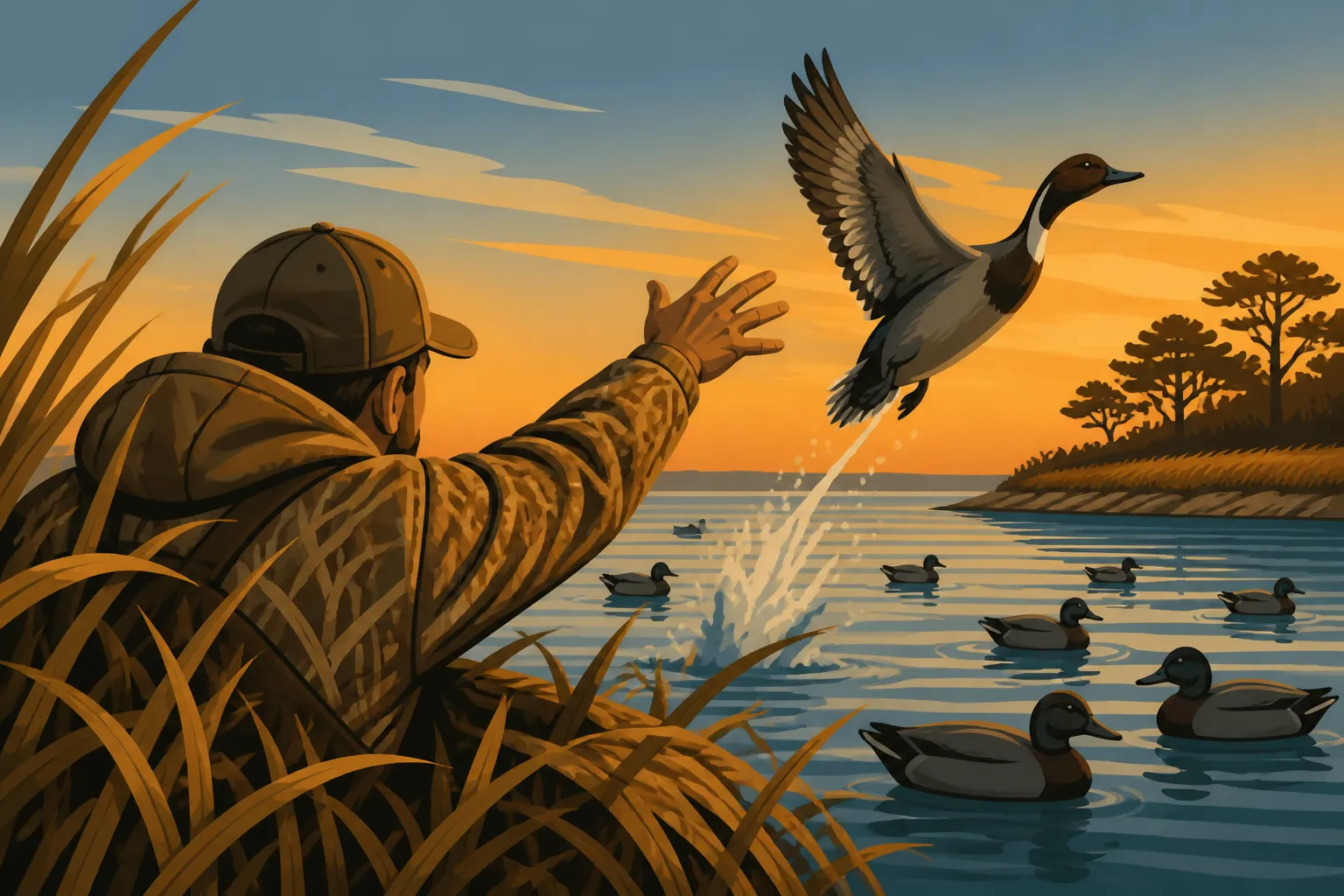
Hunting diver ducks off a Chesapeake point can be one of the most rewarding, yet challenging, experiences for a waterfowler. The fickle nature of the Bay’s currents and winds, combined with the fast flight and often wary behavior of divers, means that a poorly set spread often results in passing birds. This guide will walk you through the nuances of setting diver decoys effectively off a Maryland point, ensuring your efforts lead to more ducks in the bag.
Understanding Diver Duck Behavior on the Chesapeake
Diver ducks are a unique challenge. Unlike dabblers, they typically feed by diving beneath the surface, often preferring deeper, more open water. However, the unique geography of the Chesapeake Bay, with its numerous points, shoals, and islands, creates prime opportunities for these birds. To consistently decoy them, you need to think like a diver.
Reading the Water and Wind
The Chesapeake Bay is a dynamic environment, and understanding its movements is paramount to diver hunting success. Divers like canvasbacks, redheads, and bluebills are heavily influenced by both wind and tide. They use points as navigational markers, often swinging wide around them or hugging their leeward side for calmer water, especially when strong winds churn the main body of the Bay.
Wind direction is perhaps the single most critical factor. Divers, like most waterfowl, prefer to land into the wind. This means your decoy spread needs to be oriented in such a way that the "landing zone" is directly into the prevailing breeze. If the wind shifts, even slightly, your spread can go from deadly effective to completely useless. Many experienced Bay hunters will monitor the forecast religiously, and even keep an eye on real-time weather apps like GoHunt, which can provide invaluable updates on wind speed and direction, allowing for last-minute adjustments.
Tide also plays a significant role, though often less dramatically than wind. A strong outgoing tide can create currents that pull your decoys out of position, or make it difficult for birds to land where you want them. Conversely, a calm, high tide might allow divers to feed in areas they normally avoid. Always consider how the current will affect your spread’s natural appearance and where it will position your landing hole. Remember, divers are strong swimmers and can handle current, but they still seek efficiency and safety when landing and feeding.
Key Diver Species and Their Habits
Knowing the specific habits of the diver species you’re targeting on the Chesapeake can drastically improve your decoy placement. While they all fall under the "diver" umbrella, their preferences can vary.
Canvasbacks, often hailed as the "King of Ducks," are particularly fond of wild celery and sago pondweed, which are found in shallower sub-aquatic grass beds near points and shoals. They are large, fast-flying birds that tend to circle spreads widely before committing. Your spread for canvasbacks should appear open and inviting, allowing them plenty of room to land. They can be wary, so realism in decoys and a natural-looking spread are key.
Redheads, another beautiful diver, share some habitat preferences with canvasbacks but are often found in slightly shallower, more protected coves and embayments near main points. They are generally less wary than 'cans' and are known for their distinctive "purr" call. A spread that incorporates a few redhead decoys, even when targeting other species, can often add to the natural appeal. Their flight is also incredibly fast, so be ready when they commit.
Bluebills, or scaup, are probably the most numerous diver on the Chesapeake. Both greater and lesser scaup are found here, often in massive rafts in open water. While they'll visit points, they are more adaptable and will feed on small clams, snails, and aquatic insects in various depths. For bluebills, a larger spread can be very effective, mimicking the huge flocks they often travel in. Don't be afraid to put out several dozen bluebill decoys. These birds often fly in tight groups, so be prepared for multiple shot opportunities when they pile into your spread.
Ringnecks and Buffleheads are smaller divers that often prefer calmer, more sheltered waters, like tidal creeks and protected bays just off main points. Ringnecks, with their distinctive white ring on the bill, are fast fliers that will zip into a spread quickly. Buffleheads are tiny, highly active, and often seen in small groups, constantly diving and resurfacing. Both are often found closer to shore than the larger divers. Your spread should account for these preferences if you're targeting them specifically, perhaps with smaller, tighter groups of decoys tucked into a calmer pocket.
Essential Gear for Setting a Diver Spread
Successful diver hunting off a Chesapeake point isn't just about knowing the ducks; it's also about having the right tools for the job. The Bay can be unforgiving, and reliable gear is your best friend.
Decoy Types and Rigging
The foundation of any diver hunt is, of course, the decoys themselves. When choosing diver decoys, realism, durability, and visibility are paramount. Standard size decoys are fine, but many seasoned hunters opt for magnum or even super magnum decoys, especially for open water or to attract the attention of high-flying birds. These larger decoys create a more visible target from a distance, mimicking larger, confident ducks. Brands like Avian-X and Tanglefree offer excellent diver decoys that stand up to the rigors of salt water and rough weather.
Rigging your decoys for the Bay requires a bit more thought than a casual pond hunt. Texas rigs are popular for their ease of deployment and retrieval, especially if you're hunting different points or moving your spread. Each decoy has a length of line with a weight on one end and a loop on the other that clips to the decoy keel. This allows for quick setup and breakdown. However, for a truly natural look in strong currents, long lines are often preferred. A long line involves a main line with multiple decoys spaced out on dropper lines. This creates a realistic raft effect that divers find irresistible. You typically anchor each end of the long line, giving the spread a lifelike movement with the current.
Individual weights on each decoy can also work, particularly for smaller spreads or when you want to create a more scattered look. The key is to ensure the weight is heavy enough to hold the decoy in place against the current and wind, but not so heavy that it pulls the decoy unnaturally low in the water. For the Chesapeake, 8-12 oz weights are often a good starting point for individual rigging, while long lines benefit from heavier mushroom or pyramid anchors at each end.
Boats, Blinds, and Ancillary Equipment
The Chesapeake Bay demands specific boat types for safety and effectiveness when hunting divers. A layout boat, like those from Bankes Boats or TDB, is the gold standard for open-water diver hunting. These low-profile vessels allow hunters to hide almost completely flat on the water, becoming virtually invisible to incoming birds. They are typically towed behind a larger "tender" boat, which serves as a command center, retrieves birds, and transports gear.
For point hunting, a larger, stable tender boat is essential. This boat needs to be robust enough to handle the Bay's chop and carry all your gear, decoys, and hunting partners. Aluminum or fiberglass boats with a deep V-hull are often preferred for their stability and seaworthiness. Beyond the boat, proper blind placement is critical. If hunting a natural point, utilizing existing phragmites, marsh grass, or scrub pines for concealment is ideal. If cover is sparse, a temporary panel blind brushed in with local vegetation, or even a specialized boat blind, can make all the difference. Remember, divers have excellent eyesight, and even a slight glint of sunlight off a face or gun barrel can flare them.
Don't forget ancillary equipment. Heavy-duty anchors and plenty of rope are non-negotiable for holding your boat and long lines in place against strong currents and winds. A reliable GPS or mapping app like GoHunt is vital for navigation, especially in low light or fog. Warm, waterproof clothing is a must, as conditions on the Bay can change rapidly. Don't underestimate the cold from constant wind and water spray. And, of course, a well-trained retriever is invaluable for quickly fetching downed birds in potentially rough water, minimizing crippled birds and ensuring every bird is recovered.
Strategic Decoy Spreads for Chesapeake Points
The art of decoy placement is what separates an average diver hunter from a consistently successful one. It's about creating an illusion that is irresistible to passing birds.
The Classic J-Hook or Fishhook Spread
The J-hook, or fishhook, spread is arguably the most popular and effective formation for decoying divers, especially when hunting off a point. The basic concept is to create a large, open pocket or "landing zone" that birds naturally want to drop into, with the main body of decoys forming the curve of the 'J' and a tail extending downwind.
To set this up, identify the prevailing wind direction. The main body of the 'J' should be positioned upwind and up-current from your blind, extending out from the point. The open side of the 'J' should face directly into the wind, creating a calm water landing strip. The long tail of the 'J' then extends downwind, acting as a natural funnel and giving passing birds a long line of decoys to see and follow. For instance, if the wind is from the northwest, you'd place the curve of the J to the north and west of your blind, with the opening facing northwest, and the tail stretching southeast.
The beauty of the J-hook is its versatility. You can adjust the length of the tail and the size of the pocket depending on the number of decoys you have and the conditions. A spread of 50-100 diver decoys can create a truly compelling illusion, drawing birds from far away. Always aim to leave a clear, calm patch of water in the crook of the 'J' where you want the birds to land, well within shooting range of your hidden position. Many hunters find success when they're Decoying Divers on Maryland's Open Bay with this method, even when not directly on a point.
Enhancing Realism with Confidence Decoys
While diver decoys are the main attraction, adding "confidence" decoys can make your spread look even more natural and inviting, especially to wary birds. Confidence decoys are those of other bird species commonly found sharing the same waters as divers, signaling to incoming ducks that the area is safe and actively used.
Coots are excellent confidence decoys for divers. These small, dark birds are often seen mixed in with diver rafts, dabbling and diving. A small group of coot decoys, placed subtly within or on the outer edges of your diver spread, can add a layer of realism that makes the whole setup more believable. Similarly, adding a few Canada goose floaters, strategically placed slightly away from your main diver spread, can convey a sense of security. If you're often Decoying Canada Geese on the Upper Eastern Shore, you likely already have these on hand.
Even a few gull decoys, positioned on nearby sandbars or floating casually in the spread, can enhance the natural look. Gulls are opportunistic feeders and are almost always present where ducks congregate. The goal is to create a scene that looks completely natural and undisturbed, encouraging even the most cautious canvasback or redhead to commit. Think about what a large group of ducks and other waterfowl naturally looks like on the Bay, and try to replicate that scene.
Adapting to Conditions and Pressure
No two days on the Chesapeake are exactly alike, and neither should your decoy spread be. The ability to adapt to changing conditions and hunting pressure is a hallmark of a successful diver hunter.
On calm days with light winds, divers might be less concentrated and fly more sporadically. In these situations, a more scattered, open spread can work well, mimicking small groups of birds feeding naturally. Conversely, on blustery days with strong winds, divers will often raft up in larger numbers, seeking shelter. Here, a tighter, larger spread, with decoys almost touching, can be more effective at drawing their attention and offering a visual haven. Keep an eye on the weather forecast and check apps like GoHunt for current conditions to make informed decisions. Sometimes, hunters find that Hunting After a Maryland Cold Front changes bird behavior significantly, making adaptability even more crucial.
Hunting pressure is another major factor. If birds have been heavily shot at, they become incredibly wary. In such scenarios, consider scaling back your decoy numbers and focusing on hyper-realistic decoys and a more subtle spread. Sometimes, fewer, perfectly placed decoys that look incredibly natural will outperform a massive, poorly deployed spread. Varying your spread from day to day and from point to point can also help keep the birds guessing and prevent them from associating a particular setup with danger. Don't be afraid to experiment; sometimes a minor tweak, like shifting your landing zone a few yards, can make all the difference.
Here’s a quick comparison of common diver decoy spreads:
| Spread Type | Description | Best Conditions | Pros | Cons |
|---|---|---|---|---|
| J-Hook/Fishhook | Large curve with a long tail, creating a central landing pocket. | Moderate to strong winds, open water. | Highly effective for wary divers, clear landing zone. | Requires many decoys, can be complex to retrieve in strong currents. |
| U-Shape/V-Shape | Similar to J-hook but symmetrical, with landing zone in the middle. | Variable winds, good for large rafts of birds. | Provides ample landing space, mimics natural raft. | Can be harder to hide blind effectively with symmetrical spread. |
| Loafing Raft | Tight group of decoys, mimicking birds resting or feeding. | Calm days, pressured birds, small numbers. | Looks very natural, requires fewer decoys. | Less effective at drawing birds from a distance, smaller landing zone. |
| String/Gang Line | Decoys spaced linearly on a single line, often angled into the wind/current. | Strong currents, targeting specific flight paths. | Easy to deploy and retrieve, creates a clear travel path for birds. | Less visually appealing from a distance, limited landing space. |
Tactics for Maximizing Success on the Point
Decoys are just one piece of the puzzle. How you position yourself, interact with the birds, and prioritize safety are equally important for a truly successful diver hunt.
Blind Placement and Concealment
Even the most perfect decoy spread will be useless if your blind is giving you away. For point hunting, blind placement is paramount. Ideally, you want to utilize natural cover already present on the point. Thick phragmites, marsh grass, scrub bushes, or even a fallen tree can offer excellent concealment. The key is to break up your outline and blend into the surroundings. When Building a Blind on a Maryland Shoreline Point, think about the approach angles of the ducks and how your blind will look from their perspective.
Position your blind with the sun at your back, if possible, especially during morning hunts. This puts the sun in the birds' eyes, making it harder for them to spot you, while also illuminating them for easier identification and shooting. Avoid silhouetting yourself against the sky or open water. If the point allows, place your blind slightly inland, just enough so you can see your decoys and shooting lane without being exposed. Brush in your blind meticulously with local vegetation, making sure to cover any gaps. Even small details like covering your face and hands with camouflage can make a significant difference, as divers are notorious for spotting the slightest bit of exposed skin.
Calling Strategies for Divers
Unlike dabbling ducks or geese, diver calling is generally more subtle and less aggressive. You won't be high-balling them like mallards or honking loudly like Canada geese. Divers respond more to the visual appeal of a well-set spread and the impression of safety and numbers.
For canvasbacks, a low, guttural "growl" or "burrr" call can be effective, mimicking their contented feeding sounds. These calls should be used sparingly and softly, mostly when birds are committed and circling your spread. Redheads are known for a distinctive "purr" or "trrr" sound, which can also be replicated with a specialized call. Bluebills sometimes respond to a soft "brrr" or "kerr" sound, especially when they are already close.
The key with diver calling is subtlety. Often, the movement of your decoys on the water, combined with the sheer visual appeal of a large, realistic spread, is more effective than aggressive calling. However, a well-timed, soft call can sometimes be the final nudge needed to bring a wary flock into range. Focus on understanding the natural sounds of the birds you're targeting and try to mimic those rather than blasting away. Observe how birds are Reading Goose Flight Lines Off the Chesapeake; similar visual cues apply to divers.
Safety and Regulations on the Water
Hunting divers on the Chesapeake Bay comes with inherent risks, and safety should always be your top priority. The Bay can be unpredictable, with sudden squalls, strong currents, and rapidly dropping temperatures.
Always wear a U.S. Coast Guard-approved personal flotation device (PFD), even if you're an experienced swimmer. Hypothermia is a real danger in the cold waters of the Bay. Before heading out, check the marine weather forecast thoroughly and be prepared to cancel or cut short your hunt if conditions deteriorate. Tell someone where you are going and when you expect to return. Always carry appropriate navigation lights, a fully charged cell phone (in a waterproof case), and an emergency signaling device like a whistle or air horn. These measures are critical for Boat Safety on the Chesapeake in December.
Beyond personal safety, be well-versed in Maryland's hunting regulations. Know the specific Maryland Duck Season Dates for your zone, daily bag limits for each species, and shooting hours. Understand the rules for blind licensing, especially if you are hunting from a permanent blind. Make sure your boat is properly registered and equipped with all required safety gear. Ignorance of the law is never an excuse, and violating regulations can result in hefty fines and loss of hunting privileges. Consult the Maryland Department of Natural Resources (DNR) website or a comprehensive resource like GoHunt for the most up-to-date information on all hunting regulations.
Disclaimer
Please ensure you are fully aware of and compliant with all local, state, and federal hunting regulations before embarking on any hunting activity. Safety should always be your number one priority. This guide is for informational purposes only and does not supersede official hunting laws or safety guidelines.