Hunting the Edge of a Soybean Field at Dusk
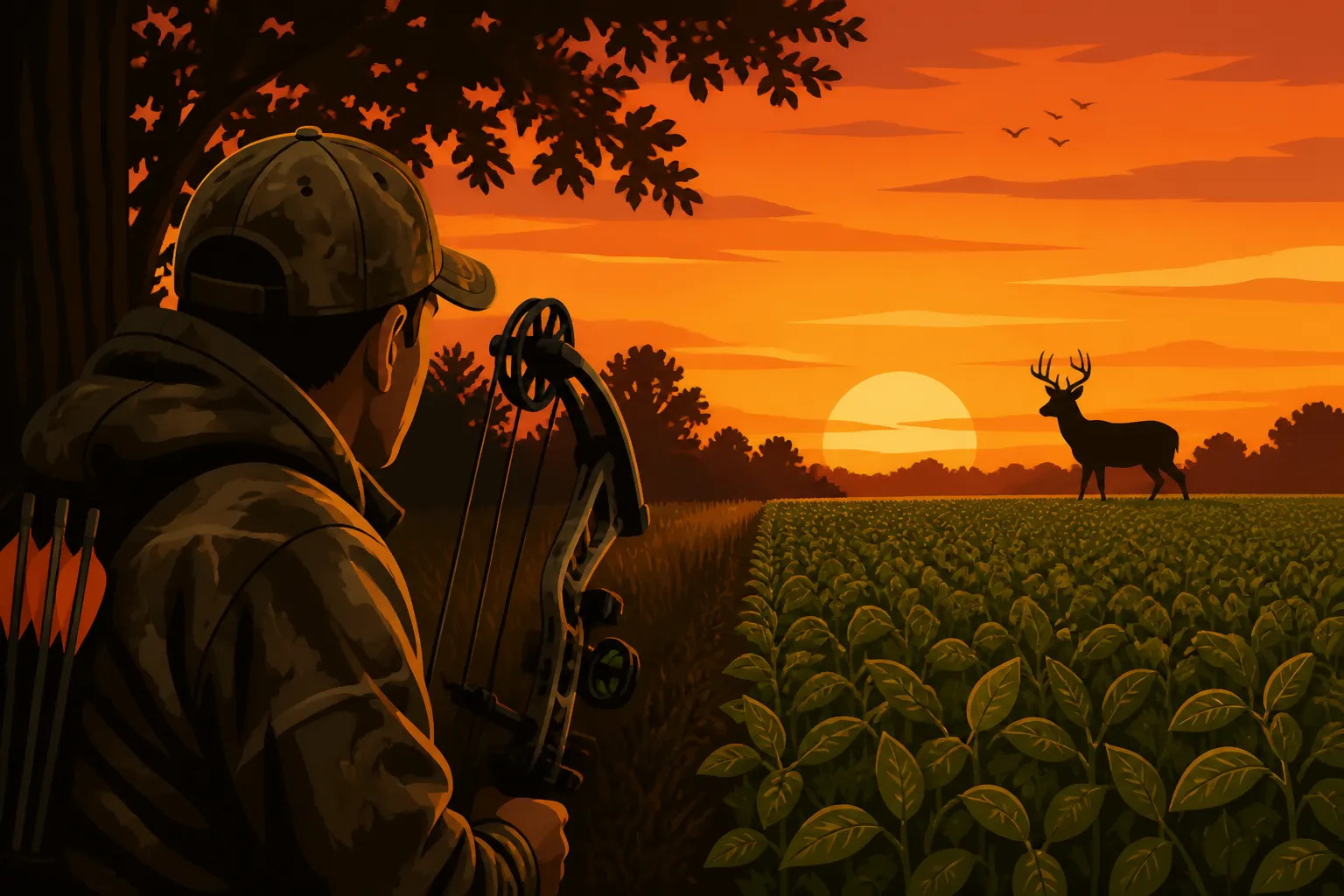
There are few things as frustrating as spending hours in a stand only to have deer materialize out of nowhere at last light, just out of range, or dart across a field you weren't watching. Hunting the edge of a soybean field at dusk is one of those classic scenarios that holds immense potential, but only if you understand why deer are there and how to set yourself up for success. This guide will dive deep into cracking the code of those twilight soybean movements in Maryland, giving you the insights to turn those frustrating near-misses into successful harvests.
Understanding Deer Movement in Soybean Fields at Dusk
Soybean fields are absolute magnets for deer throughout much of the hunting season in Maryland, and their appeal shifts as the plants mature. Understanding this dynamic, coupled with the natural patterns of deer movement as evening descends, is crucial for anyone hoping to tag a deer on a field edge.
Why Soybeans Are a Deer Magnet
From the moment young soybean plants emerge from the ground in spring until they are dried and harvested in the fall, they offer a smorgasbord of nutrition and appeal to deer. Early in the growing season, deer are drawn to the tender, protein-rich leaves and stems, which provide vital nutrients for antler growth in bucks and milk production for does. As the season progresses into late summer and early fall, the plants begin to produce pods filled with high-energy beans. These beans are incredibly palatable and provide a concentrated energy source that deer actively seek out to build up fat reserves for the coming winter.
Unlike some other crops, soybeans offer a long window of attraction. Initially, it's the lush green forage. Later, it’s the high-energy beans. Even after harvest, the scattered beans left on the ground provide a persistent food source, especially if a cold front pushes deer to feed heavily. This continuous appeal makes a soybean field a reliable destination for deer, almost like a deer cafeteria that’s open for extended hours. The sheer volume of food available in a large soybean field can support a significant number of deer, making it a prime location to target throughout the fall.
The Rationale Behind Dusk Movement
Deer are crepuscular animals, meaning they are most active during the twilight hours of dawn and dusk. This behavioral pattern is deeply ingrained and driven by a combination of biological needs and survival instincts. As dusk approaches, deer transition from their bedding areas – often dense cover in nearby woodlots, thickets, or even tall weeds within the field itself – to their primary feeding grounds. A soybean field, bursting with nutrition, is often exactly where they're headed.
The fading light of dusk provides a sense of security for deer. They feel less exposed to predators, including human hunters, as the visibility decreases. This is also when thermal currents begin to drop and stabilize, especially if the day has been warm. Understanding how Wind and Thermals in Western Maryland Terrain impact deer movement is paramount, but even in flatter Eastern Shore country, evening thermals can carry your scent down into the field or along an edge. Deer often use these falling thermals to their advantage, scent-checking the air ahead of them as they move out of cover. Your job as a hunter is to recognize these patterns and position yourself accordingly, ensuring your scent isn't blowing directly into their anticipated travel lanes. This movement from security cover to feeding areas is predictable, making the edge of a soybean field a high-odds ambush point for the last hour or two of daylight.
Scouting and Stand Placement Strategies for Soybean Edges
You can't just pick any tree on a field edge and expect success. Smart scouting and precise stand placement are the bedrock of consistently harvesting deer that are heading to feed in soybeans.
Pre-Season and In-Season Scouting Techniques
The work for a successful soybean edge hunt starts long before you ever climb into a stand. Pre-season scouting is about identifying potential hotspots. I always recommend using tools like GoHunt, which offers fantastic aerial imagery and property line overlays. This lets you digitally scout from your couch, identifying key features like pinch points, funnels, and dense cover adjacent to soybean fields. Look for areas where strips of woods bottleneck, or where a drain ditch offers concealed travel. Then, hit the ground. Spend time in late summer, well before the season opens, observing from a distance with binoculars or a spotting scope. Watch where deer enter and exit the fields. Are they consistently using a particular corner? Is there a subtle dip in the terrain or a fenceline they prefer to cross? Look for heavily worn trails entering the field, indicating frequent use.
Once the season opens, your scouting becomes even more refined. Look for fresh deer sign directly on the field edge: tracks in the soft soil, fresh droppings, and browse lines on nearby shrubs or saplings. Pay close attention to rub lines and scrape lines along the treeline bordering the soybeans. These are clear indicators of buck activity, especially as you approach Hunting the Rut in Early to Mid November. Remember, deer habits can change throughout the season as hunting pressure increases or food sources shift. Don't be afraid to adjust your strategy based on what you're seeing in real-time. A simple trail camera strategically placed on a well-used trail leading into the soybeans can provide invaluable intelligence about deer numbers, buck quality, and exact timing of their movements.
Optimal Stand Setup on the Edge
Once you've identified a promising entry point or travel corridor, the next critical step is flawless stand placement. The wind is always your number one concern. You must ensure your scent is blowing away from where you expect deer to come from and where they'll be feeding. This often means having multiple stand locations for different wind directions, or at the very least, waiting for the perfect wind. Consider the sun's position at dusk; you don't want to be staring directly into the setting sun, nor do you want it silhouetting you.
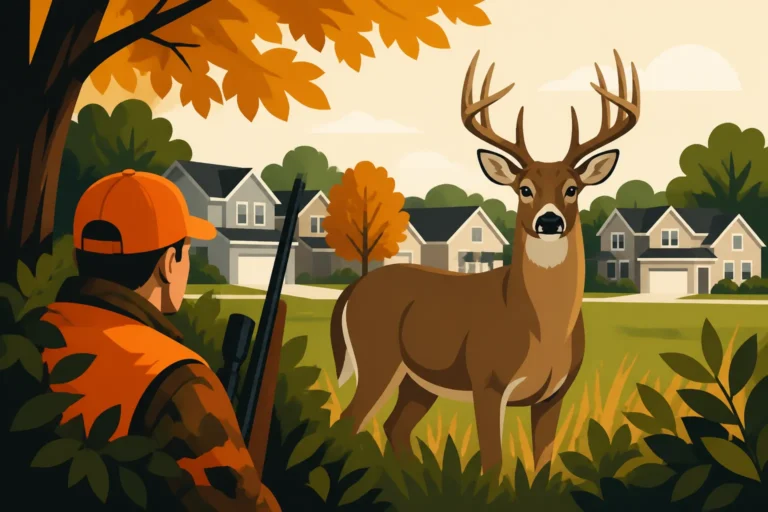
When choosing between a tree stand and a ground blind, think about the specific situation. A tree stand offers a higher vantage point, often allowing you to see deer approaching from a greater distance and providing a safer shooting angle. However, getting into a tree stand quietly and concealing yourself adequately can be challenging. A well-placed ground blind, especially one brushed in naturally, can offer excellent concealment and warmth, but it limits your line of sight and can sometimes make scent control more difficult. For example, when you're considering Hanging a Stand on a Maryland Farm Edge, you'll want to think about the specific tree you're using. Is it an old oak that provides ample cover, or a younger sapling that leaves you exposed? Ideally, you want to be positioned just inside the timber line, offering concealment, but with clear shooting lanes into the field and along the edge. Try to find a tree that backs up to thicker cover, allowing you to blend in better. Don't forget to trim shooting lanes well in advance to avoid last-minute noise and disturbance.
Executing the Dusk Hunt: Tactics and Considerations
Even with perfect scouting and stand placement, the actual hunt requires careful execution. Your approach, your patience, and your adaptability can make or break an evening sit over soybeans.
Silent Entry and Exit Strategies
Getting to your stand on a soybean field edge without alerting every deer in the county is paramount. This means meticulous planning of your entry route. Use natural cover whenever possible – drainage ditches, fencelines, hedgerows, or the densest part of the woods – to mask your approach. Walk slowly and deliberately, avoiding rustling leaves or snapping twigs. Consider the time of day you enter; if you can get in a few hours before deer are expected to move, the woods will have time to settle down. Often, a stealthy approach through a thick woodlot can mean the difference between seeing a mature buck and having him skirt your position entirely. This is especially true when you're thinking about Hunting a Chesapeake Farm Woodlot Point, where deer will often stage before entering an adjacent field.
The exit strategy is just as crucial, if not more so, than the entry. Once the light fades and you've decided to call it a night, resist the urge to immediately climb down and walk straight out. Wait until it's completely dark. This minimizes the risk of spooking deer that might still be in the field or just inside the timber line. If you spook deer on your way out, they'll associate that field edge with danger, potentially making your next hunt there less productive. Use a quiet headlamp on a low, red-light setting to navigate, and again, follow your pre-planned, quiet exit route. If you've been sitting over standing crops, consider routes that lead away from typical deer travel paths, perhaps along a field road or through open ground that deer are less likely to be using after dark.
Dealing with Changing Conditions and Pressure
Deer behavior is rarely static; it's constantly influenced by weather, hunting pressure, and the changing availability of food sources. Being adaptable is key to consistent success. A sudden Hunting After a Maryland Cold Front can send deer into a feeding frenzy, making a soybean field edge an even hotter ticket. Conversely, a warm, drizzly evening might make them more sluggish and less likely to move early. Always check the forecast and adjust your expectations and even your stand choice accordingly. Pressure from other hunters, especially on public land, will also impact deer. If a field edge has been heavily hunted, deer might become more nocturnal or switch their entry points to less exposed areas. This is where those alternate stand locations for different conditions really pay off.
Don't be afraid to experiment with calls or scents, but use them sparingly and strategically. A soft doe bleat or a light grunt call might pique a buck's curiosity, especially if he's cruising for does near Scrape Lines Along a Maryland Field Edge. However, overcalling can quickly alert and spook deer. GoHunt's mapping features can also help you identify areas of public ground adjacent to private farms where deer might seek refuge from pressure, giving you a chance to intercept them as they transition back into feeding areas. Remember, your primary advantage on a field edge is patience and stealth; calls are secondary tools.
Using Supplemental Attractants and Scents
While not always necessary, especially if the soybeans themselves are a strong draw, supplemental attractants and scents can sometimes give you that extra edge. For ethical reasons, and to ensure you're compliant with Maryland DNR regulations, always double-check what is legal in your specific hunting area regarding baiting or using certain attractants. In many areas, simple mineral blocks or natural attractants that do not contain food products might be permissible. These can draw deer in and hold them in an area, increasing the likelihood they’ll eventually visit your soybean field edge.
Regarding scents, both cover scents and deer lures have their place. Cover scents, designed to mask your human odor, are crucial. Scents like pine, earth, or even commercially available "natural" deer scents can help to blend you into the environment. Deer lures, such as doe estrus or buck urine, should be used with extreme caution and only during the appropriate phases of the rut. Deploying an estrus scent too early in the season can actually scare deer away. When using any scent, apply it downwind of your stand or on mock scrapes, never directly on yourself or your equipment. The goal is to either mask your scent or to naturally draw a deer to an area where you have a clear shot.
Gear Essentials for a Successful Evening Hunt
Having the right equipment can make a significant difference in your comfort, effectiveness, and ultimately, your success when hunting a soybean field at dusk.
Optics and Lighting
When you're perched on a field edge as the sun dips below the horizon, good optics are not a luxury; they're a necessity. A high-quality pair of binoculars (10×42 or 10×50 are popular choices) will allow you to scan the field, pick out subtle movements, and identify deer even in low light. The better the light-gathering capability of your binoculars, the more effectively you can hunt right up until legal shooting light ends. A rangefinder is also essential, especially when hunting across an open field. Knowing the exact distance to key landmarks or potential shot zones before a deer appears can prevent critical errors when target acquisition is tough in fading light. You don't want to be guessing yardage at the moment of truth.
For your exit, a reliable headlamp is indispensable. Choose one with a red-light option, as red light is less disruptive to your night vision and less likely to spook any remaining deer. Make sure your headlamp has fresh batteries or that you carry spares. The last thing you want is to be fumbling around in pitch darkness, particularly if you have to track a deer after the shot. Recovering a deer from a tidal marsh, for instance, in the dark without good lighting can be an absolute nightmare.
Scent Control and Camouflage
Deer possess an incredible sense of smell, far superior to our own. This makes rigorous scent control absolutely vital for hunting any field edge, especially when deer are likely to approach from downwind. Start with a scent-eliminating shower before your hunt, use scent-free laundry detergent for your hunting clothes, and store them in airtight containers or bags. Sprays like Scent Killer or Ozonics can further reduce your odor profile. Don't forget your boots and hat – these are often overlooked sources of human scent. Many hunters swear by wearing rubber boots to and from their stand to avoid leaving human scent trails.
Your camouflage should be chosen to blend into the specific environment of a soybean field edge. This typically means patterns with browns, tans, and greens that mimic timber and undergrowth, or even patterns designed for open field environments. The goal is to break up your human outline. Remember, while camouflage is important, remaining absolutely still is even more critical. Deer are much more likely to spot movement than they are to discern intricate camo patterns, especially in the low light of dusk. When Hunting a Green Ridge Ridgetop Bench in Western Maryland, you might opt for a darker, more timber-centric pattern, but on an Eastern Shore soybean field, you'll want something that allows you to disappear against the varied backdrop of the field edge.
| Stand Type | Advantages | Disadvantages | Ideal Scenario |
|---|---|---|---|
| Tree Stand | Elevated view, better range of motion | Harder to get in/out quietly, less portable | Tall, mature trees on field edge, good cover in canopy |
| Ground Blind | Excellent concealment, warmth, comfort, easy setup | Limited visibility, scent control challenging, bulky | Short cover, thick brush lines, permanent setup |
| Saddle Hunter | Extremely portable, adaptable, 360-degree shooting | Requires specific technique, less comfortable for long sits | Scouting new areas, mobile hunting, quick setup on any tree |
| Box Blind | All-weather comfort, enclosed, stable shooting | Very permanent, expensive, obvious to deer | Long-term private land strategy, disabled hunter friendly |
Understanding Legal Shooting Hours
One of the most frustrating aspects of hunting the edge of a soybean field at dusk is when a trophy buck steps out right at the cusp of legal shooting light, or even after it. In Maryland, legal shooting hours for deer typically extend from one-half hour before sunrise to one-half hour after sunset. It is absolutely crucial that you know the exact sunrise and sunset times for your specific location on the day you are hunting. Many hunting apps, like GoHunt, will provide this information, often with a timer. You must be able to positively identify your target and have a clear, ethical shot within these legal times.
It's tempting to push the limits, especially when you've waited all evening for a deer. However, taking a shot outside of legal hours is not only illegal but also highly unethical. It significantly increases the chance of wounding an animal and losing it in the dark, and can result in serious penalties. It's far better to let a deer walk and hunt another day than to risk a poor shot and a citation. Practice shooting in low-light conditions to understand your own limitations and the capabilities of your equipment.
Disclaimer
Please note: Hunting laws and regulations in Maryland, including those concerning licenses, seasons, bag limits, and legal equipment, can change. Always consult the most current Maryland Department of Natural Resources (DNR) Hunting Guide or visit their official website before heading afield. This guide is for informational purposes only and does not supersede official regulations.