Why Sika Deer Run Smaller Than Whitetails
If you've spent any time hunting Maryland's Eastern Shore, especially in those distinctive marshy areas, you've probably noticed something striking about the Sika deer compared to our more familiar white-tailed deer: they're just… smaller. Many hunters are initially surprised by their diminutive stature, sometimes mistaking a mature Sika stag for a whitetail fawn or a very young doe. This guide will dive deep into why Sika deer consistently run smaller than their white-tailed cousins here in Maryland, exploring the fascinating blend of genetics, habitat, and lifestyle that contributes to their unique physical characteristics.
The Distinctive Differences Between Sika and Whitetail Deer
It’s easy to group all deer together, but Sika and white-tailed deer are fundamentally different species, each with its own evolutionary path and physical traits. While they now share some of the same ground in Maryland, their biological blueprints set them apart in terms of size and appearance. Understanding these core distinctions is the first step to appreciating why one is so much larger than the other.
White-tailed Deer: The Maryland Mainstay
The white-tailed deer (Odocoileus virginianus) is the quintessential deer species across North America, and certainly the dominant one in Maryland. These deer are known for their relatively large bodies, especially mature bucks, which can weigh upwards of 200 pounds, with some exceptional individuals pushing even heavier in good habitat. Their shoulder height typically ranges from 3 to 3.5 feet. Whitetails are incredibly adaptable, thriving in a diverse range of habitats from dense forests to agricultural fields and even suburban environments. Their diet is broad, including acorns, browse, agricultural crops like corn and soybeans, and various forbs and grasses. This rich and varied diet, coupled with their genetic predisposition for larger size, allows them to grow substantially. Maryland's deer management efforts have also played a role in maintaining healthy populations, often encouraging the growth of mature animals through various regulations. Many hunters enjoy the challenge of hunting Maryland's Two Deer Management Regions, each with its own set of rules and opportunities for whitetails.
Sika Deer: An Exotic Introduction
Sika deer (Cervus nippon) are quite different. Originally native to East Asia, these deer were introduced to Maryland in the early 20th century, specifically onto James Island off the coast of Dorchester County. From there, they found a niche in the unique marsh habitats of the Lower Eastern Shore and have since spread, though their primary range remains concentrated in those coastal regions. If you're wondering, "How Far Sika Deer Have Spread From Dorchester," you'd be surprised at their slow but steady expansion.
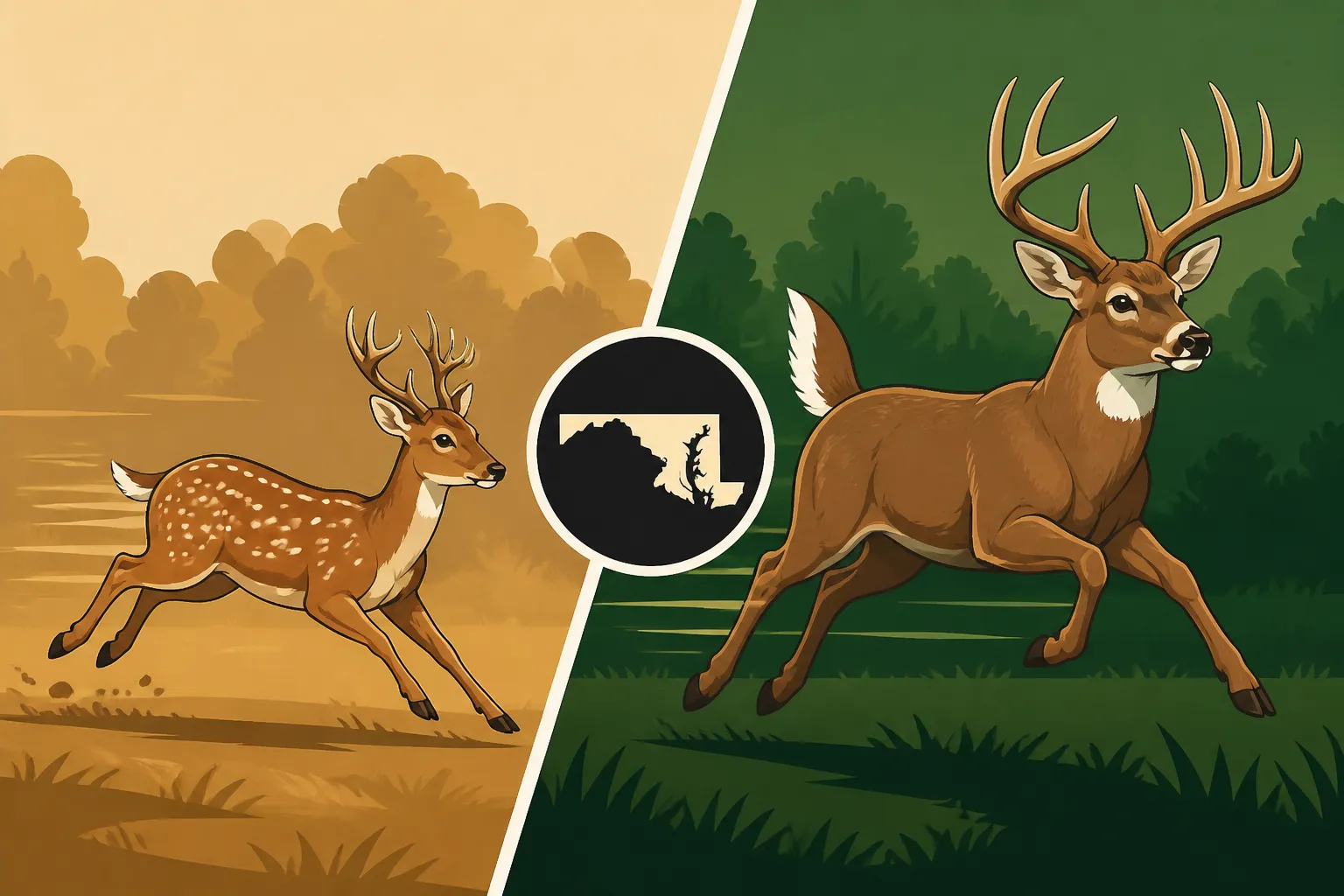
Genetically, Sika deer are a much smaller species globally compared to whitetails. Even a fully mature Sika stag, often referred to locally as a "Japanese elk" due to their initial misidentification and unique bugle-like whistle, will rarely exceed 100 pounds live weight, with many weighing closer to 60-80 pounds. Their shoulder height is typically around 2.5 to 3 feet, making them noticeably shorter and more compact than even a young whitetail. Their antlers are also proportionally smaller, usually forming 3-4 points per side, or even just spikes, and lack the heavy mass often seen on mature whitetail bucks. This inherent genetic difference is the primary driver behind their smaller size.
Unpacking the Size Disparity: Genetics, Diet, and Environment
The reasons for the Sika's smaller stature aren't just anecdotal; they're rooted in their biology and the specific conditions they inhabit. It's a fascinating interplay of their genetic heritage and the unique challenges and opportunities presented by the Maryland landscape.
Genetic Blueprint: It's in Their DNA
At the heart of the matter, Sika deer are simply bred to be smaller. This isn't a result of poor nutrition in Maryland; it's how the species evolved over millennia in its native range. There are several subspecies of Sika deer, and while some can be slightly larger than others, none approach the typical size of a white-tailed deer. Think of it like comparing a Shetland pony to a Clydesdale; both are horses, but their genetic makeup dictates a vast difference in size.
Their skeletal structure, muscle mass potential, and even metabolic rates are all geared towards a smaller body plan. This genetic predisposition means that even if a Sika deer were given an absolutely optimal diet and perfect living conditions, it would still never grow to the size of a comparably healthy white-tailed deer. It's a fundamental aspect of "Why Sika Deer Run Smaller Than Whitetails" that often surprises hunters used to our larger native cervid. This intrinsic difference means that when you're comparing a Sika stag's antlers to a whitetail buck's, you're looking at completely different benchmarks for a "trophy."
Habitat and Nutrition: The Marsh Factor
While genetics set the baseline, the environment in which Maryland's Sika deer thrive certainly plays a role in their overall expression of size. Most of Maryland's Sika population lives in the demanding tidal marshes and surrounding upland edges of the Lower Eastern Shore, particularly in counties like Dorchester and Somerset. This habitat, characterized by dense Phragmites australis, loblolly pine thickets, and scattered agricultural fields, presents both challenges and opportunities.
What Sika Deer Eat in a Tidal Marsh often consists heavily of marsh grasses and reeds, which, while abundant, might not offer the same nutrient density or variety as the diet available to many whitetails. While Sika are resourceful and will browse on woody vegetation and graze on agricultural crops when available, their primary marsh diet can be tougher to digest and less nutrient-rich than the diverse forage of a whitetail in a hardwood forest or cornfield. These marsh conditions, with their cycles of high and low tide, mean food sources can be inundated or less accessible at times. If you're scouting, understanding "Where Sika Deer Bed in Phragmites" gives you a better idea of their daily movements and feeding patterns. Using tools like GoHunt can provide detailed aerial imagery, helping you map out these marsh guts, pine islands, and potential food sources that are critical for Sika. This kind of mapping can be invaluable for understanding how limited food resources might impact the local deer herd's size.
Life History and Maturity: When They Peak
Another contributing factor to perceived size differences is the life history and maturity rates of each species. While both Sika and white-tailed deer mature relatively quickly, their maximum growth potential is inherently different. A whitetail buck may continue to add body mass and antler size well into its 4-5 year old range, with some continuing to impress even later.
Sika deer, while reaching breeding maturity fairly quickly, hit their peak body and antler size at a much smaller overall scale. A mature Sika stag might only be 4-5 years old, but its body will still be a fraction of the size of a whitetail of the same age. Hunters accustomed to waiting for a massive whitetail might be surprised to learn that a "trophy" Sika stag, though small, might be an older, battle-hardened animal that has navigated the tough marsh environment for years. This also highlights the distinct challenges of hunting these animals; recovering a downed Sika in the dense marsh requires specialized gear and knowledge, as discussed in "Blood Trailing in Marsh Grass After Dark."
| Feature | White-tailed Deer (Mature Buck, Maryland) | Sika Deer (Mature Stag, Maryland) |
|---|---|---|
| Average Weight | 150-250 lbs (often heavier) | 60-100 lbs (rarely above 100) |
| Shoulder Height | 36-42 inches | 30-34 inches |
| Antler Spread | 15-25+ inches (typical) | 8-15 inches (typical) |
| Antler Points | 8-10 points (typical) | 6-8 points (typical) |
| Coat Color | Reddish-brown (summer), Gray-brown (winter) | Spotted (summer), Dark brown/gray (winter) |
| Tail | Broad, white underside | Short, dark, with white rump patch |
Practical Implications for Maryland Hunters
Understanding why Sika deer are smaller isn't just an academic exercise; it has real, practical implications for how you scout, hunt, and even process your game in Maryland. Whether you're targeting one species or hunting Maryland Whitetails on the Same Ground as Sika, being prepared for the size difference is key.
Judging Size in the Field: How to Adjust Your Eye
One of the biggest adjustments for hunters accustomed to whitetails is judging the size of a Sika deer in the field. When a Sika stag steps out, its compact body can make it appear much younger or smaller than it actually is. What looks like a yearling whitetail might very well be a mature Sika stag with impressive (for a Sika) antlers. This is especially true when you're hunting in areas where both species coexist.
To adjust your eye, focus on characteristics beyond just overall body mass. Look at the neck thickness, the depth of the chest, and the antler development relative to the Sika's head size. A mature Sika stag will have a thick, muscular neck and often very dark, almost black, antlers with well-defined points, even if those points are short. Pay attention to behavior too; older stags often move with more caution and awareness than younger animals. Using a good mapping app like GoHunt can help you identify areas where Sika are known to frequent, allowing you to prepare your mind for the smaller scale of the animals you might encounter. If you're trying to figure out "What a Maryland Sika Stag Weighs" before you shoot, remember that visual estimates can be deceiving when comparing to whitetails.
Gear Considerations for Sika: Shot Placement and Recovery
The smaller size of Sika deer has direct implications for hunting gear and technique, particularly concerning shot placement. Their vital organs (heart and lungs) are proportionally smaller and tucked tighter into their chest cavity than those of a whitetail. This means your shot needs to be even more precise.
When aiming for a Sika, imagine a smaller target zone. Many experienced Sika hunters advocate for a slightly forward shot, aiming for the front shoulder to ensure you hit lung or heart. Broadside shots are still ideal, but the margin for error is significantly reduced. This is a crucial consideration for any hunter, but especially for those accustomed to the larger kill zone of a whitetail.
Furthermore, recovering a downed Sika can be notoriously difficult. Their small body size means they don't leave as robust a blood trail, and the dense, often water-logged marsh habitat they prefer can swallow up even a good trail quickly. Having a reliable tracking system or even a good tracking dog can be invaluable. Considering the terrain, proper footwear like "Hip Boots Versus Chest Waders in Sika Country" is not just about comfort, it's about being able to effectively pursue and recover your game.
Managing Expectations: What a "Trophy" Sika Looks Like
Finally, it's essential to manage your expectations regarding what constitutes a "trophy" Sika deer. If you're used to chasing whitetail bucks with 140-inch racks, a Sika stag's 20-25 inch antler spread might seem underwhelming at first glance. However, a "trophy" Sika is about so much more than gross antler score.
A mature, hard-earned Sika stag with deep chocolate antlers and solid points, taken from the challenging Maryland marshes, is a truly special animal. These deer are wily, their habitat is unforgiving, and the hunt itself is an experience unlike any other. Embrace the unique challenge and the intrinsic beauty of these smaller, but incredibly resilient, deer. Understanding their unique attributes and the demanding environment they inhabit will allow you to fully appreciate the remarkable accomplishment of taking a Maryland Sika stag.
Disclaimer
Always consult the most current Maryland Department of Natural Resources (DNR) hunting regulations before heading afield. Hunting laws and regulations can change, and it is the hunter's responsibility to stay informed and compliant.