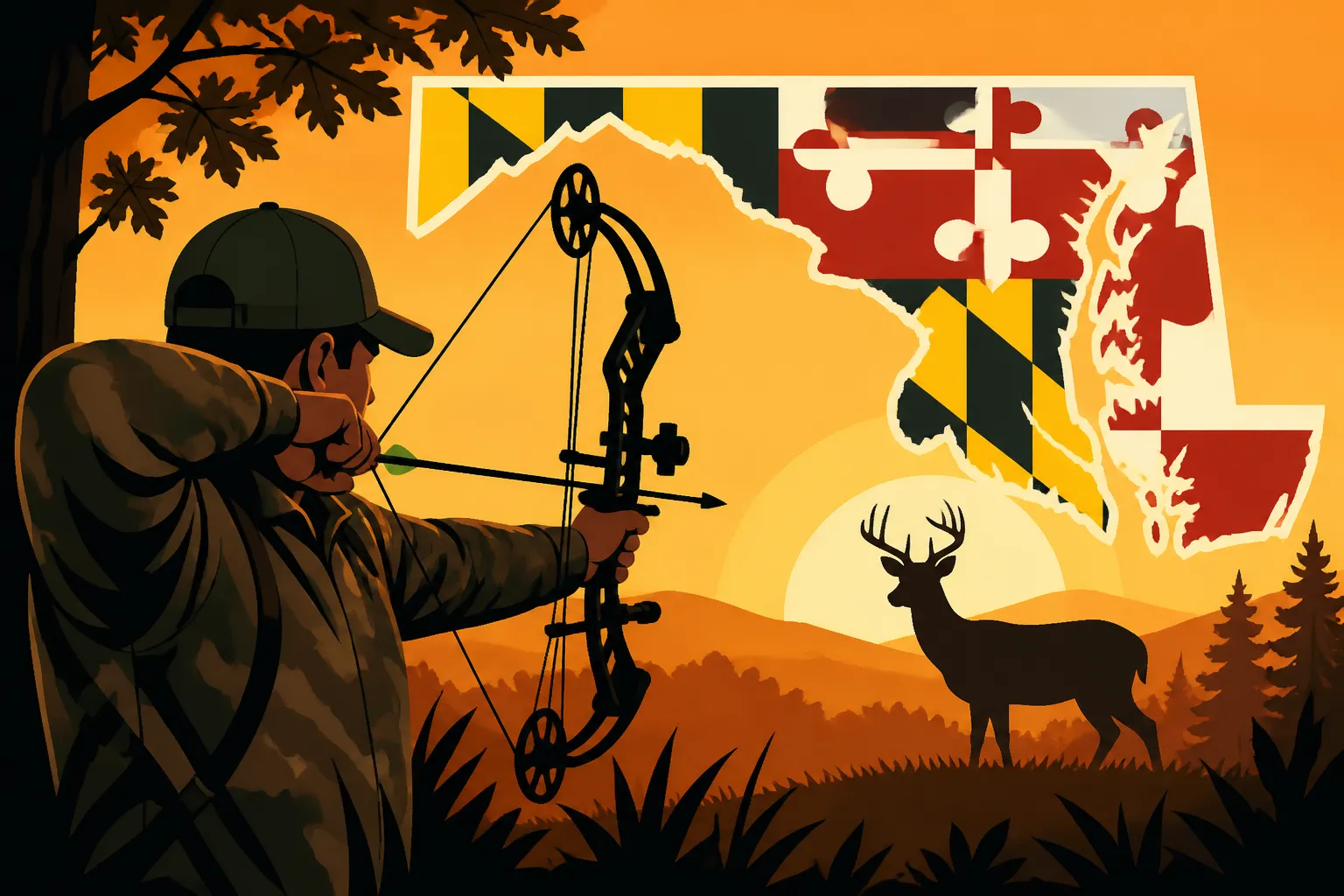
Hunting Maryland’s September Archery Opener
The crisp air of autumn feels a long way off when Maryland's archery season opens in September, leaving many bowhunters grappling with stifling heat, dense foliage, and deer patterns that are still very much in their summer routines. It's a frustrating dance, trying to find success when the woods are green and humid, and deer movement is often limited to the cooler parts of the day. This comprehensive guide is here to help you unravel the mysteries of early-season bowhunting in Maryland, offering practical strategies and insights to make your September archery opener a rewarding experience.
Understanding the Early Season Challenge in Maryland
Maryland's deer archery season kicks off when most people are still enjoying summer evenings on the porch. This early start presents a unique set of challenges that can make the first few weeks of the season feel less like hunting and more like a sweaty endurance test. From sweltering temperatures to insect invasions and deer that are still holding tight to their summer patterns, success in September requires a different mindset and approach compared to the frosty mornings of November.
Heat and Humidity's Impact on Hunters and Deer
Let's face it, stepping into a Maryland woodlot in September can feel like walking into a sauna. The high temperatures and oppressive humidity don't just make us uncomfortable; they profoundly influence deer behavior. Whitetails are seeking relief from the heat, which means their daytime activity, especially in open areas, is significantly reduced. They'll spend more time bedded down in thick cover, often near water sources or in shaded, airy spots where a breeze might offer some reprieve.
For us hunters, the heat is a double-edged sword. First, it makes walking, climbing, and sitting in a stand an ordeal, increasing fatigue and making it harder to stay focused and still. Second, and perhaps more critically, it magnifies our scent. Sweat production goes into overdrive, and no amount of scent-eliminating spray can entirely counteract a soaked base layer. This means our scent footprint in the woods is much larger and more persistent, making deer even warier than usual. Understanding how deer react to this climate, seeking out those cool, shaded bedding areas and water sources, is paramount. You might find deer moving more actively right at first light or in the last few minutes of legal shooting light, sometimes even after dark, but those mid-day movements are almost non-existent.
The Thick Green Woods of September
Unlike the open, airy woods of late fall, September in Maryland is a dense, green jungle. The leaves are still on the trees, providing maximum canopy cover, and the undergrowth is at its thickest, often creating impenetrable walls of vegetation. This impacts visibility dramatically, limiting shooting lanes and making it incredibly difficult to spot deer, much less get a clear shot. It also provides deer with an abundance of cover, allowing them to move through their territories largely unseen.
Navigating these thick woods quietly is a skill in itself. Every twig snap, every rustle through knee-high weeds, can alert a deer long before you even know it's there. This density also means that sound travels differently, often making it harder to pinpoint the exact location of a deer you hear moving. Setting up stands along natural edges, subtle deer trails within the thickest cover, or near existing breaks in vegetation becomes even more critical. It’s a challenge to pick a spot where you can actually see enough to get a shot off, let alone spot a deer coming through the brush. This is where diligent pre-season scouting really shines, as it allows you to identify those rare openings or pinch points where a shot might be possible.
Early Deer Behavior and Patterns
Deer in September are still very much in their summer patterns, largely focused on feeding, bedding, and staying cool. The frantic activity of the rut is months away, meaning bucks are less likely to be cruising widely. Instead, they’re often in bachelor groups, maintaining consistent routines between bedding and feeding areas. Antler growth is complete, and bucks are typically still holding velvet or have just shed it, making them quite vulnerable but also highly predictable.
Food sources are abundant, with lush green growth, early mast crops like soft mast (persimmons, wild grapes), and agricultural fields still drawing deer in. Their patterns will revolve heavily around these food sources, but always with an eye on the clock for cooler temperatures. You'll rarely see deer lingering in open fields mid-day; instead, they'll hit them right at dawn or dusk, retreating to thick cover for the bulk of the day. Understanding these localized patterns, identifying key food sources, and observing deer movements from a distance without disturbing them is key. Often, the best strategy is to pinpoint where deer are entering or exiting fields, or moving between bedding and feeding, and setting up along those subtle transition lines.
Scouting and Stand Placement for September Success
Successful bowhunting on Maryland's September opener isn't just about showing up; it's about showing up in the right spot at the right time. This requires meticulous scouting, often conducted in conditions similar to what you'll hunt in, to understand where the deer are and what they're doing. Unlike the rut, when deer are more susceptible to calls and random encounters, early season success relies heavily on intercepting deer along their predictable, heat-driven routes.
Locating Early Season Food Sources
In September, food is abundant, which can sometimes make it harder to pinpoint where deer will concentrate. However, certain food sources are particularly attractive to deer during this period. Lush alfalfa fields, soybean fields (especially those nearing maturity), cornfields, and natural soft mast like persimmons, wild grapes, and early-dropping white oak acorns are prime targets. Deer will often prioritize these high-energy and palatable options.
Your scouting should focus on identifying which of these sources are present in your hunting area and, more importantly, which ones are actively being used. Look for fresh tracks, droppings, and browse lines around the edges of fields and under fruit-bearing trees. A great strategy is to use trail cameras on these food sources, facing them along the likely entry and exit trails rather than directly at the field, to get a better sense of when and how deer are using them. If you can find a cluster of productive persimmon trees or an isolated patch of preferred browse in an otherwise less desirable area, you might have hit a goldmine. Also, remember that a deer's primary concern in early September is often comfort, so a preferred food source that's easily accessible from dense, cool bedding cover will be even more attractive.
Identifying Shade and Water for Deer Comfort
With the September heat, deer are constantly seeking out ways to stay cool. This makes shade and water sources incredibly important features to identify during your scouting trips. Look for dense, mature timber stands, particularly on north-facing slopes or in creek bottoms, where temperatures might be a few degrees cooler and direct sunlight is limited. These areas often serve as bedding sites during the hottest parts of the day.
Water sources, whether a small stream, a pond, or even a low-lying marshy area, will also be magnets for thirsty deer. Combining a major food source with a convenient water source and ample shade creates an irresistible package for early-season deer. During your scouting, pay close attention to trails leading directly to these features. Deer will use the path of least resistance, and these trails often offer the best opportunity for a shot. Using tools like GoHunt or other mapping apps can help you quickly identify potential water sources and shaded timber blocks on a larger scale, saving you valuable time on the ground. Once identified, you can zoom in and physically scout for fresh sign. Remember, even a subtle depression that holds moisture after a rain can be an attractive spot for a deer to lie down and cool off.
Setting Up Near Bedding Areas
While conventional wisdom often advises against hunting directly over bedding areas to avoid spooking deer, the September opener presents a slight nuance. With deer movement so restricted to dawn and dusk, setting up near a bedding area, along the primary travel corridor leading to a food source, can be incredibly effective. The key here is "near" – not in it. You want to catch deer as they are leaving their beds in the evening or returning to them in the morning.
Bedding areas in September will typically be in the thickest cover available – dense conifer stands, brushy creek bottoms, or thickets of briars and regenerating timber. Look for areas with dense overhead cover for shade and horizontal cover for security. Scouting for droppings, rub lines (even small ones from velvet shedding), and distinct trails leading into and out of these thickets will help you confirm their use. When setting up your stand, consider the prevailing wind directions for the time of day you plan to hunt, and ensure your entry and exit routes won't bust deer still in their beds. A good rule of thumb is to allow deer to get 75 to 100 yards out of their bedding area before you try to intercept them, ensuring they are relaxed and moving naturally. This often means setting your stand on a pinch point or a funnel that deer are forced to travel through between their sanctuary and their supper. For more detailed insights on how deer use these spaces, check out our guide on Hunting a Chesapeake Farm Woodlot Point.
| Feature/Strategy | Morning Hunt Considerations | Evening Hunt Considerations |
|---|---|---|
| Deer Movement | Returning to beds, cautious. | Leaving beds, cautious. |
| Best Locations | Near bedding, along return trails, deep shade. | Near food sources, along trails leading from beds. |
| Scent Control | Critical. Wind often calmer early. | Critical. Wind can swirl at dusk. |
| Visibility | Low light, dense foliage. | Low light, dense foliage. |
| Entry/Exit | Approach in darkness, leave mid-morning. | Approach mid-day, leave in darkness. |
| Focus | Intercepting deer coming from food to bed. | Intercepting deer going from bed to food. |
| Challenge | Getting in quietly without spooking. | Getting out quietly without spooking. |
Gear and Clothing for Warm Weather Bowhunting
Hunting in Maryland during the September archery opener demands specialized gear and clothing choices. The challenges of heat, humidity, and abundant insects mean your standard cold-weather hunting setup just won't cut it. Making the right choices here can be the difference between a comfortable, successful hunt and a miserable, scent-busting sweat-fest.
Lightweight and Breathable Apparel
Forget those heavy wool or insulated layers you save for late season. September in Maryland calls for the absolute lightest, most breathable clothing you can find. Look for synthetic fabrics designed to wick moisture away from your body, helping you stay drier and cooler. Brands like Sitka Gear, KUIU, and even more budget-friendly options from Bass Pro Shops or Cabela's offer excellent early-season lines. Consider long-sleeved shirts and pants, even in the heat, for sun protection and to guard against insect bites and briars. Light colors or patterns that blend into the green foliage are also good choices, as deer are often still more keyed into broad shapes than intricate camouflage at this stage.
Layering is still important, but in a minimalist way. A lightweight base layer that wicks sweat, and perhaps a very thin outer layer for camouflage, might be all you need. Avoiding cotton is paramount, as it absorbs moisture and stays wet, leading to discomfort and increased odor. Remember, staying cool isn't just about comfort; it's about minimizing sweat and, by extension, your scent profile. The less you sweat, the less you smell. Don't forget a wide-brimmed hat to keep the sun off your face and neck, and lightweight, breathable boots that offer good support but don't trap heat.
Scent Control in High Temperatures
This is arguably the most critical aspect of early-season hunting. The heat and humidity create the perfect storm for scent dispersion. Our bodies naturally produce more odor in warm weather, and sweat carries that odor further. Diligent scent control starts long before you even leave for the woods. Shower with scent-eliminating soap, wash all your hunting clothes in scent-free detergent, and store them in airtight bags or containers.
When you get to your hunting area, try to minimize walking directly to your stand in your hunting clothes. If possible, change into your outer layers closer to your stand, carrying them in a scent-proof bag. Spraying down thoroughly with a high-quality scent-eliminating spray is a must, but understand that it's a temporary solution. The best defense is to always play the wind. Even with the best scent control regimen, a deer downwind of you will eventually pick up your presence. Choose stand locations that offer consistent wind directions away from likely deer travel routes, or adjust your hunting plans if the wind shifts unexpectedly. Think of it like this: your scent is a constantly expanding cloud; you want that cloud to drift into an area where no deer are likely to be.
Bow Maintenance in Humid Conditions
The high humidity of a Maryland September can be tough on your archery equipment. Bowstrings can stretch slightly, affecting tuning, and metal components are more susceptible to rust if not properly cared for. Before the season, ensure your bow is perfectly tuned for broadheads. Shoot regularly in warm, humid conditions if possible, to see if your string reacts to the moisture.
Lubricate cam axles and other moving parts with a dry lubricant to prevent rust and ensure smooth operation. Keep your string waxed regularly to protect it from the elements. Broadheads, especially fixed-blade ones, can rust quickly if exposed to moisture, so ensure they are clean, dry, and protected. Many hunters opt for mechanical broadheads in early season due to their contained blades, but even these need to be checked. When you come out of the woods, wipe down your bow with a dry cloth, paying special attention to metal parts. Store it in a breathable case, rather than a sealed one, to allow moisture to escape and prevent condensation. Taking these small steps can prevent big headaches when that moment of truth arrives. For more on preparing for the season, consider reading up on Bowhunting Maryland's Long Archery Season.
Effective Hunting Strategies for the Opener
Successfully hunting Maryland's September archery opener requires more than just good gear; it demands smart strategies tailored to the unique conditions. Deer are not acting like it's November, and neither should you. Understanding when and where to be, and how to approach your hunt, will significantly increase your chances.
Morning vs. Evening Hunts
The debate between morning and evening hunts is perennial, but in early September, the dynamics shift significantly due to temperature.
Morning Hunts: These can be challenging but rewarding. Deer typically move through the night to feed under the cover of darkness and slightly cooler temperatures. As daylight approaches and temperatures begin to rise, they start making their way back to bedding areas. The key to a successful morning hunt is to be in your stand well before first light, giving the woods time to settle down after your entry. Your stand should be positioned along a travel corridor leading from a prime feeding area (like a soybean field or a persimmon grove) to a known bedding thicket. The challenge is getting in silently without bumping deer that might still be feeding or lingering near their beds. Entry routes through cut corn before daylight can be very quiet. Often, the best activity will be in the first hour or two of legal light, as deer quickly retreat to shade once the sun is up and it starts to warm.
Evening Hunts: Many seasoned Maryland bowhunters favor evening hunts during the September opener, and for good reason. As the day cools down, deer begin to stir from their bedding areas and make their way towards food. This often provides a more predictable movement pattern. Position your stand between a bedding area and an attractive food source, focusing on those primary trails they'll use to access dinner. Be in your stand by mid-afternoon, allowing plenty of time for the woods to calm down before deer start moving. This also gives you the opportunity to sweat less during your walk in. The last hour of daylight is usually the most productive. The crucial part of an evening hunt is a silent exit. Once you've hunted, waiting until absolute darkness to climb down and leave will minimize the chance of spooking deer that might be feeding nearby or moving through the area.
Ultimately, both can be productive, but evening hunts often offer a slightly higher probability due to the natural cooling trend encouraging movement.
The Importance of Entry and Exit Routes
This cannot be stressed enough, especially during the early season. Deer are on high alert, even when relaxed, and any disturbance can send them elsewhere. A poor entry or exit can ruin a hunt before it even begins, or worse, educate deer to your presence in that area for weeks.
Entry: Your entry route needs to be as quiet and scent-free as possible. Plan your approach to avoid known bedding areas or current feeding locations. Utilize terrain features, ditches, creek beds, or even a standing cornfield edge as cover. Walk slowly, deliberately, and in the dark for morning hunts. For evening hunts, go in during the midday lull when deer activity is minimal. Avoid walking directly down major deer trails; instead, parallel them if possible, staying slightly off to the side, or approach from an unexpected angle. Always ensure the wind is in your favor for your entry route, not just for your stand location.
Exit: Equally important, if not more so, is your exit. After an evening hunt, resist the urge to climb down immediately at the end of shooting light. Wait until it's completely dark. Use a flashlight sparingly, covering it with a red or green lens to minimize disturbance. Your exit route should again avoid known bedding areas and feeding spots. If you've shot a deer, the exit strategy changes slightly as you'll be focused on recovery, but the principle of minimizing disturbance to the rest of the herd remains. For a quick departure, consider a longer, quieter route, even if it adds a few extra minutes to your walk. Thinking about your path in and out, not just your stand location, is a fundamental part of Hunting a Chesapeake Bay Blind at First Light or any hunt for that matter.
Aggressive vs. Patient Approaches
In September, patience is often your best friend. Deer are not actively seeking out other deer or responding strongly to calls as they will during the rut. An aggressive approach of still-hunting or stalking through dense cover can be incredibly difficult, noisy, and often results in spooking deer without ever seeing them. The thick foliage makes stealthy movement almost impossible.
A patient approach involves setting up in a well-scouted location, often in a treestand overlooking a pinch point, food source, or travel corridor, and simply waiting. This allows the woods to settle around you and gives deer a chance to move naturally. Focus on staying still, minimizing movement, and letting the deer come to you. Early season bowhunting is largely an ambush game. If you feel the need to move, do so slowly and methodically, only when you have significant cover or during a strong gust of wind that can mask your sound. This patient strategy applies to both whitetails and sika deer, as they both exhibit cautious behavior in the early season. For insights into another challenging species, check out Hunting Sika Deer in Maryland's Loblolly Pine Edges.
While aggressive calling with grunt calls in Maryland hardwoods might work later in the season, early September is usually not the time for it. Light social bleats or fawn bleats might occasionally pique a doe's curiosity, but strong grunts or rattling antlers are likely to either be ignored or alarm bucks that are still focused on food and bachelor groups. Save the aggressive tactics for when the pre-rut and rut kick in around Hunting the Rut in Early to Mid November.
Navigating Public Land During the Opener
Maryland offers some fantastic public land hunting opportunities, but the September archery opener can bring unique challenges, especially when it comes to shared space. Knowing how to navigate these areas effectively can lead to success even in pressured environments.
Dealing with Increased Hunter Pressure
Let's be honest, public lands, especially those easily accessible, often see a significant increase in hunter pressure during the opening weeks of archery season. Everyone is eager to get out, and popular spots can feel crowded. This pressure can push deer into more remote, thicker cover, or cause them to become almost entirely nocturnal.
The key to dealing with this is anticipating it. Don't expect to find deer behaving normally right off the main parking lot. Scout areas that require a longer walk, cross a small creek, or involve navigating some uncomfortable terrain. Most hunters will stick to the easiest access points. By pushing a little further, you increase your chances of finding less pressured deer. Be courteous to other hunters you encounter; a friendly wave goes a long way. Also, be mindful of where others are setting up. If you see a truck parked at a trailhead and know a hunter is likely in a particular area, consider moving to a different section to avoid interference. Knowledge of specific public lands like the Chesapeake Forest Lands or state forests can give you an edge, as you might find pockets others overlook. For more strategies on this, delve into Hunting Pressure on Maryland Public Land.
Finding Unpressured Pockets
Even on heavily hunted public land, there are almost always unpressured pockets where deer feel safe. These areas are usually characterized by dense cover, difficult access, or areas that hunters simply overlook. Look for:
- Thick, Nasty Cover: Swamps, briar thickets, steep ravines, or dense conifer stands are often passed over by hunters looking for easier walking. Deer will gravitate to these sanctuaries.
- Remote Locations: Areas that are a mile or more from the nearest road or parking lot often see significantly less pressure. Invest in good boots and be willing to walk.
- Small, Isolated Patches: Sometimes, a small, overlooked woodlot surrounded by private land, or a narrow strip of public timber along a creek, can hold deer that rarely see hunters.
- Transition Zones: The edges of public and private land can be hot spots. Deer that live on private land might occasionally venture onto public land to feed, or vice versa. Always be aware of property lines, especially if using a mapping app like GoHunt. These apps are invaluable for showing property boundaries, which is crucial when hunting near private holdings.
Scouting these hard-to-reach areas before the season is paramount. Don't just scout the easy spots; actively seek out the places that look difficult to access or hunt. These are often where the mature deer will hide when pressure increases. The more effort you put into scouting during the off-season, the better your chances of finding one of these hidden gems. Learning how to properly Scouting Maryland Public Land Before Season is an art form that pays dividends.
Permit Requirements and Regulations
Hunting public land in Maryland often comes with specific permit requirements and regulations that go beyond your standard state hunting license. Ignoring these can lead to fines and loss of hunting privileges, so it's critical to be informed.
Many Wildlife Management Areas (WMAs) and State Forests require a free public land permit, often available online through the Maryland DNR COMPASS system. Some areas, particularly during certain seasons, might have check-in/check-out procedures or specific access rules. For instance, some areas may only allow foot traffic, while others might have restrictions on when you can enter or exit. Additionally, some special hunts, like those on Blackwater National Wildlife Refuge or certain State Parks, require a special application and draw.
Before heading out, always consult the current Maryland Guide to Hunting and Trapping, paying close attention to the specific regulations for the WMA or State Forest you plan to hunt. The DNR website is an excellent resource for this. Ensure you have your valid Maryland Hunting Licenses and What They Cost and any required stamps, like an Archery Stamp, in your possession. Ignorance of the rules is not an excuse, so a quick check of the regulations before each trip is a must. Knowing the rules for Maryland's two deer management regions, Region A and Region B, can also impact your bag limits and antler restrictions depending on where you hunt.
Post-Shot Considerations in Warm Weather
Taking a shot in early September requires even more careful consideration than later in the season. The primary concerns are ethical shot placement due to dense foliage, and the rapid spoilage of meat in warm temperatures. Successful recovery and proper meat care become critical components of the hunt.
Tracking and Recovery Challenges
When you release an arrow in September, the thick foliage can make it incredibly difficult to see the impact or track the deer's initial flight. This is why shot placement is paramount. Aim for a perfect double-lung or heart shot to ensure a quick, ethical kill. If you hit a deer and it runs into thick cover, resist the urge to immediately pursue it. In warm weather, a deer will spoil much faster if it's not recovered quickly, but chasing a marginally hit deer can push it further and make recovery impossible.
Typically, after a good hit, waiting 30-60 minutes before tracking is advisable to let the deer expire. However, in temperatures above 70 degrees Fahrenheit, this waiting period needs to be carefully evaluated. If you're confident in a perfect shot, you can often begin tracking sooner. If the shot was marginal (gut or liver hit), you'll still need to wait, but the urgency to find the deer within a few hours becomes extreme.
Start your track at the point of impact, looking for blood, hair, bone, or any sign that can guide you. The dense undergrowth will make this challenging, so bring a good tracking light, even if hunting during the day, to help illuminate the trail. Mark the last blood trail you find with flagging tape as you go. If you lose the trail, spread out and grid search the area. If you're struggling, consider calling a friend to help or, if absolutely necessary, a tracking dog. Remember, the clock is ticking much faster in September. This is why practicing your blood trailing skills and knowing how to interpret sign is so crucial. For complex recovery situations, our guide on Blood Trailing in Marsh Grass After Dark offers valuable techniques.
Field Dressing and Meat Care
Once you've recovered your deer, the real race against the clock begins. In warm September temperatures, meat spoilage can occur rapidly, often within just a few hours if not properly handled. Your priority is to cool the carcass down as quickly as possible.
Field Dressing: Perform a thorough field dress immediately upon recovery. Remove all internal organs to allow the body cavity to cool. If possible, rinse the cavity with clean water, then wipe it dry with paper towels or a clean cloth. Propping the cavity open with a stick can help air circulate. If you're hunting in a remote area, you might consider quartering the deer in the field to make it easier to pack out and cool faster.
Transport and Cooling: Get the deer out of the sun and into a cooler environment as quickly as possible. If you have a long drive home, plan ahead. Bring large coolers filled with ice. Once the deer is field dressed, place ice packs or bags of ice inside the body cavity. Never transport a whole deer on the hood or roof of your vehicle in warm weather, as it will act like an oven. If you can, transport it in the bed of a truck, covered with a tarp to keep the sun off, and with plenty of ventilation. At home, get the deer to a processor immediately, or if you plan to butcher it yourself, get it into a walk-in cooler or large chest freezer quickly. Breaking the deer down into quarters and placing them in clean coolers with ice is often the best approach for immediate cooling. For detailed instructions on proper handling, refer to our guide on Field Dressing a Deer in Warm September Weather. After all that hard work, remember to register your deer through the Registering a Maryland Deer by Phone or App system as required.
Disclaimer
Please be aware that hunting regulations and season dates can change. Always consult the most current Maryland Department of Natural Resources (DNR) hunting guide and local regulations before planning any hunt. This article is intended for informational purposes only and does not supersede official DNR guidelines.