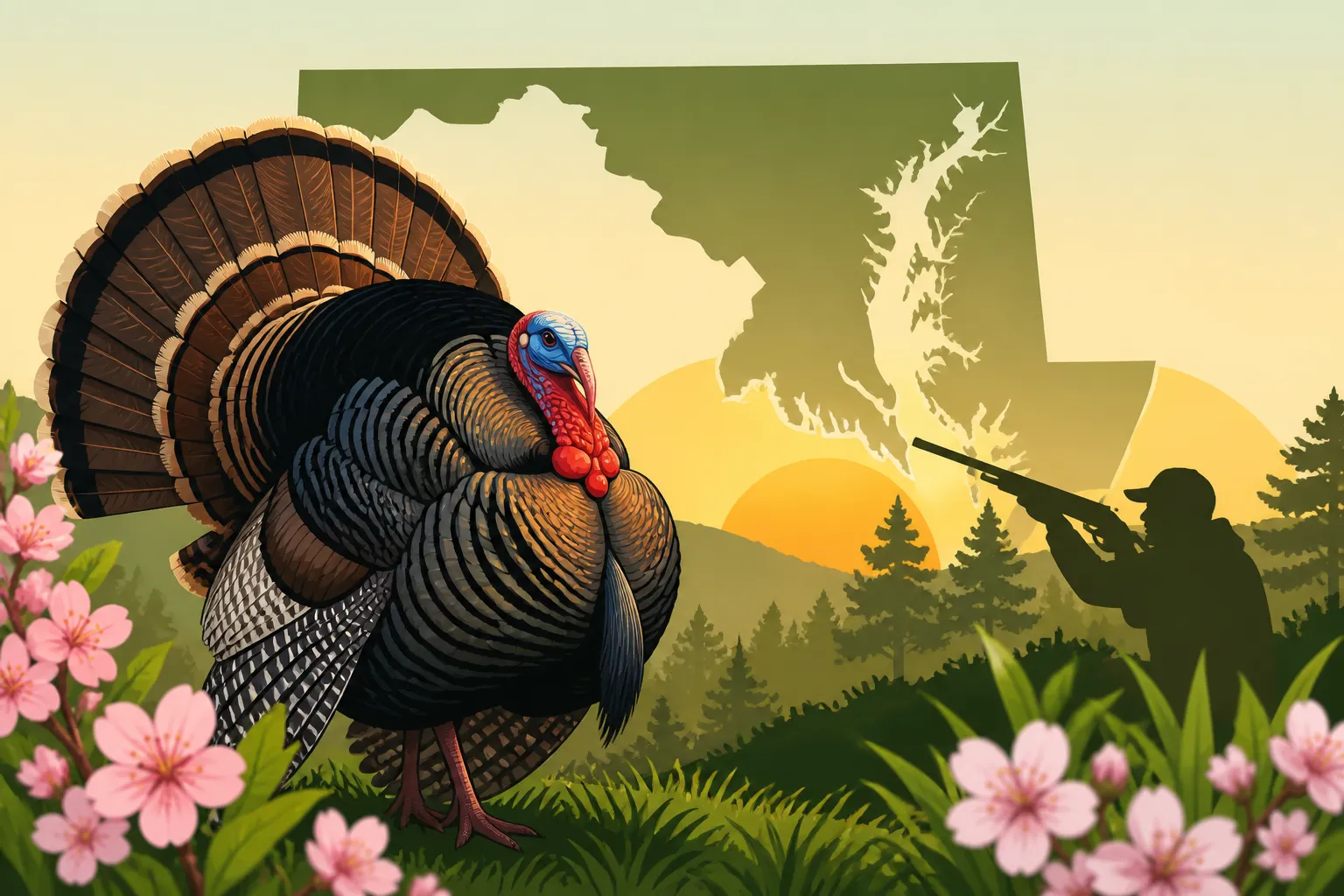
Spring Turkey Hunting in Maryland
There's nothing quite like the sound of a gobbler hammering at first light, shaking the quiet woods of a Maryland spring. But for many hunters, especially those new to the pursuit, figuring out how to consistently get a longbeard within range can feel like trying to solve a complex puzzle. From understanding the ever-changing regulations to mastering the art of calling and setting up, it's a rewarding challenge. This guide is here to walk you through everything you need to know to maximize your chances of success during spring turkey hunting in Maryland.
Understanding Maryland's Spring Gobbler Season
Maryland's spring turkey season is a highly anticipated time for many hunters, offering a unique opportunity to engage with one of the most exciting game birds. But just like any hunting endeavor, success starts with a thorough understanding of the regulations, dates, and what’s expected of you as a hunter. Trying to navigate season dates and bag limits without a clear picture can quickly lead to frustration, or worse, a violation.
Key Dates and Season Structure
The Maryland spring turkey season typically kicks off in April and runs through May, offering several weeks of prime hunting. While the specific dates can shift slightly each year, the general structure remains consistent. We start with a special Junior Turkey Hunt Day, which is an incredible opportunity for young hunters (16 and under) to get out into the woods with a mentor before the regular season opens. This day allows them to experience the thrill of the hunt with less pressure, often leading to a higher chance of success and fostering a lifelong love for the sport. It's a fantastic initiative that many states, including Maryland, embrace.
After the junior day, the regular statewide season usually opens for adult hunters, running five days a week (Monday through Saturday) for the first few weeks, and then often transitions to Monday through Sunday for the later part of the season. This longer window in May can be a blessing, especially if early-season birds are pressured or weather conditions are uncooperative. Remember, a gobbler's behavior changes throughout the spring, and understanding these shifts can be key to success. Knowing when the season starts and ends, and any changes in hunting days, is fundamental to planning your outings. Always consult the Maryland Department of Natural Resources (DNR) guide for the exact dates each year, as they are the final authority on the matter. You can find detailed information on the Maryland Turkey Seasons and Permits through the DNR website.
Bag Limits and Permits
When it comes to spring turkey hunting in Maryland, the bag limit is quite straightforward: hunters are generally allowed to harvest one gobbler (bearded bird) per day, with a maximum of two gobblers for the entire spring season. This means you can't just fill your freezer with an endless supply of wild turkey, but it offers a fair chance to take a couple of birds over the course of the season. The definition of a "gobbler" is critical here – it must be a turkey with a visible beard. Hens, or female turkeys, are protected during the spring season to ensure successful reproduction and population growth. Misidentifying a hen for a gobbler can lead to serious legal consequences, so always be 100% sure before you pull the trigger.
Beyond your standard Maryland hunting license, there aren't usually additional state stamps specifically for spring turkeys in Maryland, unlike some other game species. However, it's always wise to double-check the current regulations, as things can change. For instance, if you're a non-resident, your license structure will be different than a resident's. What's crucial is to ensure your general hunting license is up-to-date and valid for the current hunting year. If you plan to hunt on certain public lands, some may require additional permits or check-in procedures, so always investigate the specific rules for your chosen hunting area well in advance. Familiarizing yourself with the Maryland Spring Turkey Bag Limit and other regulations will prevent any unwelcome surprises in the field.
Essential Gear for Maryland Spring Turkeys
Having the right gear for spring turkey hunting isn't just about comfort; it's about increasing your odds of success and ensuring a safe, ethical hunt. You don't need to break the bank to get started, but investing in a few key items will make a world of difference. Trying to call in a wary gobbler in a bright shirt or with an unpatterned shotgun is a recipe for disappointment, and potentially, an unsafe situation.
Shotguns and Ammunition
For spring turkey hunting, most hunters opt for a 12-gauge shotgun, though a 20-gauge is perfectly capable, especially for younger or smaller-framed hunters. The key isn't necessarily the gauge, but how well your shotgun patterns with your chosen ammunition. A good turkey shotgun should be fitted with a tight choke, such as a full, extra-full, or even a specialized turkey choke. These chokes constrict the shot column more tightly, leading to a denser pattern at longer ranges, which is essential for placing enough pellets in a turkey's head and neck vital zone for a clean kill.
Ammunition choices have evolved significantly over the years. Traditional lead shot is still widely used, typically in sizes #4, #5, or #6. However, modern advancements have brought us denser shot materials like bismuth and tungsten super shot (TSS). TSS, though more expensive, is incredibly dense, allowing for smaller shot sizes (like #7 or #9) to carry more energy and create incredibly tight, lethal patterns at extended ranges. Regardless of your choice, the absolute most critical step is to pattern your shotgun before the season. Take your shotgun and several different types and brands of turkey loads to the range. Shoot at turkey head targets at various distances (20, 30, 40, and even 50 yards if you plan to shoot that far) to see which combination of choke and ammunition gives you the tightest, most consistent pattern. This practice ensures you know your maximum effective range and can make an ethical shot when the moment arrives.
Decoys and Calls
Turkey decoys are an incredibly effective tool for luring a gobbler into comfortable shooting range, especially if you're dealing with birds that tend to hang up just out of reach. There's a wide variety to choose from, each serving a different purpose. Simple hen decoys, often paired with a jake (young male turkey) decoy, are a popular choice. The sight of a jake with a receptive hen can often enrage an older, dominant gobbler, compelling him to come in to challenge the younger rival. Full strut gobbler decoys can be very effective but can also intimidate other gobblers, making them hesitant to approach. Some hunters use a single feeding hen or a quietly receptive hen. The key is to place your decoys strategically to present a realistic scenario and draw the gobbler to within 20-30 yards of your position for a clean shot. For specific advice, look into Decoy Placement for Pressured Maryland Gobblers, as intelligent placement can make all the difference.
As for calls, they are your voice in the woods, essential for communicating with turkeys and enticing them to come closer. There are several types:
- Box Calls: Easy to use, producing loud, resonant yelps and cuts. Great for covering ground or getting a response from a distant gobbler.
- Slate Calls (Pot Calls): Versatile, allowing for a wide range of calls from soft purrs to sharp cuts, depending on the striker used and pressure applied.
- Diaphragm Calls (Mouth Calls): Require practice but allow for hands-free calling, crucial when a gobbler is close and you need to be ready to shoot. They offer incredible realism and versatility.
- Push-Button Calls: Excellent for beginners, producing consistent clucks and yelps with minimal effort.
Often, hunters carry a variety of calls to adapt to different situations. A soft purr might work for a wary bird, while aggressive cutting might ignite a hot gobbler. Mastering at least one or two types of calls will significantly boost your confidence and effectiveness in the field.
Camouflage and Blinds
In spring turkey hunting, stealth and concealment are paramount. Turkeys have incredible eyesight, notorious for picking out the slightest movement or unnatural color. Full camouflage, from head to toe, is not just recommended, it's essential. This includes a full camo pattern that blends with the spring woods – think greens, browns, and some darker elements. Don't forget a face mask or face paint and gloves; exposed skin will stick out like a sore thumb. Your clothing should also be quiet, meaning no noisy fabrics that rustle with every slight movement.
Many hunters, especially those hunting with youth or in areas where remaining still can be a challenge, opt for a pop-up ground blind. These portable blinds offer excellent concealment, allowing for some movement inside without spooking approaching birds. They are also fantastic for shielding you from the elements, like unexpected spring showers. If you're not using a blind, you'll need to meticulously choose your setup location, ensuring you have a wide tree or dense brush directly behind you to break up your silhouette. This isn't just for concealment; it's also a crucial safety measure to prevent other hunters from potentially mistaking you for a turkey. Carrying a comfortable, portable seat or cushion can make a long sit much more enjoyable and keep you still longer. For those new to the sport, Maryland Hunter Education Requirements mandate certain safety protocols, including wearing blaze orange when moving through public lands, so always check the specific rules for turkey season.
Scouting Strategies for Success
You can have the best gear and call like a pro, but if you're not in an area where turkeys frequent, it's all for naught. Scouting is arguably the most critical component of consistent spring turkey hunting success. It's about becoming a detective in the woods, piecing together clues to understand where the turkeys are, what they're doing, and when they're doing it. The frustration of setting up in a "dead zone" is something every turkey hunter has experienced, but diligent scouting drastically reduces those instances.
Pre-Season Reconnaissance
Before the season even opens, your boots should be on the ground. Pre-season reconnaissance is about identifying key turkey habitats and patterns when hunting pressure is non-existent. Start by looking at maps – topographical maps, aerial imagery, and even tools like GoHunt's mapping layers can be invaluable. Look for elevated roosting sites, often mature trees along ridges or near water sources, that turkeys use at night. Identify open fields or clearings that might serve as strut zones where gobblers display for hens. Map out potential travel corridors between roosts, feeding areas, and strut zones, such as creek bottoms, logging roads, or subtle changes in timber type.
Once you have potential spots identified on a map, it's time to hit the woods. Walk these areas, looking for physical signs of turkey activity. Fresh droppings (j-shaped for gobblers, blob-shaped for hens) indicate recent presence. Tracks in soft earth or mud can tell you how many birds are present and their general direction of travel. Look for shed feathers, especially the distinct breast feathers of a gobbler. Dust bowls – shallow depressions in dry earth where turkeys have ruffled their feathers to clean themselves – are another strong indicator. Finally, listen. Even in the pre-season, you might hear a distant gobble or the subtle sounds of turkeys moving through the woods. Knowing the landscape and the turkeys' preferred spots before opening day gives you a massive advantage. You can find more specific guidance on Scouting Maryland Public Land Before Season to fine-tune your approach.
Locating Gobblers During the Season
Once the season is underway, your scouting shifts from long-term pattern identification to immediate gobbler location. This often means being in the woods before daylight. The most exciting and effective way to locate a gobbler is to listen for his natural gobbling from the roost. Position yourself in a strategic listening post before dawn, ideally on a ridge or high point that allows sound to carry. As the first rays of light touch the treetops, listen intently for the "gobble, gobble, gobble" that signals a tom proclaiming his presence. Pinpointing the direction and distance of that first gobble is crucial for planning your initial approach.
Sometimes, turkeys are tight-lipped, or you're in an unfamiliar area. This is where locator calls come into play. These aren't turkey calls, but rather sounds that often elicit a "shock gobble" from a tom without making him think a hen is actively calling to him. Owl hoots, crow calls, and even a sharp coyote howl can make a gobbler respond, revealing his location. Blow an owl hoot, listen for a response, then move quietly to get closer, repeating the process until you've narrowed down his position. Once a gobbler sounds off, it's important to understand his post-roost behavior. He might fly down immediately and start strutting, or he might wait for hens to gather beneath his tree. Observing or anticipating this behavior allows you to set up appropriately. Often, turkeys will move towards open areas like fields or food plots shortly after flying down. Understanding these movements is key to intercepting them. A great resource for this is learning about Roost Hunting Gobblers on Maryland Farmland.
Calling Tactics and Situational Play
Calling a wild turkey is an art form, a conversation between you and the bird. It’s not just about making turkey sounds; it’s about timing, inflection, and knowing what to say and when. Many hunters get frustrated when a gobbler cuts them off but never commits, a classic scenario that can often be remedied by adapting your calling strategy.
Mastering the Turkey Vocabulary
To effectively call a turkey, you need to speak their language. While there are dozens of turkey sounds, focusing on a few core calls will get you far.
- Yelps: The most common call, signaling a hen's presence. Yelps can vary from soft, contented sounds to loud, excited series. A plain yelp is a basic "kee-yawk, kee-yawk, kee-yawk."
- Clucks: Short, sharp sounds that turkeys make when content or looking around. A single cluck can be a great way to get a hung-up gobbler to take those last few steps.
- Purrs: Soft, rolling sounds of contentment, often made by feeding turkeys. These are fantastic for close-in work to reassure a wary bird.
- Cutts: Short, sharp, loud, and often erratic yelps or "ka-ka-ka" sounds that signal excitement or agitation. Great for challenging a gobbler or getting a hot bird to gobble.
The key is to practice these calls until they sound natural and you can vary their volume and intensity. Using a variety of calls can sometimes be more effective than just repeating the same sound. Start with softer calls, and if you get no response, gradually increase the volume and aggression. There are countless online tutorials and instructional videos that can help you master the basic turkey vocabulary. Remember, consistency in your calling is often more important than perfection. Being able to produce realistic yelps, clucks, and purrs can go a long way in getting a tom to commit. Many successful hunters attribute their success to being able to effectively use a range of calls, like when Calling a Gobbler Off a Maryland Farm Roost.
Reading the Gobbler and Adapting Your Approach
This is where the real nuance of turkey hunting comes into play. No two gobblers are exactly alike, and no two hunting situations are identical. The ability to "read" the gobbler's responses and adapt your calling and tactics is what separates successful hunters from those who consistently come up empty-handed.
- When to be aggressive, when to be subtle: If a gobbler is hammering back at every call and cutting you off, he's likely hot and ready to come in. In this scenario, you can often be more aggressive with your calling – louder yelps, sharp cuts. However, if a gobbler is only gobbling occasionally, or softly, he might be more wary. In this case, back off, use softer yelps, clucks, and purrs, mimicking a contented hen. Sometimes, less is more.
- Dealing with hung-up gobblers: This is the bane of every turkey hunter's existence. A gobbler gobbles his head off, struts, and then stops just out of range, often across a field or behind a natural barrier. The common mistake is to keep calling aggressively, which often solidifies his position. Try going completely silent for a while. Make him wonder where the hen went. Sometimes a soft cluck or purr after a long silence can draw him in. Another tactic is a "fading hen" – make a few soft calls, then slowly walk away (if safe and practical), calling softly as you go, to make him think the hen is leaving.
- Knowing when to move and when to sit tight: If a gobbler is actively coming toward you, sit absolutely still. Any movement will bust him. If he stops gobbling or moves away, it might be time to subtly change your position. This could mean moving closer (if you have cover) or repositioning your setup to address his new line of approach. Deciding when to make a move is a critical judgment call. If you're on public land, moving means being incredibly cautious about other hunters and wearing blaze orange. Understanding when Maryland Gobblers Go Quiet in Mid May can help you understand when to adjust your strategy for less vocal birds.
Ultimately, successful calling is about listening more than calling, and reacting to what the turkey tells you. Be patient, observe, and don't be afraid to try different things.
Setting Up for the Shot
All the scouting and calling in the world won't matter if you can't seal the deal with an ethical shot. Setting up properly is a crucial step that many new hunters overlook, often costing them opportunities. It's not just about hiding; it's about being ready and safe.
Optimal Stand Locations
When a gobbler is working his way in, the pressure is on, and every tiny detail of your setup can determine success or failure. First and foremost, safety is paramount. Always set up against a tree that is wider than your shoulders and provides a solid backrest. This protects you from another hunter approaching from behind and also helps break up your silhouette. Never set up with another hunter directly behind you, or on the top of a ridge where you could be silhouetted.
Beyond safety, consider visibility and shot lanes. You want a clear line of sight to where you expect the gobbler to appear, but also enough cover to remain concealed. Look for natural funnels or pinch points that will guide the bird's approach. If you're hunting near a field edge, position yourself just inside the timber line, where you can see the field but remain hidden. Pay attention to the sun's direction; you want the sun at your back, if possible, to illuminate the turkey and make it harder for him to see into the shadows where you're hiding. Also, consider the gobbler's likely approach path and how he might circle before committing. Turkeys often circle to get a better view of the 'hen' they're hearing, so anticipating this can help you pick the best spot. Sometimes, the perfect spot is simply Setting Up Against a Big Oak for Turkeys with good cover behind it.
Decoy Placement and Shot Presentation
Your decoy setup can greatly influence how a gobbler approaches and where he stops. If using decoys, place them where they are clearly visible to an approaching gobbler but also within your effective shooting range, typically 20-30 yards. Most hunters position decoys so that a gobbler approaching them will have his head and neck turned towards you, presenting an ideal shot. If you're using a jake or full strut gobbler decoy, placing it to face away from you can sometimes entice a real gobbler to come in and circle it, offering you a prime quartering-away shot.
Before a bird appears, visualize the shot. How will you raise your gun without excessive movement? Which tree branches might be in the way? Clear any small twigs or leaves that could deflect your shot. Practice raising your gun and acquiring a sight picture silently and smoothly. When a gobbler is within range, wait for him to extend his neck and head, giving you a clear target. Aim for the base of the neck, where it meets the body, or directly at the head. A steady aim and a smooth trigger pull are vital for a quick, humane kill. Do not rush the shot, but be decisive when the moment is right. Knowing your effective range from patterning your shotgun is crucial here. If a gobbler stops just beyond your comfort zone, have the patience to try and call him a few more yards, or let him walk rather than risking a wounded bird.
Public Land vs. Private Land Hunting in Maryland
One of the biggest hurdles for any hunter, especially those new to an area, is finding a place to hunt. Maryland offers both public and private land opportunities, each with its own set of advantages and challenges. Understanding these differences and how to access each type of land is key to expanding your hunting opportunities.
Navigating Maryland's Public Hunting Areas
Maryland boasts a decent amount of public hunting land, primarily in the form of Wildlife Management Areas (WMAs) and State Forests. Areas like Green Ridge State Forest and Savage River State Forest in Western Maryland offer vast tracts of timber, while WMAs on the Eastern Shore, such as Fishing Bay or Deal Island, provide unique marsh and woodland opportunities, often with turkeys roaming the edges. These public lands are open to anyone with a valid hunting license, making them accessible entry points for many.
However, public land hunting comes with its own set of challenges, most notably hunting pressure. Especially on opening day or weekends, popular public areas can see a lot of foot traffic from other hunters. To succeed, you often have to be willing to walk further, deeper into areas others might overlook. Using mapping apps like GoHunt can help you identify remote sections, topographical features that funnel game, or areas with difficult access that might deter other hunters. Some WMAs or State Forests might require a special permit or a check-in/check-out system, so always research the specific regulations for the area you plan to hunt. While you won't always have a spot to yourself, diligent scouting and a willingness to explore can often lead you to less-pressured areas where turkeys feel more comfortable. For comprehensive scouting tips, checking out Scouting Maryland Public Land Before Season is invaluable.
Gaining Private Land Access
Hunting on private land can offer a significant advantage, often providing less pressured birds, more consistent patterns, and a more serene hunting experience. However, gaining permission to hunt private land requires effort, respect, and good communication skills. It's about building relationships and demonstrating that you are a responsible, ethical hunter.
The most common way to secure private land access is simply by knocking on doors. Identify potential turkey habitat on aerial maps—woodlots, field edges, creek bottoms—and then locate the landowners. Approach them politely, introduce yourself, and clearly state your intentions. Be prepared to offer something in return, such as helping with chores, sharing game meat, or simply being a good steward of their property. Emphasize your commitment to safety, adherence to regulations, and respect for their land. Providing references from other landowners or even a copy of your hunting license and insurance can help build trust. A signed permission slip is always a good idea to clarify the terms of your access. Maintaining a positive relationship by thanking the landowner after your hunt and even sharing a photo of your success can go a long way in securing future access. The benefits of private land—less competition and often more predictable turkey behavior—make the effort to secure permission well worth it. Learn more about Getting Private Land Permission in Maryland to improve your chances.
Post-Harvest Care and Registration
After the excitement of a successful hunt, your responsibility as a hunter shifts to proper care of your harvested turkey and fulfilling all legal requirements. This isn't just about compliance; it's about honoring the animal and ensuring you get to enjoy the delicious reward of your efforts.
Field Dressing and Transport
Once you've harvested a gobbler, the priority is to cool the meat down as quickly as possible, especially in Maryland's often warm spring weather. While some hunters prefer to transport the bird whole, field dressing your turkey at the kill site or very soon after can significantly improve meat quality. The simplest method is to remove the entrails (guts). You can make an incision around the vent and carefully pull out the internal organs. This allows the body cavity to cool, preventing bacterial growth. If you plan to mount the bird, be mindful not to damage the breast feathers or neck area. Some hunters will also skin the bird and breast out the meat immediately, especially if facing a long pack out or particularly warm temperatures.
When transporting your turkey, ensure it is visible and properly secured. Maryland regulations generally require that the head or beard remain attached to the bird until it is registered and processed, to allow for species and sex identification. If you're traveling a distance, place the bird in a cooler with ice, or at least on a bed of ice, to maintain proper temperature. Avoid placing the bird in an airtight plastic bag for extended periods, as this can trap heat and moisture, leading to spoilage. Protecting the meat from dirt and debris during transport is also important. The goal is to get that bird home and processed as quickly and cleanly as possible.
Maryland Turkey Registration Requirements
Registering your harvested turkey is a mandatory legal requirement in Maryland, and it's a critical step to ensure that the DNR can accurately monitor turkey populations and make informed management decisions. Failing to register your turkey within the specified deadline can result in fines and penalties, so don't overlook this crucial step in the post-harvest process.
Maryland makes registration relatively easy through its COMPASS portal, available online or via a dedicated mobile app. You will typically need to register your turkey within 24 hours of harvest. During the registration process, you'll be asked for information such as your hunting license number, the date and time of harvest, the county where the bird was taken, and potentially details like beard length or spur length. This data is vital for wildlife biologists. After successfully registering your turkey, you will receive a confirmation number. It's essential to keep this number on hand as proof of registration. Some hunters will even print it out or write it on a tag attached to the bird, especially if taking it to a processor or taxidermist. Always refer to the official Maryland DNR hunting guide for the most current and specific registration instructions to ensure you are fully compliant.
Comparing Turkey Calls
Picking the right turkey call can be overwhelming with so many options out there. Here's a quick look at the most common types to help you decide which might be best for your hunting style and skill level.
| Call Type | Pros | Cons | Best Use Cases |
|---|---|---|---|
| Box Call | Easy to learn, loud volume, realistic yelps and cuts, good for beginners | Can be bulky, not hands-free, can get wet and lose sound quality | Locating distant gobblers, aggressive calling, breaking silence |
| Slate/Pot Call | Versatile sounds (yelps, clucks, purrs), good realism, moderate learning curve | Requires two hands, can get wet, strikers can be lost | All-around calling, soft purrs, close-in work, varied cadence |
| Diaphragm/Mouth Call | Hands-free, very realistic, wide range of sounds, compact | Steep learning curve, takes practice to master, can cause gag reflex | Close-quarters calling, keeping hands on gun, mimicking complex calls |
| Push-Button Call | Extremely easy to use, consistent sounds, good for beginners | Limited range of sounds, not hands-free, less realistic than others | Beginner hunters, quiet clucks and yelps, fast responses |
| Locator Call | Not a turkey call, but elicits shock gobble from distant turkeys | Not for luring birds, purely for locating | Pinpointing gobblers on the roost, confirming location |
Disclaimer
Please remember that hunting regulations and seasons can change. Always consult the most current Maryland Department of Natural Resources (DNR) hunting guide before heading afield to ensure you are fully compliant with all state laws and regulations. This guide is for informational purposes only and should not replace official DNR documentation.