Decoying Buffleheads on a Tidal Creek
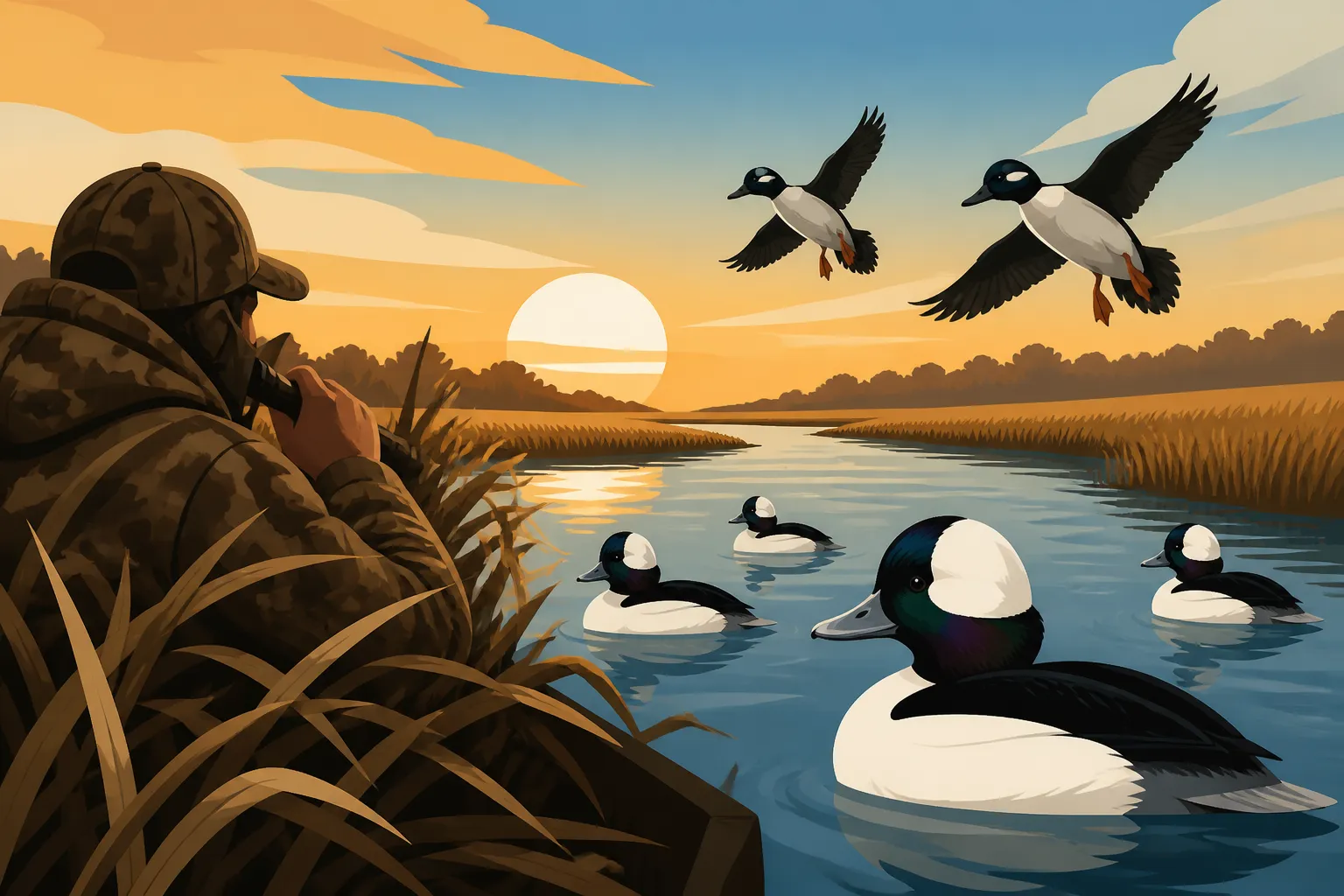
There's nothing quite like the sight of those compact, zippy buffleheads rocketing in over the water, especially when you've put in the effort to set up a smart spread in a quiet tidal creek. Many waterfowlers get frustrated trying to decoy these small, fast divers, often because they treat them like bigger ducks or don't understand their unique habits in these intricate waterways. This guide is all about cutting through that frustration, giving you the real-world know-how to consistently bring buffleheads into your spread on Maryland's abundant tidal creeks.
Understanding Bufflehead Behavior in Maryland Tidal Creeks
Buffleheads are truly unique among the ducks we hunt in Maryland. They're small, incredibly agile, and possess a distinct personality that, once understood, makes them a joy to pursue. They aren't big, hardy divers that sit out on the open Bay in the roughest weather. Instead, they often seek out the more sheltered, food-rich environments that Maryland's myriad tidal creeks provide. Knowing why they are there and what they are doing is the first step to success.
Why Buffleheads Love Tidal Creeks
These little dynamos are insectivores, primarily feeding on aquatic invertebrates, small crustaceans, and mollusks that thrive in the rich, silty bottoms of shallow tidal creeks. Unlike some of the larger divers like canvasbacks or redheads that might prefer deeper, open water to graze on submerged aquatic vegetation, buffleheads are perfectly equipped for quick dives in shallower environments. Their small size and quick movements allow them to dart around submerged structure, pilings, and oyster beds where these food sources are plentiful. Tidal creeks, with their fluctuating water levels, often concentrate these food items, making them prime bufflehead buffets. You’ll often find them working the edges, especially where there are shallower flats transitioning into slightly deeper channels, or around oyster reefs and muddy banks exposed at low tide, which then get covered again on the incoming tide. This is a critical detail: they're not just loafing; they're actively feeding, and your setup needs to reflect that.
Reading the Tide and Weather for Bufflehead Success
Maryland's tidal creeks are, by definition, influenced by the ebb and flow of the Chesapeake Bay and its tributaries. Understanding these tidal movements is paramount to successful bufflehead hunting. Buffleheads will often move with the tide, preferring certain feeding grounds as water levels change. On an incoming tide, they might push further back into the shallower reaches of a creek, exploiting newly submerged feeding opportunities. Conversely, a falling tide can concentrate them into deeper pockets or channels. You can use resources like the NOAA tide charts, which are easily accessible online or through apps like GoHunt, to predict these movements. A high tide might offer concealment behind marsh grass if you're hunting from a kayak or a small boat, while a lower tide could expose key structure that concentrates birds.
Weather also plays a massive role. Buffleheads are tough little birds, but extreme cold or high winds can drive them from the main body of the bay into more sheltered creeks. A biting northwest wind might make the open water too choppy for efficient feeding or even just for resting comfortably. That's when those quiet, protected creek bends become goldmines. Keep an eye on the forecast: a strong cold front pushing through can mean excellent bufflehead hunting in the days that follow, especially if it brings blustery winds. These are the days when you might want to bundle up and head for a creek rather than brave the open water. Think about how the wind will affect your concealment and the flight path of the birds. A crosswind can be your friend, making birds cup their wings and offer an easier shot as they try to fight it. Remember, boat safety on the Chesapeake in December is always important, especially when navigating small craft in colder weather and strong currents.
Identifying Key Bufflehead Foraging Areas
Success with buffleheads really boils down to finding where they want to be, and that's usually where the food is. These ducks are highly concentrated feeders. Look for areas with prominent submerged aquatic vegetation (SAV) beds, even if sparse, as these often harbor the invertebrates buffleheads seek. Oyster beds, even old, dead ones, create structure that holds food and are magnets for these birds. Mudflats that are regularly exposed and submerged also indicate a rich feeding environment.
Scouting is your best friend here. Before the season starts, or even on non-hunting days, take a quiet paddle or boat ride through potential creeks. Look for signs of feeding: disturbance on the water, small rafts of buffleheads actively diving, or even just areas where you consistently see them flying in and out. Pay close attention to current lines, eddies, and subtle depth changes. These can create "micro-habitats" where food concentrates. Using a mapping tool like GoHunt can help you identify these features from above, marking potential spots like creek bends, narrow pinch points, or areas where tributaries feed into the main creek, which often create productive current seams. Remember, buffleheads don't need vast areas; a good 50-yard stretch of productive water can hold all the birds you need for a fantastic hunt.
Setting Up Your Decoy Spread for Buffleheads
Once you've identified a promising tidal creek spot, the next crucial step is laying out a decoy spread that effectively draws in these sharp-eyed little ducks. Buffleheads are curious but can be wary, so a natural, inviting spread is key.
Choosing the Right Decoys and Numbers
When it comes to bufflehead decoys, realism and variety are your friends, but don't overdo the numbers. For a tidal creek setting, a small spread of 6 to 12 decoys is often more than enough. Buffleheads are often seen in small groups or pairs, so a massive spread can sometimes look unnatural or even intimidating to them. Focus on quality over quantity. Choose decoys that are true to size and have good paint schemes, mimicking their striking black-and-white patterns. A mix of drakes and hens will look natural.
Beyond just bufflehead decoys, consider adding a few other "confidence" decoys. Small puddle ducks like mallards or black ducks, or even a few teal decoys, can make your spread look more inviting and safe, especially to wary buffleheads that might be observing from a distance. These birds will often share the same sheltered creek habitats, so it's a very natural look. If you're hunting during the early part of the duck daily bag limit by species season, when other puddle ducks are still numerous, this mix can be particularly effective. You might also consider adding one or two diving duck decoys of a slightly larger species, like a redhead or canvasback, if you occasionally see them in the same creek, but don't overdo it, as their habits are generally different. Some hunters also swear by adding a single coot decoy, as these non-game birds are often found mingling with feeding ducks and can signal a safe zone.
Strategic Placement for Maximum Visibility
Decoy placement for buffleheads in a tidal creek is all about creating an inviting landing zone and maximizing visibility within the confines of the creek. Unlike open water spreads, you're working with natural channels and bends.
A common and effective setup is a "J" or "U" shape, with the open end facing into the prevailing wind. This creates a natural landing strip for approaching birds. Place your bufflehead decoys in tighter groups of 2-3, mimicking their natural tendency to feed in small clusters. Position these clusters to the downwind side of your hide, allowing the buffleheads to work into the wind over your shooting lane. Keep a clear "kill hole" free of decoys, usually about 15-25 yards out, directly in front of your blind or concealment.
Crucially, think about the current. If there's a strong tidal current, rig your decoys with heavier weights and longer lines to prevent them from washing downstream. Some hunters even use decoy anchors that dig into the bottom to keep them precisely where they want them. Place some decoys closer to the creek banks, especially if there are oyster beds or areas of emergent marsh grass, as this is where buffleheads often feed. Consider one or two decoys slightly separated from the main flock, as if they are actively working a food source. This subtle realism can make a big difference. Reading tide charts before a marsh hunt is vital here, as the water depth and current will dictate how and where you can effectively place your spread.
Blending In: Concealment on a Tidal Creek
Concealment is absolutely paramount when decoying buffleheads, perhaps even more so than for larger, less skittish ducks. These birds are small, fast, and surprisingly sharp-eyed. Tidal creeks, by their nature, often have natural cover like marsh grass, fallen trees, or overhanging brush. Use these to your advantage.
A small, low-profile blind that blends seamlessly into the bank is ideal. If you're hunting from a kayak or canoe, pull it into the thickest cover you can find, and use a camo net or natural vegetation to break up your outline. For those hunting from shore, a simple pop-up blind brushed in with local vegetation can be incredibly effective. The key is to disappear. Buffleheads will often circle a spread a few times, looking for anything out of place before committing. Even a subtle movement or a glint of sunlight off a face can send them packing. Consider wearing a face mask and gloves in addition to your camo clothing.
Position your blind or hide where you have a good view of the approach, but where you also have a solid backdrop. Avoid silhouetting yourself against the sky or open water. For example, setting up against a dark treeline or a dense stand of phragmites can provide excellent natural camouflage. Remember, these creeks can be narrow, so being low and still is your best bet. If you're able to find a natural depression or a cut in the bank, even better. This attention to detail will greatly increase your chances of success and is much more effective than trying to "jump-shoot a marsh gut on a falling tide" with no hide at all.
Essential Gear and Tactics for Tidal Creek Bufflehead Hunting
Beyond the decoys and the hide, having the right gear and knowing specific tactics for these feisty little ducks will seal the deal. Buffleheads present unique challenges and opportunities, and being prepared makes all the difference.
Selecting the Right Shotgun and Ammunition
Given their small size and rapid flight, buffleheads don't require heavy artillery, but reliable patterns are crucial. A 12-gauge shotgun is most common and versatile, but a 20-gauge can be just as effective and lighter to carry, especially if you're hiking into a spot. What's more important than gauge is your choke selection and ammunition choice.
For chokes, a modified or improved cylinder is often perfect. Buffleheads are rarely shot at extreme distances in a creek setting; they either commit and come close, or they don't. A more open choke allows for a wider, more forgiving pattern on these fast-moving targets. Going too tight, like a full choke, can make shooting these quick, erratic flyers incredibly frustrating and often leads to missed shots or over-patterning a small bird at close range.
As for ammunition, stick with non-toxic shot as required for waterfowl. Steel shot is the standard. For buffleheads, shot sizes from #4 to #6 steel are generally ideal. Many hunters favor #6 steel for its higher pellet count, which creates a denser pattern, increasing the likelihood of hitting these small birds. If you're expecting longer shots or are also targeting slightly larger puddle ducks, #4 steel offers a bit more energy. High-velocity loads can give you a slight edge in terms of lead time and energy transfer. Brands like Federal, Winchester, and Kent provide excellent waterfowl loads. Remember to pattern your shotgun with your chosen ammunition and choke before the season to understand its effective range and spread. This preparation will boost your confidence when those buffleheads buzz your spread.
Accessing and Navigating Maryland's Creeks
Many of Maryland's prime tidal creeks for buffleheads are in areas that aren't easily accessible by large boats or even directly by vehicle. This often means foot access, kayaks, canoes, or small skiffs are your best friends.
If you're using a small boat, familiarity with the creek is key. Shallow water, submerged stumps, and oyster bars can be hazards, especially at low tide or in unfamiliar territory. A reliable shallow-draft boat like a jon boat or a canoe is often ideal. Always check the depth finder or use a push pole to navigate unknown waters. Always prioritize boat safety on the Chesapeake in December, particularly when dealing with cold water and potentially strong currents. Carry all required safety gear: life jackets for everyone, a whistle, lights if you're out before legal shooting hours or after, and a charged cell phone.
For foot access, mapping apps are invaluable. GoHunt, for example, can show you property lines, public land boundaries, and potential walking paths to remote creek sections. Be mindful of private property and always seek permission if there's any doubt. If you're hiking in, pack light but smart. Hip boots or chest waders are often necessary, as you'll likely be wading to set decoys or retrieve birds. Choose comfortable, sturdy waders that won't restrict movement. This type of hunting can be physically demanding, so being prepared for mud, water, and varied terrain is crucial.
The Art of the Bufflehead Shot and Retrieval
Buffleheads are notorious for their explosive takeoffs and quick, darting flight patterns. They often fly low to the water, hugging the contours of the creek. This means your shooting window can be brief, and you need to be ready to mount your gun quickly and swing smoothly.
When they commit to the spread, they'll usually cup their wings and dive in rapidly. Wait until they are clearly within range and offering a good shot before you rise. Don't rush it. The temptation to shoot the moment you see them coming is strong, but a few extra seconds can mean the difference between a clean kill and a frustrating miss. Focus on a single bird, swing through it, and pull the trigger. Because of their speed, an instinctive, fluid swing is often more effective than trying to meticulously aim. Practice your lead times on clays or even just by swinging at passing birds during the off-season.
Retrieval can be another challenge. Buffleheads are tough, and a crippled bird can dive and swim incredibly fast. A good retrieving dog is invaluable, especially in marshy areas or where currents are strong. If you don't have a dog, a long retrieve pole with a hook or a small, maneuverable kayak can be essential. Mark where the bird falls clearly, and retrieve it as quickly as possible. A downed bird that starts swimming or diving in a strong current can quickly disappear. Knowing the local conditions, like how the current flows or where shallow banks might hold a cripple, will help immensely. For youth hunters, especially during Maryland's Youth Waterfowl Days, teaching proper shooting mechanics and emphasizing quick retrieval is a great lesson in responsible hunting.
Disclaimer
Hunting is an inherently dangerous activity. Always follow all applicable local, state, and federal laws and regulations. Ensure you have proper licensing, including your federal duck stamp rules for bird hunters, and adhere to all safety guidelines. This guide is for informational purposes only and does not substitute for hands-on experience or certified hunter education. The author and publisher assume no responsibility for accidents or injuries sustained while hunting.