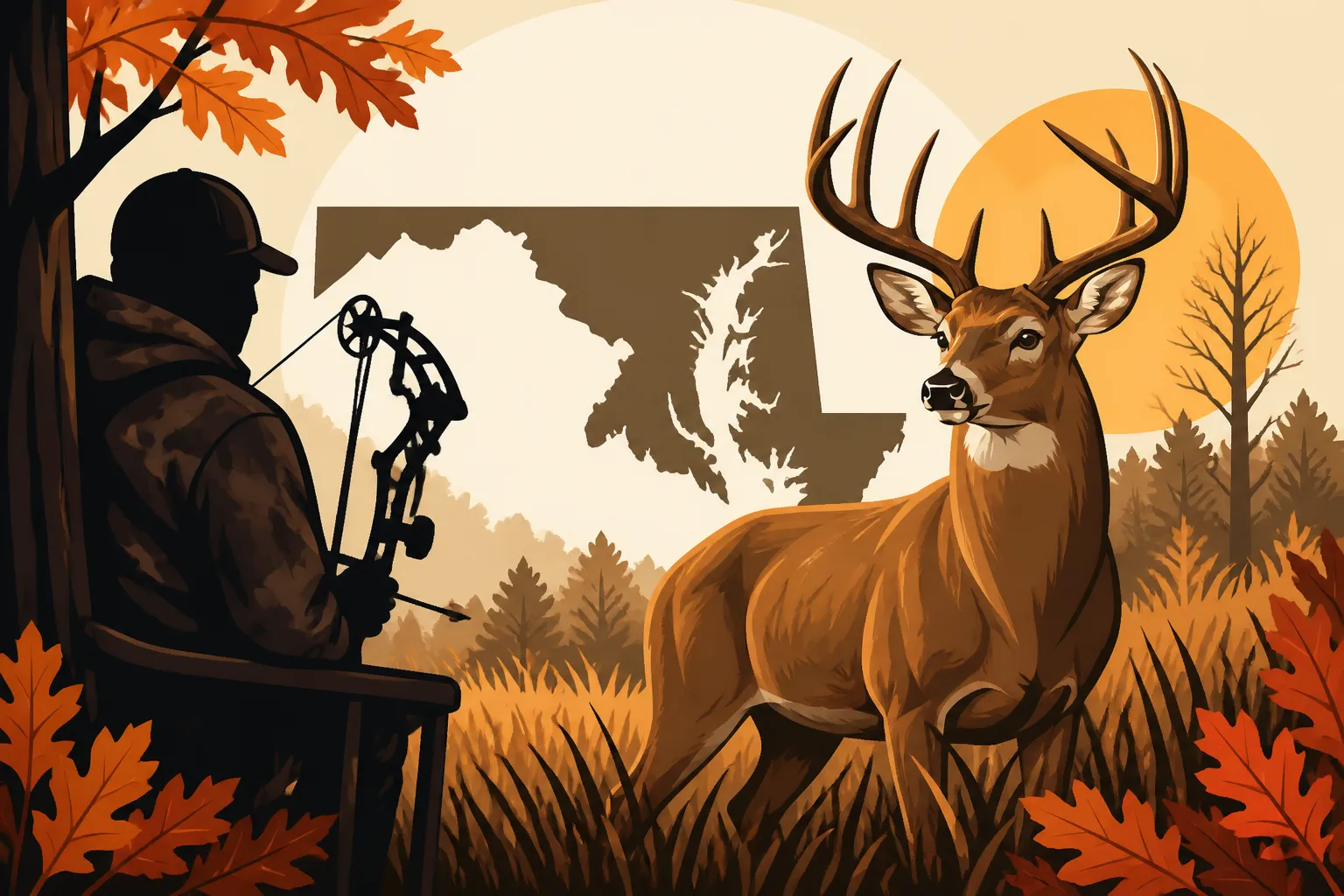
Hunting the Rut in Early to Mid November
The frustration of watching deer disappear into the shadows during the early archery season, or struggling to pattern them on their usual food-to-bedding routes, is a common one for Maryland hunters. But as we transition into early to mid-November, everything changes. This guide is all about helping you understand and capitalize on the most exciting time of the deer season: the whitetail rut in Maryland.
Understanding Maryland's Whitetail Rut Cycle
The annual whitetail rut is more than just a few weeks of increased deer activity; it's a complex, hormone-driven period that reshapes deer behavior entirely. For hunters, understanding this cycle is paramount to success, especially in Maryland's diverse landscapes, from the Eastern Shore farmlands to the Western Maryland mountains.
The Build-Up to Peak Rutting Activity
Before the full-blown chaos of the rut descends, there's a crucial pre-rut phase, usually kicking off in late October and extending into early November. During this period, bucks, feeling the surge of testosterone, begin to ramp up their activity. You'll start to notice more prevalent deer sign: rubs appearing on saplings and small trees, where bucks strip bark with their antlers, marking territory and strengthening their necks. These rubs aren't just random; they often follow established travel corridors or stand as signposts in bedding areas.
Even more exciting are the scrape lines. A scrape is essentially a patch of bare earth, typically under a low-hanging branch, where a buck paws the ground, urinates, and rubs his pre-orbital gland on the branch above. These are communication hubs, telling other deer in the area who's around and what their intentions are. In the pre-rut, bucks will start opening these scrapes, checking them frequently, and establishing dominance. What might have been a few scattered scrapes in October can quickly turn into well-defined lines as November approaches. Ignoring this increased sign is like ignoring a roadmap to buck movement. This initial burst of activity is a prelude, a promise of the heightened action to come, and it signals that bucks are becoming more tolerant of daylight movement as they start searching for the first does coming into estrus.
Why Early to Mid-November is Prime Time
When early to mid-November rolls around, Maryland's whitetail rut typically hits its stride. This is the peak breeding window, a period when the majority of does come into estrus, and bucks lose almost all caution in their relentless pursuit of receptive females. Forget their nocturnal tendencies; during these weeks, bucks are often on their feet throughout the day, covering ground, checking scrape lines, and running does. This is why many seasoned hunters will tell you that if you're going to pick one time to be in the deer woods, this is it.
The increased daylight movement is a game-changer. That wary buck you only ever caught on trail camera pictures at 2 AM? He's now potentially crossing an open field at 10 AM, nose to the ground, searching for a hot doe. This relentless pursuit means bucks are less focused on their surroundings and more driven by instinct. They're covering more ground than any other time of year, making them vulnerable in areas they might otherwise avoid. Whether you're hunting the quiet timber of Allegany County or the suburban woodlots near Baltimore, the core behavior remains the same: bucks are on the move, and they're looking for love. This period often sees bucks following does into unexpected places, pushing them out of thick cover, and creating opportunities that simply don't exist during the rest of the season.
Scouting Strategies for Rutting Bucks
Successful rut hunting isn't just about showing up; it's about showing up in the right place at the right time. Even though bucks are on the move, smart scouting helps you intercept them by understanding where they're likely to be.
Locating Key Rutting Sign
While scouting is important year-round, looking for fresh rut sign in early November becomes a highly focused effort. You're no longer just identifying areas where deer might be; you're identifying specific corridors and communication hubs where rutting activity is concentrated. Fresh rubs will be shiny, revealing lighter wood beneath the stripped bark, and often, sap will still be oozing. These are clear indicators that a buck, usually a larger one, has recently passed through and left his mark. Pay attention to the height of the rubs; higher rubs often indicate a taller-racked deer.
Active scrape lines are another goldmine. The bare earth will be freshly pawed, sometimes still damp with urine, and the licking branch above will be broken or frayed. Communal scrapes, where multiple deer visit, can be particularly hot. These often occur at strategic locations, like the edge of a field, a ridge saddle, or where multiple trails converge. As you scout, look for trails leading into these areas. An excellent tool for this kind of detailed scouting is a mapping app like GoHunt, which allows you to mark rubs, scrapes, and travel routes directly on an aerial map, helping you visualize buck movement patterns. This digital record helps you track consistency over time and pinpoint where the action is truly heating up. Understanding when a scrape line is "hot" versus "cold" is critical; a cold scrape might only show residual sign, whereas a hot one will practically smell of deer.
Interpreting Buck Behavior in Early November
During early November, buck behavior shifts dramatically from their usual patterns. They're less cautious, less predictable, and far more focused on does. Instead of moving directly from bedding to a specific food source, bucks will be cruising larger areas, often scent-checking traditional doe bedding locations, secondary food sources, and travel corridors between them. You might see a buck trot through an area, head down, smelling the ground, covering ground quickly rather than stopping to feed.
They also become more competitive, leading to sparring matches or even serious fights if two bucks converge on a receptive doe. This means listening for the sounds of antlers clashing in the distance can sometimes lead you to the action. Understanding that their primary driver is breeding means they might be found in places you wouldn't expect in October, such as an open hardwood ridge during midday, or even pushing a doe through a suburban backyard during daylight hours. By observing the intensity and freshness of the sign, you can gauge the stage of the rut and how aggressively bucks are pursuing does in your specific hunting area. Remember, what a buck does one day can change the next, so staying flexible and observant is key to understanding the constantly evolving rut picture.
Effective Hunting Tactics During the Rut
Once you've done your scouting, it's time to put boots on the ground with tactics specifically tailored for the unpredictable, yet exhilarating, nature of the rut.
Stand Placement for Cruising Bucks and Doe Groups
During the rut, stand placement strategy undergoes a significant change. Instead of focusing solely on food plots or bedding areas, your priority shifts to intercepting bucks that are actively cruising for does or trailing a hot doe. This means setting up in funnels, pinch points, and natural travel corridors that connect larger tracts of cover or lead between known doe bedding and feeding areas. A "funnel" could be a narrow strip of timber between two fields, a creek bottom leading into a swamp, or a saddle on a ridge that deer use to cross terrain. These areas force deer into predictable paths, increasing your chances of an encounter.
Consider what local hunters call "doe magnets" – areas where does naturally congregate. This might be a secluded water source, a patch of thick cover, or a preferred food source that still has appeal in early November. Bucks will invariably check these spots. Always hunt the downwind side of these funnels and doe magnets, using the wind to your advantage. Your scent control becomes even more critical now, as a buck on the move might be less wary but can still bust you if your scent stream crosses his path. Setting up along a fence line in a farm country funnel, for example, gives you a clear shot when a buck checks the downwind side. Remember that bucks will often travel just inside the edge of cover, not necessarily out in the open, so positioning your stand accordingly is crucial. This type of strategic placement is essential for Hunting a Funnel Between Two Grain Fields.
Using Calls and Scents to Your Advantage
The rut is prime time for calling and using scents because bucks are receptive to anything that might lead them to a doe. Grunt calls can be incredibly effective. A short, guttural grunt can mimic a buck trailing a doe or a buck challenging another, often enough to pique the curiosity of a cruising buck and bring him into range. Practice your Grunt Calls in Maryland Hardwoods for maximum effectiveness. Rattling antlers, mimicking two bucks fighting, can also draw in bucks looking for a dominance challenge or to steal a doe. Start with light rattling, and if no response, escalate to a more aggressive clash.
Doe estrus scents are designed to mimic the smell of a receptive doe and can be incredibly alluring. Place them on a scent wick downwind of your stand, or near a mock scrape you've created. Buck urine, particularly dominant buck urine, can also be used to challenge an incoming buck. When using scents, always consider wind direction to carry the scent to where deer are likely to be. Brands like Tinks, Code Blue, and Wildlife Research Center offer a range of effective rut scents. Remember, a buck's nose is his primary defense, so use quality products and handle them carefully to avoid contamination. For hunters on Maryland's Eastern Shore, mastering Rattling Antlers on an Eastern Shore Farm can be especially effective in drawing out mature bucks from timber blocks.
All-Day Sits and Persistent Hunting
This is perhaps the most difficult but rewarding tactic during the rut: committing to all-day sits. Unlike other times of the season where deer movement might be concentrated at dawn and dusk, during the peak rut, bucks can be on their feet at any time of day. They're constantly searching, chasing, and tending does, meaning a mid-day lull simply doesn't exist for them. Many big bucks are harvested between 10 AM and 2 PM when other hunters have left their stands.
Packing a good lunch, plenty of water, and having a comfortable stand setup are essential for enduring these long hours. Persistence truly pays off during this time. Don't leave your stand because you haven't seen anything for a few hours. That quiet period might be immediately followed by a mature buck pushing a doe right into your shooting lane. Furthermore, fluctuating weather during early November, from crisp mornings to surprisingly warm afternoons, can alter deer movement patterns throughout the day, reinforcing the need to be present for the entire daylight period. Staying put, even when your mind tells you to move, often separates the successful rut hunters from those who just get frustrated.
Navigating Common Rut Challenges in Maryland
Even with the increased activity, the rut isn't without its complexities, especially in a state like Maryland where hunting pressure and diverse landscapes demand adaptability.
Dealing with Hunting Pressure
Maryland is a relatively small state with a passionate hunting community, which means public lands can see significant pressure, particularly during the peak of the rut. This pressure can make even rut-crazed bucks wary, pushing them deeper into cover or making them move during low-light hours. To counter this, you need to think differently. Instead of hunting the most obvious spots, try to find overlooked areas. Look at your Scouting Maryland Public Land With Aerial Photos and identify pockets of thick cover that are hard to access, areas surrounded by private land, or parcels that require a longer walk than most hunters are willing to make. These often become sanctuaries where deer can escape pressure.
Private land, while offering more control, can also have its own forms of pressure. If you're on a smaller private parcel, understanding how deer move onto and off your property in response to neighboring hunting activity is crucial. Sometimes, the best tactic is to hunt the perimeter of these pressured sanctuaries, catching bucks as they enter or exit. Remember, deer are incredibly adept at finding the path of least resistance away from human activity. A mapping system like GoHunt can reveal these often-overlooked travel corridors and hidden bedding areas that other hunters might bypass. The key is to analyze how deer are reacting to pressure and adjust your strategy accordingly, perhaps even waiting for a significant cold front to push deer back into more exposed areas. This approach is vital for Finding Maryland Ground Others Walk Past.
Adapting to Unpredictable Deer Movement
While bucks are more active during the rut, their movement isn't always predictable in terms of where they'll be. They are primarily driven by the presence of receptive does, and if the does shift, so do the bucks. Weather patterns, especially sudden changes in temperature or strong winds, can also influence movement, sometimes making deer bed down or move more cautiously. For example, a warm spell in early November might slow daytime movement, whereas a cold snap can ignite it.
Being adaptable is key. If your chosen stand location isn't producing, don't be afraid to move, even mid-day. This is where aggressive still-hunting or checking multiple stand locations throughout the day can be effective. If you're seeing fresh sign but no deer, consider that the deer might have moved to a different part of their range. Keep an eye on the long-range weather forecast and consult current conditions before each hunt. Have a backup plan or two, and be prepared to modify your strategy based on what you're seeing (or not seeing) in the woods. Sometimes, it's about breaking conventional wisdom and trying something new, like focusing on a remote bedding area rather than a traditional field edge if the deer seem to be holding tight. The more information you gather from trail cameras, ground scouting, and even local reports, the better you can anticipate these shifts.
Final Thoughts on Rut Hunting Success
The Maryland whitetail rut in early to mid-November is a truly special time to be in the woods. It's when the deer you've been dreaming about all year throw caution to the wind, offering unique opportunities that simply don't exist during other phases of the season. Yes, it can be frustrating sometimes when the deer seem to disappear, or when the weather doesn't cooperate, but that's part of the challenge and reward.
Patience and Persistence Pay Off
Ultimately, success during the rut often boils down to two things: patience and persistence. Be patient enough to sit through the slow periods, trusting that a buck could appear at any moment. Be persistent enough to keep going back, day after day, even when you're tired and the action seems slow. The buck of a lifetime could be just around the corner, or following the next doe. This period is a marathon, not a sprint. The more time you put in, the higher your chances of intercepting that dream buck. So, embrace the unpredictable nature of the rut, stay vigilant, and enjoy every moment of this incredible hunting experience. It's the kind of dedication that leads to stories you'll tell for years.
Disclaimer
Hunting is an inherently dangerous activity. Always prioritize safety, understand and adhere to all Maryland hunting regulations, and ensure you have the proper licenses and permits before heading afield. Always verify specific season dates and bag limits with the Maryland Department of Natural Resources.