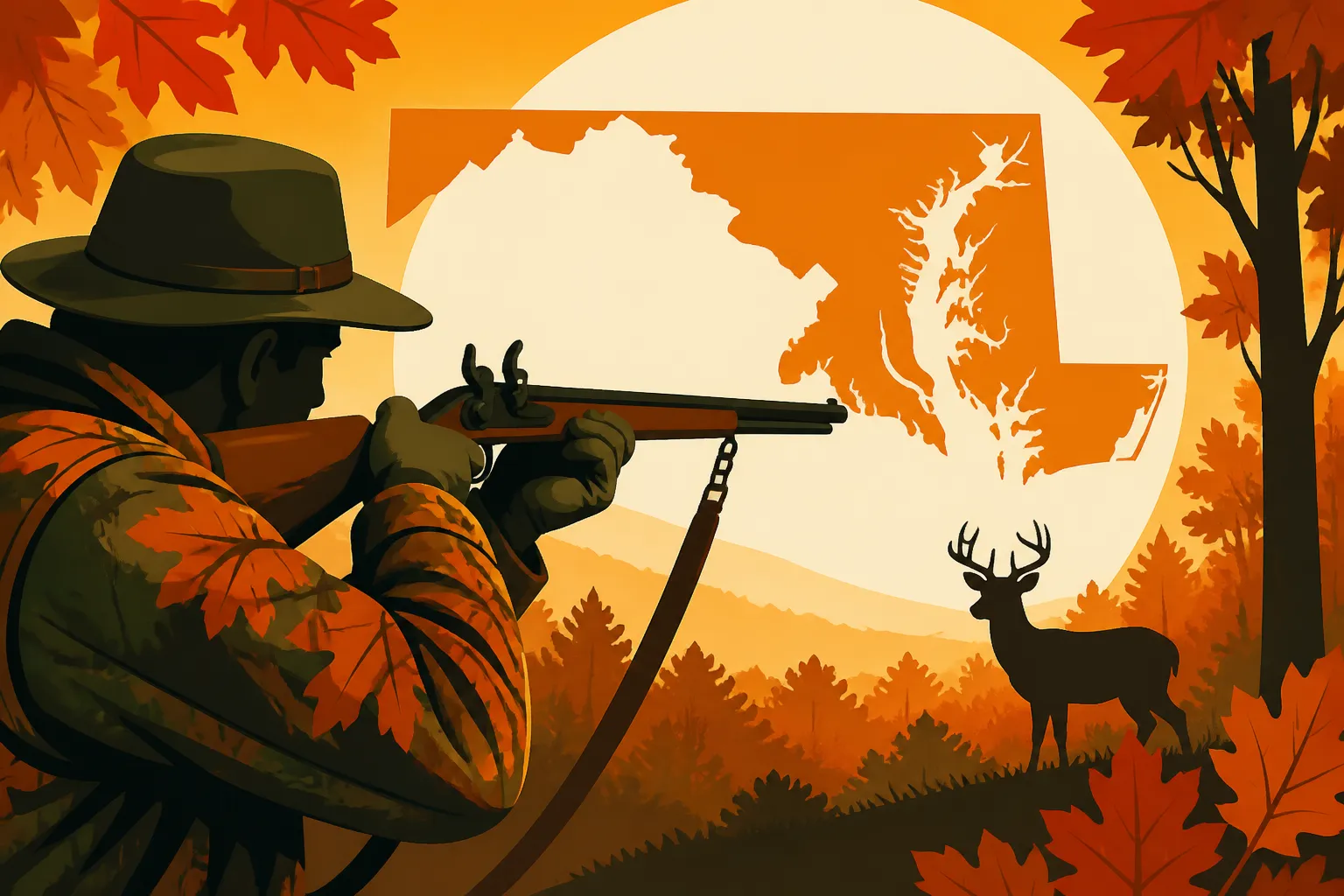
Hunting Maryland’s October Muzzleloader Week
Maryland's hunting calendar can feel like a puzzle sometimes, and nailing down the prime windows for certain weapons can be a real headache. Many of us grapple with fitting our limited hunting time into these short, often overlooked seasons, especially when it comes to something as specific as muzzleloader week. This guide is here to walk you through everything you need to know to make the most of Maryland's October Muzzleloader Week, ensuring you're prepared, knowledgeable, and ready for success in the deer woods.
Understanding Maryland's October Muzzleloader Season
The allure of muzzleloader hunting lies in its simplicity, its challenge, and the unique window it offers in Maryland's deer season. For many of us, it’s a chance to get back into the woods before the hustle and bustle of the modern firearms season, connecting with a more traditional hunting experience. But before you dust off that smoke pole, it's crucial to understand the specifics of this short, but often productive, period.
Key Dates and Why They Matter
Maryland's October Muzzleloader Season is a brief affair, typically a single week, positioned strategically in the early fall. Historically, it falls in the third full week of October, often starting on a Thursday and running through the following Wednesday. This timing is significant because it precedes the main firearms season, offering hunters a less pressured environment to pursue deer. You can find the exact dates for each year in the official Maryland hunting regulations, but knowing it's consistently in October helps you plan your scouting and gear prep well in advance. Don't forget, these dates can shift slightly year to year, so always double-check the current year's guide.
This specific window is a golden opportunity because it lands just before the peak of the rut kicks into high gear, but deer are already transitioning from summer patterns. Food sources are abundant, and deer are actively feeding to put on weight for winter. The weather is usually crisp and pleasant, making for comfortable days in the stand or still-hunting through the timber. It's a fantastic chance to fill an antlerless tag, or even catch a buck moving predictably before he gets completely consumed by the madness of the rut. Understanding Maryland Muzzleloader Season Dates is your first step to planning a successful hunt.
Weapon Restrictions and Muzzleloader Types
When we talk about muzzleloaders in Maryland, we're specifically referring to traditional black powder firearms. This means no cartridge guns adapted for muzzleloading, and typically, percussion caps or flintlock ignition systems are the order of the day. The state regulations are pretty clear on what constitutes a legal muzzleloader for deer hunting. Generally, this includes .40 caliber or larger rifles that load from the muzzle, using black powder or approved black powder substitutes. Inline muzzleloaders are generally permitted, offering a bit more modern convenience and accuracy for some hunters.
It's absolutely critical to understand the legal definition of a muzzleloader and the specific rules regarding projectiles, powder, and ignition systems. Some counties might have additional restrictions, particularly in more suburban or populated areas where certain firearms might be banned entirely, forcing hunters to consider archery or specific straight-walled cartridges if allowed. Always check Maryland's Legal Weapons by County to ensure your chosen setup is compliant for your hunting spot. The last thing any hunter wants is to get into the woods with an illegal setup.
Region A vs. Region B Considerations
Maryland divides its deer management into two distinct regions: Region A (primarily Western Maryland's mountainous counties) and Region B (the rest of the state, including the Eastern Shore and Central Maryland). These regions have different deer populations, habitat types, and, crucially, different bag limits and sometimes slightly varied regulations. For October Muzzleloader Week, while the season dates are usually statewide, the bag limits for antlered and antlerless deer can differ significantly.
In Region A, which typically has lower deer densities and more expansive public land, hunters often face stricter antlered deer limits. Meanwhile, Region B, especially in agricultural and suburban areas, tends to have higher deer populations, leading to more generous antlerless bag limits to help manage the herd. Before you even head out, you need to know which region your hunting ground falls into and review Maryland's Deer Bag Limits and Antler Rule for that specific year. Ignoring this detail can lead to unnecessary legal trouble, and frankly, it's just good stewardship to understand the local management goals.
Scouting and Preparation for Muzzleloader Week
Muzzleloader hunting, more than many other methods, truly rewards the prepared hunter. You're dealing with a single shot, slower reloading, and often less range than a modern rifle, which means getting close and making that first shot count is paramount. This makes thorough scouting and meticulous preparation not just helpful, but absolutely essential for success during the brief October muzzleloader window.
Pre-Season Reconnaissance and Sign Reading
The deer you'll be pursuing during muzzleloader week have likely been living on the property for months, making their patterns somewhat predictable if you put in the legwork. Begin your scouting long before October rolls around. Look for traditional food sources like acorns, persimmons, and agricultural crops, which deer will be hammering in early fall. Pay close attention to trails leading to and from these food sources, especially those with fresh tracks, droppings, and rubs or scrapes, even if they're still relatively fresh. These early rubs might not be the aggressive rut sign you see in November, but they indicate bucks are starting to get antsy.
Using tools like the GoHunt app or other aerial mapping software can be a game-changer. You can virtually scout for pinch points, funnels, and natural travel corridors between bedding areas and feeding sites. These apps allow you to mark potential stand locations, plan your entry and exit routes, and understand the topography without putting unnecessary pressure on the deer. Walking these areas in late summer or early fall, before the leaves completely drop, helps you verify what you see on the map and find the freshest sign. Remember, deer patterns can shift quickly with changing food sources or hunting pressure, so recent sign is always the most valuable.
Essential Gear for the Muzzleloader Hunter
Beyond your trusty muzzleloader, there are several key pieces of gear that can make or break your October hunt. First and foremost, you'll need your cleaning supplies and components for loading: powder, primers/caps, and projectiles. Pack these securely and in a waterproof container. A speed loader with pre-measured charges and a projectile can save precious time if a follow-up shot is needed, which, let's be honest, is a huge concern with a muzzleloader. Don't forget a dependable rangefinder – knowing your exact distance is critical for that single shot accuracy.
Layered clothing is also essential for Maryland's often variable October weather. Mornings can be chilly, but midday can warm up quickly. A good pair of binoculars will help you pick apart distant cover and identify deer before they identify you. And, as always, a sharp knife, game bags, and gloves for field dressing are non-negotiable. Given the often pleasant temperatures of October, prompt and clean field dressing is important to preserve the meat, so review Field Dressing a Deer in Warm September Weather to refresh your skills.
Practice Makes Perfect: Muzzleloader Proficiency
There’s no substitute for range time with your muzzleloader. Unlike modern rifles, muzzleloaders often have a more rainbow-like trajectory, and different loads (powder charge, projectile type) can dramatically change your point of impact. You need to know exactly where your chosen load shoots at 50, 75, and 100 yards, and even further if you’re confident in your ethical range. Practice shooting from various field positions – offhand, resting against a tree, kneeling – replicating real-world scenarios.
Familiarize yourself with the entire loading and shooting process under pressure. Can you load a follow-up shot quickly and smoothly if needed? Does your percussion cap seating tool work flawlessly? What about cleaning your barrel after a few shots to maintain accuracy? The more comfortable and efficient you are with your muzzleloader, the less likely you are to be flustered when that deer steps out. Even if you're a seasoned archer who has spent months preparing for Bowhunting Maryland's Long Archery Season, the mechanics of a muzzleloader are entirely different and require dedicated practice.
Effective Hunting Strategies During Muzzleloader Week
October Muzzleloader Week presents a unique set of challenges and opportunities. The woods are still relatively thick with leaves, but they're starting to thin, and deer haven't yet faced the full brunt of firearms pressure. This middle ground requires specific strategies to put you in the right place at the right time.
Capitalizing on Early October Conditions
Early October means that deer are still primarily focused on food, but their movement patterns are starting to shift. Acorn crops are a huge draw, and if you can find a good white oak flat dropping nuts, you're likely to find deer. Agricultural fields, especially standing corn or bean fields, are also major food sources. Think about where deer will move from their bedding areas (often thick cover) to these feeding areas, and plan your ambush accordingly. The woods can still be noisy with falling leaves, so quiet movement and patience are key.
Because the weather is often mild, deer movement might be concentrated during the early morning and late evening hours. Midday may see them bedded down, only moving minimally. This makes morning and evening hunts from a well-placed stand or ground blind particularly effective. Don't underestimate the power of a cool front; a sudden drop in temperature can really get deer on their feet and moving, especially as they try to pack on calories. Look for the freshest sign near these food sources, as deer will often be focused on the most desirable and abundant forage available.
Stand Placement and Movement Tactics
Given the limited range of a muzzleloader, your stand placement is critical. You want to be within 75-100 yards, ideally closer, of where you anticipate deer moving. Identify natural funnels, saddlebacks, or creek crossings that deer use as travel corridors between bedding and feeding. Consider the wind direction carefully; deer in October are still extremely wary. Using the GoHunt app, you can mark prevailing wind directions and plan multiple stand locations for different wind scenarios.
If you prefer to be more active, still-hunting can be incredibly effective, especially in dense timber or along ridge lines. Move slowly, taking one or two steps, then pausing to scan and listen for several minutes. Use the terrain and available cover to break up your silhouette. Remember, the goal is to get within that tight muzzleloader range without being detected. This takes immense patience and a keen eye for deer sign and subtle movements. If you’re hunting agricultural land, consider Hunting a Funnel Between Two Grain Fields, which can be incredibly productive for catching deer moving from bedding to feed.
Understanding Deer Behavior in the Early Fall
During October Muzzleloader Week, deer behavior is a mix of late summer patterns and the nascent signs of the rut. Bucks are starting to feel the hormonal shift, making rubs and scrapes, but they're not yet in full-blown chase mode. They're still somewhat predictable around food sources, especially at dawn and dusk. This is a great time to target them before they become completely nocturnal or erratic with the approaching rut.
Does and fawns will be moving in family groups, often hitting food sources more consistently than the larger bucks. Observing these groups can give you clues about broader deer movement patterns in the area. While you might encounter some early rutting activity, don't expect the all-day cruising that comes later in November. Focus on their stomachs, and you'll find them. Understanding Hunting the Rut in Early to Mid November can help you anticipate how deer behavior will change after muzzleloader week.
Ammunition, Reloading, and Follow-Up
The simplicity of a muzzleloader can be deceiving; there's a certain art and science to getting it to shoot accurately and reliably. This isn't just about loading powder and a bullet; it's about consistency, precision, and being prepared for the moment of truth and what comes after.
Choosing the Right Muzzleloader Projectile
The market offers a wide variety of muzzleloader projectiles, from traditional patched round balls to saboted bullets designed for maximum accuracy and knockdown power. For deer, a projectile that expands reliably and retains its weight is crucial. Many hunters opt for saboted projectiles like Hornady SSTs or Barnes MZ-Expanders, which offer excellent ballistic coefficients and terminal performance. These typically come in .45 or .50 caliber, with the sabot matching your bore size.
However, some jurisdictions or specific muzzleloader types might restrict sabots, requiring hunters to use full-bore projectiles. Always check your local regulations to ensure your chosen projectile is legal. Whatever you choose, it's essential to test it extensively at the range with your specific powder charge. Consistency is paramount, so once you find a load that groups well, stick with it. Different bullets can perform wildly differently, even with the same powder charge, so don't skimp on the testing.
Loading and Reloading in the Field
Loading a muzzleloader correctly is critical for accuracy and safety. Consistency in your powder charge, seating pressure of the projectile, and proper alignment are key. In the field, having pre-measured powder charges in speed loaders or vials makes the process much faster and less prone to error. Always use the recommended powder type and charge for your firearm. When it comes to reloading for a follow-up shot, this is where speed loaders shine.
Imagine a scenario: you take a shot, and the deer runs a short distance but then stops, still within range. Being able to quickly and smoothly reload could mean the difference between recovering your deer and a long, potentially fruitless tracking job. Practice this reload sequence at home, or even better, at the range. Make sure your ramrod clears the bore easily, and that your primers or caps are accessible and seat properly even with cold hands or in low light. This isn’t a quick-and-dirty process; it requires deliberate, practiced movements.
Tracking and Recovery After the Shot
Unlike a high-velocity rifle shot that often produces a quick, clean kill, a muzzleloader shot can sometimes be slower to drop an animal. This means impeccable tracking skills are often required. After the shot, take a moment to compose yourself and listen. Did you hear the deer crash? Did you hear it running? Mark your exact shooting location, and then the spot where you last saw the deer. If you don’t see it fall, wait. Give the deer at least 30 minutes, or even an hour for a questionable hit, before taking up the trail.
Look for a blood trail, broken branches, or disturbed leaves. Often, the blood trail may not start immediately, especially if it's a pass-through shot without much initial external bleeding. Grid search the area where you last saw the deer. If you're on public land or hunting alone, having a hunting buddy to help with the track can be invaluable. If night falls before you recover the animal, mark the last spot of blood, and return at first light. Remember the deadline to register your deer, usually within 24 hours. Refer to The Maryland Deer Registration Deadline After a Kill to make sure you're compliant.
Navigating Public and Private Land Access
Finding a good hunting spot in Maryland for Muzzleloader Week, especially one that isn't already saturated with other hunters, can be a challenge. Whether you're a public land warrior or fortunate enough to have private ground access, knowing how to approach each situation is key.
Public Land Challenges and Opportunities
Maryland offers a good amount of public hunting land, including state forests and Wildlife Management Areas (WMAs). However, these areas often see significant pressure, especially during popular seasons like muzzleloader week. The trick is to find areas that are harder to access or that other hunters tend to overlook. Using mapping tools like GoHunt, you can identify remote corners of public land, areas behind gates, or sections that require a longer walk to reach. These "walk-in" areas often hold less pressured deer.
Be prepared for competition, but don't let it deter you. Sometimes, other hunters inadvertently push deer your way. Learn to read pressure; if you see a lot of trucks at a parking lot, consider exploring deeper or finding an alternative entry point. Focus on thick cover, bedding areas, and overlooked pockets that might be just off the beaten path. These small oases can be incredibly productive. For detailed information, check out Scouting Maryland Public Land Before Season to gain an edge.
Gaining Private Land Permission
Accessing private land can drastically increase your odds of success, as these areas often hold higher deer densities and receive less hunting pressure. The key is persistence, respect, and good communication. Start by knocking on doors in areas known for good deer numbers. Farmers are often open to hunters, especially if deer are causing crop damage. When approaching landowners, be polite, well-groomed, and clearly state your intentions. Offer to help with chores or share some of the venison.
Crucially, understand and respect their rules, whether it's specific shooting lanes, parking instructions, or designated hunting days. Written permission is always a good idea to protect both you and the landowner. Building a long-term relationship based on trust and respect can secure you a prime hunting spot for years to come. Remember that some landowners may be hesitant to grant permission for firearms hunting but might be open to Hunting a Maryland Farm Lease Your First Season.
Specific Areas Known for Muzzleloader Success
While deer are widespread across Maryland, some areas stand out for muzzleloader hunting due to their habitat and deer populations. In Western Maryland, the expansive state forests like Green Ridge and Savage River offer vast timberlands where still-hunting with a muzzleloader can be very effective. Here, you'll be looking for oak flats and benches where deer are feeding on acorns. Be sure to check Reading Sign in Maryland Mountain Timber for tips on what to look for.
On the Eastern Shore, agricultural areas interspersed with woodlots and marsh edges can be prime. Counties like Kent, Queen Anne's, and Caroline often provide excellent opportunities for both antlered and antlerless deer, especially around standing corn or soybean fields. However, these areas are often privately owned, so securing permission is paramount. In Southern Maryland, counties like Charles and St. Mary's have a mix of timber and agricultural lands that can be fruitful, particularly around creek bottoms and dense cover. Always focus on areas with diverse habitat and abundant food sources, and combine your local knowledge with resources like the GoHunt app to pinpoint specific honey holes.
Maryland Muzzleloader Season at a Glance
To give you a quick reference, here's a general overview of what you can expect during Maryland's October Muzzleloader Week. Always consult the official Maryland Department of Natural Resources (DNR) regulations for the most up-to-date and specific information for the current hunting year.
| Feature | Region A (Western MD) | Region B (Central, Southern, Eastern Shore MD) |
|---|---|---|
| Season Dates | Typically 7 days, mid-October (e.g., Oct 19 – Oct 25) | Typically 7 days, mid-October (e.g., Oct 19 – Oct 25) |
| Antlered Deer Bag Limit | Varies, often 1 during Muzzleloader Season | Varies, often 1 during Muzzleloader Season |
| Antlerless Deer Bag Limit | Varies, typically 1 (check county specifics) | Varies, often more liberal (check county specifics) |
| Legal Weapons | Muzzleloaders .40 cal or larger (black powder/substitute) | Muzzleloaders .40 cal or larger (black powder/substitute) |
| Projectile Types | Round ball, conical, or sabot (check local rules) | Round ball, conical, or sabot (check local rules) |
| Blaze Orange | Required for all hunters | Required for all hunters |
| Licensing | Requires valid MD hunting license & Archery/Muzzleloader Stamp | Requires valid MD hunting license & Archery/Muzzleloader Stamp |
Note: This table provides general guidance. Exact dates and bag limits are subject to change annually by the Maryland DNR.
Disclaimer
The information provided in this guide is for general informational purposes only and does not constitute legal advice. Hunting regulations in Maryland are subject to change, and specific rules can vary by county, weapon type, and even specific public land units. Always consult the most current official Maryland Department of Natural Resources (DNR) hunting regulations and local ordinances before heading into the field. It is the hunter's responsibility to know and abide by all applicable laws and regulations.