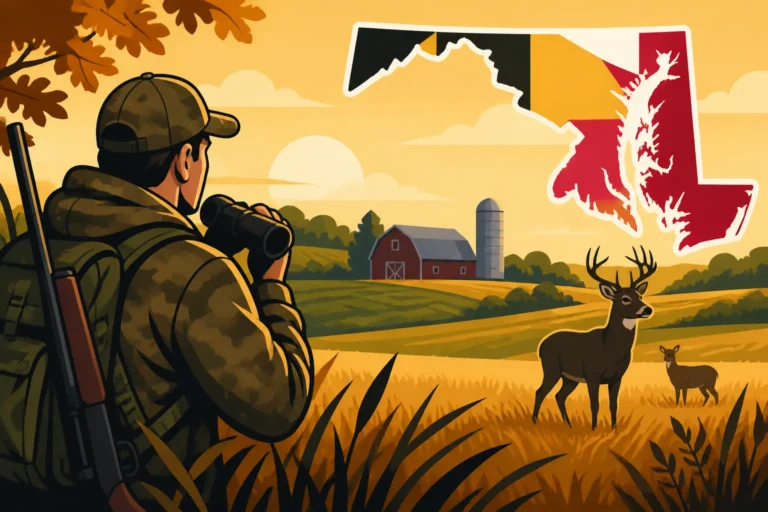
Rattling Antlers on an Eastern Shore Farm
There's nothing quite as frustrating as spending countless hours in a stand, knowing the big bucks are out there, but they just won't show themselves. Especially on Maryland's Eastern Shore farms, where deer often have plenty of cover and food, drawing in that mature whitetail can feel like a guessing game. This comprehensive guide is here to walk you through the nuances of rattling antlers effectively on Eastern Shore farms, transforming those quiet sits into heart-pounding encounters.
Understanding the Eastern Shore Rut Dynamics for Rattling
Rattling antlers isn't just about making noise; it's about mimicking the sound of two bucks fighting, a sound that can trigger a primal response in other bucks, especially during the rut. But to do it effectively on the Eastern Shore, you really need to understand the local deer behavior and the landscape itself.
The Timing is Everything on Delmarva
The rut, or breeding season, is the absolute sweet spot for rattling. On the Eastern Shore, the timing of the rut can feel a little different compared to the mountains of Western Maryland or even the more suburban counties. While you might hear whispers of a "Halloween rut" in some areas, generally, the primary chase phase and peak breeding activity for whitetails on the Delmarva Peninsula tends to settle in around early to mid-November. This is when bucks are actively searching for does, and their aggression levels are at their highest, making them most susceptible to the sounds of a fight.
However, it’s not a one-day event. You'll often see pre-rut activity picking up in late October, with younger bucks starting to spar and rub trees. This early period can be great for light rattling to spark curiosity, but the full-blown, aggressive rattling that brings in mature deer is best reserved for those crucial weeks in November. Don't forget about the secondary rut either! Sometimes, unbred does will come back into estrus later in December or even early January. While not as intense as the primary rut, a subtle rattling sequence during the late season, particularly around good Late Season Food Sources for Maryland Deer, can still surprise a buck looking for a last chance.
Weather plays a huge role too. A sudden cold snap can really get deer on their feet, making them more responsive to rattling. Conversely, those unseasonably warm November days can make daytime movement sluggish, meaning you might need to be more patient or try rattling at dawn and dusk. Always check the forecast and adjust your strategy accordingly. For deeper insights into this crucial period, consider reading up on Hunting the Rut in Early to Mid November.
Reading the Landscape for Rattling Success
Eastern Shore farms are a patchwork of agricultural fields, small woodlots, thick hedgerows, and often winding creek bottoms. This diverse habitat offers unique challenges and opportunities for rattling. You can't just rattle anywhere; you need to choose your setup wisely to maximize your chances.
Think like a buck during the rut. Where would he feel safe moving, but also be able to hear a fight? Bucks, especially mature ones, are always looking for cover. Those narrow strips of woods that follow a creek, the thick briar patches along a field edge, or even the small islands of timber in the middle of a sprawling cornfield are prime locations. These are natural travel corridors and bedding areas. When a buck hears a fight, his first instinct is to investigate, but he'll likely approach cautiously, using whatever cover is available.
Focus on pinch points and funnels. These are areas where the landscape naturally constricts deer movement, forcing them into predictable paths. A narrow strip of woods between two large fields, a creek crossing, or a thick fencerow connecting two larger timber blocks are all excellent spots. Imagine a buck moving from one woodlot to another; if he hears a fight in the funnel, he's very likely to come check it out. When Hunting a Funnel Between Two Grain Fields, rattling from a strategic position within that funnel can be incredibly effective.
Furthermore, consider the wind. Always, always, always set up with the wind in your favor, blowing away from where you expect a buck to approach. Deer will circle downwind to scent-check a fight before committing, so you want your scent to be carried away from their approach path. Overlooking a field edge with a thick woodline behind you, for example, can be a great setup, especially if you know deer are bedding in that woodline.
Essential Gear and Techniques for Effective Rattling
Just like any hunting method, having the right tools and knowing how to use them makes all the difference when rattling on an Eastern Shore farm. It's not just about clanking antlers together; there's an art and a science to it.
Choosing Your Rattling Repertoire
When it comes to the actual sound production, you have a few options, each with its own advantages and disadvantages in the Eastern Shore farm setting:
- Real Shed Antlers: This is the classic choice, and for good reason. The sound generated by real antlers is incredibly authentic. You can control the intensity, from light clashing to heavy, bone-jarring fights. Look for medium-sized sheds, ideally from a 2.5 to 3.5-year-old buck, as this size produces a good, resonant sound that mimics bucks of an age likely to be aggressive. The downside? They can be bulky to carry, especially when trying to stay quiet through thick brush or during a stealthy approach to Setting Up on a Maryland Grain Field Edge. They can also be noisy if you accidentally bump them while walking.
- Synthetic Rattling Bags or Calls: Companies like Knight & Hale, Primos, and Flextone make various synthetic rattling devices, from small bags filled with synthetic sticks to compact, one-piece calls that mimic antler clashes. These are fantastic for portability and convenience. They're often quieter to carry and easier to use discreetly, which can be a huge advantage when you're trying to sneak into a stand pre-dawn. However, some hunters feel the sound isn't quite as natural or rich as real antlers, and it can be harder to vary the intensity as much. For quick, light sparring sequences, they work wonderfully.
- Combination: Many successful Eastern Shore hunters actually carry both. They might use a rattling bag for subtle, exploratory sequences and then pull out a pair of real antlers for a more aggressive, drawn-out fight if they think a buck is close but hesitant.
Don't forget that rattling is just one piece of the puzzle. Always complement your rattling with other calls. A grunt tube is practically mandatory. After a rattling sequence, throw in a few deep grunts. This makes the "fight" sound even more realistic, mimicking a buck grunting during or after a skirmish. A doe bleat can also be effective, suggesting a doe is nearby, which can pique the interest of a buck already drawn in by the fight. Combining these calls effectively is part of the art, and you can learn a lot from mastering Grunt Calls in Maryland Hardwoods.
Mastering the Art of the "Fight"
This isn't just noise; it's storytelling. You're trying to paint a picture of two bucks battling it out. There are generally two main types of rattling sequences:
- Light Sparring: This is best for the pre-rut or when you want to avoid over-pressuring an area. It involves gentler clicks and rubs of the antlers, simulating younger bucks testing each other or a less intense dominance display. Start with a few light clashes, maybe a few rubs, then pause for a minute or two. Repeat this every 15-20 minutes. This can often pique the curiosity of a cruising buck without being too aggressive.
- Aggressive Fighting: This is your bread and butter during the peak rut. It's loud, intense, and designed to draw in a dominant buck looking for a fight or to assert his territory. Start by really crashing those antlers together, mimicking the sound of two bucks locking up. Don't be afraid to thrash nearby brush or kick the ground to simulate hoof stomps and breaking branches. This adds incredible realism. A typical sequence might last 30 seconds to a minute of intense clashing, followed by 3-5 minutes of absolute silence, where you are on high alert, scanning every direction. Repeat this every 20-30 minutes.
The key to realism is varying the cadence and volume. Bucks don't fight at a steady, rhythmic pace. There are pauses, bursts of aggression, and moments of pushing and shoving. Listen to videos of actual buck fights if you can, or recall times you've witnessed them in the field. Incorporate those nuances into your rattling. Also, be mindful of how far the sound travels. On a calm Eastern Shore morning, a good rattling sequence can carry a long way across open fields. On a windy day, you'll need to be more aggressive to cut through the noise.
Strategic Setup and Wind Awareness
You’ve got your antlers, you’ve practiced your fight sequence, now where do you actually do it? Your setup is crucial. As mentioned earlier, wind is your number one priority. Always position yourself so your scent is blowing away from the direction you expect a buck to approach. Bucks almost always circle downwind to get a whiff of the "intruders" before showing themselves. If you’re not playing the wind, you’re often just alerting deer to your presence.
Utilize natural cover to your advantage. Whether you're in a tree stand or a ground blind, ensure you have good concealment. A rattling buck is going to be looking for movement, so you need to be still and hidden. If you're ground hunting, a thick fencerow, a large fallen tree, or a brush pile can provide excellent cover. In a tree stand, having good background cover helps break up your silhouette. When you rattle, hold the antlers slightly away from your body and rattle towards the area you expect deer to approach from, making the sound seem more distant from your actual position.
Think about your shot windows before you even start rattling. If a buck comes in, where is he most likely to appear? Will you have a clear shooting lane? Clearing a few small branches beforehand can save you a missed opportunity. Plan for a buck to approach from various angles, but always assume he’ll try to come in downwind. This means you might need to quickly pivot or adjust for a shot. Using apps like GoHunt can help you scout the terrain beforehand, identifying key areas where deer are likely to travel and where you can set up effectively. Identifying Scrape Lines Along a Maryland Field Edge on your map can also help pinpoint promising rattling locations.
Common Mistakes and Refining Your Eastern Shore Rattling Strategy
Rattling is definitely a learned skill, and there are plenty of pitfalls that even seasoned hunters can fall into. But by understanding these common mistakes and continuously refining your approach, you'll dramatically increase your success on Maryland's Eastern Shore farms.
Avoiding Over-Rattling and Under-Rattling
One of the biggest dilemmas for any rattler is finding the right balance.
Over-rattling is probably the more common mistake, especially for excited hunters. You're out there, you're not seeing anything, and you just keep crashing those antlers together, hoping to conjure something up. The problem is, if you rattle too frequently or too aggressively for too long, you can actually make yourself sound unnatural. Real buck fights, while intense, aren't non-stop for hours. They have distinct lulls and bursts. Over-rattling can signal to a wary buck that something isn't quite right, or worse, make him think the fight is over and the victor has left. Moreover, if you're targeting pressured Eastern Shore deer, constant aggressive rattling can simply scare them off, as they associate loud noises with human presence.
Conversely, under-rattling can mean you're not getting enough attention. If you're too subtle or don't rattle long enough, your "fight" might not carry far enough to reach a buck, or it might not be convincing enough to draw him in. A quick tap of the antlers every hour isn't going to cut it during the peak rut.
The sweet spot is often found through patience and observation. Start with a sequence, then commit to a period of absolute silence, anywhere from 3 to 10 minutes, where you are intensely scanning. Many bucks will approach silently, trying to pinpoint the location of the fight. If nothing shows up after a solid silence, try another sequence. Adjust based on the deer activity you're observing. If you know bucks are cruising, you might be more aggressive. If things are quiet, a more subtle approach might be better. Remember, sometimes the best rattling happens in short, explosive bursts, followed by long, quiet stretches of keen observation.
Adapting to Pressure and Local Buck Behavior
Eastern Shore deer, particularly on the smaller, fragmented farm properties, often face significant hunting pressure. These aren't wilderness deer. They've heard calls, they've seen hunters, and they've likely been pressured by their neighbors. This means they're often much warier and less likely to charge in blindly to a rattling sequence.
To adapt, you might need to adjust your rattling intensity. Sometimes, a full-blown, aggressive fight is too much for a pressured buck. Instead, try more subtle "mock fights" – light sparring, rubbing antlers on a tree, or even just some soft clacks. This can be enough to pique curiosity without raising red flags. You're trying to convince a cautious buck that there are other deer around, not necessarily that there's a brawl. This is especially true if you are Hunting Deer Behind a Maryland Housing Development where deer are used to human activity.
Scouting and trail cameras are invaluable here. Before you ever rattle, use your scouting time to understand the specific bucks in the area. What are their movement patterns? Are they responding to scrapes? Are they daylight active or mostly nocturnal? The more you know about the local buck behavior, the better you can tailor your rattling strategy. If you've got a shy, older buck on camera that's only active late, maybe a softer, shorter sequence closer to dark is best. If you're seeing younger, aggressive bucks, you can probably be more assertive. Apps like GoHunt can help you manage your trail camera photos and track deer movement patterns over time, giving you a better understanding of what to expect from the local population. It's also worth understanding How Many Deer Maryland Holds in your specific area to gauge the local pressure.
Integrating Technology and Observation
Modern technology has given us powerful tools that can greatly enhance our rattling efforts, especially on private farm ground.
Mapping Applications: Tools like GoHunt are indispensable. Use them to study aerial photos of your farm property before you ever step foot on it. Identify those hidden creek bottoms, fencerows that act as natural travel corridors, isolated woodlots, and field edges that provide cover. You can mark potential stand locations that offer good wind advantage and clear shooting lanes for a rattling setup. Looking at historical satellite imagery can even reveal old field edges or changes in cover that might influence deer movement. Knowing where the buck will likely approach from is half the battle.
Trail Cameras: As mentioned, trail cameras give you a direct window into the local deer population. They can tell you when the rut is peaking in your specific area, not just what the general statewide forecast says. You'll see which bucks are active, what their temperament seems to be (are they sparring a lot?), and where they're moving. This information allows you to deploy rattling more strategically, saving your most aggressive sequences for when you know a mature buck is in the vicinity and likely to respond.
Observation and Patience: Ultimately, no amount of gear or technique can replace good old-fashioned observation and patience. When you rattle, your primary job during the silent periods is to listen and watch. Bucks often approach silently, using thick cover. They might stand just inside the tree line, watching and listening for the source of the sound. You need to be ready for a deer to appear seemingly out of nowhere. Look for flicking ears, a glimpse of antler, or subtle movement in the brush. Sometimes, a buck will hang up 50 or 100 yards out, trying to size up the situation. If you spot him, a soft grunt or bleat might be all it takes to convince him to close the distance.
Here's a quick comparison of rattling tools to help you decide:
| Rattling Tool | Pros | Cons | Ideal Use Case |
|---|---|---|---|
| Real Shed Antlers | Most authentic sound; variable intensity | Bulky, noisy to carry; can be heavy | Aggressive, realistic fights during peak rut |
| Synthetic Rattling Bag | Portable, quiet to carry; easy to use | Sound can be less authentic; less intensity variation | Light sparring, quick sequences, pre-rut |
| Hard Plastic Calls | Compact, durable; good sound projection | Sound can be too uniform; less realism than real antlers | Combining with grunt calls, discreet carry |
Remember that Maryland's Deer Bag Limits and Antler Rule are important to consider when hunting any buck. Always know what you're legally allowed to harvest before you pull the trigger. Good luck out there on the Eastern Shore, and may your rattling bring in that buck of a lifetime!
Disclaimer
Hunting is an inherently dangerous activity. Always prioritize safety, understand and follow all local, state, and federal hunting regulations, and be familiar with your equipment. This guide is for informational purposes only and should not replace proper hunter education and field experience.