Reading Goose Flight Lines Off the Chesapeake
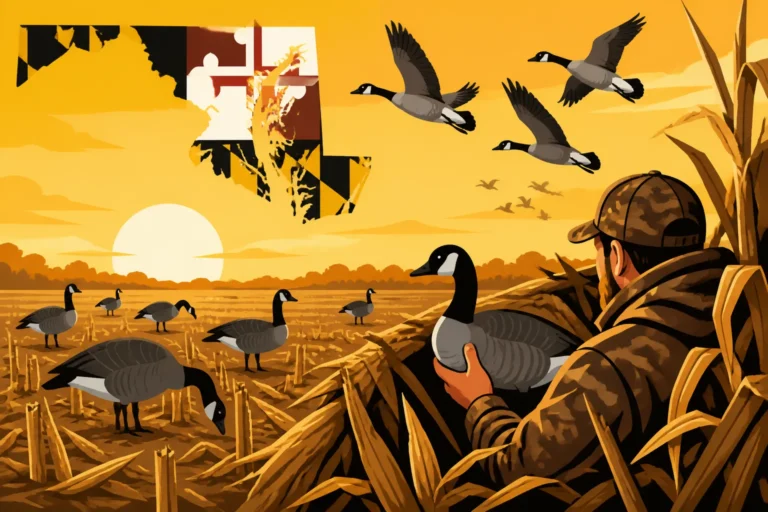
There's nothing quite as frustrating as waking up before dawn, setting up your blind, carefully placing decoys, and then watching wave after wave of Canada geese fly right over your neighbor's field or a different part of the marsh, completely ignoring your spread. It feels like they have a secret map you don't. Understanding how to read goose flight lines off the Chesapeake Bay isn't just a skill; it's the key to turning those frustrating days into memorable hunts, and this guide is here to help you unlock that knowledge.
The Rhythmic Movement of Chesapeake Geese
Goose hunting around the Chesapeake Bay is a tradition for many, but it's far from a static game. The geese are constantly on the move, driven by instinct, hunger, and pressure. To truly intercept them, you have to understand their daily rhythm and how they navigate the vast landscape of the Eastern Shore and beyond. It’s not just about finding a field with geese in it; it’s about understanding their highways in the sky.
Daily Commutes and Feeding Patterns
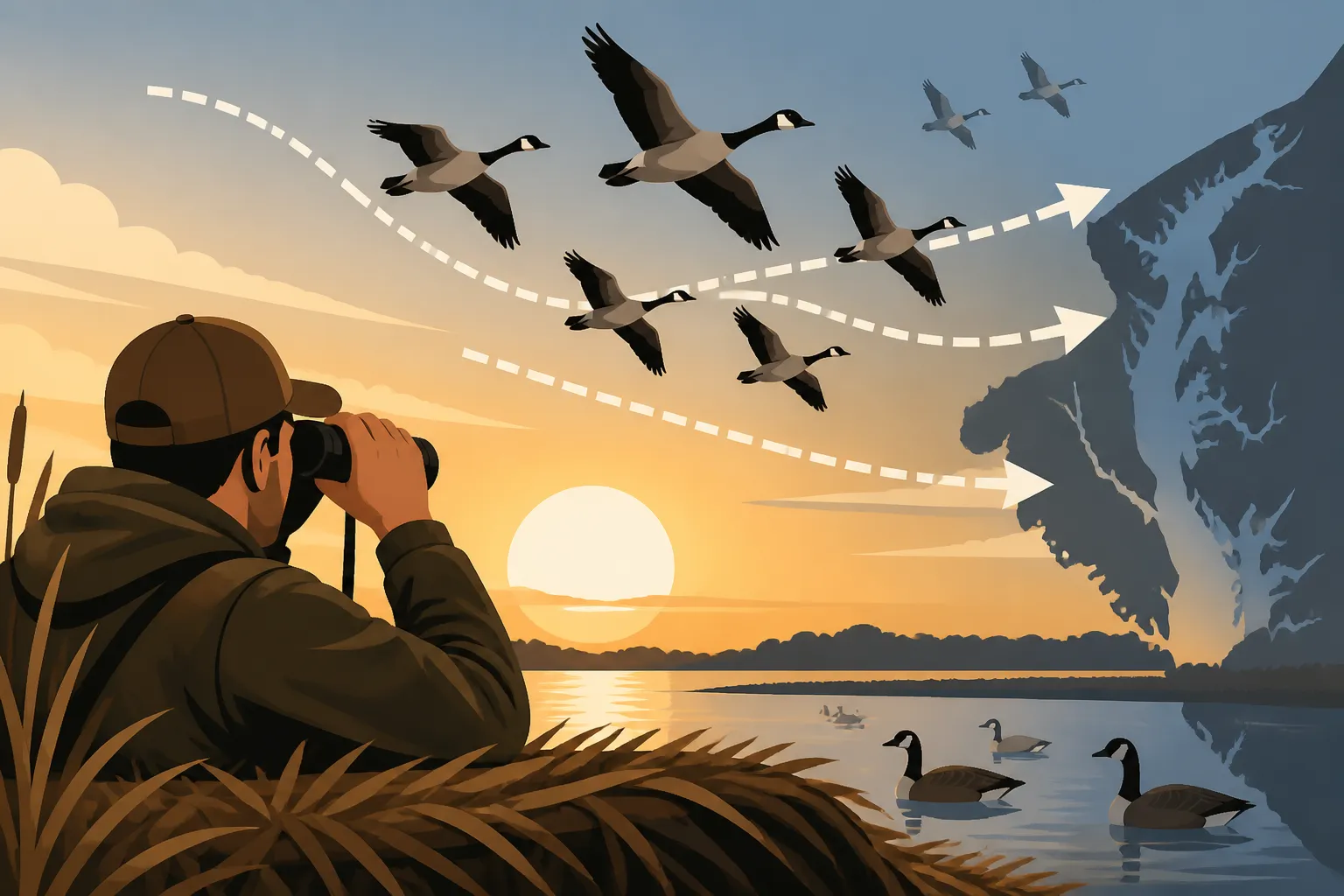
Think of Canada geese as creatures of habit, at least initially. Their days typically revolve around a commute between a safe roosting area, usually large bodies of water like the Chesapeake Bay itself, major rivers, or even large farm ponds, and their preferred feeding grounds. These feeding grounds are often agricultural fields brimming with corn, winter wheat, or soybeans. This daily round trip establishes predictable flight lines, especially early in the season before heavy hunting pressure sets in.
Their morning flight will see them leaving the roost shortly after or even before legal shooting light, heading directly to a field they’ve patterned as a reliable food source. The evening flight reverses this, with geese leaving the fields as dusk settles, returning to the safety of open water. Missing these key times means missing the bulk of the traffic. Sometimes, there are even mid-day flights, usually when geese have depleted one field and need to find another, or if they're disturbed. This is where understanding subtle changes becomes critical.
Influences from Roosting and Feeding Locations
The specific flight lines geese use are a direct result of the location of their roosts and the fields they’re targeting. For example, if a large flock is roosting on a wide expanse of the Chesapeake Bay and feeding in a cut cornfield several miles inland, their flight path will likely be a straight shot between those two points, perhaps hugging a tree line or a river corridor. The geography of the land, including rivers, creeks, and even major roads, can act as natural funnels, concentrating flight patterns.
It's also important to remember that not all geese are the same. Maryland hosts two distinct populations: the migrating Atlantic Population Canada Geese that journey south from their northern breeding grounds, and the Resident Canada Geese in Maryland that live here year-round. While both populations share similar feeding and roosting habits, their sheer numbers and flight behaviors can vary. Resident geese might be more habituated to local disturbances, while migrating birds might be more wary of specific types of fields or blinds they've encountered on their long journey. Knowing which population you’re primarily hunting can sometimes inform your scouting and setup.
Decoding Environmental Cues and Hunter Pressure
Geese, for all their predictable habits, are also highly adaptable. Their flight lines aren't set in stone. Weather conditions can dramatically alter their behavior, and perhaps even more significantly, hunter pressure can force them to change their routes overnight. It’s a constant chess match, and the hunter who can read these subtle shifts is often the one who finds success.
Weather's Dominant Role
Weather is arguably the biggest external factor influencing goose flight lines. Wind, for instance, dictates not only their speed but also their preferred approach to landing. Geese almost always land into the wind, so understanding the prevailing wind direction on your chosen day is paramount. A strong crosswind might push them slightly off their typical line, or they might fly at a lower altitude, seeking to conserve energy or stay below the brunt of the wind. A stiff tailwind can make them fly higher and faster, making them harder to pull down with calls.
Temperature also plays a role. During severe cold fronts, geese might be more desperate for high-energy foods, leading them to fly further or seek out different types of fields. Low visibility conditions, like dense fog or heavy rain, often make geese fly lower to the ground, trying to navigate by visual cues they might otherwise ignore. This can be a boon for hunters positioned correctly but can also make for challenging hunting if their lower flight path skirts your setup. Always check the long-range forecast and be prepared to adjust your strategy based on the day's conditions.
The Impact of Hunter Disturbance
Nothing changes goose behavior faster or more completely than hunting pressure. Geese are smart, and they quickly learn to associate certain fields, blinds, or even specific flight paths with danger. If a field or a flight corridor is consistently hunted, geese will simply adapt. They might shift their flight path by a few hundred yards, fly at a higher altitude to stay out of range, or even become nocturnal, feeding under the cover of darkness. This is a common challenge for hunters participating in hunts like Layout Hunting Canada Geese on the Upper Shore where many fields are hunted regularly.
This means what worked last week, or even yesterday, might not work today. You have to be a detective, constantly observing and adapting. Pay attention not just to where geese are flying, but where they aren't flying. If a traditional flight line suddenly goes cold, it's a strong indicator of pressure. This often means scouting for alternative flight paths, perhaps routes that take them over thicker cover, less accessible areas, or even entirely new feeding grounds. Being the first to find these new, undisturbed lines can be the difference between limits and empty game straps.
Practical Strategies for Identifying Flight Lines
Reading goose flight lines isn't magic; it's a combination of diligent observation, an understanding of goose behavior, and increasingly, smart use of technology. You can't just guess where they're going to fly; you need to put in the legwork (or the screen time) to confirm their patterns. This is where dedicated scouting truly pays off and gives you a significant edge over the competition.
Dedicated Pre-Season and In-Season Scouting
Effective scouting for goose flight lines starts long before the Canada Goose Season Dates arrive and continues throughout the season. Pre-season, you're looking for where geese are currently feeding and roosting, using binoculars or a spotting scope from a distance that won't disturb them. Identify major water bodies they're using for sanctuary and fields that show consistent feeding activity. Look for droppings, pulled-up stubble, and tracks. This baseline information is crucial.
Once the season opens, in-season scouting becomes even more critical. You're no longer just looking for where geese are, but how they get there. Observe their flight paths early in the morning and late in the afternoon. Do they hug a particular tree line? Follow a creek? Cross over a specific knob of high ground? Are they consistently passing over a particular farm that provides excellent Goose Hunting Maryland's Eastern Shore Grain Fields? These consistent routes are your flight lines. Note their altitude, speed, and any deviations caused by wind or immediate disturbances. Remember, geese rarely fly the exact same line every single time, but there will be a general corridor they favor.
Utilizing Digital Tools and Local Knowledge
In today's hunting world, apps like GoHunt have become indispensable tools for modern waterfowlers. These platforms provide high-resolution aerial imagery, topographical maps, and property boundaries that can help you visualize the landscape from a bird's-eye view. With GoHunt, you can mark potential roosting ponds, identify active feeding fields, and even trace power lines or tree lines that might serve as natural funnels for flying geese. Use these tools to identify potential choke points or low saddles in topography that geese might favor for crossing. It's like having a digital scouting assistant in your pocket.
Don't just look at the static map; use GoHunt to overlay historical weather data if available, or simply use it to mark observation points where you can spend time watching. Beyond technology, local knowledge is invaluable. Talk to farmers, other landowners, or even local bait shop owners. They might have observed consistent flight patterns for years, or they might be able to tell you about recent shifts due to new crops or hunting pressure. While you always need to verify information yourself, the "grapevine" can often point you in the right direction, especially when looking for fields where geese prefer to go for Decoying Canada Geese on the Upper Eastern Shore.
Optimizing Your Setup for Flight Line Success
Once you’ve identified a consistent goose flight line, the next step is to position yourself strategically to intercept those birds. This isn't just about throwing out decoys; it's about making your setup irresistible and your presence invisible. The goal is to get those geese to commit to your spread, rather than just passing overhead.
Strategic Blind and Decoy Placement
The cardinal rule of hunting a flight line is to place your blind directly under it, or as close as safely and legally possible. If geese are consistently flying over a specific fence row, that’s where you want to be. If they’re cutting across a corner of a large field, that corner becomes prime real estate. Resist the urge to set up in a "good looking" spot if it's not on the flight line. Geese flying high overhead are notoriously difficult to pull down.
Your decoy spread then needs to be set up to capitalize on that flight line. Consider the wind: geese will want to land into it. So, your decoys should be positioned such that the geese, once committed to the flight line, see a natural landing zone with the wind at their face, right in front of your blind. A "J" or "U" shaped spread with a large open landing hole is a classic choice. For specific advice on different setups, check out a resource like Setting a Goose Spread in Cut Corn. Also, consider the number of decoys – if you're hunting a massive flight line of thousands of geese, a small spread might be ignored. Conversely, for smaller, wary flocks, too many decoys can look unnatural. It's about matching your spread to the expected behavior of the birds.
Calling and Concealment Techniques
Effective calling is the art of convincing geese on the flight line that your spread is where they want to be. Start with light, conversational calls to get their attention, then build in excitement as they respond and get closer. Learn to read their body language: when they turn their heads, cup their wings, or lower their landing gear, it's time to ease off the aggressive calling and let them work into the spread. Many hunters make the mistake of over-calling as birds get close. The goal is to mimic the sounds of contented geese on the ground, inviting them to join the party.
Finally, concealment cannot be overstated. Geese have incredible eyesight. If they see anything out of place – a glint of skin, an unnatural lump of a blind, or movement – they will flare. Whether you're in a layout blind, a pit blind, or a naturally brushed-in blind, ensure it blends seamlessly with the surroundings. Use natural materials from the field or marsh you're hunting. For example, when doing Hunting a Chesapeake Bay Blind at First Light, natural marsh grass is essential. Even small details like covering your face and hands, or wearing non-shiny clothing, can make a difference. The more natural you appear, the more likely those geese will commit to your flight line and drop into your decoys. Putting in the effort to be completely hidden using a powerful mapping platform like GoHunt can give you that critical edge. When you commit to a flight line, commit to being invisible.
Goose Flight Line Planning Table
| Factor | Impact on Flight Lines | Scouting/Setup Tip |
|---|---|---|
| Wind | Geese prefer headwinds for landing. Strong winds shift paths. | Set decoys for landing into the wind. Position blinds to intercept adjusted paths. |
| Food Source | Direct paths between roost and primary feed. Leads to predictable routes. | Identify active feeding fields (e.g., Entry Routes Through Cut Corn Before Daylight). Confirm via droppings/tracks. |
| Pressure | Geese become wary, shift to less disturbed areas/times/altitudes. | Scout after heavy hunting. Look for new, less obvious paths. Consider alternative fields or Hunting a Farm Along the Potomac. |
| Time of Day | Peaks at dawn/dusk for commute. Mid-day flights for relocation/disturbance. | Focus scouting during peak times. Be set up well before first light. |
| Weather | Low visibility (fog/rain) means lower flight. Cold pushes to open water/food. | Adapt blind position for low flying birds in fog. Check long-range forecasts. Look for cover if cold, or in areas with less Hunting Pressure on Maryland Public Land. |
| Geography | Rivers, tree lines, valleys, hills funnel birds. | Use aerial maps (GoHunt) to identify natural funnels and pinch points. |
Disclaimer
Hunting is an activity with inherent risks. Always prioritize safety, adhere to all Maryland Department of Natural Resources regulations, and obtain proper licenses and permits before venturing afield. This guide is for informational purposes only and does not substitute for personal experience, professional instruction, or legal advice.