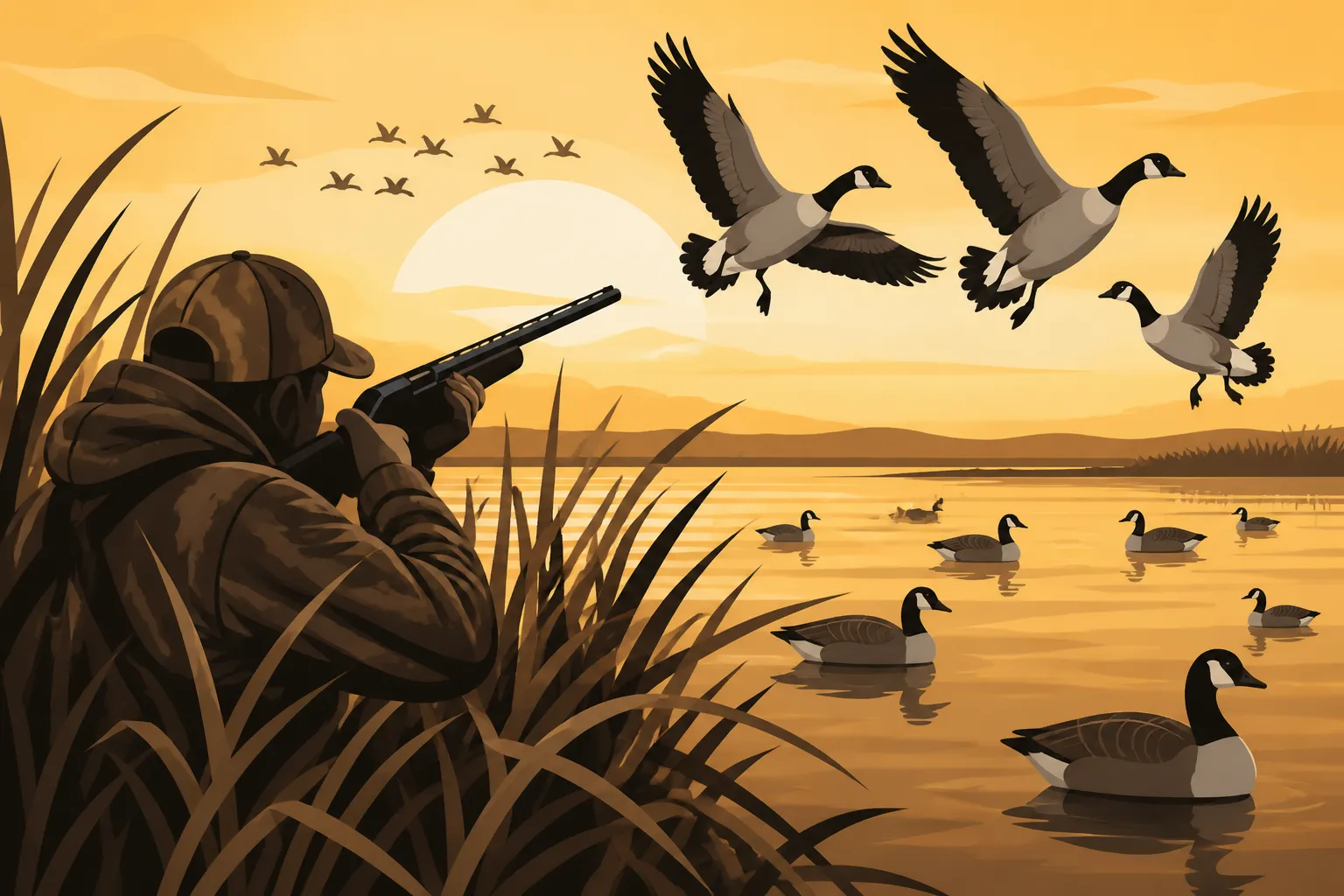
Decoying Canada Geese on the Upper Eastern Shore
It's incredibly frustrating, isn't it? You spend hours scouting, set up a perfect spread before dawn, shiver in the cold, and those big Canada geese just give your decoys a wide berth, sometimes even flaring out of range with barely a glance. Hunting these wary birds on Maryland's Upper Eastern Shore presents a unique set of challenges. This guide is all about diving deep into the nuances of successfully decoying Canada geese in this highly pressured region, helping you understand their behavior, master your spreads, and refine your calling for better success.
Understanding the Challenge of Upper Shore Geese
The Upper Eastern Shore of Maryland, with its expansive grain fields and proximity to major waterways, is a goose hunting Mecca. However, this popularity also means the geese here are among the most educated and pressured birds you'll ever encounter. They've seen it all, heard it all, and survived countless seasons.
Why Upper Shore Geese are Different
Forget what you might have learned about decoying geese in less-pressured areas. The Canada geese frequenting Maryland's Upper Eastern Shore are often a mix of resident birds that never leave and migratory Atlantic Population geese that have run the gauntlet down the Atlantic Flyway. These birds have developed an uncanny ability to spot anything out of place. They recognize unnatural decoy spreads, hesitant calling, and poorly concealed hunters from astonishing distances.
One of the biggest differences is their feeding habits and how they react to pressure. A flock of geese might hit a freshly cut cornfield one day, but if they're shot at, they could completely abandon it for days, weeks, or even the rest of the season. They become nocturnal, feeding only under the cover of darkness, or move to heavily protected private lands where hunting pressure is minimal. This means that a successful hunt isn't just about finding birds; it's about understanding which birds you're dealing with, where they feel safe, and how to convince them your spread is that safe haven. Furthermore, their flight patterns can be incredibly predictable once you learn them, but they're also quick to adapt to new threats. For a broader understanding of goose movements in the region, check out our insights on Maryland's Canada Geese and Their Two Populations.
Reading the Landscape for Success
Before you even think about putting out a decoy, you need to become a master scout. The Upper Eastern Shore landscape is a mosaic of agriculture – vast fields of corn, soybeans, and winter wheat interspersed with woodlots, creeks, and farm ponds. Geese use these features for feeding, roosting, and escape routes.
Identifying key feeding areas is paramount. This isn't just about finding geese in a field; it's about finding fresh sign. Are there fresh droppings? Is the field freshly cut? What type of stubble or crop is available? Geese prefer fields where they can easily access leftover grains, like shelled corn, or graze on tender shoots of winter wheat. They'll often pick the highest points in a field or areas with good visibility to feed, allowing them to spot predators (or hunters) from afar. A valuable tool like a detailed aerial map, much like you’d find on a platform such as GoHunt, can help you identify these subtle elevation changes or proximity to roosting water. Pay close attention to any natural funnels or pinch points that geese might use as flight corridors between their roost and feeding grounds. You can learn more about how to identify these patterns in our article on Reading Goose Flight Lines Off the Chesapeake.
Once you've pinpointed a field, observe the flight paths. Do the geese approach from a specific direction? Do they circle multiple times before committing? Do they land short and walk in? All of this information dictates where you should set your spread and position your blind for an effective shoot. Understanding Scouting Maryland Public Land Before Season techniques can also be beneficial, even if you're primarily hunting private ground, as the principles of observation remain the same.
Essential Decoy Spreads for Wary Birds
The days of simply throwing out a dozen cheap decoys and hoping for the best are long gone, especially on the Upper Eastern Shore. Today's geese demand realism, and your decoy spread is your primary tool for convincing them your field is safe.
Full-Body Decoys Versus Shells Versus Silhouettes
Each type of decoy has its place, but for wary Upper Shore geese, realism is key.
- Full-Body Decoys: These are the gold standard for realism. They offer 3D profiles, realistic feather detail, and natural postures (feeders, sentries, resters). While more expensive and bulkier to transport, their lifelike appearance can make a significant difference in luring in educated birds. For hunters targeting specific fields, such as those discussed in Setting Up on a Maryland Grain Field Edge, full-bodies offer the best chance of fooling discerning eyes. They excel in situations where geese are already wary and need that extra level of confidence to commit. Brands like Avian-X and Dakota Decoy systems offer incredible detail and durability.
- Shell Decoys: These are essentially the top half of a full-body decoy, designed to sit low to the ground. They're lighter and stackable, making them easier to deploy in large numbers. While they lack the full 3D realism, they can be highly effective in conveying numbers, especially when mixed with a few full-bodies. They're a good choice for expanding your spread without breaking the bank or your back.
- Silhouettes (Silos): Silhouettes are flat, 2D decoys that offer maximum portability and are incredibly quick to deploy. Their main advantage is creating the illusion of a massive flock with minimal effort and cost. They can be incredibly effective on bright, clear days when geese are flying high and seeing birds on the ground, but their lack of depth can be a disadvantage up close or in flat light. Many hunters use them as "confidence decoys" on the outer edges of a spread, mixed with full-bodies closer to the landing zone.
The best approach for the Upper Eastern Shore is often a combination of these types. A core group of full-bodies creates the realistic landing zone, while shells and silhouettes extend the spread to provide the illusion of a much larger, active flock. Planning your decoy types in conjunction with mapping tools like GoHunt can ensure you’re making the most of the terrain and the birds’ likely approach.
Crafting Effective Spreads
Once you've chosen your decoys, how you arrange them is critical. Geese are social birds, but they're also wary. A tight, unnatural clump will send them flaring.
- The J-Hook or U-Shape: This is a classic and effective spread. The bulk of your decoys form the "J" or "U" shape, with the open end facing into the prevailing wind. This creates a natural-looking landing zone directly in front of your blinds. Geese prefer to land into the wind, so this setup leverages their natural instinct. Place a few "family groups" of 3-5 feeders and sentries within the main body of the spread to add to the realism.
- Family Groups: Geese often feed in small family units. Mimic this by scattering groups of 3-5 decoys together, with a mix of feeders and a single sentry or rester, slightly spaced from other groups. This creates a more dynamic and believable scene than a uniform spread.
- The Landing Zone: This is the most crucial part. Keep the area directly in front of your blinds relatively open and free of decoys. This is where you want the geese to commit and put their feet down. A few motion decoys (wind socks, flappers, or even a simple flag) can add a critical element of movement, especially on calm days, to truly sell the illusion. Learn more about optimal arrangements in Setting a Goose Spread in Cut Corn.
- Density: Don't be afraid to put out a lot of decoys if you have them. A large, confident flock is a huge draw for high-flying geese. However, more important than sheer numbers is thoughtful placement. Even a small, well-placed spread of realistic decoys can outperform a massive, poorly arranged one.
The Importance of Blending In
No matter how perfect your decoy spread, if the geese see you, the hunt is over. Concealment on the Upper Eastern Shore, with its flat agricultural fields, is incredibly challenging but absolutely vital.
- Layout Blinds: These are the most common and effective solution for field hunting. Modern layout blinds are comfortable, low-profile, and designed to disappear into the stubble. Crucially, they need to be brushed in meticulously. Don't just throw a few stalks of corn on top; spend the time to gather local vegetation (corn stalks, soybean stubble, wheat stubble) and blend your blind perfectly into its surroundings. The goal is for your blind to look like just another bump in the field, not a big, rectangular box.
- Pit Blinds: If you're fortunate enough to hunt private land where a landowner allows it, a permanent pit blind can be the ultimate in concealment. Buried below ground level, a well-constructed pit blind offers superior hide and comfort, especially in harsh weather.
- Natural Cover: Sometimes, you can use existing natural cover like fence lines, drainage ditches, or the edge of a woodlot. However, these spots often dictate your shooting lanes and might not be in the ideal landing zone for geese. If you use natural cover, enhance it with additional vegetation to ensure you're completely hidden. For hunters focused on specific field edges, our guide on Hunting a Maryland Farm Lease Your First Season can offer additional insights into working with landowners on such matters.
Remember, the geese are looking for you. Pay attention to shining faces, exposed hands, and any unnatural shapes. Wear camouflage that matches the field you're hunting. If it's a cut cornfield, dark brown and tan patterns are best. If it's a green winter wheat field, lighter greens and browns.
Calling Strategies and Timing
Calling for Upper Eastern Shore Canada geese is an art form that requires finesse, patience, and a deep understanding of goose behavior. Aggressive, nonstop calling often does more harm than good with these pressured birds.
Mastering the Call for Pressured Geese
Unlike ducks that can be called directly into decoys with enthusiasm, wary geese often respond best to subtle, realistic sequences that mimic a contented flock.
- Less is More: With educated geese, overcalling is a common mistake. Start with soft, contented clucks and moans. If the geese are distant, a series of hail calls can grab their attention, but once they turn, switch to softer, more inviting sounds.
- Realistic Vocals: Focus on accurate clucks, moans, honks, and comeback calls. Listen to real geese in the field and try to mimic their sounds. Short-reed calls are popular for their versatility and realistic tone, allowing for quick transitions between notes. Brands like Zink, Foiles, and Field Proven calls are popular among serious goose hunters.
- Cadence and Volume: Vary your cadence and volume to match the geese. If they're far out, a louder, longer hail call might be appropriate. As they get closer, reduce the volume and increase the realism of your clucks and moans. If they respond, match their intensity, but don't try to outcall them.
- The Power of Silence: Sometimes, the best call is no call at all. If geese are locked up and heading towards your spread, put the call down. Let the realism of your decoys do the work. Any unnatural sound at that critical moment can send them flaring. This is particularly true when hunting in areas known for Hunting Pressure on Maryland Public Land.
Reading the Birds and Adjusting Your Approach
Being able to "read" the geese as they approach is crucial for adjusting your calling and overall strategy.
- Circling and Inspecting: If geese are circling high and wide, they're inspecting your spread. This is the time for light, intermittent clucks and moans, just enough to keep their interest. Avoid aggressive honking, as it can signal alarm.
- Cupping Wings and Losing Altitude: This is what you want to see! As they commit, they'll often cup their wings and start losing altitude. Keep your calling minimal, focusing on soft, contented sounds.
- Flaring or Turning Away: If geese suddenly flare, gain altitude, or turn away, something is wrong. They either saw you, heard an unnatural call, or spotted something wrong with your spread. If this happens, immediately assess the situation. Were you moving? Is your blind visible? Did you call too much? Adjust your strategy for the next flock.
- Flagging: A simple goose flag can be incredibly effective, especially when geese are far out or reluctant to commit. Use it sparingly to mimic a goose flapping its wings to land or stretch. Too much flagging can look unnatural. Wave it with realistic, short movements to catch their eye, then put it down as they get closer.
Beyond Decoys and Calls: Advanced Tactics
While decoys and calling are the foundation, successful Upper Shore goose hunting often requires integrating advanced tactics, understanding regulations, and leveraging environmental factors.
The Role of E-Callers and Motion Decoys (Where Legal)
Technology has certainly changed the game, but it’s important to understand the rules and effectiveness.
- Electronic Calls (E-Callers): In Maryland, electronic calls are not permitted for hunting migratory game birds like Canada geese. This is a crucial regulation to remember. While they can be effective for other species in different regions, using them for geese will put you in violation of state and federal law. Stick to traditional mouth calls for migratory birds.
- Motion Decoys: Motion decoys, such as spinning wing decoys, flying decoys, or simple wind-activated flappers, can add a dynamic element that static spreads lack. The movement catches the eye of distant geese and creates a more lifelike scene. However, their effectiveness can vary. Some hunters swear by them, while others feel that wary geese can sometimes be spooked by overly aggressive or unnatural motion. Consider using realistic "feeder" motion decoys or subtle wind socks over overtly mechanical spinners for pressured birds. Just like with GoHunt, ensuring you have the most current information on regulations is paramount for a legal and successful hunt.
Utilizing Weather and Pressure to Your Advantage
Mother Nature and fellow hunters play a huge role in goose movement. Being able to adapt is key.
- Wind: Geese always land into the wind. Use this to your advantage by placing your blinds downwind of your spread, allowing geese to finish right in your face. A strong wind also helps decoys move naturally and helps carry your calls further. Conversely, a dead calm day can make it harder to draw birds in, as static decoys look less realistic and calls don't carry as well.
- Cold Fronts: A major cold front often brings in new birds and can get existing birds moving more aggressively to feed. These can be prime hunting days, as geese might be less wary as they focus on finding food.
- Fog and Rain: Poor visibility can work both for and against you. Fog can conceal your approach and blinds, allowing geese to get closer before seeing the spread. However, it can also make it difficult for geese to spot your spread from a distance. Light rain or drizzle often keeps geese moving and feeding. Heavy rain can ground them.
- Hunting Pressure: This is a huge factor on the Upper Eastern Shore. If nearby fields are being heavily hunted, geese will often shift their patterns, becoming more nocturnal or seeking refuge in protected areas. Try to hunt fields that haven't been pressured recently, or target specific times of day when other hunters might be leaving. Early mornings are often best, but sometimes a mid-day lull can be productive after the initial pressure subsides. Understanding the different Maryland Canada Goose Season Dates and the associated hunting pressure can also help you plan your trips.
| Decoy Type | Pros | Cons | Ideal Use Case |
|---|---|---|---|
| Full-Body | Most realistic, excellent detail, 3D | Heavy, bulky, more expensive | Primary landing zone, confidence decoys, wary birds |
| Shells | Lighter, stackable, more affordable | Less realistic (2D profile from some angles) | Building numbers in the spread, filling gaps |
| Silhouettes | Very lightweight, portable, creates mass | Least realistic (flat 2D) | Outer edges of spread, creating illusion of large numbers |
When planning your hunt, consider the specific rules for your area. For instance, hunters targeting the Atlantic Population often need to be aware of The Atlantic Population Goose Zone Limit to ensure compliance with bag limits.
Disclaimer
Please remember that hunting regulations and seasons can change. Always consult the latest Maryland Department of Natural Resources (DNR) hunting guide before heading afield to ensure you are aware of and comply with all current laws and regulations. Safe and ethical hunting practices are paramount.