Layout Blind Hunting a Kent County Corn Field
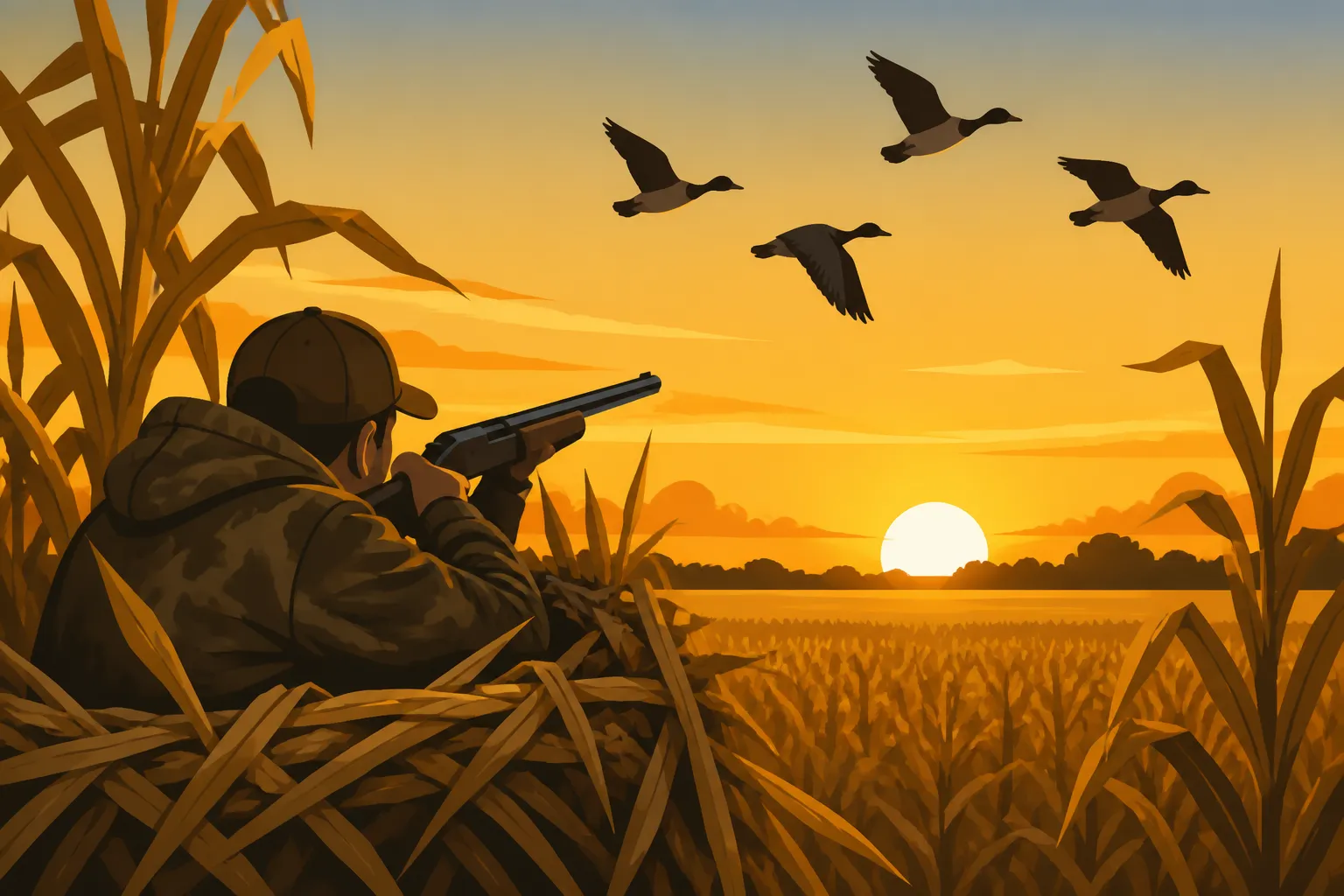
There’s nothing quite like the sight and sound of Canada geese dropping into a cut cornfield, but for many Maryland hunters, getting close enough for a shot feels like a pipe dream. These birds are some of the wariest game animals out there, and the wide-open expanse of a Kent County field often leaves hunters feeling exposed and outmaneuvered. This guide is all about how to beat their keen eyesight and suspicious nature by mastering the art of layout blind hunting in these challenging, yet incredibly rewarding, environments.
Understanding Kent County's Goose Hunting Landscape
If you've spent any time on Maryland's Eastern Shore, you know Kent County is practically synonymous with prime waterfowl hunting. The rich agricultural lands here, particularly the vast cornfields, act like a giant magnet for migrating and resident Canada geese. But with that allure comes a significant challenge: these aren't your grandpa's geese. They've seen it all, and they demand a level of stealth and precision that many traditional hunting methods simply can't deliver.
The Allure of Kent County Agriculture
Kent County, nestled along the Chesapeake Bay, is a mosaic of fertile farmlands and winding waterways, making it a critical wintering ground and migration stop for countless waterfowl. When those combines roll through the cornfields, leaving behind a bounty of waste grain, it’s like ringing the dinner bell for thousands of Canada geese. These fields become their daily buffet, offering high-energy sustenance vital for their migration and overwintering. You’ll often find geese working these fields in large flocks, sometimes stretching for acres, meticulously gleaning every last kernel. The sheer volume of birds can be staggering, presenting an incredible opportunity for hunters who know how to approach them. The pattern often involves geese flying off the water at first light, heading to these feeding grounds, spending a good part of the morning, then heading back to loafing areas or water. Understanding this daily rhythm is your first step to success. If you're looking for broader strategies, check out our guide on Goose Hunting Maryland's Eastern Shore Grain Fields.
The Challenge of Educated Geese
Let's be real: Maryland's Canada geese, especially those in heavily hunted areas like Kent County, are incredibly intelligent and have evolved to avoid hunters. They possess uncanny eyesight, often spotting a misplaced blind or a hunter's silhouette from hundreds of yards away. I remember back in my early days, we'd try to hide under a camouflaged net, only to watch entire flocks flare at 400 yards, never even giving us a look. They've learned to associate unusual shapes, movement, and even certain vehicle types with danger. The continuous hunting pressure throughout the season means these birds become increasingly wary. They develop distinct flight patterns, often flying high, circling potential landing zones multiple times, and relying on sentinel birds to keep watch while the main flock feeds. This means you can't just set out a few decoys and expect them to commit. You need to become virtually invisible, a part of the landscape itself, which is where the layout blind truly shines.
The Essentials of Layout Blind Hunting for Geese
Layout blind hunting is less about brute force and more about finesse and absolute commitment to concealment. It's about getting down to the birds' eye level, disappearing into the field, and presenting an irresistible invitation that even the wariest goose can't resist.
Choosing the Right Layout Blind for Maryland Fields
Selecting the right layout blind is paramount to your success in Kent County's cornfields. It’s not just about buying any blind; it’s about finding one that fits your body, blends seamlessly with the environment, and offers practical features for a long day in the field. There are several excellent brands on the market, each with their loyal following. For instance, brands like Avery, Rogers Sporting Goods, and Rig'Em Right offer robust options designed for serious waterfowlers.
When you're out there, crawling into a blind before daylight, you'll appreciate key features:
- Low Profile: This is non-negotiable. The whole point of a layout blind is to be as flat to the ground as possible. Look for models specifically designed to hug the earth, minimizing any unnatural bumps or shadows.
- Comfort: You'll be lying in this thing for hours, sometimes in cold, damp conditions. Padded seats, backrests, and good insulation are crucial. My back isn't what it used to be, and a little extra padding makes a huge difference in staying focused and comfortable until the birds arrive.
- Durability: These blinds get dragged, scraped, and exposed to all sorts of weather. Reinforced stitching, tough fabrics, and sturdy frames are a must.
- Stubble Straps: These are perhaps the most important feature for concealment. They're loops or pockets sewn onto the blind where you can attach natural vegetation from the field. Without ample stubble straps, it's incredibly difficult to blend in.
- Camouflage Pattern: While stubbling is key, the base camo pattern should match the general hues of a cut cornfield – lots of browns, tans, and faded yellows. Don't be afraid to augment this with natural elements you collect right there in the field.
| Blind Feature | Importance for Cornfields | Why It Matters |
|---|---|---|
| Low Profile | Critical | Geese spot vertical lines and unnatural bumps from hundreds of yards. |
| Stubble Straps | Essential | Allows attachment of natural field stubble for ultimate concealment. |
| Comfort Padding | High | Long waits in cold, hard fields demand comfort to maintain focus and patience. |
| Durable Fabric | High | Withstands rough handling, sharp corn stalks, and harsh weather conditions. |
| Easy Setup/Takedown | Moderate (Depends on group size) | Quick deployment and packing up, especially in cold or fading light. |
| Camouflage Pattern | Medium (Stubble is more important) | Provides a good base layer, but natural stubbling is the final key to blending. |
Decoy Spreads That Fool Wary Birds
Your decoy spread is the silent ambassador that coaxes wary geese into shooting range. In Kent County, where geese are highly pressured, your spread needs to be as realistic and natural as possible. Forget those old, shiny shell decoys; you need full-body decoys or realistic silhouettes that mimic feeding, content birds.
Here are some strategies for effective spreads:
- Numbers Matter, But Realism More: While a large spread of 100+ decoys can be effective, 3-4 dozen meticulously placed, realistic full-bodies will often outperform a sloppy mega-spread. Focus on quality over quantity.
- Family Groups: Geese are social, and they often feed in family units. Create clusters of 3-7 decoys, with some looking like they're feeding, some with their heads up like sentinels, and a few preening. Varying the head positions creates a more lifelike appearance.
- The Landing Zone: This is your sweet spot, typically 15-25 yards directly in front of your blinds, where you want the geese to land. Leave a clear, open patch within your spread, making it look inviting and safe. Think about the wind direction – geese always land into the wind, so your landing zone should be positioned accordingly.
- Motion Decoys: A few flapper or wind-sock style decoys can add crucial movement, especially on calm days. The subtle flicker of white undersides can catch a goose's eye from a long distance.
- Scouting for Clues: Before you even think about setting a spread, spend time scouting the fields. Notice how the geese are actually landing and feeding. Are they tight-knit or spread out? Are they favoring a particular corner of the field? Tools like GoHunt can provide invaluable aerial imagery to help you identify previous feeding patterns and entry points, which can give you a leg up when planning your spread. Adjust your spread to mimic what you’ve observed. Don’t be afraid to be fluid with your setup. For more detailed insights on effective setups, check out Setting a Goose Spread in Cut Corn.
Mastering the Art of Concealment and Calling
You've got your blinds, you've got your decoys, but the real magic happens when you master the art of making yourself disappear and speaking the language of the birds. This is where most hunters succeed or fail.
Blending Your Blind into the Corn Stubble
This is the most critical step in layout blind hunting, and frankly, it's where most hunters get lazy. A well-stubbled blind is virtually invisible; a poorly stubbled one is a giant red flag for approaching geese.
- Collect Local Stubble: This is non-negotiable. Before the hunt, gather corn stalks, dried weeds, and whatever other natural vegetation is present in the field you're hunting. It needs to match the exact color and texture of the surrounding ground cover. If you're hunting a cut cornfield, use corn stalks. Don't bring stubble from a different field.
- Layer it Naturally: Start by laying a base layer of stubble over the entire blind, mimicking the natural flow of the field. Break up any straight lines or obvious shapes. Geese have an incredible ability to spot geometric anomalies in nature.
- Break Up the Outline: Pay special attention to the edges and corners of your blind. These are often the most difficult to hide and where the blind's outline is most apparent. Use larger pieces of stubble to create irregular shapes.
- No Gaps: Ensure there are no shiny spots or gaps where the blind's fabric or your dark clothing might show through. If you can see the blind, so can the geese.
- Headrest and Door: Conceal the headrest and opening flap thoroughly. These are the parts that move when you sit up to shoot, and any abrupt shift can spook birds. You want enough stubble to hide, but not so much that it interferes with quickly opening the blind and getting a clean shot. I always tell new hunters, "If it looks like a lump of grass, you're doing it wrong. It needs to look like more grass."
Effective Calling Strategies for Kent County Geese
Calling is an art, not a science, and it takes practice to get it right. In Kent County, where geese are often "call-shy" due to over-calling, less can sometimes be more.
- Choose the Right Call: A good short-reed goose call is essential. Brands like Zink, Echo, or Rich-N-Tone make excellent calls, but remember, the call is only as good as the caller.
- Read the Birds: This is the golden rule. Don't just blast away. Watch how the geese react to your calls.
- Distant Birds: For geese flying high and far, start with louder, longer hail calls to get their attention. Think of a pleading "Come on over!"
- Approaching Birds: As they turn and head your way, tone down the volume. Switch to more contented clucks and moans, making it sound like happy geese on the ground. A soft, continuous murmur can be incredibly effective when birds are close and circling.
- On Final Approach: When they're cupping their wings and dropping, often a soft series of clucks and an occasional low moan is all you need. Sometimes, absolute silence is the best call. Let the decoys do the work.
- The "Backdoor" Effect: Geese often fly past your spread, then circle behind you before making a final approach into the wind. This is where having a partner on the "back" of the spread can be crucial, softly calling to guide them around.
- Calling Cadence: Vary your calling. Don't fall into a repetitive rhythm. Mimic the natural sounds of a flock – some loud, some soft, some short, some long.
- The Power of Confidence: A good caller projects confidence through their call. Geese can sense hesitation. Practice, practice, practice until your calls sound natural and assured. And don't forget the importance of understanding their natural movements. Knowing how to interpret Reading Goose Flight Lines Off the Chesapeake can significantly improve your calling timing.
Practical Tips and Safety Considerations
Hunting geese from a layout blind in a Kent County cornfield is an exciting experience, but it requires careful planning and unwavering attention to safety. These are not trivial details; they are crucial for a successful and safe outing.
Scouting and Setup for Success
You can have the best blind and the finest decoys, but if you're not in the right spot, it's all for naught. Scouting is the backbone of successful goose hunting.
- Pre-Season Reconnaissance: Start well before the season opens. Drive the backroads of Kent County, looking for cut cornfields that are holding birds. Pay attention to how they enter and exit the fields, and where they concentrate their feeding. This is where a mapping app like GoHunt becomes an absolute game-changer. You can mark potential fields, identify property lines (crucial for getting permission!), and even observe terrain features that might influence flight paths.
- Observe Flight Paths: Geese are creatures of habit. They'll often use the same flight corridors to and from their feeding grounds. Position your spread under these flight paths, if possible. You want to intercept them on their way in, not try to pull them off a mile-long line.
- Get Permission: Kent County is largely private land. Always, always, always secure written permission from the landowner before stepping foot on their property. This is not only a legal requirement but also a fundamental aspect of ethical hunting. A polite knock on the door or a well-worded letter can open up incredible opportunities.
- Early Arrival and Silent Setup: Get to your chosen field well before legal shooting light. Darkness provides a blanket of concealment for your setup. Drive in slowly, quietly, and minimize any artificial light. The less disturbance you create, the better your chances.
- Optimal Blind Placement: Position your blinds downwind of your decoy spread, facing into the expected flight path. This allows geese to approach into the wind, giving you a frontal or quartering shot as they commit to the landing zone. Ensure enough space between blinds for safe shooting lanes. Consider the sun's position as well; you don't want the sun in your eyes, nor do you want your blind casting a long, dark shadow that spooks birds. When considering options for field hunting, remember strategies like Setting Up on a Maryland Grain Field Edge can be adapted to layout blind scenarios.
Safety First in the Field
Waterfowl hunting, especially in groups, carries inherent risks. A focus on safety is non-negotiable.
- Hunter Orange (When Applicable): While not typically required within a layout blind for migratory birds, it's always wise to wear hunter orange when walking to and from your blinds, especially during firearms deer season, to ensure visibility to other hunters or landowners.
- Safe Shooting Lanes: Before any birds arrive, clearly communicate and identify each hunter's safe zone of fire. Generally, this means no shooting at birds directly over another hunter's blind. Muzzles should always be pointed in a safe direction. The last thing you want is a negligent discharge or a stray pellet hitting a hunting partner.
- Muzzle Control: Always treat your shotgun as if it's loaded. Keep the muzzle pointed in a safe direction, typically towards the decoys or the sky. When sitting up to shoot, ensure you have a clear, safe shot path.
- Communication is Key: Talk to your hunting partners. Announce incoming birds, call out "Don't shoot!" if a bird is too low or out of range, and clarify who is taking which shot. A simple "Right side!" or "My bird!" can prevent confusion and dangerous cross-shooting.
- Mark Your Blinds: In the excitement of the moment, it's easy to lose track of where everyone is, especially if you have several blinds spread out. Bright flags or markers placed a few yards from each blind can help establish visible boundaries for safe shooting.
- Know Your Regulations: Before heading out, double-check all Maryland hunting regulations, including bag limits, shooting hours, and licensing requirements. Make sure your Maryland Migratory Game Bird Stamp Cost is covered, you have your Federal Duck Stamp Rules for Bird Hunters in order, and you've completed your HIP Registration for Migratory Bird Hunters. Ignorance of the law is never an excuse.
Disclaimer
Please remember that hunting regulations and conditions can change. Always consult the Maryland Department of Natural Resources (DNR) official website or current hunting guide for the most up-to-date and accurate information before planning any hunt. Safety should always be your top priority.