Glassing a Western Maryland Clear-Cut for Bear
The thrill of chasing a black bear in Western Maryland is unlike anything else, but let's be honest, finding these elusive giants in dense mountain timber feels impossible sometimes. You scout, you walk, you scrutinize every rub and track, only to question if they even exist in your hunting area. This guide is all about cutting through that frustration and showing you how glassing clear-cuts can drastically improve your chances of locating a bear, helping you plan your next move with confidence.
Understanding Western Maryland's Bear Habitat
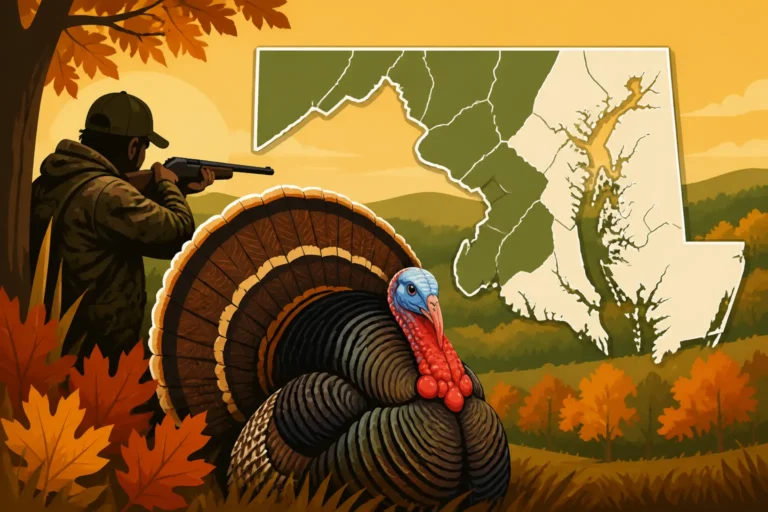
Western Maryland's landscape is a rugged tapestry of mountains, valleys, and dense forests, primarily in Garrett and Allegany counties, with some presence in Washington and Frederick. Bears thrive in this environment, but they're not just anywhere. They're drawn to specific types of areas, and knowing these key habitats is the first step to successful glassing.
Why Clear-Cuts Attract Bears
Clear-cuts, or areas of timber that have been recently harvested, might look like a mess to the untrained eye, but to a bear, they represent an all-you-can-eat buffet and prime cover. Once the big timber is removed, sunlight floods the forest floor, stimulating a burst of new growth. This includes succulent grasses, various berry bushes (think blackberries, blueberries, raspberries), and young hardwood sprouts – all vital food sources for bears, especially in late summer and fall as they prepare for hibernation.
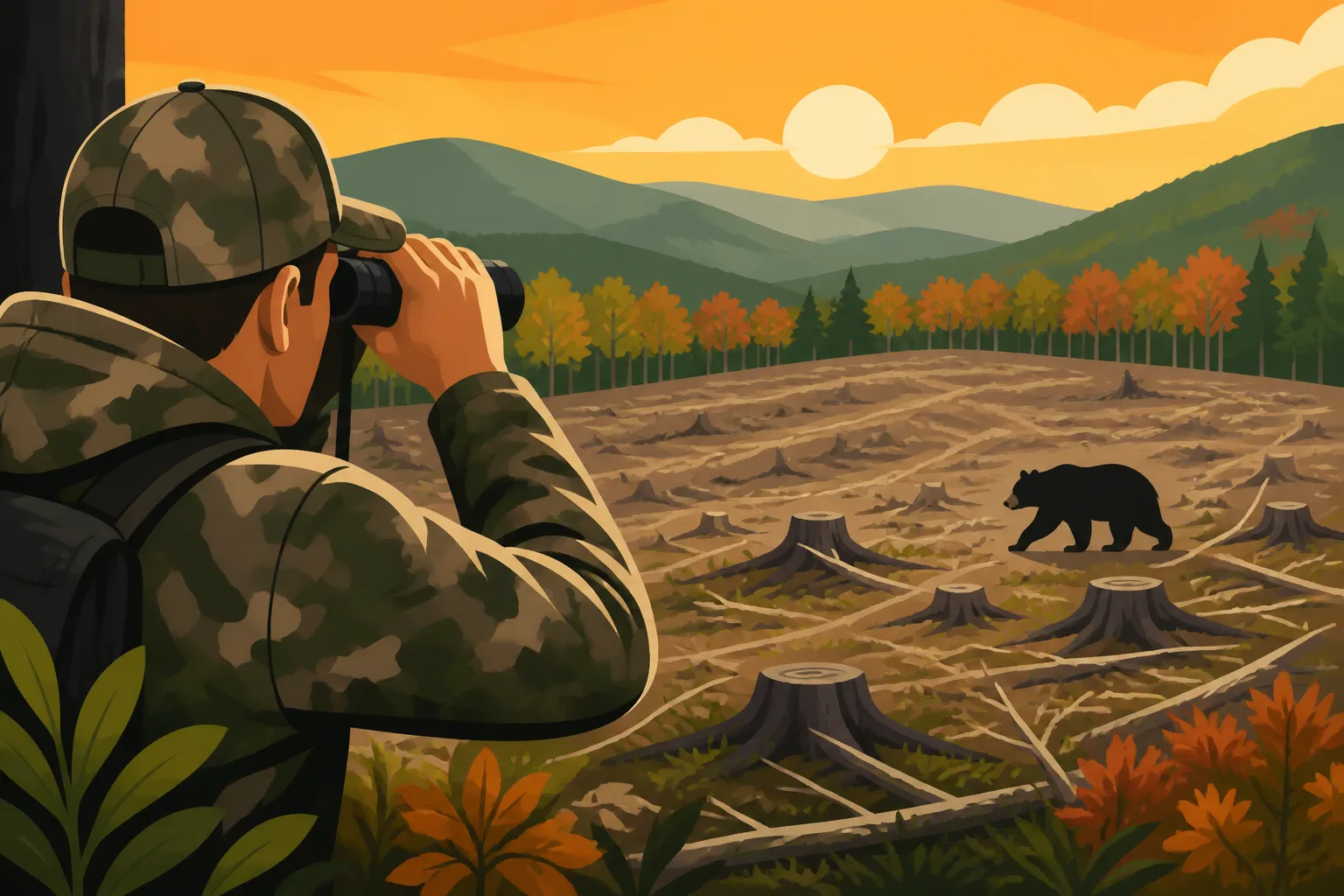
Beyond food, these areas offer incredible security. The tangle of downed logs, slash piles, and thick regrowth provides dense cover where bears can bed down undisturbed. They can move through these areas with a low profile, foraging and resting, without feeling exposed. For hunters, this makes clear-cuts a critical place to focus your efforts because while bears are in the thick stuff, they also need to move around or through it, often exposing themselves on edges or openings within the cut. This is where your binoculars come in.
Prime Foraging Opportunities in Openings
Bears are opportunistic omnivores, and clear-cuts are essentially giant, regenerating pantries for them. As the season progresses into late summer and early fall, these areas become incredibly productive. You'll find a smorgasbord of soft mast, like wild cherries, grapes, and various berries. Later in the fall, acorns from surrounding oaks will draw bears into the fringes of clear-cuts. The edges where the clear-cut meets mature timber are often hotspots, as bears can quickly dart back into deeper cover if they feel threatened.
Think about a bear's daily routine: they'll often feed heavily in these protein-rich areas during cooler parts of the day or night, then retreat to dense bedding areas within the clear-cut or nearby mature timber during midday. By understanding these patterns, you can time your glassing sessions for dawn and dusk when bears are most likely to be active and visible. Knowing What Maryland Bears Eat in Fall can give you an edge in pinpointing specific food sources within these cuts.
The Art and Science of Glassing Clear-Cuts
Glassing isn't just about pointing your binoculars at a hillside and hoping for the best. It's a methodical process that requires patience, discipline, and the right technique to effectively pick apart vast landscapes.
Choosing Your Observation Point
The first step to successful glassing is finding the right vantage point. You need to position yourself where you can see a large section of the clear-cut, preferably downwind and with good back cover. Elevated positions, such as a ridgetop or a high point across a valley, are ideal. You want a stable setup, free from obstructions like dense tree branches or power lines that can break up your view. When scouting for these spots, consider the sun's position throughout the day; you don't want to be looking directly into it during prime bear activity times.
Think about the prevailing wind direction as well. Bears have an incredible sense of smell, and they will bust you long before you ever see them if your scent blows into their feeding or bedding areas. A good map tool, like GoHunt, can be invaluable here. Use its topographic layers to identify high points, saddles, and potential travel corridors, allowing you to choose an observation post that gives you a strategic advantage while minimizing your scent footprint. This kind of preparation can also assist in Scouting Maryland Public Land With Aerial Photos.
Executing a Systematic Glassing Strategy
Once you're set up, resist the urge to just randomly scan. This is where many hunters fail. Instead, employ a systematic grid pattern. Start at one end of the clear-cut, pick a point, and slowly scan horizontally, overlapping each scan slightly. Then, drop your optics down a small increment and scan back the other way. Repeat this until you've covered the entire area.
Pay particular attention to edges, openings, and variations in topography within the clear-cut. Bears often use old skidder trails or natural benches to travel. Look for subtle movements, a flick of an ear, a patch of black that doesn't quite look like a shadow, or even birds scattering from a specific area, which could indicate a larger animal. Remember to take breaks, resting your eyes and then returning to the glass. It's amazing what you'll pick up on the second or third pass after a brief rest.
Reading Bear Sign in Open Terrain
Spotting a bear isn't always about seeing the entire animal. Often, it's about picking up on subtle clues or pieces of the bear. Even if you don't spot a bear during your glassing session, identifying fresh sign can confirm their presence and help you adjust your strategy.
Identifying Bears and Their Movement Patterns
When you're glassing, train your eyes to differentiate a bear from a shadow, a stump, or another animal. Bears often appear as a dark, irregular blob. Look for movement—even a subtle sway of the head or a shift in weight. Pay close attention to areas with good forage, like berry patches or oak flats adjacent to the clear-cut. Bears will often move along the path of least resistance, following old logging roads or natural benches that traverse the clear-cut. Observing these movement patterns can give you valuable insight into where they are entering and exiting the area.
Thermals play a huge role in Western Maryland's mountainous terrain. In the mornings, air warms and rises, carrying scent uphill. In the evenings, air cools and falls, carrying scent downhill. Bears often move with these thermals, using them to their advantage to scent-check for danger. Understanding Wind and Thermals in Western Maryland Terrain is paramount to planning your approach and even your glassing locations, ensuring you're not giving yourself away.
Interpreting Indirect Sign from a Distance
Even if you don't see a bear, you might see signs of their recent activity. Look for disturbed vegetation in berry patches, especially if a specific area looks flattened or heavily browsed. Scratches on trees, especially larger pine or oak trees on the edges of the clear-cut, can indicate a bear has been scent-marking. Fresh scat is another strong indicator. While you can't always make out detailed scat from a distance, an unusually large, dark pile on a game trail or open area is usually a dead giveaway.
Using the long-range capabilities of your optics can also help you identify trails entering and exiting the clear-cut. Bears are creatures of habit, and if you can identify a well-used game trail leading into a prime feeding area within the clear-cut, you’ve found a potential travel corridor. Marking these observations on a mapping app like GoHunt can help you build a comprehensive picture of bear activity over time, guiding your future hunting efforts. This data can also be crucial for Hunting Bear in Maryland's Six-Day Season, helping you maximize a limited timeframe.
Essential Gear for Effective Glassing
To truly unlock the potential of glassing clear-cuts for bears, you need the right tools. Investing in quality optics and accessories isn't just a luxury; it's a necessity that directly impacts your success.
Optics: Binoculars Versus Spotting Scopes
Choosing between binoculars and a spotting scope, or ideally, using both, depends on the distance you'll be glassing and the level of detail you need.
- Binoculars: For general scanning and covering wide areas, a good pair of 10×42 or 12×50 binoculars is your bread and butter. Brands like Vortex, Leupold, and Maven offer excellent clarity and light transmission without breaking the bank. They're quick to deploy and essential for initial sweeps.
- Spotting Scopes: When you need to pick apart distant details, confirm a bear sighting, or determine its size and characteristics, a spotting scope (typically 15-45x or 20-60x magnification) becomes indispensable. A high-quality spotting scope from brands like Swarovski, Zeiss, or Kowa can turn a distant "blob" into a confirmed bear, allowing you to make crucial decisions about your stalk. The wider objective lenses (e.g., 65mm or 85mm) gather more light, which is critical during low-light conditions at dawn and dusk.
| Optic Type | Magnification Range | Key Advantages | Best Use Case | Considerations |
|---|---|---|---|---|
| Binoculars | 8x to 12x | Wide field of view, portable, quick target acquisition | Initial scanning, closer ranges, general observation | Less detail at long distances, can cause eye strain |
| Spotting Scope | 15x to 60x+ | High magnification, detailed observation, positive ID | Long-range glassing, verifying animals, assessing size | Heavier, requires tripod, narrower field of view |
Tripods and Mounts for Stability
Regardless of whether you choose binoculars or a spotting scope, stability is key. Trying to glass for extended periods freehand will quickly lead to eye fatigue and missed details due to shaky images. A sturdy tripod is non-negotiable for serious glassing.
Look for a lightweight yet robust carbon fiber tripod that can withstand the rigors of mountain hunting. A good fluid head or ball head will allow for smooth, precise adjustments. For binoculars, a tripod adapter is essential to mount them securely. If you're using a spotting scope, ensure the tripod's weight capacity can handle your scope without wobbling. This setup will allow you to maintain focus on distant areas for longer periods, significantly increasing your chances of spotting a subtle movement.
Other Essential Glassing Accessories
Beyond optics, a few other items will enhance your glassing experience.
- Comfortable Cushion or Seat: You'll be sitting for extended periods, so a small, lightweight cushion or folding stool will make a huge difference in your comfort and ability to stay put.
- Rangefinder: Once you spot a bear, knowing the exact distance is critical for planning a stalk. A rangefinder like those offered by Vortex or Leupold will give you precise measurements.
- Mapping App: This is where GoHunt shines. Having a detailed mapping app on your phone or a dedicated GPS unit is crucial for marking observation points, recording bear sightings, identifying access routes, and planning your approach if you spot a bear. The satellite imagery and topographic maps are indispensable for understanding the lay of the land, identifying clear-cut boundaries, and planning your entry and exit points.
- Lens Cleaning Kit: Dust, pollen, and fingerprints can quickly degrade the performance of your expensive optics. A small lens pen and microfiber cloth are essential for keeping your lenses pristine.
- Small Backpack: To comfortably carry all your gear, including water, snacks, and extra layers, a functional daypack is a must. You don't want to be fumbling with gear when a bear finally steps out.
Remember, Black Bear Hunting in Western Maryland is often a test of patience and preparation, and having the right gear is a major part of that equation.
Planning Your Stalk After a Sighting
Spotting a bear from afar is only half the battle. The real challenge, and the true test of your hunting skills, begins when you decide to initiate a stalk. This phase requires meticulous planning, extreme caution, and a deep understanding of the terrain and the animal you're pursuing.
Assessing the Situation and Planning Your Route
Before taking a single step, observe the bear carefully. What is it doing? Is it feeding, bedding, or moving? Which direction is it heading? What’s the wind doing, and how is it likely to shift? These are critical questions to answer. Use your rangefinder to get an accurate distance, and mentally (or even physically, with your GoHunt app) map out potential approach routes. Look for terrain features that can provide cover—draws, ridgetops, dense patches of timber. Avoid open areas where you might be silhouetted.
Always prioritize the wind. If the wind isn't right for an immediate approach, you might have to wait for conditions to change or attempt a much longer, circuitous route. It's often better to back out and try another day than to attempt a stalk with a poor wind, which almost guarantees a busted hunt. Remember that thermals in the mountains can change throughout the day, so constantly monitor the wind with a wind checker.
Executing a Stealthy Approach
Once you've committed to a route, move slowly and deliberately. Every step should be calculated. Avoid breaking branches, scuffing rocks, or making any unnecessary noise. When moving through thick brush, lift your feet high and place them down gently. If you're hunting with a partner, communicate silently through hand signals. Pause frequently to listen and scan the area ahead, especially for any subtle movements or sounds from the bear.
Utilize the terrain to your advantage. Stay in the shadows, move behind ridges, and use large trees or rock formations for concealment. If the bear is feeding, it might be preoccupied, but bears have incredible hearing and smell, so remain vigilant. This is where your detailed knowledge of the terrain, perhaps pre-scouted on GoHunt, really pays off. Knowing the contours of the land helps you predict where you can move unseen and unheard. Ultimately, the goal is to get within an ethical shooting range without alerting the bear to your presence. This often means being prepared for a long and arduous journey through challenging Western Maryland forests, potentially far from where you started glassing.
Making the Most of Maryland's Bear Lottery
Maryland’s black bear hunting is a permit-only affair, which means you can’t just decide to go bear hunting on a whim. The lottery system creates both excitement and frustration, as successful applicants are limited, making every hunt a truly special occasion.
Applying for the Bear Lottery
The first, and most crucial, step is applying for the Maryland Black Bear Lottery. Each year, the Maryland Department of Natural Resources (DNR) opens an application period, usually in the summer. It’s vital to pay attention to these deadlines, as missing them means you’re out of luck for the entire season. You can typically apply online through the COMPASS system. There’s a non-refundable application fee, and you’ll need a valid Maryland hunting license to apply.
It's a common frustration to keep applying year after year and not drawing a tag, but persistence is key. Maryland has a preference point system designed to give unsuccessful applicants a better chance in subsequent years. Every year you apply and don’t draw, you accrue a preference point, increasing your odds the following year. Understand the Maryland Bear Lottery Application Rules thoroughly to maximize your chances.
Maximizing Your Opportunity with a Permit
If you’re one of the fortunate few to draw a bear permit, congratulations! Now the real work begins. Given the limited number of permits and the short six-day season, maximizing your time in the woods is paramount. This means thorough pre-season scouting, well beyond just glassing clear-cuts. You’ll want to identify multiple potential hunting areas, look for fresh bear sign, and understand the specific food sources bears are keying on in the specific year you're hunting.
For hunters from outside the primary bear counties, securing access can be a challenge. Public lands like Savage River State Forest, Green Ridge State Forest, and Potomac State Forest offer vast opportunities, but they also see more pressure. If possible, consider Getting Private Land Permission in Maryland in the four bear hunt counties (Allegany, Frederick, Garrett, and Washington) to increase your odds of finding undisturbed bears. Remember that these limited opportunities make every moment precious, so having your gear, scouting, and plan dialed in before the season opens is the only way to truly make your drawn permit count.
Disclaimer
Please note: Hunting regulations and seasons can change. Always consult the latest Maryland Department of Natural Resources (DNR) regulations and guidelines before planning any hunting trip.