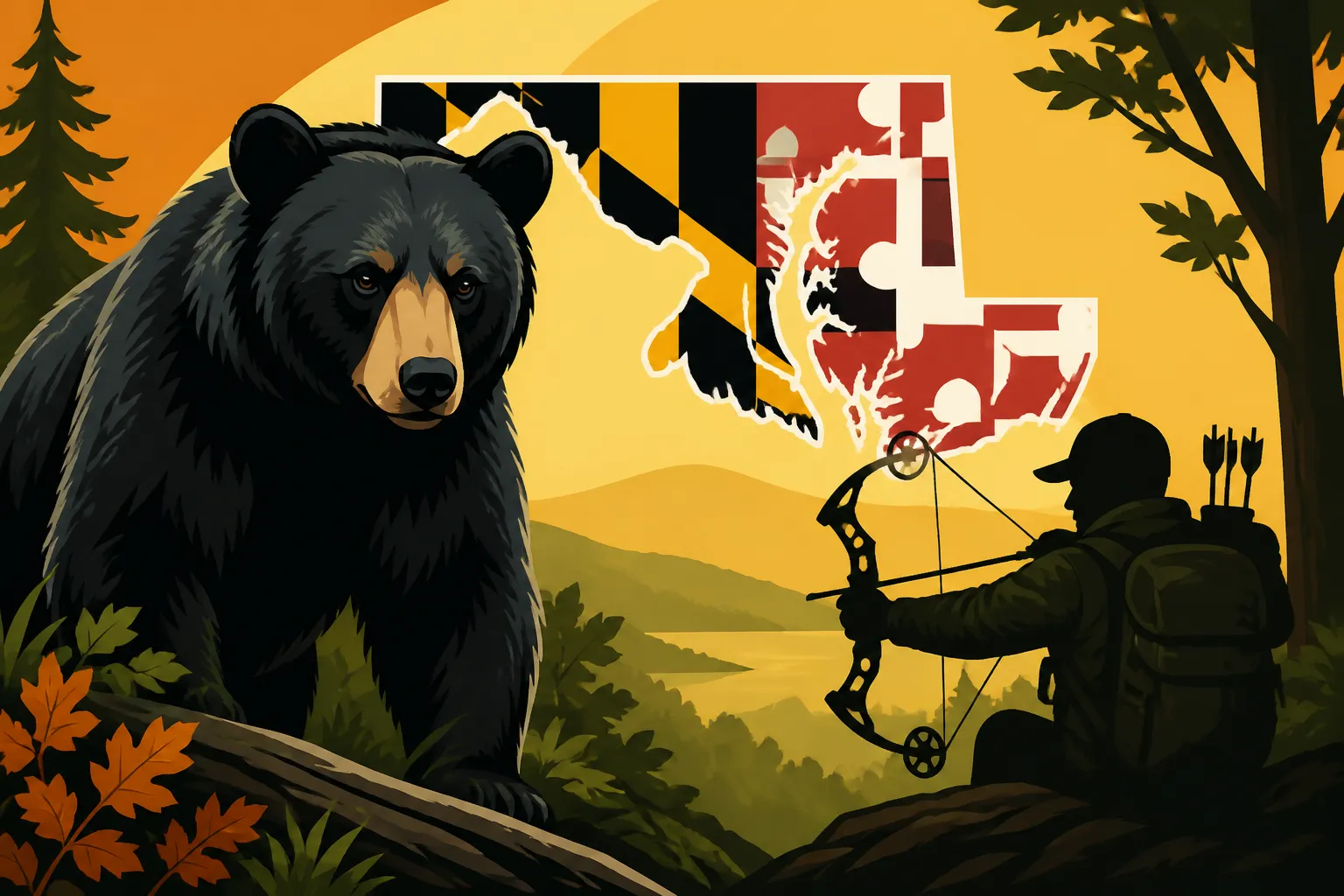
Hunting Bear in Maryland’s Six-Day Season
The short, often unpredictable nature of Maryland's six-day bear season can feel incredibly daunting. You wait years, sometimes decades, for a permit, only to face a tiny window to make it count. It’s easy to get overwhelmed by the pressure and limited time, especially when navigating dense Western Maryland timber or vast clear-cuts. This comprehensive guide is here to walk you through every critical step, from understanding the lottery to executing a successful hunt and ensuring you're fully prepared for the challenges and rewards of Hunting Bear in Maryland's Six-Day Season.
Understanding Maryland's Black Bear Lottery
Drawing a Maryland black bear permit is a major achievement, often the culmination of years of patiently applying. Unlike deer or turkey hunting where licenses are readily available, bear hunting in Maryland is strictly controlled through a lottery system designed to manage the growing population in the western counties while maintaining a quality hunting experience. This competitive process means that securing one of the limited permits is the first, and often most challenging, step toward a successful hunt.
The application process is handled through the Maryland Department of Natural Resources (DNR) COMPASS online licensing system, and it's absolutely crucial to get it right. Missing a deadline or making an error can mean another year, or more, of waiting.
The Application Process and Key Deadlines
Applying for a Maryland black bear permit can feel a bit like playing the lottery itself, but with far greater stakes and a lot more anticipation. You've likely heard the stories of hunters waiting years for that coveted email or notification that they've drawn a tag. It’s a testament to the healthy, but carefully managed, bear population in Western Maryland, and the strong interest among hunters. The key to even getting a shot at the six-day season is nailing the application process perfectly.
First, you'll need a valid Maryland hunting license, and then you'll apply specifically for the Maryland's Black Bear Lottery through the DNR's COMPASS portal. The application period typically opens in mid-July and closes in mid-August. This window might seem generous, but with summer vacations and busy schedules, it’s surprisingly easy to let it slip by. I always recommend setting multiple reminders on your phone and calendar the moment the DNR announces the official dates. There’s usually a small application fee, which helps cover the administrative costs of the lottery and bear management programs.
When you apply, you'll indicate if you're a resident or non-resident, and you might also be asked to select a specific hunt zone, though most years it's a statewide lottery with permits allocated to the four designated hunt counties: Allegany, Frederick, Garrett, and Washington. It’s vital to double-check all your information before submitting. Once the application period closes, the DNR conducts a random drawing, often in late August or early September. This is when the anxiety builds, as every hunter who applied eagerly awaits the results. Successful applicants will receive an email notification, and their permit will be accessible through their COMPASS account. Unsuccessful applicants are automatically awarded a preference point, which is where the long-term strategy comes into play.
Earning and Using Preference Points
Preference points are the golden ticket in Maryland's black bear lottery, especially if you haven't drawn a permit in previous years. Think of them as loyalty rewards; for every year you apply and don't draw a bear permit, you earn one preference point. These points accumulate, and the more points you have, the better your odds of drawing a permit in subsequent years. It's a system designed to give those who have waited the longest a better chance, which is incredibly fair when you consider how many years some folks put in.
Understanding how to strategically use these points is key to your long-term success. Your preference points are automatically applied each year you submit an application, so you don't need to "redeem" them in a separate step. The DNR essentially gives those with higher point totals more entries in the drawing, significantly increasing their chances. For instance, if you have five preference points, you might effectively have six "chances" in the drawing (your current year's application plus your five points). This system can really pay off for dedicated hunters; many successful bear hunters I know drew their permit after accumulating 5-10 or even more preference points.
However, there's a crucial catch to The New Rule on Expiring Preference Points: if you successfully draw a bear permit and harvest a bear, or if you simply draw a permit but choose not to hunt or don't harvest, your preference points reset to zero. This is a "use it or lose it" scenario that encourages hunters to make the most of their drawn permit. It means that once you get that coveted tag, you better be ready to dedicate yourself to the hunt, because you'll be starting from scratch in the lottery for future years. This rule ensures that the system continues to circulate permits among a broader base of hunters over time, making it fair for everyone in the long run.
Scouting Strategies for Maryland Bears
Once you've secured that coveted bear permit, the real work begins: scouting. Maryland's Western Mountains, home to the majority of the state's black bear population, are vast and rugged. You can't just show up on opening day and expect to find a bear; strategic, thorough scouting is absolutely essential, especially with such a short season. Bears are intelligent and adaptable, and their movements are heavily influenced by food availability, weather, and hunting pressure. Understanding these factors and pinpointing specific areas they frequent will dramatically increase your chances of success during the six-day window.
Effective scouting isn't just about walking around in the woods; it's about systematically gathering information and interpreting the clues the bears leave behind. This process starts long before the season, often immediately after the lottery results are announced, and continues right up until opening day. Tools like detailed maps, aerial imagery, and even social media can all play a role in helping you narrow down your search and identify prime hunting locations.
Identifying Prime Bear Habitat and Food Sources
Locating prime bear habitat in Western Maryland is all about understanding their seasonal needs, particularly their drive to fatten up before winter. In late summer and early fall, black bears are in hyperphagia, a period of excessive eating, so food sources are the absolute number one predictor of where they'll be. This is where your focus should be during scouting. Western Maryland is rich in various mast crops, and knowing what's "hot" that particular year is invaluable.
The number one food source for bears in this region, hands down, is acorns. Oak flats, especially those with white oaks, will be absolute magnets for bears when the acorn crop is good. Bears will spend hours, even days, gorging themselves on acorns, building up their fat reserves. Beyond acorns, look for other hard mast like hickory nuts and beechnuts. Soft mast, too, plays a critical role early in the fall. Wild grapes, persimmons, and various berries like black huckleberries can draw bears to specific areas. I've found that using a mapping tool like GoHunt's satellite imagery to identify different timber stands can help you pinpoint areas with a high concentration of oak trees, which you can then check on foot for acorn production.
Beyond food, bears need dense cover for bedding and security, especially in areas with human activity. Thick laurel thickets, stands of dense conifers, and remote, steep ravines are all classic bear bedding areas. They also need reliable water sources, so scouting creek bottoms, springs, and even small seeps can reveal valuable travel corridors. When you're in the woods, look for actual bear sign: scat, tracks, claw marks on trees (especially on beech trees), and overturned rocks or logs where they've been foraging for grubs. This is critical for Reading Sign in Maryland Mountain Timber and confirming bear presence. A table outlining common bear signs can be helpful to keep in your mind or on your phone while scouting.
| Bear Sign | Description | What it Tells You |
|---|---|---|
| Scat | Size, shape, and contents vary. Often tubular, can contain berries, nuts, corn, fur, or insect parts. | Confirms bear presence and what they are currently eating. Freshness indicates recent activity. Large diameter suggests a large bear. |
| Tracks | Large, five-toed paw prints. Front paw is wider and shorter; hind paw is longer and narrower, resembling a human foot. Claw marks may or may not be visible. | Confirms bear presence and direction of travel. Size helps estimate bear size. Look in mud, soft dirt, or snow. |
| Claw Marks | Vertical scratches on trees (often beech, oak, or pine) from climbing or marking territory. Also found on logs and stumps from tearing apart for insects. | Indicates bears are climbing, marking, or foraging. Can show height and age of bears using the area. Fresh marks are bright, older marks are weathered. |
| Foraging | Overturned rocks, torn-apart logs/stumps, dug-up ground for roots or grubs. Also, broken branches or stripped bark on fruit trees. | Shows active feeding. Focus on areas with good forage opportunities. Fresh foraging indicates recent activity. |
| Rub Marks | Patches of hair, mud, or oils rubbed on trees, especially evergreens, often at shoulder height. Bears rub to mark territory or scratch. | Confirms bear presence and can give an idea of their size and general travel routes. |
Using Trail Cameras and Technology Effectively
In Maryland's mountainous terrain, covering ground and consistently scouting can be physically demanding. This is where trail cameras and modern mapping technology like GoHunt become invaluable assets. They allow you to extend your scouting efforts, gather intelligence silently, and maximize your time in the field during that precious six-day season. For Scouting Bear Sign in Garrett County or other bear-rich areas, these tools are indispensable.
When deploying trail cameras for bears, consistency is key. Place them on established game trails, near active food sources (like an oak flat dropping acorns), or along the edges of dense cover where bears are likely to travel between bedding and feeding areas. I like to position them about 2-3 feet off the ground, angled slightly downward, to capture clear images of their entire body. Consider using a security box or cable lock, as bears are notoriously curious and can be rough on equipment. It's also wise to check them discreetly and infrequently to minimize human scent and disturbance, perhaps every 7-10 days leading up to the season. The data you gather – time of day, size of bears, specific travel routes – will be critical for pinpointing exactly where and when to set up your stand or focus your still-hunting efforts.
Modern mapping apps like GoHunt are absolute game-changers for Hunting Maryland's Western Mountain Forests. Before you even step foot in the woods, you can use high-resolution satellite imagery to identify potential food sources, thick cover, water, and likely travel corridors. Mark every sign you find – scat, tracks, rubs, and specific oak trees dropping acorns – as a waypoint in your app. This creates a virtual map of bear activity, allowing you to see patterns over time. You can also use topographical maps to identify saddles, benches, and steep ravines that bears might use to navigate the rugged terrain. These features act as natural funnels, concentrating bear movement and providing prime ambush points. By combining trail camera intelligence with precise mapping data, you're not just guessing; you're building a highly informed strategy for that limited hunting window.
Hunting Techniques for a Short Season
With a mere six days to make your bear hunt a success, efficiency and adaptability are paramount. Western Maryland's terrain—from dense timber to rocky ridges—presents its own unique set of challenges, and bears are masters of using that landscape to their advantage. You need a diverse toolkit of hunting techniques to maximize your opportunities, whether you're actively pursuing them or waiting patiently. Success often hinges on your ability to read the woods, understand bear behavior, and adjust your approach based on real-time conditions.
This isn't the time for trial and error; it's about executing proven methods with precision. Being physically prepared for demanding hikes and mentally ready for long hours of patient waiting will also play a significant role. The most successful bear hunters I know combine aggressive scouting with a strategic blend of these core hunting methods.
Still-Hunting Western Maryland Mountain Timber
Still-hunting is perhaps the most exhilarating and challenging way to pursue black bears in Maryland's mountains. It requires immense patience, sharp observation skills, and a deep understanding of Wind and Thermals in Western Maryland Terrain. When you're still-hunting, you're not just walking; you're moving with deliberate slowness, pausing frequently to scan the woods, listen for subtle sounds, and try to piece together the narrative of the forest. The goal is to cover ground quietly and efficiently, putting yourself in a position to spot a bear before it spots you.
The key to successful still-hunting in dense timber, especially in areas like Savage River State Forest or Green Ridge, is to move at a snail's pace. Take five steps, then stop for five minutes. Use your binoculars to pick apart every shadow, every stump, every patch of thick cover. Bears blend into the dark timber incredibly well, often appearing as just another dark blob until they move. Pay close attention to the wind, always trying to keep it in your face or quartering to you. Bears have an incredible sense of smell, and a shift in wind can betray your presence instantly. Walk along contour lines, benches, and ridges, as these are natural travel routes for bears looking for food or moving between bedding areas. Focus on areas where you've found fresh What Maryland Bears Eat in Fall sign, such as recently worked-over acorn flats or wild grape thickets.
One realistic scenario might be slowly working your way through a mature oak-hickory stand on a cool, crisp morning, fresh scat indicating recent activity. You move deliberately, picking up a track here, a fresh rub on a tree there. Suddenly, you spot a dark shape ahead, just beyond a cluster of mountain laurel. It could be a stump, or it could be a bear. You freeze, raise your binoculars, and slowly confirm it’s a bear methodically flipping rocks and logs, completely unaware of your presence. This kind of encounter is the essence of Still-Hunting a Savage River Oak Flat, demanding ultimate stealth and precision. You might only get one chance in that six-day season, and still-hunting puts the responsibility squarely on your shoulders to make it count.
Stand Hunting Key Travel Corridors
While still-hunting is active, stand hunting offers a more passive, yet equally effective, approach to bear hunting during Maryland's short season. This method involves identifying key locations where bears are likely to travel or feed, setting up a tree stand or ground blind, and patiently waiting for them to appear. It's an excellent strategy for those limited days, allowing you to cover an area thoroughly without disturbing it. The success of stand hunting hinges entirely on your scouting and your ability to pick the right spot.
Key travel corridors for bears often include natural funnels such as saddles between ridges, steep ravines that provide easy access down to water or food, or the edges of dense bedding cover leading to an active mast crop. Look for areas with a confluence of sign – multiple game trails, recent scat, and claw marks – indicating consistent bear movement. Another prime location can be a secluded pond or spring, especially during dry periods when water sources might be limited. The trick is to identify these high-traffic zones and then place your stand where you have good visibility, a clear shooting lane, and a favorable wind direction. Remember, bears are wary, so minimizing your scent and movement is paramount.
Consider a scenario where your GoHunt map revealed a saddle connecting two large blocks of timber, and your trail cameras confirmed bears moving through it consistently between 4 PM and sunset, heading from a thick bedding area to a dropping red oak flat. You arrive hours early, quietly set up your stand downwind of the main trail, perhaps 15-20 yards off the path, and settle in. You've cleared shooting lanes previously, and your bow or rifle is ready. As the shadows lengthen, you might hear the rustle of leaves or a twig snap, a sign that something big is moving. This disciplined approach to waiting in a pre-scouted, high-percentage area can pay huge dividends, making the most of your critical hunting days.
Glassing Clear-Cuts and Openings
Western Maryland's forests, especially in areas managed by the state or private timber companies, often feature clear-cuts or large natural openings. These areas, while sometimes appearing barren, can be absolute magnets for bears, particularly during certain times of the day. Glassing these clear-cuts is a highly effective tactic, especially during the early mornings and late evenings when bears are most active and visible. It requires good optics, patience, and a bit of elevation.
Bears are drawn to clear-cuts for a variety of reasons. The regenerating vegetation often provides an abundance of soft mast like blackberries, raspberries, and even certain grasses and forbs that bears love to browse. The edges of these clear-cuts, where the new growth meets mature timber, also serve as natural travel routes and provide quick access to cover. To effectively glass these areas, you need a high vantage point – a distant ridge, a logging road with an overlook, or even a strategically chosen tree stand on the perimeter. Bring quality binoculars (10×42 or 12×50 are ideal) and a spotting scope if you have one. Set up before first light or well before sunset, and patiently scan every inch of the opening, paying particular attention to shaded areas, downed logs, and the edges of the timber.
The patience involved in Glassing a Western Maryland Clear-Cut for Bear cannot be overstated. Bears can appear suddenly, seemingly out of nowhere, or they might be bedded down in plain sight, camouflaged by shadows and brush. A realistic scenario involves sitting for hours, slowly picking apart the clear-cut, watching for any movement or any dark shape that doesn't quite look right. You might spot a bear feeding casually, completely unaware, giving you time to plan your stalk. This method offers the unique advantage of spotting a bear from a distance, allowing you to formulate a precise plan of approach and leverage the terrain to close the gap undetected, turning a long-distance observation into a close-range opportunity during the short season.
Gear and Preparations for Bear Hunting
Successfully hunting black bears in Maryland's rugged Western Mountains during a short, intense season isn't just about having a permit and knowing where to go; it's profoundly about being properly prepared and equipped. The terrain is unforgiving, the weather can be unpredictable, and bears are tough animals. Having the right gear, from your weapon of choice to your backpack essentials, is non-negotiable for both safety and success. Moreover, physical conditioning can't be overlooked; a bear hunt in these hills can be more demanding than many realize.
This section dives deep into the critical equipment considerations and personal readiness that will define your experience. You don't want to be caught unprepared when that long-awaited opportunity finally presents itself. From footwear to first aid, every item in your kit should serve a purpose in ensuring you're ready for whatever the Maryland wilderness throws your way.
Weapon Choices and Ammunition Considerations
Choosing the right weapon for Black Bear Hunting in Western Maryland is a critical decision, as it needs to be powerful enough for a clean, ethical kill on a large, robust animal. Maryland allows several weapon types during its six-day bear season, typically aligning with the general firearms, muzzleloader, and archery regulations. No matter your choice, absolute proficiency with your selected weapon is paramount.
For firearms, legal options generally include rifles, shotguns (slugs only), and muzzleloaders. When it comes to rifles, calibers commonly recommended for bear include .30-06 Springfield, .308 Winchester, .270 Winchester, .300 Win Mag, or even the venerable .45-70 Government. The key isn't just the caliber, but the bullet construction. You'll want a heavy-for-caliber, bonded, or monolithic bullet designed for deep penetration and controlled expansion. Avoid light, frangible bullets that might break up on heavy bone. For shotguns, use high-quality rifled slugs. Muzzleloaders should also be capable of delivering a heavy, hard-hitting projectile, typically a conical bullet of at least .50 caliber. Practice extensively at various ranges to ensure precise shot placement, as a bear's vitals are well-protected by dense muscle and fat.
Archery hunters, whether using compound bows, recurves, or crossbows (which are legal in Maryland for deer, and thus also for bear), need to ensure their setup delivers enough kinetic energy and uses broadheads designed for large game. Fixed-blade broadheads with strong construction are often preferred for their reliability and penetration. A minimum draw weight of 50-60 pounds for vertical bows is advisable, paired with heavy arrows. For crossbows, make sure your bolts are well-matched to the bow and tipped with quality broadheads. Regardless of weapon, remember the goal is a quick, humane kill, so practice, practice, practice until you're confident in your ability to place a shot accurately under pressure, understanding that a bear's anatomy can be deceptively tricky from certain angles.
Packing for Success in Western Maryland Terrain
Maryland's Western Mountains are beautiful but can be incredibly demanding. When you’re spending your precious six days bear hunting, being prepared with the right gear in your pack can make the difference between a successful, safe hunt and a miserable, potentially dangerous one. You're not just going for a walk in the park; you're venturing into rugged, remote areas that demand respect.
Your pack should be comfortable and large enough to carry essentials, but not so cumbersome that it hinders movement. Start with the basics: plenty of water (at least 2-3 liters for a day hunt), high-energy snacks, a reliable first-aid kit, and navigation tools. While GPS apps on your phone (like GoHunt) are excellent, always carry a physical map and compass as a backup, and know how to use them. The terrain can be steep and disorienting, and cell service is spotty at best in many parts of Hunting Savage River's High Country. Good rain gear is non-negotiable; mountain weather can change rapidly from sunny to pouring rain, and staying dry is crucial for comfort and preventing hypothermia. A headlamp with extra batteries is also a must, as bear recovery often extends into low light or darkness.
Beyond personal safety, think about post-harvest needs. If you're fortunate enough to harvest a bear, you'll need game bags to keep the meat clean, a sharp knife, rope, and perhaps even a small saw for processing. A heavy-duty contractor bag or large garbage bags can be useful for keeping the hide clean during the initial stage of Packing a Bear Out of Savage River State Forest. Remember, bears are large animals, and getting one out of a steep hollow can be an arduous task, even with help. Consider carrying a lightweight game cart if you anticipate hunting flatter, more accessible terrain, though this is often impractical in the steepest areas. Don't forget durable, waterproof hiking boots with good ankle support are essential for navigating the rocky, uneven ground. Being physically fit enough to handle strenuous hiking and potentially dragging a heavy animal out of tough terrain is just as important as the gear you carry.
Post-Harvest Procedures and Regulations
Harvesting a black bear in Maryland is a truly memorable and challenging accomplishment, marking the culmination of years of lottery applications and intense hunting effort during a short, focused season. However, the work doesn't end when the bear hits the ground. There are critical post-harvest procedures and regulations that every hunter must adhere to, not only for legal compliance but also for ethical game handling and contributing to the state's wildlife management efforts. This stage of the hunt is physically demanding and requires careful attention to detail.
Understanding these steps beforehand will reduce stress and ensure that you properly care for your hard-earned trophy and meat, while also fulfilling your responsibilities as a Maryland bear hunter. From field dressing to check-in, every step is important.
Field Dressing and Recovery in Challenging Terrain
Once you’ve made a successful shot on a bear, the immediate priority is to ensure the animal is expired and then begin the field dressing process as quickly and efficiently as possible. Bears are thick-skinned and heavily muscled, so finding the blood trail can sometimes be a challenge, especially if the bear ran into dense cover. Take your time, mark the last spot you saw the bear, and systematically search for blood, broken branches, or disturbed leaves. If you're lucky, the bear will drop close by, but often they'll run a short distance, making for an intense tracking effort.
Field dressing a bear is similar to deer, but on a larger scale and with more fat. You'll want to remove the entrails as soon as possible to allow the carcass to cool, which is critical for meat quality, especially if the weather is warm. Remember, Maryland has specific regulations about what parts of the bear must be kept for check-in (usually the head and hide attached to the carcass). Make your incisions carefully, avoiding cutting into the internal organs. Once field dressed, the real challenge often begins: recovery. If you're in steep, rugged terrain, you'll likely need help. Rope, a strong backpack, or even a specialized game sled can assist in dragging or packing out sections of the bear. Bears can weigh hundreds of pounds, and attempting to move one by yourself from a remote hollow is often impossible. Planning for recovery assistance is a vital part of your overall hunt strategy.
Given the physical exertion involved, and the potential for a long recovery, having enough water, light, and communication devices is crucial. Many hunters opt to quarter their bear in the field to make it more manageable for packing out, especially if the distance is significant or the terrain is particularly nasty. Using high-quality game bags to keep the meat clean and free from debris is always a good idea. Remember, taking breaks and prioritizing safety during the recovery process is more important than rushing. This is where your physical preparation during the off-season really pays off.
Checking In Your Bear and CWD Sampling
Maryland has strict requirements for checking in harvested game, and black bears are no exception. This process is crucial for the DNR to collect vital data on the bear population, harvest numbers, and health. After you've successfully recovered and field-dressed your bear, you must check it in at an official Maryland DNR Black Bear Check Station. These stations are typically located in or near the primary bear hunting counties (Garrett, Allegany, Washington, and Frederick) and are staffed by DNR personnel.
You usually have a specific timeframe, often within 24 hours of harvest, to present your bear for check-in. At the check station, DNR staff will collect important biological data, such as the bear's weight, sex, and age (determined by extracting a tooth). They will also confirm your permit and issue a tag or confirmation number. It is absolutely imperative that you bring your valid hunting license and bear permit, and ensure the carcass still has the head and hide attached to prove it is indeed the animal you harvested. This data collection is vital for sound wildlife management, allowing the DNR to monitor the health and growth of the state's bear population and make informed decisions about future hunting seasons and permit allocations.
In addition to standard check-in procedures, Maryland also participates in Chronic Wasting Disease (CWD) surveillance. While CWD is primarily associated with deer, there's a possibility, albeit low, of it affecting bears. Therefore, at the check station, DNR staff may also collect samples for CWD testing. This is a critical part of monitoring wildlife health and preventing the spread of disease within the state. You will receive specific instructions regarding the CWD sampling process, and your cooperation is essential. The entire check-in process, though an extra step after a long day of hunting and recovery, is a fundamental responsibility of every successful bear hunter, providing valuable information that benefits the entire wildlife community and ensures the continued health of Maryland's Black Bear Population Growth.
Disclaimer
Please remember that hunting regulations, season dates, and permit requirements can change. Always consult the most current Maryland DNR Hunting & Trapping Guide or visit their official website before planning any hunt to ensure you are in full compliance with all state laws and regulations.