Calling Coyotes Over a Maryland Deer Carcass
Coyotes have steadily moved into Maryland over the past few decades, and they've become a real presence, especially for deer hunters. Many of us have felt that frustration of seeing fewer deer, or finding evidence of coyote predation, and wondering how to manage these adaptable predators. This guide is all about turning a specific scenario – a deer carcass – into a strategic advantage for calling in coyotes, offering you actionable insights and techniques to address this growing challenge in Maryland's diverse landscapes.
Understanding Maryland's Increasing Coyote Presence
For many years, coyotes were more of a western Maryland phenomenon, a creature talked about in hushed tones as they slowly expanded their range eastward. But those days are long gone. Today, these intelligent canids are firmly established across pretty much every county in Maryland, from the mountain hollows of Garrett County to the sprawling farmlmlands and suburban fringes of the Eastern Shore. They're a testament to nature's adaptability, thriving even in areas with significant human populations.
The Rise of Coyotes in Maryland
It really wasn't that long ago that a coyote sighting in most of Maryland was a rare event, almost legendary. Many seasoned hunters remember a time when the biggest predator worry was a bobcat in the mountains or a stray dog. But the landscape has changed dramatically. Coyotes, originally native to the western parts of North America, have undergone a remarkable expansion across the continent, largely filling the ecological niche left by the extirpation of wolves. In Maryland, they likely migrated down from Pennsylvania and West Virginia, finding abundant food sources and surprisingly hospitable habitat even in our more developed areas.
This expansion has been aided by their incredible ability to adapt. They can thrive in deep woods, open farmlands, and even surprisingly close to suburban developments, often unnoticed. They learn quickly, avoid human contact, and are masters of camouflage and stealth. Their diet is incredibly varied, including everything from small rodents, rabbits, and birds to deer, especially fawns, and even discarded human food or agricultural waste. This wide-ranging diet and adaptability have allowed them to establish strong populations where they were once absent, leading to a new dynamic for wildlife management and hunting opportunities. For more on their arrival, check out our guide on How Coyotes Took Hold in Maryland.
Impact on Local Deer Herds
The presence of a healthy coyote population inevitably brings questions about their impact on other wildlife, particularly deer. For many Maryland deer hunters, there's a tangible concern that coyotes are taking a toll on fawn survival rates and potentially even adult deer, especially during harsh winters or if a deer is injured. While it's true that coyotes are opportunistic predators and deer, especially fawns, are a significant food source for them, the exact impact on the overall Maryland deer population is complex and often debated.
Studies often show that coyotes primarily prey on fawns during the spring and early summer when they are most vulnerable. They can also take down weakened or injured adult deer, particularly after a long winter or during periods of stress. This can be particularly noticeable in areas with high coyote densities or where deer habitat is fragmented. However, deer populations are robust in many parts of Maryland, and compensatory factors, such as higher birth rates when predation is present, can sometimes offset these losses. Nevertheless, for a hunter who sees fewer fawns or finds evidence of a coyote kill, the impact feels very real. Understanding these dynamics is crucial for anyone interested in Do Maryland Coyotes Affect Deer Numbers? and how to approach predator control responsibly.
Why a Deer Carcass is a Prime Calling Spot
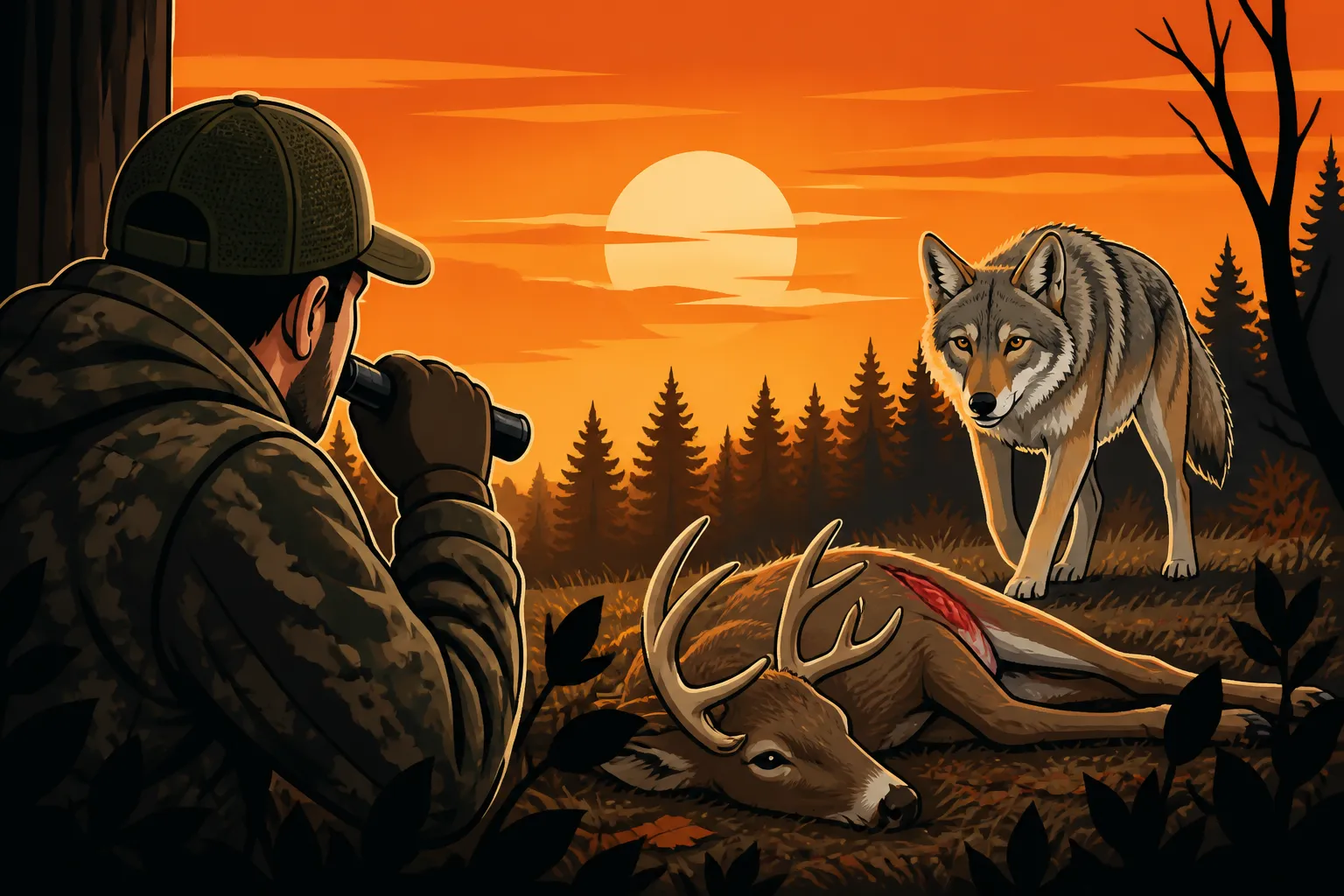
Finding a deer carcass in the woods isn't always a pleasant discovery, but for a coyote hunter, it can be like hitting the jackpot. Coyotes are scavengers by nature, and a readily available, high-calorie meal like a deer carcass is an irresistible draw. This makes a carcass an incredibly effective natural attractant, creating a potent hotspot for calling opportunities that can be hard to beat.
Natural Attractor for Coyotes
Think about it from a coyote's perspective. Life in the wild is tough, and every meal is a struggle. So, when a large food source like a deer carcass presents itself, it’s not just a meal; it's a beacon. The scent of decaying flesh, blood, and bone carries a long way, especially on a crisp, still morning. It signals an easy meal, no chasing required, no risk of injury from a kick or antlers. This instinctual drive to scavenge is incredibly powerful for coyotes, drawing them in from surprisingly long distances.
A carcass doesn't just attract coyotes looking for a quick meal; it often becomes a social hub. Multiple coyotes from a local pack might visit it over several days, especially if it's a substantial one. This provides excellent opportunities for multiple encounters. Furthermore, other scavengers like foxes, raccoons, and even local birds of prey will be drawn to it, creating a natural food chain that coyotes are often at the top of. By positioning yourself near a known carcass, you're not just hoping to intercept a random coyote; you're setting up on a location that is actively advertising "dinner" to every coyote in the vicinity. This natural magnetism is what makes calling over a carcass so effective and different from simply blind calling.
Scouting for Carcass Opportunities
The key to successful carcass hunting is knowing where to find them and how to assess their potential. Carcasses aren't just random occurrences; they often show up in predictable places. After a deer season, for instance, there might be gut piles or unrecovered deer. During harsh winters, deer can succumb to stress, leading to winter kills. Roadkills are also a common source, though you must exercise extreme caution and ensure legal access if considering these.
Using tools like the mapping features on GoHunt can be invaluable here. You can mark potential areas where deer might bed or travel, which could lead to finding natural mortalities. If you're a deer hunter yourself, you might find a carcass while scouting for future deer season opportunities, or even utilize a gut pile from your own successful harvest, provided you can legally and safely call near it. When you find a carcass, observe it for signs of coyote activity – tracks, scat, or disturbed snow/ground around it. Also, consider the accessibility and wind direction. Is there a safe, concealed spot for you to set up downwind? How fresh is the carcass? Fresher means more scent and more immediate interest. A well-scouted carcass location can be the difference between a frustrating blank day and a successful coyote encounter. Remember to always know and follow local regulations regarding private land access, which might mean getting written permission from landowners, especially on Maryland Farm Hedgerows.
Essential Gear and Techniques for Calling Over a Carcass
Calling coyotes over a deer carcass isn't just about showing up and blowing a call. It's a strategic endeavor that combines the right gear, careful setup, and precise execution. You're trying to emulate the sounds of prey, or even other coyotes, to draw them into a confident position for a shot. The goal is to make them believe the easy meal is still there, or that a rival is trying to claim it, without alerting them to your presence.
Choosing Your Calls
When it comes to coyote calling, you essentially have two main categories: hand calls and electronic calls. Both have their place, and often, the most successful hunters employ a combination of the two, adapting to the specific situation.
Hand calls are fantastic for their versatility and realism, especially when you need to make subtle adjustments to tone and volume. You can produce a wide range of sounds, from distress cries of rabbits and fawns to challenge howls and yips of coyotes. They require skill and practice to master, but their portability and lack of batteries make them reliable in any conditions. Brands like Primos and Foxpro (for their hand calls) offer excellent options that can mimic a variety of prey animals.
Electronic calls, on the other hand, offer an incredible array of pre-recorded sounds, often in high fidelity. This means you can play incredibly realistic sounds of injured fawns, struggling rabbits, or even a full sequence of coyote vocals, including pup distress, lone howls, and even fights. They are especially effective for reaching out over long distances or when you need to switch between different sounds quickly. Many electronic callers also come with a remote, allowing you to place the caller away from your position, drawing the coyote's attention away from you. This is a huge advantage, as a coyote coming into a call is almost always scanning the sound source for movement. The ability to control the sound from a distance, perhaps even with a decoy near the caller, dramatically increases your chances.
Here's a quick comparison of the two main types of calls:
| Feature | Hand Calls | Electronic Calls |
|---|---|---|
| Sound Variety | Limited by skill; versatile for distress/vocals | Vast library of realistic sounds |
| Volume Control | Manual, requires practice | Precise digital control |
| Realism | Can be very realistic with practice | Often superior due to high-fidelity recordings |
| Range | Shorter, dependent on conditions and caller's skill | Longer range, especially with powerful speakers |
| Portability | Very high, small and lightweight | Moderate, can be bulky with remote/speakers |
| Battery Reliance | None | High, requires batteries for unit and remote |
| Cost | Generally lower (per call) | Higher initial investment |
| Hunter Concealment | Coyote looks at hunter/call position | Coyote often focuses on remote speaker/decoy position |
Setting Up Your Stand and Wind Considerations
Proper setup is absolutely critical when calling coyotes, and it becomes even more vital when using a fixed point like a carcass. Coyotes are incredibly wary, with keen senses of smell, hearing, and sight. Your goal is to remain undetected until the moment of the shot.
First and foremost, always hunt the wind. A coyote's nose is its primary defense. They will almost always circle downwind to get a whiff of whatever is making the sound or to confirm the identity of the carcass. This means you need to position yourself directly downwind of the carcass and your anticipated approach route for the coyote. If the wind shifts, you might need to adjust your setup or even abandon the stand if it becomes too unfavorable. You can use apps like GoHunt to check real-time wind conditions and predict how scent will travel, helping you choose the best setup for the day.
Secondly, choose a position that offers excellent concealment and a clear line of sight to the carcass and surrounding terrain. This could be against a thick stand of pines, tucked into a hedgerow, or behind some natural topography. Think about your backstop – you don't want to be silhouetted. Try to elevate your position if possible, but without sacrificing concealment. Good camo from head to toe, including a face mask and gloves, is essential. Once you're set up, remain absolutely still. Any movement, even a slight twitch, can spook a wary coyote. Consider your entry and exit routes too, ensuring you can approach and leave without disturbing the area. When scouting for places to set up on farmland, our guide on Setting Up on a Maryland Grain Field Edge might provide helpful ideas for concealment.
Strategic Calling Sequences
The actual calling sequence when working a carcass can vary, but generally, you want to start with sounds that grab attention, then transition to sounds that close the deal. A common strategy is to begin with relatively quiet, subtle distress calls, like a whimpering fawn or a soft rabbit in distress. This is to "feel out" the area and see if any coyotes are close by without blowing them out of the country.
After a few minutes, if nothing responds, gradually increase the volume and intensity of your distress calls. Mimic a more frantic rabbit or a more urgent fawn bleat. Pause for a minute or two between sequences, scanning intently. Coyotes can approach silently and quickly. If you get a response, or if you feel a coyote might be approaching, you can switch to more aggressive sounds, like a coyote challenge howl, to try and draw them in for a territorial response, or even a pup distress call, which can trigger a strong parental instinct in female coyotes.
A typical calling sequence might look something like this:
- Opening: 2-3 minutes of soft, intermittent prey distress (e.g., fawn bleat, rabbit squeals). Listen intently.
- Mid-Sequence: 5 minutes of moderate to loud prey distress, varied in intensity. Add some lone howls or coyote yips. Scan 360 degrees.
- Lull: 5-10 minutes of silence, or very light, infrequent distress. This is often when a wary coyote will commit.
- Closer: If still no visual, hit it with a short, aggressive series of howls or a fighting sequence to provoke a response from a hesitant animal.
Repeat this pattern, or variations of it, for 20-30 minutes before moving to a new stand. Remember to always be ready for a shot; a coyote can appear out of nowhere. Our guide Coyote Calling in Maryland Farm Country offers more general insights into effective calling strategies.
Shot Placement and Follow-Up
When a coyote finally commits and approaches your position, shot placement is paramount. Coyotes are relatively small, fast-moving targets, and a precise shot is necessary for a quick, humane kill. Aim for the vital zone – typically the shoulder/chest area, just behind the front leg. A well-placed shot here will hit the heart and lungs, dropping the coyote quickly. Avoid headshots unless you are an exceptionally skilled marksman, as the head is a very small target.
After the shot, watch the coyote's reaction closely. If it drops instantly, great. If it runs, mark the last spot you saw it and immediately begin a systematic search. Coyotes can be incredibly tough, and even a mortally wounded animal can travel a significant distance, especially through thick cover. Look for blood, broken branches, or disturbed ground. If you're using a firearm, ensure you understand Maryland Legal Weapons by County and any local restrictions. If you're archery hunting, which is common during Bowhunting Maryland's Long Archery Season, the blood trail might be harder to follow in dense vegetation, so pay extra attention to the impact site. Sometimes, calling for a few more minutes after a shot can bring in another coyote that was trailing behind the first or was drawn in by the commotion.
Safety Considerations and Ethical Hunting Practices
Hunting coyotes, especially when utilizing a carcass as an attractant, comes with a unique set of safety and ethical responsibilities. It’s not just about getting the animal; it's about doing so safely, legally, and respectfully. As responsible hunters, we uphold the highest standards to ensure our sport is preserved and respected.
Hunter Safety in the Field
Safety should always be your top priority, even when pursuing predators. When hunting near a deer carcass, especially one that might be close to a road or a field edge, be extra vigilant of your surroundings. Always be absolutely sure of your target and what lies beyond it before taking a shot. This means positively identifying the animal as a coyote, confirming there are no other hunters, people, or livestock in your line of fire. Given that many coyotes are harvested incidentally during Maryland's Split Firearms Deer Season, always abide by all deer hunting safety rules.
Wearing blaze orange is critical during any open firearm season for deer, turkey, or bear in Maryland, even if you are hunting coyotes. While not always required specifically for coyote hunting outside of big game seasons, it's a smart practice for visibility, especially on public lands or when hunting private land where other hunters might be present. Check Maryland Blaze Orange Requirements for specific rules. Be mindful of property lines. Utilize mapping tools like GoHunt to clearly define boundaries and ensure you are not trespassing or shooting across private property lines without permission. Lastly, always handle firearms safely: keep the muzzle pointed in a safe direction, keep your finger off the trigger until ready to shoot, and keep the gun unloaded until you are in your hunting location.
Respecting Wildlife and Regulations
Ethical hunting practices extend beyond just safety; they encompass respect for the animal, the land, and the laws. When hunting over a carcass, it's crucial to understand that you are utilizing a natural food source. This isn't traditional "baiting" in the sense of bringing in food from elsewhere, but rather leveraging an existing situation. Always double-check Maryland's specific regulations regarding baiting for coyotes. Generally, using a carcass of an animal legally harvested by yourself or found through natural means is acceptable for attracting predators, but it's vital to stay informed on any nuances.
After a successful hunt, if you harvest a coyote, consider how you will utilize it. While coyotes aren't typically consumed as table fare like deer, their pelts can be used, or they can be properly disposed of. Leaving an animal to waste without purpose is generally frowned upon ethically. Proper disposal means burying it or taking it to an approved disposal site, never just leaving it in a conspicuous or disrespectful manner, especially if it's visible to other landowners or hikers. By adhering to all regulations and maintaining a strong ethical compass, you not only enjoy a challenging hunt but also ensure that the tradition of hunting remains a respected part of wildlife management in Maryland. Our guide on Maryland's Deer Disease Watch List can also inform you about carcass handling should you find a deer that potentially died from disease.
Disclaimer
The information provided in this article is for educational and informational purposes only and does not constitute legal advice. Hunting regulations, seasons, and licensing requirements in Maryland are subject to change. Always consult the most current Maryland Department of Natural Resources (DNR) hunting guide and local ordinances before engaging in any hunting activity. It is the responsibility of the individual hunter to understand and comply with all applicable laws and regulations.