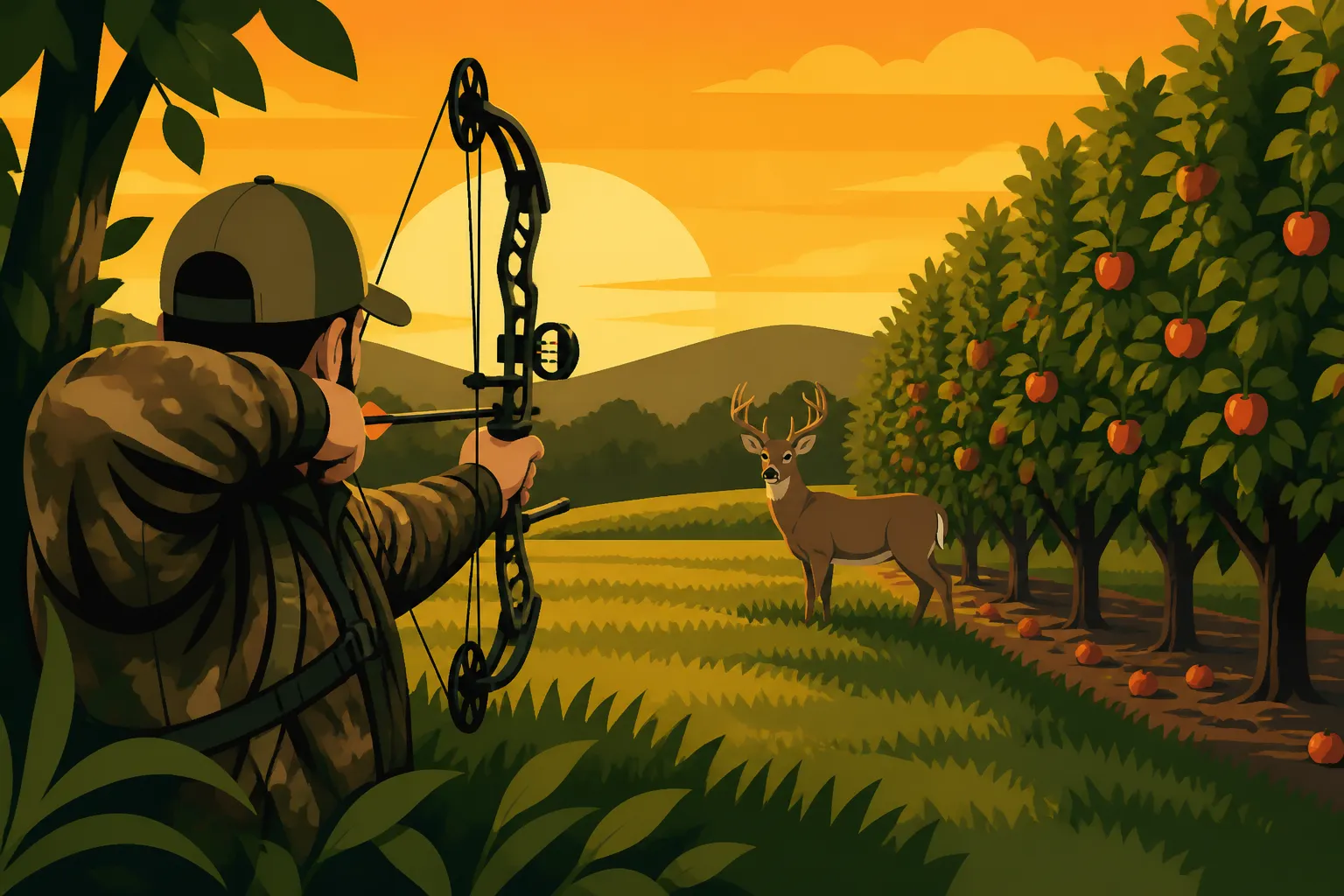
Hunting an Orchard Edge in Frederick County
Hunting an orchard edge in Frederick County, Maryland, can feel like you've unlocked a secret cheat code, but if you don't play it right, you'll be staring at empty trees instead of a deer. Deer are constantly on the move, and finding where they feed and feel safe is the name of the game. This guide is all about helping you understand why these orchard edges are deer magnets and how to position yourself for success when those Frederick County whitetails come calling.
Why Frederick County Orchard Edges Attract Deer
There's just something about an orchard that deer can't resist, and it's not just the delicious fruit. These agricultural pockets in Frederick County offer a unique blend of food, cover, and travel routes that create ideal deer habitat, making them prime real estate for hunters who know how to read the landscape.
The Allure of Abundant Food Sources
Let's be honest, deer are foodies, especially when it comes to high-energy treats. Orchard edges provide a buffet of options throughout the year. In spring and summer, deer are drawn to the lush, green growth of young shoots, tender leaves, and the various cover crops or grasses often planted between rows. As summer transitions into fall, the real magic happens: the fruit. Apples, peaches, pears, cherries – whatever type of orchard you're hunting in Frederick County, those dropped, ripe, or even fermenting fruits become an irresistible feast.
Imagine a deer's perspective. They can literally walk along a fence line or a field edge and find a concentrated, predictable source of high-sugar, high-calorie food without having to browse through dense timber for hours. This is especially critical during the pre-rut and rut phases when bucks are burning through energy like crazy. You'll often find deer hitting these orchards hard in the late afternoon and early evening, gorging themselves before heading back to bed for the night. Knowing this consistent pattern is half the battle, and it's why understanding these food sources is so vital for anyone looking to go Hunting Maryland's Long Archery Season.
Cover and Security in Adjacent Timber
An orchard alone might offer food, but it rarely offers the security deer need to feel comfortable spending much time there during daylight hours. This is where the "edge" comes in. The best orchard hunting spots are always bordered by some form of dense cover – whether it's a mature hardwood forest, a thick pine stand, a brushy hedgerow, or even a steep creek bottom with heavy undergrowth. This adjacent timber provides crucial bedding areas, escape routes, and a sense of safety from predators, including us hunters.
Deer will often stage in this thick cover, waiting for the last hour or two of daylight before stepping out into the orchard to feed. They use these transition zones as observation points, scent-checking the area before committing to the open ground. A mature buck, especially, will rarely expose himself in a wide-open orchard until he feels it's absolutely safe. Understanding this push-pull between food and security is paramount. It means that while the orchard itself is the attraction, the woods next to it are often where you need to be set up. This combination of rich food and immediate safety makes orchard edges a classic ambush spot.
Water Sources and Travel Corridors
Beyond food and cover, deer need water, and many Frederick County orchards are often situated near natural water sources like creeks, small ponds, or even drainage ditches. Furthermore, the edges of these orchards naturally create travel corridors. Deer tend to stick to the fringes of open areas, using them as highways to move from bedding to feeding, or from one block of cover to another. A well-used trail running parallel to an orchard edge, especially one that leads directly into or out of a thick woodlot, is a major hotspot.
These travel corridors become even more pronounced during the rut. Bucks will patrol these edges, scent-checking for does that might be moving in or out of the orchard. You'll find scrapes and rubs appearing along these lines, marking them as communication hubs. Pay attention to how the terrain funnels deer movement. A small dip in the land, a narrow strip of woods between two fields, or even a section of broken fence can create a natural bottleneck that concentrates deer movement right where you want it. This kind of detailed observation can really pay off when you're Hunting the Rut in Early to Mid November.
Scouting Strategies for Frederick County Orchards
Successful orchard hunting isn't about just showing up; it's about doing your homework. Scouting is the foundation of any good hunt, and when it comes to Frederick County orchards, specific strategies will give you the edge. You need to understand not only where the deer are but when and why they're using particular parts of the orchard.
Reading Deer Sign Along the Periphery
The edges of an orchard are typically where deer first interact with it. This means it's a goldmine for sign. Look for heavily used trails entering and exiting the orchard, especially where the orchard meets dense timber or a natural funnel. Pay close attention to fresh tracks; deer will often leave deep, worn trails as they consistently enter and exit. Fresh droppings can tell you how recently deer have been in the area and how heavily it's being used.
Beyond trails and droppings, keep an eye out for rubs on small saplings or larger trees along the edge, indicating bucks are moving through and marking their territory. Scrapes, particularly those made with an overhanging branch, are critical. Bucks will repeatedly visit these communication hubs, especially as the rut approaches. A quick tip from veteran hunters: if you find a cluster of fresh scrapes and rubs along an orchard edge, you've likely found a major travel corridor for a mature buck. Sometimes, you'll even see where deer have munched on low-hanging branches of fruit trees. An experienced hunter using a tool like the GoHunt app can mark these specific signs on a map, building a comprehensive picture of deer activity.
Understanding Seasonal Orchard Activity
Deer activity around orchards isn't static; it changes with the seasons and even the time of day. In early archery season, when Maryland's weather can still be warm, deer might feed in orchards primarily at night, seeking cooler bedding areas during the day. As the season progresses into fall and cooler temperatures arrive, deer become more comfortable moving during daylight. The peak of the fruit drop, usually late September through October for apples, can be an absolute frenzy, drawing deer from a wide radius. This is a fantastic time for Hunting Maryland's September Archery Opener.
Later in the season, after most of the fruit is gone, deer might still visit the orchard for leftover scraps or to browse on dormant vegetation, but their focus might shift to other late-season food sources like brassicas, acorns, or standing corn in nearby fields. Your scouting needs to adapt to these changes. What works in early fall won't necessarily work in late December. Knowing the specific fruit species in the orchard can also help. Some varieties drop earlier, some later, providing a staggered buffet for the deer.
Leveraging Technology for Scouting
In today's hunting world, technology is your friend. Satellite imagery and topographic maps, easily accessible through platforms like GoHunt, are invaluable for initial scouting. You can identify potential orchard edges, adjacent timber blocks, creek bottoms, and funnels without ever setting foot on the property. Look for variations in tree density, changes in elevation, and natural choke points that might concentrate deer movement.
Trail cameras are another non-negotiable tool. Placing cameras on known trails entering the orchard or overlooking a scrape line can provide real-time intelligence on deer patterns, including specific bucks. You'll learn not just if deer are using the orchard, but when (time of day), how often, and even which deer (bucks, does, age classes). This information is gold for planning your hunt. Remember to check local regulations regarding trail camera use on public lands if you're not on private property. Combining these technological insights with boots-on-the-ground sign reading creates a powerful scouting strategy.
Optimal Stand Placement and Hunting Tactics
Once you've done your scouting, the next critical step is to strategically place your stand and employ the right hunting tactics. An improperly placed stand, even in a great spot, can ruin a hunt faster than anything.
Wind Direction and Approach Routes
This cannot be stressed enough: wind is king. Deer rely heavily on their sense of smell, and if your scent is blowing into the area where deer are likely to approach or feed, your hunt is over before it begins. Always, always, always play the wind. This often means having multiple stand locations for different wind directions, or being willing to sit out a hunt if the wind isn't right for your chosen spot.
When choosing a stand site, consider not just the wind for the hunt itself, but also your approach and exit routes. Can you get to and from your stand without alerting deer? Can you avoid walking through bedding areas or directly across fresh trails? Many hunters make the mistake of having a perfect stand location, only to spook deer on their walk in or out. Utilize natural terrain features, creek beds, fencerows, or dense cover to conceal your movement. An app like GoHunt can help you visualize wind direction overlays and plan your approach routes efficiently. For more tips on getting into your spot undetected, check out Entry Routes Through Cut Corn Before Daylight, which, while corn-specific, offers universal wisdom on quiet entry.
Best Times to Hunt Orchard Edges
While deer can be present at any time, certain periods offer significantly higher chances of success around orchard edges. The last 1-2 hours of daylight are often prime time, as deer emerge from bedding areas to feed. The first hour of light can also be productive, catching deer still finishing up their nighttime meal before heading back to bed.
During the rut, however, all bets are off. Bucks are cruising at all times of day, searching for does. This means midday can become incredibly productive. If you're Hunting the Rut in Early to Mid November, don't be afraid to sit all day in your stand, especially if you're overlooking a travel corridor along an orchard edge where bucks might scent-check for does. After a major cold front, deer often increase their movement to feed heavily, making it a great time to be out. For a comprehensive look at post-cold front deer activity, read Hunting After a Maryland Cold Front.
Dealing with Changing Conditions and Pressure
Frederick County is a popular area for hunting, and deer can become educated very quickly. If an orchard edge receives too much pressure, deer will become more nocturnal or shift their patterns to less disturbed areas. It's crucial to adapt. If you're seeing less daylight activity, consider backing off for a few days, or explore a new section of the orchard or adjacent timber.
Weather also plays a huge role. Rain can push deer to move during midday, while heavy fog might make them hesitant to move until it burns off. Snow, especially fresh snow, often makes deer feel more exposed but can also make them move to open areas for easier browsing, or to accessible food sources. A good hunter stays flexible, constantly re-evaluating conditions and adjusting their strategy. Don't be afraid to move your stand if the deer aren't showing up where you expect them, or if a new pattern emerges.
Frederick County Specific Considerations for Orchard Hunting
Hunting in Frederick County comes with its own set of rules and nuances that every hunter needs to be aware of. Beyond general hunting ethics, understanding local regulations and land access is critical.
Local Regulations and Sunday Hunting
Maryland has specific regulations that can vary by county, and Frederick County is no exception. Before you even think about setting up a stand, make sure you're familiar with the current Maryland Hunting Licenses and What They Cost, as well as the specific deer bag limits and antler rules for Region B, where Frederick County is located. For instance, understanding Maryland's Three-Point Antler Restriction is paramount for any buck you might encounter.
Perhaps one of the most significant considerations is Sunday hunting. While many counties in Maryland have expanded Sunday hunting opportunities, specific rules apply in Frederick County, especially concerning public vs. private land and weapon types. Always check the latest Maryland Guide to Hunting & Trapping for up-to-date information on Maryland's Sunday Hunting Rules by County. This can dramatically impact when you can hunt those orchard edges. Additionally, ensure you're aware of Maryland's Legal Weapons by County, as regulations on rifles, shotguns, and muzzleloaders can differ.
Public vs. Private Land Access Challenges
Most orchards in Frederick County are on private land, which means gaining permission from the landowner is absolutely essential. This can be one of the biggest hurdles for hunters. Approach landowners respectfully, well in advance of the season, and offer to help with chores or share your harvest. Building a good relationship is key. Platforms like GoHunt can help you identify land ownership boundaries, making it easier to research and contact landowners. Remember, Do You Need Written Permission in Maryland? The answer is yes, if you're not the landowner or an immediate family member. Always get it in writing to avoid any misunderstandings.
While public land orchards are rare, some state parks or wildlife management areas in or near Frederick County might have small, scattered fruit trees or old homestead orchards. However, these often receive heavy pressure. For those hunting public land, resources like Scouting Maryland Public Land With Aerial Photos can be invaluable for identifying potential spots and finding areas that might be overlooked by other hunters. Regardless of whether you're on private or public ground, always be aware of setback rules from dwellings and roads to ensure you're hunting legally and safely.
Seasonal Deer Activity Around Orchard Edges
Understanding how deer use orchard edges throughout the hunting season is crucial for planning your hunts effectively. Here's a quick overview of what you might expect:
| Season Phase | Typical Months | Deer Activity & Focus | Optimal Hunting Strategy |
|---|---|---|---|
| Early Season | September – Early Oct | Primarily nocturnal feeding on dropped fruit; daytime movement minimal, seeking cover. | Evening sits, focusing on trails from bedding to feeding. Play the wind. |
| Peak Fruit Drop | Mid Oct – Early Nov | High daytime activity, heavy feeding on fruit. Bucks start cruising for does near edges. | All-day sits, especially midday during the rut. Focus on travel corridors. |
| Rut | Mid Nov – Early Dec | Bucks actively chasing does near edges. Feeding is secondary to breeding activity. | Focus on funnels and scrapes/rubs along edges. Call with grunts. |
| Late Season | Dec – January | Deer focus heavily on any remaining food, including late-dropping fruit or browse. Seeking warmth. | Hunt near thermal cover and any remaining food sources. Mornings and evenings. |
Disclaimer
Please note that hunting regulations, seasons, and licensing requirements can change. Always consult the most current Maryland Department of Natural Resources (DNR) official guide and local ordinances before planning any hunting trip. It is your responsibility to know and follow all applicable laws.