Hunting Canvasbacks on the Susquehanna Flats
Hunting canvasbacks on the vast expanse of the Susquehanna Flats can feel like an overwhelming challenge for many waterfowl hunters. The sheer size of the Flats, combined with the often-unpredictable Chesapeake Bay weather and the wary nature of these magnificent diving ducks, can leave even seasoned hunters scratching their heads. This guide aims to demystify the process, offering practical advice and strategies to help you successfully target canvasbacks in this iconic Maryland waterfowl mecca.
Understanding the Canvasback and the Susquehanna Flats
The Susquehanna Flats, located at the very head of the Chesapeake Bay, is a truly unique ecosystem that draws an incredible number of migratory waterfowl, particularly diving ducks. For canvasback hunters, it's a legendary spot, but understanding why it's so special and what makes canvasbacks tick here is crucial to success.
Why Canvasbacks Love the Flats
Canvasbacks are renowned for their preference for submergent aquatic vegetation (SAV), and the Susquehanna Flats has historically been a prime feeding ground for them due to its abundant wild celery beds. This vast, shallow area where the Susquehanna River meets the Bay creates a dynamic environment. The influx of freshwater from the river, combined with the Bay's tidal influences, nourishes these crucial underwater grasses. When these wild celery beds are healthy, they act like a magnet, pulling in large rafts of canvasbacks who travel thousands of miles to gorge themselves on this nutritious food source. It's a race against the clock each fall and winter as these birds fatten up for the next leg of their journey or to sustain themselves through the cold months.
However, the health of these grass beds can fluctuate year to year due to various environmental factors like water quality, storm events, and salinity changes. Hunters often lament the years when the grasses are sparse, making the birds harder to hold in one area. Despite these challenges, the Flats remain a critical staging and wintering area, and understanding these patterns, perhaps even using a mapping tool like GoHunt to scout historical grass bed locations, can be a game-changer. The birds are here for the food, and finding that food is your first step.
Identifying Canvasbacks on the Water
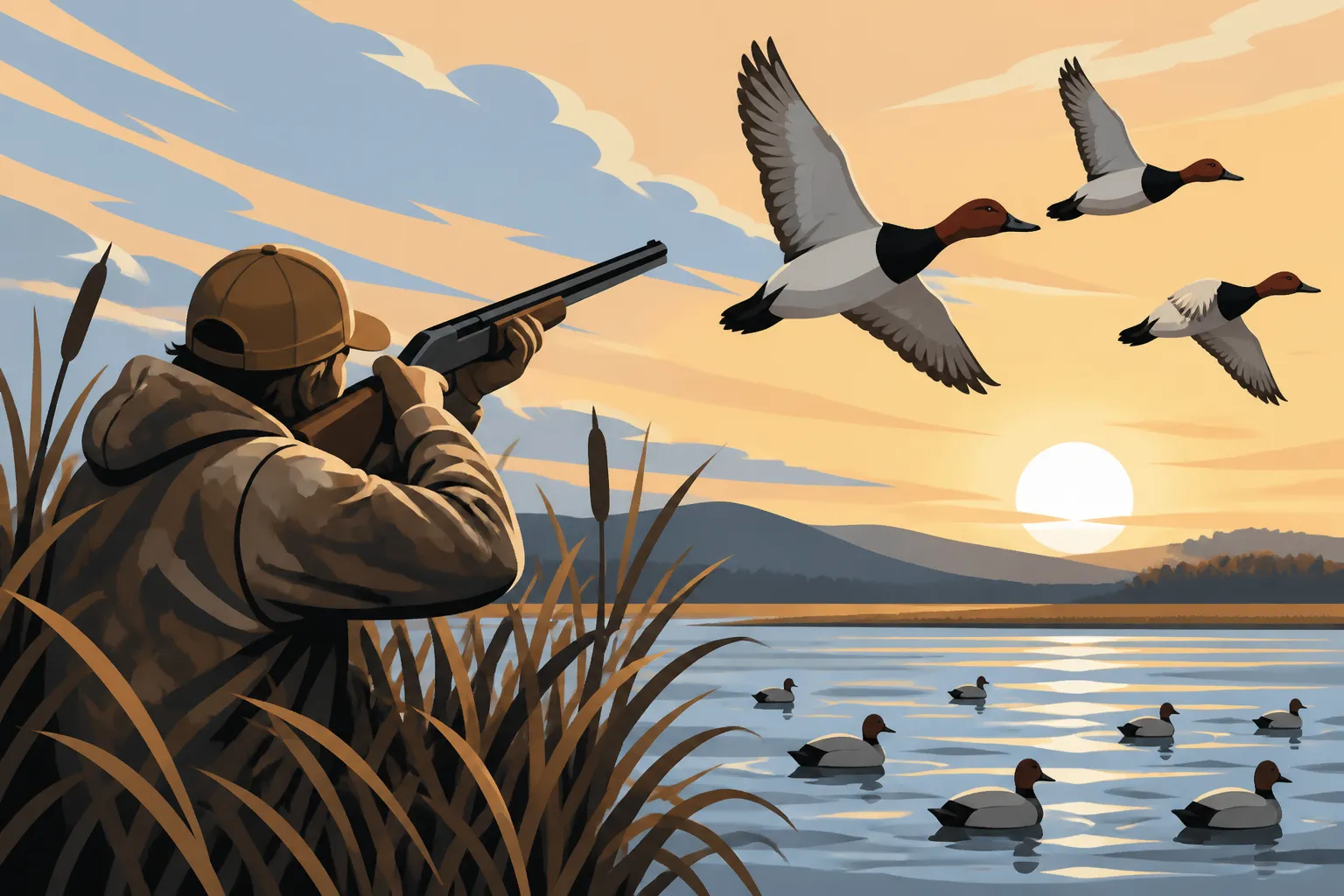
For new hunters, or those unfamiliar with diver hunting, correctly identifying canvasbacks can be a bit tricky, especially at a distance or in low light. Canvasbacks are often called the "King of Ducks" for a reason; they're large, regal-looking birds. The drakes (males) are striking with their rusty red head and neck, a black chest, and a bright white body. Their most distinctive feature, however, is their long, sloping profile from the forehead to the bill, giving them a wedge-shaped head. This isn't just a slight slope; it's quite pronounced. The hens (females) are a duller brownish-gray but still retain that distinct head profile.
They fly with powerful, rapid wingbeats in long, V-shaped or undulating lines, often low over the water. On the water, they're typically found in large rafts, often mingling with other divers like redheads and bluebills. Pay close attention to that head profile; it's the most reliable identifier. Misidentification can lead to inadvertently shooting a protected species or exceeding daily bag limits for other ducks. Knowing your birds cold is part of being a responsible hunter, and there are many resources available online and in print to help you hone your identification skills before you even step foot in the blind. Remember, Maryland has specific Duck Daily Bag Limit by Species you must adhere to.
Essential Gear and Boat Requirements for the Flats
Hunting canvasbacks on the Susquehanna Flats isn't like jump-shooting a creek. It requires specialized gear, particularly when it comes to decoys and your vessel. The conditions on the Flats can be harsh, and being underprepared isn't just uncomfortable, it can be downright dangerous.
Decoy Spreads and Rigging for Divers
When it comes to canvasbacks, bigger is often better, and numbers truly count. These are big birds, and they want to see a lot of their buddies on the water. A typical spread for canvasbacks on the Flats will involve hundreds of decoys, often 200-300 or more, to create the illusion of a massive feeding raft. You'll want predominately canvasback decoys, but mixing in some redheads, bluebills (scaup), and even a few buffleheads can add realism. These species often associate with canvasbacks.
Rigging these decoys properly for diver hunting is paramount. Most serious Flats hunters use Texas rigs or longlines. Texas rigs, which have a single line with a weight attached directly to the decoy keel, allow for quick deployment and retrieval, especially important when dealing with strong currents or rough water. Longlines, which connect multiple decoys to a single main line, are excellent for creating large, natural-looking rafts that can be anchored at either end. You'll need plenty of heavy weights to keep your spread from drifting in strong winds or currents, and durable, tangle-free line is essential. Some hunters even invest in oversized magnum decoys to enhance visibility from a distance, which can make a real difference in drawing birds in from far away. A solid spread is the backbone of any successful diver hunt, and don't be afraid to experiment with different patterns. Learning how to set up your spread effectively can be found in more detail in guides like Setting Divers Off a Chesapeake Point or Decoying Divers on Maryland's Open Bay.
Boat Setup and Safety Considerations
The Susquehanna Flats is open water, often shallow but exposed, and the weather can change in an instant. A reliable, well-equipped boat is non-negotiable. Most hunters use sturdy duck boats, often 18-24 feet in length, with shallow-draft capabilities but enough V-hull to handle choppy conditions. A powerful, reliable outboard motor is crucial, not just for getting to your spot, but for safety in case of rapidly deteriorating weather. Redundant safety equipment is also a must: multiple anchors, plenty of rope, a VHF radio, GPS, navigation lights, life jackets for everyone on board, and even backup paddles or an emergency signal kit. You should always ensure your boat is in top condition, especially if you're planning to hunt in cold weather when a breakdown can quickly become life-threatening.
Many Flats hunters incorporate some form of blind into their boat setup, whether it's a permanent doghouse blind, a pop-up blind, or natural camouflage. Blending in with the surrounding environment is key, especially since canvasbacks have exceptional eyesight. Think about how you'll hide not just yourselves, but also the boat itself. A crucial safety consideration is knowing the specific rules for Boat Safety on the Chesapeake in December, as cold water immersion is a serious risk. Always inform someone of your hunting plan, including your intended location and return time, and check marine weather forecasts religiously before heading out.
Strategies for a Successful Hunt on the Flats
Hunting the Susquehanna Flats is a blend of art and science, combining an understanding of waterfowl behavior with practical application of tactics. Success often hinges on a hunter's ability to adapt to conditions and read the birds.
Reading Weather and Tides
Weather and tides are arguably the two most critical factors influencing canvasback movement on the Flats. A strong north or northwest wind can push birds south into the main Bay, while a moderate northeast breeze can often concentrate them in certain areas, especially where there's some natural windbreak or current break. Cloudy, blustery days tend to be better for diver hunting than clear, calm ones, as the chop on the water helps hide your spread and blind, and the birds are more apt to fly lower.
Tides, particularly the falling tide, play a huge role in exposing the favored wild celery beds that canvasbacks love to feed on. Many experienced Flats hunters will time their hunts to coincide with the last few hours of a falling tide and the beginning of the incoming tide, as this is when the birds are most actively feeding. Knowing how to interpret local tide charts is absolutely essential. Websites, apps like GoHunt, and local bait shops can provide up-to-date tide information for various points on the upper Bay. Don't underestimate the power of these natural forces; they dictate where the food is, and where the food is, the ducks will be. Getting proficient at Reading Tide Charts Before a Marsh Hunt can give you a significant advantage, even on the open Flats.
Decoy Placement and Blind Tactics
Once you've factored in the weather and tides, it's time to set your spread and get hidden. Canvasbacks are sharp-eyed, so concealment is paramount. If you're hunting from a boat blind, ensure it's well-camouflaged with natural vegetation or artificial grass mats that blend with the surroundings. On the Flats, many hunters utilize temporary stake blinds or even subtle bumps in the bottom to set up their spreads around. The key is to disappear.
When placing your decoys, think about creating a natural landing zone for the birds. A common setup involves a large, loose raft of canvasback decoys upwind of your blind, with an open "landing strip" in front of you. Often, a small group of confidence decoys, perhaps a few mallards or geese, can be placed closer to the blind or slightly off to the side to give the impression of a safe feeding area. Ensure your decoys are spaced far enough apart to look natural but close enough to appear as a cohesive flock. Always position your blind to take advantage of the wind, ensuring decoying birds are coming into the wind and offering you a good shot. Calling for canvasbacks is often subtle, primarily low feeding calls or quiet clucks, rather than aggressive hails, as these birds are more attracted by the visual of a large, contented flock.
Navigating Regulations and Ethical Hunting
Hunting canvasbacks on the Susquehanna Flats isn't just about strategy; it's also about strict adherence to regulations and maintaining a high standard of ethical conduct. The Bay is a busy place, and responsible hunting ensures its future for everyone.
Maryland Specific Rules for Diver Hunting
Maryland has a comprehensive set of regulations for waterfowl hunting, and canvasbacks, being a highly managed species, often have specific rules that can change year to year based on population surveys. It's absolutely critical to consult the most current Maryland DNR waterfowl hunting guide every season before you head out. Key areas to focus on include:
- Season Dates: Canvasback season dates can be shorter and differ from other duck seasons. Ensure you know the exact dates for Maryland Duck Season Dates for canvasbacks.
- Bag Limits: Canvasbacks typically have a very restrictive daily bag limit, often one or two birds per hunter. Double-check this annually, as it can fluctuate. This is part of the overall Duck Daily Bag Limit by Species.
- Shooting Hours: Adhere strictly to legal shooting hours, which are typically one-half hour before sunrise to sunset.
- License Requirements: You'll need a Maryland hunting license, a Maryland Migratory Game Bird Stamp, and a Federal Duck Stamp. Don't forget your Federal Duck Stamp Rules for Bird Hunters.
Beyond these, remember rules regarding shotgun capacity (plugged to three shells), non-toxic shot requirements, and transportation of birds. Ignorance of the law is never an excuse, and game wardens are frequently patrolling the Flats.
Respecting the Resource and Other Hunters
The Susquehanna Flats can get crowded, especially on prime hunting days. Practicing good etiquette and respecting your fellow hunters is not just polite, it's essential for safety and enjoyment. Give other hunters ample space; don't set up too close to an established spread or blind. Understand that others have often put in significant effort to scout and set up their locations.
Furthermore, responsible hunting extends to how you treat the birds themselves. Only shoot at birds within effective range to ensure clean kills and minimize cripples. If you do cripple a bird, make every reasonable effort to retrieve it quickly. This is where a good retriever comes into its own, or a fast, agile boat. Picking up your spent shell casings, not leaving trash, and ensuring you're only targeting legal species within your bag limits all contribute to the ethical image of hunting. Organizations like Ducks Unlimited and Delta Waterfowl work tirelessly to conserve canvasback habitat, and as hunters, we are stewards of this incredible resource. Using tools like GoHunt to mark your spots and scouting notes can help you track your impact and plan more sustainably.
Disclaimer
Please note that hunting regulations and conditions can change. Always consult the most current Maryland Department of Natural Resources (DNR) hunting guide and local regulations before planning any hunt. Safety should always be your top priority in the field.