Maryland’s Three Huntable Squirrel Species
While big game like deer and turkeys often steal the spotlight, there's an incredible amount of satisfaction and challenge to be found in small game hunting, particularly for squirrels, right here in Maryland. Many hunters, especially those new to the woods or looking for a way to extend their season, can feel a bit lost on where to start beyond the common whitetail. This comprehensive guide is here to shed light on Maryland's three huntable squirrel species, helping you identify them, understand their habits, and equip you with the knowledge to pursue them successfully across our diverse landscapes.
Maryland's Bushy-Tailed Trio: An Overview of Huntable Squirrels
Maryland is home to several squirrel species, but not all are fair game. Understanding which ones you can legally pursue is the critical first step for any responsible hunter. Forget the confusion; we're going to break down the key players you'll be looking for in the woods.
Why Squirrel Hunting Matters in Maryland
Squirrel hunting isn't just a fallback; it's a fantastic hunting tradition in its own right, offering many benefits. For starters, it’s highly accessible. You don't always need vast tracts of private land or specialized permits. Often, good squirrel hunting can be found on public lands or smaller private woodlots. It’s also an excellent way to introduce new hunters, especially youth, to the ethics, woodcraft, and thrill of the chase without the pressure of a big game animal. The seasons are long, often overlapping with early archery and extending into the colder months, which means more days in the field. Plus, squirrel meat is absolutely delicious, offering a lean, healthy protein source that's incredibly versatile in the kitchen. It teaches patience, observation, and precision shooting, skills that transfer to all other forms of hunting.
The Legal Line: What You Can and Can't Hunt
When you're out there, it's crucial to know your targets. Maryland has three species of squirrels that are legal to hunt: the Eastern Gray Squirrel, the Eastern Fox Squirrel, and the Red Squirrel. Each of these has distinct characteristics and preferred habitats. What you absolutely cannot hunt, and must be vigilant to avoid, is the Delmarva Fox Squirrel. This particular subspecies is federally protected and, while it shares a name with the huntable Eastern Fox Squirrel, it looks different and occupies a more restricted range. We'll delve deeper into how to tell them apart later, but always remember: if you have any doubt, don't take the shot. Responsible hunting means respecting these conservation efforts.
The Eastern Gray Squirrel: Maryland's Most Common Quarry
When most people picture a squirrel in Maryland, they're probably thinking of the Eastern Gray Squirrel. These agile, often brazen creatures are Maryland's most widespread squirrel species, found from bustling suburban parks to the deepest tracts of hardwood forest. They are a staple of small game hunting for a very good reason.
Habitat and Habits of the Gray Squirrel
Eastern Gray Squirrels thrive in deciduous and mixed hardwood forests, especially those rich with oak, hickory, beech, and walnut trees. These trees provide not only the acorns and nuts that form the bulk of their diet but also the cavities and dense canopy cover essential for nesting and escaping predators. You'll find them just about anywhere there's a good mast crop. They're primarily arboreal, meaning they spend most of their lives in trees, but they're not shy about foraging on the forest floor, especially in the fall when they’re burying nuts for winter. Their activity peaks in the early morning and late afternoon, often coinciding perfectly with prime hunting hours. They're incredibly vocal, using barks, chattering, and tail flicks to communicate warnings or excitement. Knowing this can actually help you locate them. If you're "Squirrel Hunting Maryland Hardwood Ridges" you're likely to encounter a bounty of gray squirrels.
Identifying Gray Squirrels in the Field
Gray squirrels are generally easy to spot. They typically weigh between 1 to 1.5 pounds and measure around 18-20 inches long, including their impressive bushy tail. Their fur is predominantly gray on the back and sides, often with a brownish or reddish wash, and a clean white or light gray belly. Their most distinguishing feature is that large, often somewhat flat, bushy tail which they use for balance, as a blanket, and for communication. Sometimes you’ll see individuals that are nearly black, a melanistic variation, but they are still genetically gray squirrels. These darker phases are particularly common in some parts of Maryland, like along the Potomac River corridor or in more urbanized areas. Regardless of color variation, the overall body shape and tail characteristics remain the same.
Where to Find Abundant Gray Squirrels
To find gray squirrels, focus on areas with mature hardwood forests that produce a reliable mast crop. Think big stands of oak and hickory. Areas like Seneca Creek State Park (where hunting is allowed in designated areas, with appropriate permits) or many of Maryland’s state forests and wildlife management areas, especially in the central and western regions, will hold healthy populations. Don't overlook the smaller woodlots and creek bottoms, either, particularly those bordering agricultural fields. They love the edges where food sources are diverse and escape cover is nearby. Utilizing mapping tools like GoHunt can help you scout for these specific habitat types on public or private land. Look for "Gray Squirrels in Maryland Hardwoods" and you'll often find success.
The Eastern Fox Squirrel: A Larger, More Elusive Prize
The Eastern Fox Squirrel is Maryland’s largest squirrel species and, for many hunters, a truly special trophy. They are not as numerous or widespread as the gray squirrel, making a successful hunt for a fox squirrel particularly rewarding.
Fox Squirrel Characteristics and Unique Traits
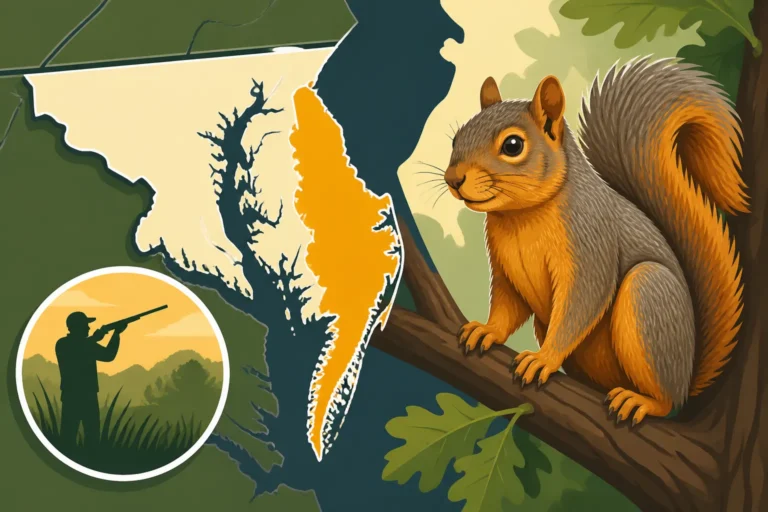
Eastern Fox Squirrels are significantly larger than their gray cousins, often weighing 2 to 3 pounds and stretching to 20-26 inches in length. Their coloration is quite variable, but typically they have a grizzled grayish-brown back with rusty or yellowish-orange undersides, and often a distinctive reddish-orange stripe down their back or tail. Their tail is still bushy but often appears flatter and less "fluffed out" than a gray squirrel's. They also have smaller ears in proportion to their head size. Unlike the frenetic gray squirrel, fox squirrels tend to be a bit more deliberate and cautious in their movements. They’re less inclined to scamper through the canopy and more likely to stick to larger branches or even spend significant time foraging on the ground.
Preferred Habitats and Distribution in Maryland
Fox squirrels prefer more open, mature hardwood forests with less understory, or mixed forests that include pines, often near agricultural fields or along forest edges. They are less dense-forest dependent than gray squirrels. In Maryland, their populations are concentrated primarily in the western counties, especially Garrett and Allegany, and in certain areas of the Eastern Shore. If you're exploring areas like Green Ridge State Forest or Savage River State Forest in Western Maryland, you'll be in prime fox squirrel country. Here, they often utilize the old growth timber and oak flats. You might find them while "Still-Hunting a Savage River Oak Flat" or "Hunting a Green Ridge Ridgetop Bench". They also exist in scattered populations on the lower Eastern Shore, often in loblolly pine plantations mixed with hardwoods.
Distinguishing Fox Squirrels from Their Protected Cousins
This is perhaps the most critical distinction for any squirrel hunter in Maryland. The Eastern Fox Squirrel (huntable) must not be confused with the federally and state-protected Delmarva Fox Squirrel.
Here's how to tell the difference:
-
Eastern Fox Squirrel (Huntable):
- Size: Larger, 2-3 pounds.
- Coloration: Variable, often grizzled brown-gray back with rusty/orange undersides. Can have a reddish stripe.
- Tail: Bushy but can appear flatter.
- Head: Often has a distinctive "mask" pattern around the eyes and nose, which can be darker or lighter than the surrounding fur.
- Behavior: More deliberate, often terrestrial.
- Range: Western Maryland (Allegany, Garrett) and scattered populations on the lower Eastern Shore.
-
Delmarva Fox Squirrel (Protected):
- Size: Similar large size, perhaps slightly larger than typical Eastern Fox Squirrels.
- Coloration: Generally a much lighter, almost silver-gray back with a white belly. Critically, no reddish or rusty tones. They often appear quite pale.
- Tail: Exceptionally large and bushy, often with a white-fringed appearance.
- Head: White nose and white ears are key identifiers. Often a somewhat blank or "ghostly" facial appearance compared to the typical Eastern Fox Squirrel's darker facial markings.
- Behavior: Also deliberate and often terrestrial.
- Range: Primarily found in a more restricted range on the Eastern Shore, notably in Dorchester, Somerset, Wicomico, and parts of Talbot and Caroline counties. They favor mature pine-oak forests with open understories.
The key takeaways are the white nose and ears and the lack of any reddish/rusty coloration on the Delmarva Fox Squirrel. Always err on the side of caution. If you're hunting in the Eastern Shore counties where both might exist, and you see a large, pale squirrel with a white nose and ears, assume it's protected and do not shoot. For more details, you can research "The Protected Delmarva Fox Squirrel" to ensure you're fully informed before heading afield.
The Red Squirrel: A Small, Feisty Challenger
Often overlooked by hunters focused on their larger cousins, the American Red Squirrel offers a unique hunting experience due to its diminutive size, feisty personality, and specific habitat preferences.
Red Squirrel Appearance and Vocalizations
Red squirrels are the smallest of Maryland’s huntable squirrels, typically weighing only about 5 to 9 ounces and measuring 10-14 inches long (including tail). Their fur is a striking reddish-brown on the back, often with a noticeable white or creamy belly, and sometimes a faint dark stripe along their sides. Their tails are not as bushy as gray or fox squirrels, appearing thinner and often with a yellowish fringe. What truly sets them apart, however, is their vocal prowess. They are incessant chatterboxes, often emitting rapid, scolding chirps and trills, sometimes sounding like a bird. This can be both a blessing and a curse for hunters – their noise gives them away, but it also means they've likely spotted you!
Piney Woods Dwellers: Red Squirrel Habitat
As their common name, "pine squirrel," suggests, red squirrels are strongly associated with coniferous and mixed conifer-hardwood forests. They absolutely adore stands of pine, spruce, and hemlock, especially those with abundant cones. You'll find them particularly in the higher elevations of Western Maryland, where conifer stands are more prevalent. They create middens – large piles of chewed cone scales – at the base of trees or under logs, which are tell-tale signs of their presence. These middens are where they store their winter food supply. "Fox Squirrels in Western Maryland" may overlap in some mixed stands, but red squirrels really dominate the pure conifer woods. They're also known to raid bird feeders with impressive determination.
The Challenge of Hunting Red Squirrels
Hunting red squirrels presents a different kind of challenge. Their small size makes them a harder target, requiring more precise shooting. Their constant chattering can make you feel like you're being scolded by the forest itself. However, their vocal nature also makes them somewhat easier to locate, if you can pinpoint the source of the ruckus. Because they rely heavily on conifer cones, finding areas with a good cone crop is key. You'll often find them working their way through the branches of pines, sometimes cutting down cones, or darting around the bases of trees near their middens. Still-hunting slowly and quietly through a conifer stand, pausing to listen for their distinctive chatter, is an effective tactic.
Effective Strategies for Maryland Squirrel Hunting
Regardless of which species you're targeting, successful squirrel hunting in Maryland hinges on a few core principles: scouting, understanding their habits, using appropriate gear, and timing your efforts.
| Species | Size/Weight | Primary Coloration | Key Habitat Preference | Maryland Distribution |
|---|---|---|---|---|
| Eastern Gray | 1-1.5 lbs | Gray back, white belly | Deciduous hardwood forests (oak, hickory) | Statewide, highly common |
| Eastern Fox | 2-3 lbs | Grizzled brown/gray, rusty/orange belly, often reddish stripe | Open, mature hardwoods, mixed pine-hardwoods, forest edges | Western MD (Allegany, Garrett), scattered Lower Eastern Shore |
| Red Squirrel | 5-9 oz | Reddish-brown back, white belly | Coniferous and mixed conifer forests | Western MD, especially higher elevations with conifers |
| Delmarva Fox (PROT.) | 2-3 lbs | Silver-gray back, white belly, NO red/rusty tones | Mature pine-oak forests with open understory | Restricted Eastern Shore (Dorchester, Somerset, Wicomico, parts of Talbot, Caroline) |
Scouting for Squirrel Sign and Hotspots
Scouting is just as vital for squirrel hunting as it is for deer. You're looking for signs of active squirrel feeding and presence. In the fall, this means finding trees dropping nuts or acorns. Look for chewed nut shells on logs, stumps, or along trails. For red squirrels, seek out those distinctive middens. Keep an eye out for leaf nests (dreys) in tree canopies, especially after the leaves have fallen, or tree cavities which squirrels use for dens. A good pair of binoculars can help you spot movement high in the canopy or identify den trees from a distance.
When "Scouting Maryland Public Land Before Season", pay close attention to the mast crop. Some years, certain tree species will produce heavily, and squirrels will concentrate there. Using an aerial map tool, even one as simple as Google Maps or a more advanced one like GoHunt, can help you identify promising timber stands and access points. Focus on creek bottoms, ridge lines, and areas where different timber types meet.
Preferred Gear and Techniques for Bushy-Tails
Squirrel hunting doesn't require a lot of specialized gear, which is part of its appeal. A good .22 rifle or a shotgun (20 gauge or 12 gauge with appropriate shot size, like 6 or 7.5) are common choices. Many prefer the quiet challenge of a .22 for headshots, preserving meat and adding to the sport. If you're using a shotgun, remember that squirrels are quick, and you'll often be shooting through branches, so patterns can be tricky.
Still-hunting is perhaps the most effective technique. This involves moving slowly, taking a few steps, then pausing for several minutes to scan the trees and listen. Squirrels are often active after you've moved past them, so patience is key. Find a comfortable spot with good visibility under a productive oak, sit still, and wait. Sometimes, a simple squirrel call, mimicking barks or chirps, can pique their curiosity and draw them out. Early season hunts might involve "Squirrel Hunting Maryland's September Opener", where foliage is thick, demanding keen eyesight. Later in the year, when leaves are down, spotting them is easier, but they're also warier.
Timing Your Hunt for Optimal Success
Squirrels are most active during the cooler parts of the day, particularly early morning and late afternoon. This makes them a perfect target for a quick hunt before work or after, or for an extended outing on a crisp fall day. Overcast days without much wind can be particularly productive, as squirrels tend to be more active and their movements are easier to hear. Avoid hunting during heavy winds, as squirrels will often hunker down, and the rustling leaves make it nearly impossible to hear or see them. Pay attention to "When Maryland Squirrel Season Opens and Closes" and "Small Game Season Dates and Daily Limits" to plan your hunts effectively. A cold front after a warm spell can often kick-start squirrel activity as they know winter is approaching and feeding opportunities will become scarce.
Always remember safety first. Be absolutely sure of your target and what lies beyond it. Squirrels move quickly and can present challenging shots. By understanding these three huntable species and employing smart hunting strategies, you’ll find that Maryland's bushy-tailed trio offers an engaging and rewarding experience for hunters of all skill levels.
Disclaimer
This article is for general informational purposes only and does not constitute professional advice. Laws, prices and regulations vary by location and change over time. Consult a qualified professional for guidance on your specific situation.