The Protected Delmarva Fox Squirrel
It’s a common scenario for many squirrel hunters in Maryland: you’re out on a crisp autumn morning, maybe still-hunting through a mature oak stand on the Eastern Shore, and a large, stately fox squirrel bounds across your path. Your adrenaline surges, but then a flicker of uncertainty creeps in. Is this the elusive, state-protected Delmarva Fox Squirrel, or one of the more common, huntable fox squirrel subspecies? The distinction is incredibly important, as mistakenly taking a protected animal can lead to significant legal trouble and goes against every principle of ethical hunting. This guide is designed to clarify the nuances, helping you understand precisely what sets the Delmarva Fox Squirrel apart, where it thrives, and how to confidently identify it in the field so you can hunt responsibly and with peace of mind.
What Makes the Delmarva Fox Squirrel Special (and Protected)?
For hunters who have spent years chasing gray squirrels or even the more common Eastern Fox Squirrel, encountering a Delmarva Fox Squirrel can be a bit like seeing a ghost from the past. These aren't just any squirrels; they represent a significant piece of Maryland's natural heritage and a testament to dedicated conservation efforts. Understanding their unique characteristics and history is the first step toward appreciating their protected status.
A Unique Maryland Native
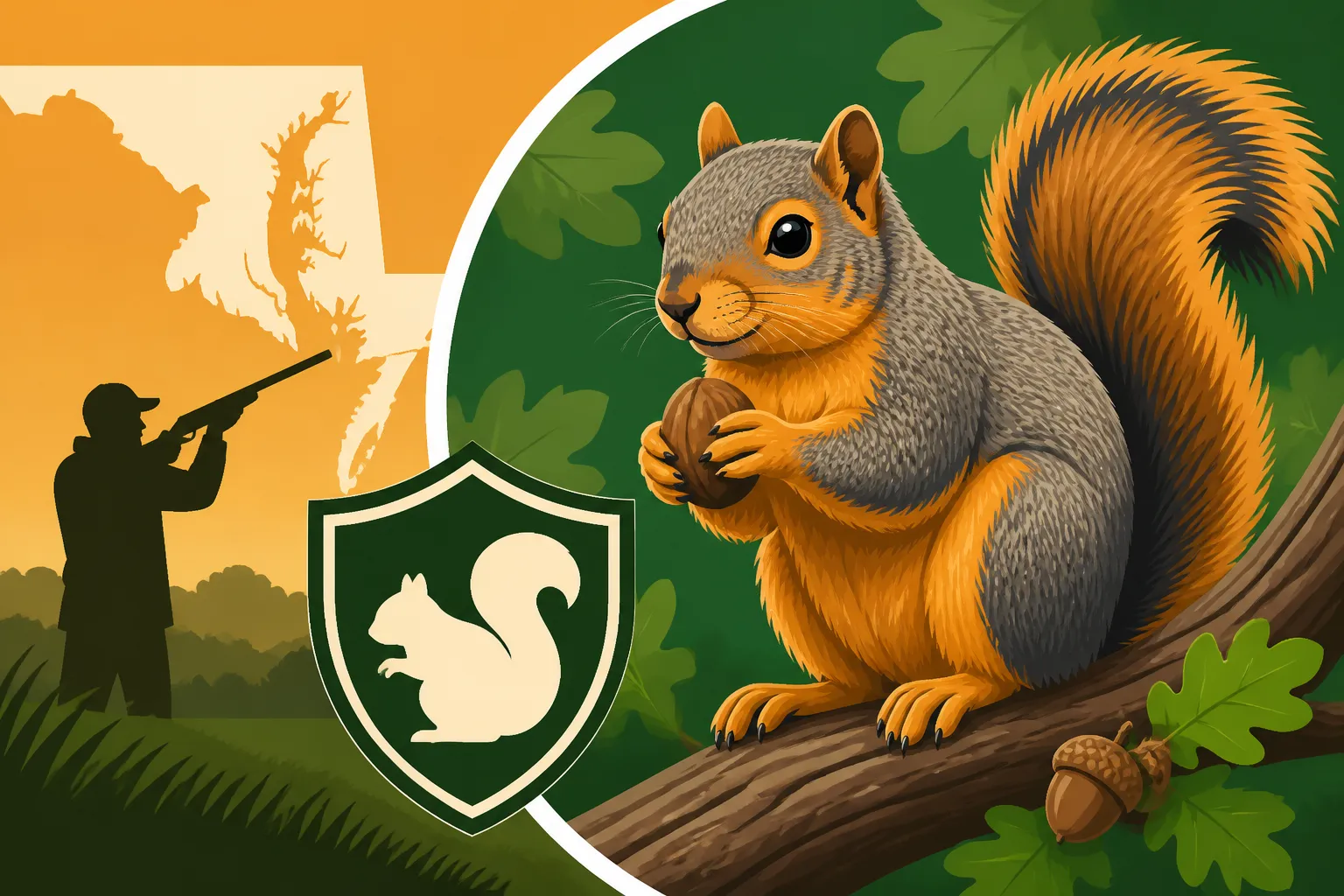
The Delmarva Fox Squirrel (DFS), often simply referred to as the Delmarva, stands out from its squirrel cousins for several compelling reasons. First and foremost is its striking appearance. Unlike the reddish-brown hues often seen on Eastern Fox Squirrels, the Delmarva sports a beautiful silver-gray coat, sometimes with hints of white, especially on its belly and muzzle. Its ears are often noticeably white, and it possesses a distinctive white nose. These aren't subtle differences; once you've seen a true Delmarva, it's hard to confuse it with others. Furthermore, they are notably larger and heavier than gray squirrels, often appearing slow and deliberate in their movements compared to the frantic scurrying of grays. Imagine a stately old gentleman of the squirrel world, moving with purpose rather than panic. This unique combination of size, coloration, and demeanor gives the Delmarva Fox Squirrel a distinct identity, making it a true jewel of the Delmarva Peninsula's wildlife.
The Story of Their Decline and Recovery
The Delmarva Fox Squirrel wasn't always so rare. Historically, their range stretched across the entire Delmarva Peninsula, from southern Delaware and Maryland down to Virginia. They were once a common sight in the mature, open-canopy forests that characterized much of the region. However, as human populations grew and agricultural and timber practices intensified, their habitat began to disappear at an alarming rate. Large tracts of mature forests were cleared for farms or converted into dense, young pine plantations, which aren't suitable for the DFS. By the mid-20th century, their numbers had plummeted to critical levels, and they were listed as federally endangered. This severe decline served as a wake-up call, highlighting how quickly even seemingly common species can vanish when their specific habitat needs are not met. The story of the Delmarva Fox Squirrel is one of drastic decline, but also of remarkable recovery, thanks to decades of concentrated conservation efforts. These efforts have slowly but surely helped this iconic squirrel reclaim some of its former strongholds, although its populations remain fragile and dependent on ongoing management.
Where the Delmarva Fox Squirrel Still Lives in Maryland
Knowing where to look is half the battle when it comes to identifying and protecting these unique creatures. The distribution of the Delmarva Fox Squirrel in Maryland is not uniform; it's heavily concentrated in specific areas, primarily on the lower Eastern Shore, due to a combination of historical factors and ongoing habitat management.
Current Strongholds on the Eastern Shore
Today, if you're hoping to spot a Delmarva Fox Squirrel in Maryland, your best bets are generally in the southern and central Eastern Shore counties. Dorchester, Somerset, Wicomico, and Worcester counties are considered the primary strongholds. These areas still contain significant tracts of the mature, open pine-hardwood and deciduous forests that the DFS prefers. You'll find them in places like the vast forests around the Nanticoke River watershed, in and around some of the larger public land holdings, and on private timberlands where specific management practices are in place. For hunters pursuing other small game or deer in these areas, like those who might be Hunting Maryland's Lower Eastern Shore Marshes or Hunting a Loblolly Pine Cutover, it’s crucial to be extra vigilant. While their historical range was much broader, these particular counties now represent the core of their remaining Maryland population. The continued presence of these squirrels in these areas is a direct result of ongoing conservation work.
Habitat Requirements and Expansion Efforts
The Delmarva Fox Squirrel is quite particular about its living arrangements. They thrive in mature forests with an open understory, which means there isn't a dense thicket of saplings and shrubs beneath the canopy. This open structure allows them to move freely on the ground, where they spend a significant portion of their foraging time. They prefer large trees, often oaks and hickories, that provide a consistent source of acorns and other nuts, as well as plenty of den sites. This is a stark contrast to gray squirrels, which are comfortable in much denser woods, or even Eastern Fox Squirrels, which can adapt to slightly more varied habitats.
Conservation efforts have focused heavily on restoring and maintaining these specific habitat types. This often involves selective timber harvesting to create more open conditions, as well as prescribed burning to control understory growth and promote healthy forest regeneration. Reintroduction programs have also played a role, with squirrels being moved from healthy populations to suitable habitat areas where they had previously been extirpated. These careful management strategies, often involving partnerships between state agencies, federal wildlife refuges, and private landowners, are vital for ensuring the continued recovery and expansion of the Delmarva Fox Squirrel population. When you're Scouting Maryland Public Land Before Season in these regions, you might notice areas specifically managed to foster these open, park-like forest conditions, which are ideal DFS territory.
Why These Squirrels Are Protected (and Why It Matters to Hunters)
The protection status of the Delmarva Fox Squirrel isn't just an arbitrary rule; it's a critical component of a broader conservation strategy aimed at preserving biodiversity. For hunters, understanding this protection is paramount, not only to avoid legal penalties but also to uphold the ethical standards of our sport.
Conservation Status and Legal Protections
The Delmarva Fox Squirrel has been a poster child for recovery efforts. While it was once federally endangered, its population rebounded enough to be delisted from the federal Endangered Species Act. However, this doesn't mean it's out of the woods entirely. In Maryland, the Delmarva Fox Squirrel remains a state-protected species. This designation means that it is illegal to harvest, harm, or possess a Delmarva Fox Squirrel without specific permits. The penalties for violating these protections can be severe, ranging from hefty fines to potential imprisonment, and the loss of hunting privileges.
For hunters, this isn't just a regulatory hurdle; it's a testament to the fragile nature of this species' recovery. Every individual squirrel counts, and accidental harvesting could jeopardize the progress made over decades. Knowing the rules and understanding the reasons behind them is a fundamental responsibility of every hunter. Before heading out for Squirrel Hunting Maryland's September Opener or any small game season on the Eastern Shore, make sure you're well-versed in the identification guidelines and the specific areas where the DFS is known to reside.
Ethical Hunting and Conservation
Beyond the legal implications, protecting the Delmarva Fox Squirrel aligns perfectly with the core tenets of ethical hunting and wildlife conservation. Responsible hunters are, by definition, conservationists. We understand that healthy wildlife populations depend on healthy habitats and sustainable management. Accidentally or carelessly taking a protected species not only reflects poorly on the individual hunter but can also undermine the public perception of hunting as a whole.
Our role as hunters often involves contributing to wildlife management through license fees and excise taxes on gear. This funding directly supports agencies that protect species like the Delmarva Fox Squirrel. By being diligent in our identification and respecting protected species, we reinforce our commitment to conservation. It demonstrates that we are not just consumers of wildlife but active stewards, dedicated to ensuring vibrant ecosystems for future generations. This commitment helps preserve our hunting heritage and the wild places we cherish, while also showcasing the important role hunters play in broader wildlife conservation efforts, a value often highlighted by resources from organizations like GoHunt that emphasize ethical practices and land stewardship.
Identifying a Delmarva Fox Squirrel in the Field
The moment of truth for any squirrel hunter in Delmarva territory often comes down to rapid, accurate identification. When a large squirrel appears, you need to be able to tell if it's a huntable species or one of the protected Delmarva Fox Squirrels. This isn't always easy, especially if you're not accustomed to seeing them regularly, but there are distinct physical and behavioral cues that can help you make the right call.
Key Physical Traits for Identification
The most reliable way to identify a Delmarva Fox Squirrel is by its unique appearance. Forget the reddish hues you might associate with other fox squirrels or the typical gray and white of the Eastern Gray Squirrel. The Delmarva Fox Squirrel typically has a striking silver-gray coat across its back and sides, often with a clean, bright white belly. Its most distinctive features are its head: a prominent white nose and white patches around its ears. This "white-faced" look is a strong indicator. They are also notably larger than gray squirrels, often appearing almost cat-sized to the untrained eye, and generally larger than most Eastern Fox Squirrels you'd encounter further west. Their tails are long and bushy, blending with their overall gray coloration.
To put it into perspective, imagine seeing a typical Eastern Gray Squirrel – small, quick, mostly gray with a white belly, a black-bordered tail. Now, picture an Eastern Fox Squirrel – larger than a gray, often with reddish-brown fur, especially on its sides and head, and a rust-colored belly. Finally, visualize the Delmarva: much larger, predominantly silver-gray, a stark white belly, and that tell-tale white nose and ear patches. When you’re hunting for Maryland's Three Huntable Squirrel Species, a silver-gray squirrel with a white nose should immediately raise a red flag. Always remember: if there's any doubt about whether it's a protected Delmarva, err on the side of caution.
Behavioral Clues and Habitat Context
Beyond their physical appearance, Delmarva Fox Squirrels also exhibit certain behaviors and preferences that can aid in identification. They tend to be less frenetic and more deliberate in their movements compared to the hyperactive gray squirrel. While a gray squirrel might zip up a tree trunk and disappear into the canopy at the first sign of danger, a Delmarva Fox Squirrel might move more slowly, perhaps stopping to assess the situation from a low branch or even staying on the ground longer. They spend a considerable amount of time foraging on the forest floor, in search of acorns, nuts, and fungi, especially in their preferred open-canopy habitats.
Consider a scenario: you're walking through a mature loblolly pine stand with a relatively clear understory, typical DFS habitat. You spot a large squirrel on the ground, slowly digging. It's much bigger than a gray, and its movements are calm. As it looks up, you notice its silver-gray fur and a distinct white nose. This combination of habitat (open, mature woods), size, color, and calm demeanor should be a strong signal that you're likely looking at a Delmarva. Conversely, if you're in a dense, brushy woodlot, or you see a small, quick, reddish squirrel, it's far less likely to be a Delmarva. Observing these behavioral and habitat clues in conjunction with physical traits can significantly increase your confidence in proper identification.
| Feature | Delmarva Fox Squirrel | Eastern Fox Squirrel | Eastern Gray Squirrel |
|---|---|---|---|
| Size | Large, almost cat-sized | Large, but generally smaller than DFS | Small, common backyard squirrel |
| Primary Coloration | Silver-gray | Reddish-brown to orange | Gray with white belly |
| Belly Color | White | Orange-red to rust | White |
| Head Features | White nose, white ear patches | No prominent white on face/ears | No prominent white on face/ears |
| Tail | Long, bushy, gray | Long, bushy, reddish-brown/orange | Long, bushy, gray with white fringe |
| Movement | Slow, deliberate, ground-foraging | More active than DFS, often arboreal | Very active, highly arboreal |
| Preferred Habitat | Mature, open forests, minimal understory | Varied forests, farm woodlots, urban | Dense forests, suburban areas |
| Legal Status in MD | Protected | Huntable | Huntable |
Habitat Management for the Delmarva Fox Squirrel
The remarkable comeback of the Delmarva Fox Squirrel isn't accidental; it's the direct result of intentional and sustained habitat management efforts. Without dedicated stewardship, these unique squirrels would likely still be on the brink of extinction. Understanding these efforts helps clarify why certain forest characteristics are so vital to their survival.
Promoting Open Canopy Forests
At the heart of Delmarva Fox Squirrel recovery is the creation and maintenance of open-canopy forests. Imagine a forest where you can easily walk through the understory, where the sunlight filters down to the forest floor, and where large, mature trees dominate. This isn't just aesthetically pleasing; it's biologically essential for the DFS. These open conditions allow them to see predators from a distance while foraging on the ground, and to navigate easily between feeding areas. Dense, brushy undergrowth, while great for some species, limits their visibility and mobility, making them vulnerable.
To achieve this, land managers often employ a variety of forestry techniques. Selective timber harvesting can remove smaller, less desirable trees, opening up the canopy and allowing more light to reach the forest floor. Prescribed burning is another critical tool, carefully used to reduce dense understory vegetation, recycle nutrients, and promote the growth of mast-producing trees like oaks and hickories. These practices aren't just for squirrels; they also benefit other wildlife and improve overall forest health. When you're exploring areas like Hunting Chesapeake Forest Lands for Sika or other timbered tracts on the Eastern Shore, you might observe these management techniques in action, all aimed at fostering the specific conditions the Delmarva thrives in.
Landowner and Public Land Stewardship
The success of the Delmarva Fox Squirrel recovery story owes a great deal to the collaborative efforts of both public land managers and private landowners. On public lands, Maryland's Wildlife Management Areas (WMAs) and State Forests have been at the forefront of implementing habitat improvements. Areas like Fishing Bay WMA or Deal Island WMA, while known for waterfowl, often include adjacent forested uplands that are managed for a variety of species, including the DFS. These public areas serve as crucial anchor populations and corridors for expansion.
Private landowners, particularly those with significant forest acreage on the Eastern Shore, also play an indispensable role. Many have partnered with state and federal agencies to implement voluntary conservation practices, receiving technical and sometimes financial assistance to manage their forests in a way that benefits the Delmarva Fox Squirrel. Programs encourage activities like creating snags (standing dead trees) for den sites, planting mast-producing trees, and carefully managing timber harvests. This cooperative approach underscores a fundamental truth about wildlife conservation: it takes a community of dedicated individuals and organizations to make a lasting difference.
Hunting Responsibly in Delmarva Fox Squirrel Territory
For the ethical hunter, responsible practice in areas where protected species reside is not just about avoiding legal trouble; it's about upholding the integrity of the sport and demonstrating respect for all wildlife. When you venture into Delmarva Fox Squirrel territory, a little extra preparation and caution can go a long way.
Pre-Hunt Scouting and Awareness
Before you even step foot in the woods for a small game hunt, especially on the Eastern Shore, do your homework. Understand the specific boundaries of where the Delmarva Fox Squirrel is known to occur. Maps and online resources from the Maryland Department of Natural Resources are invaluable for this. You can also use advanced mapping tools like GoHunt, which often allow you to overlay habitat data or public land boundaries, helping you visualize potential DFS zones. Knowing your hunting location thoroughly, including property lines and habitat types, is always a good practice, whether you're chasing squirrels or contemplating Hunting a Marsh Ditch Bank at Sunrise for Sika deer.
Take the time to scout your chosen area before the season opens. Look for the signs of open-canopy forests and mature trees that are characteristic of DFS habitat. If you find yourself in such an environment, be prepared to encounter a Delmarva Fox Squirrel. Awareness starts long before a shot is ever fired. Familiarize yourself with the visual and behavioral cues discussed earlier, and mentally rehearse what you’ll do if a large, silver-gray squirrel with a white nose appears. This proactive approach helps to prevent those split-second moments of indecision that can lead to mistakes.
Avoiding Misidentification: When in Doubt, Don't Shoot
This is perhaps the most crucial piece of advice for any hunter in Delmarva Fox Squirrel country: if you are not 100% certain of your target's identity, do not shoot. It’s that simple. There is no squirrel trophy or meat worth the risk of violating state law and harming a protected species. Far better to let an animal walk than to make a regrettable error. Even if you miss out on what might have been a legal Eastern Fox Squirrel, the peace of mind knowing you acted ethically is priceless.
Practice identifying Maryland's Three Huntable Squirrel Species versus the Delmarva Fox Squirrel. Use binoculars to get a clearer view if you have any doubt. Pay close attention to the size, color, and specific head markings. Remember that white nose and ear patches are distinct indicators. The consequences of misidentification are serious, and as responsible hunters, we are held to a high standard. By exercising caution and making certain of our target, we not only protect the Delmarva Fox Squirrel but also safeguard our hunting privileges and uphold the conservation ethic that defines our community. It’s a small sacrifice for a much larger, more important cause.
Disclaimer
This article is for general informational purposes only and does not constitute professional advice. Laws, prices and regulations vary by location and change over time. Consult a qualified professional for guidance on your specific situation.