Long-Tailed Ducks in the Offshore Zone
Many hunters dream of expanding their horizons beyond the familiar cornfields and creek bottoms, and if you're feeling that pull towards the horizon, Maryland's offshore waters offer an exhilarating, albeit challenging, pursuit: hunting long-tailed ducks. These remarkable birds, often called "oldsquaws" by old-timers, present a totally different set of challenges and rewards than hunting puddle ducks in a marsh or geese in a field. This guide will take a deep dive into everything you need to know to successfully and safely pursue long-tailed ducks in Maryland's vast and often unforgiving offshore zone.
The Enigmatic Long-Tailed Duck: Identification and Behavior
Long-tailed ducks are truly unique among waterfowl, both in their appearance and their lifestyle. They are birds of the open ocean, rarely seen far from large bodies of water, and hunting them requires understanding their specific habits and the environments they call home.
Distinguishing Features and Unique Calls
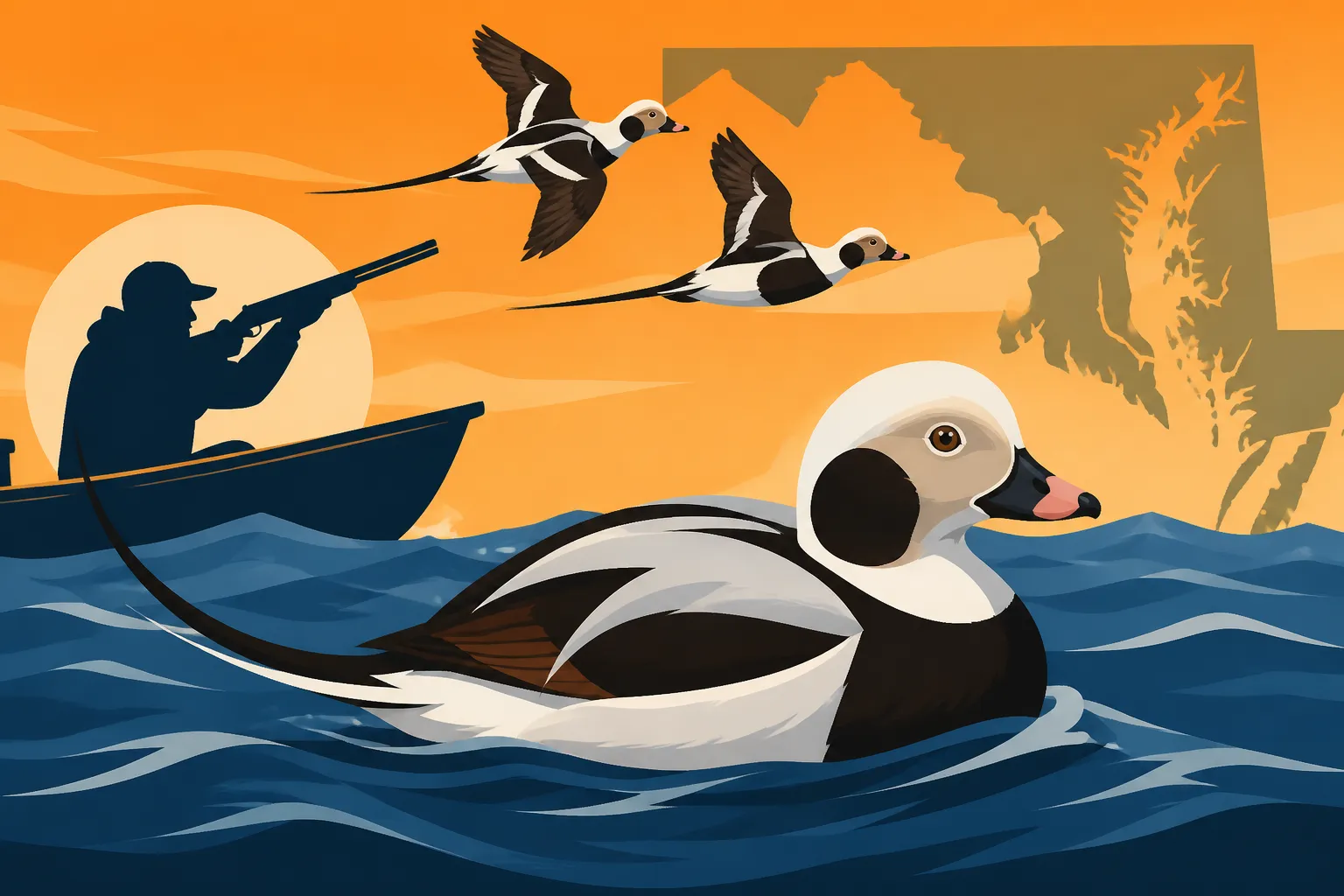
When you see a long-tailed duck, even from a distance, it's pretty clear why they earned their name. The males, especially, sport incredibly long, pointed central tail feathers that can extend several inches beyond the rest of their tail. Their plumage is a striking patchwork of black, white, and gray, which shifts dramatically between their breeding and non-breeding seasons. In winter, adult drakes typically display a mostly white body with a dark brown back, a black chest patch, and a distinctive gray cheek patch on a white head, contrasting sharply with their dark bill and eye. Hens are usually duller, with less pronounced tail feathers and a more subdued brown and white pattern. They're medium-sized ducks, but their elegant profile and the sheer length of those tail feathers make them appear larger than they are.
Identifying them isn't just about what you see; it's often about what you hear, especially when the waves are crashing and visibility is limited. Long-tailed ducks have one of the most distinctive and memorable calls in the waterfowl world, often described as a clear, yodeling "ow-ow-ooooold-squaw" or "cow-cow-cadillac." It’s a resonant, almost musical sound that carries well over the open water, even in windy conditions. Unlike the quacks of a mallard or the guttural honk of a goose, the long-tailed duck's call is unmistakable once you've heard it.
This unique vocalization isn't just a charming quirk; it's a vital tool for hunters. When you're running offshore, battling choppy seas and driving rain or snow, hearing that call can be your first clue that you're in the right area, even before you spot birds on the water. It can also help you differentiate them from other sea ducks like scoters or eiders, especially if they're coming in fast and low over the waves. Learning to recognize that call will be one of your most valuable skills for hunting these magnificent birds.
Being able to visually identify these birds quickly is also important, not just for confirming your target but for respecting bag limits. The coloration and tail length are key, but remember that juvenile birds and hens may not have the extreme tail length of a mature drake. The overall pattern, diving behavior, and of course, that distinct call, all come together to paint a clear picture.
Deep-Diving Specialists of the Open Ocean
Long-tailed ducks are true masters of the underwater world, holding the distinction of being some of the deepest-diving ducks. Their diet primarily consists of small marine invertebrates, particularly mollusks like mussels and clams, as well as crustaceans and other aquatic insects found on the seafloor. To access these food sources, they are equipped with an incredible ability to dive to impressive depths, often reaching 60-70 feet and sometimes even deeper, with reports of them diving well over 200 feet in extreme cases.
When they dive, they can stay submerged for a remarkably long time, often exceeding a minute or more, before resurfacing. This deep-diving capability sets them apart from nearly all other waterfowl. Puddle ducks, as their name suggests, barely dip their heads, while even diving ducks of the bay tend to forage in shallower waters. Long-tailed ducks are built for the vast, deep expanses of the ocean, where their specialized physiology allows them to thrive. Their compact bodies and strong webbed feet are perfectly adapted for propulsion underwater.
This preference for deep, open water means you won't find long-tailed ducks dabbling in shallow marshes or feeding in agricultural fields. Their habitat is fundamentally different, relying on the rich, cold waters of the continental shelf. Even during migration, they stick to coastal routes, shunning inland waterways. This inherent connection to the deep ocean means that pursuing them requires specialized boats, equipment, and a profound respect for the marine environment.
Their reliance on specific types of deep-water forage also means they're often concentrated in areas where these food sources are abundant. For a hunter, this translates to scouting for these particular underwater features, often far offshore where currents and water temperatures create ideal conditions for their prey. It's a challenging endeavor, but finding these "honey holes" where the long-tails congregate is the key to a successful hunt.
Migration Patterns and Wintering Grounds in Maryland
Long-tailed ducks spend their summers breeding in the far northern reaches of North America, from the Arctic tundra to coastal Alaska and Canada, where they nest near freshwater ponds and lakes. But once the brutal Arctic winter begins to set in, these hardy birds embark on a monumental migration, heading south to their traditional wintering grounds. For a significant portion of the Atlantic flyway population, this means the mid-Atlantic coast, and Maryland's offshore waters play a crucial role.
As temperatures drop and ice begins to form in their northern breeding grounds, long-tailed ducks are pushed south by instinct and necessity. They traverse vast distances, often flying hundreds or even thousands of miles, making their way to the relative warmth and open, ice-free waters off states like Maryland. Here, they find abundant food resources along the continental shelf, allowing them to replenish their energy reserves and survive the winter.
Maryland's offshore regions become a vital staging and wintering area for these ducks, with large concentrations of birds often present from late fall through early spring. Major weather fronts, especially those bringing sustained cold and strong northerly winds, can often trigger large movements of long-tails, pushing them into more accessible offshore zones. Similarly, extensive ice cover further north in bays and estuaries can concentrate birds even more tightly into the open ocean.
The sheer numbers of long-tailed ducks that can concentrate in Maryland's offshore waters can be truly breathtaking. It offers a unique big-water hunting experience, vastly different from hunting in a private impoundment or even the wide-open Chesapeake Bay. The constant movement of these birds, often flying low over the waves in tight flocks, creates exciting opportunities for those willing to brave the elements. Understanding these migration patterns and how they respond to weather is key to timing your hunt for optimal success.
Navigating Maryland's Offshore Zone: Rules, Safety, and Access
Hunting long-tailed ducks in Maryland's offshore zone is an endeavor that demands more than just hunting skill; it requires a deep understanding of marine navigation, rigorous safety protocols, and strict adherence to specific regulations. The open ocean is no place for complacency.
Defining the Offshore Zone and Associated Regulations
Maryland's hunting regulations carefully define different zones for waterfowl, and the "offshore zone" is distinct from the general Chesapeake Bay or Atlantic Flyway zones. Generally, the offshore zone refers to waters beyond the established "coastal zone" or territorial sea, typically extending out into the Atlantic Ocean, often past the three-mile state waters limit. It's crucial for hunters to consult the most current Maryland Department of Natural Resources (DNR) regulations booklet or website to understand the precise boundaries, as these can be complex and are sometimes subject to change. Maryland Waterfowl Zones and Season Dates will provide more general context, but for sea ducks, the offshore specifics are paramount.
Within this offshore zone, specific regulations apply to sea ducks, which include long-tailed ducks, scoters, and eiders. These birds often have different season dates and bag limits than other duck species, reflecting their unique populations and management needs. It's not uncommon for sea duck seasons to open earlier or run longer than traditional puddle duck seasons, and their daily bag limits are typically separate. Always double-check the current Sea Duck Season Dates and Zone Limits and review all Maryland Sea Duck and Offshore Zone Rules before planning your trip. These are specialized regulations for a specialized hunt, and ignorance is no excuse when dealing with game wardens far from shore.
Beyond the specific sea duck regulations, all hunters must possess the necessary licenses and stamps. This includes a valid Maryland hunting license, a Maryland Migratory Game Bird Stamp, and a Federal Duck Stamp. Don't forget to complete your annual Migratory Bird Harvest Information Program (HIP) registration. You can find comprehensive details on these requirements in resources like Maryland Migratory Bird Stamp Requirements, Federal Duck Stamp Rules for Bird Hunters, and HIP Registration for Migratory Bird Hunters. Failing to have any of these in order can quickly turn a memorable hunt into a costly headache.
Finally, always be aware of legal shooting hours. While general hunting hours are typically half-hour before sunrise to half-hour after sunset, confirming the precise times for migratory birds in the offshore zone is vital. In the vastness of the ocean, navigating in low light can be tricky, so accurate timekeeping and a reliable light source are essential for safe and legal operations.
Safety First: Essential Considerations for Offshore Hunting
I cannot stress this enough: offshore hunting is inherently dangerous, and safety must be your absolute top priority. The Atlantic Ocean off Maryland's coast can be incredibly beautiful, but it can also turn treacherous with shocking speed. What starts as a calm morning can quickly become a white-capped nightmare. You are far from shore, far from help, and the water is dangerously cold for much of the hunting season.
First and foremost, you need a seaworthy vessel. This is not a job for a jon boat or a small bay boat. You'll need a robust, deep-V hull boat, ideally 20 feet or longer, with a reliable engine, and ideally, a secondary "kicker" motor for redundancy. Before every trip, inspect your boat thoroughly: check the fuel lines, battery connections, bilge pump, and all navigation lights. Make sure your fuel tank is full, and always carry extra fuel in approved containers.
Your safety gear list should be extensive and routinely checked. This includes an EPIRB (Emergency Position Indicating Radio Beacon) or PLB (Personal Locator Beacon) that is registered and functional, ample flares, a whistle, and an air horn. A reliable marine VHF radio is critical for communicating with the Coast Guard or other vessels, and a fully charged handheld VHF should be carried as a backup. GPS navigation is non-negotiable, and a redundant handheld GPS is also a must. Everyone on board must have a Type I or Type II PFD (Personal Flotation Device), and frankly, they should be worn at all times, especially in rough conditions or when deploying decoys.
Dress for immersion. The water temperature for much of the sea duck season will be lethally cold. Layer your clothing to stay warm, starting with moisture-wicking base layers, insulating mid-layers like fleece, and a waterproof, windproof outer shell (jacket and bibs). Hypothermia is a constant threat. Your footwear should be waterproof, insulated, and have non-slip soles. While What to Pack for a Maryland Marsh Hunt offers good general advice, offshore demands even greater attention to extreme cold and wet conditions.
Never, ever hunt offshore alone. Always have at least one experienced partner, ideally more. Ensure someone on shore knows your float plan – your departure point, intended hunting area, estimated return time, and who is with you. Be realistic about weather forecasts; if there's any doubt, stay home. The birds will be there another day. The lessons learned from Boat Safety on the Chesapeake in December regarding cold weather boating are amplified tenfold in the open ocean.
Accessing the Deep Water: Boats, Ramps, and Guides
Getting out to where the long-tailed ducks live requires specialized equipment. As mentioned, a large, seaworthy boat is essential. Think boats designed for offshore fishing – Mako, Boston Whaler, Parker, or similar brands known for their rugged construction and ability to handle rough seas. These boats provide the stability and safety needed for long runs and often feature enough deck space to manage large decoy spreads.
Maryland offers several public boat ramps that can serve as launching points for offshore adventures. The Ocean City area, particularly the ramp at the 125th Street Public Boat Ramp or the Commercial Harbor, is a popular choice for accessing the Atlantic. These facilities are designed to handle larger vessels and offer ample parking, though they can be busy during peak seasons. Be prepared for early morning starts, which often mean launching in the dark, so know your chosen ramp thoroughly.
For many hunters, especially those new to sea duck hunting or without their own specialized offshore rig, booking a trip with a licensed guide is the smartest and safest option. Maryland has excellent Maryland's Licensed Waterfowl Guides who specialize in sea duck charters. These professionals have the right boats, the safety equipment, the local knowledge of productive hunting grounds, and the expertise to handle challenging marine conditions. They'll also provide the decoys and handle the complex logistics of setting up in rough water.
While a guided trip might seem like a significant investment, when you consider the cost of purchasing, outfitting, and maintaining an offshore boat, plus the learning curve of navigating the ocean, it can often be a more economical and certainly safer choice for many. You can expect to pay a fee per person, which often covers the boat, guide, decoys, and fuel for the day. While specific costs vary, checking What a Chesapeake Sea Duck Charter Costs involves can give you a baseline, though sea duck specific charters often have their own pricing structures. It’s an investment in a unique experience and your personal safety.
Strategies and Equipment for Long-Tailed Duck Success
Hunting long-tailed ducks isn't just about getting offshore; it's about knowing how to set up, what to shoot, and how to effectively bring these wary birds into range in a dynamic marine environment. This requires specific tactics and a good understanding of specialized gear.
Decoy Spreads and Presentation
Long-tailed ducks are different from puddle ducks and even many bay divers when it comes to decoying. They spend their lives in vast, open water, so they are accustomed to seeing large rafts of their own kind. This means you need a substantial decoy spread to attract their attention from a distance. Think big spreads, often 50-100 decoys or more, to create a highly visible "raft" effect on the water.
Contrast and motion are key. Long-tailed ducks, like scoters, have distinct black and white patterns. Your decoys should mimic this, with strong contrasts to stand out against the grey-blue of the ocean. Many hunters use a mix of long-tailed duck decoys and scoter decoys, as these species often raft together. Motion is also incredibly important in choppy water. Waves will naturally provide some movement, but large, sturdy decoys are needed to maintain their visibility and presence. Some hunters even incorporate specialized "jigging" decoys or flags on the main lines to add extra lifelike movement.
Setting up a diver rig for sea ducks is different from a typical duck spread. You'll often use a main line (or "longline") system, where a heavy anchor secures a long rope, and individual decoys are attached to this main line via shorter dropper lines (gang rigs). This allows you to deploy and retrieve many decoys quickly. The main line should be robust, sinking rope, and the droppers should be strong clips or lines that won't tangle easily. Each decoy needs a weighted keel to keep it upright in the waves. Decoying Divers on Maryland's Open Bay offers some foundational principles, but offshore sea duck rigs are often much heavier and designed for more extreme conditions.
The placement of your spread relative to the wind, current, and your boat or layout blind is crucial. Long-tails will typically approach from downwind, landing into the wind just like other ducks. Your boat or blind should be positioned downwind of the main body of your spread, allowing incoming birds to fly over the decoys and present broadside shots as they commit to land. You'll often be hunting from a sturdy anchored boat, or for a truly immersive experience, from a layout boat specifically designed to keep you low and invisible on the water.
Firearms, Ammunition, and Shooting Techniques
When it comes to firearms for long-tailed ducks, reliability and stopping power are paramount. A 12-gauge shotgun is the standard, and many hunters opt for 3-inch or even 3.5-inch magnum shells for the increased payload and velocity needed to bring down these tough birds. These are not delicate teal; long-tails are dense, hardy ducks with thick feathers, requiring a solid hit to bring them down cleanly.
For ammunition, non-toxic shot is legally required for all waterfowl hunting. Steel shot is common, but many sea duck hunters prefer denser alternatives like bismuth, tungsten-iron, or even pure tungsten blends, as these materials retain energy better and offer superior penetration on heavily feathered birds. Pellet size is also critical: think larger shot sizes like BB, 1, or 2, rather than the smaller 3s or 4s often used for puddle ducks. A modified or improved modified choke is a good starting point, providing a balance of pattern density and spread, but some hunters prefer a full choke for longer shots on open water.
Shooting long-tailed ducks presents its own challenges. They are often fast flyers, especially when streaking across the waves, and their flight can be erratic as they dip and rise with the swells. You'll often be shooting from a bobbing boat, adding another layer of difficulty. The key is to swing through the bird and maintain your lead, just like any other waterfowl, but be prepared for longer shots and the bird's inherent toughness. Don't be afraid to take follow-up shots if necessary to ensure a clean kill and minimize cripples.
Many dedicated sea duck hunters utilize a specialized "layout boat." This is a small, low-profile boat designed for one or two hunters to lie flat, almost at water level, making them nearly invisible to incoming birds. The layout boat is typically deployed far from the larger "mother ship" which carries the guide, crew, and main decoy spread. Hunting from a layout boat provides an incredibly close and thrilling experience, but it also comes with stringent safety protocols. You can learn more about this specialized technique and its safety considerations by looking into Running a Layout Boat for Sea Ducks. Always remember that safety rules apply even more strictly in this isolated and exposed environment.
Leveraging Scouting and Technology (GoHunt Integration)
Scouting for long-tailed ducks is a very different beast than scouting for deer or even geese on farmland. You can't just drive around looking for birds. The sheer vastness of the offshore zone makes traditional visual scouting incredibly difficult, if not impossible, for the average hunter. Instead, you rely heavily on historical knowledge, guide reports, and marine forecasts.
Marine forecasts become your primary scouting tool. You need to monitor sea conditions, wind speed and direction, wave height, and water temperature for days leading up to your hunt. A good forecast will tell you not only if it's safe to go out but also where birds might be concentrated based on prevailing winds and currents. Understanding bottom contours is also crucial, as long-tailed ducks feed on specific mollusk beds. Tools like GoHunt can be invaluable for cross-referencing weather, marine forecasts, and historical harvest data if available, helping you plan your trip with a clearer picture of potential bird concentrations and safe travel routes.
Even for deep-water game like long-tailed ducks, understanding the underwater terrain can be crucial for identifying feeding grounds, and platforms like GoHunt sometimes offer advanced mapping overlays that can give you an edge by highlighting areas with specific depths or bottom compositions that might hold their preferred food sources. This kind of technological assistance helps minimize unproductive scouting and maximizes your time on the water.
Once you are offshore, spotting scopes and high-powered binoculars are essential for locating rafts of birds from a distance, allowing you to approach stealthily or set up your spread in the optimal location. Your boat's sonar can also help you identify bottom structure and potential food sources, further refining your hunting area. Before you even leave the dock, having a solid plan mapped out, perhaps using the planning features of a comprehensive platform like GoHunt, can save you precious time and enhance safety by ensuring everyone knows the intended route and backup plans. Technology, in this context, is about preparation, safety, and maximizing your chances, not just about finding birds.
The Unforgettable Experience of a Long-Tailed Duck Hunt
Beyond the technical aspects of gear and regulations, a long-tailed duck hunt in Maryland's offshore zone offers an experience unlike any other. It's a blend of raw adventure, profound respect for nature, and the kind of challenge that leaves you with lasting memories.
The Logistics of a Big Water Adventure
A typical long-tailed duck hunt starts long before dawn. You'll be meeting your guide or fellow hunters in the dark, usually at a coastal boat ramp, well before legal shooting light. The pre-dawn run out to the hunting grounds can be a cold, wet, and exhilarating experience, with the spray flying and the boat pounding through the waves. It's a stark reminder that you're heading into a wild, untamed environment.
Deploying the decoy spread is a team effort and often the most physically demanding part of the hunt. In choppy water, wrestling with heavy decoy lines and anchors, and carefully clipping on dozens of decoys, requires coordination and strength. It's a true test of teamwork, often involving the guide maneuvering the boat while others deploy the spread into the wind and current. This is where the heavy-duty nature of sea duck rigs really becomes apparent.
Then comes the wait. You'll be anchored, likely in a sturdy boat, enduring the elements. The wind can bite, the spray can soak you, and the constant motion of the ocean can be relentless. But amidst the discomfort, there's an incredible anticipation. You'll scan the horizon, listening for that distinct "oldsquaw" call, watching for the telltale dark shapes against the sky. This is where the unique solitude of offshore hunting truly settles in – just you, your companions, and the vast, open ocean.
Retrieving birds from the cold, open water can also be a challenge. A well-trained retriever is an invaluable asset, but even the best dog needs assistance in rough seas. A long gaff or hook is often necessary to reach birds that drift away or are in difficult positions. It's imperative to recover every bird shot; nothing should be left to waste in this challenging environment.
Respecting the Resource: Conservation and Ethics
Like all forms of hunting, pursuing long-tailed ducks comes with a deep responsibility to the resource and the environment. Understanding bag limits and proper species identification is paramount. While long-tailed ducks are distinctive, misidentification can happen in fast-flying flocks or poor visibility, so always be sure of your target before you shoot.
Ethical hunting demands quick, clean kills and diligent retrieval to minimize crippling loss. These are tough birds, and a poorly placed shot can lead to a long-tailed duck diving and resurfacing far away, or worse, succumbing to its wounds out of reach. Practice your shooting before the season, understand your effective range, and only take shots that offer a high probability of a clean kill.
The purchase of federal duck stamps, required for all migratory bird hunters, is a direct contribution to conservation. These funds go towards acquiring and restoring wetlands and waterfowl habitats across the country, benefiting not just long-tailed ducks but countless other species. Every stamp you buy is a direct investment in the future of waterfowl hunting.
Beyond that, sea duck hunters often become fierce advocates for healthy marine ecosystems. Pollution, habitat degradation, and climate change all impact these birds and their food sources. By understanding and respecting the intricate balance of the ocean, we contribute to ensuring that future generations can also experience the thrill of hunting long-tailed ducks in Maryland's offshore zone.
The Unique Thrill of the "Oldsquaw" Experience
There's a special beauty to a long-tailed duck up close. Their intricate patterns, their elegant form, and the sheer density of their plumage are something to behold. Holding one of these birds in your hand after a challenging hunt is a moment of profound connection to the wild.
The entire experience, from the bone-chilling boat ride to the struggle with the decoy lines, to the focus required for shooting in rough seas, builds to a sense of immense satisfaction. It's a hunt that demands grit, skill, and perseverance. Success in this harsh environment feels truly earned, a testament to your preparation and ability to adapt to nature's demands.
There's a unique camaraderie that develops among sea duck hunters. It's a niche within a niche, and the shared challenges and rewards forge strong bonds. The stories told, often exaggerated with each retelling, of massive waves, missed shots, and incredible flights, become part of a shared oral tradition. Sharing those stories and photos later, perhaps even logging your hunt details in a platform like GoHunt, becomes part of the lasting memory.
Ultimately, hunting long-tailed ducks in Maryland's offshore zone is an unforgettable adventure. It strips away the comforts and conveniences of modern life and places you squarely in the raw power of the Atlantic. It's a chance to connect with a truly wild bird in its wild domain, creating memories and forging friendships that will last a lifetime.
Essential Offshore Sea Duck Hunting Gear
To help you prepare for your offshore long-tailed duck adventure, here's a breakdown of essential gear you'll need. This isn't an exhaustive list, but it covers the critical items for safety and success.
| Category | Item | Notes |
|---|---|---|
| Vessel & Propulsion | Seaworthy Boat (20ft+ recommended) | Deep-V hull, reliable primary motor, secondary "kicker" motor for safety |
| Extra Fuel & Oil | Always carry more than you think you'll need, in approved containers | |
| Heavy Anchor & Sufficient Rode | Sized for your boat and expected conditions, with ample rope (rode) length | |
| Navigation & Safety | Marine GPS (Chartplotter) | With up-to-date charts, redundant handheld GPS |
| VHF Marine Radio | Fixed-mount, plus a fully charged handheld VHF backup | |
| EPIRB/PLB (Personal Locator Beacon) | Registered and functional, a critical safety device | |
| Flares, Whistle, Air Horn | Visual and audible distress signals | |
| Life Jackets (PFDs) | Type I or II, one for every person, worn at all times | |
| Comprehensive First Aid Kit | Waterproof and easily accessible | |
| Bilge Pump (Manual & Electric) | Essential for managing water | |
| Marine Fire Extinguisher | Accessible and properly rated | |
| Hunting Equipment | Decoys (Long-tailed Duck & Scoter) | Large spread (50-100+), durable, weighted keels, high contrast |
| Decoy Gang Rigs/Longlines | Heavy-duty main lines, strong dropper lines, robust clips | |
| Shotgun (12 gauge, 3-3.5" magnum) | Reliable, capable of handling harsh marine environments | |
| Non-Toxic Ammunition (BB, #1, #2) | Denser shot like bismuth or tungsten-iron often preferred for sea ducks | |
| Layout Blind (optional) | For dedicated layout hunting, specialized and safe for offshore use | |
| Cooler/Game Bag | For harvested birds, keeping meat cool and contained | |
| Long Gaff or Hook | Essential for retrieving birds in rough water | |
| Well-Trained Retriever (optional) | With a protective vest for cold water | |
| Personal Gear | Waterproof Outerwear (Jacket & Bibs) | High-quality, marine-grade, durable |
| Layered Clothing | Wool or synthetic base layers, fleece mid-layers, insulated jacket | |
| Insulated Chest Waders | Neoprene or breathable with heavy insulation | |
| Warm Hat & Waterproof Gloves | Crucial for retaining body heat | |
| Insulated, Waterproof Boots | With non-slip soles | |
| Thermos with Hot Drinks/Food | High-energy snacks, soup, coffee | |
| Sunglasses & Sunscreen | Protection from glare and UV rays, even in winter | |
| Dry Bag for Electronics & Personal Items | To protect phone, wallet, keys, etc., from water |
Disclaimer
This article is for general informational purposes only and does not constitute professional advice. Laws, prices and regulations vary by location and change over time. Consult a qualified professional for guidance on your specific situation.