Maryland Sea Duck and Offshore Zone Rules
Hunting Maryland's offshore waters for sea ducks presents a unique, thrilling challenge, but it also comes with its own complex set of rules and regulations that can feel overwhelming, especially for those new to this specialized pursuit. Navigating the specific season dates, bag limits, and legal requirements for hunting in the designated offshore zones is crucial, not just for compliance but for a safe and successful trip. This comprehensive guide aims to demystify Maryland's sea duck and offshore zone rules, providing you with the clear, in-depth information you need to confidently plan your next cold-weather adventure.
Understanding Maryland's Waterfowl Hunting Zones
Maryland's diverse geography means that waterfowl hunting regulations are often split into distinct zones, each with its own set of rules. For sea duck hunters, understanding the difference between the Atlantic Population Canada Goose Zone, the Resident Canada Goose Zone, and crucially, the Sea Duck and Offshore Zone is paramount. These zones aren't just lines on a map; they dictate everything from when you can hunt to what species you can target and how many you can bring home.
The General Waterfowl Zone Framework
Across Maryland, waterfowl regulations are broadly structured to account for migratory patterns and resident populations. You have the main Atlantic Flyway general duck and goose zones that cover the bays, rivers, and inland areas, often with different season splits and bag limits. However, sea ducks are a unique category, and their management often requires a specific designation because of their preferred habitat: the open ocean and its immediate approaches. This is where the concept of a dedicated "Offshore Zone" comes into play, distinct from the more sheltered waters of the Chesapeake Bay or coastal marsh creeks.
For instance, while you might be jump-shooting ducks on an Eastern Shore gut in December under one set of rules, the moment you venture out into the vastness of the Atlantic Ocean, you're under entirely different regulations. These distinctions are put in place by the Maryland Department of Natural Resources (DNR) in coordination with federal guidelines to ensure sustainable hunting practices for species that behave very differently from puddle ducks or resident geese. Ignoring these zone boundaries can lead to significant legal trouble, so always be sure of your location and the rules that apply to it.
Defining the Sea Duck and Offshore Zones
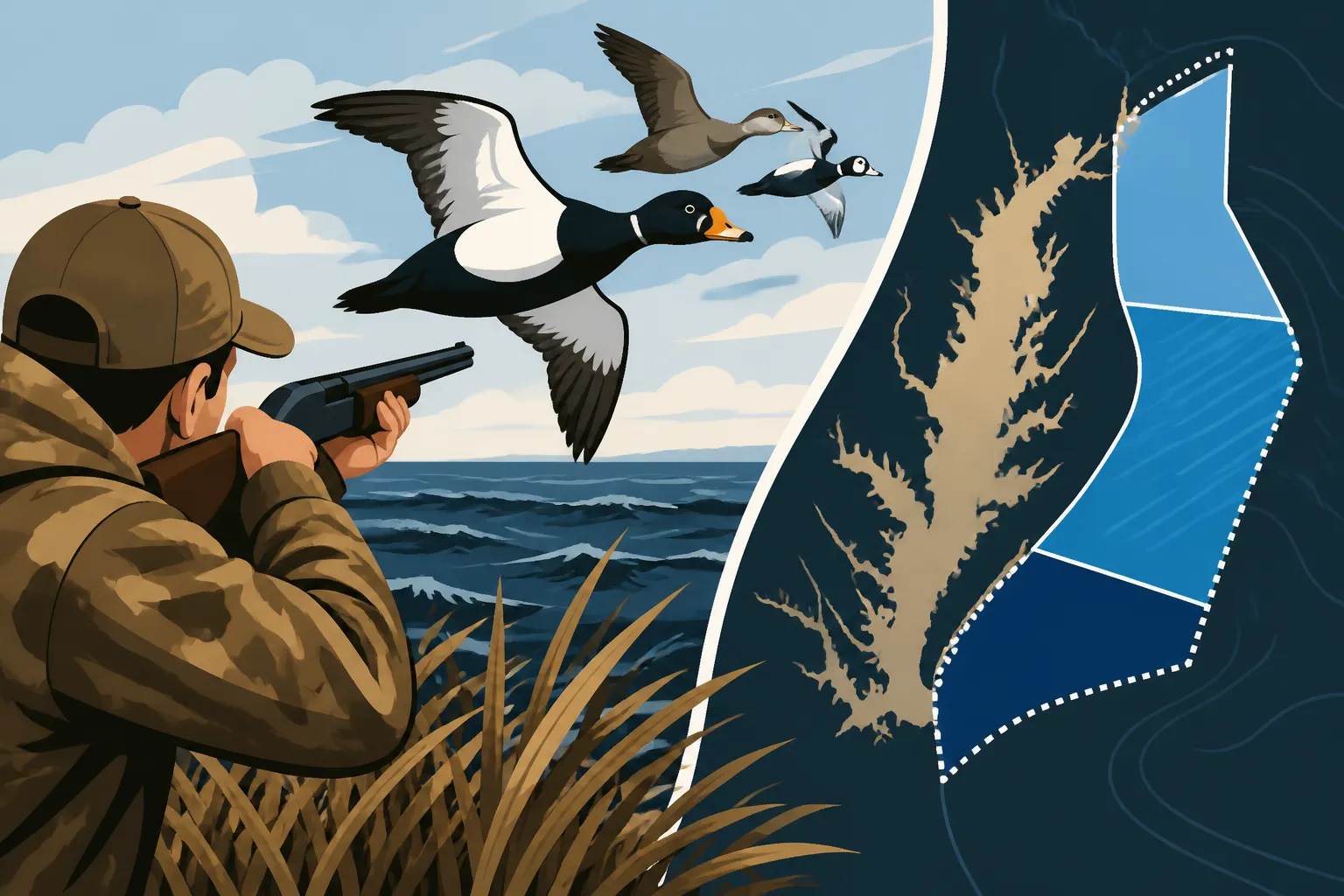
The Sea Duck Zone, as designated by Maryland DNR, specifically refers to the waters of the Atlantic Ocean and its tidal tributaries seaward from the first upstream bridge or impoundment. This is important because it means you're not just limited to the deep ocean; certain coastal bays and estuaries, up to their first bridge, might also fall under these special sea duck rules. However, the true "Offshore Zone" often implies venturing beyond the immediate shoreline into the more exposed waters where sea ducks typically congregate in large rafts.
Generally, the Offshore Zone is considered the area more than 1,000 yards from the Atlantic Ocean shorelines of Maryland, or beyond a specific navigation line established for certain coastal bays. This distinction is critical because some general waterfowl hunting regulations, such as those governing setting up on a Maryland shoreline point blind, might not apply or might be superseded by the more specific offshore rules once you pass that 1,000-yard mark. Always consult the most current Maryland DNR hunting guide or use a reliable mapping application like GoHunt to confirm these precise boundary lines. Knowing exactly where the general waterfowl rules end and the specialized sea duck and offshore rules begin is your first step to a legal and enjoyable hunt.
Identifying Maryland's Huntable Sea Duck Species
Sea duck hunting is a specialized pursuit, and part of that specialization lies in recognizing the different species you'll encounter. Unlike puddle ducks or even most divers in the Chesapeake Bay, sea ducks have distinct characteristics, flight patterns, and often, specific regulations tied to their conservation status. Mistaking one species for another can lead to unintentional violations of bag limits.
Common Sea Ducks You'll Encounter
In Maryland's offshore waters, you're primarily targeting three groups of sea ducks: scoters, eiders, and long-tailed ducks (formerly known as oldsquaw). Each of these groups presents a different hunting experience and has specific visual cues that experienced hunters learn to identify quickly.
- Scoters: You'll likely encounter three species of scoters: the Surf Scoter, Black Scoter, and White-winged Scoter. Surf Scoters are chunky with distinctive white patches on their head (males) and an oddly shaped bill. Black Scoters are entirely black with a bright orange knob on the bill of the drake. White-winged Scoters are the largest, characterized by a white patch on their wings visible in flight and a reddish-orange bill. They often fly in long, loose lines and raft up in large groups, especially on calm days. Their flight can be fast and direct, making for challenging pass-shooting opportunities.
- Eiders: While Common Eiders are found further north, King Eiders are a rare but possible trophy in Maryland's offshore zone. They are large, robust ducks with distinctive bill shapes and plumage. King Eiders are particularly striking, with the males displaying a unique orange frontal lobe on their bill and a pale green patch on the back of the head. Spotting and identifying an eider is a moment to savor, but remember their extremely restrictive bag limits due to their scarcity.
- Long-tailed Ducks: These are perhaps the most vocal and distinctive of the sea ducks, with their long, pointed tails (especially pronounced in drakes). They are constantly diving, making a characteristic "ow-ow-oodle-oo" call, giving them their old name, "oldsquaw." Their plumage is a striking pattern of black, white, and gray, shifting with the seasons. They are incredibly agile in the air, often darting and weaving, making them tough targets for even seasoned shooters.
Learning to differentiate these birds, even at a distance or in flight, is a skill that takes time and practice. Using high-quality binoculars or a spotting scope can help with pre-hunt scouting, allowing you to observe their flight patterns and raft compositions. Many dedicated sea duck hunters find great satisfaction in the challenge of accurate identification.
Key Identification Characteristics and Challenges
Beyond the general appearance, there are specific characteristics that aid in field identification, especially when the birds are flying fast or conditions are less than ideal. Size, shape, wingbeats, and flocking behavior are all clues.
- Size and Shape: White-winged Scoters are notably larger than Surf or Black Scoters. Long-tailed ducks have a sleeker, more elongated appearance due to their tail feathers. Eiders are the largest and stockiest of the group.
- Flight Patterns: Scoters often fly in somewhat organized lines or V-formations. Long-tailed ducks tend to fly more erratically, with rapid wingbeats, often in smaller, less structured groups.
- Plumage Details: For scoters, the presence or absence of white patches on the head, wings, and distinct bill colors are key. For long-tailed ducks, the long tail feathers are unmistakable. Eiders, if encountered, have very distinctive head and bill structures.
- Vocalization: Long-tailed ducks are famously noisy, a sound that can carry a long way across the water and give away their presence even before you see them. Scoters are generally quieter but will occasionally make soft calls.
The dynamic nature of offshore hunting, with pitching boats, low light, and fast-moving birds, makes positive identification challenging. It's not uncommon for new sea duck hunters to struggle with this. Always err on the side of caution; if you can't positively identify a bird and confirm it's within your legal bag limit, don't pull the trigger. Consulting resources like the federal duck identification guide or using a reliable hunting app like GoHunt that includes bird ID features can be invaluable tools for improving your recognition skills.
Specific Sea Duck Season Dates and Bag Limits
This is where the rubber meets the road for offshore hunters. Maryland's sea duck seasons and bag limits are highly specific and often differ significantly from the general duck season rules. Failing to adhere to these numbers can quickly turn a memorable hunt into a costly infraction.
Scoter, Eider, and Long-tailed Duck Regulations
The Maryland DNR, in conjunction with the U.S. Fish and Wildlife Service, sets annual season dates and bag limits for sea ducks. These limits are designed to manage populations sustainably, especially for species that have faced conservation concerns.
For scoters, eiders, and long-tailed ducks, Maryland usually has a specific season that often runs concurrently with portions of the general duck season but has its own distinct daily bag and possession limits. It's critical to remember that these are not generic "duck" limits. For instance, the general duck limit might be six ducks, but within that, there are specific restrictions on species like pintails, canvasbacks, or black ducks. For sea ducks, the limits are often much tighter and apply only to the sea duck species themselves.
Historically, the daily bag limit for sea ducks has been relatively low, often around 5 birds, with further restrictions on certain species within that limit. For example, you might be allowed five sea ducks, but no more than four of any one species, or perhaps only one eider. These numbers can change annually based on population assessments, so checking the current year's hunting guide is absolutely non-negotiable. Don't rely on last year's memory! This is where an up-to-date source like the Maryland DNR website or a hunting app can really save the day.
Overall Sea Duck Bag and Possession Limitations
Beyond the daily bag limit, there are also possession limits, which dictate how many birds you can have in your possession after multiple days of hunting. Typically, the possession limit is three times the daily bag limit. So, if the daily bag for sea ducks is 5, your possession limit would be 15. This is important for hunters who may stay for several days at a lodge or have multiple hunting trips planned in a short period.
It's also crucial to understand how sea ducks factor into your overall migratory bird bag limit. Sea ducks are not typically counted against your general duck bag limit, nor do general ducks count against your sea duck limit. They are treated as a separate category. This means you could, theoretically, harvest your daily limit of general ducks (mallards, teal, etc.) and your daily limit of sea ducks on the same day, provided you are in the correct zones for both and adhere to all other regulations. This unique aspect allows for highly diverse hunting opportunities in coastal areas, but it also increases the complexity of ensuring you stay within all legal parameters.
The table below illustrates a hypothetical example of what Maryland's sea duck regulations might look like. Always refer to the current year's official Maryland DNR hunting guide for exact dates and limits.
| Species Group | Daily Bag Limit (Example) | Possession Limit (Example) | Season Start (Example) | Season End (Example) | Notes |
|---|---|---|---|---|---|
| All Sea Ducks | 5 birds | 15 birds | Nov. 15 | Jan. 31 | Aggregate limit for all sea ducks. |
| Within Sea Duck Limit | |||||
| Scoters (any species) | 4 birds max | 12 birds max | Nov. 15 | Jan. 31 | No more than 4 scoters per day. |
| Eiders (any species) | 1 bird max | 3 birds max | Nov. 15 | Jan. 31 | Very restrictive due to low populations. |
| Long-tailed Ducks | 4 birds max | 12 birds max | Nov. 15 | Jan. 31 | No more than 4 long-tailed ducks per day. |
Remember, these are illustrative figures. Official season dates for Maryland's Sea Duck and Offshore Zone can fluctuate from year to year. A reliable source like the annual Maryland Migratory Game Bird Guide, usually available on the DNR website, is your best friend. Many experienced hunters also rely on digital platforms like GoHunt, which often integrate these up-to-date regulations directly into their mapping and planning tools, providing real-time information that can be invaluable when you're preparing for your trip.
Navigating the Offshore Zone's Unique Requirements
Hunting the open ocean is a vastly different experience than hunting inland marshes or bay waters. The environment itself imposes a strict set of safety and logistical requirements that go hand-in-hand with the specific hunting regulations. Maryland's offshore zone rules are designed not only for wildlife management but also for the safety of the hunters.
Legal Boundaries and Navigation
As mentioned earlier, the "Offshore Zone" generally begins beyond 1,000 yards from the Atlantic Ocean shorelines or specific lines within coastal bays. This isn't a boundary you can eyeball. The ocean is vast and featureless, and drifting even a short distance can put you outside the legal hunting zone or into areas where different rules apply. This is why precise navigation is non-negotiable for offshore sea duck hunting.
Every offshore hunter should be equipped with reliable GPS units, preferably redundant systems. This might include a dedicated marine GPS plotter, a handheld GPS device, and a smartphone or tablet running a mapping application like GoHunt. Before you ever leave the dock, you should program the precise coordinates or boundary lines of the offshore zone into your devices. Understanding how to set up on a Maryland field edge is one thing, but knowing your exact position offshore requires specific tools and skills. This allows you to monitor your position constantly and ensure you remain within the legal hunting area throughout your trip. Beyond legal compliance, good navigation is also critical for safety, especially if weather conditions deteriorate or you need to return to shore in low visibility.
Vessel Requirements and Safety at Sea
Hunting the offshore zone demands a vessel capable of handling the often-unpredictable conditions of the open ocean. This is not a hunt for a small jon boat. Maryland's DNR and the U.S. Coast Guard have specific requirements for vessels operating in these waters, which are in place to ensure your safety and the safety of others.
Your boat needs to be seaworthy, adequately powered, and equipped with all required safety gear. This includes, but is not limited to:
- Life Jackets: One approved life jacket for every person on board, readily accessible.
- Visual Distress Signals: Flares, a signal flag, or an electronic strobe light.
- Sound Producing Device: A horn or whistle.
- Fire Extinguisher: For vessels with enclosed compartments or fuel tanks.
- Anchor and Line: Appropriate for your vessel's size and the waters you're in.
- Navigation Lights: If operating at night or in restricted visibility.
- Communication Devices: A marine VHF radio is essential for calling for help or communicating with other vessels. Cell phone service can be unreliable far offshore.
- Emergency Position Indicating Radio Beacon (EPIRB) or Personal Locator Beacon (PLB): Highly recommended for offshore trips, as they can alert rescue services to your exact location in an emergency.
Beyond the legal requirements, common sense dictates additional preparedness. Always check the marine weather forecast thoroughly before heading out, and be prepared to cancel or cut short your trip if conditions are marginal. Rough seas can make shooting dangerous, recovering birds difficult, and travel back to shore hazardous. Many offshore guides who run a layout boat for sea ducks will emphasize that safety is always the priority. Inform someone on shore of your float plan, including your intended hunting area and estimated return time. The unpredictable nature of the Atlantic means that being overprepared is always better than being underprepared.
Essential Gear and Tactics for Offshore Sea Duck Hunting
Hunting sea ducks in Maryland's offshore zone isn't just about knowing the rules; it's about having the right equipment and employing effective strategies to succeed in a challenging environment. From decoy spreads to shotgun choices, every detail matters when battling the elements for these tough birds.
Decoy Spreads for Sea Ducks
Unlike hunting ducks on a small pond or river, sea duck decoying in the open ocean requires a specific approach. Sea ducks are highly gregarious, meaning they like to congregate in large groups, often referred to as rafts. Your decoy spread needs to mimic this behavior to be effective.
- Quantity is Key: Sea duck spreads are almost always massive, often numbering 50 to 100 decoys, or even more. The sheer size helps create a visible target on the vast ocean. Many hunters will connect multiple decoys on a single longline or "mother line" to make deploying and retrieving easier. These lines might have 5-10 decoys each, spaced appropriately.
- Species-Specific Decoys: While some hunters use general black or white decoys, species-specific decoys for scoters, long-tailed ducks, and even eiders can be more effective. Realism matters, especially as sea ducks approach your spread. Mix and match species based on what you expect to encounter.
- Visibility and Motion: Large, magnum-sized decoys are preferred because they are more visible on choppy water. Adding motion decoys, such as battery-powered swimmers or even simple jerk strings, can add lifelike movement to your spread, making it more enticing. Remember, birds flying high over the open water need a strong visual cue to commit.
- Layout and Placement: A typical sea duck spread is often set up in a large "J" or "U" shape, with the open end facing into the wind. This creates a natural landing zone for birds approaching from upwind. The hunting boat, whether a larger mothership or a smaller layout boat, is usually positioned at the bend of the "J" or "U", allowing hunters to shoot at birds cupping their wings to land in the open pocket. Always consider the wind and current when deploying your spread, as they can quickly shift your decoys.
It's a lot of work to set up and retrieve a large sea duck spread, but the payoff can be incredible. Many guides specialize in this, providing all the necessary gear and expertise, making for a much easier experience, especially if you're considering a Maryland Sea Duck and Offshore Zone charter.
Shotguns and Ammunition Considerations
Choosing the right shotgun and ammunition is paramount for success and ethical hunting in the offshore environment. Sea ducks are notoriously tough birds, heavily feathered and capable of absorbing a lot of punishment.
- Gauge and Choke: A 12-gauge shotgun is the standard for sea duck hunting, though some hunters successfully use a 20-gauge. The heavier payload and pattern density of a 12-gauge are often preferred. For choke, modified or improved modified are common choices, offering a good balance of pattern density at typical shooting ranges. Full choke can be effective but might be too tight for closer shots.
- Ammunition: Only non-toxic shot is legal for waterfowl hunting in Maryland, including sea ducks. Steel shot, bismuth, or tungsten-based loads are the primary options. For sea ducks, you want to use heavier shot sizes to ensure penetration and knockdown power. BB, 1, and 2 shot sizes are popular for scoters and long-tailed ducks. For the larger, tougher eiders, even larger shot like BBB or T might be considered, though they are rarely encountered.
- Shell Performance: High-velocity, heavy-payload loads are generally preferred. The extra velocity helps to cut through wind and gives the pellets more energy. Remember to pattern your shotgun with your chosen ammunition before the season. This ensures you know how your gun and shell combination performs at various distances, reducing the chances of missed shots or wounded birds.
- Corrosion Resistance: The saltwater environment is harsh on firearms. Ensure your shotgun is cleaned thoroughly after every hunt to prevent corrosion. Stainless steel or marine-grade finishes are highly advantageous for offshore hunting.
When you're out there, battling the cold and waves, you want equipment you can trust. Investing in quality gear, practicing your shooting, and understanding the unique aspects of hunting in the sea duck zone will significantly increase your chances of a rewarding experience.
Important Regulations and Best Practices
Beyond the core season dates and bag limits, there are several other critical regulations and best practices that every Maryland sea duck hunter needs to be aware of. These often overlap with general migratory bird rules but are especially pertinent in the offshore environment.
Federal Duck Stamp and HIP Registration
Before you even think about setting foot in a duck blind or on a boat for sea ducks, two federal requirements must be met:
- Federal Duck Stamp: Every waterfowl hunter 16 years of age or older must possess a valid Federal Migratory Bird Hunting and Conservation Stamp, commonly known as a Federal Duck Stamp. This stamp must be signed across the face. It's not just a legal requirement; the funds from stamp sales go directly to conserving wetland habitats, which benefits all migratory birds, including sea ducks. You can purchase these stamps at most post offices, sporting goods stores, or through the Maryland DNR's COMPASS system. Remember to also get your Maryland Migratory Bird Stamp requirements in order.
- Harvest Information Program (HIP) Registration: All migratory bird hunters, regardless of age, must register with the federal Harvest Information Program (HIP) each year. This is a free registration, usually completed when you purchase your state hunting license. It helps wildlife agencies gather important data on migratory bird harvests, which is vital for setting future season dates and bag limits. If you're planning a trip to go Hunting Maryland's Youth Waterfowl Days, even the junior hunters need to be HIP registered. Without both the Federal Duck Stamp and HIP registration, your hunt is illegal.
Blaze Orange and Ethical Practices
While blaze orange is a mandatory requirement for deer hunters in Maryland during certain firearms seasons, it's generally not required for waterfowl hunting in blinds or boats. However, it's always a good idea to have some blaze orange accessible, especially if you're transporting birds across land or walking to and from a shore access point. Safety should always be your top priority, and making yourself visible when not actively hunting can prevent accidents.
Ethical hunting practices are paramount, especially in the challenging offshore environment:
- Target Identification: As discussed, positive identification of sea duck species is crucial to adhere to bag limits. Never shoot at birds you cannot identify.
- Retrieval: Sea ducks often fall into strong currents or rough seas. Having a well-trained retriever or a reliable boat handler dedicated to bird recovery is essential. Wounded birds that cannot be retrieved are a waste, and ethical hunters strive to recover every bird.
- Fair Chase: Uphold the principles of fair chase. Do not shoot at birds beyond your effective range, and always respect the regulations concerning shooting hours (Maryland Shooting Hours and Legal Light).
- Boat Safety: Beyond the legal requirements, exercise extreme caution on the water. Understand proper boat safety on the Chesapeake in December or any time you're offshore. Be mindful of other boaters, fishermen, and wildlife.
- Reporting Violations: If you witness any poaching or illegal hunting activity, report it to the Maryland Natural Resources Police. Protecting Maryland's hunting heritage and its wildlife populations is everyone's responsibility.
Hunting sea ducks in Maryland's offshore zone is an incredibly rewarding experience, offering a chance to connect with a unique species in a rugged, beautiful environment. By meticulously understanding and adhering to all the rules, from the detailed Maryland Sea Duck and Offshore Zone rules to general waterfowl regulations, and by practicing safe and ethical hunting, you can ensure a successful and memorable trip.
Disclaimer
Please note that hunting regulations, season dates, and bag limits are subject to change. While every effort has been made to provide accurate and up-to-date information, it is the hunter's responsibility to consult the current official Maryland Department of Natural Resources (DNR) hunting guide and federal regulations before participating in any hunting activity. This guide is for informational purposes only and should not be considered a substitute for official legal documentation.