How a Sika Stag’s Antlers Differ From a Buck’s
Many Maryland hunters find themselves in a bit of a quandary when they first encounter a Sika stag in the wild, especially if they're more accustomed to the majestic racks of whitetail bucks. The truth is, distinguishing between a Sika stag's antlers and a whitetail buck's antlers is critical for proper identification, understanding your target, and even knowing what to expect in terms of trophy potential. This guide will walk you through the distinct differences, helping you confidently identify your quarry in Maryland's diverse hunting landscapes.
The Striking Disparity in Antler Size and Overall Mass
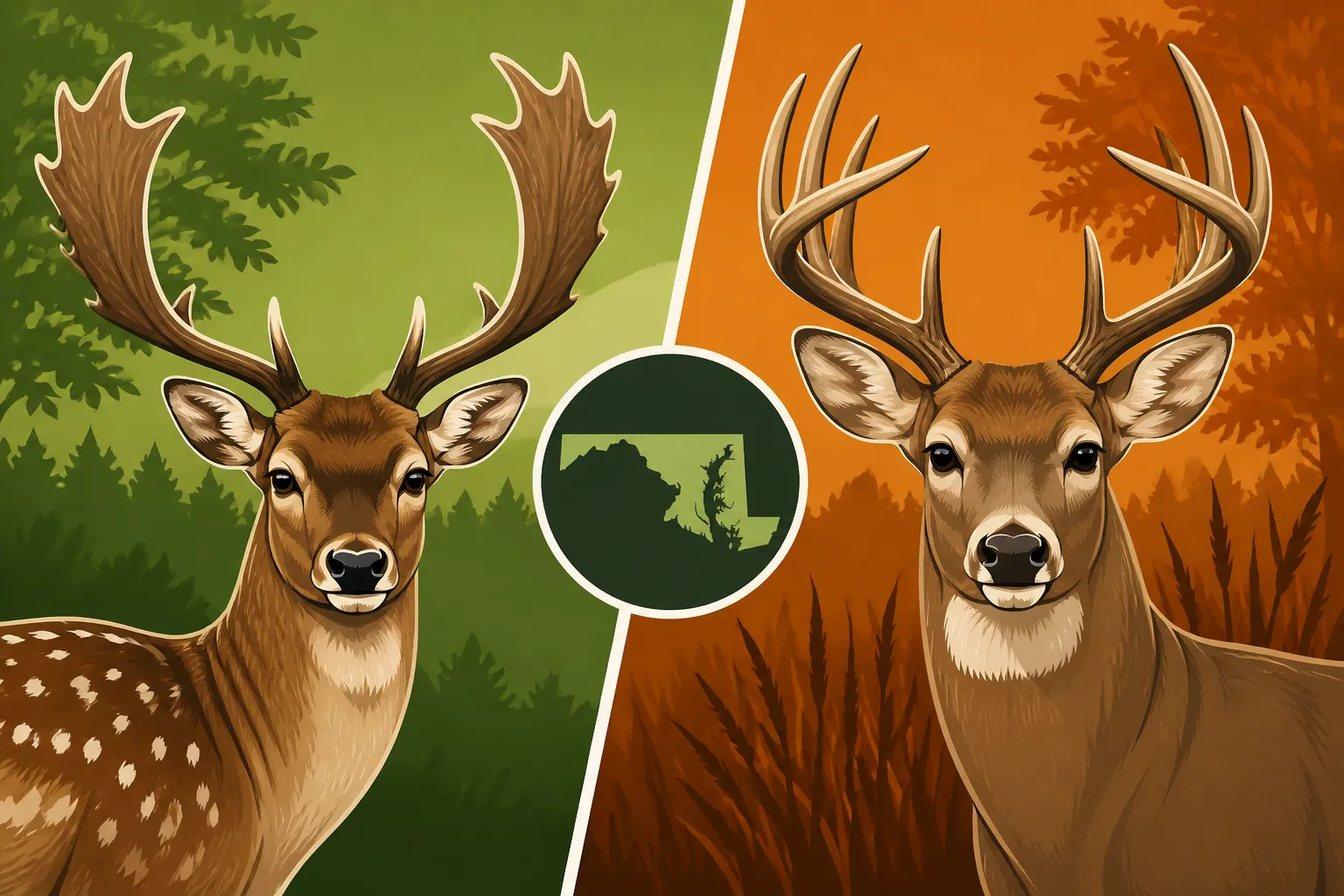
The most immediate and obvious difference between a Sika stag's antlers and a whitetail buck's antlers is their overall size and mass. While both are impressive in their own right, they are built for entirely different animals.
Compactness Versus Grandeur: A Visual Comparison
Imagine trying to fit a classic, sprawling whitetail rack onto the head of a much smaller animal – it just wouldn't look right. Sika antlers are, by nature, significantly smaller and more compact than those of a mature whitetail buck. They tend to grow in a more upright, narrow fashion, almost like two small, sturdy spears reaching skyward. This compactness is perfectly suited to the Sika deer's smaller body size and their preferred habitat, often thick marsh grass or dense loblolly pine thickets where a wide rack could hinder movement. For more insight into these fascinating creatures, check out Maryland's Sika Deer, an Imported Herd.
Whitetail antlers, on the other hand, are known for their potential grandeur. They can be wide, tall, and boast impressive spread, sometimes extending well beyond the animal's ears. The sheer volume of antler material is usually far greater on a whitetail. It's why when people refer to Sika as "Japanese Elk," it's often a misnomer, as their antler size doesn't come close to that of a true elk, or even a large whitetail buck, despite sharing a similar vocalization that can sound like an elk bugle in miniature, which you can learn more about in Why Sika Deer Whistle Instead of Grunting. When scouting areas on your GoHunt app, pay close attention to the habitat – if it's thick, marshy cover, you're more likely to encounter the compact Sika racks.
The Story in the Beams: Diameter and Weight
Beyond the overall visual, the main beams of a Sika stag's antlers are noticeably thinner and carry considerably less mass than those of a comparable whitetail buck. A mature Sika stag might have beams that are proportionate to its smaller head and neck, but they rarely achieve the impressive girth and heavy bases often seen on a robust whitetail.
This difference in beam diameter and mass isn't just aesthetic; it reflects the underlying bone structure and physical demands on the animal. A Sika stag, which can weigh considerably less than a whitetail buck (consider What a Maryland Sika Stag Weighs compared to a typical Maryland whitetail), simply doesn't need to support or grow the same amount of antler material. Their antlers appear sleek and solid, often with a darker, almost blackish-brown hue, especially at the base, due to rubbing on marsh vegetation and tree bark. Whitetail beams, in contrast, often exhibit a more rugged, robust appearance, reflecting the larger animal that carries them.
Understanding the Unique Branching and Point Configuration
While whitetail bucks are famous for their highly variable antler configurations, Sika stags stick to a much more predictable pattern, making identification fairly straightforward once you know what to look for.
The Signature Sika Four-Point Rack
The most defining characteristic of a Sika stag's antlers is its typical configuration: a four-point rack. This means, on each side, you'll generally find a brow tine, a bez tine (often referred to as the G2), and then the main beam terminates in a distinct fork (creating the G3 and G4). It's incredibly rare to see a Sika stag with more than eight total points (four on each side). A clean, symmetrical four-point rack on a Sika is a highly prized trophy among hunters who understand the species.
This consistent structure stands in stark contrast to the diverse world of whitetail antlers, which can range from simple spikes on a young buck to complex, multi-tined non-typical racks with drop tines, kickers, and stickers. While whitetails can be 4-points (a "basket rack" young buck), it's not their dominant mature form like it is for Sika. When you're trying to quickly identify an animal in the field, this consistent four-point pattern is a dead giveaway for a Sika stag. Remember to familiarize yourself with Maryland's Sika Deer Stamp and Bag Limits before heading out.
Tine Placement: Brows, Bez, and Terminal Forks
Let's break down the specific tines to understand the unique Sika pattern:
Sika brow tines, those points closest to the deer's head, are often quite short and stubby, sometimes barely protruding from the main beam. They can even be almost non-existent on some stags. This differs greatly from many whitetail bucks, whose brow tines can be quite long and impressive, sometimes rivaling the length of other tines on the rack.
The bez tine (G2) on a Sika stag is usually the longest and most prominent point on the entire antler. It projects forward and upward, giving the Sika rack its characteristic upright, forward-leaning appearance. This G2 is often what a hunter focuses on when assessing a Sika stag. For whitetails, while the G2 is important, it's just one part of a larger, often more complex array of tines that can vary greatly in length and angle depending on the buck's age and genetics. When you're using your GoHunt app to check out topography, consider how these compact antlers help Sika move through the dense cover in areas like Where Sika Deer Bed in Phragmites or Hunting a Loblolly Pine Island in the Marsh.
Main Beam Architecture and Curvature
The main beams of a Sika stag's antlers are relatively short compared to a whitetail, and they tend to curve slightly inward as they rise. Critically, as mentioned, they almost always terminate in that distinctive fork, rather than continuing as a single, long beam with multiple tines originating along its length, which is common for whitetails.
Whitetail main beams, conversely, often sweep back from the head, then curve outward and forward, creating that classic "cup" or "basket" shape. Along these longer main beams, multiple tines (G2s, G3s, G4s, etc.) can sprout, creating a much more open and expansive antler structure. Understanding these distinct differences in antler architecture is key when considering Sika Deer Versus Whitetail Differences in their physical attributes.
Subtle Yet Distinctive Antler Characteristics
Beyond the obvious size and configuration, there are subtle visual cues in the texture and color of Sika antlers that can further aid in identification, especially when you're up close or examining shed antlers.
Color, Texture, and the Tell-Tale Rubs
Sika stag antlers often boast a darker, richer coloration compared to most whitetail antlers. They can appear almost blackish-brown at the base, fading to a slightly lighter brown towards the tips. This darker hue is often attributed to the types of vegetation they rub on in their marshy environments, such as phragmites and various woody shrubs. The surface texture of Sika antlers is generally smoother, with less pronounced pearling (the small, rough bumps) along the main beam and around the burr compared to many whitetails.
Whitetail antlers, while varying greatly by region and diet, typically range from a light tan to a medium brown, sometimes with darker staining from rubbing on specific trees like pines or cedars. They are often characterized by significant pearling, particularly near the base, giving them a rougher, more gnarly appearance. These textural differences, while subtle, can be another piece of the puzzle when you're Hunting Maryland Whitetails on the Same Ground as Sika and need to make a quick, accurate identification.
Pedicle and Coronet: The Antler Base
The pedicles, which are the bony structures on the deer's skull from which the antlers grow, are generally proportionate to the overall size of the Sika stag. While the antlers themselves are smaller, the pedicles can appear quite sturdy in relation to the compact nature of the rack. The coronets, or burrs, at the base of the Sika antler are typically less exaggerated and gnarly than what you might find on a mature whitetail buck. They are present, of course, but often present a smoother transition from the skull to the main beam.
On a mature whitetail buck, the coronets can be incredibly thick, rough, and deeply furrowed, often indicating age and good nutrition. These differences, while perhaps not the first thing you notice from a distance, become clear when handling sheds or examining a harvested animal. They contribute to the overall distinct aesthetic of each species' headgear.
Influences on Antler Development
Just like with whitetails, a Sika stag's age, genetics, and nutritional intake all play a role in antler development. However, Sika deer tend to maintain their characteristic four-point framework with remarkable consistency. While an older, exceptionally healthy Sika might grow slightly thicker beams or slightly longer tines, they very rarely deviate into the complex non-typical racks occasionally seen in whitetails.
Whitetail antler development is much more prone to wide variations based on these factors. A whitetail's rack can change significantly year to year, especially as it matures, often growing more points, mass, and spread until it reaches its peak. While environmental factors like a harsh winter or poor forage can temporarily impact a Sika's antler growth, they are less likely to produce the kind of "freak" racks that sometimes emerge from the whitetail population. Using a robust mapping tool like GoHunt can help you identify areas with rich forage and healthy deer populations, which might, in turn, influence antler quality for both species.
Practical Implications for the Maryland Hunter
Understanding these differences isn't just for curiosity; it has real-world implications when you're out in the field. From avoiding mistakes to setting realistic expectations, knowing your antlers is crucial.
Avoiding Misidentification in Mixed Habitat
Maryland is unique in that in many areas, particularly on the Eastern Shore, both whitetail and Sika deer inhabit the same landscapes. This overlap creates a distinct challenge for hunters. It's not uncommon for a young whitetail buck with spike antlers or a small forked horn rack to be mistakenly identified as a Sika stag, especially in low light or thick cover. Conversely, a large Sika stag might be mistaken for a small whitetail.
Beyond antler morphology, always look for other distinguishing features. Sika deer are significantly smaller-bodied than whitetails, often described as pony-sized. Their ears are smaller and more rounded, and their vocalizations are distinctly different—from their unique "whistle" to sharp, bark-like alarms, compared to the snorts and grunts of a whitetail. Always remember to assess the entire animal. Tools like GoHunt can be invaluable here, helping you understand where prime Sika habitat overlaps with whitetail ranges, allowing you to anticipate what you might encounter.
Scoring and Trophy Expectations
For those interested in trophy hunting, it's essential to understand that Sika antlers are scored using different systems and have different minimums than whitetail antlers. While a 170-inch whitetail is a truly massive animal, a Sika stag scoring even 100 inches is an absolute giant and a rare feat, as noted by records like The Biggest Sika Stag Ever Taken in Maryland.
You simply cannot apply the same "big rack" criteria you use for whitetails to Sika deer. A mature Sika stag with a clean, symmetrical four-point rack, good beam length, and reasonable mass is a fantastic trophy. Adjusting your expectations and appreciating the unique beauty of a Sika's rack is part of the experience.
Navigating Regulations and Ethical Hunting
Understanding the antler differences is also crucial for staying within Maryland's hunting regulations. While Maryland's Statewide Antlered Deer Bag Limit typically applies to both, specific rules might exist or apply differently. For instance, Maryland has a Maryland's Three-Point Antler Restriction in most of Region B for whitetails, which requires a buck to have at least three points on one antler to be legal (with exceptions like Why One Buck Can Skip the Three-Point Rule). These rules are primarily designed for whitetail management and are less applicable to the naturally four-pointed Sika.
Always verify antler points carefully. Learning Counting Antler Points Before You Shoot is a fundamental skill for any hunter. By familiarizing yourself with the distinct antler characteristics of both species, you ensure ethical hunting practices and compliance with the law. A reliable mapping application like GoHunt can also assist hunters in understanding county lines and specific regulatory zones if you choose to hunt in different areas.
| Feature | Sika Stag Antlers | Whitetail Buck Antlers |
|---|---|---|
| Overall Size | Compact, small, upright | Large, wide, often tall |
| Mass | Thinner beams, less overall mass | Thicker beams, significant mass |
| Typical Points | Predominantly 4 points (brow, bez, terminal fork) | Highly variable (spikes to many points), often 8+ |
| Brow Tines | Short, stubby, sometimes minimal | Can be long and prominent |
| Bez Tine (G2) | Often the longest and most prominent point | Variable length, part of a larger array of tines |
| Main Beams | Relatively short, curve slightly inward, often terminate in a fork | Longer, sweep back then forward, tines from top |
| Color | Often darker, almost blackish-brown at base | Lighter (tan to dark brown), varies |
| Texture | Generally smoother, less pearling | Often significant pearling and burring |
| Associated Deer Body Size | Smaller body deer, deer | Larger body deer |
Disclaimer
This article is for general informational purposes only and does not constitute professional advice. Laws, prices and regulations vary by location and change over time. Consult a qualified professional for guidance on your specific situation.