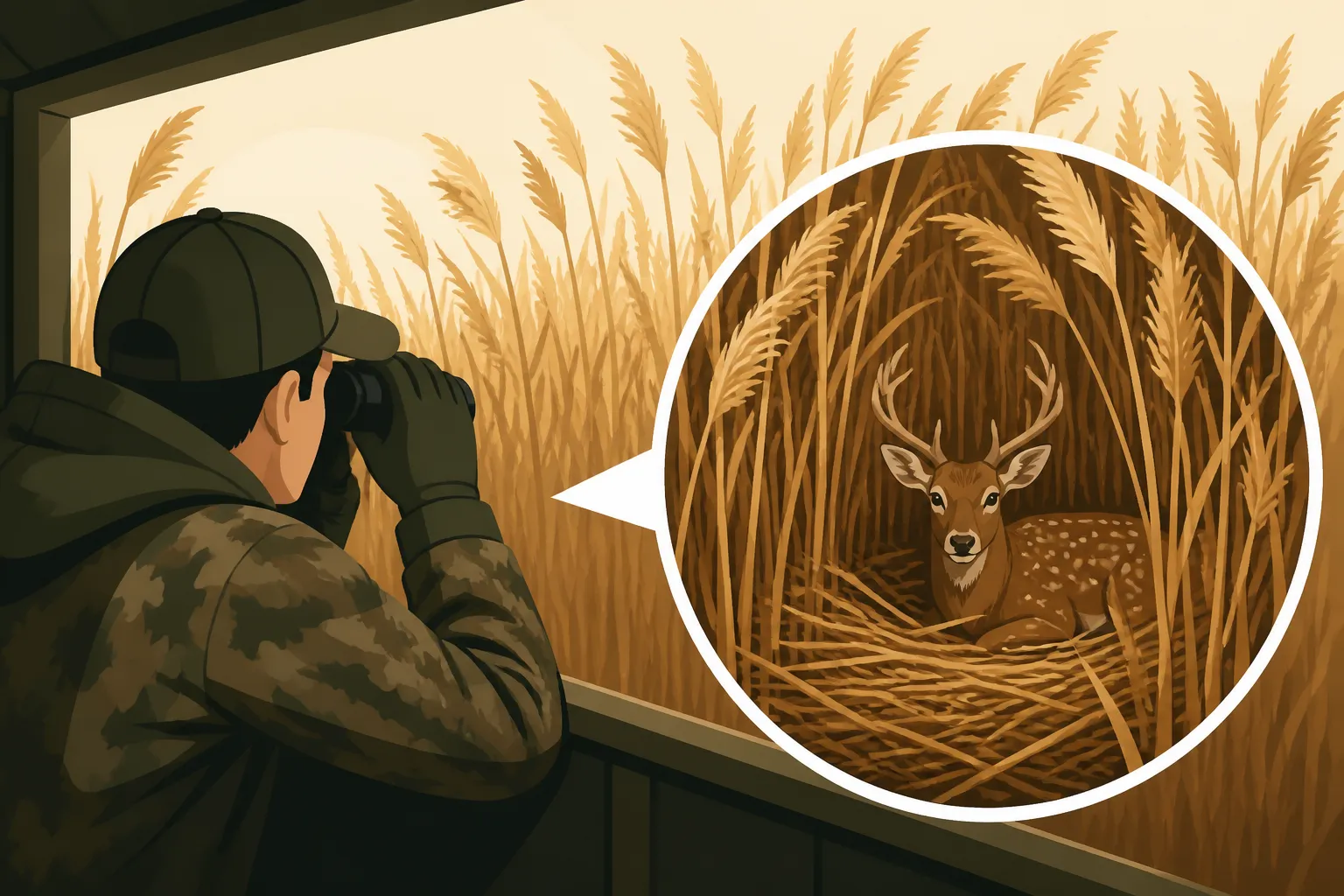
Where Sika Deer Bed in Phragmites
Finding sika deer in Maryland's vast, often impenetrable phragmites marshes can feel like searching for a needle in a haystack, leaving many hunters frustrated and questioning where these elusive "marsh elk" truly hide. This guide is here to unravel the mysteries of sika bedding behavior, focusing specifically on how they utilize the dense phragmites, and offering practical strategies to help you pinpoint their sanctuaries and increase your chances of a successful hunt.
The Unyielding Fortress of Phragmites
Phragmites australis, or common reed, has become an undeniable feature of Maryland's tidal marshes, especially on the Eastern Shore. While often seen as an invasive species, for sika deer, it's a five-star hotel, a fortress, and a pantry all rolled into one. Understanding why sika choose phragmites for bedding is the first critical step in figuring out where they're going to be. It’s not just about hiding; it’s about survival in a dynamic environment, particularly given the unique challenges of the marsh.
Why Sika Deer Crave This Dense Cover
Imagine trying to navigate a dense thicket of switchgrass that stands taller than your head and is as tough as bamboo. That's phragmites for us. For a sika deer, especially during the colder months or when hunting pressure is high, this stuff offers unparalleled security. It’s a literal wall of vegetation that predators, including humans, struggle to penetrate silently or efficiently. The sheer density creates a microclimate, buffering them from harsh winds and even offering some thermal protection during those biting winter days. They can vanish into it, only to reappear where you least expect them.
Moreover, phragmites often grows in areas that are hard for humans to access without specialized equipment, like mud motors or airboats, or by wading through knee-deep mud and water. This natural barrier further enhances its appeal as a bedding location. It’s their safe haven, a place where they can rest, chew their cud, and feel largely undisturbed. The frustration of hunters is often rooted in this very fact: the best sika spots are often the hardest to reach, and those spots are almost always thick with phragmites. It truly embodies how Sika Deer Use Phragmites for Cover, turning an invasive plant into a vital resource.
Phragmites as Both Bed and Buffet
It’s not just about cover, though. Phragmites also offers a food source. While sika deer primarily browse on marsh grasses, shrubs, and even agricultural crops like soybeans and corn when available, young phragmites shoots can be part of their diet, especially when other forage is scarce or less accessible due to water levels. This means their bed could very well be a few steps away from their dinner table, minimizing energy expenditure and exposure.
Think about it: why leave a perfectly secure, somewhat edible bedroom if you don’t have to? This makes specific phragmites patches even more desirable. They're seeking the path of least resistance for survival. So, when you're considering "Where Sika Deer Bed in Phragmites," remember they're looking for the ultimate combination of safety, thermal regulation, and proximity to sustenance. It’s a holistic decision for them, driven by their instincts to conserve energy and avoid danger. Understanding What Sika Deer Eat in a Tidal Marsh can help you narrow down areas where bedding and feeding zones might overlap.
Deciphering the Signs of Sika Beds in the Reeds
Once you understand the 'why,' the next challenge is figuring out the 'where.' Unlike an open hardwood forest where a deer bed might be a clear depression in the leaves, a sika bed in phragmites is a much more subtle affair. The marsh itself is a master of concealment, and the sika are experts at using it to their advantage. It requires patience, keen observation, and often, a lot of slogging through the muck that characterizes Hunting Sika Deer in Maryland's Tidal Marshes.
Reading the Marsh for Active Bedding Sites
The number one sign that sika deer are actively bedding in a phragmites patch isn't always a perfectly formed bed. More often, it's the network of intricate trails leading into and out of the dense reeds. Sika deer are creatures of habit, and they'll often use the same trails day after day, especially between feeding areas and their preferred bedding cover. These trails will be matted down, sometimes with broken phragmites stalks, and in softer mud, you'll clearly see their distinctive, small tracks. Don't be fooled by larger deer trails; remember, sika deer are significantly smaller than whitetails, so their tracks will be daintier. For more on this, you might find our guide on Reading a Marsh Trail for Sika Sign particularly helpful.
Beyond trails, keep an eye out for other indicators. Fresh droppings—small, pellet-like, and often clumped—are a dead giveaway that sika have been frequenting the area. Look for them on trails or in small openings within the phragmites. You might also find rubs on smaller saplings or even thicker phragmites stalks where stags have polished their antlers. During the rut, these signs will be much more apparent, as stags become less cautious. Water levels are also critical; sika prefer to bed on slightly higher ground within the marsh, avoiding areas that regularly flood. So, look for subtle elevation changes, even a few inches can make a difference.
Leveraging Technology to Pinpoint Hidden Havens
Scouting on foot is irreplaceable, but modern technology can give you a significant head start. Satellite imagery, particularly high-resolution maps from services like GoHunt, can be incredibly valuable for identifying potential bedding areas before you ever put on your waders. Look for distinct changes in vegetation density within the phragmites. Often, sika will bed in the thickest sections, or along the edges of small, drier "islands" of higher ground within the marsh.
Use your mapping app, like GoHunt, to identify transition lines – where phragmites meets open water, a small patch of loblolly pines, or even an agricultural field. These transition zones are often key travel corridors and can contain satellite bedding areas. Zoom in and look for faint lines or breaks in the dense reed beds that might indicate well-worn trails or natural funnel points. Mark these areas as waypoints for closer inspection during your actual scouting trips. It saves countless hours of slogging through unproductive marsh and helps you focus your efforts where deer are most likely to be. Remember, even a small patch of higher, drier ground on a satellite image can be a prime bedding location for a sika.
Strategically Approaching Sika Bedding in Phragmites
So, you’ve identified a promising phragmites patch, complete with fresh sign. Now comes the trickiest part: getting close enough for a shot without alerting these notoriously spooky deer. Sika have excellent hearing and a keen sense of smell, making a direct, head-on approach almost always a recipe for failure. Their senses are finely tuned to detect even the slightest disturbance in their dense domain.
Mastering the Wind and Tide
In the marsh environment, the wind isn't your only concern; the tide is equally crucial, if not more so. Sika deer often move with the tides, using low water to access new feeding grounds and high water to retreat to higher bedding areas within the phragmites. When you’re trying to approach a bedding area, you absolutely must consider both. Always approach with the wind in your face or quartering. This might mean taking a circuitous route that adds significant distance, but it’s non-negotiable. A slight shift in wind direction can carry your scent directly to a bedded sika, and they’ll be gone before you even know they were there.
The tide influences access and noise. If you're wading in, a falling tide might expose more mud, creating noisier walking conditions. A rising tide, on the other hand, might make it easier to slip through some areas, but could also push sika into different bedding pockets. Check the local tide charts religiously before your hunt. For a detailed look at how to account for the water, check out our piece on Boating Into a Sika Marsh at Low Tide. A careful hunter plans their entry and exit around these natural rhythms, using them to their advantage rather than fighting against them. Just like with whitetails in mountains, Wind and Thermals in Western Maryland Terrain are critical, but in the marsh, you add the complexity of water movement.
Silent Infiltration: Moving Through the Reeds
Moving through thick phragmites is inherently noisy. Every stalk snaps, every reed rubs, and the mud underfoot can suck at your boots. The key is slow, deliberate movement. Think "turtle speed." Take one step, pause, listen. Repeat. Try to step on solid ground or submerged roots rather than snap dry reeds. Hip boots versus chest waders in Sika country can also impact your mobility and noise; often, hip boots are lighter and quieter if the water isn't too deep, allowing for more agile movement.
Wearing quiet clothing is paramount. Fleece or wool that won't rustle or snag on every stalk will be your best friend. Consider bringing a sturdy walking stick or a pair of trekking poles to help with balance and test mud depth, reducing the chance of a noisy stumble. Your goal is to be a ghost. If you hear snapping reeds, chances are a sika heard it too. If you’re Tracking a Sika Stag Into Thick Marsh Grass, you know how challenging this can be. Sometimes, the best approach is to find a subtle game trail that allows for quieter passage, even if it’s not the most direct route. Patience and ultra-slow movement are the only ways to beat their keen senses.
Effective Hunting Strategies for Phragmites Bedding Areas
Just getting to the phragmites is half the battle; actually getting a shot at a sika deer that's using it for bedding requires a specific set of tactics tailored to this unique environment. Direct stalking into the heart of a phragmites bed is rarely successful, so a more strategic approach is often necessary.
Setting Ambushes Along Travel Corridors
Since directly stalking a bedded sika in dense phragmites is often futile, a more effective strategy is to set up an ambush along the well-used trails leading into and out of their bedding sanctuary. Sika deer will use these pathways to move from their beds to feeding areas, water sources, or other cover. Identify pinch points, intersections of trails, or narrow strips of slightly higher ground where the phragmites might thin out slightly, offering a clearer shooting lane.
These areas are perfect for ground blinds, especially if you can brush them in naturally with surrounding phragmites stalks. A portable hunting chair tucked into a thick cluster of reeds can provide hours of patient waiting. You’re playing the odds, knowing that eventually, a sika will emerge from the impenetrable cover. This method is particularly effective during the rut, when stags are more actively cruising these trails in search of hinds. Consider Setting a Stand on a Marsh Ditch Bank or along the edge of a Loblolly Pine Island in the Marsh, as these often serve as natural funnels.
Table: Sika Deer Bedding Indicators in Phragmites
| Indicator | Description | Ideal Conditions to Spot | Importance |
|---|---|---|---|
| Well-worn Trails | Matted-down phragmites, visible tracks (small, pointed hooves). | Softer mud, prolonged use, near feeding/water sources. | High |
| Fresh Droppings | Small, pellet-like, often dark and clumped. | On trails, in small openings, near bedding areas. | High |
| Rubs/Scrapes | Small trees/reeds rubbed by antlers; scrapes are less common in marsh. | During rut, along travel routes, edges of cover. | Medium |
| Phragmites Density | Look for the thickest, tallest patches offering maximum concealment. | Any time, but particularly where hunting pressure is high. | High |
| Elevated Ground | Subtle rises within the marsh that stay dry during high tides. | Low tide for visual confirmation, high tide for active use. | High |
| Vocalization | Whistling (stags during rut), occasional bleats (hinds/calves). | Early morning/late evening, during the September Whistle. | Low (for direct bedding) |
Still-Hunting the Edges and Pockets
While direct stalking through the heart of dense phragmites is incredibly difficult, still-hunting the edges and pockets within the larger reed beds can be a highly productive tactic. This involves slowly moving along the periphery of the densest phragmites, looking for openings, small clearings, or narrow waterways that sika might use as internal travel routes. These areas offer brief windows of opportunity for a shot.
Focus on mornings and evenings when sika are most likely to be moving to or from their primary bedding areas. Walk into the wind, always looking ahead and to the sides, scanning for any movement, a flick of an ear, or a patch of brown hide. Sometimes, you'll spot a sika feeding on marsh grasses or browse along the edge of the phragmites, just before it dives back into the impenetrable cover. If you hear a distant sika whistle or a splash, freeze and listen intently. They often betray their presence through sound before you ever see them. Using an app like GoHunt to mark small openings or potential clearings you see on aerial imagery can guide your still-hunting path, making it more efficient. This method takes immense patience and stealth, but it can yield great results for the persistent hunter. Remember, the game of hunting sika in the phragmites is one of inches, not yards. You might also want to check out Wading Into a Dorchester Marsh Before Daylight for more tips on navigating these tricky environments.
Utilizing Calls in the Marsh
Sika deer, particularly stags during the rut, are famously vocal. Their distinctive "whistle" can be a powerful tool for locating deer and, sometimes, for coaxing them out of thick cover. While you won't typically use calls to pull a bedded sika out of its bed, you can use them to locate stags in dense phragmites or to draw them closer if they are already on the move near a bedding area.
A sharp, challenging whistle can often provoke a response from a stag, allowing you to pinpoint its general location. This can be invaluable when trying to decide which direction to push or where to set up an ambush. Be careful, though; a stag might whistle back and then circle downwind to scent-check you. Always be ready for a quick shot if you call. For more on this, check out our guide on Hunting Sika Stags During Their Fall Whistle. Sometimes, a soft "chirp" or "mew" can mimic a hind and pique a stag's curiosity, drawing him cautiously towards the sound. The key is knowing when to call, and more importantly, when to remain absolutely silent. Remember, these are not whitetails, and while Grunt Calls in Maryland Hardwoods can work for them, sika have their own unique vocalizations.
Recovering Your Sika in the Reeds
One of the most disheartening experiences is making a good shot only to lose your deer in the dense phragmites. Sika deer are tough animals, and even a well-placed shot can see them run a surprising distance into the thickest cover. If you take a shot, mark the exact spot where the deer was standing and its direction of travel. Then, give it time – at least 30 minutes for a good lung shot, and several hours for a gut shot, especially in warm weather. You want that deer to expire before you push it further.
When tracking, look for blood, broken phragmites stalks, and any disturbed vegetation. Sika blood can be surprisingly sparse, even with a good hit. Take your time, moving slowly and methodically. If you lose the trail, spread out and grid-search the area. Bringing a buddy or even a trained blood-trailing dog can significantly increase your chances of recovery. The dense nature of phragmites makes a Blood Trailing in Marsh Grass After Dark an incredibly difficult, if not impossible, task, so always try to track it during daylight hours. Having a reliable GPS unit or mapping app like GoHunt to mark your last known blood trail spot is absolutely essential. Don't give up quickly; a recovered sika is a testament to your persistence and respect for the animal.
The Patience of the Marsh Hunter
Ultimately, hunting sika deer in phragmites for their bedding areas is a game of immense patience and resilience. These marshes are challenging environments, full of mud, water, and thick vegetation that seems designed to confound the hunter. But it's precisely this challenge that makes a successful sika hunt so rewarding. Every sika stag taken from the phragmites is a trophy earned through sweat, mud, and unwavering dedication.
The deer are masters of their domain, and to succeed, you must learn to think like them, understanding their movements, their needs, and their sanctuary. Don't get discouraged by seemingly empty stretches of marsh or by the sheer difficulty of the terrain. The sika are there, hidden just out of sight, relying on the phragmites to keep them safe. With the right approach, diligent scouting, and an understanding of how they use this unique cover, you can unlock the secrets of where sika deer bed in phragmites and experience the thrill of hunting these magnificent, elusive animals.
Disclaimer
Hunting is a challenging and potentially dangerous activity. This guide provides information for educational purposes only. Always consult and adhere to all local, state, and federal hunting regulations, including those specific to Maryland. Obtain all necessary licenses and permits. Prioritize safety, ethical hunting practices, and respect for wildlife and private property. Consider taking a certified hunter education course before venturing into the field. The author and publisher are not responsible for any accidents, injuries, or legal issues that may arise from using the information presented here.