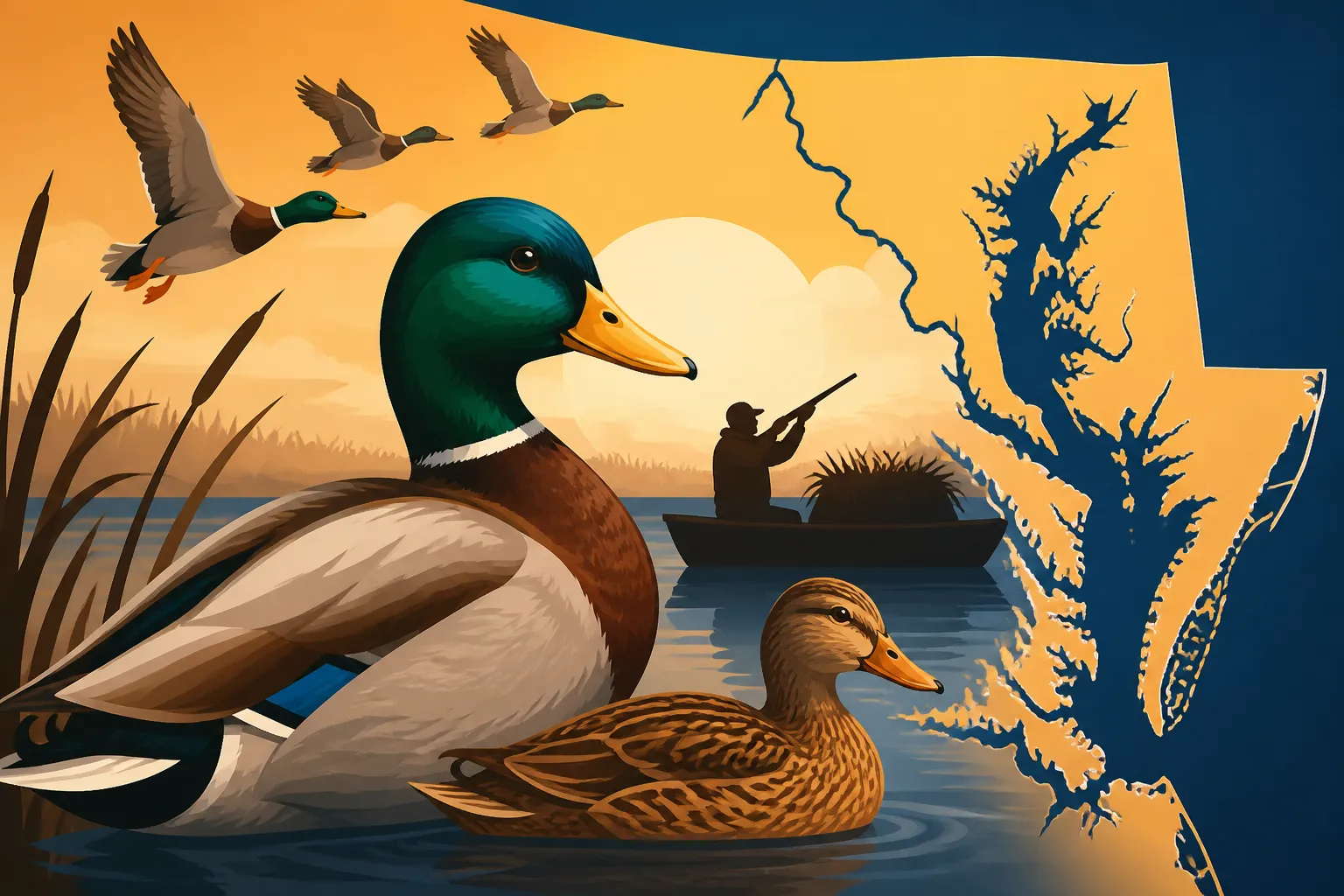
Ducks of Maryland’s Chesapeake Bay
It can feel overwhelming trying to make sense of the incredible variety of ducks that call Maryland's Chesapeake Bay home, especially when each species has its own habits, preferred habitats, and even specific hunting regulations. Many hunters, new and seasoned alike, struggle with quickly identifying ducks in flight or knowing the best strategies to pursue them effectively across the Bay's diverse landscapes. This comprehensive guide will peel back the layers on Maryland's duck diversity, helping you understand the different species, where to find them, and how to navigate the hunting season successfully.
Understanding Maryland's Duck Diversity
The Chesapeake Bay, with its vast estuaries, intricate marsh systems, and surrounding agricultural lands, is a crucial wintering ground and migratory stopover for a truly astonishing array of duck species. For hunters, this diversity is both a blessing and a challenge. It's a blessing because it offers varied hunting opportunities throughout the season, but it's a challenge because proper identification is absolutely critical for staying within legal limits and making ethical decisions in the field. Knowing your ducks isn't just about bagging birds; it's about respecting the resource and enhancing your entire hunting experience.
Maryland sits smack in the middle of the Atlantic Flyway, a superhighway for migratory birds that stretches from the Arctic all the way down to the Caribbean. Ducks from Canada and the far northern states funnel into our region, drawn by the relatively mild winters and abundant food sources the Chesapeake provides. From the shallow, tidal creeks of the Eastern Shore to the wide-open waters of the main Bay, each duck species has found its niche. This rich ecological tapestry supports not just a thriving population of waterfowl, but also a vibrant hunting tradition that dates back centuries.
The Two Main Groups: Puddle Ducks versus Diving Ducks
When you're out on the water, the first major distinction you'll often make, even before identifying the exact species, is whether you're looking at a puddle duck or a diving duck. These two broad categories behave very differently, and understanding these fundamental differences is key to successful hunting. Puddle ducks, also known as dabbling ducks, typically feed in shallow water by tipping their heads down and "dabbling" their bottoms up. Their legs are more centrally located, allowing them to walk on land with relative ease. They burst almost vertically from the water when startled, a defining characteristic.
Diving ducks, on the other hand, are built for life beneath the surface. They feed by diving completely underwater, propelling themselves with powerful webbed feet set further back on their bodies. This anatomical difference makes them a bit more awkward on land, and when taking flight, they need to run across the water's surface to gain momentum, much like a seaplane. Recognizing this simple difference in feeding and takeoff can instantly narrow down your identification, making it easier to determine bag limits and tailor your hunting approach.
| Feature | Puddle Ducks (Dabblers) | Diving Ducks |
|---|---|---|
| Feeding Style | Tip heads down, "dabble" in shallow water; rarely dive | Dive completely underwater for food |
| Takeoff | Spring vertically from the water | Run across the water's surface to become airborne |
| Leg Placement | More centrally located; walk well on land | Further back on body; awkward on land |
| Typical Habitat | Shallow marshes, ponds, flooded fields, river edges | Large, deep bodies of water (Bays, big lakes) |
| Diet | Seeds, aquatic vegetation, insects, grains | Mussels, clams, aquatic insects, submerged plants |
Why Species Identification is Crucial for Hunters
Beyond the academic interest, accurate duck identification is paramount for ethical and legal hunting in Maryland. The state, in conjunction with federal regulations, sets specific daily bag limits and possession limits that often vary by species. For instance, the daily bag limit for mallards might be different from that of pintails, and certain species like black ducks or canvasbacks may have very restrictive limits or special timing. Mistakes can lead to significant penalties, including fines and loss of hunting privileges.
What makes it even trickier is that identifying ducks in low light, at a distance, or in rapidly moving flight can be genuinely difficult. Factors like a bird's size, silhouette, flight pattern, wing beat, and call all contribute to identification. You might hear seasoned hunters talking about "wing beats" or "flash patterns" when distinguishing between, say, a broad-winged mallard and a fast-flying teal. Investing time in learning these nuances, perhaps by studying a good bird identification guide or using an app like GoHunt to review species characteristics, will make you a much more confident and responsible hunter. Understanding these details also helps you anticipate which species might respond to certain calls or decoy spreads, directly impacting your success in the field.
Puddle Ducks: The Marsh and Farm Favorites
Maryland's shallow marshes, flooded timber, and agricultural fields are prime real estate for puddle ducks. These are the birds that can be found splashing in the shallows of the Chesapeake's myriad creeks and guts, or feeding on waste grain in a cut cornfield on the Eastern Shore. They're often the first species new waterfowlers encounter, and for good reason – their habitat is typically more accessible than the open-water haunts of diving ducks. The thrill of a group of mallards circling your decoys, or a wood duck whistling through flooded timber, is something truly special.
Hunting puddle ducks often involves setting up in areas with shallower water, good natural cover, and access to food sources. This might mean wading into a marsh before daylight, building a blind on a Maryland shoreline point, or setting up on the edge of a flooded field. Decoy spreads for puddle ducks are typically set closer to shore, sometimes mimicking birds feeding actively. Their diet, often consisting of seeds, grains, and aquatic vegetation, means they're drawn to specific types of forage found in these shallower environments.
Mallards and Black Ducks: The Mainstays
The mallard is arguably the most recognizable duck in North America, and it's certainly a cornerstone of duck hunting in Maryland. The vibrant green head of the drakes and the mottled brown of the hens are distinct, even from a distance. Mallards are adaptable birds, found everywhere from urban parks to remote marshes and agricultural fields. They thrive on waste grain, making them a common sight and target for hunters set up in cut corn or soybean fields, especially after a cold front pushes new birds into the region. They are gregarious birds, often flying in large flocks, and respond well to calling and realistic decoy spreads.
Closely related and often found in similar habitats is the American Black Duck. While once far more common, their populations have seen declines in some areas, making them a species of particular interest for conservation. Black ducks are typically shyer than mallards and possess a keen wariness, which can make them a challenging but rewarding quarry. They have a dark, sooty brown body with a lighter head and a distinctive purple speculum (wing patch) that often appears iridescent blue in good light. Unlike mallards, both the drake and hen look very similar. They prefer brackish marshes and tidal creeks, often feeding on aquatic plants and invertebrates. Hunting black ducks often requires more camouflage and stealth, as they are quick to spot anything out of place. Be sure to check your Duck Daily Bag Limit by Species for specific black duck restrictions, as they are often more stringent than for other puddle ducks.
Wood Ducks and Teal: Woodland and Early Season Gems
The wood duck is, without a doubt, one of the most strikingly beautiful ducks in North America. The drakes, with their iridescent green and purple crest, chestnut flanks, and intricate patterns, are a true sight to behold. Hens are a more subdued brown, but still possess that characteristic crested head. Wood ducks are unique among dabblers for their strong preference for wooded wetlands, beaver ponds, and slow-moving rivers, where they often nest in tree cavities. Hunting wood ducks often involves targeting flooded timber or stream corridors, especially during the early season.
These birds have a distinctive, almost squealing whistle call, and they fly with a rapid, agile wingbeat through the trees. They are particularly active at dawn and dusk, flying to and from roosting areas. Hunting a beaver pond for wood ducks as the sun rises is an unforgettable experience, often requiring a quick shot as they dart through the canopy. The smaller teal, including Green-winged and Blue-winged varieties, are also early season favorites. Blue-winged teal are typically the first to migrate south, offering excellent opportunities during the September Archery Opener. Green-winged teal are slightly smaller, faster, and possess a green speculum. Both species are incredibly swift flyers, zipping over decoy spreads with a seemingly impossible speed. Hunters looking for a fast-paced shoot often target these diminutive but delicious birds, especially in shallow, muddy flats or rice fields. Don't underestimate their size; they can be incredibly challenging targets!
Gadwall and Wigeon: Often Overlooked but Rewarding
While perhaps not as iconic as mallards or as flashy as wood ducks, gadwall and American wigeon are fantastic puddle ducks that offer excellent hunting opportunities in Maryland. Gadwall are often referred to as "grey ducks" due to their subtly patterned plumage. The drakes have a dark bill, grey body, and a distinct white speculum on their wing, which is a great field mark for identification. Hens are similar but a bit lighter. They prefer marshes and shallow impoundments rich in submerged aquatic vegetation, which forms a significant part of their diet. They are dabblers, often seen tipping up in shallow waters.
Wigeon, particularly the American wigeon, are known for the bright white patch on the drake's forewing (the "white patch") and a prominent white crown strip on their heads, giving them the nickname "bald pate." Hens are a mottled brown with a greyish head. They are highly vocal, with the drakes making a distinct three-note whistle. Wigeon are often found in open, shallow water, frequently associating with diving ducks, as they will sometimes "pirate" food brought to the surface by divers. They are primarily vegetarians, feeding on aquatic plants, often in the brackish waters of the Chesapeake Bay. Both gadwall and wigeon can be less wary than mallards, sometimes offering good decoying opportunities, especially if you set up a spread that includes some feeding motion. Their presence can make a spread more attractive to other puddle ducks as well.
Diving Ducks: The Open Water Specialists
When you think of the vast, open expanses of the Chesapeake Bay, particularly in the heart of winter, you're picturing the domain of the diving ducks. These birds are built for the deeper, often saltier, waters of the main Bay, its wider rivers, and larger tidal embayments. They spend much of their time underwater, foraging for mollusks, crustaceans, and submerged aquatic vegetation (SAV) that thrives in these environments. Hunting diving ducks is a completely different ballgame than puddle ducks; it often involves specialized equipment, larger boats, and an understanding of the Bay's currents and depths.
The challenge and allure of hunting diving ducks lie in their resilience to rough water, their impressive speed in flight, and the specific habitats they prefer. You won't find many canvasbacks dabbling in a shallow farm pond. Instead, you'll be looking for them rafting up in massive flocks on the Susquehanna Flats or flying low over the choppy waters of the mid-Bay. These hunts often demand tough blinds, robust decoys, and a willingness to brave the elements, making them a truly classic Chesapeake Bay waterfowl experience.
Canvasbacks and Redheads: Kings of the Bay
The canvasback, often revered as the "King of the Ducks," is a magnificent diving duck that holds a special place in the hearts of Chesapeake Bay waterfowlers. Drakes are unmistakable with their rusty-red heads, black chest, and a gleaming white back that gives them their name. Hens are a more subtle brown. Their distinctive wedge-shaped head and long, sloping profile are excellent identification markers, even in flight. Canvasbacks are powerful flyers, capable of incredible speeds, and are known for their strong, steady wingbeats. They feed primarily on submerged aquatic vegetation, historically gathering in vast numbers on the Susquehanna Flats, though their numbers and distribution can vary based on food availability.
Redheads, though similar in appearance to canvasbacks at a glance, are another prized diving duck of the Bay. Drakes sport a rounded, cinnamon-red head (lacking the canvasback's sloped profile), a black chest, and a grey body. Hens are a uniform brownish-grey. Redheads are often found in similar habitats to canvasbacks, favoring open bay waters, large tidal rivers, and brackish marshes. They also feed heavily on SAV, as well as seeds and aquatic invertebrates. Both canvasbacks and redheads often raft up in large groups, sometimes mixed with scaup, and can present a challenging target as they commit to a decoy spread. Hunting these birds often involves large spreads of decoys, sometimes hundreds, and being able to identify them quickly is crucial due to their specific bag limits. Learn about Decoying Divers on Maryland's Open Bay to optimize your chances.
Scaup and Ring-necked Ducks: The Common Divers
Greater and Lesser Scaup, often collectively referred to as "bluebills" or "broadbills," are among the most common diving ducks on the Chesapeake Bay. Drakes of both species have a distinctive black head (with a greenish sheen on Greaters, purplish on Lessers), a white side, and a grey back. Hens are mottled brown with a noticeable white patch at the base of their bills. Distinguishing between Greater and Lesser Scaup in the field can be tricky, as they are very similar in size and appearance, though Greaters are generally larger and have a slightly different head shape. They feed on mussels, clams, and aquatic insects, often found in large rafts on the open Bay. Their flight is fast and direct, and they decoy well, often in large groups.
Ring-necked ducks are another abundant diving duck, often found in both fresh and brackish waters. Drakes have a striking black back, grey flanks, a white ring on their bill, and a subtle chestnut "ring" on their neck (though this is rarely visible in the field, hence the bill ring being a better identifier). Hens are brown with a white patch at the base of their bill. Ring-necks are strong flyers, often flying in tight groups, and are particularly fond of freshwater ponds, impoundments, and the calmer sections of tidal rivers. They feed on seeds of aquatic plants and invertebrates. While they are divers, they often utilize shallower water than scaup or canvasbacks, sometimes mingling with puddle ducks on larger bodies of water. Hunters can find good opportunities for ring-necks on many of Maryland's inland waterways and larger ponds.
Goldeneyes and Buffleheads: Small but Spirited
Buffleheads are small, compact, and incredibly fast-flying diving ducks that are a delight to encounter. Drakes are easily identified by their striking black and white plumage, featuring a large white patch behind the eye on a puffy black head. Hens are darker with a distinct white cheek patch. Buffleheads are agile flyers and divers, often seen in small groups in sheltered bays, tidal creeks, and even along open shorelines. They feed on small fish, crustaceans, and aquatic insects. These little ducks are known for their spirited nature and quick dives, often disappearing underwater only to pop up unexpectedly a good distance away. Their small size means they don't offer much meat, but their challenging flight and beautiful plumage make them a favorite among many Bay hunters.
Common Goldeneyes are slightly larger than buffleheads but share a similar striking black and white pattern on the drakes, though the goldeneye drake has a circular white patch between its eye and bill on a green-glossed black head. Hens are mottled brown with a chocolate brown head. Goldeneyes are strong, fast flyers with a distinctive whistling sound made by their wings in flight, earning them the nickname "whistlers." They prefer large bodies of water, often congregating in harbors, estuaries, and larger rivers, and feed on aquatic insects, crustaceans, and small fish. Both buffleheads and goldeneyes are tough birds that can withstand very cold weather, often remaining on the Bay through the harshest winter months. Their presence is a welcome sight on cold, clear days, and they offer thrilling shooting challenges, often darting quickly through a decoy spread.
Key Habitats for Chesapeake Bay Ducks
Maryland's landscape offers a mosaic of habitats, each attracting different duck species. Understanding these diverse environments is like having a secret map to where the birds will be. It's not just about finding water; it's about finding the right kind of water with the right kind of food and cover for the ducks you're hoping to encounter. From the dense reeds of the tidal marshes to the vast stretches of open Bay, knowing where to focus your efforts is paramount. This knowledge also helps you choose the right gear and tactics, whether it's specialized boats for open water or hip waders for marsh hunting.
Many successful Maryland hunters spend significant time before the season scouting these varied habitats. Tools like online aerial maps or apps such as GoHunt can be invaluable for identifying potential hotspots, hidden ponds, or access points. Observing bird movements, identifying feeding patterns, and noting tide schedules are all part of piecing together the puzzle of duck distribution. The more you understand the specific ecological needs of different duck species, the more effective and enjoyable your hunts will become.
Tidal Marshes and Creeks
The intricate network of tidal marshes and creeks, particularly along the Eastern Shore and portions of Southern Maryland, are absolute magnets for puddle ducks. Species like mallards, black ducks, wood ducks, and teal thrive in these shallow, brackish environments. These areas provide abundant food in the form of seeds from marsh grasses, aquatic invertebrates, and easily accessible shallow water for dabbling. The dense stands of Phragmites and Spartina grasses offer crucial concealment from predators and hunters, as well as shelter from harsh winds.
Hunting these areas often involves wading, using small boats like jon boats or kayaks for access, and setting up portable blinds or utilizing natural cover. The tides play a critical role here; a marsh that's bustling with birds at high tide might be nearly dry and devoid of ducks at low tide, or vice-versa, depending on how the birds are feeding and resting. Learning to read tide charts before a marsh hunt is essential. The challenge here is the mud, the biting insects (in early season), and the sheer physical effort of navigating these often-remote locations. However, the rewards—like a flock of black ducks barreling through a marsh gut at first light—are well worth the effort.
Open Bay Waters and Flats
For diving ducks, the vast, open waters of the main Chesapeake Bay, its broad tributaries, and the extensive shallow flats like the Susquehanna Flats, are where they feel most at home. These deeper, often more turbulent waters, provide the ideal habitat for species like canvasbacks, redheads, scaup, and goldeneyes. Their diet often consists of submerged aquatic vegetation, clams, mussels, and other bottom-dwelling invertebrates, all abundant in these areas. The sheer expanse of open water also offers them safety from land-based predators and allows them to raft up in enormous flocks, sometimes numbering in the tens of thousands.
Hunting these open water zones requires specialized equipment. Layout boats, large decoy spreads, and stout boats capable of handling choppy Bay conditions are often necessary. Setting up on a Maryland offshore stake blind or running a layout boat for sea ducks are experiences unique to this type of hunting. Weather can be a major factor here; strong winds can make open water hunting dangerous and unproductive, while calm days might see birds resting far offshore. Understanding the wind, currents, and depths is crucial for decoy placement and safe navigation. It's a challenging but deeply rewarding form of waterfowling that connects you directly to the raw power and beauty of the Chesapeake.
Farm Ponds and Flooded Timber
Away from the Bay's immediate influence, Maryland's agricultural lands and inland forests offer yet another set of prime duck habitats: farm ponds and flooded timber. Many private farms, particularly on the Eastern Shore and in the Piedmont region, have ponds that attract migrating puddle ducks. These can be small, hidden gems where ducks rest and feed on agricultural runoff, seeds, and insects. Flooded timber, while less common than in some southern states, can be found along river bottoms and in certain low-lying areas, providing excellent habitat for wood ducks and sometimes mallards.
Hunting farm ponds often means securing permission from private landowners, which can be challenging but highly rewarding. Setting up against a natural bank or with a portable blind, and using a small spread of puddle duck decoys, can be very effective. For flooded timber, stealth and camouflage are key, as birds will be flying through the trees at close range. These habitats tend to be quieter and offer a more intimate hunting experience than the open Bay. Always remember that when hunting on private property, respecting the landowner's rules and boundaries is paramount. Scout these areas diligently, perhaps using an app like GoHunt to identify potential spots, and always have a clear understanding of your entry and exit routes.
Navigating Maryland's Duck Hunting Regulations and Zones
One of the most intimidating aspects of waterfowl hunting, especially for newcomers, is the maze of regulations. Maryland, like all states, operates under federal guidelines for migratory birds, but then adds its own layers of complexity with specific zones, bag limits, and licensing requirements. It's not enough to simply know what to hunt; you absolutely must know how and when it's legal. Ignoring these rules can lead to serious consequences, not just legally, but also for the conservation efforts that ensure healthy duck populations for future generations.
The frustrations are real – remembering all the specific dates, understanding what constitutes a legal daily bag, and making sure you have all the correct stamps can feel like a full-time job. But it's a necessary part of being a responsible hunter. Before you ever step foot in a marsh or launch a boat on the Bay, take the time to thoroughly review the Maryland DNR waterfowl regulations each year, as they can change. This guide will help break down some of the key components, but always defer to the official DNR materials for the most current information.
Maryland Waterfowl Zones and Season Dates
Maryland is divided into different waterfowl zones, and this is critical because season dates can vary significantly between them. For ducks, Maryland primarily operates under the Atlantic Flyway Council's framework, but specific dates and splits are set by the state. Historically, there have been a few key zones that influence duck seasons: the Atlantic Population Canada Goose Zone, the Resident Population Canada Goose Zone, and the Sea Duck Zone. While these primarily govern goose and sea duck seasons, the overall timing of duck seasons can also have distinct "splits" or breaks, allowing hunters to target birds during specific migration periods.
For instance, there might be an early split in October, a longer main season spanning from November through December, and a late season in January. These splits are designed to coincide with different migration waves, allowing hunters to target various species as they pass through or winter in Maryland. Knowing your exact hunting location and which zone it falls into is the first step in understanding when you can legally pursue ducks. Always double-check the current year's Maryland Waterfowl Zones and Season Dates on the DNR website, as these are subject to annual changes and adjustments based on population data and federal frameworks.
Daily Bag Limits by Species and Special Restrictions
This is where duck identification really comes into play, as the daily bag limit is not a blanket number for "ducks." Instead, it's a cumulative total with species-specific restrictions that can be quite complex. For example, you might have an overall daily bag limit for ducks, but within that limit, only a certain number can be mallards, and even fewer can be black ducks or canvasbacks. Some species might have "point" systems (though less common now), or special daily limits like "two pintails" or "one canvasback."
The DNR's regulations will clearly outline these specific numbers. For instance, you might find that while the overall duck limit is six birds, it could be restricted to "no more than 4 mallards (including no more than 2 hens), 2 black ducks, 2 canvasbacks, 1 pintail, 2 redheads, 2 scaup, 1 mottled duck." These numbers are set to manage populations, protect vulnerable species, and ensure sustainable hunting. It's not uncommon for hunters to use duck identification apps or even print out a quick guide to keep in their blind, helping them identify birds on the wing and stay within their Duck Daily Bag Limit by Species. Misidentifying a hen mallard for a black duck could have legal repercussions, so constant vigilance and accurate ID are essential.
Licensing, Stamps, and HIP Requirements
Before you even think about loading your shotgun for a duck hunt in Maryland, you need to ensure all your paperwork is in order. It's a multi-layered system, designed to fund conservation and track hunter participation. First and foremost, you'll need a valid Maryland hunting license. For residents and non-residents alike, these can be purchased through the Maryland Department of Natural Resources' COMPASS portal or at authorized license agents.
Beyond the basic hunting license, migratory bird hunters have additional requirements:
- Maryland Migratory Game Bird Stamp: This state stamp is required for anyone hunting ducks, geese, doves, or other migratory game birds in Maryland. The revenue from this stamp directly supports waterfowl management and habitat projects within the state.
- Federal Duck Stamp: This is a federal requirement for all waterfowl hunters aged 16 and older across the entire United States. The Federal Duck Stamp is a critical source of funding for the National Wildlife Refuge System, conserving millions of acres of wetland habitat. Make sure you have your Federal Duck Stamp Rules for Bird Hunters in order.
- Harvest Information Program (HIP) Registration: All migratory bird hunters must register annually with the federal HIP program. This is a quick, free registration that helps wildlife agencies gather data on hunter activity, which is vital for setting future season dates and bag limits. You'll need to complete your HIP Registration for Migratory Bird Hunters through the Maryland DNR COMPASS system when you buy your license or stamps.
Failing to possess any of these licenses or stamps can result in significant fines and penalties. Always carry your physical licenses or have them readily accessible on a digital device, as law enforcement officers can and do check compliance in the field. Think of it as your contribution to the resource you love to pursue; these fees directly fund the conservation efforts that make waterfowl hunting possible.
Essential Gear and Strategies for Duck Hunting
Duck hunting is a gear-intensive pursuit, and for good reason. The challenges of weather, water, and wary birds demand specific tools and thoughtful strategies. You can't just walk into a marsh with a shotgun and expect success. From the right decoys to proper blind concealment and the invaluable assistance of a good retriever, every piece of the puzzle plays a role in drawing ducks into range and ensuring a successful, safe, and ethical hunt. Understanding how to use this gear effectively, and adapting your strategies to the specific conditions of the Chesapeake Bay, is what separates consistently successful hunters from those who just get lucky.
It's easy to get caught up in the latest and greatest gadgets, but truly essential gear revolves around safety, concealment, and decoy presentation. While a top-of-the-line shotgun is nice, it's often the less glamorous items – like well-maintained waders, a sturdy boat, or a reliable dog – that make the biggest difference in the field. Investing in quality gear, and more importantly, learning how to use it proficiently, will not only increase your harvest but also enhance your overall enjoyment of the hunt.
Decoy Spreads for Puddle and Diving Ducks
Decoys are the cornerstone of nearly every duck hunt. They serve to attract birds by mimicking a safe, inviting resting or feeding area. However, the type of decoys and how they are arranged (the "spread") varies significantly depending on whether you're targeting puddle ducks or diving ducks.
For puddle ducks, which primarily feed in shallow water, smaller spreads are often effective. A typical spread might consist of a dozen to two dozen mallard, black duck, or mixed puddle duck decoys. Often, hunters arrange them in a "J" or "U" shape, leaving an open landing zone in front of their blind. Adding motion decoys, such as spinning-wing decoys (e.g., Mojo Decoys) or jerk strings, can significantly enhance realism, mimicking active feeding and splashing. These motion elements can be particularly effective on calm days or when trying to draw the attention of high-flying birds. For example, when hunting a Maryland farm edge, a realistic feed of a few mallards could be all you need.
For diving ducks, especially on the vast open waters of the Chesapeake, you often need much larger spreads to be seen from a distance. Rigs of 50, 100, or even several hundred decoys are not uncommon. These spreads might be arranged in long "strings" or "gangs," often with a distinct "blob" or mass of decoys that simulates a large raft of birds. Species-specific decoys like canvasbacks or scaup are important. Motion can be created by the natural chop of the water, but some hunters also use "swimming" motion decoys or even battery-powered ones to create movement. The goal is to create a highly visible, inviting spectacle that gives distant divers the confidence to commit. Understanding how to rig these larger spreads for various wind and current conditions, particularly when Decoying Divers on Maryland's Open Bay, is a skill honed over many seasons.
Blind Types and Concealment
Being unseen is just as crucial as having an attractive decoy spread. Ducks, especially those that have been hunted before, have incredible eyesight and can spot anything out of place. Choosing the right blind type and perfecting your concealment strategy is paramount.
For puddle duck hunting in marshes or along field edges, natural concealment is often the best option. This might involve brushing in a makeshift blind using local vegetation, sitting among a thick patch of reeds, or utilizing a layout blind in a cut cornfield. Portable ground blinds that are heavily brushed with local grasses and branches can also be effective. The key is to blend seamlessly with the environment, breaking up your outline and ensuring you're hidden from all angles. For example, when scouting Maryland public land before season, look for areas with existing natural cover that you can enhance.
For diving duck hunting on open water, specialized blinds are common. These include permanent stake blinds built on points or in shallow flats, often disguised with extensive brushwork, or mobile layout blinds used in boats. Layout boats, which allow hunters to lie nearly flat at water level among their decoy spread, offer exceptional concealment. Another common approach is Building a Blind on a Maryland Shoreline Point, where you can intercept birds flying along the contour of the land. Whatever the blind type, absolute stillness and minimal movement are essential when ducks are working your spread. Don't fidget, don't look up too soon, and wait for the birds to commit fully before making your move.
Retriever Dogs and Their Role
A well-trained retriever is not just a valuable asset; it's often an indispensable partner in duck hunting, especially in challenging Maryland environments. The Chesapeake Bay's marshes, cold waters, and thick cover make finding and recovering downed birds difficult, and without a dog, many birds would be lost, leading to unethical waste. A good retriever saves birds, saves hunters from dangerous swims, and adds an immeasurable layer of enjoyment to the hunt.
The most common breeds for waterfowl retrieval are Labrador Retrievers, Chesapeake Bay Retrievers (a Maryland native!), and Golden Retrievers. A successful retriever must be:
- Disciplined: Able to sit quietly in the blind, remain still until sent, and ignore distractions.
- Marking Ability: Capable of marking where multiple birds fall, even at long distances.
- Strong Swimmer: Able to handle cold water, strong currents, and long retrieves in rough conditions.
- Dedicated: Possessing the drive to push through thick cover and bring the bird back to hand.
Training a retriever is a significant commitment, but the rewards are immense. Imagine shooting a bird that falls into thick phragmites or drifts into an icy current; without a dog, that bird is likely lost. With a good retriever, that bird is brought safely back, honoring the resource and completing the hunt ethically. Always ensure your dog is properly conditioned for the cold, has appropriate dog vests for warmth and visibility, and is trained in basic obedience and retrieving commands before taking them into the field. If you're Hunting a Chesapeake Bay Blind at First Light, a quiet, steady retriever makes all the difference.
Conservation Efforts and Duck Hunting's Future in Maryland
Duck hunting in Maryland is more than just a pastime; it's deeply intertwined with the history and ongoing efforts of waterfowl conservation. Hunters have historically been, and continue to be, the primary funders and advocates for wetland protection and restoration. Without the dedication and financial contributions of waterfowlers, the vibrant duck populations we enjoy today, and the critical habitats they depend on, would simply not exist in the same way. This connection between hunting and conservation is a fundamental pillar of wildlife management in North America.
However, the future of ducks in the Chesapeake Bay and beyond faces ongoing challenges, from habitat loss and degradation to climate change and disease. Understanding these threats and the conservation initiatives designed to address them is crucial for every Maryland hunter. Our collective actions, both in the field and through our support for conservation organizations, will dictate the health of duck populations for generations to come.
Habitat Preservation and Restoration
The most critical factor influencing duck populations is habitat. Ducks need healthy wetlands, clean water, and abundant food sources throughout their migration and wintering grounds. In Maryland, habitat preservation and restoration are ongoing, monumental tasks. Organizations like Ducks Unlimited, working with federal and state agencies, are instrumental in this effort. They focus on protecting existing wetlands, which often involves acquiring land or working with private landowners to establish conservation easements.
Beyond protection, active restoration is vital. This includes efforts to restore degraded marshes by managing water levels, controlling invasive species like Phragmites, and replanting native vegetation. Restoring submerged aquatic vegetation (SAV) in the Chesapeake Bay is particularly important for diving ducks like canvasbacks and redheads. Agricultural practices that leave waste grain in fields also provide crucial winter food sources for puddle ducks. Every dollar spent on hunting licenses and duck stamps, along with direct donations to conservation groups, directly fuels these essential habitat projects. It's a testament to the fact that hunters are not just consumers of wildlife, but stewards of its future.
The Role of Hunter Contributions
It cannot be overstated: hunters are the backbone of waterfowl conservation funding. The "user pays, public benefits" model is unique to wildlife management in North America, and it's incredibly effective. Here's how hunters contribute:
- License and Stamp Fees: As discussed earlier, the purchase of Maryland hunting licenses, state migratory game bird stamps, and federal duck stamps generates millions of dollars annually. These funds are specifically earmarked for conservation and directly finance habitat acquisition, restoration, research, and law enforcement.
- Excise Taxes (Pittman-Robertson Act): When hunters purchase firearms, ammunition, and archery equipment, a federal excise tax is levied. This money, allocated through the Pittman-Robertson Act, is then distributed back to state wildlife agencies for conservation projects, including waterfowl management. This means every box of shotshells you buy helps conserve habitat.
- Volunteer Efforts and Advocacy: Beyond financial contributions, hunters often volunteer their time for habitat projects, clean-ups, and mentoring new hunters. Organizations like Delta Waterfowl and the Maryland Waterfowlers Association actively involve hunters in advocacy for sound wildlife policies and habitat protection.
These contributions are vital for ensuring that there are healthy populations of ducks not just for hunters, but for all wildlife enthusiasts. Without this consistent funding and engagement from the hunting community, Maryland's duck populations and their habitats would face an even more uncertain future.
Challenges and Opportunities for Maryland's Ducks
Despite robust conservation efforts, Maryland's duck populations and their habitats face significant challenges. Habitat loss due to coastal development, wetland degradation from pollution and sedimentation, and the ongoing impacts of climate change (such as sea-level rise and increased storm intensity) are constant threats. For instance, the loss of vast beds of submerged aquatic vegetation in the Chesapeake Bay impacts the primary food source for many diving ducks. Invasive species, like nutria (though largely eradicated in Maryland) and Phragmites, also alter crucial marsh ecosystems.
However, there are also significant opportunities. Continued investment in habitat restoration, particularly in the restoration of oyster reefs and native SAV beds, can have cascading positive effects on the entire Bay ecosystem, benefiting ducks. Implementing sustainable agricultural practices that leave waste grain and create wetland buffers can provide more reliable food and cover. Furthermore, educating the public about the importance of wetlands and the critical role hunters play in conservation can foster broader support. Innovation in wildlife management, utilizing tools like satellite telemetry to track migration patterns (as might be used with a GoHunt mapping tool), helps us better understand and respond to the needs of these incredible birds. By working together, hunters, landowners, conservationists, and government agencies can ensure that the ducks of Maryland's Chesapeake Bay continue to thrive for generations to come.
Disclaimer
Please be aware that hunting regulations, season dates, and bag limits are subject to change annually by the Maryland Department of Natural Resources (DNR) and federal guidelines. Always consult the most current official Maryland DNR hunting guide before engaging in any hunting activity. This content is for informational purposes only and should not be considered a substitute for official legal guidance or hunter education.