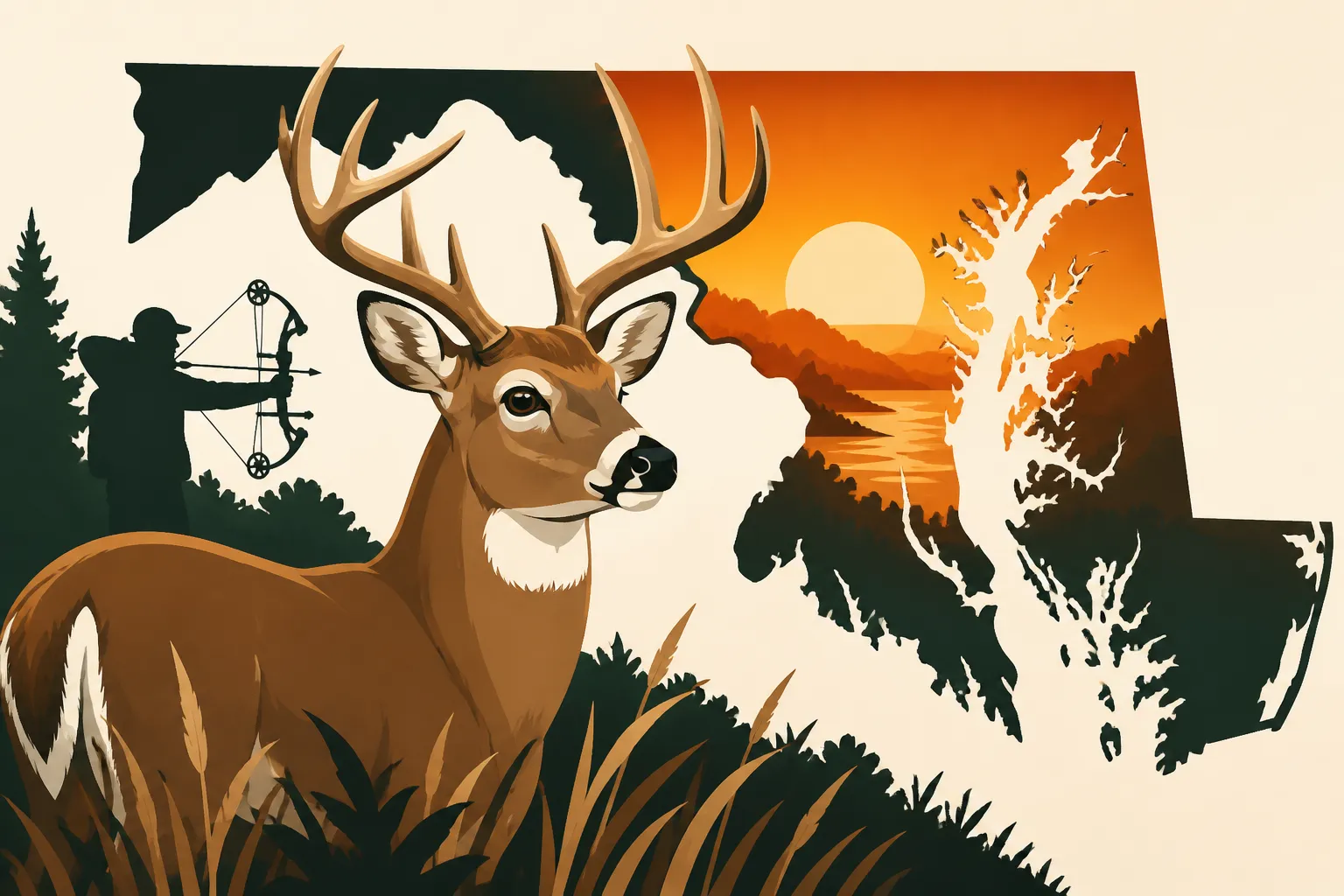
White-Tailed Deer in Maryland
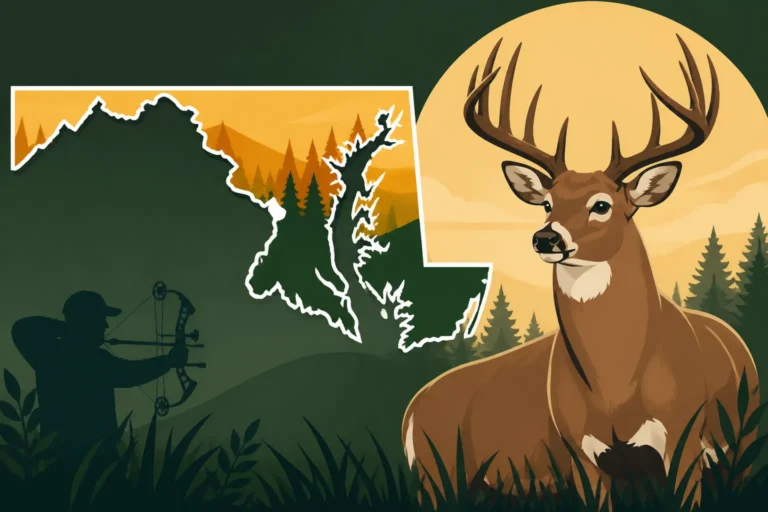
Understanding Maryland's white-tailed deer population can feel like navigating a maze, especially with varying regulations, diverse habitats, and local nuances that change from the mountains to the marshes. This comprehensive guide is designed to help you make sense of it all, providing a deep dive into the state's deer dynamics, how they behave, where they live, and the ins and outs of ethically pursuing them.
Maryland's White-Tailed Deer Population and Distribution
Maryland is a state of incredible ecological diversity, and its white-tailed deer herd reflects that, adapting to everything from dense Appalachian forests to sprawling Eastern Shore farmlands and even thriving in suburban green spaces. Knowing the general health and distribution of these deer is the first step to becoming a more informed and successful hunter.
Statewide Deer Numbers and Trends
For decades, Maryland's white-tailed deer population has been robust, and in many areas, thriving. After significant declines in the early 20th century due to habitat loss and unregulated hunting, conservation efforts, habitat recovery, and adaptable deer behavior led to a remarkable comeback. Today, the statewide population is estimated to be well over 200,000 animals, a testament to effective management and the deer's inherent resilience.
While the overall trend has been one of stability or slight growth in recent years, it's not uniform across the state. Some areas, particularly in agricultural and suburban zones, experience higher densities, leading to more deer-vehicle collisions and agricultural damage. In contrast, heavily forested, less fragmented landscapes might see more moderate numbers. Factors like weather patterns (especially severe winters or prolonged droughts), disease outbreaks such as Epizootic Hemorrhagic Disease (EHD) which can cause significant local die-offs, and human pressures like development and hunting pressure all play a role in the annual ebb and flow of deer numbers. The Maryland Department of Natural Resources (DNR) constantly monitors these trends to adjust management strategies, ensuring a healthy balance for both the deer and the ecosystem.
Region A Versus Region B Differences
Maryland is divided into two distinct deer management regions: Region A and Region B, and understanding these boundaries is absolutely critical for any deer hunter. These regions dictate everything from antlered deer bag limits to antlerless harvest opportunities and even the specific weapon choices allowed in certain areas.
Region A encompasses the more rugged, mountainous terrain of Western Maryland, primarily Garrett and Allegany counties, along with parts of Washington and Frederick counties. This region is characterized by extensive public lands, vast state forests like Savage River State Forest and Green Ridge State Forest, and a landscape dominated by mature hardwoods, steep ridges, and narrow valleys. Deer densities here are generally lower than in Region B, and the deer often have larger home ranges, making them a more challenging quarry. Hunters in Region A often find themselves still-hunting or stand-hunting vast timber tracts, focusing on natural funnels, acorn flats, and bedding areas. The focus here is more on quality over quantity, and deer tend to be wilder, more wary, and often larger-bodied due to the less fragmented habitat. If you're looking for a genuine big-woods experience, this is your territory.
Region B, on the other hand, covers the vast majority of the state, stretching from the Piedmont region through Central Maryland, down to Southern Maryland, and across the entire Eastern Shore. This region is a mosaic of agricultural fields, suburban woodlots, small private timber tracts, and even coastal marshes. Deer densities in Region B are significantly higher, especially in areas with abundant agriculture and suburban sprawl. The deer here are often accustomed to human activity, can be found in smaller pockets of cover, and thrive on diverse food sources ranging from corn and soybeans to manicured lawns and garden plants. Hunting in Region B often involves hunting over agricultural fields, in smaller woodlots, or participating in managed suburban hunts. The higher deer numbers and often more concentrated populations make for different hunting strategies and generally higher success rates for antlerless deer. You'll find specific rules for What Makes Region A Different for Deer Hunters, which is a key distinction to learn.
| Feature | Region A (Western Mountains) | Region B (Rest of State) |
|---|---|---|
| Primary Counties | Garrett, Allegany, parts of Washington, Frederick | All other counties including Eastern Shore, Southern MD, Central MD |
| Habitat Type | Large tracts of mature forest, steep terrain, public lands | Mixed agriculture, suburban woodlots, small private parcels, coastal marshes |
| Deer Density | Lower, deer often have larger home ranges | Higher, especially in agricultural and suburban areas |
| Hunting Style | Still-hunting, stand hunting large timber, focusing on natural funnels | Stand hunting field edges, smaller woodlots, suburban managed hunts, food plots |
| Antlered Limit | Generally 2 antlered deer per year (with specific rules) | Generally 2 antlered deer per year (with specific rules) |
| Antlerless Limit | More conservative, often limited to specific seasons or permits | Generous, often unlimited during specific seasons, crucial for population control |
| Hunter Experience | More wilderness feel, challenging, wary deer | More access to private land, higher deer encounters, adaptable deer |
Understanding Maryland Deer Behavior and Habitat
To consistently find and successfully hunt white-tailed deer in Maryland, you need to think like a deer. This means understanding their year-round movements, their dietary preferences, and how they utilize the diverse landscapes available to them. It's a puzzle that changes with the seasons and the specific location.
Seasonal Movement and Food Sources
Deer are creatures of habit, but their habits are strongly dictated by the availability of food, water, and cover, which all shift throughout the year.
In the spring and early summer, deer are focused on regaining body condition lost during winter and does are preparing to fawn. They seek out lush, green growth: new grass, tender shoots, clover, and early agricultural crops like alfalfa. You'll find them grazing openly in fields during low-light hours, or browsing young forbs in regenerating timber cuts. Their movements are often predictable as they commute between bedding areas and these prime feeding grounds.
As summer progresses, deer continue to feed heavily to build fat reserves. They'll transition to more mature vegetation, including various browse species, legumes, and early soft mast like blackberries and wild grapes. Agricultural fields, especially corn and soybeans, become major attractants, providing both food and dense cover. During this time, they often move more at night to avoid heat and insects, particularly in open areas.
The fall is when deer really ramp up their feeding in preparation for the rut and winter. This is the time of hard mast – acorns are king! White oaks drop first, followed by red oaks. Hunters who understand What Acorn Crops Do to Maryland Deer Movement know that finding a hot acorn flat can be like hitting the jackpot. Other crucial fall foods include persimmons, apples, and standing or freshly cut agricultural crops like corn and soybeans. Deer will gorge themselves, sometimes traveling significant distances to find the best food sources. This period of intense feeding, known as the "pre-rut," is also when bucks begin to become more active, rubbing and scraping.
By winter, especially after the leaves have fallen and temperatures drop, food becomes scarcer. Deer primarily rely on browsing woody stems and any remaining agricultural waste. In areas with significant snowfall, deer might "yard up" in sheltered conifer stands, but in most of Maryland, they'll simply focus on conserving energy and finding whatever browse is available. Late-season food plots, like brassicas or winter wheat, can be absolute magnets, as can areas with persistent soft mast or unpicked corn. Understanding What Maryland Deer Eat Through Winter is crucial for extending your season success.
Preferred Habitat Types Across the State
Maryland's landscape offers a fascinating array of habitats, and deer have adapted to thrive in each. A good hunter knows how to read these environments and predict where deer will be.
In Western Maryland's mountainous regions, deer prefer the security of expansive timber. They'll bed on south-facing slopes in dense cover, using thickets of mountain laurel or regenerating clear-cuts for daytime security. During feeding times, they'll move into oak flats when acorns are dropping, or browse along creek bottoms and the edges of powerline cuts. Travel corridors often follow natural funnels like saddles between ridges or benches along steep hillsides. Hunting these areas requires stamina and a keen eye for subtle sign, as deer can be spread out. If you're interested in Still-Hunting a Savage River Oak Flat, you'll need to understand the nuances of this type of terrain.
The Eastern Shore, with its characteristic mix of agriculture and scattered woodlots, presents a different challenge. Here, deer often bed in dense pine plantations, thick fencerows, small swampy areas, or even the tangled edges of tidal marshes. They feed heavily on corn, soybeans, and winter wheat in farm fields. Hunters often focus on the edges of these fields, intercepting deer as they move between bedding cover and food sources at dawn and dusk. Identifying pinch points and natural funnels between woodlots can be incredibly effective. Consider how Hunting a Funnel Between Two Grain Fields on the Eastern Shore might differ from mountain hunting.
In Piedmont and Central Maryland, where suburban and exurban areas blend with agriculture and smaller forest tracts, deer habitat is often fragmented. Deer here have become incredibly adept at utilizing small pockets of cover – brushy creek bottoms, powerline rights-of-way, overgrown hedgerows, and even residential landscaping. They thrive on a diverse diet that includes garden plants, ornamental shrubs, and acorns from suburban oak trees. Hunting in these areas often requires special permits (like those for Hunting Maryland's Suburban Deer Management Hunts), a strong understanding of safety zones, and a very discreet approach, but the deer densities can be exceptionally high.
The Maryland Deer Rut and Breeding Cycle
The rut is perhaps the most anticipated time of year for deer hunters, a period of increased deer activity, unpredictable behavior, and the best chance to encounter a mature buck during daylight hours. But it's not a single event; it's a dynamic process influenced by several factors.
When the Maryland Whitetail Rut Peaks
Maryland's white-tailed deer rut is a complex, drawn-out affair, but generally, the most intense breeding activity, often referred to as the "peak rut," occurs in early to mid-November. However, the entire "rut window" is much longer, starting with the pre-rut and extending into the post-rut.
The pre-rut typically begins in late October and continues into the first week or two of November. During this phase, bucks are feeling the surge of testosterone. They become highly active, establishing rub lines and freshening scrape lines to communicate their presence and dominance. They're often seen scent-checking does, but serious chasing and breeding haven't quite kicked off yet. This is a fantastic time to be in the woods, as bucks are moving during daylight, often cruising for the first receptive does. If you're specifically interested in Hunting the Rut in Early to Mid November, this pre-rut phase is often just as productive as the peak.
The peak rut, usually the second and third weeks of November, is when the majority of does come into estrus. Bucks become singularly focused on breeding. This is characterized by intense chasing, aggressive buck-on-buck sparring, and bucks relentlessly pursuing does. Deer activity can be frantic and unpredictable throughout the day, not just during dawn and dusk. Hunters might witness bucks moving at midday, oblivious to their surroundings, or chasing does right past their stand. Weather can play a role here; a cold front can kick things into overdrive, while unusually warm weather might suppress daytime movement.
Following the peak is the post-rut, which usually runs from late November through early December. Many does have been bred, and bucks, exhausted and having lost significant body weight, begin to focus heavily on recovery and feeding. They're still active, especially if there are unbred does (known as a "secondary rut" or "trickle rut"), but their movements become more food-centric. Smart hunters shift their focus back to prime food sources, knowing that bucks will be trying to replenish their energy.
Rutting Behavior and Hunter Strategies
Understanding the different phases of the rut is key to adapting your hunting strategies. During the pre-rut and early peak rut, deer behavior offers distinct clues.
Rub lines are created when bucks rub their antlers and foreheads on small trees and saplings, leaving scent and visual markers. These are often indicators of a buck's travel routes or a general area he's frequenting. Finding a fresh, active rub line can tell you a lot about a buck's size and recent activity.
Scrape lines are perhaps even more exciting. Bucks will paw an area on the ground, urinate into it (often over their tarsal glands to deposit scent), and typically create an "overhead licking branch" where they'll chew or rub their preorbital glands. Scrapes are communication hubs, used by both bucks and does to share information. During the pre-rut, bucks will actively visit and refresh scrapes, sometimes multiple times a day. As the rut intensifies, their focus shifts from scrapes to seeking out does, but scrapes still provide valuable intel on where deer are moving. Learning about Scrape Lines Along a Maryland Field Edge can give you an edge in farm country.
To capitalize on this increased activity, hunters often employ calling strategies. Grunt calls, mimicking the sounds bucks make, can be highly effective, especially during the pre-rut and early peak. A short, deep grunt can pique a buck's curiosity and bring him in to investigate. Similarly, rattling antlers, simulating two bucks fighting, can draw in dominant bucks eager to assert their territory or curious about the commotion. However, timing and volume are critical; over-calling or calling at the wrong time can sometimes spook wary deer. For those hunting in specific regions, understanding Grunt Calls in Maryland Hardwoods might be more relevant than rattling in open fields.
Finally, focusing on funnels and travel corridors becomes paramount during the rut. As bucks are constantly on the move, searching for does, they'll naturally use the easiest and most secure routes. These can be narrow strips of timber between two fields, saddles in ridge lines, or thick creek bottoms. Setting up a stand or ground blind in a funnel that connects bedding areas to feeding grounds or areas of doe concentration can put you right in the path of a cruising buck. The GoHunt app can be a fantastic tool for identifying these topographic features and mapping out potential travel corridors, especially on public land where deer movement patterns can be harder to discern.
Maryland's Deer Bag Limits and Antler Rules
Maryland's deer management strategy is designed to balance population control with providing quality hunting opportunities, and a major component of this is the state's specific bag limits and antler restrictions. These rules can seem a bit intricate at first glance, but they are crucial to understand before heading afield.
Statewide Antlered Deer Bag Limits and Exceptions
For most of Maryland, hunters are permitted to harvest two antlered white-tailed deer per license year. This limit applies across archery, firearms, and muzzleloader seasons combined. However, there's a critical nuance: for one of those antlered deer, you must adhere to the three-point antler restriction (which we'll delve into next). The other antlered deer is considered your "bonus" or "hunter's choice" buck, and it can be any antlered deer, regardless of antler points.
Beyond the standard two-antlered deer limit, Maryland also offers a "Bonus Antlered Deer Stamp." This stamp, purchased in addition to your regular hunting license and required stamps, allows a hunter to take an additional antlered deer. This is particularly appealing for those who want to maximize their antlered harvest opportunities within the regulations. However, any antlered deer harvested using the Bonus Antlered Deer Stamp must also comply with the three-point antler restriction. So, while you might have the potential for three antlered deer, two of them must meet that specific antler point threshold. These nuanced rules are clearly laid out in the DNR's annual guide, and using a resource like GoHunt can help you quickly reference these specifics while planning your hunt.
The Three-Point Antler Restriction Explained
The three-point antler restriction (3-PAR) is arguably the most talked-about and sometimes debated regulation among Maryland deer hunters. The rule states that one of your antlered deer (and any taken with a Bonus Antlered Deer Stamp) must have at least three points on one antler. A point is defined as a projection at least one inch long from a main beam or another point. This rule was implemented to help increase the age structure of the buck population, allowing more young bucks (typically 1.5 years old) to survive another year and grow into larger, more mature animals.
The impact of the 3-PAR has been significant. By protecting most yearling bucks, it theoretically allows them to age, develop larger racks, and contribute to a healthier buck-to-doe ratio, which can positively influence the timing and intensity of the rut. This means that hunters are more likely to encounter 2.5-year-old and older bucks, which typically have more substantial antlers. Many hunters report seeing a noticeable increase in the quality and size of bucks in areas where the rule has been in effect for some time. However, it does require hunters to be diligent in the field, accurately counting points before pulling the trigger, especially during those low-light moments. If you're unsure about Counting Antler Points Before You Shoot, it's always best to let the deer walk and wait for a clearer shot or another opportunity.
There is one key exception to the 3-PAR: one antlered deer per license year can be any antlered deer, regardless of the number of points on its antlers. This is often referred to as the "hunter's choice" buck. This allows a hunter to take a spike or a fork-horn if they choose, perhaps if it's their first deer, or if they prefer to use that tag on an opportunity that might otherwise be passed up.
Antlerless Deer Bag Limits by Region
Harvesting antlerless deer (does) is absolutely vital for managing Maryland's deer population, particularly in Region B where densities are often high. Overpopulation can lead to increased disease transmission, habitat degradation, and more conflicts with humans (e.g., crop damage, vehicle collisions).
In Region B, antlerless deer bag limits are quite generous, with many seasons allowing for an unlimited number of antlerless deer. This encourages hunters to play an active role in population control. The firearms and muzzleloader seasons often have extended antlerless days, and the archery season offers extensive opportunities for antlerless harvest. This focus on doe harvest helps keep populations in check, maintains a healthy buck-to-doe ratio, and can improve the overall health and body condition of the herd. Landowners experiencing significant agricultural damage can also apply for Deer Management Permits for Farm Damage, which often allow for additional antlerless deer to be taken outside of regular seasons.
In Region A, the antlerless bag limits are typically more conservative. Given the lower deer densities and more expansive, less fragmented habitat, excessive doe harvest isn't usually necessary for population control. Antlerless permits might be allocated differently or limited to specific seasons or areas to ensure the population remains stable. Hunters in Region A will need to pay close attention to the specific antlerless regulations for their chosen county and season.
Hunting White-Tailed Deer in Maryland's Diverse Seasons
Maryland offers a remarkably long and diverse hunting season for white-tailed deer, spanning from early September through the end of January. Each weapon choice and season offers unique challenges and rewards, catering to different hunting styles and preferences.
Archery Season Opportunities
The archery season in Maryland is a marathon, not a sprint. Kicking off in early September and running virtually uninterrupted until the end of January (with a brief break during the November firearms season), it provides the longest continuous hunting opportunity. This extended season allows archers to hunt deer through several distinct phases: the early season, the pre-rut, the peak rut, and the late season.
The early September opener, as detailed in Hunting Maryland's September Archery Opener, presents unique challenges and rewards. Deer are still on predictable summer patterns, often moving between bedding cover and reliable food sources like alfalfa fields, clover plots, or early dropping fruit trees. However, the warm weather means extra attention must be paid to meat care, and insects can be a nuisance. As the season progresses into October and November, archery hunting transitions into the pre-rut and rut, offering exciting opportunities to intercept bucks responding to calls or cruising for does. The late archery season, post-firearms, can be tough, as deer are often pressured, but focusing on secluded food sources can pay off.
Archery hunting demands stealth, precision, and an intimate understanding of deer movement. It's often the best way to get close to deer in suburban environments where firearms may be prohibited. Many archers value the challenge and the close encounters it provides, leading to a deep connection with the animal and the landscape. It's a fantastic option for hunters who love to scout, practice their craft, and spend significant time afield, as highlighted in Bowhunting Maryland's Long Archery Season.
Firearms Season Dynamics
Maryland's firearms season is, for many, the main event. It's a high-participation season that offers the best chance for many hunters to fill their freezers. The season is traditionally split into two main segments: a six-day segment in late November and a shorter segment in early January.
The late November firearms split is typically the most popular and productive. Occurring right after the peak of the rut, bucks are still active but are also heavily focused on recovering lost body weight. Deer movement is usually strong, especially with colder temperatures. This is a time when many hunters take to public and private lands, often participating in small drives on private property or still-hunting large timber tracts. Hunter safety, including the mandatory use of blaze orange, is paramount during this high-pressure period. Knowing the nuances of Hunting the Late November Firearms Split can significantly improve your odds.
The January firearms reopening offers a different kind of challenge. By this point, deer have been heavily pressured, and food sources are scarcer. This season often takes place in colder weather, sometimes with snow on the ground, which can both help (tracking) and hinder (deep snow) hunters. Focus during this late season shifts almost entirely to prime, persistent food sources like standing corn, winter wheat, brassicas, or dense thermal cover where deer are trying to conserve energy. This can be a very rewarding time for patient hunters willing to brave the elements and put in the work. Understanding Hunting the January Firearms Reopening requires a different mindset and scouting approach. For general rules about Maryland's Split Firearms Deer Season, the DNR guide is indispensable.
Muzzleloader Season Advantages
Muzzleloader season offers a unique blend of traditional hunting and modern capabilities, providing a fantastic opportunity between the intense archery and firearms seasons. Maryland has two muzzleloader seasons: an early week in October and a late season that often overlaps with the late archery and early January firearms seasons.
The October muzzleloader week is a gem. It typically falls before the full intensity of the rut, giving hunters a chance to hunt deer that are still in relatively predictable patterns, but are also beginning to show early signs of rut activity. The weather is often pleasant, and the woods are quieter than during firearms season. It's a prime opportunity to focus on food sources like acorn flats or agricultural fields without the widespread pressure of modern firearms. Understanding Hunting Maryland's October Muzzleloader Week can unlock some excellent early fall hunting.
The late muzzleloader season provides an extended opportunity, often coinciding with late archery and even portions of the January firearms segment. This allows hunters to continue pursuing deer with a primitive weapon during colder weather and potentially challenging conditions. Like the late firearms season, success often hinges on locating crucial late-season food sources and bedding areas. Muzzleloaders require a different level of preparation and patience, as reloading is slower and shots are typically at closer ranges, emphasizing good shot placement. For details on Muzzleloader Deer Hunting in Maryland and its specific challenges, hunters often turn to experienced local guides or online resources.
Important Regulations, Safety, and Ethical Hunting
Beyond the thrill of the hunt, responsible deer hunting in Maryland is deeply rooted in understanding and adhering to regulations, prioritizing safety, and upholding strong ethical principles. These aren't just rules; they're the foundation of sustainable wildlife management and a respected hunting heritage.
Licensing, Tags, and Registration Requirements
Before you even step foot in the woods, ensuring you have the correct licenses and stamps is non-negotiable. Every hunter in Maryland, with very few exceptions for landowners hunting their own property, must possess a valid Maryland hunting license. Beyond the basic license, deer hunters typically need specific stamps depending on their chosen weapon: an Archery Stamp for bowhunting and a Muzzleloader Stamp for muzzleloader seasons. These are annual purchases and are critical for legal hunting. If you're a new hunter, make sure you understand Maryland Hunting Licenses and What They Cost.
Perhaps the most critical step after a successful harvest is deer registration. Maryland mandates that all deer killed must be registered with the Maryland Department of Natural Resources (DNR) within 24 hours of harvest. This can be done online through the COMPASS portal, by phone, or via the official Maryland DNR mobile app. The registration process collects vital data for wildlife management, including the county of harvest, weapon used, date, and whether the deer was antlered or antlerless. You'll receive a confirmation number that must remain with the deer until it's processed. Failing to register a deer is a serious violation. For a detailed walkthrough of How to Register a Deer Within the Deadline, consult the DNR's official guide or website. This step is crucial for accurate harvest data and ensuring the future of Maryland's deer herd.
Blaze Orange, Legal Weapons, and Shooting Hours
Safety is paramount when deer hunting, and Maryland has clear regulations to ensure everyone in the woods, hunters and non-hunters alike, stays safe.
Blaze orange requirements are a prime example. During specific firearms seasons (and sometimes during other seasons when firearms are permitted, even if you're bowhunting), hunters are required to wear a minimum amount of fluorescent orange material. This typically means a solid orange hat and an outer garment (like a vest or jacket) worn above the waist and visible from all directions. The purpose is simple: to make hunters highly visible to other hunters, reducing the risk of accidental shootings. Always check the current year's hunting guide for precise blaze orange rules, as they can vary slightly by season and location. It's important to understand How Much Blaze Orange Maryland Requires.
Maryland also has county-specific regulations regarding legal weapons for deer hunting. While shotguns (with slugs) are generally permitted statewide, the use of rifles is much more restricted. Many counties in Region B, particularly in the more populated areas, only allow shotguns, muzzleloaders, or archery equipment. A growing number of counties now permit straight-walled cartridge rifles, which bridge the gap between shotguns and traditional bottleneck rifle cartridges in terms of range and power. In Region A, where deer densities are lower and the landscape is more expansive, traditional centerfire rifles are generally permitted. Always verify the legal weapons for the specific county you plan to hunt in by checking Maryland's Legal Weapons by County in the current hunting guide.
Finally, adhere to legal shooting hours. For deer, hunting is typically permitted from one-half hour before sunrise to one-half hour after sunset. These specific times are critical to follow, as shooting outside of legal hours is a serious violation and can be dangerous. Knowing these precise windows requires checking a reliable sunrise/sunset chart for your exact location, and many hunting apps, including GoHunt, provide this information directly within their mapping interface, making it easy to stay compliant.
Ethical Considerations and Respect for the Resource
Ethical hunting goes beyond simply following the law; it's about a deep respect for the animals, the land, and the hunting tradition itself.
Fair chase principles are at the core of ethical hunting. This means giving the animal a reasonable chance to escape, avoiding methods that give the hunter an unfair advantage, and always respecting the animal's wild nature. It emphasizes the skill and challenge of the hunt.
Once an animal is harvested, meat care becomes an immediate ethical responsibility. Especially in warmer early-season conditions, proper field dressing and cooling of the carcass are essential to prevent spoilage and ensure the meat is fit for consumption. Wasting game meat is an unacceptable ethical lapse.
Tracking wounded game is another critical ethical duty. If you've taken a shot and suspect you've hit a deer, it's your responsibility to make every reasonable effort to recover that animal. This might mean patiently waiting before tracking, carefully following blood trails, or enlisting the help of experienced trackers or tracking dogs. Losing a wounded animal is a heartbreaking experience, and every effort should be made to prevent it. Sometimes, blood trailing can be particularly difficult, especially if you're Blood Trailing in Marsh Grass After Dark or in dense cover.
Finally, respect for landowners and other land users is paramount. Whether you're hunting on private land with permission or on public land, always leave the area cleaner than you found it, be mindful of noise, and respect boundary lines. For private land hunters, maintaining a good relationship with the landowner is key to future access. For public land hunters, understanding Hunting Pressure on Maryland Public Land and actively seeking out less crowded areas can enhance your experience while minimizing conflicts. Using a tool like GoHunt to scout public land boundaries and access points beforehand is an excellent way to be a respectful and prepared hunter.
Disclaimer
Always consult the current Maryland DNR hunting guide for the most up-to-date regulations, season dates, and licensing requirements before engaging in any hunting activities. Regulations can change annually.