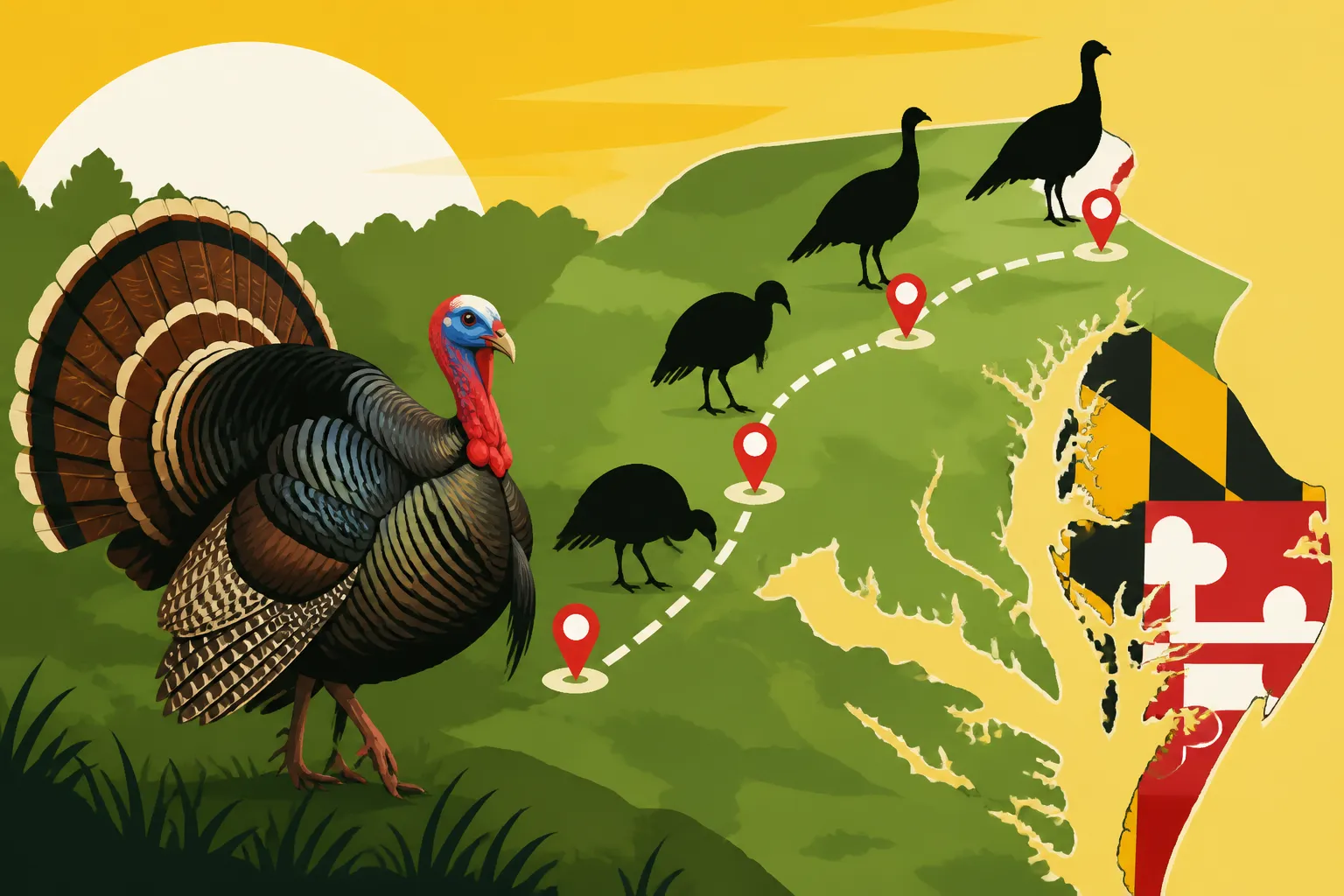
How Far a Gobbler Travels in a Day
It's a question every Maryland turkey hunter has pondered, often staring at an empty field or silent woodlot: just how far does a gobbler travel in a day? You scout, you listen, you try to put yourself in the right spot, but sometimes it feels like those longbeards are on an entirely different planet, covering miles while you sit still. The truth is, there's no single answer, as their daily journey is a dynamic dance influenced by a myriad of factors. This guide will help you unravel the mysteries of a Maryland gobbler's daily movements, giving you a better understanding of how far they might roam and, more importantly, how you can use that knowledge to put yourself in a better position come hunting season.
The Daily Rhythm of a Maryland Gobbler
Just like us, wild turkeys have a pretty consistent schedule, though theirs is dictated by survival, breeding, and the availability of food and cover. Understanding this rhythm is key to predicting how far they might move from sunrise to sunset.
Roosting and Morning Breakup
As the first hint of gray light appears in the eastern sky over a Carroll County woodlot or a Dorchester swamp, gobblers are typically still on their roosts, usually high in a sturdy oak, pine, or even a sycamore limb. They've spent the night here, safe from ground predators. Their first movements of the day are usually pretty short – a hop, a flutter, and a glide down to the ground. This initial move might only take them a few dozen yards from their roost tree, but it marks the start of their active day.
Once on the ground, the early morning ritual often involves regrouping with hens that were roosted nearby. The gobbler will often commence his strutting and gobbling display right there, trying to gather his harem. Depending on how many hens are with him, and their immediate intentions, this initial stage might keep them relatively localized for an hour or so. If he has a group of contented hens, they might simply start scratching for food within a few hundred yards of the roost. If the hens are scattering or he's looking for more company, he's quickly on the move, gobbling to announce his presence to any listening ladies or rival toms.
Mid-Morning Foraging and Strutting
After the initial flurry of morning activity, gobblers generally transition into a phase of foraging, often accompanied by continued strutting and gobbling, especially during the peak of the breeding season. This is when they can truly start to cover ground. A gobbler with hens in tow will follow them as they peck for insects, tender green shoots, and any leftover mast from the previous fall. They might slowly work their way across a pasture edge, through an open timber stand, or along a creek bottom.
During this mid-morning period, a gobbler could easily cover half a mile to a mile, sometimes more, depending on the terrain and the urgency of their mission. If they’re in open farmland, like parts of Kent County, they might be visible from a distance as they work a field edge, constantly displaying. In the thicker, hillier terrain of Western Maryland, their movements might be more obscured, but they are still steadily pushing through the woods, feeding as they go. This isn't usually a frantic dash, but a steady, purposeful movement as they exploit new feeding areas and the gobbler keeps an eye on his hens. What Maryland Turkeys Eat in Spring
Midday Lulls and Afternoon Movement
As the sun climbs higher and morning temperatures rise, especially as spring progresses towards May, gobblers often enter a midday lull. The intense breeding activity of early morning wanes, and they might seek out cooler, shadier spots. You might find them dusting in a patch of dry dirt, or simply loafing in thick cover near a water source. This period often sees reduced vocalization and slower movement.
However, "reduced movement" doesn't mean "no movement." A gobbler might still travel a few hundred yards to a comfortable bedding or loafing area, especially if his hens have decided to sit on nests or have wandered off. He might begin searching for new hens or rejoining others. The afternoon often brings another surge of activity, though typically not as intense as the morning. Gobblers might start moving towards evening roosting locations, often retracing parts of their morning path or exploring new areas. They might feed more deliberately, trying to fill their crops before nightfall. This afternoon movement can add another significant chunk to their daily travel, pushing their total distance covered even further.
Evening Roosting
As dusk approaches and the shadows lengthen across the landscape, gobblers begin their journey back to a roost tree. This could be the same tree or general area they used the previous night, or it could be a completely different one several hundred yards away, depending on where they ended up during their daily wanderings. The flight up to the roost is usually short and direct.
The distance they cover to reach their roost often depends on where they were feeding or strutting during the late afternoon. If they were far afield, they might make a direct bee-line, covering a considerable distance in a relatively short time to reach a safe roost. If they spent the day closer to their typical roosting area, it might be a short walk and a quick flight up. This final leg of their daily journey is crucial for their safety, and they'll prioritize reaching a secure spot before dark.
Factors Influencing Gobbler Travel Distance
A gobbler's daily odometer isn't set in stone. Several key factors can dramatically influence how much ground he covers from one day to the next, even in the same general area of Maryland.
Seasonal Changes Pre-Rut, Peak Rut, and Post-Rut
The time of year, particularly in relation to the breeding cycle, is perhaps the most significant factor.
- Pre-Rut (Late March/Early April): Before hens are consistently nesting, gobblers are often gathering large harems. They might travel significant distances to consolidate these groups and establish dominance. Their gobbling is frequent, and they're actively searching for receptive hens. This can lead to covering more ground as they cruise their home range.
- Peak Rut (Mid to Late April): This is often when gobblers are covering the least total ground, but the most intense ground. Many hens are bred and starting to nest, which means fewer hens are available for gobblers. A gobbler might stay very close to a single, hot hen for days, moving only as far as she does. However, if he's alone and actively searching for new hens, he might cover extensive areas, gobbling relentlessly. When Maryland Gobblers Start Strutting Hunters often report hearing gobblers on the move for long distances as they try to locate lonely hens.
- Post-Rut (May): As most hens are nesting, gobblers often form "bachelor groups" again. With the pressure of breeding largely over, their movements become more relaxed and focused on feeding. They might still gobble occasionally, but the frantic searching is gone. Their daily travel could still be significant as they forage, but it's less driven by breeding urgency. By this point, they might stick to consistent feeding patterns, slowly working a specific draw or field system.
Food and Water Availability
Turkeys are always looking for their next meal or drink. If food sources are abundant and widespread, a gobbler might not need to travel as far. Think of a field loaded with clover or insects, or a hardwood bottom with a good acorn crop (though this is more critical in fall). If a gobbler can find everything he needs within a small radius, he'll likely stay put.
Conversely, if food is scarce or scattered, a gobbler will expand his search. This is especially true during dry spells when water sources might dwindle, or early spring when lush green forage is just emerging. A gobbler could travel a mile or more in a day simply moving between different patches of forage or from a feeding area to a reliable stream or pond for a drink. This is why scouting for food sources is so crucial; if you can pinpoint what they're eating, you can often predict their travel corridors.
Habitat and Terrain
The physical landscape of Maryland plays a huge role in how far a gobbler travels.
- Open Farmland (Eastern Shore, Piedmont): In areas with large fields and woodlots, like those found in Queen Anne's or Caroline County, gobblers might appear to cover vast distances as they cross open ground. Their movements are often more linear, following field edges or tree lines. They can cover a lot of ground quickly here.
- Dense Woods (Western Maryland Mountains, Southern Maryland Swamps): In thick, rugged terrain like Garrett County's mountain forests or the dense bottomlands of Charles County, gobblers might not travel as far "as the crow flies," but the effort involved is much greater. Their movements are more circuitous, navigating through thickets, up and down steep ridges, or around swamps. While they might not cover miles in a straight line, their actual footsteps could add up significantly as they weave through cover.
- Access to Roosting and Strutting Areas: The proximity of good roosting trees to prime strutting grounds and feeding areas can also influence daily travel. If a gobbler has a "perfect" setup where he can fly down, strut, and feed all within a few hundred yards, his movements might be minimal. If he has to travel across a barren area to get from his roost to the ideal strutting spot, his daily trek will increase.
Hunting Pressure
Maryland's public lands, particularly during the early weeks of spring season, can see significant hunting pressure. When gobblers feel pressured, their behavior changes dramatically. They become warier, more elusive, and often cover greater distances to escape human disturbance. Hunting Pressure on Maryland Public Land
A gobbler that's been called to and spooked multiple times might abandon his usual haunts and move to a more secluded part of his home range, or even establish a new one. This could mean traveling several miles over the course of a day or two to find refuge. They might become "silent" gobblers, moving stealthily without vocalizing, making them even harder to locate. Understanding this response to pressure is vital; a gobbler on public land might travel much further than one on a lightly hunted private farm.
Weather Conditions
Believe it or not, the weather has a big say in a gobbler's daily travel plans.
- Rain and Wind: Heavy rain or strong winds can reduce a gobbler's desire to move and gobble. They might hunker down in dense cover, only moving short distances to feed. Their gobbling activity can decrease significantly, making it harder to track them.
- Cold Temperatures: Very cold mornings, especially early in the season, can delay their fly-down and lead to slower, more deliberate movements as they conserve energy.
- Warm Temperatures: Conversely, hot weather, particularly later in the season, can make them seek shade earlier in the day and reduce midday activity. Their movements might be concentrated around water sources.
- Clear, Calm Days: These are often the days of peak activity, where gobblers are most vocal and willing to travel in search of hens. They feel secure and are less inhibited by the elements.
Understanding Daily Range vs. Total Range
It's important to differentiate between how far a gobbler travels in a single 24-hour period and the overall "home range" he might utilize throughout the season. These are not always the same.
Home Range Dynamics
A gobbler's home range is the total area he uses over a longer period – weeks or months. This area can be surprisingly large, often spanning hundreds of acres, especially in less fragmented habitat. Within this home range, he'll have preferred roosting sites, strutting grounds, feeding areas, and escape cover. He might not visit every corner of this range every day, but he knows it intimately.
Think of it like your own neighborhood. You might walk to the corner store one day, drive across town for groceries another, and stay home entirely on a third. All of these activities happen within your "home range" but represent different daily travel distances. For a gobbler, his home range in Maryland might encompass several woodlots, agricultural fields, and creek bottoms, and he'll move between them depending on his daily needs.
Day-to-Day Variability
This variability is what makes turkey hunting so challenging and rewarding. One day, a gobbler might fly down from his roost, breed a few hens right there, and spend the entire morning within a 200-yard radius before loafing in a thicket. The next day, those same hens might lead him on a mile-long trek across two fields and into a new block of timber.
Research has shown that gobblers can have average daily movements of anywhere from a few hundred yards to over two miles, with occasional outliers that might travel even further. This isn't a simple straight line either; it's the cumulative distance of all their meanderings, strutting, feeding, and social interactions.
To better understand these patterns, many hunters are turning to technology. Mapping apps and tools like GoHunt allow you to meticulously scout aerial photos, pinpoint potential roosting sites, identify food sources, and map out likely travel corridors. This kind of detailed pre-season work can help you anticipate where a gobbler might travel on any given day within his home range. Scouting Maryland Public Land With Aerial Photos
Practical Implications for Maryland Hunters
Knowing that a gobbler can travel a significant distance in a day means you, as a hunter, need to be adaptable and strategic in your approach.
Scouting Smart for Movement
Pre-season scouting isn't just about finding birds; it's about understanding their potential movements. Look for consistent travel corridors: saddles in ridges, natural funnels between woodlots and fields, creek bottoms, or old logging roads. These are the highways gobblers use to move from one area to another. Finding fresh tracks, dusting bowls, and droppings along these routes can tell you that birds are regularly using them.
Also, try to identify multiple potential roosting and strutting areas within a larger block of timber. If a gobbler doesn't fly down in the exact spot you expect, he might be using an alternative roost a quarter or half-mile away. Knowing these options allows you to adjust your approach or even move to a new setup if the morning doesn't pan out as planned.
Adapting to Gobbler Habits
Once the season starts, paying attention to a gobbler's daily habits becomes crucial. Is he consistently flying down from the same ridge and heading towards a particular field? Is he moving silently after the first hour, or continuing to gobble as he travels? Your setup should reflect these observations.
If you know a gobbler is covering a lot of ground, sometimes moving is your best option. Don't be afraid to pick up and relocate if the birds are moving away from your initial setup. Aggressive calling or subtle finessing might be needed, but being in the right general area, especially along their travel path, is paramount. If you've been sitting Setting Up Against a Big Oak for Turkeys all morning and haven't heard a peep, consider shifting your location.
The Importance of Persistence
Ultimately, a gobbler's daily travel distance highlights the importance of persistence in turkey hunting. Some days, you'll feel like you're playing a chess match, anticipating every move. Other days, it will feel like a long walk in the woods. But understanding their capacity for movement, and the factors that drive it, gives you a significant advantage. You'll know that even if a gobbler sounds distant at first light, he could be in front of you within minutes, or he could be on a mission to cover a mile before he even thinks about stopping. Keep that in mind, and you'll be one step closer to putting a Maryland longbeard on your shoulder.
Gobbler Movement: A Quick Reference
Here’s a simplified look at how far a gobbler might travel under different scenarios, keeping in mind that these are just general guidelines for Maryland's diverse habitats.
| Factor | Typical Daily Travel Distance Range | Notes for Maryland Hunters |
|---|---|---|
| Early Morning (Roost to First Strut) | 50 – 300 yards | Very localized; depends on immediate hen presence. |
| Mid-Morning (Foraging/Searching) | 0.5 – 1.5 miles | Most active period of movement, especially when looking for hens. |
| Midday (Loafing/Resting) | 100 – 500 yards | Less direct movement, often seeking shade or dusting. |
| Afternoon (Feeding/Pre-Roost) | 0.5 – 1 mile | Moving towards evening roost; can re-engage with hens. |
| Total Daily Potential | 1 – 3 miles (or more) | Cumulative movement; highly variable based on conditions. |
| High Hunting Pressure | Increased distances, more cautious | Gobblers become more wary and elusive, seeking undisturbed areas. |
| Peak Rut (Searching) | Potentially 2+ miles | Lone gobblers actively seeking hens will cover significant ground. |
| Following Receptive Hens | As far as the hens lead them | Movement dictated by the hens' foraging and nesting activities. |
This table illustrates that while a gobbler might spend intense periods in a small area, his total daily trek can add up, especially if he's actively searching for hens or escaping pressure.
Disclaimer
This article is for general informational purposes only and does not constitute professional advice. Laws, prices and regulations vary by location and change over time. Consult a qualified professional for guidance on your specific situation.