Where Maryland’s Wintering Diver Flocks Sit
There's a special magic, and often a whole lot of head-scratching, that comes with trying to pinpoint where Maryland's wintering diver duck flocks decide to settle down. If you've ever spent a frigid morning glassing miles of open Bay only to see a few scattered birds, or set up in a beautiful spot that held hundreds last year only to find it barren this season, you know the frustration. This guide is here to unravel some of that mystery, helping you understand the patterns, preferences, and prime locations where these magnificent diving ducks spend their winters, giving you a better chance to find them when the temperatures drop.
Understanding Diver Duck Behavior in Maryland Winters
Diver ducks are a different breed from your typical puddle ducks. They don't dabble in the shallows; they plunge deep, often in open, expansive waters, chasing after a very specific menu. Understanding their fundamental needs during the colder months is the first step to knowing where to look. It's not just random chance – there's a method to their winter madness.
Why Divers Choose Specific Wintering Grounds
Imagine being a duck. The wind howls, the water is frigid, and you need thousands of calories a day just to keep warm and fed. Divers aren't just looking for any water; they're looking for prime real estate that offers both sustenance and safety. For species like canvasbacks, redheads, and bluebills, this means expansive, often deeper water bodies where they can feed on submerged aquatic vegetation (SAV), clams, mussels, and other invertebrates that thrive on the Bay bottom. They need vast feeding grounds where they can gorge themselves, building up the fat reserves necessary to survive the harsh winter.
Beyond food, shelter is paramount. Open Bay waters can be incredibly rough, and while divers are built to handle it, they still seek areas that offer some protection, especially during major cold fronts or sustained high winds. This might be the lee side of a large island, a wide river mouth, or a particularly deep, sheltered cove. These spots allow them to rest and conserve energy without constantly battling the elements. They also tend to stick to historical patterns, returning to the same general areas year after year, as long as the food sources remain viable. When those food sources dwindle, due to storms, disease, or human impact, the birds will often relocate, making scouting an annual imperative.
Key Diver Species You'll Find
Maryland's winter waters are a haven for a variety of diver species, each with its own quirks and preferred habitats. Knowing who you're looking for can narrow down your search considerably.
Canvasbacks: Often dubbed the "King of Ducks," canvasbacks are truly magnificent. They prefer large, open bodies of water and are primarily vegetarians, gorging on the tubers of sago pondweed and wild celery, which is a major draw to areas like the Susquehanna Flats. When you see a massive raft of ducks out in the middle of a wide-open area, chances are good you're looking at canvasbacks. They're strong flyers and divers, and their presence usually signifies healthy submerged aquatic vegetation. They'll often feed aggressively early in the morning and then raft up in large groups to digest and rest throughout the day.
Redheads: These striking ducks are often found in similar habitats to canvasbacks, favoring expansive shallow bays and estuaries with healthy SAV beds. They have a slightly more varied diet, including both plant matter and small invertebrates. Redheads can often be found mixed in with rafts of canvasbacks or bluebills, but they also form their own distinct flocks. They're highly sought after for their beauty and provide a challenging target, often reacting well to large decoy spreads in open water. While they'll use the big bay, you might also find them in wider river sections.
Bluebills (Scaup): Maryland hosts both Lesser and Greater Scaup, collectively known as bluebills. These are arguably the most numerous divers in the state's wintering population. Unlike canvasbacks and redheads, bluebills are primarily mollusk eaters, feasting on small clams, mussels, and snails. This means you'll often find them in areas with abundant shellfish beds, which can be in slightly deeper, often more turbid, waters. They form enormous rafts, sometimes stretching for what seems like miles, especially in the Mid-Bay and lower Eastern Shore. While they prefer open water, they are adaptable and can be found in a wide range of tidal rivers and even larger impoundments further inland, particularly the Lesser Scaup.
Ring-necked Ducks: While often found on freshwater lakes and ponds, ringnecks are quite common on Maryland's tidal rivers and even some calmer Bay areas, particularly where there's plenty of SAV. They are smaller than canvasbacks or redheads and tend to stick to more sheltered coves or narrower river sections. Their diet is diverse, including plants, seeds, and aquatic insects. Don't overlook these birds; they can provide excellent hunting opportunities, especially if you're targeting areas where the bigger divers aren't concentrated. They decoy readily and offer fast-paced action.
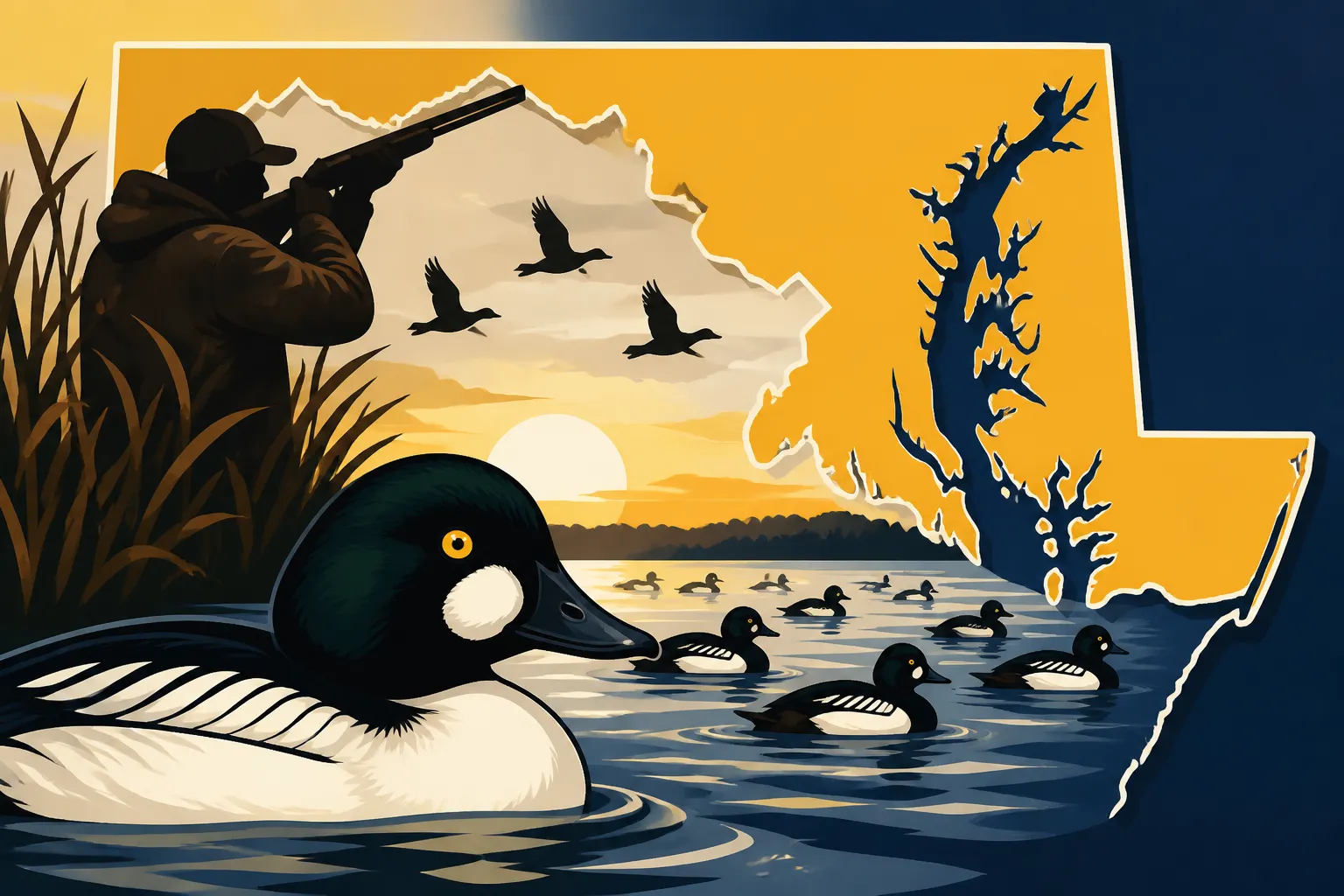
Goldeneyes and Buffleheads: These smaller, often flashier divers are more frequently encountered in the more sheltered environments of tidal creeks, river mouths, and protected coves. Goldeneyes are larger, with a distinct golden eye and a bold black and white pattern. Buffleheads, affectionately called "butterballs," are tiny and incredibly fast, darting in and out of the water. Both species are primarily carnivorous, feeding on aquatic insects, crustaceans, and small fish. They often work their way far up tidal creeks, providing fantastic opportunities for hunters with smaller boats or those setting up more intimate spreads. You'll often spot them tucked into shorelines or around points where other, larger divers won't venture. Decoying Buffleheads on a Tidal Creek
Prime Locations for Wintering Diver Flocks on the Chesapeake Bay
When it comes to diver hunting in Maryland, location, location, location is the mantra. While birds can show up almost anywhere, certain areas of the Chesapeake Bay consistently hold significant wintering populations due to their unique ecological features. These are the places that every serious diver hunter has on their radar.
The Legendary Susquehanna Flats
If there's one place synonymous with diver ducks in Maryland, it's the Susquehanna Flats. Located at the very top of the Chesapeake Bay, where the Susquehanna River meets the Bay, this expansive area of shallow water is legendary for its historical importance to canvasbacks, redheads, and bluebills. For generations, the Flats have been a critical staging and wintering ground, primarily due to the vast beds of submerged aquatic vegetation, like wild celery and sago pondweed, that once flourished here.
While SAV populations have fluctuated over the years, the Flats still draw incredible numbers of birds. Hunters will spend countless hours scouting the shallow waters, often running large spreads of diver decoys, especially for canvasbacks. The sheer volume of water means birds can be spread out, but when a major cold front pushes them in, the hunting can be exceptional. Access can be tricky due to shallow water, and the weather can change in an instant, turning a calm morning into a dangerous chop. But for those who brave it, the reward can be an unforgettable diver hunt. It's a place where you'll want to deploy a lot of decoys, often in a long line or a broad "V" shape, to truly grab the attention of those passing rafts. Setting Divers Off a Chesapeake Point
Mid-Bay and Lower Eastern Shore Open Water
As you move south into the heart of the Chesapeake Bay and down towards the lower Eastern Shore, the character of the diver habitat changes. Here, you'll find vast stretches of deeper, open water where divers, especially bluebills, redheads, goldeneyes, and buffleheads, thrive on different food sources. Instead of primarily feeding on SAV, these birds often target abundant mussel and oyster beds, as well as various crustaceans found on the Bay's bottom.
Areas around Kent Island, Poplar Island, and further south into Tangier Sound and around Deal Island, offer extensive open water. The deep channels and abundant shellfish here create ideal conditions for species that rely on invertebrate protein. You'll often see massive rafts of bluebills (scaup) sitting far offshore, sometimes in areas where a traditional shore blind won't reach them. This is where specialized hunting tactics, like hunting from a layout boat, become incredibly effective. While land-based access can be limited to points and islands, experienced guides often run charters to these open water areas, using layout boats to get right in the midst of the birds. Hunting From a Maryland Offshore Stake Blind The sheer scale of these waters means that birds have endless places to go, so careful scouting, both visually and through e-scouting tools like GoHunt, is essential to locate the shifting concentrations.
Tidal Rivers and Estuaries
Don't make the mistake of thinking divers only use the wide-open Bay. Maryland's numerous tidal rivers and estuaries, particularly on the Eastern Shore, offer excellent wintering habitat for several diver species, especially when the main Bay gets too rough or begins to freeze. Rivers like the Choptank, Chester, Miles, Wicomico, and Nanticoke provide more sheltered waters, often with a mix of historical SAV beds, clam flats, and mussel beds.
These river systems are particularly attractive to smaller divers like buffleheads, goldeneyes, and ring-necked ducks, but you'll also find good numbers of bluebills and even redheads pushing upriver. The shallower coves and protected bends of these rivers allow birds to feed and rest without being exposed to the full force of Bay winds and waves. Hunters often utilize traditional shore blinds or hunt from boats anchored near points and gut mouths. These areas can be fantastic, especially during periods of extreme cold when the main Bay freezes over, forcing birds into whatever open water they can find. Access to these tidal river spots might involve navigating private property permissions, but many public access points and boat ramps are available, especially in larger towns along the rivers.
Reading the Conditions and Finding Diver Pockets
Finding diver ducks isn't just about knowing the general areas; it's about understanding how the environment influences their movement and concentration. Weather patterns, tides, and diligent scouting are your best friends in pinpointing those elusive diver pockets.
The Impact of Weather and Tides
Weather is, without a doubt, the single biggest factor dictating where diver ducks will be on any given day. A sudden cold front isn't just uncomfortable for you; it dramatically shifts duck behavior. Frigid temperatures, especially when combined with strong winds, will push birds off exposed open water and into more sheltered coves, river mouths, and the lee side of large islands. They seek refuge from the relentless wind and waves, conserving precious energy. Keep a close eye on the forecast: persistent northwesterly winds often mean the Eastern Shore's river systems will hold more birds than the main Bay, and vice versa for southeasterlies.
Ice is another critical factor. As shallow bays and protected coves begin to skim over or fully freeze, divers are forced into whatever open water remains. This can concentrate birds into smaller, huntable pockets. Major ice events can push birds further south down the Bay or even out to the Atlantic coastal bays, completely changing the game. While tides are incredibly important for puddle ducks in marsh guts, they play a less direct role for divers on deep water. However, for those hunting shoreline blinds or trying to access certain shallow feeding flats, understanding the Reading Tide Charts Before a Marsh Hunt is still crucial for safe navigation and optimal decoy placement.
Scouting and E-Scouting for Diver Flocks
You can have the best decoys and calls in the world, but if you're not where the birds want to be, you're just enjoying a cold morning. Scouting is paramount. Get out before the season, or on non-hunting days, and spend time glassing known diver areas from shore points, bridges, or from a boat. Look for those tell-tale rafts of birds, whether they're sitting tight or actively feeding. Pay attention to where they fly from and to, as this can give you clues about their feeding and resting patterns.
In the modern age, "e-scouting" is a powerful tool in your arsenal. Websites and apps with satellite imagery and mapping layers can give you an incredible advantage. Using services like GoHunt, you can examine detailed aerial photos of the Chesapeake Bay, identifying deep water channels, historical SAV beds, mussel bars, and sheltered coves. Look for changes in bottom contour, darker areas that might indicate deeper water or historical grass beds, and potential access points. This allows you to narrow down your physical scouting efforts, focusing on areas with the highest potential. You can also identify potential blind locations or layout boat spots well before you ever launch your boat. Scouting Maryland Public Land With Aerial Photos This blend of digital and physical reconnaissance is the most effective way to stay on the birds throughout the winter.
Equipment and Tactics for Diver Hunters
Successfully hunting diver ducks often requires a specific approach and gear, different from what you might use for puddle ducks in a marsh. These birds live on big water, and your tactics need to reflect that.
Layout Boats: For hunting divers on truly open water, away from shore, a layout boat is often indispensable. These low-profile boats are designed to blend seamlessly with the water's surface, making you virtually invisible to incoming birds. Hunters lie down inside, concealed, as the ducks work the surrounding decoy spread. This is a highly effective, but physically demanding, method that requires a tender boat for transport and decoy setting. If you're serious about open-water divers, especially canvasbacks and bluebills on the main Bay, a layout rig is something you'll want to explore. Running a Layout Boat for Sea Ducks
Large Decoy Spreads: Divers are social creatures, and they respond well to large numbers of decoys. Forget your dozen puddle duck decoys; a diver spread often numbers in the dozens, sometimes hundreds. Long lines of decoys, V-patterns, or J-hooks are common formations, designed to create a landing zone in front of your blind or layout boat. The sheer mass of decoys signals safety and abundant food to passing birds, drawing them in from afar. Mix species in your spread: a core of bluebills, canvasbacks, and redheads will appeal to most diver species.
Blind Placement: Whether you're hunting from a permanent stake blind on a point, a portable boat blind, or a layout boat, placement is key. Divers typically want to land into the wind. Your blind should be situated to allow birds to approach naturally, with the wind at their backs, giving them a clear path to your spread. For open-water hunting, this often means setting up on prominent points, along channel edges, or in areas where known concentrations of birds feed. On rivers, look for bends, island tips, or wide coves that offer both shelter and food. Remember, divers are always moving, so what worked last week might not work this week. Be prepared to adapt and move if necessary.
Calls: While calling can certainly help, it's generally less critical for diver hunting than for puddle ducks. A good setup and location often outweigh a perfect call sequence. However, having a few diver calls on your lanyard – a canvasback "burr" or a bluebill "growl" – can add realism to your spread and occasionally help turn birds that are on the fence. More often, a sharp whistle or a hail call to grab their attention is all you need, letting the large decoy spread do the heavy lifting of bringing them in close.
Navigating Challenges and Ensuring a Successful Hunt
Diver hunting in Maryland, particularly on the expansive Chesapeake Bay, comes with its own set of challenges, from accessing prime water to ethical considerations. Being prepared for these aspects is just as important as knowing where the birds sit.
Accessing Prime Diver Water
One of the biggest hurdles for diver hunters is simply getting to where the birds are. Many prime diver spots are in open, often remote, areas of the Bay or large tidal rivers. This usually means you'll need a reliable and sturdy boat, one capable of handling the sometimes unpredictable conditions of the Chesapeake. Boat Safety on the Chesapeake in December A small jon boat might be fine for a sheltered creek, but for open-water divers, you'll want something with more freeboard and a good engine.
Access can be a mix of public and private. Maryland has specific riparian rights laws concerning shoreline blinds, and understanding Maryland Waterfowl Blind Site Licensing is crucial if you plan on establishing a permanent setup. Many public boat ramps provide access to the larger waterways, but the best hunting might require venturing further afield. Some of the most productive areas may only be accessible by boat, far from any public land. For those without their own boat, seeking out a licensed guide who specializes in diver hunting can be a fantastic option, as they often have the specialized equipment and knowledge to get you to the birds safely and legally. Maryland's Chesapeake Shoreline Hunting Access
Respecting the Resource and Other Hunters
The Chesapeake Bay is a shared resource, and during prime waterfowl season, popular diver spots can attract a good number of hunters. It's vital to practice good etiquette and respect for both fellow hunters and the birds themselves. Avoid setting up too close to another hunting party – give everyone ample space. If someone is already working a flock, don't try to beat them to the shot or push their birds. Communication, especially on busy waterways, can prevent conflicts.
More importantly, responsible hunting ensures the longevity of the resource. Know your Duck Daily Bag Limit by Species and stick to them. Avoid "sky-busting," which is shooting at birds that are too far away. Not only does this often result in missed shots, but it also educates the birds, making them more wary for everyone else. Let birds work into your decoys, identify them clearly, and take ethical shots. Many diver species have specific bag limits and even possession limits, so positive identification before you shoot is not just good practice, it's the law. Taking the time to observe and learn flight patterns, feeding habits, and species identification will make you a more successful and ethical diver hunter in Maryland.
Disclaimer
This article is for general informational purposes only and does not constitute professional advice. Laws, prices and regulations vary by location and change over time. Consult a qualified professional for guidance on your specific situation.