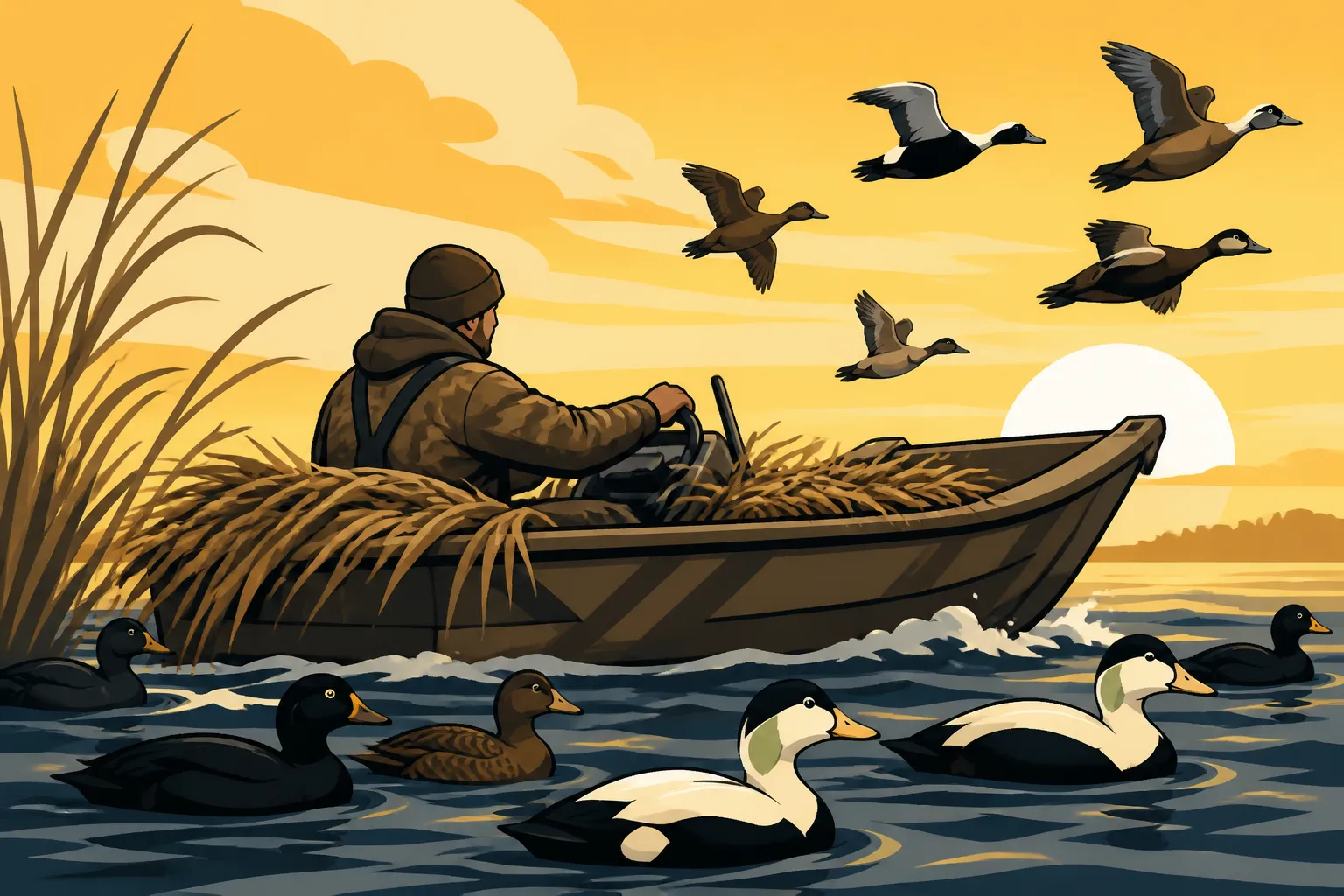
Running a Layout Boat for Sea Ducks
There’s a special kind of hunter out there, the one who looks at the vast, often angry, expanse of the Chesapeake Bay or Maryland’s coastal waters and doesn't see a barrier, but an invitation. If you’ve ever dreamed of being truly among the ducks, hidden just inches above the chop, with sea ducks cupping their wings right over your head, then you know the allure of the layout boat. But let's be real, running a layout boat for sea ducks in Maryland isn't for the faint of heart or the unprepared. It's a demanding, exhilarating pursuit that can quickly turn dangerous if you don't know the ropes. This guide is going to dive deep into everything you need to know, from the gear that keeps you safe to the strategies that put birds in your bag, ensuring you're ready to tackle Maryland's challenging offshore hunting grounds.
Understanding the Appeal and Challenges of Layout Boat Hunting for Sea Ducks
There's nothing quite like the experience of hunting sea ducks from a layout boat. It's an immersive, raw form of hunting that puts you right in the heart of their world. But it's also a world that demands respect, planning, and the right equipment.
Why Layout Boats Reign Supreme for Sea Ducks
When you picture waterfowl hunting, you might think of cozy shore blinds or spacious pit blinds on grain fields. But for sea ducks, those traditional setups just won't cut it. Sea ducks – like scoters, long-tailed ducks (often called oldsquaws), buffleheads, and goldeneyes – spend their lives on vast open water, feeding on mussels, clams, and crustaceans often found far from shore. They're not looking for fields or marshes; they're looking for open water with abundant food sources.
This is where the layout boat shines. Its low profile disappears into the water, making you virtually invisible to incoming birds that are often wary of anything that breaks the natural horizon. You're lying down, almost at water level, which offers unparalleled concealment. This allows you to set up directly in their flight paths or over their preferred feeding grounds, often miles from the nearest land. The unique perspective of watching a string of scoters commit to your spread, banking hard and dropping their feet just a few yards from your face, is an experience that traditional blinds simply cannot replicate. It's intense, personal, and utterly captivating, pulling you closer to the wild heart of the bay than almost any other hunting method.
The Unique Demands of Maryland's Offshore Waters
While the reward is immense, the challenges of layout boat hunting in Maryland's offshore environment are equally significant. This isn't a calm farm pond; this is the open Chesapeake Bay or the Atlantic Ocean, and it can turn on a dime. One moment you might be enjoying a gentle swell, the next you're fighting whitecaps and howling winds.
Maryland's large bodies of water, particularly the main stem of the Chesapeake and the ocean, are notorious for unpredictable weather and rapidly changing conditions. A slight breeze onshore can quickly build into a formidable chop, making it difficult to maintain your spread, retrieve birds, and stay comfortable. The water temperatures in late fall and winter are frigid, and capsizing or an accidental dip can lead to hypothermia in minutes. Furthermore, you're often far from any direct assistance, meaning self-sufficiency and robust safety protocols are paramount. Running a layout boat for sea ducks also requires a "mother boat" – a larger, more stable vessel that deploys and retrieves the layout boat and decoys, and serves as your safe haven. This adds another layer of complexity, demanding a skilled boat operator and a well-maintained vessel capable of handling the conditions. Navigating busy shipping channels or vast expanses of open water also requires keen navigational skills and an understanding of marine traffic. It’s a serious endeavor, demanding respect for the elements and meticulous preparation. For more on navigating these challenging waters, you might find our guide on Boat Safety on the Chesapeake in December useful.
Essential Gear and Setup for Your Maryland Layout Hunt
Success in layout boat hunting hinges on having the right gear, and knowing how to use it. This isn't a minimalist pursuit; it's an equipment-intensive operation where every piece plays a crucial role in safety and effectiveness.
The Anatomy of a Sea Duck Layout Rig
A complete sea duck layout rig is a complex system of interconnected components, each vital to the operation. At its core are two main vessels: the mother boat and the layout boat itself.
The mother boat is your command center, your safe harbor, and the workhorse that handles all the heavy lifting. This needs to be a sturdy, seaworthy vessel, typically a center console or cuddy cabin boat ranging from 18 to 25 feet, equipped with reliable engines, navigation electronics (GPS, chart plotter, depth finder), and all necessary safety gear. It's used to transport hunters, the layout boat, and hundreds of decoys to the hunting grounds, deploy the spread, and act as a mobile retrieve station. The mother boat's role is also critical for spotting incoming birds, signaling the layout hunter, and providing a warm, dry place to retreat to between flights or in changing weather. Companies like Boston Whaler or Parker Marine are often favored for their robust construction and stability in choppy conditions, though many local Maryland watermen have custom-built boats perfectly suited for the task.
The layout boat is the stealthy, low-profile craft where the hunter lies in wait. These purpose-built boats are designed to be extremely stable, watertight, and to blend seamlessly with the water's surface. They are typically single-person vessels, though some models can accommodate two, and feature a small cockpit where the hunter lies with their shotgun. Key features include a shallow draft, exceptional stability to prevent capsizing in waves, and often a camouflage paint job or cover to further break up their outline. Brands like TDB (Tuckerton Duck Boat) or Bankes Boats are renowned for their quality layout boats, known for their durability and effectiveness. They usually have heavy keels for stability and often have scuppers or drains to shed any water that might come in.
Beyond the boats, you'll need an arsenal of decoys. Sea ducks are gregarious birds, and they respond best to large, realistic spreads. You'll typically deploy anywhere from 50 to 300 decoys, depending on the species you're targeting and the size of your hunting area. These decoys are generally larger and heavier than typical puddle duck decoys, designed to ride realistically in waves and withstand the harsh marine environment. They are often rigged on long gang lines with heavy anchors to prevent them from drifting in strong currents.
Decoy Spreads for Maryland Sea Ducks
The effectiveness of your layout hunt largely depends on your decoy spread. Different species of sea ducks, while often found in the same general areas, may respond to slightly different presentations. Your decoy strategy needs to be adaptable.
For scoters (black, surf, and white-winged), which are arguably the most commonly targeted sea ducks in Maryland, a large, dense spread is often key. Scoters are highly social and are attracted to the sight of a big raft of their kin. A common setup involves creating a large "blob" or "U" shaped spread of 100-200 scoter decoys, with the opening of the "U" facing downwind, creating a landing zone for incoming birds directly in front of the layout boat. You'll want to place your layout boat just inside this opening, effectively becoming part of the flock.
Long-tailed ducks (oldsquaws) are also social, but often respond well to slightly smaller, more scattered spreads, or a mixed spread with scoters. They tend to be a bit more curious and will often circle a spread several times before committing. A "J" or "fishhook" shape can be effective, with the layout boat positioned at the bend, allowing birds to follow the line of decoys into the shooting zone.
Buffleheads and goldeneyes, while smaller, are also often found in open water, particularly in the calmer sections of the Bay or in larger tidal rivers. These birds are often less wary and can be decoying to smaller spreads, sometimes even mixed with a few diver decoys. They are swift flyers and require quick reactions. If you're specifically targeting these ducks, a separate, smaller spread off to the side of your main sea duck rig can be effective. Often, you'll find yourself shooting them as they zip through your scoter spread, taking advantage of the large numbers.
Regardless of the species, realism in your decoys is crucial. Consider investing in flocked decoys for a more lifelike appearance, especially for the closer birds. Also, be mindful of the wind and current. Your decoys must ride naturally and consistently. A good practice, especially if you use a scouting app like GoHunt, is to study aerial maps to understand currents and bottom contours, which can influence where sea ducks naturally raft and feed. This allows you to place your spread strategically, taking advantage of natural feeding areas. For more on decoying various species, you might be interested in our guide on Decoying Divers on Maryland's Open Bay.
Mastering the Art of the Layout Hunt
Beyond the gear, there's an art and a science to successfully hunting from a layout boat. It’s a dynamic environment where conditions are constantly shifting, and adaptability is paramount.
Reading the Weather and Tides
This cannot be stressed enough: safety and success in layout boat hunting are inextricably linked to your ability to read and respect the weather and tides. Maryland's open water, whether it's the Chesapeake Bay or the Atlantic, is unforgiving.
Weather: Before you even consider launching, meticulously check multiple weather forecasts. Look not just at wind speed and direction, but also gust potential, wave height predictions, and temperature (including wind chill). A slight change in wind direction can completely alter water conditions, making a calm morning into a dangerous situation in hours. A general rule of thumb: if the forecast calls for sustained winds over 15 mph, or significant wave heights (over 2-3 feet), it's probably best to stay ashore. Heavy fog can also be incredibly dangerous, reducing visibility to zero and making navigation and communication between the layout boat and mother boat nearly impossible. Always have a backup plan, and be willing to call off the hunt if conditions deteriorate. No duck is worth risking a life.
Tides: While less critical for safety than weather in the immediate sense, tides significantly influence where sea ducks feed and how they move. Strong tidal currents can make deploying and retrieving decoys a nightmare, cause your spread to drift, and affect the natural movement of the birds. For example, a strong outgoing tide might pull decoys into shallower water or concentrate food sources in specific areas. Understanding the tidal charts for your specific hunting area is essential for proper decoy placement and predicting bird behavior. For instance, Long-tailed Ducks often prefer deeper channels where currents can concentrate their food. Knowing the tides for your specific hunt zone is a crucial part of planning, much like understanding Reading Tide Charts Before a Marsh Hunt for sika deer.
Strategies for Deployment and Decoy Placement
Deploying a layout boat rig is a well-rehearsed dance between the mother boat and the layout hunter, demanding precision and coordination.
First, the scouting. You need to know where the birds are. This means spending time observing their flight patterns, feeding areas, and resting rafts. Look for tell-tale signs like lines of birds flying low over the water, or large groups sitting on the open bay. Modern tools, like the GoHunt app, can help you mark these locations with GPS coordinates, making return trips much easier.
Once on site, the mother boat approaches the desired hunting location, often a known feeding ground or a choke point in a flight path. The crew on the mother boat will then begin deploying the decoys. This is usually done by running a pre-rigged gang line with decoys attached. The mother boat makes passes, dropping sections of decoys strategically to form the desired spread shape. This often involves multiple trips and a lot of heavy lifting. The anchor for the gang line is dropped first, then the boat motors away, paying out the line and decoys, before dropping the second anchor.
Once the main spread is out, the layout boat is carefully lowered into the water, typically positioned in the sweet spot of the spread – the designated landing zone for incoming birds. The layout hunter then climbs in, gets comfortable, and communicates their readiness to the mother boat. The mother boat then retreats to a designated "hide" location, usually a few hundred yards away, out of sight of incoming birds but close enough for quick response. This hide location can be behind a point, in a deeper channel, or simply far enough away that it doesn't alarm the ducks. Maintaining communication via VHF radio is critical during this entire process.
In-the-Blind Tactics and Ethical Considerations
Once you're settled in the layout boat, the hunt truly begins. It's a waiting game, often punctuated by moments of intense action.
Visibility and concealment: The entire premise of layout hunting is disappearing into the water. Ensure your layout boat is well-camouflaged, and your head and shoulders are the only things visible (and ideally, only when you're preparing to shoot). Don't make sudden movements. Sea ducks, especially scoters, can be surprisingly wary, often flaring at the slightest unnatural movement.
Calling: While not as critical as for puddle ducks, some sea duck calls can be effective. A scoter "burr" call can sometimes draw attention, especially from lone birds or small groups that are passing by. For long-tailed ducks, their distinctive "ow-ow-ow-a-lick" call can sometimes be imitated, but it's often the visual of the large spread that does most of the work.
Taking the shot: This is where practice pays off. Shooting from a prone or semi-prone position in a layout boat, often with waves rocking you, is challenging. You need to be able to swing smoothly and lead effectively. Patience is key; let the birds commit fully to the spread, ideally landing or hovering just above the water within easy range. Don't take Hail Mary shots at high-flying birds, as this can spook the entire flock and educate them. Focus on ethical, clean kills.
Retrieval: This is where the mother boat comes back into play. After a shot, the layout hunter signals the mother boat, which then maneuvers to retrieve any downed birds. This minimizes the time the layout hunter is out of action and ensures no crippled birds are lost. This collaborative effort is a hallmark of successful layout hunting. If you're hunting in the more specific waters for sea ducks, such as those covered in Sea Duck Hunting Maryland's Offshore Zone, these tactics become even more refined.
Safety First: Navigating Maryland's Open Water
Safety is paramount when hunting from a layout boat. The open water environment presents inherent risks that must be taken seriously. Neglecting safety can have dire consequences.
Critical Safety Equipment
Beyond your hunting gear, an array of safety equipment is non-negotiable for a layout boat operation. This isn't just about following regulations; it's about survival.
Personal Flotation Devices (PFDs): Every person on both the mother boat and the layout boat must have a properly fitting PFD. For the layout hunter, an inflatable PFD is often preferred as it allows for greater mobility and comfort while lying down, but it must be easily deployable. In the freezing waters of a Maryland winter, a PFD can buy you precious minutes if you end up in the water.
VHF Radio: A reliable VHF marine radio on both the mother boat and a handheld, waterproof VHF radio on the layout hunter is absolutely essential for constant communication. Cell phone service can be unreliable in many offshore areas, making VHF your primary communication link. Ensure batteries are charged and radios are tested before every trip.
GPS and Navigation: A GPS unit with pre-loaded charts on the mother boat is critical for navigation, especially in fog or low light. The layout hunter should also have a small handheld GPS or a modern smartphone app like GoHunt with offline maps downloaded, allowing them to pinpoint their location if separated from the mother boat. Mark your launch point, hunting location, and any known hazards.
Emergency Signals: Carry flares, a whistle, and a signaling mirror. An EPIRB (Emergency Position Indicating Radio Beacon) or PLB (Personal Locator Beacon) is a wise investment for offshore trips, transmitting your exact location to rescue authorities in an emergency.
Cold Weather Gear: Layering is crucial. Waterproof and windproof outer layers are a must. Wear wool or synthetic base layers that wick moisture away from your body. Dry suits or survival suits are excellent investments for layout hunters, providing an additional layer of protection against hypothermia if you accidentally go overboard. Always dress for the water temperature, not the air temperature, because if you go in, it's the water that will kill you.
First-Aid Kit: A comprehensive first-aid kit, equipped for marine environments and cold weather injuries, should be readily accessible on the mother boat.
Anchor and Spare Anchor: The layout boat should have its own small anchor, even if it's typically tethered to the mother boat, for emergency situations. The mother boat needs a robust anchor system with ample chain and rode, plus a spare, in case of mechanical failure or severe weather.
Contingency Planning and Communication
Even with the best gear, things can go wrong on the water. Having clear contingency plans and consistent communication protocols can make the difference between a minor mishap and a major disaster.
Pre-Hunt Briefing: Before leaving the dock, every member of the hunting party should know the plan: who is in charge, where you're going, the weather forecast, emergency contact numbers, and what to do in case of an emergency (e.g., man overboard, mechanical failure, medical emergency). Discuss signals and communication procedures.
"Man Overboard" Protocol: This is perhaps the most critical contingency. Everyone should know how to immediately retrieve someone who falls into the water. The mother boat operator must be proficient in quick turns and recovery techniques. Having a throwable PFD or life ring readily available is essential. In cold water, time is of the essence, so quick action is vital.
Mechanical Failure: Always have a fully charged spare battery and a basic tool kit on the mother boat. Know how to troubleshoot common engine issues. Consider carrying a spare propeller. Having a towing plan (e.g., another boat on standby, knowing local marine assistance providers) is also wise.
Changing Conditions: The decision to abort a hunt should always be easy to make, and never debated. If weather conditions worsen unexpectedly, or if anyone in the party feels uncomfortable or unsafe, pack up immediately. There's no shame in calling a hunt early; the ducks will be there another day.
Buddy System: Never hunt alone. Ensure there are at least two people on the mother boat (one to operate the boat, one to act as a spotter/helper) and maintain constant visual contact with the layout boat. For those truly passionate about these unique hunts, understanding Why Offshore Guides Need a Captain's License can shed light on the professional standards involved in leading such trips safely.
Hunting sea ducks from a layout boat in Maryland is an extraordinary experience that connects you deeply with the raw power of the Bay and the Atlantic. It's a challenging, rewarding pursuit, but it demands respect for the environment, meticulous preparation, and an unwavering commitment to safety. By understanding the gear, mastering the tactics, and prioritizing safety above all else, you can enjoy thrilling hunts and create memories that will last a lifetime on Maryland's wild waters.
Maryland Sea Duck Species and Ideal Layout Conditions
Maryland's coastal waters and the Chesapeake Bay host a variety of sea duck species, each with distinct characteristics and preferences. Understanding these can help you tailor your layout hunt for maximum success.
| Species | Primary Habitat | Key Identification (Male) | Preferred Decoy Spread Size | Ideal Weather Conditions | Notes |
|---|---|---|---|---|---|
| Black Scoter | Open ocean, lower/mid Chesapeake Bay | All black, yellow knob on bill | Large (100-200+) | Calm to moderate chop, overcast | Strong fliers, often fly in lines, responsive to big rafts |
| Surf Scoter | Ocean coast, lower/mid Chesapeake Bay | Black with white patches on head, colorful bill | Large (100-200+) | Moderate chop, cloudy | Very social, often fly in tight groups, good decoying |
| White-winged Scoter | Ocean coast, lower/mid Chesapeake Bay | Black with white wing patch, orange bill | Large (100-200+) | Moderate chop, overcast | Largest scoter, can be wary, prefer slightly deeper water |
| Long-tailed Duck (Oldsquaw) | Open ocean, Bay mouth, deeper channels | Distinctive long tail feathers, black/white | Medium (50-100), often mixed | Calm to moderate, clear and cold | Extremely vocal, active divers, respond to movement |
| Bufflehead | Tidal creeks, calmer Bay waters, coastal ponds | Black and white, large white head patch | Small (12-24), often mixed | Calm, clear, little wind | Fast, erratic flight, often alone or in small groups |
| Common Goldeneye | Tidal rivers, protected Bay coves, open Bay | Green head, white spot below eye | Small (12-24), often mixed | Calm to moderate, clear | Rapid flight, often found near diving ducks, wary |
Disclaimer
Hunting involves inherent risks, including injury and death. Always prioritize safety, adhere to all local, state, and federal hunting regulations, and ensure you have the necessary licenses and permits. The information provided in this guide is for informational purposes only and should not replace professional training, expert advice, or personal judgment. Be aware of changing weather conditions and always inform others of your hunting plans.