Scoters Off the Maryland Coast
Many waterfowlers in Maryland stick to the familiar marshes and shallow bays, rarely venturing out to the vast, open ocean, missing out on a truly unique and challenging experience. Scoter hunting off the Maryland coast can seem daunting, a world away from decoying puddle ducks or geese in a cornfield. This guide will dive deep into what it takes to pursue these hardy sea ducks in their offshore domain, offering insights into their habits, the gear you'll need, and how to stay safe while tackling the unpredictable nature of the Atlantic.
Understanding Scoters and Their Maryland Habitat
Hunting scoters isn't like hunting mallards or Canada geese; it's a completely different ballgame that requires a unique understanding of these specialized birds and their environment. These are tough, ocean-dwelling ducks that spend most of their lives battling the elements, and that makes them an incredibly rewarding pursuit for those willing to venture offshore.
What Exactly Are Scoters?
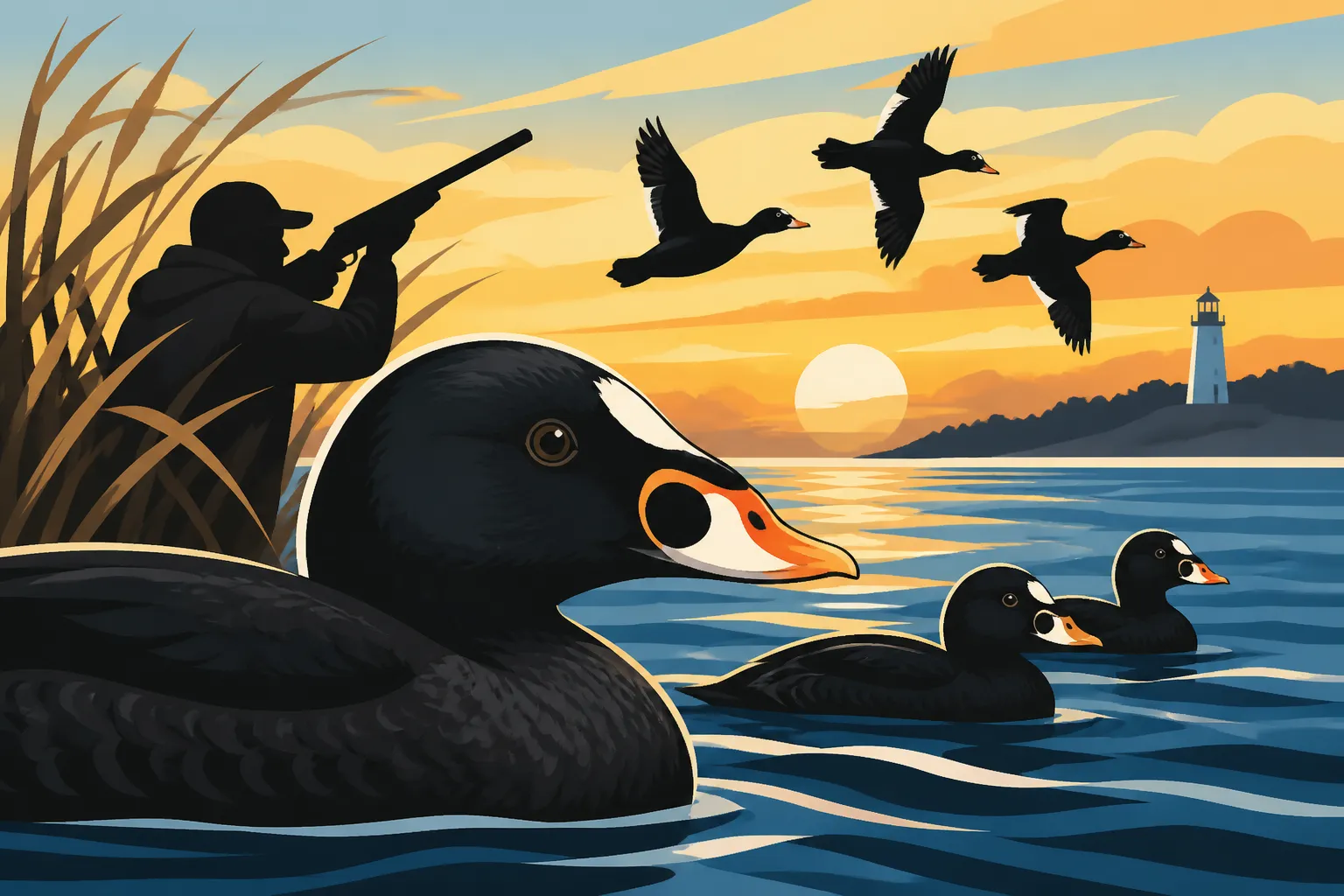
When we talk about scoters, we're generally referring to three distinct species you might encounter off the Maryland coast: the Black Scoter, the Surf Scoter, and the White-winged Scoter. While they all share a generally dark, stout appearance and a love for the open ocean, each has its own subtle characteristics. Black scoters are, as their name suggests, entirely black for males, with a distinctive orange knob on their bill. Surf scoters are also primarily black, but males sport striking white patches on their forehead and the nape of their neck, along with a uniquely shaped, colorful bill. The largest of the trio, the white-winged scoter, is identifiable by the prominent white patch on its wing, visible both in flight and when resting on the water, and often has a small orange knob at the base of its bill.
It's easy to lump all "sea ducks" together, but knowing these subtle differences can really help when identifying them on the water, especially when bag limits can vary or you're trying to hone in on a specific species. All three are diving ducks, meaning they feed by submerging themselves, often for extended periods, to forage on the bottom. Their strong legs are set far back on their bodies, making them powerful underwater swimmers but giving them an awkward gait on land—not that you'll see them waddling much.
They often form large, cohesive rafts on the water, sometimes numbering in the hundreds or even thousands, and will dive synchronously to feed on mollusks, crustaceans, and other marine invertebrates. When startled or moving between feeding grounds, their flight is fast, direct, and typically low over the water, especially when flying into a strong wind. You might hear the distinctive whistling wingbeats of a black scoter before you see it, a sound unique among the sea ducks.
Where Do Scoters Live Off the Maryland Coast?
Scoters are true ocean birds, and their primary habitat off the Maryland coast is, unsurprisingly, the offshore waters of the Atlantic. This often means waters far beyond the sight of land, where the bottom drops away and the waves roll in from thousands of miles out. They are typically found over sandy bottoms where shellfish beds are abundant, as these are their primary food sources. You'll find them concentrating near shoals, shipwrecks, and artificial reefs—anywhere that provides structure for their prey.
Specific areas like the waters outside the Ocean City inlet, particularly around nearshore wrecks or ledges, can hold good numbers of scoters. While they prefer the deeper, open ocean, strong storms or specific feeding patterns might occasionally push them closer to barrier islands or even into the mouths of large bays. However, to consistently find them, you generally need to be prepared to make a significant run offshore.
Their diet primarily consists of blue mussels, surf clams, other bivalves, small crabs, and even some small fish, which they efficiently collect from the seabed. They are incredibly well-adapted for diving deep and staying down, often disappearing for a minute or more to feed before resurfacing. You can't just run out anywhere and expect to find them. Knowing their preferred haunts is half the battle, saving you a ton of fuel and frustration, and understanding their feeding habits helps predict where they might congregate on any given day.
Why are Scoters a Unique Hunt?
Hunting scoters off the Maryland coast offers a completely different experience from traditional duck or goose hunting in the Chesapeake Bay or farm fields. For starters, the sheer wildness and unpredictability of the open ocean present a level of challenge and solitude that few other hunts can match. You're truly at the mercy of the elements, and success often hinges on careful planning, robust gear, and an unwavering commitment to safety.
The challenges are considerable. You're dealing with constantly shifting weather, potentially rough water, and the need for a specialized, offshore-capable boat with reliable engines. Navigation becomes paramount, and you're exposed to the raw power of the Atlantic, meaning good layered, waterproof clothing isn't just a comfort, it's a necessity. It’s less about hiding in marsh grass and more about presenting decoys in vast expanses of open water, often miles from land. This type of hunting often demands specialized equipment, like layout boats, and a crew willing to work together in challenging conditions.
However, the rewards are equally unique. There's an incredible sense of accomplishment that comes with successfully pursuing these hardy birds in their wild domain. The solitude of the ocean, the vast expanse of blue, and the sight of a flock of scoters cupping their wings into your spread are unforgettable experiences. And for many, the table fare is exceptional; properly prepared, scoter meat is rich and flavorful, a testament to their diet. If you're looking for a hunt that truly tests your mettle and provides a profound connection to the raw power of nature, Sea Duck Hunting Maryland's Offshore Zone is certainly an experience worth considering.
Navigating the Offshore Zone for Scoters
Stepping into the offshore world of scoter hunting requires more than just a shotgun and some decoys. It demands a significant investment in specialized gear, a keen understanding of marine conditions, and a willingness to learn unique hunting techniques. This isn't a casual morning hunt; it's an expedition.
Essential Gear for Offshore Scoter Hunting
The cornerstone of any successful and safe offshore scoter hunt is the right boat. You'll need an offshore-capable vessel, typically 20 feet or longer, with a deep-V hull designed to handle the choppy seas and swells of the Atlantic. Twin, reliable engines are often preferred for redundancy, as engine failure miles offshore is a serious, potentially life-threatening situation. Beyond the boat itself, a comprehensive suite of safety equipment is non-negotiable: a reliable GPS for navigation, a VHF marine radio for communication, an EPIRB (Emergency Position Indicating Radio Beacon) or satellite messenger for emergencies, flares, and, of course, plenty of Coast Guard-approved life jackets for everyone on board.
Decoys for scoter hunting are also a different breed. You'll typically need a large spread—dozens to even hundreds—of durable, specialized sea duck decoys. These are often larger and heavier than typical puddle duck decoys, designed to ride realistically in rough water. Longline rigging systems are incredibly popular, allowing hunters to deploy and retrieve many decoys efficiently, mimicking the large rafts of scoters that gather on the open ocean. Make sure you have a good mix of black, white-winged, and surf scoter decoys to accurately represent the birds in the area.
When it comes to personal gear, layering is absolutely critical. You'll need waterproof, windproof, and breathable outer layers to protect against spray and cold winds, along with warm insulating layers underneath. While waders might not be for standing in the water as they would be in a marsh, they are still valuable for keeping dry from boat spray and when handling decoys. For shotguns, a 12-gauge or 10-gauge is generally preferred, capable of handling heavy loads of non-toxic shot. Given the hardy nature of scoters and the often longer ranges, shot sizes like BB, BBB, or T are common. Finding reliable gear can be tough, but platforms like GoHunt can offer reviews or forums where experienced sea duck hunters discuss their preferred setups, helping you avoid costly mistakes and ensuring you're ready for anything the ocean throws at you.
Reading the Conditions: Weather and Waves
In offshore hunting, safety isn't just a recommendation; it's paramount. The ocean doesn't forgive mistakes, and misjudging the weather can quickly turn a thrilling hunt into a dangerous ordeal. Understanding marine forecasts is an absolute must. You need to pay close attention to wind direction and speed, wave height, and, crucially, the swell period. A 2-foot chop with a short period can be far more uncomfortable and dangerous than a 3-foot swell with a long period.
Ideal conditions for scoter hunting typically involve calm to light chop on the seas, often with overcast skies that help break up your silhouette. High winds and heavy swells are non-negotiable reasons to stay at the dock, both for the safety of your crew and the effectiveness of your hunt. Nobody wants to be bouncing around in a washing machine, and trying to shoot straight in those conditions is a pipe dream.
Always check multiple sources for marine forecasts, including NOAA marine forecasts, local buoy data, and specialized weather apps designed for boaters. Critically, always have a Plan B (or C, or D!) in mind. Many a trip has been called off at the ramp after seeing that the real-world conditions don't match the forecast or simply aren't safe enough to venture out. Your life, and the lives of your hunting partners, are far more important than a few scoters. Don't push it, ever.
Common Hunting Methods for Scoters
There are a couple of primary methods for hunting scoters, each with its own nuances and requirements. The layout boat method is perhaps the most iconic for sea duck hunting. This involves deploying small, low-profile boats, often resembling floating coffin blinds, from a larger "mother ship" that remains at a safe distance. Hunters lie almost flat in these layout boats, providing ultimate concealment amidst a large spread of decoys. This method is incredibly effective but requires very calm water, a dedicated crew to ferry hunters and retrieve birds, and specialized layout boats. If you're considering this, understanding Running a Layout Boat for Sea Ducks is a great starting point.
Alternatively, hunters can use a conventional larger boat, anchoring or drifting it within a spread of decoys. Some boats are equipped with pop-up blinds on deck to offer concealment. While this method is generally more stable and less weather-dependent than layout boat hunting, it presents a higher profile to incoming birds. Regardless of the boat type, decoy spreads are crucial. Longlines are common, creating the illusion of a massive raft of scoters, with anchor systems designed for deep water.
When scoters are working your spread, they often fly high, circle a few times, and then cup their wings as they commit. Setting up downwind of your spread is typically ideal, as birds prefer to land into the wind. Patience is key; these birds aren't always in a hurry and might make several passes before committing. Just like when you're Decoying Divers on Maryland's Open Bay, you need to be ready for fast, strong birds coming in.
Regulations and Responsible Scoter Hunting
Just like any other form of hunting, pursuing scoters comes with a specific set of rules and regulations designed to ensure safety, conservation, and ethical practices. These regulations can be a bit different from inland hunting, so it's critical to be informed before you head offshore.
Maryland's Sea Duck Season Dates and Zone Limits
Maryland's sea duck seasons often have specific dates that may differ from the general duck season dates, so don't just assume. These specialized seasons are set to protect breeding populations and manage harvest levels for these unique species. It's imperative to consult the current Maryland hunting regulations each year before planning your trip. The season structure can have splits, meaning there might be an early and a late season, or specific periods when only certain species are open.
Furthermore, Maryland often delineates an "Offshore Zone" or "Sea Duck Zone" with particular rules that apply only to those waters. Know your boundaries! Hunting outside the designated zone, or targeting species outside their specific season, can lead to significant penalties. Daily bag limits for scoters can also be more restrictive than for other duck species, and there may be aggregate limits for all sea ducks combined. Sometimes, species-specific limits apply, meaning you can only take a certain number of Black Scoters, for example, within your overall sea duck bag. Misunderstanding these dates or zones can lead to serious fines and losing your hunting privileges. It's not worth the risk, so check the latest Maryland Sea Duck and Offshore Zone Rules and Sea Duck Season Dates and Zone Limits carefully every season.
License and Stamp Requirements
Before you even think about setting foot on a boat for a scoter hunt, you need to ensure all your licensing is in order. This isn't just a suggestion; it's a legal requirement, and wildlife enforcement officers take it very seriously. The first step, of course, is having a valid state hunting license. This forms the foundation for all other required permits.
Beyond the basic hunting license, migratory waterfowl hunters aged 16 and older are required to possess a current Federal Duck Stamp. This stamp is crucial, as the funds generated from its sale go directly to conserving wetland habitats for migratory birds across the nation. In addition to the federal stamp, Maryland requires hunters of migratory birds to purchase a Maryland Migratory Game Bird Stamp. Finally, you must also be registered with the Harvest Information Program (HIP), a federal program that collects data on migratory bird harvest to aid in population management. It’s a lot of paperwork, and it's easy to forget one or two when you're caught up in the excitement of a new season. Double-check your wallet or your online Buying a Maryland License Through COMPASS portal before you even think about hitting the water. For more details, refer to Federal Duck Stamp Rules for Bird Hunters and HIP Registration for Migratory Bird Hunters.
Ethical Considerations and Conservation
Responsible scoter hunting goes beyond simply following the letter of the law; it involves a commitment to ethical practices and conservation principles. One of the most critical aspects is accurate bird identification in flight. Scoters can be tricky to distinguish, especially in low light or rough seas, but it's crucial to identify them to ensure you're within legal bag limits and not inadvertently targeting protected species. Take the time to learn their flight patterns, silhouettes, and unique markings.
Aim for clean, humane kills to minimize crippling losses. Scoters are incredibly tough birds, and a poorly placed shot can lead to a long chase over open water, or worse, a lost bird. This brings us to retrieval. Have a solid plan for retrieving downed birds quickly, as waves and currents can carry them away rapidly. A well-trained retriever dog, if your boat can safely accommodate one, can be an invaluable asset. Otherwise, a dedicated "cripple boat" like a kayak or a smaller tender, or simply having a crew member ready to quickly maneuver the main boat for retrieval, is essential.
Respect for the resource and the environment is paramount. Scoter populations, like all wildlife, are monitored, and by hunting responsibly and adhering to regulations, you contribute to the continuation of these hunting opportunities for future generations. Additionally, consider how your actions impact other boaters or marine life. Minimizing disturbance and being a good ambassador for hunters helps everyone. And speaking of taste, Why Sea Ducks Taste Different is a real thing, and preparing your scoters properly is part of honoring the harvest. For those serious about contributing to conservation efforts, logging your hunts and observations through tools or communities like GoHunt can provide valuable data to wildlife managers, painting a clearer picture of migratory patterns and population health.
| Scoter Species | Key ID Features (Males) | Typical Diet | Notes on Maryland Hunt |
|---|---|---|---|
| Black Scoter | All black, orange knob on bill | Mussels, clams | Often found in shallower nearshore waters than others, distinct whistling wings. |
| Surf Scoter | Black, white patches on forehead & nape, colorful bill | Mussels, small crabs | Bold white patches stand out, bill profile is unique. |
| White-winged Scoter | Black, white wing patch, orange knob | Crustaceans, mollusks | White wing patch visible in flight and at rest, largest of the scoters. |
Scoter hunting off the Maryland coast is not for the faint of heart, nor is it a casual affair. It demands respect for the ocean, a commitment to safety, and a deep understanding of these magnificent sea ducks. But for those willing to embrace the challenge, it offers one of the most wild and rewarding waterfowl experiences imaginable. The vastness of the Atlantic, the power of its waves, and the hardy nature of the scoters themselves combine to create memories that will last a lifetime. So, if you're ready to trade the marsh blind for a layout boat and the quiet creek for the open sea, the scoters of the Maryland coast are waiting.
Disclaimer
This article is for general informational purposes only and does not constitute professional advice. Laws, prices and regulations vary by location and change over time. Consult a qualified professional for guidance on your specific situation.