Buffleheads and Goldeneyes in Tidal Creeks
There's something truly magical about watching a flock of ducks cup their wings and commit to your decoy spread, especially when you're tucked into a quiet tidal creek in Maryland. But let's be honest, hunting these smaller diving ducks like buffleheads and goldeneyes in those tight, often tricky waterways presents a whole different set of challenges than chasing big honkers in a cornfield or divers on the open Bay. This guide is all about helping you understand these zippy little birds and how to successfully pursue them right here in Maryland's intimate tidal creeks, turning those frustrations into successful, memorable hunts.
The Charm and Challenge of Maryland's Tidal Creek Divers
Maryland's tidal creeks offer a unique, often overlooked, hunting experience. They're not the vast expanses of the Chesapeake Bay, nor the sprawling impoundments of the Eastern Shore. Instead, these winding arteries of water provide shelter, food, and distinct hunting opportunities for specific species, especially buffleheads and goldeneyes. These aren't the big, slow-flying ducks, and their behavior in these constricted environments requires a different approach.
Buffleheads: Pint-Sized Powerhouses
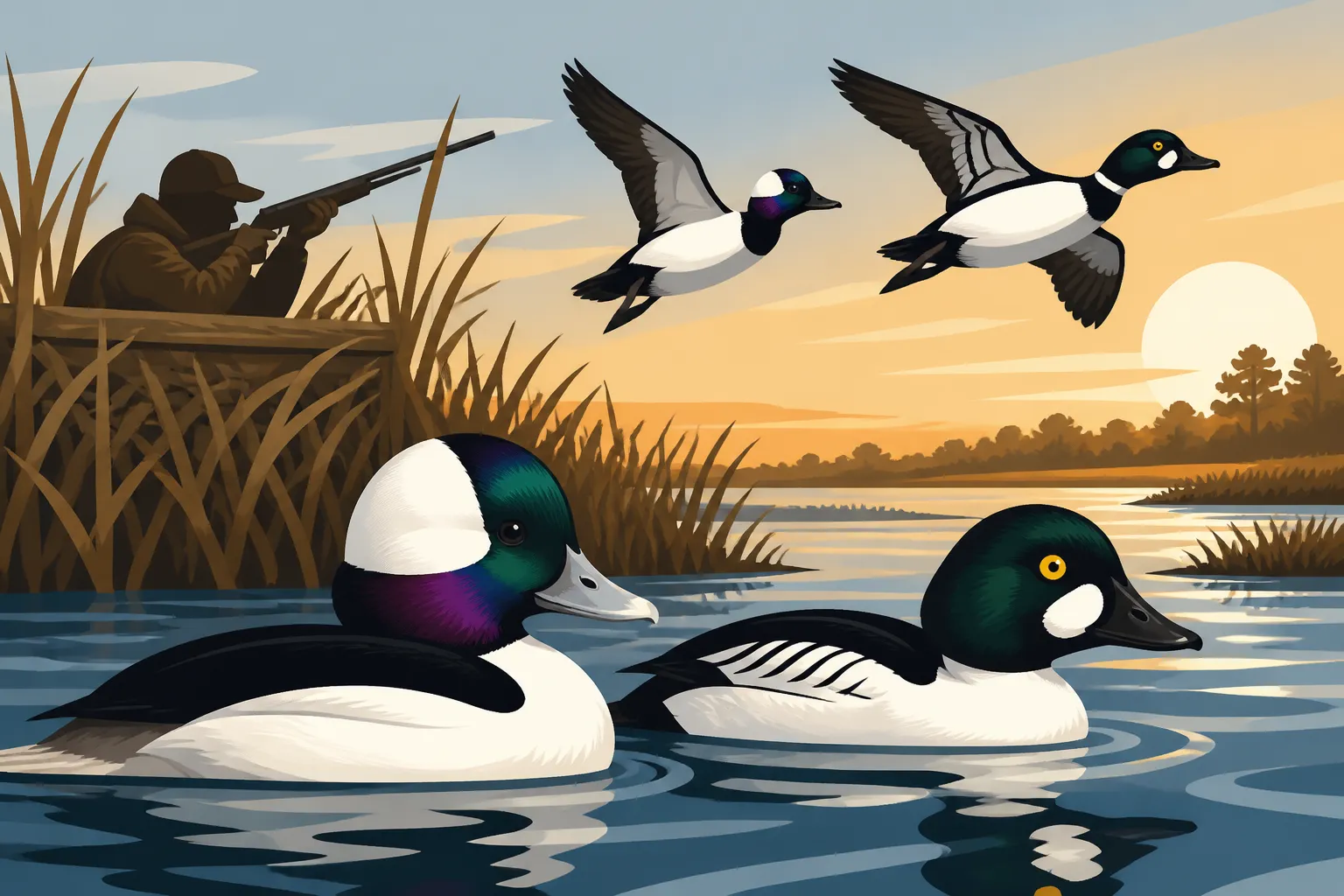
Buffleheads, often affectionately called "butterballs" or "dippers," are truly a marvel to watch. They're small, compact ducks, known for their disproportionately large, puffy heads (especially the males with their striking white patch) and their incredibly fast, erratic flight. What makes them so charming, and challenging, in tidal creeks is their diving ability. They can disappear and reappear in a flash, making them hard to track and even harder to hit. They zip in low, often seeming to come out of nowhere, buzz the decoys, and if they don't like what they see, they're gone in a blink. Their diet in these creeks often consists of small invertebrates, crustaceans, and aquatic insects, which they expertly forage by diving repeatedly. Because of their size and speed, many hunters underestimate them, leading to missed shots and frustration.
Goldeneyes: The Elegant Bay Birds
Goldeneyes, both common and Barrow's (though Barrow's are far less common here), are larger than buffleheads but still considered smaller divers. Males are stunning with their iridescent green-black heads, bright yellow eyes, and clean white bodies. They fly with powerful, rapid wingbeats, producing a distinctive "whistling" sound, which is how they got their nickname, "whistlers." In tidal creeks, you'll often find them working the same areas as buffleheads, though they might prefer slightly deeper pockets or areas with larger prey like small fish, clams, and mussels. Goldeneyes tend to be a bit more cautious than buffleheads, often circling several times before committing, giving you a chance to prepare but also more opportunity for them to spot something amiss. They are incredibly strong divers, sometimes staying underwater for quite a while, which can make retrieving a downed bird in a strong current a real test.
Unlocking Their Secrets: Scouting and Behavior in Creeks
Success with buffleheads and goldeneyes in tidal creeks hinges on understanding their preferences and patterns. These birds aren't just randomly distributed; they seek out specific conditions that offer food and safety. Good scouting, often assisted by modern tools, is your best friend.
Reading the Water: Tides, Currents, and Feeding Patterns
Tides are the lifeblood of tidal creeks, and they dictate everything when it comes to diver hunting. Buffleheads and goldeneyes will often move with the tide, preferring certain water depths for feeding. On a rising tide, they might push further into the shallower guts and edges, while a falling tide might concentrate them in deeper channels. Reading Tide Charts Before a Marsh Hunt is essential reading for anyone serious about this.
- Slack Tide: This can be a tricky time. Sometimes birds will raft up and rest, but feeding activity might slow down as the current lessens. It's a good time for them to loaf, but maybe not for them to decoy actively.
- Moving Tide: This is often prime time. The current stirs up the bottom, making food more accessible. Ducks will typically feed against the current. Pay attention to how the current affects your decoys and boat positioning. A strong outgoing tide can pull your decoys downstream quickly, requiring more anchoring or a different spread configuration.
- Wind's Influence: Wind can be just as important as the tide. Ducks, especially divers, almost always land and take off into the wind. A stiff breeze can also make them hug shorelines or seek shelter in more protected bends of a creek. Observing wind direction and strength is crucial for optimal decoy placement and blind setup. It can also make boat handling quite a challenge, so be prepared for some choppy water, even in a creek.
Using tools like GoHunt can be invaluable here. Its mapping features often include tidal information or can at least help you identify key pinch points, bends, and deeper holes that might be holding water during different tide stages. You can mark potential setup spots based on typical wind directions and tide flows.
Identifying Prime Creek Habitat
Not all tidal creeks are created equal for these birds. They have specific preferences that you need to identify during your scouting trips, both in person and with aerial imagery.
- Protected Coves and Bends: Look for areas that offer a break from strong winds or open water. These spots provide refuge, especially on blustery days. The ducks can rest, preen, and feed without expending too much energy fighting the elements.
- Deep Water Access Near Shallow Feeding Flats: Divers need both. They'll feed in shallower areas (often 3-10 feet deep) but feel more secure when deeper water is just a short dive away. Look for sharp drop-offs, channel edges, or submerged structures where these transitions occur. Hunting a Marsh Ditch Bank at Sunrise offers insights into similar environments.
- Abundant Food Sources: While you can't see what they're eating underwater, observing consistent use of an area over several days is a strong indicator of a good food source. Buffleheads and goldeneyes key in on small clams, mussels, aquatic insects, and tiny fish. Areas with clear water often indicate healthier submerged aquatic vegetation and benthic communities, which support their prey.
- Minimal Pressure: These ducks are quick to shy away from heavily pressured areas. If a creek sees constant boat traffic or hunting, they'll often move to quieter stretches. Finding those less-disturbed pockets, even if it means a bit more effort to access, can dramatically increase your success.
Using an app like GoHunt to mark waypoints for these features – deep holes, protective bends, potential blind sites – can streamline your planning process and make your actual hunt day much more efficient.
Essential Gear and Stealth for Tidal Creek Success
Hunting in tidal creeks demands specific gear and a keen understanding of concealment. These environments are often more intimate than open water, meaning the ducks are closer and quicker to spot anything out of place.
Decoys: Small Spreads, Big Impact
Unlike hunting larger puddlers or layout hunting for sea ducks, you don't necessarily need a massive spread for buffleheads and goldeneyes in a creek. In fact, a smaller, realistic spread can often be more effective.
- Numbers: You don't need dozens of decoys. A spread of 6-12 diver decoys, a mix of buffleheads and goldeneyes, can be plenty. Sometimes even just 3-4 will do the trick if placed correctly. These birds often travel in small flocks or pairs, so a massive spread can sometimes look unnatural in a tight creek.
- Mix and Match: Combining bufflehead and goldeneye decoys creates a natural-looking raft. You can also mix in a few ruddy duck or canvasback decoys if they're common in your area, as these species often associate with one another. Variety can sometimes be the key to confidence.
- Placement and Rigging:
- Against the Current: As divers feed into the current, place your decoys so they appear to be doing the same. If the current is moving from left to right, the decoys should be facing left, like they're feeding upstream.
- Open Landing Zone: Always leave a clear, calm pocket for the ducks to land in, preferably directly in front of your blind and within easy shooting range. Think about where a duck would naturally glide in for a landing, typically into the wind and in a slight gap in your spread.
- Anchoring: Use heavy enough anchors and sufficient line to prevent your decoys from drifting into snags or getting swept away by strong tides. Texas rigs or similar tangle-free systems work wonderfully in creeks, allowing for quick deployment and retrieval.
- Motion: A jerk string can add vital realism. The subtle movement of a few decoys twitching and bobbing can be enough to catch their eye and convince them to commit. Even a simple decoy anchored to create a slight ripple can make a difference.
| Decoy Type | Typical Quantity | Placement Strategy | Key Consideration |
|---|---|---|---|
| Bufflehead | 4-6 | Tight cluster, slightly upstream of blind | Small, erratic, fast flight |
| Goldeneye | 4-6 | Looser group, flanking buffleheads | Slightly larger, more cautious diver |
| Mixed Divers | 1-2 | Outlier, adding variety and visibility | Attract broader range, adds realism |
| Motion Decoy | 1 (jerk string) | Centered in landing zone, subtle movement | Crucial for enticing wary birds |
Blind and Boat Concealment in Tight Spaces
This is where the challenge really comes in. Tidal creeks often have limited cover, and these small ducks have incredible eyesight.
- Natural Cover is King: If you can find a natural bank with phragmites, marsh grass, or small bushes, utilize it. Hunting a Loblolly Pine Island in the Marsh gives ideas on using natural elements. Digging a shallow pit in a bank, if permissible and practical, can be an excellent option for low-profile concealment.
- Portable Blinds: Layout blinds can work on wider, flatter banks, but a simple panel blind or even a carefully brushed-in boat blind is often more practical in a creek. The key is to blend in, breaking up your outline against the background. Think about your backdrop: a dark bank or thick reeds are better than a bright, open sky.
- Boat Concealment: If you're hunting from a boat, brush it in thoroughly. Use natural vegetation from the area if legal and available, or use a good commercial boat blind that matches the local foliage. Position the boat so your profile isn't silhouetted against the sky. Sometimes, simply backing the boat into thick marsh grass or under low-hanging branches is enough.
- Shadows and Sun: Always consider the sun's position. Try to have the sun at your back or to the side, preventing the ducks from seeing your face or gun glinting. Also, consider the shadows your blind or boat casts; you don't want a long, unnatural shadow extending into your landing zone.
- Stay Motionless: These ducks are fast, and they're looking for movement. Once they commit, or even when they're circling, stay absolutely still until it's time to shoot. Any sudden movement will flare them instantly.
Shotguns, Loads, and Retrieval Considerations
These are small, tough birds, and hitting them consistently requires proper equipment and practice.
- Shotguns: A 12-gauge shotgun is the standard, though a 20-gauge can also be effective with the right loads. An improved cylinder or modified choke is usually ideal for the close-range, fast-paced action of creek hunting. You want a wide enough pattern for these speedy targets but still enough density to deliver a clean kill.
- Loads: Non-toxic shot is mandatory for waterfowl. Steel shot in sizes #2, #3, or #4 works well for both buffleheads and goldeneyes. For goldeneyes, which are a bit tougher, some hunters prefer #2 or #3 steel for better penetration. Don't skimp on quality; good loads make a difference.
- Retrieval: This is crucial. These are diving ducks, and a crippled bird can quickly dive and swim away, especially in a strong current or into thick cover. A good retriever is invaluable. If you don't have a dog, a long pole or a boat with an outboard is essential for quick retrieval. Being able to Recovering a Deer From a Tidal Marsh is one thing, but a small, swimming duck can disappear even faster. Always have a plan for swift retrieval to prevent lost birds.
Navigating the Hunt: Techniques and Etiquette
Hunting buffleheads and goldeneyes in tidal creeks is a dynamic experience. It requires quick thinking, adaptability, and a strong sense of waterman's etiquette.
Setting Up for the Shot
Once you've chosen your spot and concealed yourself, it's about making the most of every opportunity.
- Calling: Diver calls are less about complex routines and more about short, sharp, attention-getting whistles or chirps. A simple diver whistle can work for goldeneyes. For buffleheads, some hunters use soft peeps or don't call at all, relying on the decoys. If you do call, less is often more.
- Shot Opportunities: These ducks often come in fast and low. Be ready. Lead them more than you think you need to. Many shots are missed because hunters don't swing through enough. Practice shooting passing targets if possible before the season.
- Ethical Shooting Range: Resist the urge to sky-bust. Wait until the birds are well within effective range, typically 30-40 yards. A clean kill is always the goal, and attempting shots at extreme distances only increases the chance of crippling birds.
- Follow-up Shots: Be prepared for a quick second or even third shot. Buffleheads especially can absorb a lot of shot or simply keep flying with incredible resilience. If a bird is hit but still moving, get another shot into it if possible to ensure it's dispatched quickly.
Dealing with Changing Conditions
Maryland weather and tides are rarely static, and successful creek hunters are masters of adaptation.
- Tide Shifts: As the tide changes, your decoys might need adjusting, or you might find that ducks are now favoring a different part of the creek. Be flexible enough to move your spread, or even your blind, if conditions dictate. Sometimes a 50-yard shift can make all the difference.
- Weather Fronts: A cold front can push new birds into the area, while heavy rain or fog can completely change flight patterns. On foggy days, sound becomes even more important. Listen for those whistling goldeneyes or the rapid wingbeats of buffleheads.
- Wind Changes: A significant shift in wind direction might necessitate relocating your setup to ensure birds can still land into the wind in front of your spread. What was a perfect setup at sunrise might be completely ineffective by mid-morning.
- Duck Daily Bag Limit by Species: Always keep an eye on your bag limit. These small divers can add up quickly, especially on a good day. It's easy to lose track when the action is fast. Double-check your Duck Daily Bag Limit by Species before you head out.
Sharing the Water: Respect and Safety
Tidal creeks are often busy places, used by anglers, kayakers, and other hunters. Being a good steward of the resource and a respectful user of shared waterways is paramount.
- Give Space: If another hunter is already set up in a prime spot, give them ample room. Don't crowd their spread or set up directly upstream or downstream of them, potentially interfering with their hunt or pushing birds away. A little courtesy goes a long way.
- Boat Safety: Even in creeks, cold water and swift currents can be dangerous. Always wear your PFD, especially when running your boat in the dark or in adverse conditions. Ensure your boat is properly maintained and has all necessary safety equipment. Boat Safety on the Chesapeake in December is a must-read for any waterfowler.
- Navigational Rules: Understand basic navigational rules, especially regarding right-of-way. Be mindful of your wake when passing other boats or shorelines.
- Landowner Respect: Many tidal creeks are bordered by private property. Know where you are and respect posted signs. Even if you're in a boat on public water, you can't access private land without permission. Using aerial maps from GoHunt can help you clearly identify property boundaries and ensure you're not inadvertently trespassing or disturbing private property.
- Licensing and Stamps: Don't forget your basic requirements. This includes your Maryland hunting license, the necessary stamps like the Federal Duck Stamp Rules for Bird Hunters, and any other state-specific endorsements. Make sure everything is current before you hit the water. It's a fundamental part of responsible hunting.
Hunting buffleheads and goldeneyes in Maryland's tidal creeks offers a unique challenge and immense reward. These feisty little ducks provide fast-paced action and require a nuanced approach that will hone your skills as a waterfowler. With careful scouting, the right gear, and a good dose of patience, you'll soon find yourself enjoying some of the finest hidden gem hunting Maryland has to offer.
Disclaimer
This article is for general informational purposes only and does not constitute professional advice. Laws, prices and regulations vary by location and change over time. Consult a qualified professional for guidance on your specific situation.