Rails and Sora in Maryland Marshes
For many Maryland hunters, the thought of migratory bird season conjures images of majestic Canada geese silhouetted against a golden sunrise, or speedy mallards flaring over a decoy spread. But hidden within our vast, whispering tidal marshes is a different kind of challenge and reward: hunting rails and sora. These incredibly secretive marsh birds are often overlooked, yet they offer an exciting, unique hunt that pushes you into some of the most beautiful and wild landscapes Maryland has to offer. This guide will walk you through everything you need to know to pursue these elusive little birds, from understanding their habits to navigating the marsh itself.
The Allure of Maryland's Marsh Birds: Rails and Sora
There’s something truly special about hunting rails and sora. It’s not about volume or long-range shots; it’s about stealth, intimate knowledge of the marsh, and the thrill of flushing a bird just feet from your boat. Many hunters pass these seasons by, unaware of the opportunity or daunted by the seemingly impenetrable marsh, but for those who embrace it, it becomes an autumn tradition unlike any other.
What Makes Rails and Sora So Elusive?
Rails and sora are, by nature, incredibly shy and secretive creatures. They spend almost their entire lives hidden deep within the dense marsh vegetation, making them incredibly difficult to spot. Their coloring provides superb camouflage, blending seamlessly with the reeds, sedges, and grasses that dominate their habitat. You'll often hear their distinctive calls – a sharp kek-kek-kek from a Virginia rail or the descending whistle of a sora – long before you ever catch a glimpse of the bird itself. It’s a game of hide and seek where the marsh itself is their ultimate fortress.
This elusiveness is part of what makes the hunt so challenging and rewarding. You're not just scanning the horizon; you're actively probing the marsh, pushing through thick cover, and relying on your senses to pinpoint where these birds might be holding tight. They prefer to run and hide rather than fly, making them even harder to spot until you are almost on top of them. It's a testament to the wildness of our marshes that such unique birds thrive there, hidden from plain sight.
Identifying Maryland's Huntable Rail Species
Maryland is home to several rail species, but not all are legal to hunt. Understanding the differences between them is crucial, not just for compliance but for appreciating the unique characteristics of each bird. The primary huntable species are the Virginia rail, King rail, and sora.
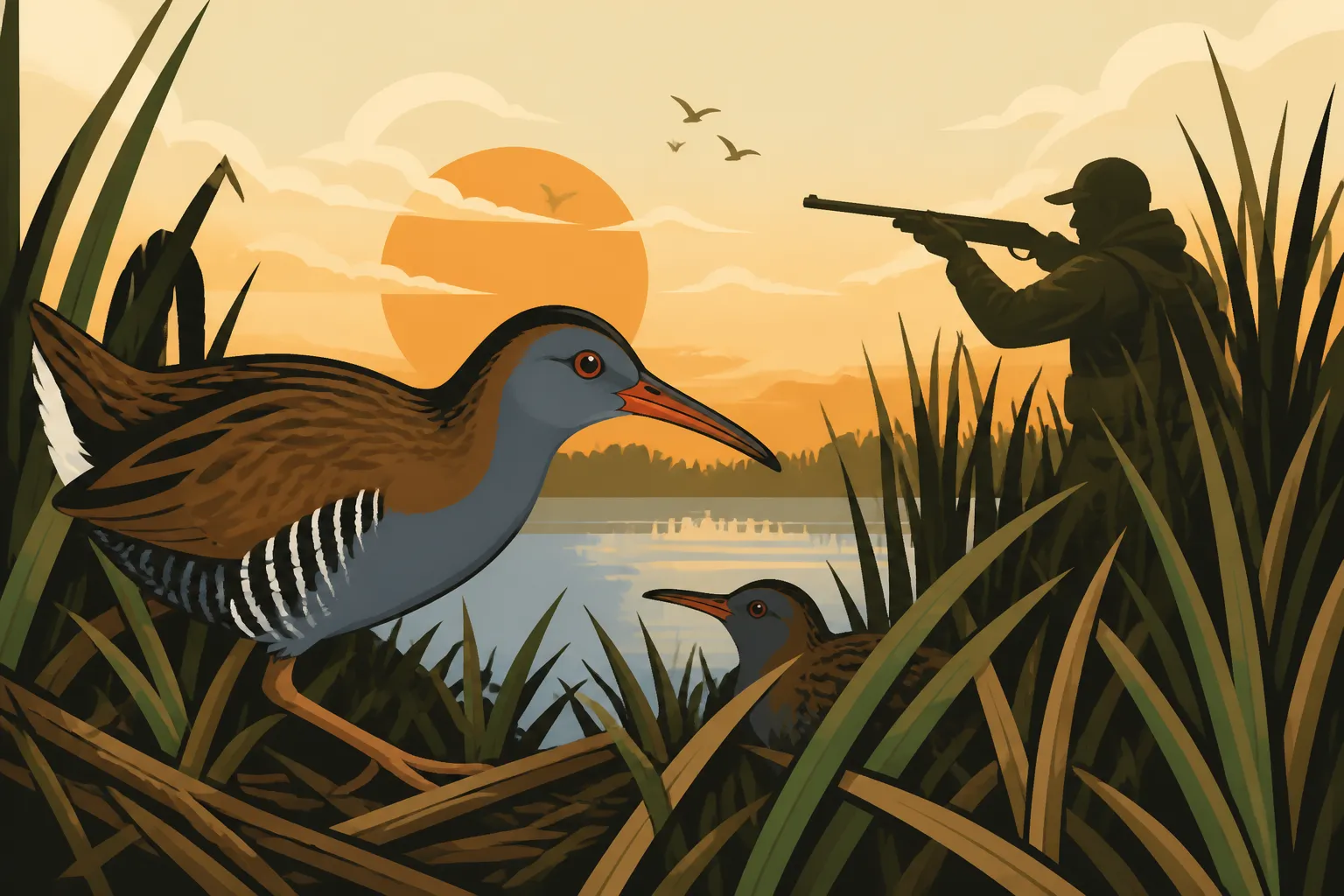
The Virginia rail is perhaps the most commonly encountered huntable rail. These small, chicken-like birds are about the size of a robin, with a long, slightly downcurved bill and rusty-red plumage. They prefer freshwater or brackish marshes with dense vegetation, often clucking away unseen in the cattails or cordgrass. When flushed, they typically fly a short distance with weak, fluttering wings before dropping back into cover.
King rails are the largest of the huntable rails, significantly bigger than the Virginia rail, resembling a small chicken. They share the rusty coloration but are much more robust, with a longer, stouter bill. King rails are found predominantly in freshwater marshes, rice fields, and the freshwater portions of brackish marshes. They are quite shy and powerful runners, making them a challenging target. Due to their size, they present a more substantial prize for the hunter.
The sora is arguably the most popular and numerous of the huntable rails. These tiny, plump birds are truly unique, with a short, chicken-like bill that is yellow at the base, a black face mask, and a slate-gray breast. They are often found in freshwater or slightly brackish marshes, particularly those with plenty of sedges and cattails. Sora are known for their distinctive descending whistle, a sound that signals the onset of fall in many a Maryland marsh. They fly weakly but can be surprisingly quick when flushed, offering a fleeting target. Their small size means you'll need a good eye and quick reflexes.
| Species | Size (Approx.) | Bill Description | Preferred Habitat (General) | Common Sound |
|---|---|---|---|---|
| Virginia Rail | Robin-sized | Long, slender, downcurved | Freshwater/Brackish Marshes, dense cover | Sharp "kek-kek-kek" |
| King Rail | Small Chicken | Long, stout, slightly curved | Freshwater Marshes, rice fields | Deep "bup-bup-bup" |
| Sora | Smallest | Short, yellow base | Freshwater/Slightly Brackish, sedges/cattails | Descending whistle, "ker-wee" |
Prime Habitat for Rails and Sora in Maryland
To find rails and sora, you need to think like a marsh bird: where's the thickest cover, where's the food, and where's the safety from predators? Maryland, with its extensive network of tidal marshes and wetlands, offers abundant habitat for these species.
The Critical Role of Tidal Marshes
Maryland’s tidal marshes, particularly along the Eastern Shore, are the undisputed stronghold for rails and sora. Places like Dorchester and Somerset counties, with their vast expanses of marsh, offer ideal conditions. These birds thrive in the dense stands of vegetation like phragmites (though invasive, it offers incredible cover), spartina grass, and various sedges. This thick cover provides not only protection from predators but also a rich buffet of insects, snails, and seeds.
The key to understanding marsh hunting for rails is the tide. Tides significantly influence where these birds are concentrated. At low tide, the birds can spread out across more exposed marsh, making them harder to flush. However, as the tide rises, it pushes them into higher ground and compresses them into smaller, denser islands of vegetation. This concentration effect makes them more accessible to hunters pushing through the marsh in a boat. Reading Tide Charts Before a Marsh Hunt is absolutely critical. You want to time your hunt for the rising tide, reaching your hunting area as the water is pushing up, and ideally hunting the high-water slack. This gives you a window of opportunity where the birds are more concentrated and the water depth is optimal for poling a shallow-draft boat.
You'll find these birds especially along the edges of larger marsh guts, small creeks, and any slightly elevated hummocks within the marsh. These are the last places they abandon as the water rises, making them prime spots to focus your efforts. Hunting Maryland's Lower Eastern Shore Marshes is a fantastic resource for general marsh access, much of which applies to rail hunting.
Beyond the Bay: Freshwater Marshes and Impoundments
While the vast tidal marshes are iconic, don't overlook Maryland's freshwater marshes and impoundments. These areas can be incredibly productive, especially for sora and king rails. Many state Wildlife Management Areas (WMAs) have managed impoundments designed for waterfowl, but these often provide excellent rail habitat in the early season before full flood-up or during periods of drawn-down water levels.
These freshwater systems might include old rice fields, beaver ponds, or areas where water levels are manipulated to promote specific vegetation. The vegetation here might be different, featuring more cattails, smartweed, and other emergent plants that provide food and cover. While you won't be dealing with the same tidal fluctuations, understanding the water levels in these managed areas is just as important. A good resource for identifying these areas and understanding their management is Maryland's Wildlife Management Areas. These spots can offer a different marsh hunting experience, often with less current and potentially easier navigation if you're not used to tidal systems.
Gear and Techniques for a Successful Rail and Sora Hunt
Hunting rails and sora is a physically demanding but incredibly rewarding experience. It requires specialized gear and a technique that has been passed down through generations of marsh hunters. Forget the big decoy spreads and long-range shooting; this is an up-close-and-personal engagement with the marsh.
Essential Equipment for Marsh Hunting
When heading into the marsh for rails, your gear choices are paramount for both success and safety.
First and foremost, you need the right footwear. Chest waders are almost a non-negotiable item. While hip boots might suffice for shallower edges, the unpredictable depths of the marsh, especially on a rising tide, mean you’ll inevitably find yourself in water over your waist. A good, sturdy pair of breathable chest waders will keep you dry and comfortable. Look for models with integrated boots that offer good traction on muddy bottoms.
Next, consider your mode of transport. A shallow-draft boat is essential. A kayak, canoe, or a small jon boat are all excellent choices. The key is maneuverability and stability in dense cover. You’ll be poling or pushing through thick vegetation, so a boat that tracks well and can handle being shoved around is crucial. Forget anything with an outboard motor unless it's a mud motor designed for marsh travel; most marsh areas are too shallow and choked with grass for traditional props.
For firearms, a light, quick-handling shotgun is ideal. Small gauges like a 20-gauge or even a .410 are popular, as these birds are small and shots are often at close range. However, a 12-gauge with light loads works perfectly fine too. The emphasis is on light recoil and quick swings. For shot size, anything from 7 ½ to 9 shot is generally sufficient, and remember that non-toxic shot is required for migratory birds. Steel shot is common, but bismuth or tungsten-matrix options can offer better patterns in smaller gauges if you're willing to pay the price.
Beyond the basics, always bring plenty of water, especially on warm early-season days. A waterproof bag for your phone, keys, and license is a must. And, of course, your Maryland Hunting Licenses and What They Cost, along with your Maryland Migratory Bird Stamp Requirements and proof of HIP Registration for Migratory Bird Hunters are critical.
The Art of "Poling" or "Pushing" the Marsh
The classic technique for hunting rails and sora is often called "poling" or "pushing" the marsh. It's an active, hands-on method that involves slowly navigating your boat through the dense marsh grass to flush the birds.
Here’s how it typically works: You'll use a long pole (a stiff bamboo pole, a sturdy piece of PVC, or a specialized push pole) to propel your boat forward, similar to a gondolier. One person stands or sits in the bow, acting as the "flusher" and shooter, while another poles from the stern. If hunting solo, you’ll have to manage both tasks, often sitting in the middle and carefully pushing, then quickly grabbing your gun when a bird flushes.
As you silently push through the vegetation, the rails, which prefer to run, will eventually be forced to flush. When they do, they'll typically pop up quickly and fly a short distance before dropping back into the cover. Your reaction time needs to be quick! The shot opportunities are often fleeting and close. The goal is to work systematically through promising patches of marsh, especially those higher islands of grass on a rising tide. This technique is similar to how one might go Marsh Hunting Sika Deer by Boat, just on a smaller scale.
Safety is paramount. The marsh bottom can be soft and uneven, and it's easy to lose your footing if you decide to jump out and wade. Always maintain three points of contact if moving in the boat, and wear a life vest, especially in larger waters or if you’re not a strong swimmer.
Decoys and Calls
Unlike other forms of waterfowl hunting, decoys are generally not used for rails and sora. These birds are not typically attracted to visual spreads. Their reclusive nature means they rely on camouflage and staying hidden, not on interacting with other birds in the open.
However, calls can be effective, especially for sora. The sora's distinctive descending whistle can be imitated, and sometimes, a bird will respond, giving away its general location. This can be particularly useful if you’re working a large patch of marsh and want to pinpoint where birds might be holding before you commit to pushing through. There are specialized sora calls available that reproduce their unique whistle. King rails also have a distinct call, a series of repetitive "kek" notes, but they are less responsive to calling than sora. Virginia rails are the least responsive to calling, typically relying on flushing them. Experimentation is key; sometimes a subtle call can make all the difference, but often, the most effective "call" is simply your presence slowly pushing through their hiding spots.
Navigating Regulations and Seasons
Like all hunting in Maryland, pursuing rails and sora requires adherence to specific regulations regarding season dates, bag limits, and licensing. These details ensure sustainable populations and a fair chase for everyone.
Understanding Maryland's Rail and Sora Season Dates and Bag Limits
Maryland’s rail and sora seasons typically kick off in early September, offering one of the first opportunities to hunt migratory birds each fall. This early start, often coinciding with warm weather, adds to the unique challenge of marsh hunting. These seasons generally run for an extended period, allowing plenty of opportunities to get out.
It's crucial to check the current Maryland hunting guide for precise season dates, as they can shift slightly year to year. Generally, sora and Virginia rail often share a season, while King rail might have a more restricted season due to lower population numbers or conservation efforts.
Bag limits are also species-specific. For sora and Virginia rails, the daily bag limit is often quite generous, reflecting their healthy populations. King rail limits are usually much more conservative. It's critical to know your target species to avoid overharvesting any particular group. Remember, possession limits are typically three times the daily bag limit. Always, always verify the most up-to-date regulations directly from the Maryland Department of Natural Resources (DNR) website or their printed guides before you head afield.
Beyond the specific rail regulations, you absolutely need to ensure you have all your migratory bird licensing in order. This includes a valid Maryland hunting license, the Maryland Migratory Game Bird Stamp, and completion of the Harvest Information Program (HIP) registration. Without these, you’re not legal to hunt.
Accessing Public and Private Marshland
Maryland offers a fantastic amount of public access for marsh hunting, but private land can also provide excellent opportunities if you're able to secure permission.
Many of Maryland's Wildlife Management Areas (WMAs) are situated within vast marsh systems and are prime locations for rail and sora hunting. Iconic areas on the Lower Eastern Shore like Maryland's Fishing Bay Wildlife Management Area and Maryland's Deal Island Wildlife Management Area offer expansive marsh suitable for these birds. Other WMAs along the Chesapeake Bay and its tributaries may also hold rails. It’s always a good idea to scout these areas beforehand, either in person or with aerial maps, to identify likely looking marsh pockets and access points. Remember to check for any specific WMA regulations, as some may have additional rules for boating, access, or even hunting methods.
For those looking at private land, access can be a bit more challenging. Marshland owners often manage their properties for waterfowl, and rail hunting might be less common. However, if you can secure permission, these private marshes can offer secluded and productive hunting. Knocking on doors in rural areas or inquiring with local farmers and landowners is often the best approach. It's a great opportunity to use mapping tools like GoHunt, which can help you identify property lines and landowner information to aid in your permission-seeking efforts. This kind of research can make all the difference in finding those hidden gems where you can enjoy a peaceful and productive rail hunt.
| Item | Importance | Notes |
|---|---|---|
| Valid MD Hunting License | Essential | Required for all hunting. |
| MD Migratory Game Bird Stamp | Essential | Specific stamp for migratory birds like rails/sora. |
| HIP Registration | Essential | Federal requirement for migratory bird hunters. |
| Chest Waders | High | Keeps you dry in varying marsh depths. |
| Shallow-Draft Boat (Kayak/Canoe) | High | Necessary for navigating dense marsh grass. |
| Push Pole | High | For propelling your boat through vegetation. |
| Light, Quick Shotgun (e.g., 20ga) | Medium | Easier to swing, less recoil for fast shots on small birds. |
| Non-Toxic Shot (7.5-9 shot) | Essential | Federal requirement for migratory birds. |
| Waterproof Bag | High | Protects essentials like phone, license, keys. |
| Water/Snacks | High | Marsh hunting is physically demanding. |
| GoHunt / Mapping App | Medium | Useful for scouting, identifying property lines, and navigation. |
| Sora Call | Optional | Can sometimes elicit responses from birds. |
Disclaimer
This article is for general informational purposes only and does not constitute professional advice. Laws, prices and regulations vary by location and change over time. Consult a qualified professional for guidance on your specific situation.